


Choosing where to base yourself can make or break a trip to the United Kingdom. Distances are short but travel times can be slow, and the feel of a neighborhood in London or a village in the Lake District can completely change your experience. This guide compares nine of the UK’s strongest all round bases for first timers, couples, families, countryside lovers and visitors travelling without a car.
How to Choose Your UK Base: City, Countryside or Car Free
Before you book anything, be clear about what you want your base to do. If you are a first time visitor who wants icons like Big Ben, Edinburgh Castle or the Roman Baths, you will be happier in compact city centers such as central London, Edinburgh Old or New Town, Bath or York. These places have dense sightseeing, plenty of places to eat within a short walk, and frequent rail links for day trips.
If you mainly want scenery and village life, look at the Lake District, the Cotswolds or the Scottish Highlands. In these regions, it matters whether you have a car. A cottage outside Ambleside or a farm stay in the Highlands is magical if you are driving, but it can feel isolating if you are relying on two buses a day. For car free trips, focus on towns like Keswick, Bowness or Ambleside in the Lakes, hubs such as Moreton in Marsh for the Cotswolds, and larger Highland bases like Fort William or Inverness rather than tiny hamlets.
Budget also shapes your decision. In summer, a central London hotel in Covent Garden or South Bank may start around 280 to 350 pounds per night for a decent double, while a well located guesthouse in York or Bath can often be found around 140 to 220 pounds. Countryside stays vary widely: a lakeside B&B in Keswick might start near 120 pounds in shoulder season, while an intimate Cotswolds inn in peak July may easily exceed 250 pounds per night.
Finally, consider travel logistics. If you are flying into London and do not want to rent a car, bases that sit on main train lines work best. Edinburgh, York, Bath, Cardiff and Belfast are all on straightforward rail or coach routes from London. For the Lake District, trains run to Windermere and Penrith, where you can connect to local buses. In the Cotswolds, mainline stations such as Moreton in Marsh or Cheltenham Spa work well with taxis and local buses for the last stretch.
London: Best for First Timers, Culture Lovers and Car Free Travel
For a first or second visit to the UK, using London as your main base is the simplest option. You can easily spend four to six nights here without exhausting the big sights, and its rail connections make day trips to places like Windsor, Oxford, Cambridge and Brighton straightforward. The key decision is which central neighborhood to pick, because journey times across London can add up.
For most first time visitors, areas like Covent Garden, Soho, Bloomsbury and the South Bank work well. Covent Garden and Soho put you within a 10 to 20 minute walk of the West End theatres, Trafalgar Square and many headline museums. Expect hotel rates that commonly fall somewhere between 280 and 450 pounds per night in peak months for a well reviewed midrange property, with smaller rooms and busy streets at night. Bloomsbury is slightly quieter and often a little better value, with easy Tube access and the British Museum on your doorstep. Around the South Bank and London Bridge, you gain views of the Thames and landmarks such as the London Eye and Tower Bridge, plus easy walking routes and riverside paths that suit couples and families.
Families may prefer the area near Hyde Park, Kensington or South Kensington, where green space, playgrounds and family friendly museums such as the Science Museum and Natural History Museum cluster together. Rooms tend to be a bit larger than in the most central zones, and late night street noise is lower. These districts remain comfortable for car free visitors, thanks to direct Tube lines to major rail stations like Paddington and Victoria. If budget is tighter, areas slightly farther out on fast Tube lines, such as King’s Cross or Paddington, can keep costs down while keeping travel times manageable.
London is designed for life without a car. Within the city, you will rely on the Underground, buses and walking; parking is scarce and expensive, and congestion charges apply in central zones. For day trips, trains depart from multiple large terminals. A realistic pattern is to spend three days largely inside London, then add one or two day trips by rail. This balance keeps you from spending your entire holiday in stations and gives London enough time to breathe.
Edinburgh: Compact, Atmospheric and Easy Without a Car
Edinburgh is one of the UK’s most rewarding bases if you want history and scenery without renting a car. From London, direct trains to Edinburgh Waverley typically take about four and a half to five hours. Once you are there, the city is compact enough that many visitors walk almost everywhere, with buses and trams filling the gaps.
Your main choice is between the medieval Old Town and the Georgian New Town. The Old Town, strung along the Royal Mile between Edinburgh Castle and the Palace of Holyroodhouse, gives you that classic silhouette of spires and tenements. This area is ideal for short, sightseeing heavy trips and first timers who want to feel in the middle of things. It is also the most expensive and the noisiest, especially during festival periods, and you will deal with steep cobbled streets and lots of steps.
The New Town spreads north of Princes Street in an elegant Georgian grid. It offers grand squares, calmer evenings and a mix of midrange hotels and stylish apartments. Travellers report that New Town often undercuts Old Town on price, especially in shoulder season, and it offers an easier walking experience for anyone who finds hills challenging. Slightly farther out, Stockbridge feels like a self contained village, with independent cafes and Sunday markets, while still being within a 20 to 25 minute walk of the city center. These neighborhoods suit couples and repeat visitors who value atmosphere and good food over being right next to the castle.
For car free Highland taster trips, Edinburgh works well. Organized day tours to places like Glencoe, Loch Ness or St Andrews depart early from the city center, and there are straightforward train routes to Glasgow and the Borders. As a base, three nights gives you time for the castle, museums and a full day walk up Arthur’s Seat or along the Water of Leith; four or five nights lets you weave in a Highland or coastal excursion without rushing.
Bath and York: Small Historic Cities for Slower, Walkable Stays
If London and Edinburgh feel too intense, Bath and York offer gentler city bases packed with history. Both are manageable without a car and suit couples, solo travellers and families who enjoy walking, museums and good food more than nightlife.
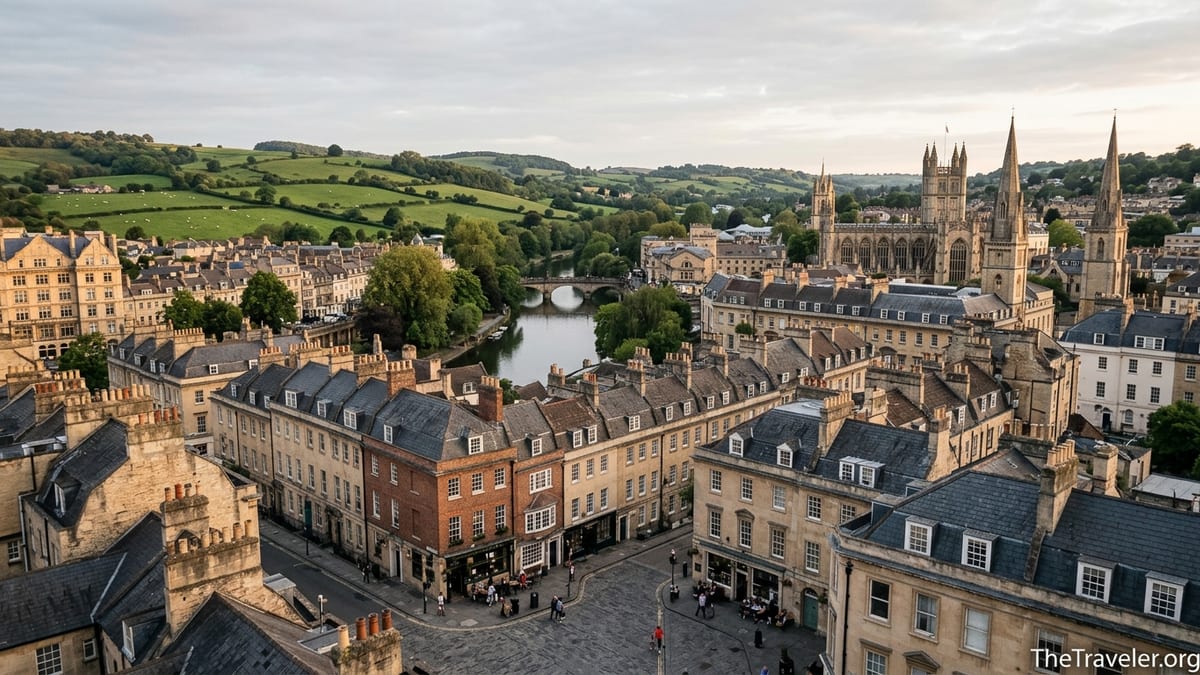
Bath, in southwest England, is a Unesco listed city of honey toned Georgian terraces built around the hot springs that fed its Roman baths. The compact historic center is essentially walkable from end to end in 20 minutes. Many visitors choose small hotels or guesthouses within ten minutes of the station, then explore on foot. In high season, central doubles in characterful townhouses often fall in the 160 to 260 pound range, with cheaper chain options in modern blocks slightly outside the center. From Bath you can join coach tours to Stonehenge and the Cotswolds, or make your own rail day trip to Bristol, which is about 15 minutes away by train.
York, in northern England, is another excellent base for car free travellers. The walled medieval center is famous for York Minster, timber framed streets and a strong railway heritage. The station sits just outside the walls, about a ten minute walk to most central hotels. Typical midrange doubles here are often slightly less expensive than in Bath, particularly outside school holidays, and there is a wide choice of family friendly guesthouses. York also works as a hub for rail day trips to places such as Durham, Leeds or the Yorkshire coast. Three nights gives you time for city highlights and a countryside excursion, while four or five nights allows for a slower pace.
Both cities are strong choices if you find London overwhelming or are travelling with older relatives who will appreciate shorter walks and quieter evenings. They pair well with a few nights in the countryside because they sit on main rail lines and are compact enough to enjoy in a weekend.
Lake District: Where to Stay for Scenery, Hiking and No Car
The Lake District is one of the UK’s classic countryside bases, with glacial lakes and rounded fells that appeal to walkers of all levels. The region rewards a longer stay of three to five nights, and your choice of base strongly affects how easy car free travel will be. Trains from London typically run to Oxenholme, where you connect to Windermere, or to Penrith for the northern lakes. From these gateways, local buses and lake steamers do the rest.
For visitors without a car, several towns repeatedly come up as practical bases. Bowness and Windermere in the south have the easiest rail link and lots of accommodation, from simple B&Bs around 100 to 150 pounds per night in shoulder season to lakeside hotels at several hundred pounds. Ambleside, at the head of Windermere, offers immediate access to walking routes, frequent buses and a busy town center that still feels smaller and more outdoorsy than Bowness. Farther north, Keswick, on Derwentwater, is widely recommended as one of the best hubs without a car. Buses connect it to Penrith station, and from town you can reach multiple valley heads, boat landings and gentle lakeside walks.
Families and first time visitors often do well in Bowness or Windermere, where short boat trips, attractions and a range of eateries keep things simple. Ambleside and Keswick suit hikers and couples aiming to do more walks straight from the door. If you plan to work remotely while staying in the Lakes, towns like Keswick and Windermere also offer more reliable shops and services than tiny villages. In high summer, expect popular B&Bs in these hubs to book out months ahead, especially for weekends.
With a car, you can look at quieter bases such as Grasmere, Hawkshead or Coniston, or self catering cottages on the fringes of the national park. These give you a stronger sense of rural seclusion but require comfort with driving on narrow, twisting roads. For car free visitors, aim for somewhere within a short walk of a bus stop and, ideally, a supermarket or cluster of restaurants to avoid long evening walks back in the dark.
Cotswolds and Scottish Highlands: Countryside Bases for Drivers and Tour Takers
The Cotswolds and Scottish Highlands give you two very different versions of scenic countryside. In the Cotswolds, rolling farmland, stone villages and cosy pubs sit within a few hours of London. In the Highlands, lochs, glens and tall hills create grander, more remote landscapes where weather and distances need more planning.
In the Cotswolds, a car gives you the most freedom. Many of the prettiest villages, such as Upper and Lower Slaughter or Snowshill, see only a few buses a day. If you are driving, basing yourselves in or near towns like Stow on the Wold, Chipping Campden or Broadway works well. You get a cluster of inns and B&Bs, evening dining options and small supermarkets, while still being able to reach quieter hamlets within 15 to 30 minutes. Typical doubles at traditional inns in peak season can run from about 180 to 280 pounds or more, with lower prices in shoulder months.
For car free travellers who still want the Cotswolds, consider using a rail connected gateway town such as Moreton in Marsh or Cheltenham as your base. From there, you can join small group day tours or use local buses and short taxi journeys to reach more rural spots. Another strategy is to visit the Cotswolds as a long day trip from Bath or London on an organized tour rather than installing yourself deep into the countryside without transport.
The Scottish Highlands cover a huge area, so choose a base that fits your priorities. Fort William works as an activity hub, with walking, outdoor sports and access to Glen Coe and the Road to the Isles. Inverness is more of a small city base with buses and trains to Loch Ness, the Black Isle and the east coast. Car free visitors often rely on day tours from these bases to reach more remote glens, while drivers can choose cottages in places like Glen Coe, Torridon or Skye. Weather can be very changeable in all seasons, so build flexibility into your plans and do not schedule long driving days back to back.
Cardiff and Belfast: Underrated City Bases with Easy Day Trips
Cardiff and Belfast give you two capital city bases that are often quieter and better value than London or Edinburgh. Both work well without a car, especially for short trips where you want a mix of culture, food and easy day excursions.
Cardiff, the capital of Wales, sits around two hours from London by direct train. In the compact city center, you can walk between Cardiff Castle, the principal shopping streets and the main station in about ten minutes. Modern midrange hotels in and around the center often price below typical London equivalents, particularly outside major events and rugby weekends. For a couple or family without a car, three nights in Cardiff might include a day exploring the revitalized Cardiff Bay area and a day trip by train to the Vale of Glamorgan coast or to the nearby market town of Cowbridge.
Belfast, the capital of Northern Ireland, is another strong base. The city center and Cathedral Quarter are compact, lively and walkable, with a growing choice of boutique hotels and apartments. Prices for central accommodation tend to sit between those of smaller English cities and London, with the best deals often appearing outside summer holidays and major events. Without a car, you can join organized day trips from Belfast to the Giant’s Causeway, Antrim Coast and sites connected to the region’s maritime and political history. For families and first time visitors, staying near City Hall or the Cathedral Quarter keeps you within easy reach of major museums and dining areas.
Both cities pair naturally with other stops. Cardiff works well combined with Bath, the Brecon Beacons or the Pembrokeshire coast. Belfast combines easily with Dublin or a road trip around the Causeway Coast if you choose to rent a car for a few days after exploring the city on foot.
The Takeaway
The United Kingdom rewards travellers who match their base to their interests and transport style. If you value iconic sights and want to move around mainly by train, a combination of London, Edinburgh and one smaller city like Bath or York will cover a lot of ground without a car. If scenery is your priority, think in terms of hubs: Keswick or Ambleside for the Lake District, a rail linked gateway plus tours for the Cotswolds, and a larger Highland town such as Fort William or Inverness as your launchpad.
Couples may gravitate to atmospheric neighborhoods such as Edinburgh’s New Town or Stockbridge, Bath’s Georgian streets or Cotswolds villages, while families often appreciate the green spaces of London’s Kensington or the relaxed scale of York and Cardiff. First timers usually benefit from spending more nights in fewer bases instead of changing beds every day. Three to five nights in each key base often beats a whirlwind loop through ten towns.
Above all, remember that in the UK travel time can be longer than the map suggests, especially on rural roads. Prioritize one or two strong bases over ticking every box on the map, and choose neighborhoods where you can walk to dinner, shops and at least some of your daily activities. With that approach, your base becomes part of the pleasure of the trip rather than just a place to sleep.
FAQ
Q1. Is London a good single base for a first trip to the UK?
Yes, if you have about a week and want a mostly car free holiday. You can spend four to six nights in London and add one or two rail day trips to places like Windsor or Bath.
Q2. How many nights should I spend in Edinburgh compared with London?
For a first visit, many travellers find that three to four nights in Edinburgh and four to six in London offers a good balance, especially if you are travelling by train between the two.
Q3. Which Lake District town is best without a car?
For most visitors, Bowness or Windermere work well for easy arrival by train, while Ambleside and Keswick are excellent for walking focused stays with good bus links and boat connections.
Q4. Do I need a car for the Cotswolds?
A car gives you far more flexibility in the Cotswolds, but car free travellers can still visit by basing in a rail connected town like Moreton in Marsh and using tours, buses and taxis for short hops.
Q5. Is Bath or York better as a base for a quieter city stay?
Both are excellent. Bath is convenient for the southwest and Cotswolds day trips, while York is stronger for exploring northern England and has particularly good rail links to nearby cities and the coast.
Q6. Where should couples stay in Edinburgh for a more relaxed feel?
Edinburgh’s New Town and Stockbridge areas suit couples who want atmosphere, good restaurants and calmer evenings, while still being close enough to walk into the Old Town.
Q7. Are Cardiff and Belfast suitable for families without a car?
Yes. Both have compact, walkable centers and family friendly museums, and you can add organized day trips to nearby coastlines or countryside without needing to drive.
Q8. How far in advance should I book accommodation in the Lake District or Cotswolds?
For peak summer and school holidays, aim to book several months ahead, especially in popular towns like Keswick, Bowness or Stow on the Wold, where small B&Bs fill quickly.
Q9. Is it realistic to visit the Highlands on a short trip without renting a car?
It is possible. Basing in Edinburgh, Glasgow, Fort William or Inverness and joining day tours gives you a taste of the Highlands without the stress of driving on narrow roads.
Q10. How many different bases should I plan for a two week UK trip?
In two weeks, three main bases usually works well. For example, you might combine London, Edinburgh and the Lake District, or London, Bath or the Cotswolds, and then Edinburgh or York.