


Trying to fit England, Scotland, Wales and Northern Ireland into a single United Kingdom trip is completely possible, but it takes smart routing and realistic timing. This guide walks you through a practical 2 to 3 week itinerary, shows how many days each nation deserves, compares trains, flights and rental cars, and highlights the must-see stops that make the miles worthwhile.
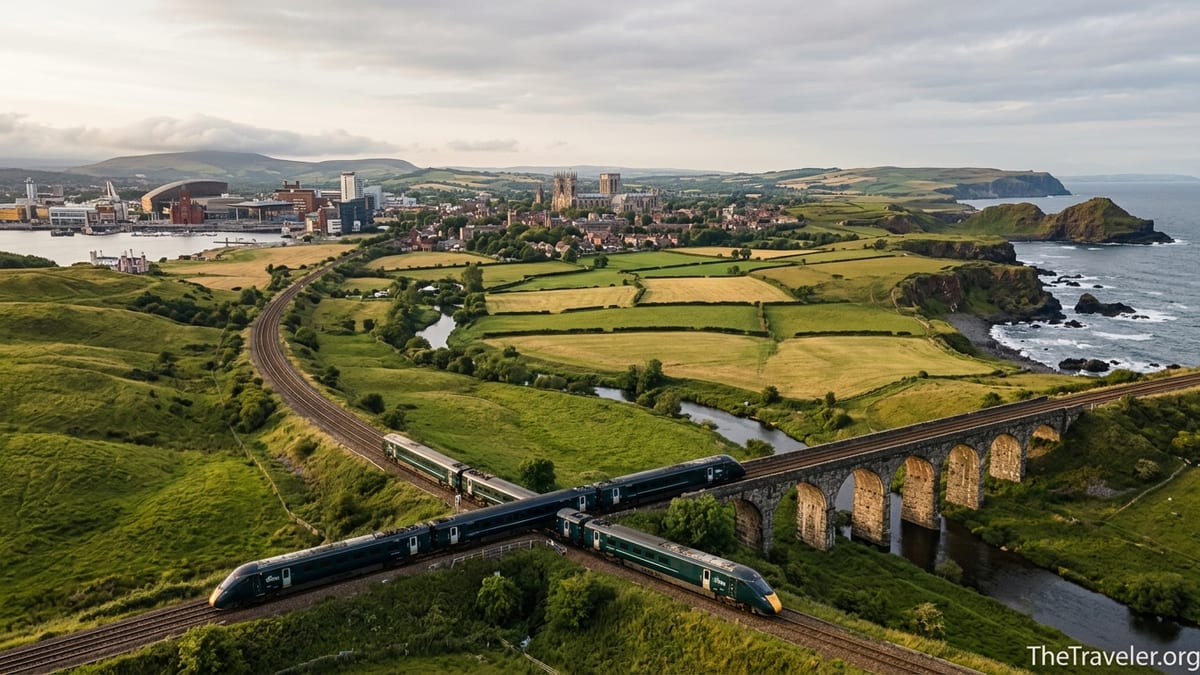
How Long Do You Really Need for All Four Nations?
For most travelers, the sweet spot to see all four nations without turning the trip into a blur is about 16 to 21 days. Less than two weeks usually means you are rushing between capitals with little time for countryside, islands or coastal scenery. Around 3 weeks lets you linger in a few key regions while still covering the classic highlights in each nation.
A balanced split for a first trip might be 7 to 9 days in England, 4 to 5 days in Scotland, 3 to 4 days in Wales and 2 to 3 days in Northern Ireland. In practice, that could look like 4 nights in London plus 3 nights shared between the Cotswolds and Bath or York, 3 nights in Edinburgh plus 1 or 2 in the Highlands, 3 nights split between Cardiff and Snowdonia, and 2 or 3 nights in Belfast with a day trip to the Giant’s Causeway or the Mourne Mountains.
Travel time between nations also eats into your days, so you should mentally budget at least 4 major “travel days” across the trip: England to Scotland, Scotland back south or to Wales, Wales to the ferry or airport, and the return to your departure city. On those days, plan only light sightseeing at either end of the journey.
If you are tight on time, the easiest compromise is to reduce rural overnights rather than skip nations entirely. For example, you might trim the Scottish Highlands to a day trip from Edinburgh, or explore the Welsh countryside on day tours from Cardiff instead of adding an extra overnight stop.
Smart Overall Route: Where to Start and Finish
The most efficient route for most international visitors is a broad loop: arrive in London, head north through England to Scotland, swing back down toward Wales, then cross to Northern Ireland before returning to your departure airport. This avoids constant backtracking and makes use of good intercity rail and short flights.
A typical 18 to 20 day sequence could look like this: London (4 nights), train to York (2 nights), train to Edinburgh (3 nights), train or tour into the Highlands (2 nights), train south toward Cardiff via Bristol or Birmingham (3 nights including Cardiff and a day in the Brecon Beacons or on the Gower Peninsula), then fly or ferry to Belfast (2 or 3 nights) before returning to London or Manchester for your flight home.
Where you start should depend on flight options from your home city. Many North American travelers find cheaper or more frequent flights into London Heathrow or Gatwick, but Manchester and Edinburgh are increasingly realistic gateways. One practical variation is to fly into Edinburgh and out of London, running the loop in reverse and avoiding a long backtrack at the end.
Try to avoid routing that forces you through London every time you change nation. For instance, going Edinburgh to Cardiff via Birmingham, or Belfast to Manchester then on to North Wales, can save you hours compared with routing everything through the capital’s congested stations and airports.
England: London Plus One or Two Strategic Bases
England is where you will likely arrive, and it deserves the largest share of your time. Plan at least 4 full days in London, not counting your arrival day, to cover a mix of headline sights such as the Tower of London, the British Museum and Westminster Abbey, plus neighborhood wandering in places like Shoreditch, Notting Hill or Greenwich. Public transport works well here, so you do not need or want a car in the city.
For a first multi-country trip you then have to be selective. Two classic add-ons that work well logistically are the West Country and the North of England. A simple West Country option is to take a train from London Paddington to Bath for Georgian architecture and the Roman Baths, then on to Bristol or the Cotswolds villages like Moreton-in-Marsh. In the North, York offers medieval walls, the National Railway Museum and easy rail connections onward to Edinburgh, making it a strong one- or two-night stop.
If your priority is minimizing one-night stays, choose just one region outside London and treat it as a base. For example, you could spend 4 nights in London and 3 in York, using York for a day trip into the Yorkshire Dales, or 4 in London and 3 in Bath, taking a day tour that bundles Stonehenge, Salisbury and the Cotswold villages into one long but efficient excursion.
On the English legs between London, Bath, York and Edinburgh, high-speed trains are usually the most efficient. Advance fares on operators such as London North Eastern Railway for London to York or London to Edinburgh can be significantly cheaper than flexible walk-up tickets if booked weeks ahead, and center-to-center timing often rivals or beats flying once you factor in airport transfers and security queues.
Scotland: Capital Culture and Highland Scenery
Scotland is where many visitors fall in love with the UK’s landscapes. For most itineraries, 4 to 5 days is enough to sample both city culture and the Highlands. Start with 2 or 3 nights in Edinburgh, giving yourself time for the Royal Mile, Edinburgh Castle, Arthur’s Seat and perhaps a visit to Leith for seafood and waterfront walks. The city’s compact size makes it easy to explore on foot or by bus.
From Edinburgh, you can either continue by train to another city such as Glasgow or Inverness, or rent a car for a short Highland loop. Many travelers pick up a rental outside the city center to avoid driving in dense traffic, heading toward Glencoe, Fort William or the Cairngorms. Even a one-night stay in a Highland village can give you a sense of the quieter side of Scotland, with walks along lochs and evenings in local pubs.
Without a car, organized day or overnight tours from Edinburgh and Glasgow can cover similar scenery. Common options include one-day trips to Loch Ness and Glencoe, or two-day tours that include the Isle of Skye. These allow you to keep using trains between major cities while still getting into areas where public transport is sparse.
Overnight trains from Scotland to London, such as the Caledonian Sleeper, add an interesting option for compressing travel time. You can leave the Highlands or Edinburgh in the evening and arrive in London early the next morning, effectively gaining a day of sightseeing by combining your transport and a night’s accommodation into one.
Wales: Compact, Scenic and Often Overlooked
Wales fits surprisingly well into a multi-country UK trip because its highlights are relatively close together. Three to four days can deliver a satisfying mix of city, castles and mountains. Most itineraries begin in Cardiff, a straightforward train ride from English hubs like London, Bristol or Birmingham. Cardiff Castle, the historic arcades and the revitalized bay area are all easy to cover in a day and a half.
From Cardiff, you can head north into the Brecon Beacons for rolling hills, waterfalls and market towns, or turn west toward the Gower Peninsula for coastal walks and broad beaches. With a rental car, you can reach these areas in a couple of hours. Without one, regional buses and guided day tours are your best bet to efficiently reach viewpoints, hiking trails and smaller villages.
If you have extra time, North Wales rewards a couple of nights in places like Conwy, Llandudno or near Snowdonia National Park. This area pairs especially well with routes that continue on to Northern Ireland, because ferry ports such as Holyhead in North Wales connect directly to ports serving Belfast. Spending time here breaks up what might otherwise be a long transfer day.
Because train routes within Wales can be slower and less direct than in England, planning your Welsh segment around one or two bases rather than crisscrossing the country keeps travel times manageable. Using Cardiff as your main base and adding only one additional overnight stop in North or West Wales is a good compromise between variety and simplicity.
Northern Ireland: Belfast and the Antrim Coast
Northern Ireland often gets just a couple of days on a packed UK itinerary, but with thoughtful planning you can see a lot in 2 to 3 nights. Belfast is the logical base, with its compact city center, Titanic Quarter and lively food scene. The city’s size means you can walk between most attractions, and black taxi political tours or guided walking tours add context to its modern history.
The Giant’s Causeway and the Antrim Coast are the marquee day trip from Belfast. Many visitors join small-group tours that combine the hexagonal basalt columns with coastal stops such as Carrick-a-Rede rope bridge or old castle ruins, returning to the city in the evening. Self-drivers can explore at their own pace, stopping at lesser-known viewpoints and beaches along the way.
If you prefer mountains to coast, consider a day trip south to the Mourne Mountains, known for granite peaks, reservoirs and hiking trails. This area is less visited by overseas tourists than the Antrim Coast but offers an easy way to add variety to your landscapes in a short visit.
For onward travel back to Great Britain, short flights from Belfast airports to cities such as London, Manchester or Glasgow are frequent, and sailing times on ferries to Scottish or English ports are usually a few hours. When time is tight, flying tends to make more sense at the tail end of a trip so that you are near your departure airport on the final night.
Trains vs Flights vs Rental Cars on a UK Loop
For a multi-nation route, trains are often the backbone of the trip. Direct high-speed lines run between London and major English and Scottish cities like York, Newcastle and Edinburgh, and frequent services link London with Cardiff. When you compare downtown-to-downtown travel time, a typical fast train from London to Edinburgh is around 4 and a half hours, while flying requires at least an hour to the airport, an hour or more for check-in and security, the flight itself and then the transfer into the city at the other end.
Domestic flights still matter on certain legs, especially across the Irish Sea. Routes such as Cardiff or Bristol to Belfast, or Manchester to Belfast, can turn what would be a long combination of trains and ferries into a journey of around an hour in the air. Flights can also be cost effective on busy city pairs, particularly when booked well in advance, though budget airlines may charge extra for checked baggage and seat selection.
Rental cars give you the most freedom in rural Scotland and Wales, and in parts of Northern Ireland, but they are seldom useful in London or central Edinburgh. A common strategy is to pick up a car in a smaller city such as Inverness, Fort William or Bangor and drop it back before returning to a major city. One-way fees within the UK can vary widely, so it is worth comparing quotes from several companies and checking whether the rental conditions allow you to take the car on ferries or across internal borders.
For travelers who prefer to avoid driving entirely, pairing intercity trains with day tours fills most of the gaps. For example, you could travel by train from London to Edinburgh, then join a two-day tour from Edinburgh into the Highlands, or use local operators in Cardiff and Belfast for countryside excursions. This approach keeps your logistics simple while still delivering a mix of urban and rural experiences.
Sample 18-Day Itinerary Linking All Four Nations
One practical 18-day route might begin with arrival in London. Spend days 1 to 4 exploring the capital, using the Underground and buses to get around. On day 5, take a morning train to Bath, arriving around lunchtime and spending the afternoon at the Roman Baths and around the Royal Crescent. On day 6, use Bath as a base for a day tour to Stonehenge and nearby countryside, returning to the city for the evening.
On day 7, travel by train from Bath to York, usually with a change in Bristol or Birmingham, and spend day 8 walking the city walls, visiting York Minster and exploring the narrow Shambles lanes. Day 9 is your main transfer to Scotland, with a direct train from York to Edinburgh and an evening stroll up Calton Hill or along Princes Street to get your bearings.
Days 10 and 11 are for Edinburgh itself and a day trip, perhaps a small-group excursion to Loch Ness and Glencoe or a visit to nearby Stirling and its castle. On day 12, head south toward Wales: you might take a train through Manchester and on to Cardiff, arriving in the evening. Days 13 and 14 are based in Cardiff, with one day in the city and one in the nearby Brecon Beacons or on the Gower Peninsula, reached by car, bus or guided tour.
On day 15, travel from South Wales to Belfast. The fastest option is usually a flight via a city such as Bristol or Manchester, but you could also route via North Wales and the ferry if you have more time. Days 16 and 17 are for Belfast and the Antrim Coast, including a full-day trip to the Giant’s Causeway. On day 18, fly back to London or Manchester for your international departure, staying overnight if you have an early flight the next morning.
The Takeaway
Covering England, Scotland, Wales and Northern Ireland in a single trip is ambitious but realistic when you think in terms of regions rather than checklists. Give yourself at least 16 days if you want both capital cities and countryside, and accept that you will not see everything in one go.
Use trains as your default between major cities, lean on short flights across the Irish Sea and consider renting a car or booking tours only for the rural segments where public transport thins out. Prioritize a small number of well-chosen bases such as London, Edinburgh, Cardiff and Belfast, then layer in one or two secondary stops like Bath, York, the Highlands or Snowdonia according to your interests.
With this approach, your United Kingdom trip becomes a connected journey through four distinct nations rather than a frantic race between photo stops. You will move often enough to feel the differences between regions, yet slowly enough to actually absorb them.
FAQ
Q1. How many days do I need to visit all four UK nations in one trip?
Most travelers should plan at least 16 days to cover England, Scotland, Wales and Northern Ireland without constant rushing, with 18 to 21 days giving a more relaxed pace.
Q2. Is it better to travel the UK by train or car on a multi-country route?
For this kind of itinerary, trains usually work best between major cities, while cars or guided tours are more useful for rural Scotland, Wales and parts of Northern Ireland.
Q3. Should I fly or take the train between London and Edinburgh?
The train takes around four and a half hours center to center and avoids airport transfers, so many travelers prefer it unless they find a significantly cheaper or more convenient flight.
Q4. Do I need a car to see the Scottish Highlands and Welsh mountains?
A car offers more freedom in these regions, but you can still visit using a mix of regional buses and organized day or overnight tours from cities like Edinburgh, Glasgow and Cardiff.
Q5. Where is the best place to start a four-nation UK itinerary?
Most visitors start in London because of flight options, but flying into Edinburgh or Manchester and out of London, or vice versa, can save time by reducing backtracking.
Q6. How many nights should I spend in each capital city?
A balanced plan is about four nights in London, two or three in Edinburgh, two in Cardiff and two in Belfast, adjusting based on your interests and total trip length.
Q7. Is it worth buying a rail pass for this kind of trip?
A rail pass can be worthwhile if you are taking many long-distance trains in a short period, but it is wise to compare pass prices with advance point-to-point tickets before deciding.
Q8. How far in advance should I book trains and domestic flights?
Booking several weeks ahead usually yields better prices for both trains and flights, especially on popular routes such as London to Edinburgh or Belfast to London.
Q9. Can I easily combine Northern Ireland with the Republic of Ireland on the same trip?
Yes, many travelers add Dublin or other Irish destinations to a UK itinerary, but doing so comfortably usually requires a few extra days beyond the 2 to 3 weeks outlined here.
Q10. Is it realistic to visit the UK without renting a car at all?
Yes, it is possible using trains, buses and tours, though you may need to choose slightly more accessible destinations and accept less flexibility in very rural areas.