


Choosing where to stay in Scotland can shape your entire trip. The right base will decide how much of the country you actually see, how rushed your days feel, and whether you remember Scotland for long train views and cosy pubs or for stressful drives and fully booked hotels. This guide compares the key bases most first time visitors consider, and helps you match them to your style of travel, budget and season.
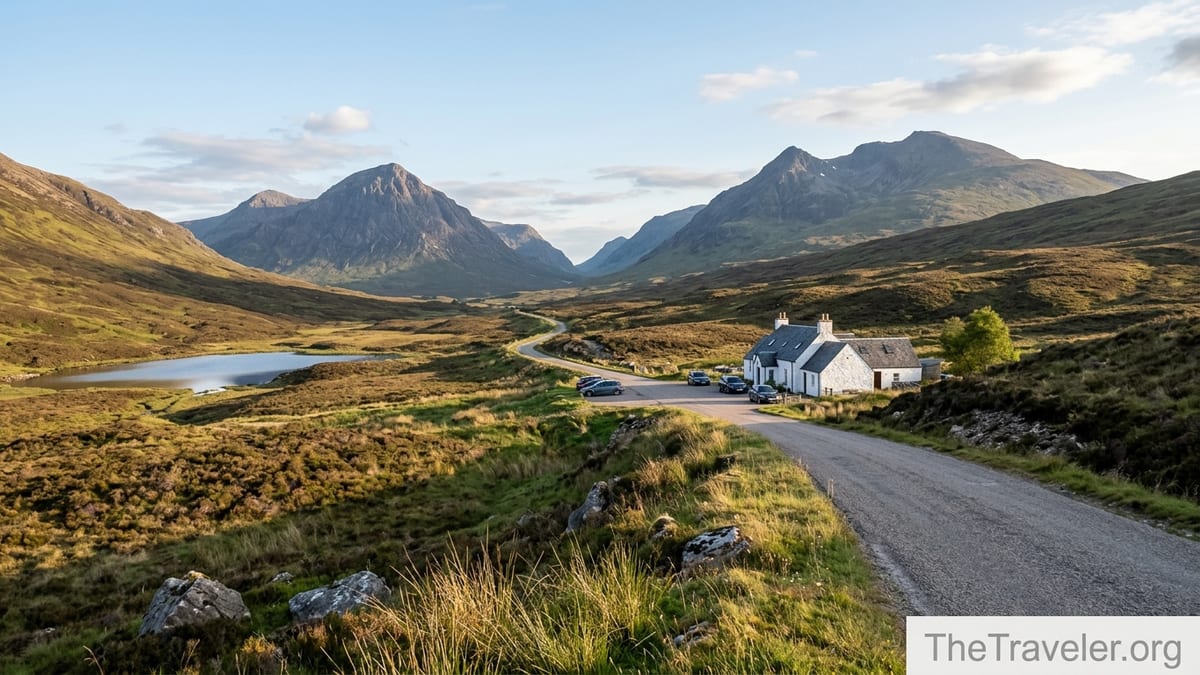
How to Choose the Best Base in Scotland
Before you start pinning castles and lochs on a map, decide what you want your base to do for you. Edinburgh and Glasgow work best if you want culture, museums and car free convenience, while Highland hubs such as Inverness, Fort William, Portree on Skye, Aviemore in the Cairngorms, and the scattered villages around Glencoe suit visitors who prioritise scenery and outdoor time. Many itineraries work best with two or three bases rather than one, for example three nights in Edinburgh followed by three or four nights split between the Highlands and Isle of Skye.
Costs vary sharply by place and season. In central Edinburgh in August, a midrange hotel often runs in the region of 220 to 300 pounds per night, while the same standard outside festival season can drop closer to 130 to 180 pounds. In Highland towns such as Fort William or Aviemore, comfortable three star hotels and guesthouses typically range from about 110 to 170 pounds most of the year, with summer and school holiday peaks. On Skye, demand often outstrips supply in May to September, so even simple B&Bs can reach 180 to 250 pounds a night.
Transport is the other big factor. If you prefer to travel by train and coach, bases on main rail lines such as Edinburgh, Glasgow, Stirling, Pitlochry, Aviemore and Inverness make life easier, as do coach served hubs like Fort William and Portree. Drivers have more flexibility, but long days connecting Skye, Glencoe and Cairngorms can become tiring on narrow roads. For most first time visitors, a realistic plan for a week is to pick one city base and one Highland base, and allow at least two or three nights in each to avoid constant packing and unpacking.
Edinburgh: Best for First Time Visitors and Short Breaks
Edinburgh is Scotland’s most visited destination and the easiest base for a first trip. The compact Old Town and New Town concentrate many of the country’s top sights within walking distance, including Edinburgh Castle, the Royal Mile, the National Museum of Scotland and Princes Street Gardens. You can land at Edinburgh Airport in the morning, reach the city centre in around 30 minutes by tram or bus, check into a hotel near Waverley station and be on the Royal Mile by lunchtime without ever driving a car.
Accommodation runs from simple hostels to luxury town house hotels. Around the Old Town, properties near the Royal Mile and Grassmarket suit travellers who want to walk out the door into history and nightlife, though noise and steep closes can be a trade off. In the New Town and West End you will find classic Georgian terraces, business hotels and serviced apartments that appeal to couples and families who value quieter streets and easier access to supermarkets and playgrounds. In 2026 Edinburgh is introducing a visitor levy, expected at around 5 percent on accommodation bills for up to five nights, which you should factor into budgets for longer stays.
For most itineraries, two to three nights are enough to explore the city before heading north. From Edinburgh Waverley, direct trains reach Inverness in roughly three and a half hours, Aviemore in about two hours forty minutes, and Glasgow Queen Street in just under an hour, which makes the capital an excellent jumping off point for wider trips. Car free visitors can also join organised day tours from Edinburgh that loop into Loch Ness, Glencoe or the Borders, though for a slower pace it is often better to stay overnight in the Highlands rather than attempt everything in a single long day.
Glasgow: Culture Hub and Practical West Coast Gateway
Glasgow is Scotland’s largest city and an underrated base for travellers who enjoy architecture, food and live music. Compared with Edinburgh, hotels in Glasgow city centre are often a little cheaper for similar standards, and you get excellent value in modern chain hotels around George Square and the financial district. Neighbourhoods such as the West End, near Kelvingrove Park and the University of Glasgow, offer boutique hotels and guesthouses on leafy streets with easy access to museums, vintage shops and bars.
Glasgow works well as a starting point for west coast and Highland road trips. From here the A82 climbs north along Loch Lomond to Glencoe and Fort William, one of Scotland’s most famous driving routes. Without a car, you can ride the West Highland Line from Glasgow Queen Street to Fort William or Mallaig, a train journey that regularly appears in lists of the world’s most scenic rail routes and takes around three and a half to four hours. This line connects directly to the ferry port for Skye at Mallaig, which means you can realistically combine a few nights in Glasgow with a loop through Skye and back to Edinburgh.
If your time is limited to five or six days, a practical pattern is to spend two nights in Glasgow to recover from your flight and explore the city’s galleries and music venues, then collect a hire car for three nights based around Glencoe or Fort William. Families often appreciate Glasgow’s large museums with free entry, such as the Riverside Museum and Kelvingrove, before heading into more weather dependent outdoor activities in the Highlands.
Inverness and Loch Ness: Gateway to the Northern Highlands
Inverness, at the mouth of the River Ness, is the administrative centre of the Highlands and a key transport hub. Direct trains and coaches connect the city to Edinburgh, Glasgow, Aberdeen and London, making it a logical base if you want to explore the northern Highlands without changing hotels every night. From here, roads fan out to places such as Loch Ness, the Black Isle, Ullapool, and the east coast fishing towns, and there are regular coaches along Loch Ness that stop at Drumnadrochit close to Urquhart Castle.
The city itself is compact, with accommodation clustered around the River Ness and railway station. Riverside Victorian town houses have been converted into small hotels and guesthouses, often including cooked breakfast and onsite parking. A central three star hotel overlooking the river typically costs in the region of 120 to 170 pounds per night in summer, with lower rates in shoulder seasons. Self catering apartments suit travellers who want kitchen facilities for longer stays or who are travelling with children and prefer more space.
Inverness is especially convenient for car free travellers. It supports day tours to the Isle of Skye, whisky distilleries and the North Coast 500 route, as well as local buses to hiking areas and lochs. A common pattern for first timers who do not plan to drive is to take the train from Edinburgh to Inverness, stay two or three nights, join a one day tour to Skye or the surrounding glens, and then continue by coach to Fort William or back south to the central belt. Drivers sometimes prefer to stay in villages outside the city, such as Beauly or along Loch Ness, if they want more of a countryside feel while still having easy access to supermarkets and fuel in Inverness.
Fort William, Glencoe and the West Highland Corridor
Fort William bills itself as the outdoor capital of the UK and works as a strong base if you plan to hike, bike or climb. The town sits on Loch Linnhe below Ben Nevis, the highest mountain in the British Isles, and hosts a mix of hotels, B&Bs and self catering lodges. In summer you can find simple rooms from around 110 to 140 pounds and more comfortable four star hotels from 160 to 220 pounds, though the most scenic lochside properties and castle hotels can be significantly higher. The town centre clusters around the High Street and railway station, which makes it practical if you are arriving by train, including on the Caledonian Sleeper from London.
The surrounding area offers some of Scotland’s most dramatic landscapes. Glencoe, about half an hour’s drive to the south, is a valley of steep ridges and waterfalls that features in numerous films and travel campaigns. Accommodation in Glencoe village, Ballachulish and the scattered lochside inns between them tends to be more limited and peaceful than Fort William, with cosy hotels and cottages that suit couples seeking scenery over nightlife. Travellers who want a compromise often stay south of Fort William near the Corran Ferry or in North Ballachulish, giving them easy access both to Glencoe and to the road north toward Skye.
Fort William is especially popular with families and rail enthusiasts because of the Jacobite steam train, which runs to Mallaig on part of the West Highland Line during the main season. Tickets can sell out many weeks in advance, and trains are busiest from June to August, so booking accommodation early is essential if riding the steam train is a priority. Even if tickets are unavailable, regular ScotRail services cover the same route and offer similar coastal views over lochs and the Glenfinnan Viaduct. For drivers on a classic west coast loop, two to three nights based around Fort William or Glencoe allow time for a full day of hiking plus a day trip to Glenfinnan or the Ardnamurchan peninsula.
Isle of Skye and Nearby Islands: Iconic Scenery, Limited Beds
The Isle of Skye is at the top of many Scotland wish lists for its jagged Cuillin mountains, the Old Man of Storr and pastel harbour towns. Portree is the island’s main base, with a cluster of hotels, B&Bs, cafes and supermarkets around its harbour. Even simple guesthouses here can reach 180 to 250 pounds per night in high summer, and rooms with harbour views or upscale dining can cost more, which reflects the island’s popularity and limited accommodation stock. The smaller villages of Broadford and Uig offer additional options, often with slightly lower prices and a quieter feel.
Reaching Skye without a car is possible but requires planning. Long distance coaches link Glasgow and Inverness to Portree, often via the Skye Bridge or ferry at Mallaig. Journey times typically run around five to six hours. Once on the island, public buses connect the main settlements but are infrequent, so many car free travellers base themselves in Portree and join day tours that loop to the Quiraing, Fairy Pools and Neist Point. These tours usually depart early in the morning and return in the late afternoon, giving a full day of sights without the stress of driving single track roads.
For road trips that include Skye, two or three nights on the island is usually the minimum to justify the travel time. A sample eight day loop for a couple could be three nights in Edinburgh, one night near Glencoe, two nights in Portree, and one final night in Glasgow before flying out. Families might reduce the number of bases and choose a holiday cottage on Skye for four or five nights, using it as a base to explore both the Trotternish peninsula and the Cuillin area at a slower pace. Because Skye books up early in peak season, travellers who cannot find a room sometimes stay on the mainland around Kyle of Lochalsh or Plockton and day trip onto the island instead.
Cairngorms and Aviemore: Four Season Base for Families and Outdoors
The Cairngorms National Park, in the central Highlands, is one of Scotland’s best year round bases for walking, wildlife and snow sports. Aviemore, on the main rail line between Edinburgh, Glasgow and Inverness, functions as the main hub, with a broad range of accommodation that includes several four star hotels, family friendly resorts, woodland lodges and self catering chalets. Large resorts near the centre of Aviemore combine hotel rooms that can sleep families of four or five with pools, soft play, and multiple restaurants, which makes them particularly attractive for school holiday trips.
Aviemore’s location keeps travel times manageable. Trains from Edinburgh take about two hours forty minutes, and from Glasgow around three hours, while the drive from Edinburgh is roughly two and a half hours under normal conditions. Buses and local services run up the ski road to Cairngorm Mountain, and there are additional services to nearby villages such as Boat of Garten and Kingussie. Families can combine reindeer centre visits, gentle lochside walks and cycle paths with more adventurous hiking or skiing depending on the season.
Prices in the Cairngorms vary with the type of accommodation. In Aviemore, basic chain hotels and older lodges might start around 100 to 130 pounds per night outside of peak periods, while full service resort hotels with pools and activities often range from 160 to 220 pounds or more in school holidays. Self catering cabins typically rent by the week and can be cost effective for larger groups. Couples looking for quieter stays often choose smaller guesthouses in nearby villages such as Nethy Bridge or Braemar, trading resort facilities for tranquillity and direct access to trailheads.
Car Free vs Road Trip: Matching Bases to Your Travel Style
Scotland is one of the easier countries in Europe to explore without a car, provided you match your bases to public transport routes. For car free first timers, a common pattern is to spend three nights in Edinburgh, then two or three nights in Inverness or Aviemore, with optional add ons to Fort William, Oban or Skye by coach. Rail passes can make sense if you plan multiple long distance rail days, but for focused Highland weeks with one or two coach legs, individual tickets are often cheaper. Booking key rail and coach journeys in advance is advisable in summer, especially on the West Highland Line and Citylink coaches to Skye and Fort William, which are popular with both locals and visitors.
Road trips offer more flexibility for stopping at viewpoints, detouring to small glens and adjusting plans around the weather. A one week loop by car might start in Edinburgh, cross to Pitlochry or Aviemore, continue to Inverness, then follow the Great Glen to Fort William and Glencoe before returning to Glasgow or Edinburgh. Drivers should factor in that Scottish roads in the Highlands can be narrow and slow, with average speeds often well under posted limits due to scenery stops, sheep and single track sections. Booking accommodation with onsite parking, especially in Edinburgh’s Old Town or central Glasgow, can also avoid last minute stress.
Whichever style you prefer, the key is to avoid overloading the itinerary. Many visitors try to fit Edinburgh, Glasgow, Skye, Glencoe, Inverness, the Cairngorms and several islands into a single seven day trip, which leads to long hours in transit and little time actually enjoying each place. A more relaxing approach is to choose one main city and one or two Highland bases tailored to your interests, whether that is whisky, hiking, castles or coastal scenery, and accept that you will return to Scotland another time to see the rest.
The Takeaway
For most first time visitors, the most effective way to see Scotland is to pair a city base with one Highland or island base rather than try to do everything. Edinburgh or Glasgow each make strong starting points, with Edinburgh better for classic sightseeing and Glasgow for modern culture and west coast access. From there, choose the Highlands base that fits your priorities: Inverness for straightforward logistics and Loch Ness, Fort William and Glencoe for big mountains and the West Highland Line, Skye for headline scenery, or Aviemore and the wider Cairngorms for family friendly resorts and four season outdoor activities.
Think about how you will move between these bases, what your budget can comfortably support in peak season, and how much time you want to spend in transit compared with on foot in a glen or at a museum. Booking accommodation and key transport legs several months ahead, especially for August festivals in Edinburgh and summer on Skye, will give you the most choice. With a realistic plan and well chosen bases, Scotland becomes a place of leisurely train rides, evenings by the fire and unhurried walks along lochs, rather than a blur of suitcases and timetables.
FAQ
Q1. Is Edinburgh or Glasgow a better base for a first trip to Scotland?
Both work, but Edinburgh usually suits first time visitors who want classic sights, while Glasgow is better if you like modern culture, live music and easier access to the west coast and Highlands.
Q2. How many bases should I plan for a 7 day Scotland itinerary?
Two or three bases are ideal. Many travellers choose three nights in Edinburgh or Glasgow and three or four nights in one Highland base such as Inverness, Fort William, Skye or the Cairngorms.
Q3. Do I need a car to visit the Scottish Highlands?
No, but it helps in more remote areas. You can reach Inverness, Aviemore, Fort William and even Skye by train and coach, then use local buses or organised day tours to explore.
Q4. When should I book accommodation for Skye and the Highlands?
For stays between May and September, it is sensible to book several months in advance, especially on Skye, around Glencoe and near popular train routes such as the West Highland Line.
Q5. What is a good base for families in the Highlands?
Aviemore in the Cairngorms is particularly family friendly, with resorts that offer pools, play areas and easy access to gentle walks, wildlife parks and lochs.
Q6. Is Inverness worth staying in, or should I just pass through?
Inverness is a practical base for two or three nights, especially without a car. It offers easy access to Loch Ness, the Black Isle and day tours deeper into the Highlands.
Q7. Where should couples stay for a romantic Highlands break?
Small hotels and guesthouses around Glencoe, Ballachulish, the shores of Loch Linnhe, or on the Isle of Skye offer dramatic scenery, quieter evenings and cosy pubs for couples.
Q8. How expensive are hotels in Edinburgh compared with the Highlands?
Central Edinburgh is typically more expensive, especially during summer and festival periods, while Highland towns such as Fort William or Aviemore often offer slightly better value for similar standards.
Q9. What is the best base if I want to ride the Jacobite steam train?
Staying in or near Fort William is most convenient, as the Jacobite departure point is the town’s station. Booking both train tickets and nearby accommodation ahead is important in peak season.
Q10. Can I see both Skye and the Cairngorms in one trip?
Yes, but you need enough time. With ten days or more you can reasonably combine a city, the Cairngorms and Skye. With a week, it is usually better to choose just one Highland region.