


Choosing between the Isle of Skye and the Isle of Mull is one of the biggest decisions many Scotland travelers face. Both islands offer rugged mountains, sweeping beaches, atmospheric castles and wildlife you will struggle to see elsewhere in the UK. Yet the experience on each island is quite different, from how you get there to how busy the roads feel in peak season. This guide compares Skye and Mull across scenery, beaches, hiking, wildlife, accommodation, ferries, driving, crowds and overall vibe so you can decide which island is the better fit for your trip.
Scenery and Overall Atmosphere
If you are drawn to dramatic, instantly recognisable landscapes, the Isle of Skye usually comes first. The jagged Cuillin ridge, the Old Man of Storr, the Quiraing and the Fairy Pools have become icons of Scotland, frequently splashed across guidebooks and travel magazines. Drive north from Portree towards Staffin and you will pass one photogenic viewpoint after another, with cliffs plunging into the sea and pinnacles of dark basalt rising out of the hillsides.
The atmosphere on Skye is intense and often moody. Weather fronts roll in fast over the Cuillin, creating brooding skies and shafts of light that make for outstanding photography. Even roadside stops, such as the lay-bys near Loch Fada with views towards the Old Man of Storr, can feel like set pieces from a fantasy film, although the island itself is very much real, working crofting and fishing country.
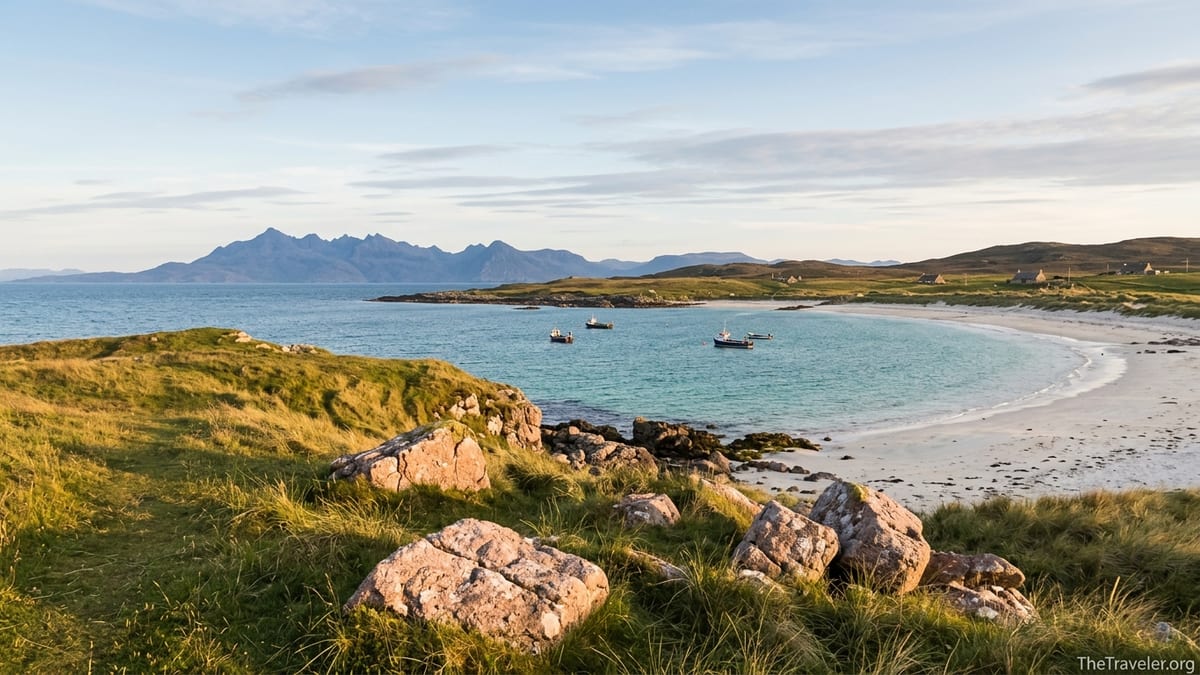
Mull’s scenery is more understated at first glance but no less impressive when you take time to explore. It is an island of wide sea lochs, rounded hills, sea cliffs and a surprisingly varied coastline. The road from Craignure to Fionnphort opens up to big skies, while the single track along the north coast between Salen and Dervaig feels wild and remote even in summer. On the Ross of Mull, around Fidden or Uisken, low pink granite outcrops and turquoise shallows give the shoreline an almost Hebridean-Caribbean look in good weather.
In terms of atmosphere, Mull feels quieter and more lived-in. Tobermory, with its brightly painted harbourfront houses, fishing boats and small independent shops, anchors the island with a friendly, small-town feel. Farms, crofts and working estates are never far from view, and it is easier here than on Skye to feel like you have stepped into everyday Highland life rather than a place built primarily around tourism.
Beaches, Coastline and Sea Views
Neither Skye nor Mull is short on coastline, but they offer different kinds of shore. Skye is famed more for cliffs and rocky shores than for classic sandy beaches. Coral Beach near Dunvegan is a notable exception, with its bright shell sand and clear water, but parking there is limited and it can feel busy in peak season. Elsewhere on Skye, you are more likely to find pebbly bays such as Talisker Bay or dramatic cliff scenery like Kilt Rock with its waterfall plunging into the sea.
Mull is the stronger choice if your idea of a Hebridean trip includes proper beach days. Calgary Bay on the north coast offers a long arc of white sand backed by dunes and low hills, with free parking and a café nearby. On the Ross of Mull, small beaches like Fidden, Uisken and Ardalanish reward those willing to navigate narrow roads, with pale sand, rock pools and big sunset views towards Iona and the smaller isles. On calm summer days, these beaches can feel surprisingly warm and sheltered given their latitude.
For seascapes and off-island views, Skye arguably has the edge in drama. From the Trotternish peninsula you look across to the mountains of the mainland Highlands, while at Elgol the view across Loch Scavaig towards the Cuillin range is one of the classic panoramas of Scotland. Small boat trips from Elgol can take you even closer to the mountains, into Loch Coruisk, where steep slopes plunge directly into the sea loch.
Mull’s stand-out coastal vistas frequently involve nearby islands. From the ferry terminal at Fionnphort, the abbey on Iona sits almost within touching distance, and boat trips from Ulva Ferry or Tobermory take you out to Staffa and the Treshnish Isles past sea cliffs and exposed headlands. Watching the basalt columns of Staffa rear out of the Atlantic or drifting past the stacked seabird cliffs of Lunga is a very different kind of coastal experience to Skye’s, and one that helps explain Mull’s reputation as a maritime and wildlife hub.
Hiking, Outdoor Activities and Driving
For committed hikers and scramblers, Skye is a dream destination. The Cuillin mountains, both the Black Cuillin and the gentler Red Cuillin, offer some of the most challenging and rewarding mountaineering in the UK, with steep ridges, airy scrambles and complex route-finding best suited to experienced parties or those hiring local guides. Even non-climbers can hike well known routes such as the Quiraing circuit or the path to the Old Man of Storr, both of which start from clearly marked car parks and take a few hours at a moderate pace.
However, Skye’s popularity can work against it. Car parks at the Fairy Pools, Storr and the Quiraing often fill by mid-morning in July and August, and visitors may find themselves directed to overflow parking or turning back. Trails that would feel wild elsewhere can resemble busy footpaths here in peak season, especially on sunny days. The single track roads that lead to trailheads such as Neist Point require patience with passing places and slow-moving campervans.
Mull has excellent walking but at a gentler overall level. There are rugged, pathless sections of coast and hills such as Ben More, which at just over 960 metres is the island’s only Munro and a substantial day out in fine weather. Yet much of Mull’s appeal lies in shorter coastal or glen walks where you might spend as much time watching for otters or eagles as you do checking your map. The walk to Calgary’s headland, loops around Loch Ba or strolls on Iona’s machair are all rewarding without being technically difficult.
Driving on both islands requires care. Skye is reached by road across the Skye Bridge or by ferry from Mallaig to Armadale, with many visitors driving from Glasgow via Fort William and the A82. The full drive from Glasgow to Portree is roughly 200 miles and typically takes around four and a half hours in good conditions, not counting stops, with the final section involving long stretches of single carriageway. Mull is usually accessed by car ferry from Oban to Craignure, a crossing of around 50 to 55 minutes operated by Caledonian MacBrayne. Typical off-peak foot passenger fares are in the region of a few pounds each way, with cars significantly more, so drivers should factor ferry costs into their budget.
Wildlife and Boat Trips
If wildlife is a priority, the Isle of Mull often comes out ahead. The island has built a strong reputation for sea eagles, golden eagles, otters and marine mammals, with several specialist operators offering guided wildlife days. Visitors commonly book day tours that focus on spotting raptors in Glen More, otters along quiet sea lochs and red deer in upland areas. Mull’s mixture of moorland, woodland and sea lochs provides habitats that suit a wide range of species, and sightings are frequent enough that many short holidays include at least one close view of a sea eagle or otter.
Mull’s access to smaller islands is another major advantage. Regular summer boat trips operate from Ulva Ferry and Tobermory to Staffa and the Treshnish Isles. These often run as six hour wildlife tours, combining sea bird colonies with chances of seeing dolphins, porpoises or even minke whales if conditions are right. Landing on Lunga in the Treshnish Isles during the puffin season, typically from around April to late July, allows visitors to sit just a few metres from relaxed puffins on the cliffs while thousands of guillemots, razorbills and kittiwakes swirl around nearby sea stacks.
Skye is not short of wildlife, but its strengths lie more in general scenery and coastal exploration than in specialist viewing. You can spot otters along sea lochs such as Loch Dunvegan, watch for white tailed eagles near Portree and see seals hauled out on small skerries around the island. Boat trips from Portree, Elgol or Uig may include commentary about birdlife and marine mammals and provide chances of seeing porpoises, dolphins or occasional whales. However, many visitors to Skye focus on iconic viewpoints and hiking routes and do not build their itinerary primarily around wildlife.
For more structured wildlife holidays, Mull’s operators and guiding infrastructure tip the scales. Multi day photography workshops and group tours base themselves on the island specifically for wildlife, with itineraries that include boat trips to Lunga and Staffa, hide sessions for otters or eagles and flexible planning to respond to weather. By contrast, on Skye, wildlife often feels like a welcome bonus rather than the central purpose of a trip.
Accommodation, Food and Practicalities
On Skye you will find a broad spectrum of accommodation, from simple hostels and campsites to high end country house hotels and destination restaurants. Portree acts as the main hub, with a cluster of guesthouses, small hotels and self catering apartments within walking distance of the harbour. Out of town, rural bed and breakfasts and holiday cottages dot the island, particularly around Broadford, Uig and the Trotternish peninsula. Rates in the main season typically reflect Skye’s popularity, and it is advisable to book months ahead for July and August stays, especially for well known places or rooms with loch views.
Dining on Skye has improved markedly in the last decade. Alongside traditional pubs serving fish and chips or venison pie, travelers can book into contemporary restaurants that aim to showcase local shellfish, lamb and foraged ingredients. Even smaller villages often have at least one café or bistro catering to visitors arriving from walks, though it pays to check opening hours outside peak months, when some places reduce their schedules or close midweek.
Mull’s accommodation scene is smaller but steadily growing. Tobermory offers several guesthouses, a handful of small hotels and popular harbourfront restaurants where fresh seafood is a highlight. Beyond Tobermory, village inns, farmhouse bed and breakfasts and self catering cottages provide options in Craignure, Salen, Dervaig and along the Ross of Mull. Prices are generally comparable to other rural parts of the Highlands. While top end luxury is rarer than on Skye, many visitors appreciate the informal feel and the sense of staying in working communities rather than in purely tourist focused clusters.
For families and those watching costs, Mull’s combination of reasonably priced guesthouses and the ability to self cater using small local shops can work well. The main complication is that accommodation stock is limited relative to demand in school holidays, so early booking is just as important as on Skye. Eating out is more concentrated in a few hubs, particularly Tobermory and Fionnphort, so visitors staying in remoter corners of the island should be comfortable driving to dinners or making use of cottage kitchens.
Ferries, Driving Stress and Crowds
Getting to Skye is relatively straightforward by car because the Skye Bridge makes the island feel like an extension of the mainland. Many visitors drive straight on from their Highland road trips, without having to think about ferry timetables or ticketing. In summer there are also regular buses from Glasgow and Inverness to Skye, making it accessible even for those who prefer not to drive. However, the ease of access contributes to crowding. Popular hotspots can feel overwhelmed in July, August and on sunny weekends in May and June, with long lines of cars heading to the same small car parks.
Mull requires at least one ferry crossing, most commonly the route between Oban and Craignure. The crossing takes about 50 to 55 minutes and typically runs multiple times a day in peak season, but advance booking for vehicles is strongly recommended in summer and around public holidays. Foot passengers generally find space, with walk on fares for adults often in the range of just a few pounds each way, making Mull a good candidate for those willing to travel without a car and rely on local tours or limited bus services.
On the islands themselves, driving feels different. Skye’s road network includes some larger two lane sections, particularly between the bridge and Portree, but many of the most scenic stretches are single track with frequent passing places. Traffic volumes in high season, including campervans and touring coaches, can make these roads slow going. On Mull, most of the main arteries are single track from the outset, and visitors quickly learn to use passing places politely. The difference is that overall traffic levels are usually lower, so once you are a few miles from the ferry, you may drive for several minutes without seeing another vehicle.
If you are sensitive to crowds, Mull may feel more relaxing. It is rarer to arrive at a viewpoint or short walk to find dozens of parked cars, and boat trips, while popular, generally run with smaller groups than some of Skye’s biggest operators. That said, both islands have busy periods. Skye fills up earlier in the season, while Mull’s ferry capacity sometimes becomes a limiting factor, with popular sailings selling out days ahead. Planning and pre booking are therefore essential for either destination between late spring and early autumn.
Best For Couples, Families and Different Travel Styles
For couples on a first time trip to Scotland who want to tick off headline sights, Skye remains an obvious choice. Its landscapes feel instantly dramatic, and many of the most famous spots are reachable within short walks from the road. A three night stay based in Portree or Broadford can easily include the Old Man of Storr, the Quiraing, the Fairy Pools, Neist Point and a boat trip from Elgol or Portree, mixed with evenings in lively pubs. It is a good match for travelers who do not mind sharing viewpoints and are happy to treat driving and parking as part of the experience.
Mull suits couples looking for a slightly slower pace and more time sitting quietly on beaches or headlands. Combine Tobermory’s harbour, a day trip to Iona’s historic abbey, a boat trip to Staffa and Lunga and walks on the Ross of Mull and you will have a holiday that feels rich and varied without rushing. The island particularly appeals to birdwatchers, photographers and those who enjoy gently exploratory days: an unhurried drive, stops to scan for eagles, an afternoon beach picnic and a pub dinner in Tobermory or Dervaig.
Families with younger children may find Mull a little easier. Short beach walks at Calgary, shell collecting at Fidden, visits to Duart Castle near Craignure and wildlife boat trips that build in plenty of interest tend to work well for mixed age groups. Roads feel quieter, and many accommodation providers are used to hosting families who want flexible meal times and outdoor space. Skye can also be excellent for families, but the combination of busier roads, longer drives between sights and heavily photographed viewpoints sometimes adds a layer of pressure for parents trying to juggle naps, snacks and parking.
For more adventurous travelers, Skye remains the destination for challenging climbs and scrambles, while Mull is ideal for people whose idea of adventure includes wild swimming in quiet bays, long coastal walks or multi day wildlife tours. Budget conscious backpackers and road trippers with tents or campervans can make either island work, although they should research local rules on wild camping and overnight parking and favour official campsites where possible.
The Takeaway
So which Scottish island is better, the Isle of Skye or the Isle of Mull? The answer depends less on which landscapes are objectively more beautiful and more on what kind of trip you want. Skye is the island of big hits: peaks, pinnacles and waterfalls that look exactly like the photos that drew you to Scotland in the first place. It suits travelers who value dramatic views, do not mind sharing them with many others and prefer the convenience of road access over ferry schedules.
Mull is the island of wildlife, beaches and a slightly softer kind of wildness. Its hills are lower but its sea lochs and coastal headlands have a spacious, airy quality, and its smaller offshore islands deliver some of the best bird and marine mammal experiences in the country. Travelers willing to factor in the time and cost of the ferry are rewarded with quieter roads, easier parking and more chances to watch otters, eagles or puffins without a crowd behind them.
If your priority is iconic scenery, challenging hiking and a sense of standing in the exact places you have seen in countless images, choose Skye and give it at least three full days. If you care more about wildlife, beaches, a slower rhythm and a feeling of being in a lived in island community, choose Mull and pair it with Iona and a boat trip to Staffa or Lunga. With enough time, of course, the best answer is to visit both and experience how different two neighbouring Hebridean islands can feel.
FAQ
Q1. Is the Isle of Skye or the Isle of Mull easier to reach without a car?
Both are possible without a car, but Skye is marginally easier. You can take direct buses from Glasgow or Inverness to Portree via the Skye Bridge, then join local tours. Mull requires a train or bus to Oban and a ferry to Craignure, followed by limited island buses or pre booked tours, so it takes more planning but is still realistic for car free travelers.
Q2. Which island is better if I only have two nights to spare?
If you have just two nights, Skye usually makes more sense because you avoid fitting a ferry crossing into a short itinerary. You can drive from the central belt or the Great Glen, base yourself around Portree or Broadford and still see a couple of headline sights. Mull is best with at least three nights so that the ferry time and cost feel worthwhile and you can include Iona or a wildlife boat trip.
Q3. Where will I see more wildlife, Skye or Mull?
Mull is generally the better choice for wildlife. The island is well known for its sea eagles, golden eagles, otters and marine mammals, and there are several specialist wildlife guides and boat operators offering structured day trips. Skye has good wildlife too, especially otters and seabirds, but most visitors focus more on scenery and hiking.
Q4. Which island is less crowded in summer?
Mull is typically less crowded overall, partly because access is limited by ferry capacity. Skye’s road access means visitor numbers can build up quickly on sunny days, especially around the Old Man of Storr, the Quiraing and the Fairy Pools. On Mull you still need to book ferries and accommodation in advance for July and August, but once on the island you are more likely to find quiet beaches and viewpoints.
Q5. Is Skye or Mull better for a beach focused trip?
Mull is the stronger option for classic sandy beaches. Calgary Bay, the Ross of Mull around Fidden and Uisken and the beaches on nearby Iona all offer white sand and clear water in settled weather. Skye has some good coastal spots, such as Coral Beach and Talisker Bay, but much of its shoreline is rocky or cliff bound rather than long stretches of sand.
Q6. How do costs compare between Skye and Mull?
Accommodation and dining costs are broadly similar, with both islands reflecting their popularity and remote locations. Skye can feel more expensive in high season because of intense demand for limited rooms, particularly in Portree. Mull introduces an extra cost in the form of ferry tickets for you and your vehicle, but some visitors find that comparable or slightly lower room rates and quieter roads balance this out.
Q7. Which island suits experienced hikers and climbers more?
Skye is the better choice for experienced hikers and climbers. The Cuillin ridge offers challenging scrambling and mountaineering, while routes such as the Quiraing and coastal hill circuits provide demanding but rewarding days. Mull has excellent walking, including Ben More and long coastal routes, but it does not match Skye for technical mountain terrain.
Q8. Which island is better for families with young children?
Mull often suits families slightly better, especially with younger children. Quieter roads, easy access beaches like Calgary and Fidden, and wildlife boat trips that do not require long hikes make it easier to plan relaxed days. Skye can still work very well for families, but you may spend more time managing car parks, busier trails and longer driving distances between attractions.
Q9. If I am interested in history and culture, which should I choose?
Both offer plenty of history, but in different ways. Skye has strong links to clan history and Jacobite stories, with sites such as Dunvegan Castle and ruined forts overlooking sea lochs. Mull combines its own castles, like Duart, with easy access to the early Christian heritage of Iona, whose abbey is a key site in Scottish religious history. If early monastic history appeals, Mull plus Iona is hard to beat.
Q10. Can I realistically visit both Skye and Mull on one trip?
Yes, if you have at least a week and are comfortable with some driving. A common route is to travel from Glasgow or Edinburgh towards Glencoe, continue to Skye for three nights, then return via Fort William and Oban to catch the ferry to Mull for another three nights before heading back to the mainland. This gives you a taste of both islands without rushing, provided you book ferries and accommodation in advance.