


The English Midlands stretch from industrial powerhouses to soft green hills, storybook villages and university cities. Picking the right base can make the difference between a smooth, well-connected trip and days lost to slow connections and awkward transfers. This guide compares the main bases that work for most visitors Birmingham, Stratford upon Avon, Warwick, Peak District villages, Nottingham, Lincoln and Shropshire so you can match each place to your interests, transport needs and travel style.
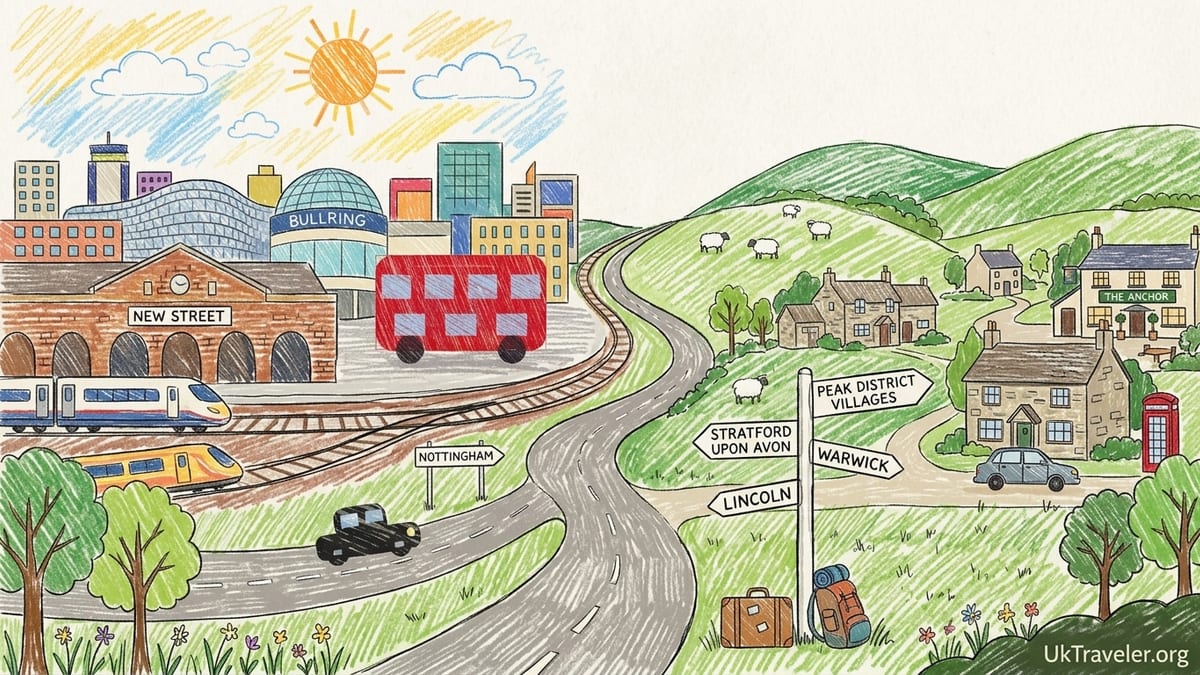
How to Choose a Base in the Midlands
The Midlands cover a wide swathe of central England, and journey times can add up quickly if you choose the wrong base. The first decision is usually between a rail focused city break and a more rural stay where you rely on a hire car. Birmingham and Nottingham work best for travellers moving largely by train, with frequent direct services to London and other major cities. Rural areas such as the Peak District and Shropshire reward visitors who are comfortable driving on country roads, although some key villages have decent bus or rail links.
Think about what you want to do each day. If your priorities are museums, nightlife and multi city day trips, Birmingham is usually the most efficient choice. If you want a focused long weekend around Shakespeare, a base in Stratford upon Avon avoids commuting back and forth. For walking in dramatic scenery, Peak District villages such as Bakewell, Castleton or Hathersage put trails on your doorstep and cut out long transfers from cities. For a slower heritage weekend, Warwick and Lincoln both work well as compact, walkable historic centres.
Hotel availability and price vary sharply. Birmingham, Nottingham and to a lesser extent Lincoln usually have a wide range of chain and independent hotels at different price points, along with serviced apartments. In smaller heritage towns like Stratford and Warwick, you will find more guesthouses and historic coaching inns, with fewer large budget chains in the very centre. In the countryside, especially in the Peak District and Shropshire, expect small inns, farm stays, self catering cottages and a handful of boutique hotels rather than big blocks of rooms.
Parking and nightlife often pull in opposite directions. Central Birmingham and Nottingham have strong nightlife and evening dining scenes but city parking charges add up quickly. By contrast, villages in the Peak District or Shropshire will often allow you to park right outside your accommodation, but you may have a single pub or hotel restaurant as your main evening option. Matching these trade offs to your own habits is the key to choosing the right base.
Birmingham: Best for Transport and Big City Variety
Birmingham is the Midlands’ obvious transport hub and a strong all round base if you want variety. Birmingham New Street is one of the country’s busiest rail stations, with frequent direct trains to London in around one hour twenty minutes and regular services to cities such as Manchester, Bristol, Nottingham and Cardiff. Trains to smaller Midlands towns such as Warwick and Stratford upon Avon usually involve one change, often at Leamington Spa, but are straightforward to book and run several times a day. For travellers arriving by air, Birmingham Airport sits on the same rail line, with a short shuttle to Birmingham International station.
The city centre has dense hotel coverage, which keeps prices broadly competitive outside major events. You will find everything from international brands to budget chains and serviced apartments around New Street, Broad Street and the Mailbox. This makes Birmingham suitable for those who want to book relatively late or prefer the predictability of chain hotels. Weekend rates can be good value compared with London, especially in business focused hotels that are quieter on Friday and Saturday nights.
Driving into central Birmingham is feasible but parking can be pricey, particularly close to New Street and the main shopping streets. Multi storey car parks serve the Bullring and Grand Central areas, while many hotels offer discounted parking in nearby garages. If you are planning day trips by train, it is usually easier to leave the car at a park and ride on the outskirts or skip the car altogether. Within the city, a compact tram network and frequent buses link areas such as the Jewellery Quarter, Digbeth and the conference district around Broad Street.
Nightlife is where Birmingham stands out against many regional rivals. The city has a broad dining scene from the Chinese Quarter to independent restaurants in the Jewellery Quarter, plus a well known cluster of bars and clubs along Broad Street and into Brindleyplace. For culture, you have the Birmingham Museum and Art Gallery, the Library of Birmingham, Symphony Hall and regular theatre at the Hippodrome. Classic day trips by rail include Worcester for cathedral and riverside walks, Leamington and Warwick for Regency and medieval architecture, or even Manchester for a contrasting northern city.
Stratford upon Avon: Shakespeare Country on Your Doorstep
Stratford upon Avon works best as a base for travellers whose main focus is Shakespeare and Tudor England rather than wide ranging city day trips. The town is compact and walkable, with the Royal Shakespeare Theatre, riverside gardens and Shakespeare linked houses all within a short stroll of each other. Many visitors come for a long weekend that combines at least one evening performance with gentle daytime sightseeing and boat trips on the Avon.
Accommodation here ranges from timber framed coaching inns and boutique hotels to small guesthouses on residential streets ten or fifteen minutes’ walk from the centre. A few larger chain properties sit on the ring road and near the river, often with better on site parking. Room availability can tighten significantly when the Royal Shakespeare Company has major productions or during school holidays, so advance booking is advisable if you want a central riverside hotel or characterful historic inn.
Rail access is workable but not as strong as Birmingham or Nottingham. Trains from London usually require a change at Leamington Spa, and services can be slower and less frequent than on main intercity routes. For those driving, Stratford is straightforward to reach from the M40 corridor, and the town is well set up for visitors arriving by car. Local authorities operate park and ride sites on the edges of town so that drivers can avoid narrow central streets, and several multi storey and surface car parks sit within a short walk of the river and theatre.
Stratford’s nightlife is built around pre and post theatre dining rather than late night bars. You will find decent pubs and smart restaurants along Sheep Street, Chapel Street and the riverside, but the atmosphere is more relaxed than in bigger university cities. Day trips from Stratford by car can cover the Cotswolds to the south, Warwick and Kenilworth castles to the north, and National Trust houses such as Charlecote Park nearby. This makes Stratford appealing for couples or small groups keen on heritage sights and gentle countryside rather than clubbing or extensive shopping.
Warwick: Compact Heritage and Easy Castle Access
Warwick is a smaller, calmer base than Stratford but very strong for travellers who want a classic medieval castle experience alongside walkable historic streets. Warwick Castle, with its towers, ramparts and family focused attractions, dominates the town’s tourism, and staying in Warwick itself allows you to visit early in the day or later in the afternoon when coach groups have thinned out. The surrounding streets offer timber framed buildings, independent shops and traditional pubs clustered around the market area.
Hotel stock in Warwick is more limited than in larger towns. Expect a mix of small hotels, guesthouses and a few well known chains near the main roads and the castle. If you are visiting in summer or during school holidays and want to be within walking distance of the castle, it pays to book early. Some visitors choose to stay in nearby Leamington Spa, which has a wider choice of accommodation and easy rail and bus connections back to Warwick for castle visits.
Warwick’s rail station sits a short walk from the centre and offers regional services to Birmingham, Leamington Spa and beyond. Connections to London usually involve a change at Leamington or on the same line at another mainline station. For drivers, Warwick benefits from its proximity to the M40, with signed routes into town and several public car parks within walking distance of the centre. Many guesthouses provide on street or small forecourt parking, so it is a practical base for those touring by car.
Evenings in Warwick are low key. You will find atmospheric pubs and restaurants but few late night venues, which suits many families and older travellers. Day trip options include Kenilworth Castle, Stratford upon Avon, the wider Cotswolds area and Coventry with its rebuilt postwar cathedral and museums. If you like the idea of a calm, historic base that still has good road connections, Warwick is a strong contender.
Peak District Villages: Countryside Bases for Walkers
The Peak District is the obvious choice if your Midlands trip is really about walking, cycling or simply being in the hills and dales. Rather than one main town, you choose from several villages, each with different strengths. Places such as Bakewell, Castleton, Hathersage and Hope sit among the best known bases, combining dramatic scenery with enough services for visitors. They are also reachable by public transport from Sheffield, Manchester or Derby, which helps if you prefer to avoid hiring a car.
Bakewell often functions as a small hub, with a market town feel, several hotels and guesthouses, and bus links to Chatsworth House, Matlock and surrounding villages. Castleton, in the Hope Valley, places you at the foot of steep hills and close to famous show caverns, which makes it ideal for visitors who want walking trails directly from the village. Hathersage offers a mix of outdoor shops, cafes and access to gritstone edges such as Stanage, while still having regular buses and a railway station a short distance away in the Hope Valley line corridor.
Accommodation in these villages is dominated by traditional inns, bed and breakfasts and self catering cottages. A typical country inn might have a dozen rooms above a pub, with walkers arriving muddy in the afternoon and eating in the bar downstairs. Booking early is important in school holidays and summer weekends, when popular places can sell out months ahead. Prices are not necessarily cheaper than in cities, because supply is limited and demand from walkers and families is strong.
Getting around without a car is easier here than in some other rural areas of England, but still requires planning. Regular buses run from Sheffield to Hope Valley villages such as Castleton and Hathersage, stopping at popular points for walks and viewpoints. Other services link Bakewell to Chatsworth, Matlock and Buxton. Rail travellers can base themselves at villages with stations on the Hope Valley or Derwent Valley lines and then use buses or local taxis to reach trailheads. If you are driving, parking in the villages and at major walking car parks is usually straightforward but can fill quickly on sunny weekends, especially around honeypot sites like Dovedale and popular reservoirs.
Nottingham: Gateway to the Northern Midlands
Nottingham is a strong base for exploring the northern Midlands, particularly if you are travelling mostly by public transport. Its central railway station handles trains operated by multiple companies and offers regular direct services to London, Birmingham, Sheffield, Leeds and other regional centres. This makes it practical to combine Nottingham with day trips to nearby cities or to country estates in Nottinghamshire and Derbyshire using a mix of rail and bus.
The city centre has extensive hotel availability, from large international chains and budget brands near the station to smaller boutique properties around the Lace Market and Hockley. This competition helps keep prices relatively reasonable outside of major events such as cricket matches at Trent Bridge or large concerts. Business hotels sometimes discount heavily at weekends, which can benefit leisure travellers looking for short breaks.
For drivers, Nottingham offers several large car parks and extensive park and ride facilities linked to its tram system. Visitors can leave their car at an out of town site and take a tram into the centre, avoiding city centre traffic. Parking charges apply in most central streets and car parks, but you generally have more choice and capacity than in smaller heritage towns. Within the city, trams and buses cover most areas visitors are likely to need, including the university quarter and key shopping districts.
Nightlife in Nottingham is lively, helped by a sizeable student population from its universities. Expect a good range of pubs, bars, live music venues and late night clubs, especially in the Lace Market and Hockley areas. Culturally minded visitors can take in performances at the Theatre Royal or concert venues, while sports fans may want to catch a match at Nottingham Forest’s City Ground or a game at Trent Bridge. In terms of day trips, Sherwood Forest and its visitor centres, the market town of Newark and the edge of the Peak District are all reachable by car within roughly an hour, with some also accessible by rail and bus.
Lincoln: Atmospheric Heritage Weekends
Lincoln suits travellers looking for a compact, atmospheric heritage city that works well for a long weekend. Its steep historic core clusters around the hilltop cathedral and castle, with cobbled streets running down towards the Brayford Pool waterfront and the modern shopping areas below. The feel is more intimate and small scale than in Birmingham or Nottingham, making it a good choice for those who prefer characterful streets and local shops over large malls.
Hotel availability in Lincoln is moderate rather than extensive, but sufficient for most visitors. Several mid range chains and independent hotels line the waterfront and the slopes of the historic uphill area, while smaller guesthouses and inns occupy side streets closer to the cathedral. In busy periods such as Christmas market season or university graduation weeks, central rooms can book out quickly and prices rise, so forward planning helps if your dates coincide with local events.
Rail access is fair, though often involving changes. Services run to and from cities such as Nottingham, Sheffield and London, sometimes requiring a transfer at Newark or another regional hub. Journey times can be longer than for comparable distances elsewhere because of line layouts, so Lincoln is better viewed as a destination in itself rather than a base for daily long distance rail day trips. For drivers, routes from the A1 and other main roads converge on the city, with multi storey and surface car parks around the centre and additional parking near the waterfront.
Evenings in Lincoln focus on relaxed dining and pub culture rather than large scale nightlife. You will find traditional pubs near the cathedral, restaurants around the Brayford Pool and smaller venues in the historic streets. During the day, most visitors split time between the cathedral, castle and museums, with occasional forays to the surrounding countryside or aviation heritage sites in Lincolnshire by car. If your priority is a photogenic, compact city break with strong historic character, Lincoln is a good fit.
Shropshire: Quiet Rural Escapes
Shropshire offers some of the quietest and most underrated rural bases in the Midlands. Towns such as Ludlow, Church Stretton and the smaller villages around the Shropshire Hills Area of Outstanding Natural Beauty appeal to travellers who want slower paced walking, castle ruins and traditional market squares without heavy crowds. Compared with the Peak District, Shropshire sees fewer tour coaches and has a more low key tourism infrastructure, which many visitors see as a positive.
Accommodation is dispersed across small market towns, villages and working farms. You will find country house hotels, pubs with rooms, farm stays and a growing number of high quality self catering cottages. Towns such as Ludlow have a reputation for food, with several good restaurants and pubs, so food loving visitors may prefer to base themselves there. In more rural spots, your nearest dinner option may be a single village pub, so it is worth checking opening days and kitchen hours carefully when planning.
Public transport coverage is patchy, so Shropshire rewards those willing to drive. Train services do reach key towns like Shrewsbury and Church Stretton on main lines, but many walking areas, castles and hilltops require a car or taxi connection. Roads are generally quieter than in busier parts of the Midlands, although narrow lanes are common in the hills. Parking is usually straightforward and inexpensive by English standards, both in town car parks and at countryside car parks for popular walks.
Nightlife in rural Shropshire is limited. Expect evenings built around the pub or a hotel lounge rather than late night bars. The payoff comes during the day, when you can walk in the Shropshire Hills, explore places like Stokesay Castle or wander half timbered streets in Ludlow with relatively few crowds. Shropshire can combine well with a city base such as Birmingham, allowing you to spend a few nights in the city for museums and dining before retreating to the countryside.
Who Should Stay Where
For first time visitors without a car who want variety and easy rail access, Birmingham is usually the most practical base. From a hotel near New Street, you can reach other Midlands towns and even cities further afield within roughly one to two hours by train, then return to a wide choice of restaurants and evening entertainment. Nottingham plays a similar role for the northern Midlands and is especially attractive if you are interested in university city energy and access to Nottinghamshire attractions such as country parks and forest sites.
If Shakespeare and Tudor history sit at the heart of your trip, base yourself in Stratford upon Avon and treat other excursions as secondary. You can still reach the Cotswolds, Warwick and other nearby spots by car or occasional buses, but your main time will be within walking distance of the theatre and historic houses. Warwick works well for families wanting a castle focused short break, particularly if you are driving and appreciate a smaller, quieter town where everything is close together.
Walkers, cyclists and landscape photographers should look first to the Peak District villages or Shropshire. In the Peak District, choose somewhere like Bakewell for a small town with services, Castleton for dramatic scenery and caverns, or Hathersage if you want easy access to rocky edges and frequent buses to bigger cities. In Shropshire, Church Stretton and its surroundings give quick access to hill walks, while Ludlow combines food, history and gentle countryside. A car opens up both regions, but certain villages also allow for car free stays if you target rail linked spots and plan around bus timetables.
For travellers who enjoy compact, historic cities with atmospheric streets but do not need intense nightlife, Lincoln is a strong pick. A long weekend there can comfortably cover the main sights without rushing, and the city’s hilltop setting provides memorable views. Ultimately, your best base in the Midlands depends on whether you prioritise transport convenience, countryside, heritage or nightlife. Being honest about your own habits and booking accordingly will make your trip smoother and more enjoyable.
FAQ
Q1. Is Birmingham a good base for day trips around the Midlands without a car?
Yes. Birmingham has one of the busiest rail hubs in the country, with frequent direct trains to cities such as London, Manchester, Bristol and Nottingham, plus regional services to places like Worcester, Coventry and Leamington Spa. From a central hotel near New Street you can reach many towns in one to two hours, making it a strong base for car free travellers.
Q2. Should I stay in Stratford upon Avon or Warwick if I want to visit both?
If your priority is theatre and Shakespeare related sights, Stratford upon Avon is usually better, because you can walk to the Royal Shakespeare Theatre and historic houses. If your main focus is castles and you prefer a quieter, compact town, Warwick may suit you more. Both are close by road, so you can visit the other on a day trip.
Q3. Can I visit the Peak District without hiring a car?
It is possible, but you need to plan carefully. Trains and buses from cities like Sheffield, Manchester and Derby reach key villages such as Castleton, Hathersage, Hope and Bakewell. Once there, you can access many walking routes directly from the village or by using local buses. However, more remote valleys and hilltops are easier with a car.
Q4. Is Nottingham better than Birmingham for nightlife?
Both cities have lively nightlife, helped by large student populations, but Birmingham offers a broader range overall because of its size. Nottingham’s bar and club scene is concentrated in the Lace Market and Hockley and works very well for a weekend break, while Birmingham has multiple districts with late night venues as well as major concert halls and theatres.
Q5. How early should I book accommodation in the Peak District or Shropshire?
For popular summer weekends, school holidays and bank holidays, it is sensible to book several months in advance, especially if you want a particular village or a property with parking and views. Midweek stays outside peak periods often have better last minute availability, but choice is still more limited than in cities because many places are small inns or cottages.
Q6. Is Lincoln easy to combine with other Midlands cities on day trips?
Lincoln is best treated as a standalone destination. While there are rail links to cities like Nottingham and Sheffield, journey times and connections mean it is usually more comfortable to base yourself there for a focused heritage weekend rather than commuting daily to other cities.
Q7. Where should I stay if I want a quiet countryside break but still need some amenities?
Consider Shropshire market towns such as Ludlow or Church Stretton, or Peak District villages like Bakewell and Hathersage. These places offer access to countryside walks and scenery while still providing shops, pubs and basic services, so you are not completely isolated.
Q8. Is parking difficult in Midlands cities?
In central Birmingham and Nottingham, parking is widely available in multi storey car parks and at park and ride sites, but daily costs can be significant. Smaller towns such as Stratford upon Avon, Warwick and Lincoln have public car parks and sometimes park and ride services, though spaces can fill at peak times. Checking hotel parking policies in advance is advisable if you are driving.
Q9. Which base is best for a family with children?
Warwick and Stratford upon Avon both work well for families, thanks to Warwick Castle, river activities and manageable town centres. The Peak District also appeals to families who enjoy walking and outdoor activities, provided you choose a village with enough facilities. Birmingham adds museums, aquariums and indoor attractions useful in bad weather.
Q10. Can I split my time between a city and the countryside in one Midlands trip?
Yes, and many travellers find this combination ideal. A common pattern is to spend a few nights in Birmingham or Nottingham for museums, dining and easy rail access, then move to the Peak District or Shropshire for three or four nights of walking and village life. Distances are short enough that transfers usually take a couple of hours by car or train.