


The English Midlands is one of the UK’s richest regions for country escapes, industrial heritage and easy rail-linked city breaks. Instead of a simple ranked list of hotels, this guide is organised by the way you actually travel: romantic weekends, family breaks, walking and cycling in the Peak District, or culture-packed city stays. All the examples below are real places that work as practical bases, with details on parking, rail access, on-site restaurants and nearby sights so you can decide which corner of the Midlands suits you best.
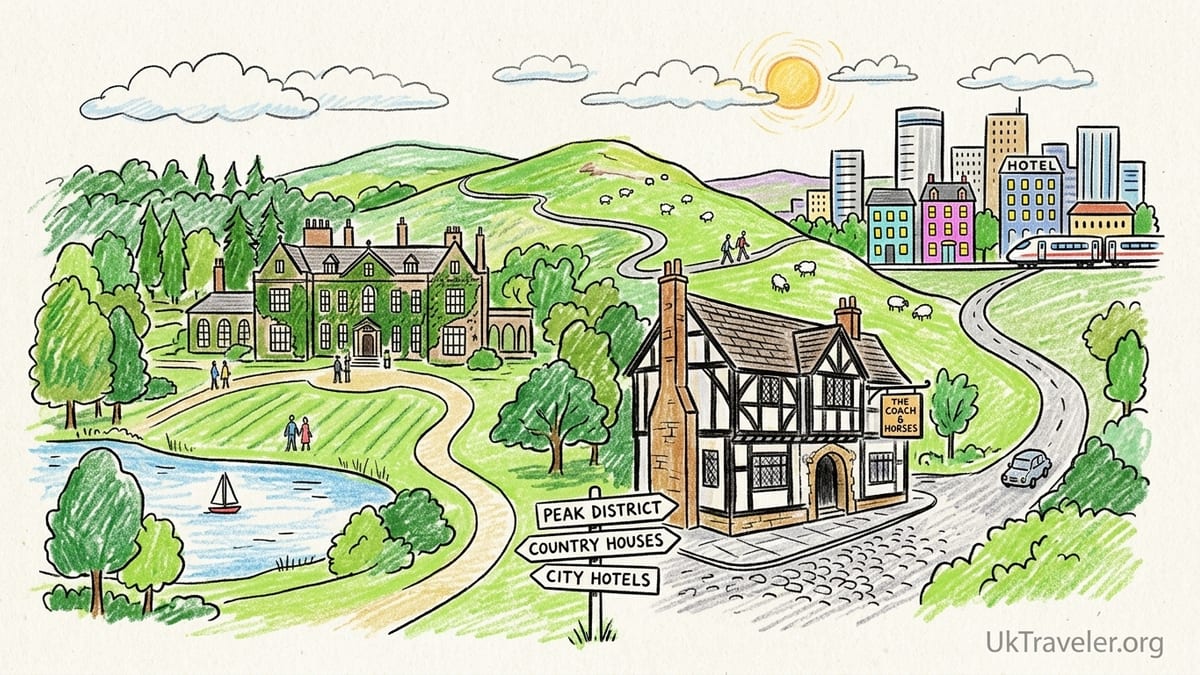
Luxury Country Houses for Classic Midlands Escapes
For many travellers, the Midlands means manor houses, landscaped grounds and long afternoons in the spa. Around Birmingham and the northern Cotswolds fringe, traditional country-house hotels offer that experience without being cut off from transport. Moor Hall Hotel & Spa in Sutton Coldfield, north of Birmingham, is a good example: a four-star country house with lawns, a small lake, modern spa and multiple dining spaces, yet still within a short taxi ride of Sutton Coldfield or Four Oaks rail stations and with free on-site parking for drivers.
To the east, Rutland and Leicestershire offer manor-style bases that work well if you want to tour several counties in one trip. Around Rutland Water, many hotels and inns sit within a 30 to 45 minute drive of both Leicester and Peterborough, making it realistic to spend a morning walking lakeside trails and an afternoon in the city. When comparing country houses here, look for properties that combine character with practicalities such as late check-in, all-day dining in at least one brasserie-style restaurant, and flexible spa opening times, which suit guests who are out sightseeing for much of the day.
Derbyshire’s edges also hide former shooting lodges and riverbank houses that have become relaxed luxury hotels. In the White Peak, for example, several properties between Matlock and Bakewell sit close to the River Derwent and within a short drive of both Chatsworth House and Haddon Hall, yet still offer quiet gardens, tasteful modern country interiors and serious cooking using local lamb and Derbyshire cheeses. Many include free parking and often attract walkers and cyclists, so ask about secure bike storage if you are arriving with gear.
Wherever you book, remember that the Midlands is compact by UK standards. A country house just outside Birmingham can double as a base for day trips to Stratford-upon-Avon, the Ironbridge Gorge or even the northern Cotswolds, while a manor in South Derbyshire can put you within reach of the Peak District, the Potteries and East Midlands attractions. Prioritise these cross-region possibilities over the most expensive room rates when choosing where to stay.
Boutique City Hotels in Birmingham, Nottingham and Leicester
If your priority is culture, dining and nightlife, the Midlands’ cities have an expanding crop of boutique hotels and stylish serviced apartments that feel more personal than large chains. In central Birmingham, smaller properties and design-led outposts set around the business district and canals work well if you plan to arrive by rail. Many are within a 10 to 15 minute walk of Birmingham New Street or Snow Hill stations, and some offer discounted parking in nearby multi-storey car parks for those arriving by car.
Near Birmingham’s Broad Street and Brindleyplace, several boutique-style hotels offer generous rooms, modern bathrooms and strong soundproofing, which is important if you want nightlife on your doorstep but quiet nights. Others in the Jewellery Quarter favour exposed brick, local artwork and in-room kitchenettes, making them practical for longer city stays. Before booking, check whether breakfast is cooked-to-order or buffet only, and whether on-site restaurants open on Sunday nights, when many city eateries reduce hours.
Further east, Nottingham’s independent hotels and aparthotels around the Lace Market and Hockley districts provide an urban base with personality. These neighbourhoods give easy access on foot to Nottingham Contemporary gallery, the Old Market Square and the city’s bar and restaurant scene, yet they stay relatively quiet midweek. Limited on-site parking and narrow streets mean drivers often rely on nearby car parks, while arrivals by train have a simple 10 to 20 minute walk or short tram ride from Nottingham station.
Leicester’s boutique options are fewer but growing, with several stylish small hotels and apartment-style properties distributed around the city centre and Cultural Quarter. They suit visitors interested in the King Richard III Visitor Centre, National Space Centre or football and rugby matches. In all three cities, the most useful hotel features are 24-hour reception for late trains, good blackout blinds against bright urban lighting, and clear directions from the nearest rail station or tram stop to avoid frustration on arrival.
Historic Inns and Coaching Houses with Character
The Midlands has some of England’s most atmospheric coaching inns, many of which sit directly on old high streets that are now conservation areas. In market towns such as Lutterworth in Leicestershire or Fownhope in Herefordshire, 16th and 17th century inns combine low beams, flagstone floors and log fires with updated bedrooms and modern bathrooms. They are ideal if you like the idea of sleeping “above the pub” while using the town as a springboard for countryside drives.
One advantage of these historic inns is that you rarely need to drive out for dinner. Many have a main bar that serves real ales and a dining room focused on seasonal local ingredients, from Herefordshire beef to Derbyshire game in autumn. Some belong to small groups that specialise in restoring old coaching inns, which often translates into consistent mattress quality, good showers and generous breakfasts even when the exterior looks unchanged for centuries.
In cathedral and county towns such as Derby or Shrewsbury, former coaching hotels line the old commercial streets close to the main squares. These work especially well for travellers arriving by train, since they tend to sit within a 10 minute walk of the station and charge either modest fees for secure rear parking or nothing at all if you are happy with first-come, first-served spaces in a courtyard. Once checked in, you can explore historic streets, churches and museums on foot before returning to an evening in the bar downstairs.
The main thing to understand about coaching inns is that room sizes and noise levels can vary: the most atmospheric timber-framed rooms above the bar may also be the loudest on a Saturday night. If you are using one of these properties as a base for multiple nights, consider asking for a room at the back or on an upper floor, especially in busier destinations popular with local drinkers.
Peak District Bases for Walkers and Scenic Drives
Northern Derbyshire’s Peak District National Park is one of the UK’s most popular walking regions and the logical northern anchor for a Midlands itinerary. The key decision is where to base yourself. Towns like Bakewell, Matlock and Buxton each offer a cluster of hotels, inns and B&Bs, along with regular buses to sights such as Chatsworth House, Haddon Hall and the Hope Valley, making them practical hubs rather than just pretty stops.
Bakewell, famous for its puddings and riverside walks, sits in the White Peak and works well if you want to split your time between stately homes and shorter day walks. Several central hotels and inns overlook the River Wye or sit just off the main square, with small car parks or public parking a short stroll away. From here you can drive or catch a bus to Chatsworth in around 15 minutes, Haddon Hall in under 10, and the villages of Ashford-in-the-Water or Eyam in 15 to 30 minutes depending on traffic.
Matlock and nearby Matlock Bath string along the Derwent valley with a choice of traditional hotels and guesthouses, including imposing former hydros that now function as family-friendly hotels with big lounges and gardens. These towns are strong options if you want to rely partly on public transport, as they have direct rail links towards Derby and Nottingham and bus routes into the national park. Many hotels offer free parking but spaces fill quickly on sunny weekends, so arriving earlier in the day can make a real difference.
Buxton, a historic spa town at the western edge of the Peaks, offers grand hotels near the Crescent and Pavilion Gardens alongside smaller B&Bs on the surrounding streets. It suits travellers who want a mix of walking and culture, with easy access by train from Manchester and decent bus links to nearby dales and gritstone edges. When picking a Peak District base, check whether early breakfasts are available for walkers, whether packed lunches can be ordered, and how late the hotel restaurant serves dinner, as many kitchens in smaller places close earlier than urban travellers expect.
Family-Friendly Hotels and Practical Bases
For families, the best Midlands hotels balance access to attractions with simple logistics like parking, flexible meals and space to spread out. Around Birmingham, larger out-of-town hotels close to the motorway network provide straightforward bases for visiting places such as Warwick Castle, Cadbury World, Black Country Living Museum and Drayton Manor Theme Park within an hour’s drive. Many offer family rooms or interconnecting doors, cots on request and generous breakfast buffets, and often include free on-site parking in the nightly rate.
Near the East Midlands cities, family-friendly hotels on the outskirts of Nottingham, Leicester and Derby often sit on business parks with reliable parking and quick access to ring roads. While they may lack period charm, they can be far easier with children than cramped city-centre properties. From these bases you can mix city days at museums, football grounds and shopping centres with countryside outings to places such as Sherwood Forest, Bradgate Park or the reservoirs around Charnwood.
In the Peak District and wider Derbyshire, many traditional hotels now provide dedicated family rooms, sofa beds and kid-friendly menus, knowing that visitors often combine hiking with visits to attractions such as Gulliver’s Kingdom near Matlock or cable cars and hilltop parks above the Derwent valley. Check for details like stair gates, lifts in older buildings and the option of ground-floor rooms if you are travelling with a buggy, as some handsome Victorian and Georgian properties retain narrow staircases that can be a challenge at the end of a long day.
If you are travelling with teenagers, consider aparthotels or serviced apartments in cities such as Birmingham or Nottingham for part of your trip. Having a washing machine, small kitchen and separate bedrooms can make longer stays more relaxed, and you can still pair them with one or two nights in a country house or Peak District inn for variety.
Romantic and Special-Occasion Stays
Couples planning a romantic weekend or anniversary trip in the Midlands typically look for views, quiet, and food worth lingering over. Country-house hotels on the fringes of the Peak District, in the rolling countryside around Rutland Water, or on the rural edge of Warwickshire often deliver all three. These properties usually focus on individually decorated rooms, many with freestanding baths or four-poster beds, and may offer small treatment rooms or hot-tub access rather than full-scale spas.
A common pattern is to spend the day exploring nearby villages, gardens and historic houses, then return for a tasting menu or three-course dinner, followed by nightcaps in a snug bar. When researching, pay close attention to whether the on-site restaurant is truly a destination in its own right, with a consistent head chef and clear menu identity, or simply a functional dining room. Recent photos, sample menus and comments about portion sizes, vegetarian options and breakfast quality are often more revealing than star ratings alone.
Historic inns can also be deeply romantic, particularly in quieter market towns where streets fall silent after dark. Stone coaching yards lit by lanterns, bedrooms with exposed beams and window seats, and real fires in the bar all help create a sense of place. For a smoother experience, choose properties that balance this atmosphere with comfortable mattresses, proper blackout curtains and decent water pressure, all of which matter just as much on a winter weekend as the age of the building.
For couples who prefer an urban buzz, book a boutique hotel in Birmingham’s Jewellery Quarter or Nottingham’s Lace Market and treat the hotel as a base for long restaurant dinners, theatre performances and cocktail bars. Here, the essentials are strong soundproofing, late-night reception and a good breakfast to recover from late evenings out. Some city boutiques now offer late checkout on Sundays, which can be worth paying extra for on special weekends.
The Takeaway
Planning a hotel stay in England’s Midlands works best when you start with your travel style rather than a generic list of expensive names. Country-house hotels around Birmingham, Rutland and Derbyshire can double as bases for day trips to multiple counties, while boutique city properties in Birmingham, Nottingham and Leicester keep you close to galleries, nightlife and rail hubs. Historic inns add atmosphere and links to the coaching age, and Peak District hotels in towns such as Bakewell, Matlock and Buxton make walking holidays and stately-home visits straightforward.
Across all these categories, the most practical hotels share similar features: reliable parking or clear guidance on nearby options, honest travel times to major attractions, food that suits both relaxed evenings in and early starts, and staff who understand that guests are often using the property as a hub for wider exploration. Decide first whether your trip is mostly about countryside, culture, family time or a special occasion, then use the examples and pointers here to narrow down locations and hotel types. The Midlands is compact and well connected, so with a little planning you can combine several of these experiences in a single trip.
FAQ
Q1. Where is the best place to stay in the Midlands without a car?
For car-free travellers, larger towns on rail and bus routes such as Birmingham, Derby, Nottingham, Buxton, Matlock and Bakewell work well. You can reach them by train from London or Manchester, then rely on local buses and occasional taxis to visit stately homes, villages and walking areas.
Q2. Which Midlands hotels are best if I want to explore the Peak District?
Look at hotels and inns in Bakewell, Matlock, Matlock Bath and Buxton, which sit on key bus routes and main roads. They give you realistic driving times to popular spots such as Chatsworth House, Haddon Hall, the Hope Valley and Monsal Trail while still offering shops and restaurants for the evenings.
Q3. Do most Midlands country-house hotels include free parking?
Many country-house hotels in the Midlands offer complimentary on-site parking, especially those in rural settings, but spaces can be limited at busier times. Always check whether parking must be reserved in advance and whether electric vehicle charging is available if you need it.
Q4. Is it better to stay in Birmingham or a smaller town for a cultural break?
If you want major museums, theatres and nightlife, Birmingham is the most practical base, with frequent trains, trams and city-centre boutique hotels. For a quieter experience with some culture, consider smaller cities such as Nottingham, Leicester or Derby and combine them with day trips into the surrounding countryside.
Q5. Are historic coaching inns suitable for light sleepers?
Historic inns often have lively bars and uneven floors, so light sleepers should request upper-floor rooms or those away from the main street. Earplugs and white-noise apps can help, but if you are very sensitive to noise, a modern hotel on the town edge may be a better choice.
Q6. What should I look for in a Peak District hotel if I plan to hike every day?
Prioritise early breakfast times, the option to order packed lunches, secure storage for muddy boots and walking gear, and clear information about public transport to nearby trailheads. It is also worth checking how late dinner is served, as many rural kitchens close earlier than city restaurants.
Q7. Are Midlands hotels generally family-friendly?
Many Midlands hotels cater well for families, particularly larger out-of-town properties and those near theme parks or major attractions. Look for family rooms, cots on request, children’s menus, flexible dining times and facilities such as pools or large gardens where children can burn off energy.
Q8. When is the best time of year for a Midlands countryside or Peak District stay?
Late spring and early autumn usually bring mild weather, longer daylight and fewer crowds than peak summer. Winter can be atmospheric for log fires and Christmas markets, but you should prepare for shorter days, possible frosts and a greater chance of rain on walks.
Q9. How far in advance should I book hotels in the Midlands?
For popular periods such as school holidays, bank holiday weekends and major events, booking several months ahead gives the best choice of rooms and rates. Outside these times, you can often find availability a few weeks in advance, though the most characterful inns and small boutiques still fill quickly.
Q10. Can I combine a Midlands city stay with a Peak District break in one trip?
Yes, many travellers spend a few nights in Birmingham, Nottingham or Leicester before or after two or three nights in the Peak District. The distances are relatively short, so you can travel between city hotels and countryside bases in around one to two hours by car or a mix of train and bus.