


Compact, characterful and full of quietly spectacular scenery, Wales is one of the easiest parts of the United Kingdom for first-time visitors to tackle. Its capital, Cardiff, is small enough to explore on foot yet packed with culture, while the north and west offer mountains, castles and beaches that feel far wilder than their distances suggest. This guide walks you through the main regions first-time visitors tend to combine, along with practical advice on costs, weather, accommodation and getting around.
Understanding Wales: Regions and First-Time Itineraries
First-time trips to Wales typically combine three elements: time in Cardiff, a mix of mountains and castles in the north, and a slice of coast, often in Pembrokeshire or on the Llŷn Peninsula. A classic 7 to 10 day itinerary might spend two nights in Cardiff, three in Eryri (Snowdonia) or North Wales, and two or three in Pembrokeshire, with a final night back in the capital before departure. With 10 to 14 days you can add Bannau Brycheiniog (the Brecon Beacons) or extend your time in the north.
Wales is relatively small, but its roads are slow and much of the beauty lies away from major highways. Cardiff to Eryri by train via Shrewsbury can take around four hours with a change, while driving to Betws-y-Coed or Caernarfon is usually 4 to 5 hours depending on traffic. Cardiff to Pembrokeshire takes about 2 to 3 hours by car to Tenby or St Davids, and closer to 3.5 hours by train to Fishguard or Haverfordwest with a change in Swansea or Carmarthen.
For a first visit, it helps to think in hubs rather than ticking off a long list of towns. In the north, many first-timers base themselves in Conwy or Llandudno for access to castles and coastal walks, or in Betws-y-Coed for easy reach of Eryri’s mountain trails. In the south-west, Tenby, St Davids and Narberth are popular bases for exploring Pembrokeshire’s beaches and the coastal path, while Brecon and Abergavenny work well for Bannau Brycheiniog.
English is widely spoken everywhere, but you will see Welsh used on road signs, in station announcements and on menus. Learning a handful of words, such as “Diolch” (thank you) and “Croeso” (welcome), goes a long way in small communities, especially in Welsh-speaking areas of Gwynedd, Anglesey and parts of Ceredigion and Carmarthenshire.
Cardiff: Compact Capital with Castle, Bay and Rugby
Cardiff is the usual starting point, thanks to good rail links with London and frequent buses from major English cities. The city centre is walkable. Many visitors stay near Cardiff Central station or in the civic quarter around Cathays Park, both of which put you within 10 minutes on foot of Cardiff Castle and the main shopping arcades. Chain hotels and serviced apartments cluster around the station, while smaller guesthouses and boutique hotels are found in Pontcanna and Roath.
Cardiff Castle sits right in the middle of the city, with its medieval walls and lavish Victorian interiors. Entry prices change periodically, but at the time of writing adults pay roughly the equivalent of a mid-range museum ticket in a UK city, with discounts for children and families. Many travellers combine a castle tour with a walk through Bute Park along the River Taff, finishing in Pontcanna’s cafes and independent restaurants for an evening meal.
Cardiff Bay, a short train ride from Cardiff Queen Street station or a 25 to 30 minute walk from the centre, is where you find the Senedd building, the Wales Millennium Centre and a promenade lined with bars and restaurants. Boat trips around the bay operate in good weather, often running short loops that give first-time visitors an overview of the former docklands. On match days, especially when the national rugby team plays at the Principality Stadium, the entire city centre fills with supporters and hotel prices can jump significantly, so it is wise to check major sporting fixtures before you book.
For a first visit of two days, one day is enough to cover the castle, Bute Park and the covered arcades off St Mary Street and The Hayes, and another to explore Cardiff Bay or take a short day trip. Popular half-day escapes include Castell Coch, a fairy-tale 19th century castle in the woods above Tongwynlais, reachable by local bus, or coastal spots like Penarth, which is about 15 minutes by train from Cardiff Central.
North Wales & Eryri: Mountains, Castles and Coastal Towns
North Wales offers some of the most dramatic landscapes in Britain combined with a concentration of castles and small seaside resorts. The Eryri National Park centres around Yr Wyddfa, better known in English as Snowdon, and draws walkers ranging from first-time hill hikers to experienced mountaineers. Popular bases include Betws-y-Coed for wooded valleys and waterfalls, Llanberis for access to the Snowdon Mountain Railway, and Beddgelert for a quieter, village feel beside a river.
Reaching the north from Cardiff without a car usually means taking a Transport for Wales train via Shrewsbury to Llandudno Junction, Bangor or Porthmadog. Services are not high speed but they are scenic, especially along the North Wales coast between Chester and Holyhead. From hubs such as Llandudno Junction, local buses link to Conwy, Llandudno and various villages within Eryri. Visitors who want maximum flexibility for mountain walks often rent a car in either Cardiff, Swansea or along the north coast.
Castles are a defining feature of North Wales. Conwy Castle and Caernarfon Castle, both part of a UNESCO World Heritage ensemble, are among the most visited. Entry fees are typically comparable to a major UK heritage attraction, with options for multi-site passes if you plan to visit several castles run by the same organisation. Many travellers combine a morning at Conwy Castle with a walk around the complete town walls and time in the harbour, then continue to the Great Orme at Llandudno in the afternoon.
Eryri’s weather is notoriously changeable, even by Welsh standards. It is common to have bright sunshine at sea level and low cloud or rain in the mountains on the same day. For first-time visitors, guided walks or using marked low-level trails around lakes such as Llyn Padarn and Llyn Dinas can be a good introduction. The Snowdon Mountain Railway from Llanberis provides a way to reach near the summit in season without a long hike, though tickets often sell out in advance on summer weekends and in school holidays.
Pembrokeshire & Bannau Brycheiniog: Coasts and Hills
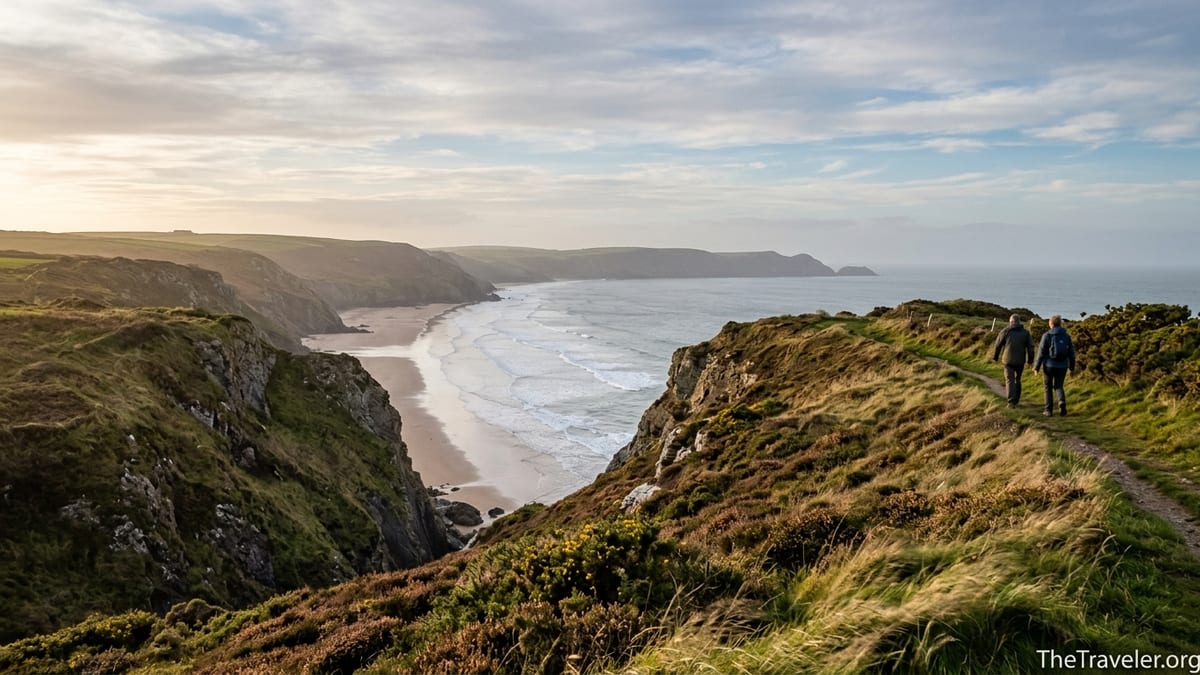
Pembrokeshire, in south-west Wales, is known for its beaches, colourful harbour towns and the Pembrokeshire Coast Path, which forms part of the Wales Coast Path. Towns like Tenby, with its pastel houses and sandy North Beach, attract families in summer, while St Davids, the smallest city in Britain, draws visitors to its cathedral and nearby coves such as Whitesands Bay. Boat trips from St Davids and Martins Haven visit wildlife-rich islands where, in season, you may see puffins, seals and various seabirds.
Getting to Pembrokeshire from Cardiff is straightforward by train or car. Direct trains run as far as Milford Haven and Fishguard on certain services, with changes often needed at Swansea or Carmarthen. Allow around 2.5 hours by car to Tenby in typical conditions, longer in school holidays when traffic can be slow on single-carriageway sections. Local buses link coastal towns, but frequencies can be limited in rural areas, especially on Sundays and in winter, so it is worth checking timetables when planning linear walks along the coast path.
Bannau Brycheiniog, previously known in English as the Brecon Beacons, lies north of Cardiff and is the closest national park to the capital. Many visitors use Brecon, Crickhowell or Abergavenny as bases. The area is known for grassy summits rather than the rocky peaks of Eryri, with Pen y Fan a popular first big hill, reachable on a well-trodden path from the Storey Arms car park. On weekends with good weather in late spring or summer, the car parks along the A470 can fill early, so arriving before mid-morning helps.
For those without a car, there are seasonal bus services that connect towns like Brecon with popular trailheads, as well as regular scheduled buses operating year-round between towns around the park. A typical first-timer combination might be two days of low to moderate walks, such as the Four Waterfalls Trail near Ystradfellte and a separate day tackling Pen y Fan, interspersed with evenings spent in local pubs and inns.
Beaches, Castles and Outdoor Experiences Across Wales
Wales has more than 2,000 kilometres of coastline, and even brief visits can include a beach day without much detour. Besides Tenby and Whitesands in Pembrokeshire, first-time visitors often mention Rhossili Bay on the Gower Peninsula near Swansea, reached by car or local bus and regularly cited as one of the UK’s most beautiful beaches. In North Wales, the sandy beaches of Anglesey and the harbour at Aberdaron on the Llŷn Peninsula feel remote yet are within a few hours’ travel of major towns.
Castles appear on almost every itinerary. In addition to Conwy and Caernarfon, Cardiff Castle offers an urban contrast, while Pembroke Castle in the south-west sits dramatically above a river and is often combined with a visit to the town and nearby coastal villages. Self-guided audio tours are common, and some castles host events in summer such as open-air theatre, concerts or medieval-themed weekends. Booking ahead is advisable for special events, especially during UK school holidays.
Outdoor experiences range from gentle to adventurous. Coasteering, which involves scrambling, swimming and jumping into the sea in wetsuits, is said to have originated in Pembrokeshire and is widely offered by local activity centres in places like St Davids, Stackpole and Abereiddy. Guided half-day sessions generally include all equipment and are suitable for reasonably fit beginners who are comfortable in the water. Sea kayaking along quieter stretches of coast, pony trekking in the hills and hiring bikes to follow converted railway paths such as the Taff Trail are all popular first-time activities.
For families or those looking for less strenuous ways to appreciate the scenery, heritage railways are a good option. In North Wales, narrow-gauge lines such as the Ffestiniog and Welsh Highland Railway operate steam trains through Eryri’s valleys, typically running several departures a day in peak season. Tickets are often priced by journey length, with advance booking recommended for summer weekends, while midweek outside school holidays is usually quieter.
Transport, Weather and Typical Costs
Most international visitors arrive in Wales via England, using rail or coach services to reach Cardiff from London or Manchester, then travelling onward by train, long-distance bus or rental car. Transport for Wales operates the majority of rail services within the country, linking Cardiff with Swansea, Carmarthen, West Wales, the Marches line to Shrewsbury and the North Wales coast. TrawsCymru-branded buses provide long-distance routes such as services between Cardiff, Mid Wales and Aberystwyth, as well as key cross-country links that supplement the rail network.
Public transport costs vary by route, but as a rough guide, intercity rail journeys between Cardiff and major Welsh towns often work out in a similar range to medium-distance UK train fares of comparable length, with advance tickets usually cheaper than walk-up fares. On long-distance buses within Wales, distance-based single fares are common, with shorter hops costing only a few pounds and longer end-to-end journeys capped at an affordable level compared with the equivalent rail trip. In North Wales, day tickets that allow unlimited bus travel over wide areas are widely used by visitors who want to combine several stops in one day.
The Welsh climate is maritime and changeable. Coastal areas in the south-west, such as Tenby and St Davids, are among the sunniest in Wales, while mountain regions like Eryri are considerably wetter, with annual rainfall in the high valleys several times that of lowland areas. Summers, from roughly June to early September, are mild rather than hot, with typical daytime highs in the high teens to low twenties Celsius, though short heatwaves can push temperatures higher. Winters are generally cool and damp, with snow more likely on higher ground than in cities like Cardiff or Swansea.
Travel costs in Wales are moderate by UK standards but can still feel high compared with many other European destinations. Independent estimates for 2026 suggest that a budget traveller relying on public transport, staying in hostels or basic guesthouses and eating mainly in pubs or casual cafes might manage on a daily spend in the region of the lower double digits in pounds sterling for food and local transport, plus accommodation. More typical mid-range travellers, staying in three-star hotels or well-rated B&Bs, dining out once a day and including paid attractions, often find their total daily costs per person comfortably into the mid-range double figures in pounds, rising higher in peak season or in very popular resorts.
Accommodation and First-Time Planning Tips
Accommodation options in Wales range from simple bunkhouses and campsites to luxury country-house hotels. For a first visit, many travellers choose a mix of mid-range hotels, guesthouses and self-catering cottages. In Cardiff and larger towns like Llandudno and Swansea, international chain hotels sit alongside independent properties. In smaller places such as St Davids, Betws-y-Coed and Brecon, traditional B&Bs and pubs with rooms are common. Booking at least a few months ahead is sensible if you plan to travel in school holidays, on bank holiday weekends or during major festivals and sporting events.
Prices vary significantly by location and season. Seaside towns like Tenby and Llandudno command higher rates in July and August, while rural areas can be noticeably cheaper outside peaks. Self-catering cottages on weekly lets can be good value for families or groups in shoulder seasons such as May, June and September, when the weather is often settled but beaches and trails are quieter. Many properties require a minimum two or three night stay over weekends, especially in national park areas.
When planning your route, it helps to be realistic about driving and transfer times. On a map, distances can seem small, but narrow roads, tractors and frequent speed changes mean that average speeds on rural routes are low. Trying to visit Cardiff, Eryri, Pembrokeshire and Bannau Brycheiniog in a single week is technically possible but will feel rushed. Instead, most first-time visitors are better off choosing two regions plus the capital, or focusing on a north-only or south-only loop and returning another time for the rest.
Advance reservations are important for certain popular activities. Examples include the Snowdon Mountain Railway in high season, guided coasteering or wildlife boat trips in Pembrokeshire, and accommodation in very small places with limited beds, such as rural inns in Bannau Brycheiniog. It is also advisable to book tables at in-demand restaurants in Cardiff and coastal hotspots at weekends. Travel insurance that covers hiking and water-based activities is worth considering if your plans include mountain routes or sea-based adventures.
FAQ
Q1. How many days do I need for a first trip to Wales?
Most first-time visitors find that 7 to 10 days allows time for Cardiff plus two regions, for example North Wales and Pembrokeshire or Eryri and Bannau Brycheiniog.
Q2. Do I need a car to explore Wales?
A car offers the most flexibility, especially in rural areas, but it is possible to combine trains, long-distance TrawsCymru buses and local services to reach most main towns and many national park hubs.
Q3. When is the best time of year to visit Wales?
Late spring and early autumn, roughly May to June and September, usually offer a good balance of mild weather, long daylight and fewer crowds than the peak summer holidays.
Q4. Is Wales expensive compared with the rest of the UK?
Wales is generally a little cheaper than London and some large English cities, but visitors should still budget for typical UK prices for accommodation, food and attractions.
Q5. Can I visit Eryri and Pembrokeshire in one week?
It is possible but involves long travel days. Many travellers prefer to focus on either the north or the south-west in a week, or keep one of the regions as a future trip.
Q6. What should I pack for the Welsh weather?
Pack layers, a waterproof jacket, comfortable walking shoes, and quick-drying clothing. Even in summer you may need a light sweater and rain protection in the same day.
Q7. Is it easy to find vegetarian or vegan food in Wales?
Most cities and larger towns have good vegetarian options, and many pubs now offer at least one vegan main, though very rural areas may have more limited menus.
Q8. Do people speak English everywhere in Wales?
Yes. Welsh is widely spoken in some regions, but English is understood everywhere, and visitors will not have difficulty communicating in English.
Q9. Are the walking trails suitable for beginners?
Yes. While there are serious mountain routes, every national park also has well-marked low-level paths, lakeside walks and short coastal sections accessible to beginners with reasonable fitness.
Q10. Is it safe to hike in the Welsh mountains without a guide?
Many people hike independently on well-known routes in good weather, but you should carry a map, check forecasts, choose trails that match your experience and be prepared to turn back if conditions change.