


Few road trips pack in as much variety as Wales. In a few days behind the wheel you can trace a Roman-era trading route past castles and seaside resorts, cross the mountainous spine of the country on one of Britain’s great driving roads, and drift along a coast of wide bays, quiet harbours and small market towns. The three national touring routes known collectively as The Wales Way – the North Wales Way, Cambrian Way and Coastal Way – give you a ready-made framework for exploring, whether you have five days or a full 10-day holiday.
Understanding The Wales Way: Three Routes, One Road Trip
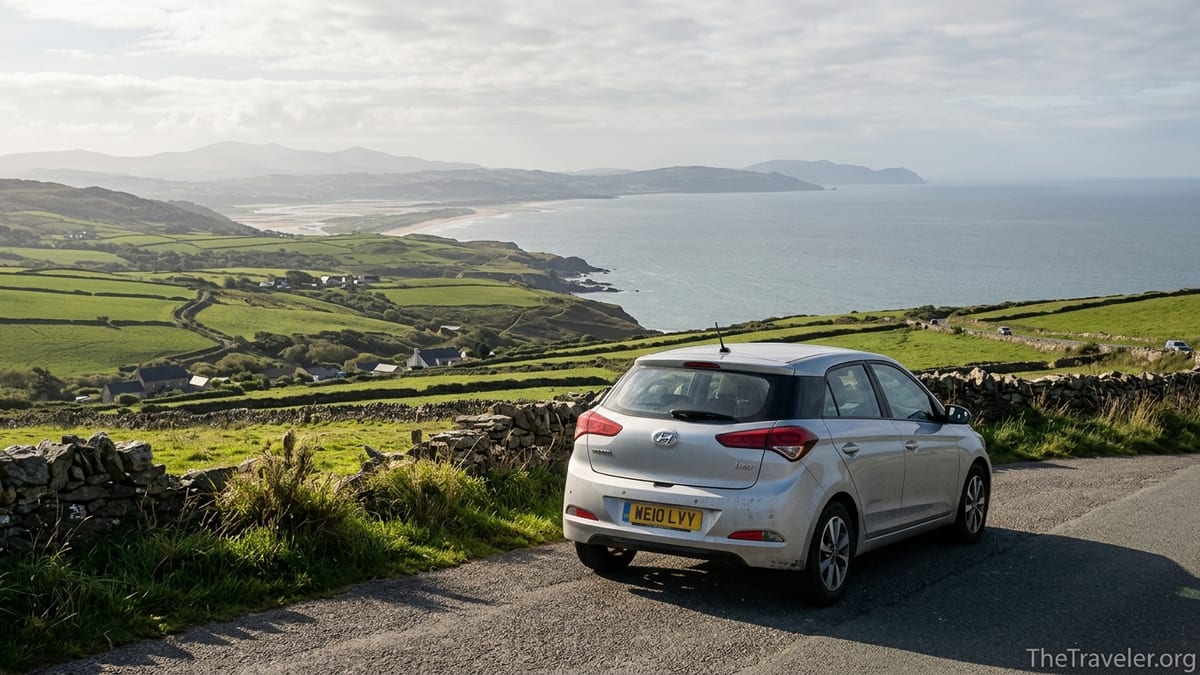
The Wales Way is a network of three officially promoted touring routes that can be driven individually or linked together. The North Wales Way runs roughly 75 miles along the north coast between the English border near Chester and Anglesey, following the A55 and older coastal roads past a string of castles and seaside towns. The Cambrian Way runs about 185 miles from Cardiff on the south coast to Llandudno on the north, mostly along the A470 through the central mountains. The Coastal Way, roughly 180 miles, follows Cardigan Bay between St Davids in Pembrokeshire and Aberdaron on the Llŷn Peninsula, taking in small resorts such as New Quay, Aberaeron and Barmouth.
All three routes are flexible concepts rather than single fixed roads. The official descriptions highlight anchor points and suggested spurs, but you are encouraged to loop inland to national parks, follow minor B-roads to viewpoints, or drop down into small harbours for lunch. For example, while the Cambrian Way broadly follows the A470, some of the most memorable detours are on smaller roads, such as the mountain lane from Rhayader through the Elan Valley reservoirs, or the A4059 skirting the edge of Bannau Brycheiniog (Brecon Beacons) National Park.
Driving times are shorter than many visitors expect, but average speeds can be low, especially on coastal and mountain sections where sheep, tractors and narrow bends are part of everyday traffic. On paper, Cardiff to Llandudno via the Cambrian Way can be driven in around five hours without stops, but most drivers find that a full day still feels rushed. The joy of these routes lies in slowing down enough to call into places like Caernarfon, Aberystwyth or Aberdaron and to walk out to a headland or castle rampart before continuing.
Because Wales is compact, you can combine parts of all three Ways into a single loop. A common pattern for international visitors is to pick up a rental car in Manchester, follow the North Wales Way into Snowdonia and Anglesey, cut south on the Cambrian Way through the heart of the country, then turn west to pick up the Coastal Way around Cardigan Bay before exiting via the Severn bridges to Bristol or London.
Practicalities: Rental Cars, Roads, Parking and Fuel
Most visitors start a Wales road trip by renting a car in one of the main gateway cities. For the North Wales Way, Manchester Airport and Liverpool John Lennon Airport are the most convenient hubs, with the major international brands alongside UK chains such as Arnold Clark and local independents. For the Cambrian Way or Coastal Way, Cardiff Airport, Bristol Airport and Birmingham Airport all work, as does London if you are comfortable with a longer initial motorway drive. Compact and mid-size hatchbacks such as the Ford Focus, Volkswagen Golf or similar are well suited to Welsh roads; they are easier to park in small towns and cope better with narrow lanes than large SUVs or 7-seaters.
Manual transmission is still common in the UK, so if you prefer an automatic, reserve early and check the vehicle category description carefully. In summer, a mid-size automatic with basic insurance often prices in the region of what you might expect for a similar car in other parts of the UK, with notable surcharges for picking up or dropping off in different cities. Collision damage waiver with a moderate excess is usually standard; consider whether you need additional cover for tyres, windscreen and underbody, as Wales’ rural roads can be potholed and edged by stone walls.
Fuel is widely available along all three Wales Ways, but distances between filling stations can increase once you leave main towns. On the Cambrian Way, for example, there are petrol stations around Merthyr Tydfil, Builth Wells, Rhayader, Llanidloes, Machynlleth and Dolgellau, but fewer options in between. On the Coastal Way, garages are clustered in hubs such as Cardigan, Aberystwyth, Porthmadog and Pwllheli. It is sensible to refill when your tank drops below half, especially if you are heading onto minor coastal lanes or into Snowdonia’s mountain roads in the late afternoon.
Parking is generally straightforward, though you should carry coins or be prepared to pay by app in council-run car parks. In Conwy, for instance, there are several long-stay car parks close to the castle and quay, with daily charges that are modest by Western European standards. In resort towns such as Llandudno or Tenby and at honeypot sites like Snowdon’s Llanberis and Pen-y-Pass car parks, summer demand is high and spaces can fill before mid-morning, so arriving early or using park-and-ride options is recommended. Many villages on the Coastal Way have small beach car parks that can be full on sunny weekends; in places such as Mwnt or Newgale, it is worth timing your visit for early or late in the day.
Driving the North Wales Way: Castles, Coast and Island Detours
The North Wales Way follows an old trading corridor for around 75 miles from the English border to the island of Anglesey, running roughly parallel to the A55 dual carriageway. Most drivers start near Chester or along the Dee estuary and head west, picking up coastal towns such as Prestatyn, Rhyl and Colwyn Bay before reaching the more dramatic scenery between Conwy and Bangor. A classic first-day route runs from Chester to Conwy, stopping at Flint Castle for views over the estuary, then continuing to the walled town of Conwy with its imposing 13th-century fortress and harbour.
From Conwy, a popular loop is to leave the main road and climb to the Victorian resort of Llandudno, where the Great Orme headland offers a toll road with expansive sea views and room to pull over for photos. Back on the A55, you soon cross to Anglesey via the Menai Suspension Bridge or Britannia Bridge, both scenic in their own right. Allow time to explore Beaumaris with its nearly perfect concentric castle and waterfront, or to drive further into the island to places such as Newborough beach and Llanddwyn Island, where forest-backed sands and mountain views across the Menai Strait reward the short walk from the car park.
With additional days, you can treat the North Wales Way as a backbone for side trips into Snowdonia. One option is to turn south at Bangor or Llanberis and follow the A4086 through the Llanberis Pass to Capel Curig, then rejoin the main coastal route near Conwy. This road, flanked by slate mountains, is one of the most memorable drives in Wales and passes close to trailheads for Yr Wyddfa (Snowdon). Another detour is the A5 through the Ogwen Valley, where parking areas provide access to lakeside strolls and more challenging hikes while still keeping your overnight base in coastal towns such as Llandudno or Caernarfon.
Overnight bases along the North Wales Way range from classic resorts to quieter harbour towns. Llandudno offers traditional seafront hotels and guesthouses, while Conwy has smaller inns and self-catering cottages within walking distance of restaurants. On Anglesey, Menai Bridge and Beaumaris are good choices for those who want dining options and evening atmosphere, whereas Rhosneigr or Trearddur Bay suit travellers seeking beaches and sunsets at the end of a day’s drive.
Driving the Cambrian Way: Through the Heart of Wales
The Cambrian Way, not to be confused with the high-level walking route of the same name, is a cross-country driving route linking Cardiff with Llandudno along roughly 185 miles of tarmac through the centre of Wales. For many drivers, this is the highlight of a Wales road trip, a constantly shifting sequence of valleys, moorland, forest and market towns. The core of the route follows the A470 from the outskirts of Cardiff past Merthyr Tydfil and Bannau Brycheiniog National Park, on through Builth Wells and Rhayader, before entering the hill country around Machynlleth, Dolgellau and Blaenau Ffestiniog.
Leaving Cardiff, you can reach the edge of Bannau Brycheiniog in under an hour, where a short detour off the main road leads to reservoirs such as Pontsticill and the old industrial town of Merthyr with its heritage sites. North of here, the A470 becomes more rural as it climbs towards Brecon, passing viewpoints and lay-bys where you can pull over safely to photograph the open hills. Further on, the section between Builth Wells and Rhayader is classic border country, with river meadows and stone bridges, while a side trip from Rhayader into the Elan Valley rewards you with a loop past Victorian dams and remote-feeling upland scenery.
North of Machynlleth, the Cambrian Way moves into the southern fringes of Snowdonia National Park, with mountain peaks closing in on the road. Dolgellau makes a convenient overnight stop, with small hotels and B&Bs clustered around its stone-built centre and access to walks on nearby Cadair Idris. The final stretches through Blaenau Ffestiniog and Betws-y-Coed to Llandudno weave through slate quarry landscapes, forests and river gorges, providing opportunities to pause for a ride on a heritage railway or a short forest walk before returning to the coast.
Because the Cambrian Way runs through sparsely populated areas at times, practical planning matters. Mobile signal can be patchy on certain stretches, so it is worth downloading offline maps and saving key locations before you set off each day. Weather in the hills can change quickly, turning bright sun to low cloud and heavy showers in a short time; drivers should be prepared to slow down for reduced visibility and take advantage of designated lay-bys if conditions deteriorate. On the positive side, traffic volumes are often light outside peak holiday weekends, and patient drivers are usually rewarded with open views and a sense of space that is increasingly rare in Western Europe.
Driving the Coastal Way: Cardigan Bay and Small-Town Wales
The Coastal Way traces the curve of Cardigan Bay for roughly 180 miles between St Davids in the south and Aberdaron on the Llŷn Peninsula, with the sea rarely far away. Unlike some famous coastal drives that stick close to the shoreline, this route often hops between roads just inland and scenic spurs leading to beaches and headlands. A typical south-to-north journey might begin near St Davids and Fishguard in Pembrokeshire, then follow roads via Cardigan, Aberporth, New Quay, Aberaeron and Aberystwyth before continuing through Barmouth, Harlech, Porthmadog and Criccieth to Pwllheli and the remote-feeling cul-de-sac road to Aberdaron.
Cardigan Bay is known for its wildlife, and the Coastal Way offers multiple chances to see dolphins and seabirds from shore. Places like New Quay and Mwnt are popular for boat trips and coastal walks; in summer, parking at these small harbours and coves can be busy, so it can be wise to base yourself in slightly larger towns such as Aberaeron or Aberystwyth and drive out early or late in the day. The A487 and A496 form the backbone of much of the route, but some of the most atmospheric sections are smaller roads such as the clifftop approach to Aberdaron or the causeway-like lanes across estuaries near Barmouth.
Many visitors enjoy combining driving with short sections of the Wales Coast Path, which runs roughly parallel to the Coastal Way. For example, you might park at Poppit Sands near Cardigan for a one- to two-hour clifftop walk before continuing north, or break your journey at Barmouth to stroll across the wooden railway bridge and back for estuary views. Towns along the route also offer low-key cultural stops, from small independent museums in places such as Cardigan and Aberystwyth to working harbours where fishing boats still land their catch alongside pleasure craft.
Accommodation on the Coastal Way spans everything from seaside campsites and holiday parks to boutique guesthouses in Georgian terraces. Aberaeron’s colourful harbourfront, for instance, is lined with B&Bs and inns, while Barmouth and Porthmadog offer traditional hotels convenient for both the coast and for forays into Snowdonia. In peak season, it is sensible to book in advance if you want specific locations or sea views; outside school holidays, you may find last-minute rooms, but arriving by mid-afternoon gives you more choice and avoids driving long distances at dusk on unfamiliar rural roads.
Suggested 5-, 7- and 10-Day Wales Way Itineraries
With five days, you can sample highlights of all three Wales Ways without rushing unduly. A practical 5-day loop for drivers arriving via Manchester might start with two days on the North Wales Way, based in Conwy or Llandudno and making a day trip onto Anglesey or into Snowdonia via the Llanberis Pass. Day three could see you turning south through Betws-y-Coed and Dolgellau onto the Cambrian Way, overnighting in a market town such as Builth Wells or Brecon. Day four might bring you west to pick up part of the Coastal Way between Cardigan and Aberystwyth, with a final night in Aberaeron or New Quay before a fifth-day return via inland main roads to your starting point.
With seven days, you can follow longer stretches of each route and add more non-driving time. One option for a south-to-north trip begins in Cardiff, with a day exploring the capital and nearby castles before joining the Cambrian Way towards Brecon and Builth Wells. Spend day two in the Elan Valley and continue to Machynlleth, then day three through Dolgellau to Betws-y-Coed and Llandudno. Day four could be dedicated to the North Wales Way and Anglesey, staying overnight in Beaumaris. On day five, swing back through Caernarfon and Porthmadog to join the Coastal Way, then follow it to Barmouth or Aberystwyth for day six and onwards to Cardigan and St Davids on day seven, finishing within reach of the M4 for departures from Cardiff or Bristol.
A 10-day itinerary allows you to drive almost the full length of all three routes at a relaxed pace. For instance, starting in Cardiff, you might take three days to work your way up the Cambrian Way to Llandudno, with overnight stops in Brecon, Rhayader or the Elan Valley, and Dolgellau. From Llandudno, you could spend two days on the North Wales Way and its side trips, basing yourself one night in Conwy and another on Anglesey. You then have five days to follow the Coastal Way south: Llandudno to Porthmadog, Porthmadog to Aberystwyth, Aberystwyth to Cardigan, Cardigan to St Davids, and a final day for a leisurely drive back to Cardiff or onwards to England.
In all cases, these suggested day splits should be treated as flexible frameworks rather than fixed timetables. Distances can look short on a map but become full days once you factor in coffee stops, castle visits and short walks. It is worth planning one or two “light” driving days where the focus is on a single area, such as Anglesey, Snowdonia, the Elan Valley or St Davids Peninsula, to avoid fatigue and to give yourself capacity to adjust for weather or roadworks. Booking cancellable accommodation and keeping one night unplanned in the middle of a 10-day trip can also help you respond to changing conditions.
Seasonal Tips, Safety and Local Etiquette
Wales is a year-round destination, but the feel of these road trips shifts markedly with the seasons. Late spring and early autumn often provide a balance of decent daylight, relatively quieter roads, and more stable weather than mid-winter. In summer, school holidays bring busier resorts and more congestion near major attractions, yet also longer evenings and a full programme of local events. Winter can be atmospheric on quiet coast roads and in small towns adorned with lights, but mountain sections of the Cambrian Way can see snow, ice and occasional closures or advisories.
Whatever the season, drivers should be comfortable with the basics of UK motoring: driving on the left, navigating roundabouts, and observing speed limits that shift between 20 mph in some built-up areas, 30 mph in towns, and 60 mph on many rural single-carriageway roads. On narrow lanes, particularly on the Coastal Way and in Snowdonia, expect to use passing places and to wait courteously for oncoming vehicles. It is both local custom and good practice to acknowledge drivers who pull in for you with a small wave.
Respect for the environment and local communities is important. Rural lay-bys and viewpoint car parks are often signed with requests not to stay overnight unless explicitly allowed; where you choose to camp in a tent or sleep in a vehicle, check local regulations and use established sites where possible. Keep dogs on leads around livestock, close gates behind you on walks, and avoid blocking field entrances or narrow village streets when parking. Wales has invested heavily in its national paths and historic sites, and simple courtesies like paying modest car park fees and supporting small cafés or village shops help sustain the very landscapes you are enjoying.
For navigation, a combination of sat-nav and traditional maps works well. Many visitors use phone-based navigation apps but keep a paper road atlas in the car as backup. In remote parts of mid-Wales, temporary diversions or farm traffic can slow journeys; building in time buffers between must-make reservations such as ferry crossings or dinner bookings reduces stress. Finally, remember that some of the best experiences on these roads come from unplanned pauses: a short detour for an unexpectedly good bakery, a turn towards a viewpoint signposted only in Welsh, or the decision to linger over coffee at a harbour instead of sticking rigidly to a schedule.
FAQ
Q1. Do I really need a car to explore the North Wales Way, Cambrian Way and Coastal Way?
While sections of all three routes can be reached by train or bus, having your own car gives you far more flexibility to combine them into a continuous road trip and to reach smaller villages, beaches and viewpoints that are poorly served by public transport, especially in the evenings or on Sundays.
Q2. Is it difficult to drive on Welsh roads if I am used to driving on the right-hand side?
Most visitors adapt quickly, especially if they choose a smaller car and take the first day gently. Major roads such as the A55 and A470 are straightforward, but narrow rural lanes and single-track sections require extra care and lower speeds. Taking regular breaks and avoiding long night drives in your first days helps.
Q3. How many days should I allow to drive all three Wales Ways comfortably?
If you want to experience substantial sections of each route without feeling rushed, 10 days is a realistic minimum. With seven days, you can still see key highlights on each but will need to be selective about detours and how much time you spend out of the car.
Q4. Are electric vehicles practical for a Wales road trip?
Public charging infrastructure is improving, and there are chargers in many larger towns along the routes, but coverage can still be patchy in rural areas. An electric vehicle road trip is possible with careful planning and flexible timing, but for maximum spontaneity a conventional petrol or hybrid car currently remains simpler.
Q5. What is the best time of year to drive these routes?
Late April to June and September to early October often offer a good balance of reasonable weather, long enough days and fewer crowds. High summer brings lively seaside towns and long evenings but also the heaviest traffic and higher accommodation prices, while winter can be quiet but brings shorter days and a higher chance of poor conditions on mountain roads.
Q6. Do I need to book accommodation in advance along the Wales Ways?
In peak periods such as school holidays and bank holiday weekends, advance booking is strongly recommended, especially in smaller coastal towns and popular bases like Llandudno, Conwy, Dolgellau and Aberaeron. Outside those times, you may find same-day availability, but booking at least a day or two ahead gives you better choice.
Q7. Are parking fees and road tolls common on these routes?
There are no tolls on the core roads of the North Wales Way, Cambrian Way or Coastal Way. However, parking fees are common at castles, beaches and popular viewpoints, typically charged by the hour or as a modest daily rate. It is wise to keep coins available and to be prepared to use local parking apps where offered.
Q8. Can I combine driving with hiking and outdoor activities?
Yes, these routes are ideal bases for short walks and longer hikes. The Coastal Way intersects the Wales Coast Path at many points, while the Cambrian Way passes close to upland areas such as Bannau Brycheiniog and southern Snowdonia. Packing decent footwear and a waterproof jacket allows you to add spontaneous walks to each driving day.
Q9. Is mobile phone coverage reliable throughout the routes?
Cities, larger towns and main roads usually have reasonable coverage, but rural valleys, remote moors and some coastal stretches can have weak or intermittent signal. Downloading offline maps and saving key information such as accommodation details before you set out each day is a sensible precaution.
Q10. Can I start and finish my Wales road trip in different cities?
Many rental companies allow one-way hires between major UK airports and cities, so it is feasible to start in, say, Manchester or Liverpool for the North Wales Way and finish in Cardiff or Bristol after completing the Cambrian and Coastal Ways. One-way rental fees can be higher, though, so it is worth checking costs against planning a circular route.