


Choosing between Eryri (Snowdonia) and the Pembrokeshire Coast is, for many travellers, the key decision when planning a big Wales adventure. One offers jagged peaks, glacial lakes and classic mountain villages; the other delivers wild cliffs, golden beaches and a 186‑mile coastal path. Both are national parks, both are hugely popular, and both can fill a week with memorable hikes, road trips and family‑friendly outdoor experiences. The best choice depends less on which is “better” and more on the type of trip you want.
Overview: Two National Parks, Two Very Different Landscapes
Eryri National Park in north‑west Wales is Wales’s mountain heartland, centred on Yr Wyddfa (Snowdon), the country’s highest peak. The park’s interior is a mix of rugged ridges, glacial cwms and slate‑quarry valleys, with towns such as Betws‑y‑Coed, Llanberis and Beddgelert acting as natural bases. You are never far from steep slopes, narrow passes and fast‑changing weather. Days here tend to revolve around summits, lakes and mountain trails, with the coast a short drive away rather than the main stage.
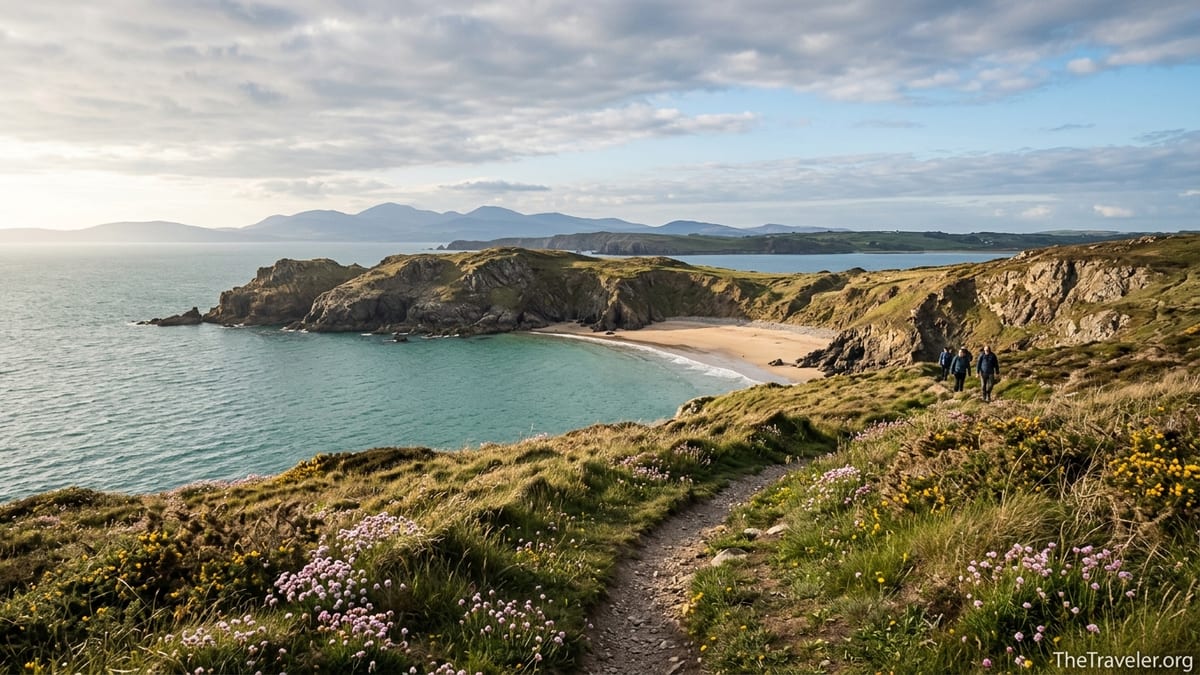
Pembrokeshire Coast National Park, by contrast, hugs much of Wales’s south‑west coastline. It is defined by cliffs and coves, long sandy bays, tidal estuaries and the moorland of the Preseli Hills. Almost every classic view here involves the sea: the headlands around St Davids, the surf beaches at Freshwater West and Newgale, or the sheltered sands at Tenby and Manorbier. The Pembrokeshire Coast Path, running about 186 miles from St Dogmaels to Amroth, ties these places together and is a destination in its own right for multi‑day hikers.
In practical terms, Eryri is the better choice if you want to climb mountains, tick off big summits and spend evenings in compact villages geared to walkers. Pembrokeshire suits travellers who prefer daily walks that start or end at the beach, road trips that hop between harbour towns, or itineraries that combine coastal scenery with water sports and boat trips.
Travel logistics also differ. Eryri clusters around a relatively small inland area, so you can base yourself in one village and access many classic hikes within 30 to 45 minutes’ drive or by bus. Pembrokeshire is longer and more linear; moving between, say, St Davids in the north and Tenby in the south can take 70 to 90 minutes by car, so many visitors choose one half of the coast and explore it in depth.
Mountains vs Coastline: What You Actually See and Do
If you imagine Wales as a place of epic peaks and knife‑edge ridges, you are probably thinking of Eryri. Yr Wyddfa is the headline, with popular routes such as the Llanberis Path, the Pyg Track and the Snowdon Ranger Path drawing thousands of walkers each year. A typical summer day might involve starting from Llanberis around 8am, following a clear but steadily steep path, and reaching the 1,085‑metre summit in three to four hours, with views that can stretch across Anglesey and even to Ireland on very clear days. Nearby ridges like Crib Goch and the Glyderau offer more technical scrambles for experienced hikers.
Beyond Yr Wyddfa, ranges such as the Carneddau and the Rhinogydd deliver quieter mountain days. For example, a traverse from Ogwen Cottage up Pen yr Ole Wen and along to Carnedd Dafydd feels remote and wild even in midsummer, with few waymarks and a strong sense of high‑level exposure. Eryri’s drama comes from this verticality: you spend much of your time above the valley floor, moving between rocky summits, corrie lakes and narrow cols.
Pembrokeshire’s drama is horizontal rather than vertical. The majority of classic walks follow sections of the Pembrokeshire Coast Path, where you spend hours tracing the edge of cliffs, watching the sea change colour and passing bays that can only be reached on foot. A typical day might see you walk from Broadhaven South to Barafundle Bay and Stackpole Quay, a route that threads through limestone cliffs, sand dunes and woodland, with detours down to sheltered beaches. You rarely get more than 150 metres above sea level, but the exposure to wind, waves and Atlantic light can feel just as intense as a mountain ridge.
For many travellers, the question is whether they want to look down on a coastline from distant peaks or to walk alongside it at eye level. Eryri offers occasional sea views from summits like Cadair Idris and the Moelwyns, but the sea is always a backdrop. In Pembrokeshire, the sea is omnipresent, audible even when hidden behind a headland, and much of your time is spent within sight or sound of surf.
Hiking, Beaches and Signature Outdoor Experiences
On pure hiking variety, both destinations deliver, but in different flavours. Eryri is ideal if you want a week of classic mountain days: Yr Wyddfa via Pyg and Miners tracks, a circuit around the horseshoe of Cwm Idwal in the Glyderau, or a quieter outing up Moel Eilio straight from Llanberis. Many visitors string together three or four such routes and base themselves in one village, reducing time in the car and focusing on early starts to avoid congestion at trailheads like Pen y Pass.
In Pembrokeshire, the flagship experience is stitching together sections of the coast path. A pair of typical routes might be St Davids to Whitesands Bay one day, then a loop from Stackpole Quay to Barafundle Bay and Broad Haven South the next. Walkers often use local coastal bus services in summer to turn linear walks into one‑way journeys, starting inland and finishing on a beach where they can swim or visit a café before bussing back to their base.
When it comes to beaches, Pembrokeshire has a clear edge. The park includes celebrated stretches of sand such as Barafundle Bay, which is reached via a 15 to 20‑minute walk from the National Trust car park at Stackpole Quay, and Freshwater West, a broad surf beach backed by dunes that now has paid parking managed by conservation bodies. Families typically combine a couple of hours building sandcastles and paddling with a short clifftop walk in the morning or evening. Lifeguards patrol many of the main beaches during the peak summer season, adding reassurance for those swimming with children.
Eryri does have attractive lakeside and estuary beaches, such as the shore at Llyn Tegid (Bala Lake) or the sands at Borth‑y‑Gest near Porthmadog, and the nearby Llyn Peninsula is within day‑trip range for those based in the park. However, if daily beach time is a non‑negotiable part of your holiday, Pembrokeshire provides more and better options right on your doorstep.
Accommodation, Road Trips and Getting Around
Eryri’s accommodation scene is strongly shaped by its mountain culture. In and around Llanberis, Betws‑y‑Coed and Dolgellau you will find a concentration of traditional inns, B&Bs, climbers’ bunkhouses and simple self‑catering cottages. It is common to find two‑ or three‑bedroom stone cottages renting on a weekly basis in high summer, as well as caravan parks and rustic campsites such as those in the Nant Gwynant and Llyn Gwynant valleys that allow you to camp close to key trailheads. There are also a handful of higher‑end hotels and spa retreats on the park fringes for travellers wanting more comfort after long days outside.
Pembrokeshire has a broader spread of coastal accommodation types. In Tenby, you can stay in Victorian seafront guesthouses overlooking North Beach, while around St Davids and Solva there are farmhouse B&Bs, modern lodges and small boutique hotels within a few minutes’ drive of the sea. Touring caravan and camping sites line much of the coast, often with direct access to the coast path or nearby coves. Holiday parks near Saundersfoot or Freshwater East are popular with families who want a mix of self‑catering lodges, on‑site pools and evening entertainment.
For road‑trip style travel, both regions work well but feel different behind the wheel. In Eryri, driving the Llanberis Pass, the road through Nant Gwynant, or the loop around Cadair Idris delivers big‑scale mountain scenery in short bursts. You are frequently climbing and descending, passing slate quarries, stone farmhouses and deep‑cut valleys. Travellers often combine these drives with detours to attractions such as the underground adventures at Llechwedd near Blaenau Ffestiniog or the forest rollercoaster at Zip World Fforest near Betws‑y‑Coed.
In Pembrokeshire, the classic road‑trip experience hugs the coast, especially on the B4582 and small lanes around St Davids, Newgale and Little Haven. A typical day might involve driving from Tenby to Barafundle Bay, then on to Freshwater West and Angle, stopping at viewpoints and village pubs along the way. Distances can be deceptive: many of these roads are narrow and winding, so a short mileage may still take an hour or more. In high summer it pays to start early, especially if you are aiming for limited‑capacity spots such as small National Trust car parks above popular bays.
Families, Adventure Parks and All‑Weather Options
Both Eryri and Pembrokeshire have evolved well beyond simple walking destinations and now cater strongly to families and mixed‑ability groups. In Eryri, one of the headline family attractions is Zip World, which operates sites at Penrhyn Quarry, Llechwedd and a forest hub near Betws‑y‑Coed. Here you can combine zip lines with the Fforest Coaster, an alpine‑style toboggan that runs for around a kilometre through woodland, allowing riders to control their own speed with hand brakes. These kinds of activities are a reliable way to occupy older children or teenagers on a non‑hiking day.
Just off the A55 between Bangor and Caernarfon, GreenWood Family Park provides a softer adventure day for younger families. This eco‑themed park mixes people‑powered rides such as the Green Dragon rollercoaster with treetop towers, a barefoot trail and indoor soft play. It often appeals to families who might do a big mountain walk on one day and then reward younger children with a full day of play in safer surroundings the next.
In Pembrokeshire, the emphasis shifts more towards sea‑based adventure. Coasteering, which involves scrambling, swimming and cliff‑jumping along the rocky shoreline, was popularised here and is now widely offered around St Davids and Stackpole. Local operators provide wetsuits, buoyancy aids and helmets, and choose routes to suit ability and tide conditions, making it accessible to confident adults and older teenagers. Surf lessons are common at Freshwater West and Newgale, while calmer spots like Saundersfoot or Broad Haven East may offer paddleboard and kayak hire in settled weather.
For rainy days, both regions have heritage and indoor options. Eryri has slate museums, small castles on its fringes and indoor segments of adventure attractions at former quarries. Pembrokeshire offers castles at Pembroke and Carew, small galleries in Tenby and St Davids, and family‑focused activity centres dotted along the coast. Neither region is dominated by large indoor theme parks or malls, so it is wise to pack waterproofs and accept that some of your trip will involve being outside in less than perfect conditions.
Weather, Seasons and When to Go
Weather is one of the most significant differences between Eryri and Pembrokeshire, especially when you consider altitude. Eryri’s mountains create their own microclimates. Clouds often cling to higher peaks even when nearby coastal areas are in sunshine, and rain falls more frequently on the western slopes that face the prevailing Atlantic weather systems. Summer days can still be warm, with temperatures in the valleys regularly reaching the high teens or low twenties Celsius, but on the tops it can feel much cooler, particularly in wind or low cloud.
Pembrokeshire, though still exposed to Atlantic fronts, tends to feel milder overall, especially away from the highest clifftops. Sea breezes can keep beach temperatures comfortable even during warm spells, and shoulder‑season days in May, June and September often offer clear, bright conditions that are perfect for walking. That said, the open nature of the coastline means that strong winds can make clifftop paths feel serious even when the thermometer is not especially low.
Seasonality also affects crowding. In Eryri, weekends from late spring to early autumn see heavy demand on the most popular Yr Wyddfa routes, with car parks at Pen y Pass, Llanberis and nearby lay‑bys filling early in the morning. Many visitors now park in Llanberis or Nant Peris and use buses up to the pass rather than driving to trailheads themselves. In Pembrokeshire, the pressure is spread more evenly along the coast, but small bays with limited parking, such as Barafundle and Broad Haven South, can still feel busy by mid‑morning in school holidays.
If you are looking for quieter hiking, April, early May and late September are attractive in both regions, provided you are prepared for changeable weather and shorter daylight hours. Winter is more challenging: in Eryri, snow and ice can transform easy paths into mountaineering routes requiring equipment and experience, while in Pembrokeshire storms can close sections of path temporarily and make sea‑based activities unsafe. Both parks publish regular updates on path closures and safety advice, which are worth checking shortly before you travel.
Who Each Destination Suits Best
Thinking in terms of trip styles can help clarify your decision. Eryri is at its best for travellers who want a mountain‑first holiday: people building an itinerary around classic summits, scrambling routes and moody upland scenery. A typical week here for a keen hiker might involve three major mountain days, one lower‑level valley or forest walk, and one or two activity days at attractions like Zip World or GreenWood. Evenings are often spent in village pubs, with an emphasis on early nights and early starts rather than nightlife.
Pembrokeshire suits travellers who want more balance between walking and relaxing. A family might structure a week with two half‑day coastal walks, two mainly beach days, one boat trip to island nature reserves such as Skomer or Ramsey (in season), and a single full‑day hike along a standout stretch of the coast path. There is usually more opportunity to combine walking with lazy afternoons, ice creams on promenades and evenings in seaside restaurants.
For mixed‑ability groups, Pembrokeshire often proves easier to manage. Someone can opt out of the day’s main walk and still enjoy the beach or a harbour town, then meet the rest of the group later. In Eryri, non‑walkers may find themselves with fewer obvious alternatives if everyone else is spending eight hours on a mountain ridge. However, if your group is consistently active and excited by the idea of climbing real peaks, the payoff in Eryri is hard to beat.
Ultimately, many visitors find that the two regions make an excellent combined trip rather than an either‑or choice. With around three hours’ drive between, it is perfectly feasible to spend three or four nights around Betws‑y‑Coed or Llanberis, then head south‑west for a similar spell around St Davids or Tenby. This split approach works particularly well for longer holidays of 10 to 14 nights, giving a sense of Wales’s full range, from slate mountains to soft sand.
The Takeaway
Both Eryri and Pembrokeshire are flagship Welsh destinations, protected as national parks and rich in outdoor opportunities. Eryri is defined by height: serrated skylines, steep ascents and a culture built around long days on the hill. Pembrokeshire is defined by the edge between land and sea: cliffs, coves and a continuous coastal path that invites slower, more meandering exploration. Your choice should reflect the ratio of summits to swims, and of strenuous days to leisurely ones, that feels right for your trip.
If you dream of standing on Yr Wyddfa at sunrise, tracing airy ridges in the Glyderau and ending the day in stone‑built villages, Eryri will likely be the better fit. If your ideal holiday involves walking clifftops in the morning, picnicking on a sheltered beach by afternoon and strolling through small harbour towns in the evening, Pembrokeshire is the stronger match. Both regions reward repeat visits and can be combined on a longer itinerary, but starting with the park that best aligns with your energy levels, family needs and appetite for exposure will set the tone for a memorable Welsh adventure.
FAQ
Q1. Is Eryri or Pembrokeshire better for first‑time visitors to Wales?
Eryri is better if your top priority is climbing mountains like Yr Wyddfa and experiencing classic upland scenery. Pembrokeshire is better if you want a mix of coastal walks, beaches and small seaside towns, with hills that are generally gentler and easier for mixed‑ability groups.
Q2. Which destination is more suitable for families with young children?
Pembrokeshire usually works better for families with very young children because you can combine short sections of easy coast path with long beach sessions and village facilities close at hand. Eryri also caters well to families, especially with attractions such as GreenWood Family Park and Zip World Fforest, but full mountain days can be tiring for little legs.
Q3. Can I visit both Eryri and Pembrokeshire on the same trip?
Yes, many travellers combine both. The drive between the main Eryri hubs and Pembrokeshire’s northern coast is roughly three hours, so on a 10‑ to 14‑day holiday you could comfortably spend four or five nights in each, experiencing both mountains and coastline without feeling rushed.
Q4. Do I need a car to explore these regions properly?
A car offers the most flexibility in both parks, particularly for reaching quieter trailheads and coves. However, there are workable car‑free options: in Eryri, regular buses serve Llanberis, Betws‑y‑Coed and key passes, while in Pembrokeshire seasonal coastal bus services link many of the main walking sections and beaches, allowing one‑way hikes.
Q5. Which area has better weather overall?
Neither region is reliably dry, but Pembrokeshire often feels milder and more forgiving at sea level, especially in spring and autumn. Eryri’s mountains experience more rapid weather changes, cooler temperatures at altitude and lower cloud, so good preparation and flexible plans are essential for mountain days.
Q6. How far in advance should I book accommodation in high season?
For July and August, it is wise to book several months ahead in both regions, particularly if you want specific types of accommodation such as small coastal cottages in Pembrokeshire or village B&Bs in Llanberis and Betws‑y‑Coed. Last‑minute options can still appear, but choice will be limited and prices higher.
Q7. Is wild camping allowed in Eryri and Pembrokeshire?
Strictly speaking, wild camping without the landowner’s permission is not a legal right in Wales. In practice, experienced backpackers sometimes pitch discreetly high in the hills of Eryri or on multi‑day coast path trips, following a leave‑no‑trace approach and moving on early. For most visitors, official campsites and caravan parks are the more straightforward and responsible option.
Q8. Are there good options for bad‑weather days?
Yes, though they are more scattered than in big cities. In Eryri, you can visit slate museums, castles on the park fringes or partially indoor adventure attractions in former quarries. In Pembrokeshire, historic castles, small galleries and indoor activity centres provide alternatives when the weather makes coastal walking or water sports unappealing.
Q9. Which destination is better for serious hikers and scramblers?
Eryri is the stronger choice for serious hikers and scramblers. Routes such as Crib Goch, the Snowdon Horseshoe and the high Carneddau demand good fitness, navigation and a head for exposure. Pembrokeshire’s walking is rarely technical, focusing more on distance and undulating coastal terrain than on steep scrambles.
Q10. If I only have a long weekend, which should I choose?
For a long weekend built around one or two standout summit days and evenings in mountain villages, choose Eryri and base yourself in or near Llanberis or Betws‑y‑Coed. For a more relaxed three days of coastal walking, beach time and harbour‑side meals, choose Pembrokeshire and focus on a single area such as St Davids or Tenby to avoid too much driving.