


Wales is one of the easiest corners of Britain to explore without a car. A dense rail network radiates from Cardiff and Swansea to seaside resorts, university towns and mountain gateways, while scenic branch lines trace estuaries and valleys that are difficult to drive efficiently. With a bit of planning, you can ride the rails from Cardiff Bay to Conwy Castle, Bangor and Holyhead, adding buses only where trains do not quite reach. This guide explains the main routes, ticket options, luggage and station logistics, and offers sample car free itineraries that link Cardiff, Swansea, Llandudno, Conwy, Bangor, Holyhead and classic scenic railways.
Understanding the Welsh Rail Network
Nearly all passenger trains in Wales are run by Transport for Wales Rail, a publicly owned operator that connects the south, mid and north of the country as well as cross border routes into England. From a visitor’s point of view, the network looks like a long north south spine from Cardiff through the English Marches to Shrewsbury, then on to Wrexham, Chester, Llandudno Junction, Bangor and Holyhead, with branches fanning out to resorts and rural lines such as the Cambrian and Heart of Wales routes. Cardiff Central and Swansea are the two main southern rail hubs, both with direct trains into England and to smaller Welsh towns.
For this article, the critical corridor is the service linking Cardiff and Holyhead, which typically runs a couple of times per day in addition to more frequent Cardiff to Chester and Manchester trains. In practice that means you can leave Cardiff in the morning, change at Chester or Shrewsbury if needed, and be on Anglesey by mid afternoon, with Llandudno Junction and Bangor as convenient stops. Separate local trains shuttle along the north Wales coast from Llandudno and Llandudno Junction to Conwy, Bangor and Holyhead, creating a flexible hop on, hop off pattern for sightseeing in North Wales.
In South Wales, Great Western Railway runs fast services from London into Cardiff and Swansea, while Transport for Wales handles stopping trains that serve coastal towns such as Bridgend, Port Talbot and Llanelli, and westward to Carmarthen and Pembrokeshire. From Swansea, the Heart of Wales Line heads inland through rural mid Wales to Shrewsbury, and from Shrewsbury you regain the north south spine toward Wrexham and the coast. Understanding these junction points is important when you design car free routes, because a thoughtfully chosen hub like Shrewsbury or Llandudno Junction can save several hours of backtracking.
Timetables in Wales have been in flux as new trains are introduced and infrastructure work continues, so timetable PDFs and live planners from Transport for Wales and National Rail are essential when you finalise a journey. As of 2026, key scenic and coastal lines such as the Conwy Valley route to Blaenau Ffestiniog and the Cambrian Coast between Machynlleth and Pwllheli are running regular daily services, but frequencies and first or last trains can vary by season and day of the week.
Key Scenic Routes: Coast, Castles and Mountains
Many visitors ride the train simply to get from Cardiff to a base in North Wales, but the network itself can be the highlight of the trip. The north Wales coast main line between Chester and Holyhead is a good example. Once you cross into Wales, the train hugs the seafront for long stretches, passing beaches at Rhyl and Colwyn Bay, then slowing for the curve around Conwy’s walled town where you see the castle towers almost level with your carriage window. From here, Bangor is just under 30 minutes further west, and the final run across Anglesey to Holyhead crosses the Menai Strait on the Britannia Bridge, with views of the suspension bridge alongside on clear days.
From Llandudno Junction, the Conwy Valley line runs inland to Blaenau Ffestiniog through steep sided valleys that are hard to reach comfortably without a car. A typical journey takes a bit over an hour and combines river scenery, slate quarries and glimpses of Snowdonia’s higher peaks near the terminus. This is one of the most rewarding day trips you can make by train from Llandudno, Conwy or Bangor, particularly if you connect at Blaenau Ffestiniog with the narrow gauge Ffestiniog Railway for a loop back toward Porthmadog.
Further south, the Cambrian routes radiating from Machynlleth are classic scenic railways. The Cambrian Line to Aberystwyth follows the Dyfi estuary, and the Cambrian Coast section toward Barmouth, Harlech and Pwllheli continues along sandy bays, salt marshes and river crossings that would be slow and tiring to drive. A common car free approach is to base in Aberystwyth or Barmouth for two or three nights and use local trains to hop between towns and beaches. Because services on these rural lines can be every one or two hours rather than every few minutes, you need to watch return times carefully.
The Heart of Wales Line, which links Swansea to Shrewsbury through Llandeilo, Llandovery, Llandrindod Wells and Knighton, is another journey that is far easier by train than by car. The line bends steadily north through remote hills and farming country, often at low speeds that suit its role as a sightseeing route rather than a pure city to city link. Through services are limited to a handful per day, so day trips need planning, but a one way ride between Swansea and Shrewsbury, linking on to Cardiff or the north coast, makes a distinctive long rail day in a wider Wales itinerary.
Tickets, Passes and How to Find Value
Ticketing in Wales follows the broader British system, which can look complex at first glance. In simple terms, you choose between flexible Anytime tickets, cheaper but time restricted Off Peak tickets, and Advance tickets tied to a specific train. As of mid 2026, Transport for Wales sells Advance fares on many longer distance routes such as Cardiff to Holyhead or Cardiff to Bangor, often released up to around 12 weeks before departure. Buying one of these Advance singles can cut the headline walk up fare by half or more, though you must travel on the booked service or forfeit the ticket.
For example, a flexible single from Cardiff to Holyhead bought on the day can be quite expensive, while an Advance ticket for the same route bought a few weeks ahead can drop to a more manageable price bracket, sometimes in the £35 to £60 range in standard class for off peak times depending on demand. Prices vary from day to day, so the best strategy is to plug your key long journeys into a journey planner as soon as you know the dates and times you can commit to. If you prefer not to lock yourself in, Off Peak day returns and period returns can still offer savings compared with Anytime, especially outside rush hours into and out of Cardiff.
International visitors often ask whether a BritRail Pass is worth buying for Wales. BritRail passes are sold only to non UK residents and cover most mainline services in England, Scotland and Wales. Current standard class passes in 2026 start at under £100 for two consecutive days, with higher prices for longer and flexible passes. To decide if it is good value, you add up the cost of individual Advance or Off Peak tickets for your planned days of heavy rail travel, then compare that total with a pass that covers the same number of days. A traveller planning Cardiff to Swansea, Swansea to Shrewsbury via the Heart of Wales, and Shrewsbury to Llandudno Junction and on to Holyhead over three consecutive days might find a three day BritRail pass more cost effective and much more flexible than separate point to point Advance tickets.
Within Wales, discount options include national Railcards, which usually reduce most fares by around one third in exchange for a one year membership fee. Visitors in their twenties often look at the 16 to 25 or 26 to 30 Railcards, while families consider the Family & Friends Railcard that cuts adult fares and gives steep discounts for children. On some Welsh routes, especially in South Wales, Transport for Wales is rolling out pay as you go smart ticketing with daily and weekly fare caps, though this is currently most useful for commuters rather than visitors on intercity trips. Finally, combination tickets that integrate TrawsCymru long distance buses and trains can occasionally undercut rail only fares on certain corridors such as Cardiff to Brecon or Holyhead to mid Wales, which is useful if you are stitching together car free routes across rural regions.
Practical Station, Luggage and Seat Tips
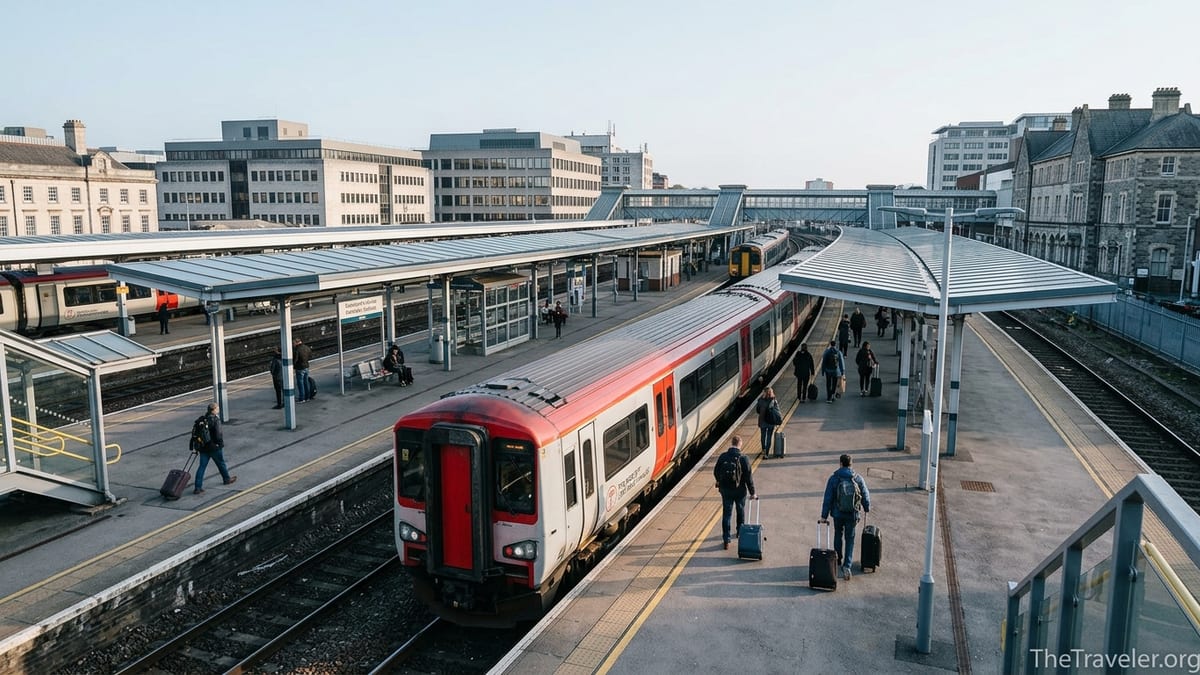
Welsh stations range from small rural halts with a single platform to busy interchanges like Cardiff Central and Swansea. Cardiff Central is the main entry point for many visitors. The station has multiple platforms, step free access via lifts and subways, staff presence, ticket machines, toilets and food options. There are left luggage facilities so you can store large bags for a few hours while exploring the city, which is especially helpful on the day you fly in or out or when you are in transit between South and North Wales. Swansea, Bangor and Holyhead are smaller but still offer typical amenities such as staffed ticket offices during core hours, waiting rooms and basic shops.
Luggage policies on Transport for Wales are fairly generous compared with low cost airlines. The standard allowance per person is usually two larger items, such as suitcases or rucksacks, plus a smaller hand item. In practice, you will see plenty of people boarding with one medium to large wheeled case and a backpack. The main constraint is space rather than strict enforcement, especially on busy trains from Manchester or Birmingham into North Wales or on Friday afternoons out of Cardiff. On shorter rural services, overhead racks and small luggage stacks can fill quickly, so keeping your bags as compact and easy to lift as possible makes moving around the train much more pleasant.
Seat reservations are not compulsory on most Welsh services, but they are strongly recommended on longer routes such as Cardiff to Manchester or Cardiff to Holyhead, especially at weekends, during school holidays or when major events are on in Cardiff or north Wales. If you buy an Advance ticket, a seat reservation is often included as part of the booking process. BritRail pass holders and travellers with flexible tickets can usually make free seat reservations separately on specific services, either online or at stations, which is worth doing for journeys over two hours. On local lines like the Conwy Valley or Cambrian Coast, reservations may not be available, so simply arrive a bit early at the station, stand roughly where the train doors will be, and board promptly to claim a window seat on the scenic side.
Finally, be aware that engineering work, particularly at weekends, can disrupt services and replace sections of routes with buses, sometimes at short notice. This can significantly change journey times between Cardiff, Swansea and the north coast. Always check for service updates a day or two before major moves, and allow cushions of at least half an hour when making tight onward connections, especially to ferries at Holyhead or long distance coaches in Cardiff.
Car Free Itineraries Linking Cardiff, Swansea & North Wales
A classic one week car free route through Wales starts in Cardiff, continues to Swansea and then works north along the spine of the country before finishing in Llandudno, Conwy, Bangor and Holyhead. A simple version might look like this. Spend two nights in Cardiff, using local trains to visit Cardiff Bay, Caerphilly or Barry Island if you have spare time. Then take a direct train to Swansea, a ride of roughly one hour, and stay at least one night to explore the waterfront and nearby Gower Peninsula by local bus. From Swansea, board a morning Heart of Wales Line train to Shrewsbury, arriving mid afternoon, and either overnight there or continue the same day to Llandudno Junction or Llandudno on Transport for Wales services.
Once based in Llandudno or Conwy for three nights, you can use the north Wales coast and Conwy Valley lines to reach major sights without driving. One day could be Llandudno Junction to Blaenau Ffestiniog and back by rail, adding a narrow gauge heritage train if time allows. Another day could link Conwy, Bangor and the Menai Strait, using short hops by train between these towns and then local buses to reach attractions such as Penrhyn Castle or the base station of the Snowdon Mountain Railway at Llanberis. A third day might focus on the Great Orme tramway and the Victorian seafront at Llandudno, both easy to reach on foot or by local bus from the station.
After North Wales, you can ride the train west across Anglesey to Holyhead for a final night near the harbour and the end of the line. This makes a logical jumping off point for the ferry to Dublin or a return to England via Chester and onwards. The rail ride from Llandudno Junction to Holyhead takes a bit under two hours, passing Conwy, Bangor, the Menai Strait and coastal villages on Anglesey. If your schedule is tight, you can run this whole itinerary in seven days, but adding extra nights in Swansea and Llandudno makes it a more relaxed 9 or 10 day trip with time for weather delays and slower sightseeing.
An alternative car free plan focuses more on the Cambrian lines. After Cardiff and Swansea, ride to Shrewsbury and then west to Machynlleth and Aberystwyth, basing there for a couple of days of coastal walks and trips on the Vale of Rheidol Railway. Then take the Cambrian Coast line north to Barmouth or Harlech for beaches and castle visits, before continuing to Porthmadog or Pwllheli and cutting across to the north coast by bus or a combination of local buses and trains. These legs are trickier than the straightforward Cardiff to Holyhead spine but reward travellers with quieter towns and some of Wales’s finest rail scenery.
Reaching Places That Are Harder Without a Car
Even with good rail coverage, some destinations in Wales remain awkward without driving. National parks, remote valleys and certain stretches of coastline often lack direct rail connections. However, careful use of integrated rail and bus options plus strategic bases near rail hubs can make them feasible. For example, the Gower Peninsula near Swansea has no rail line, but frequent buses from Swansea city centre reach Mumbles, Caswell Bay and other beaches in under an hour. By staying in central Swansea near the station, you can combine a morning rail arrival from Cardiff with an afternoon bus trip to the coast, then return by evening.
Snowdonia presents a similar pattern. There is no mainline station at Llanberis, the starting point for the Snowdon Mountain Railway and many hiking trails, but Bangor and Llandudno Junction are well placed rail gateways. From either station, you can use local buses to reach Llanberis, Betws y Coed or Capel Curig within about an hour. If your priority is climbing Yr Wyddfa (Snowdon), base yourself for several nights in Bangor or Betws y Coed, keep watch on the weather and pick the best day for your mountain trip. Heritage railways such as the Ffestiniog and Welsh Highland lines can also help you move between Porthmadog, Caernarfon and inland villages without a car.
Rural mid Wales is more challenging car free than the coasts. Towns such as Hay on Wye and Brecon do not sit on current rail lines, but they link to the network via TrawsCymru and local buses. One realistic car free approach is to take a train to Abergavenny or Hereford and then connect by bus into the Brecon Beacons National Park. Because these long distance buses may only run every one or two hours, and sometimes less on Sundays, you should treat them like rural train services and build your days around their timetables. Where possible, book accommodation near a bus stop and keep an offline copy of bus times in case mobile coverage is patchy.
Finally, certain island, headland or very rural coastal walks remain best with your own wheels. In these cases, it can be worth treating them as day trips by organised tour from major rail hubs such as Cardiff, Swansea or Llandudno, or focusing instead on sections of the Wales Coast Path and upland walks that start directly from rail served towns like Conwy, Barmouth or Aberystwyth. The advantage of a rail centred trip is that you will spend less time driving narrow lanes and more time actually walking or enjoying the scenery.
The Takeaway
Wales is one of the most rewarding parts of Britain to see by train. A single north south corridor links Cardiff with Llanelli, Shrewsbury, Chester, Llandudno Junction, Bangor and Holyhead, while scenic branches spin off toward Blaenau Ffestiniog, Aberystwyth, Pwllheli and rural mid Wales. With a little knowledge of these routes, you can link Cardiff, Swansea, Llandudno, Conwy, Bangor and Holyhead in a logical loop that rarely requires a bus ride of more than an hour.
Success on a car free Welsh trip comes from matching your expectations to the network. Long distance trains are frequent and comfortable by regional standards, but rural lines may only see a train every one or two hours. Ticketing looks complicated but rewards early planning, especially if you are willing to commit to Advance fares or compare them carefully with BritRail passes and Railcard discounts. Luggage, seat reservations and station facilities are more forgiving than airports, but it still pays to travel light and to check for engineering works.
The reward is a style of travel that fits the Welsh landscape. Instead of watching for passing places on single track roads, you sit with a book or a coffee as the train glides along estuaries, skirts castle walls and climbs through quiet hillsides. Whether your goal is a simple Cardiff to Conwy coastal holiday or a more ambitious circuit taking in the Heart of Wales and Cambrian lines, the rails of Wales can carry you there with surprisingly little stress.
FAQ
Q1. Do I need to book train tickets in advance for Wales?
It is not mandatory to book in advance, but for longer routes such as Cardiff to Bangor or Holyhead, Advance tickets bought weeks ahead are usually much cheaper than walk up fares, and often include a seat reservation.
Q2. Is a BritRail Pass good value for a trip focused mainly on Wales?
A BritRail Pass can be good value if you plan several long train days in a short period, such as Cardiff to Swansea, Swansea to Shrewsbury and Shrewsbury to Llandudno Junction and Holyhead. Add up the cost of individual Advance tickets for those legs and compare it with a pass covering the same number of days to decide.
Q3. How long does it take to travel by train from Cardiff to Holyhead?
Journey time varies by service and connections, but a typical Cardiff to Holyhead trip takes around four and a half to five and a half hours, often with a change at Shrewsbury or Chester if you are not on one of the limited through trains.
Q4. Can I store my luggage at Welsh train stations while I sightsee?
Major hubs such as Cardiff Central usually offer left luggage facilities or lockers where you can store bags for several hours. Smaller stations like Conwy or Bangor may not have formal storage, so in those cases ask your accommodation to hold bags or travel with luggage light enough to keep with you.
Q5. Are Welsh trains suitable for travellers with limited mobility?
Most main stations, including Cardiff, Swansea, Llandudno Junction, Bangor and Holyhead, provide step free access, accessible toilets and staff assistance. Many newer trains have low floors and dedicated wheelchair spaces, but at small rural halts you may need to board from a low platform, so arrange assistance in advance if possible.
Q6. How often do trains run on scenic lines like the Conwy Valley and Cambrian Coast?
On the Conwy Valley line between Llandudno and Blaenau Ffestiniog there are typically several trains each way per day, while the Cambrian Coast line from Machynlleth toward Pwllheli often runs hourly or every two hours. Frequencies can change seasonally, so always check a current timetable before planning day trips.
Q7. What is the best base in North Wales for car free exploration?
Llandudno, Conwy and Bangor all work well as rail based hubs. Llandudno offers a classic seaside resort feel with straightforward rail links, Conwy adds a walled town and castle steps from its small station, and Bangor provides quick bus connections into Snowdonia and along the Menai Strait.
Q8. Can I travel from Wales to Ireland using trains and ferries only?
Yes. Trains connect Cardiff, Swansea, Llandudno Junction and Bangor with Holyhead, where foot passengers can board ferries to Dublin. Through tickets that combine rail and sea are sometimes available, or you can buy the train and ferry portions separately.
Q9. Are there quiet times of day to avoid crowded trains in Wales?
Trains are usually busiest on weekday mornings into Cardiff and evenings out of the city, as well as Friday afternoons and Sunday evenings on long distance routes. Mid morning and mid afternoon on weekdays, plus early afternoons on Saturdays, tend to be quieter, making it easier to find seats and space for luggage.
Q10. Do I need a car to visit Snowdonia and the Gower Peninsula?
You do not strictly need a car, but you must combine trains with buses. For Snowdonia, base yourself in Bangor or Betws y Coed and use local buses to reach Llanberis and other trailheads. For the Gower, stay in Swansea and ride frequent buses to Mumbles and key beaches, keeping an eye on the return times.