


Designing a first trip to the United Kingdom can feel overwhelming. London, historic English cities, the Scottish Highlands, the castles of Wales and the coastal drives of Northern Ireland all compete for limited days. This guide breaks the UK into realistic 5, 7, 10, 14 and 21-day itineraries that combine London, England, Scotland, Wales and Northern Ireland, with example travel times, suggested overnight stops and practical notes on how to move efficiently between regions.
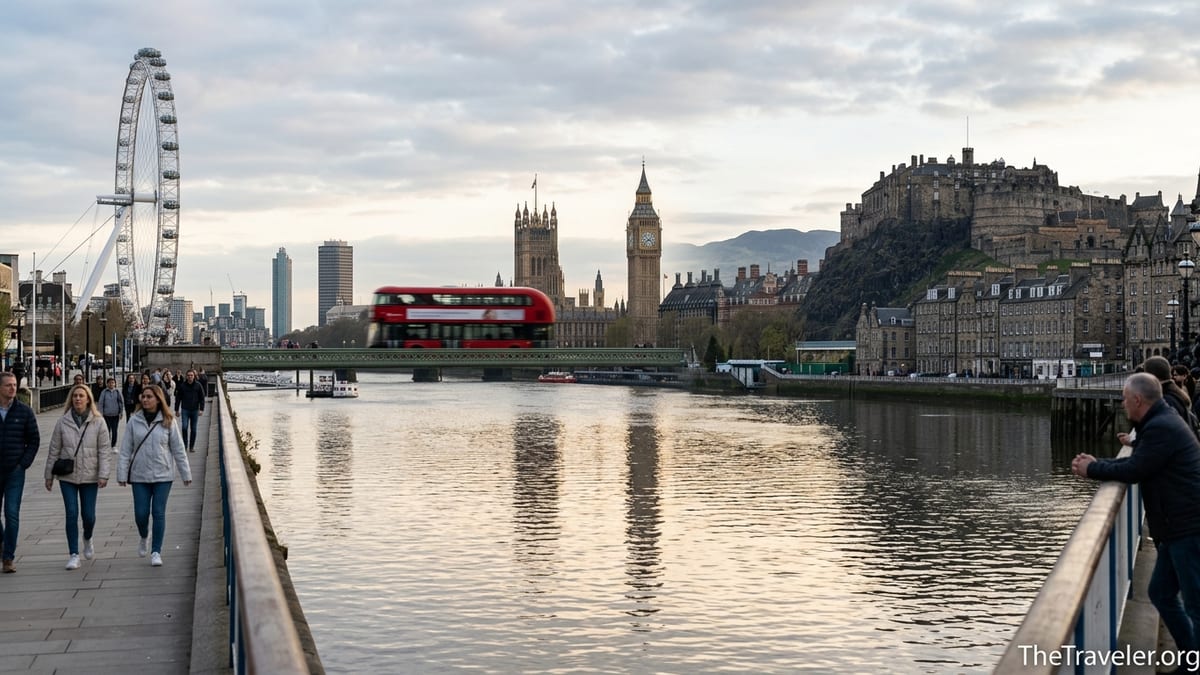
How Many Days Do You Really Need in the UK?
The United Kingdom is compact on a map but slow in practice. A direct train from London to Edinburgh typically takes around 4.5 hours, London to Cardiff is around 2 hours, and a flight from London to Belfast is about 1 hour in the air plus airport time. Once you start stitching several of those journeys together, travel days can consume far more of your schedule than expected. That is why building a realistic route is critical, especially on a first visit.
As a rule of thumb, a 5-day trip works best as a London-focused city break with one or two day trips into England. Seven days lets you add either Scotland or Wales. Ten days makes it reasonable to combine London, another part of England and either Scotland or Ireland. With 14 days you can do a classic loop that touches all four nations on a fast pace. At 21 days you can finally slow down and mix major cities with at least a taste of countryside and coast.
Costs vary widely by how you travel. Booking intercity train tickets several weeks in advance can keep sample fares between London and Edinburgh to roughly 40 to 80 pounds one way in standard class at less popular times, while buying on the day can be well over 150 pounds. Long-distance coaches are slower but often much cheaper. Domestic flights between London and Belfast or Glasgow can be competitive if booked ahead and if you travel light, but you need to factor in airport transfers and security time.
The itineraries below assume a reasonably active traveler who is comfortable using trains and short flights and changing hotels every few nights. They can be adapted if you prefer to rent a car in certain regions, especially for parts of England, Wales and rural Scotland, but in big cities such as London, Edinburgh, Cardiff and Belfast, public transport or walking is usually simpler than driving.
Five-Day UK Itinerary: London with a Taste of England
With five days on the ground, the most rewarding option is to base yourself entirely in London and add one or two day trips by rail. This avoids packing, checking in and out of hotels and losing time on long transfers. For a first-time visitor flying into Heathrow, Gatwick or London City, plan your arrival day plus four full days in the city and its surroundings.
Spend your first two full days in central London. One day could focus on Westminster and the river, taking in the Houses of Parliament, Westminster Abbey and the London Eye before walking along the South Bank. Another day might circle around the City and West End, from St Paul’s Cathedral and the Millennium Bridge through Covent Garden and Trafalgar Square to an evening show in Soho. Using an Oyster card or contactless payment on the Underground and buses keeps transport simple and relatively inexpensive.
For day three or four, add a classic day trip. A popular choice is Bath and Stonehenge with an organized coach tour from central London, which typically runs around 11 to 12 hours including hotel pick up, two hours among the Georgian crescents of Bath and a timed visit to the Stonehenge stones. Alternatively, independent travelers can reach Windsor Castle in less than an hour by train from London Waterloo, or the university city of Oxford from London Paddington in about an hour. Ticket prices vary, but an off-peak day return to Oxford booked on the day is often in the range of 30 to 50 pounds per adult.
If you are determined to add a second UK nation, consider a long day trip to Cardiff, capital of Wales. Fast trains from London Paddington to Cardiff Central can be as quick as just under two hours, making a there-and-back day feasible if you start early. On arrival you are a short walk from Cardiff Castle, the Victorian arcades and the riverside stadium. It is a long but memorable day and gives you at least a glimpse of Welsh culture without the logistics of changing hotels.
Seven-Day UK Itinerary: London, England and a Second Nation
Seven days allows a more ambitious route while remaining realistic. A practical pattern is three nights in London, two nights in another English city and two nights either in Edinburgh or Cardiff. This keeps most individual journeys under five hours and avoids the fatigue of nightly hotel changes.
One option is London, York and Edinburgh. After three nights in London, take a mid-morning train from London King’s Cross to York, a journey of around two to two and a half hours. Advance fares on this route can often be found from roughly 25 to 60 pounds one way in standard class if booked early and at less popular times. Two nights in York give time to walk its medieval walls, visit York Minster and wander The Shambles before enjoying a relaxed evening in one of the city’s historic pubs.
From York, continue by direct train to Edinburgh Waverley in about two and a half hours. Two nights in Edinburgh let you explore the Royal Mile, Edinburgh Castle and the New Town’s terraces. The climb up Calton Hill, which takes around 15 minutes from Princes Street, rewards you with a sweeping view over the city and the Firth of Forth. On your final day, fly home from Edinburgh or take an afternoon train back to London, accepting that this last leg is essentially a travel day.
For a London, Bath and Cardiff pattern, use London Paddington as your gateway. After three nights in London, take the train to Bath Spa in about 90 minutes and settle in for two nights among Georgian terraces and Roman baths. Then continue to Cardiff in roughly one hour by train, spend two nights exploring the waterfront at Cardiff Bay and the redeveloped coal-stacked arcades of the city center, and fly home from Cardiff Airport or return to London in around two hours. This version focuses on the south of England and Wales, keeps journeys short and includes both Anglo and Welsh heritage.
Ten-Day UK Itinerary: London, England, Scotland or Ireland
With 10 days you can comfortably include three bases and have at least two full days in each destination. A popular structure is four nights in London, three nights in Edinburgh and three nights in either another English city or Belfast in Northern Ireland. This involves one or two longer travel days but overall remains manageable.
A London, Edinburgh and Highlands sample route might begin with four nights in London, then a direct train to Edinburgh as a mid-morning departure that arrives mid-afternoon. Plan at least two full days in Edinburgh itself and use the third for a guided day trip into the Highlands, perhaps to Glencoe and Loch Ness or to Stirling Castle and Loch Lomond. Such tours usually depart Edinburgh around 8 am and return by early evening, making for a long but spectacular day. Prices vary between operators but are commonly in the range of 60 to 100 pounds per adult depending on group size and route.
For a version that includes Northern Ireland, consider four nights in London, three in Liverpool and three in Belfast. After London, travel to Liverpool by train from Euston in around two and a half to three hours. Liverpool offers music history, a redeveloped waterfront and ferries on the Mersey. From there, fly to Belfast in under an hour or take a train and ferry combination that can take most of a day but offers a slower, scenic approach. In Belfast, use your time to explore the Titanic Quarter, the murals of West Belfast and, on one full day, a coach tour to the Giant’s Causeway and the Antrim Coast.
If you prefer England in depth, a London, Bath and York route works well. Four nights in London, two in Bath and three in York allow you to experience London’s global scale, Bath’s Georgian elegance and York’s medieval charm. All three legs are under three hours by train and you can usually find advance fares that are significantly cheaper than last-minute tickets, especially if you avoid peak commuting hours between 6.30 to 9.30 in the morning and late afternoon on weekdays.
Fourteen-Day UK Itinerary: A Fast Circuit of All Four Nations
Two weeks finally makes it realistic to include all four nations of the UK on one route, though the pace will still feel full. The key is to cluster destinations so that each transfer is efficient. A sample 14-day itinerary might run London, Bath, Cardiff, Liverpool, Belfast, Glasgow and Edinburgh, ending in either London or Edinburgh for your flight home.
Start with four nights in London to adjust to jet lag, see major sights and fit in one day trip. Then take an early train to Bath for two nights. From Bath, continue into Wales with a direct train to Cardiff in around one hour and stay two nights to experience the castle, bay redevelopment and perhaps a day trip into the Brecon Beacons with a local hiking or minibus operator based in Cardiff. Many tours run as small groups in minibuses and include hotel pick ups in central Cardiff.
From Cardiff, cross back into England and head north. One option is to take a train to Liverpool via Bristol Parkway or Birmingham, a journey that will likely take between four and six hours with at least one change. Spend two nights in Liverpool, leaving one full day to explore the Royal Albert Dock, The Beatles Story and the city’s maritime architecture. Then fly from Liverpool or Manchester to Belfast in under an hour, usually with low-cost carriers running multiple daily departures if you book early.
In Belfast, two nights allows for one full day in the city and one on the coast. A typical Giant’s Causeway day tour leaves Belfast city center around 9 am and returns around 6 pm, stopping at rope bridges, cliff viewpoints and coastal villages along the way. From Belfast, sail or fly to Scotland. The quickest option is a direct flight to Glasgow or Edinburgh, often around 45 minutes in the air, while the ferry and train combinations can turn into a scenic but long travel day. Finish your circuit with two nights divided between Glasgow and Edinburgh, connected by frequent trains of around 50 minutes, before flying home from Scotland.
Twenty-One-Day UK Itinerary: Slower Travel Across the Union
Three weeks lets you slow the pace, work in countryside stays and build in rest days. A balanced 21-day trip might link London, the Cotswolds or another rural corner of England, North Wales, the Lake District, Glasgow, the Isle of Skye or another Highland base, Edinburgh and Belfast. The trade-off is fewer big cities but richer time in landscapes that many visitors remember most vividly.
Begin with four or five nights in London, enough to see major sights without rushing and to add at least one day trip. Then rent a car in a suburban location or at Heathrow and drive into the Cotswolds or another rural region, planning three nights in a village such as Bourton-on-the-Water or Stow-on-the-Wold. Distances are short but roads are narrow, so a drive that looks like 60 kilometers can still take over an hour. Spend your days walking between villages, visiting stately homes and experiencing smaller English pubs and markets that day trippers rarely reach.
From there, drive or take trains to North Wales, perhaps basing in Conwy or Betws-y-Coed for three nights. This gives you time for a full day in Snowdonia National Park and a second day exploring castles such as Conwy or Caernarfon. Many travelers choose to return the car before heading to the largest cities again, since parking can be tricky and expensive in places like Glasgow and Edinburgh. Using local trains and buses within Wales and northern England is usually straightforward, though services can be less frequent on Sundays and in rural areas.
Continue north through the Lake District for two or three nights in a base such as Keswick or Windermere, then on to Glasgow for two nights. From Glasgow, you might pick up a short-term rental car again or join a small-group tour into the Highlands and Isle of Skye, spending three nights in Portree or a nearby village. Scenery is the star here, with narrow single-track roads, coastal viewpoints and weather that can change from sunshine to mist in minutes. Finish with three nights in Edinburgh and, if you wish, a final side trip by flight to Belfast for an overnight visit before heading home.
Practical Travel Times, Booking Tips and Seasonal Factors
Whichever itinerary you choose, understanding UK travel patterns will save both time and money. Intercity trains are usually the fastest and most comfortable way to move between major cities like London, Edinburgh, York, Cardiff, Manchester and Glasgow. Booking advance tickets on the websites of train operators or national booking platforms often yields lower prices, especially if you travel outside of peak weekday commuter hours. Many routes open advance sales 8 to 12 weeks before departure, and cheaper quotas can sell out quickly on popular days such as Fridays and Sundays.
Domestic flights make sense for certain jumps, especially between London and Belfast or between England and more remote parts of Scotland. Flight times may be under an hour, but you should allow at least three hours door to door once you include transfers to the airport, check in, security and waiting time. Budget airlines frequently charge extra for checked bags and sometimes for larger cabin bags, so factor those costs into any comparison with rail. Long-distance coaches such as those run by large national operators can be the cheapest mode for travelers on tighter budgets, with fares that are often a fraction of last-minute train tickets, though journeys will usually take significantly longer.
Season matters. July and August bring school holidays, higher prices and busy festivals such as the Edinburgh Festival Fringe, when hotel rates in the Scottish capital can easily run two or three times higher than in November or February. Late spring and early autumn often offer a good balance of milder weather, more manageable crowds and better value on accommodation. In winter months, shorter daylight hours in northern Scotland and the risk of weather-related disruption make it especially important to avoid tightly stacked connections and to allow buffers in your schedule.
Consider Railcards if you qualify. Several national discount schemes offer roughly one third off most rail fares within Great Britain for a one-year fee, commonly in the mid-thirty pounds range. There are versions for people aged 16 to 25, 26 to 30, seniors, disabled passengers and for certain couples or families. These can quickly pay for themselves if you plan several long intercity journeys on a single trip. Be aware that Railcards do not apply to most trains in Northern Ireland and usually have some weekday morning minimum fare conditions.
The Takeaway
Designing a UK itinerary is an exercise in trade-offs. Trying to cover London, England, Scotland, Wales and Northern Ireland in a single week will leave you exhausted and mostly on trains and planes. At five days, focusing on London with one or two English or Welsh day trips offers the richest experience. Seven and ten days open up rewarding combinations of London, a second English city and either Edinburgh, Cardiff or Belfast. With 14 or 21 days, you can start to weave all four nations together and add the countryside and coastal landscapes that define so much of the United Kingdom’s character.
Whichever route length you choose, build in buffer time for travel days, research train and flight options early, and accept that you will not see everything. It is better to spend two nights in a place and actually experience morning markets, evening light and local restaurants than to collect a long list of rushed photo stops. The UK rewards repeat visits, and a well-paced first trip is often the best invitation to come back.
FAQ
Q1. Is it realistic to visit all four UK nations in one week?
For most first-time visitors, trying to fit England, Scotland, Wales and Northern Ireland into seven days means too much time in transit. It is more practical to focus on London and one or two additional regions, then plan a second trip for the rest.
Q2. How far in advance should I book UK train tickets?
Advance tickets on major intercity routes often appear around 8 to 12 weeks before departure and are usually cheapest soon after release. Prices typically rise as cheaper quotas sell out, so checking fares as soon as your dates are fixed is sensible.
Q3. Are domestic flights or trains better between London and Edinburgh?
Trains between London and Edinburgh take roughly 4.5 hours city center to city center, with no airport transfers or security lines. Flights are around 1 hour in the air but usually take 3 hours or more door to door. Trains are often more comfortable and competitive in total time, especially if you book advance fares.
Q4. Do I need a car for these itineraries?
No car is needed for the city-focused versions that link London, Edinburgh, Cardiff and Belfast using trains and flights. A car becomes useful if you want to spend several days in rural areas such as the Cotswolds, Snowdonia, the Lake District or the Scottish Highlands, where public transport is less frequent.
Q5. How many nights should I spend in London on a first trip?
Three to five nights in London works well for most first-time visitors. Three nights allows two full sightseeing days, while five gives room for a day trip to places such as Bath, Oxford or Windsor without feeling rushed.
Q6. Is it cheaper to buy a BritRail-style pass or individual tickets?
For many itineraries, especially if you book long-distance journeys several weeks in advance and travel outside peak times, individual advance tickets can work out cheaper than a pass. A pass may be better value if you plan many long journeys on short notice and value flexibility over the lowest possible fare.
Q7. What is the best season for a multi-country UK itinerary?
Late April to early June and September to early October usually offer a good mix of milder weather, longer daylight and more moderate prices. July and August can be very busy and expensive in major destinations such as London and Edinburgh, while winter brings shorter days and a higher risk of travel disruption, especially in northern Scotland.
Q8. Can I use UK Railcards as a visitor?
Yes, visitors can buy national Railcards such as the 16 to 25 or 26 to 30 versions if they meet the age or eligibility criteria. These cards usually offer around one third off most rail fares within Great Britain for a year, which can be worthwhile if you are taking several longer journeys.
Q9. Are Sunday train services limited in the UK?
Many routes operate reduced frequencies on Sundays, and early morning and late evening services can be especially limited. Engineering works also often take place at weekends, which may mean rail replacement buses on some lines, so checking schedules a few days before you travel is important.
Q10. Is it safe to arrive into UK cities late at night?
Main city stations such as London King’s Cross, Edinburgh Waverley, Cardiff Central and Belfast’s airports remain active into the evening, and many travelers arrive after dark. As in any major city, it is sensible to keep valuables secure, use licensed taxis or reputable ride-hailing services from official ranks and have your accommodation address written down before you arrive.