


Few travel experiences feel as free as a road trip across the United Kingdom. With compact distances, well-maintained roads and an ever-changing backdrop of castles, coastlines and rolling hills, England, Scotland and Wales are made for slow, scenic driving. This guide walks you through the practicalities of renting a car, navigating left-side traffic and understanding parking and fuel, then highlights classic driving routes from the Cotswolds and Lake District to the Scottish Highlands and Welsh mountains so you can plan a multi-country journey with confidence.
Essential Road Rules and Left-Side Driving Basics
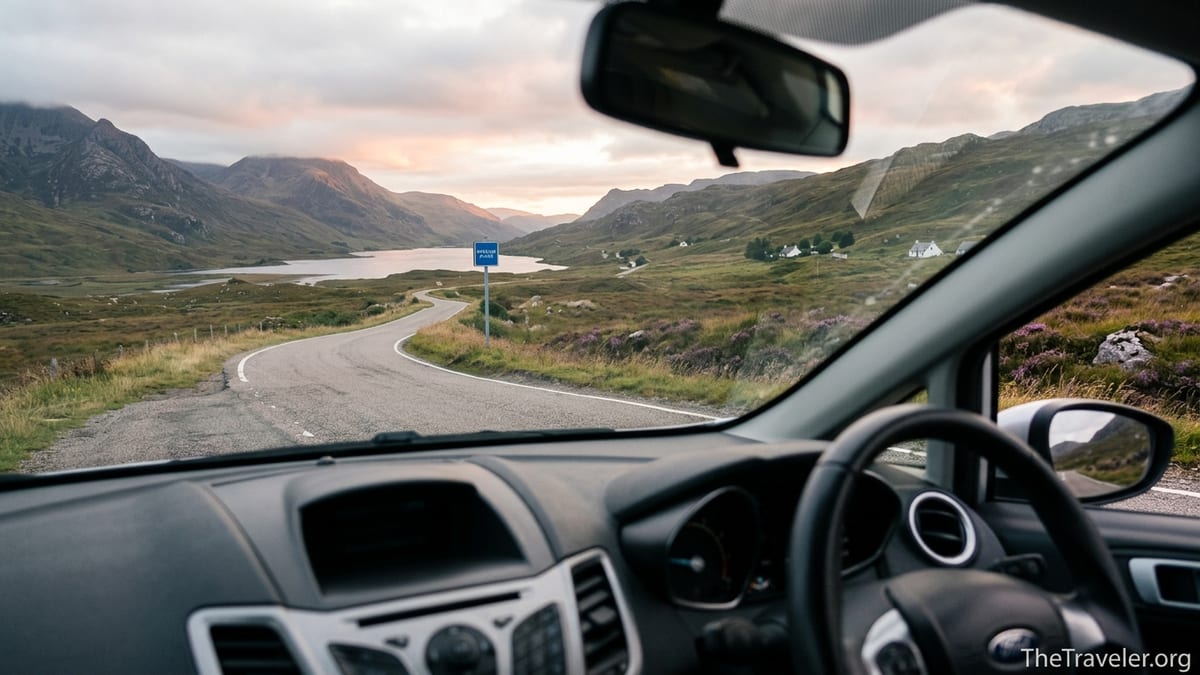
Visitors are often most nervous about one thing: driving on the left. The good news is that the United Kingdom’s roads are generally well signed and logically laid out, so most drivers adapt within an hour or two. The steering wheel is on the right, and you keep to the left side of the carriageway at all times, including on dual carriageways and motorways. This means roundabouts flow clockwise, and you give way to traffic from the right unless signed otherwise.
Speed limits are posted in miles per hour. As a rule of thumb, in built-up areas you will usually see 30 mph limits, sometimes reduced to 20 mph outside schools or in residential zones. On rural single-carriageway roads, the national speed limit for cars is typically 60 mph, while dual carriageways and motorways are usually 70 mph unless there are roadworks or variable limits. Many scenic routes in the Highlands, the Lake District and rural Wales are technically 60 mph, but driving at that speed would be unsafe on blind bends and narrow lanes, so expect to move much slower in practice.
Roundabouts are common and can feel intimidating at first. Approach in the correct lane for your exit, signal left only when you are about to leave the roundabout, and take your time; local drivers are used to visitors hesitating slightly. In cities such as London, Edinburgh and Cardiff, traffic can be congested and bus lanes are strictly enforced, so avoid driving into the very center unless you have secure parking arranged. For many road trips it makes sense to collect your rental car in a smaller city such as Manchester, Bristol, Inverness or Glasgow rather than central London.
Weather is another factor that shapes the driving experience. In the Highlands and Snowdonia, rain and low cloud can reduce visibility quickly, while in winter some high passes may be icy or temporarily closed. In summer, long daylight hours in northern Scotland can give you lingering twilight even after 10 pm, which is ideal for slow evening drives along the coast.
Renting a Car in the UK: Documents, Insurance and Costs
Most visitors start their road trip with a rental car collected from a major airport or city rail station. International companies such as Enterprise, Hertz, Avis and Budget operate alongside UK brands like Arnold Clark and Europcar. For drivers from the United States, Canada, Australia and most of Europe, a full, valid driving licence in English is generally accepted; if your licence is not in Roman characters, an International Driving Permit is usually recommended. Rental companies typically require drivers to be at least 21 to 25 years old, with a driving history of one year or more. Young driver surcharges can apply up to age 24 or even 25.
When reserving, pay close attention to insurance and excess. Basic rentals may come with a high excess, meaning you are liable for a substantial sum if the car is damaged. At a typical London Heathrow desk, for example, a compact car might appear inexpensive per day, but the excess could run into the hundreds or thousands of pounds. You can reduce this with the rental company’s collision damage waiver or rely on coverage from a premium credit card, but always read the conditions in advance and carry written confirmation of your coverage when you collect the vehicle.
Transmission choice is another key decision. Manual gearboxes are still common in the UK, although automatic cars are increasingly available. If you are not fully comfortable with a manual, especially on narrow country lanes and steep passes, reserve an automatic well ahead of time and expect to pay more. For driving the North Coast 500 in Scotland or the steep passes of the Lake District, an automatic compact SUV often offers a good combination of visibility, comfort and ground clearance.
Fuel costs change regularly, but petrol and diesel are significantly more expensive than in North America. You will find filling stations attached to major supermarkets on the edges of towns, services along motorways and small independent petrol stations in rural areas. In remote parts of the Highlands or mid-Wales, fuel stops can be widely spaced and may close early, particularly on Sundays, so get into the habit of topping up once your tank drops below half. Many stations are pay-at-pump using chip-and-PIN or contactless cards, though some still require you to pay the cashier inside.
Parking, Toll Roads and Urban Charges
Parking rules vary across the UK but follow some general patterns. In most towns you will see on-street pay-and-display bays, where you buy a ticket from a machine or pay by smartphone app and display the stub on your dashboard. Time limits are often strictly enforced by local councils, so always check the sign for maximum stays and restricted hours. In coastal hotspots such as St Ives in Cornwall, Llandudno in North Wales or Portree on the Isle of Skye, public car parks can fill by mid-morning in high season, and prices reflect the demand.
Yellow lines painted along the edge of the road indicate restrictions. A single yellow line usually means you cannot park during certain hours, shown on nearby signs, while a double yellow line usually means no parking at any time. In many city centers, private parking operators run multi-storey car parks attached to shopping centers and hotels. These can be a good option for overnight stays when your accommodation does not include parking, though you should factor daily parking fees into your budget in places like Bath, York and Edinburgh.
The UK does not have as many toll roads as some countries, but there are a few important charges to understand. London operates a Congestion Charge and an additional Ultra Low Emission Zone; most visitors return cars before going into central London or rely on public transport instead. In other cities, small tolls may be applied to bridges or tunnels, such as the Mersey Tunnels near Liverpool. You will rarely encounter traditional toll booths on scenic routes in the Highlands, the Cotswolds or Wales, so most of your road trip will feel straightforward from a payment perspective.
Increasingly, low-traffic neighborhoods and resident-only zones are used in historic centers. In a medieval city such as Oxford or Cambridge, you may be funnelled to park-and-ride facilities on the outskirts, leaving your car there and taking a bus into the center. Planning your accommodation with parking in mind, or choosing village inns with their own car park, can significantly reduce stress.
Classic Scenic Routes in England: Cotswolds and the Lake District
England offers some of the most varied driving in the UK, from thatched-roof villages and rolling hills to rugged peaks and wild coastline. For many visitors, a natural first stop is the Cotswolds, a region of stone-built villages and gentle countryside between Oxford and Cheltenham. A typical loop might start near Oxford, meander through Burford, Bourton-on-the-Water, Stow-on-the-Wold and Broadway, then finish in Chipping Campden or Stratford-upon-Avon. The driving here is relaxed, with hedgerow-lined B-roads and short hops between villages rather than long highway stretches.
Parking in the Cotswolds is generally straightforward, though small villages can feel crowded on sunny weekends. Many have pay-and-display car parks at the edge of the village, encouraging you to walk into the center. In Bourton-on-the-Water, for example, it is common to leave the car in a signed visitor car park and stroll along the river instead of trying to edge through the narrow high street in traffic.
Further north, the Lake District in Cumbria offers a more dramatic landscape of fells and lakes. A popular driving circuit might link Windermere, Ambleside, Grasmere, Keswick and Ullswater, with detours into the central passes. Roads like Kirkstone Pass between Ambleside and Patterdale, and Honister Pass between Borrowdale and Buttermere, provide steep gradients, sharp bends and sudden views. They are paved but narrow, often with only one lane and designated passing places. If you meet oncoming traffic, the car closest to a passing place reverses or pulls in.
In this region, many visitors base themselves in one town and explore in day trips rather than packing and unpacking nightly. For example, spending three nights in Keswick gives easy access to Derwentwater, the Honister Slate Mine and the shores of Bassenthwaite, while Windermere or Bowness work well for exploring the southern lakes. Pre-booked parking at your accommodation can be invaluable, especially during school holidays when day-tripper traffic peaks.
Scotland by Car: Highlands Loops and the North Coast 500
Driving in Scotland combines wide-open landscapes with some of the UK’s most famous touring routes. The North Coast 500, often compared to a northern coastal equivalent of classic American routes, is a signed loop of roughly 516 miles around the northern Highlands, starting and ending in Inverness. The route typically runs west across the Black Isle and over to Applecross, then north via Torridon, Gairloch and Ullapool, arcs along the far north coast past Durness, Thurso and John o’ Groats, then returns south along the east coast to Inverness.
Most dedicated itineraries recommend at least five to seven days for the full North Coast 500, more if you want to linger on beaches or add detours to islands. Accommodation ranges from guesthouses and small hotels to campsites and glamping pods, but demand outstrips supply in peak months, so pre-booking rooms in towns like Ullapool, Durness and Thurso is essential. Many drivers also build in non-driving days to hike in Assynt’s distinctive mountains or explore quiet coves near places such as Achmelvich and Sandwood Bay.
Outside the North Coast 500, other Scottish driving routes reward exploration. The A82 from Glasgow to Fort William and on to Inverness takes you along the banks of Loch Lomond, through the brooding valley of Glencoe and past Ben Nevis. From Fort William, a side trip on the Road to the Isles toward Arisaig and Mallaig serves up white-sand beaches and views to the Small Isles. On the east side of the country, a gentler coastal drive links fishing towns between Stonehaven, Aberdeen and Inverness, with frequent stops for harbourside fish and chips.
Scottish rural roads can be narrower and more winding than many visitors are used to. Single-track routes with passing places are common in the far north and on the islands. The etiquette is simple but important: use passing places to allow oncoming traffic to pass and to let faster vehicles overtake, and acknowledge other drivers with a quick wave or raised hand. Sheep often wander onto the road, especially on Skye, Harris and Lewis, so keep your speed moderate even when the road appears empty.
Exploring Wales: Coastal Drives and Mountain Passes
Wales offers a compact mix of beaches, castles and mountains that works especially well for shorter road trips. A classic north Wales route might link the fortified town of Conwy, the resorts of Llandudno and Colwyn Bay, and then head inland into Snowdonia National Park. Roads thread through mountain passes near Llanberis, Betws-y-Coed and Beddgelert, where slate quarries and narrow valleys create striking scenery within short driving distances.
South and west Wales deliver a different feel. From Cardiff you can drive west past Swansea into the Gower Peninsula, where beaches like Rhossili Bay and Three Cliffs Bay are reached via winding country lanes and cliff-top car parks. Further along the coast, the Pembrokeshire coastline between Tenby and St Davids is full of small harbours and sea cliffs, many accessed by one-lane roads with hedges and high banks. In villages such as Solva or Little Haven, it is common to park in a community car park on the outskirts and walk down to the waterfront.
Because distances are modest, you can cover a lot of ground in a week-long loop tying together south and north Wales. For example, one practical route is to start in Cardiff, drive west to Pembrokeshire for a few days of coastal hikes, then cut inland via Brecon Beacons National Park toward mid-Wales and continue north to Snowdonia, ending near Conwy or Llandudno. From there you can either return the car in north Wales and take the train to another part of the UK, or loop back east via Chester and the border towns.
Weather in Wales can change quickly, with sea mist and showers common even in summer. Road surfaces are generally good, but visibility on upland roads can reduce sharply in low cloud. It pays to build slack into your driving days so you can slow down and wait out showers at a cafe or castle rather than pressing on in poor visibility along narrow lanes.
Planning a Multi-Country UK Road Trip Itinerary
One of the advantages of a UK road trip is how easily you can combine England, Scotland and Wales in a single itinerary. Trains link major cities efficiently, so many travelers choose to avoid driving in the largest urban centers and instead pick up their rental car at a gateway city near the countryside. A common pattern is to arrive in London, take a fast train to a city like Bath, York, Manchester or Edinburgh, then start the driving portion of the trip there. This approach reduces your initial exposure to heavy traffic and complicated urban junctions.
For a two-week trip, a realistic route might start with a few car-free days in London or Edinburgh, followed by a one-week car rental covering nearby highlights, and then another few nights in a different city at the end. For example, you could spend three nights in Edinburgh, then collect a car and spend seven or eight days exploring the Highlands, the North Coast 500 or the Isle of Skye, before dropping the car in Glasgow and taking the train south to Manchester or London. Alternatively, a loop from Manchester could cover the Peak District, Lake District, Hadrian’s Wall and a section of the Scottish Borders.
When combining England and Wales, you might fly into London, take the train to Bath, then rent a car to explore the Cotswolds before continuing west into south Wales. After several days in Pembrokeshire and the Brecon Beacons, you could head north through Snowdonia and then cross back into England near Chester, returning the car there and continuing by rail. Because rental companies charge extra for one-way hires, it is worth comparing the cost of different start and end points and adjusting your route accordingly.
Seasonality is also important. Summer brings long days and lush landscapes, but also higher prices and more crowded car parks in hotspots such as the Cotswolds, Skye and Snowdonia. Shoulder seasons in late spring and early autumn can offer a good balance of manageable traffic and reasonable weather, although you should be prepared for cooler temperatures and occasional rain anywhere in the UK. In winter, daylight hours are short, especially in northern Scotland, and some rural accommodations may close or run reduced hours, so plan shorter driving days and confirm opening months before you travel.
The Takeaway
A road trip through England, Scotland and Wales rewards patient drivers who value scenery and spontaneity over speed. With a bit of preparation around rental requirements, left-side driving and parking rules, you can navigate from Cotswold villages to Highland passes and Welsh cliffs with confidence. Distances are modest, but landscapes shift quickly, turning a single day’s drive into a sequence of memorable views and small discoveries.
Focus on building an itinerary with a handful of strategic bases rather than rushing between one-night stops. Allow time for unplanned detours, whether that is a hillside lay-by overlooking a loch in the Highlands, a farm shop on a Cotswold back road or a coastal path spur off a car park in Pembrokeshire. By respecting local road etiquette and planning ahead for fuel, accommodation and parking, your UK road trip can feel relaxed and immersive rather than rushed.
Above all, treat the car as a way to reach Britain’s quiet corners, not just its headline destinations. The magic of a UK driving holiday often lies between the famous landmarks, on that unplanned lane through a stone village at golden hour or the empty coastal road where the sea appears around a bend. With realistic expectations and a flexible plan, your journey across England, Scotland and Wales can become the highlight of your time in Europe.
FAQ
Q1. Do I need an International Driving Permit to rent a car in the UK?
Requirements vary by rental company, but most accept a full licence in English without an International Driving Permit. If your licence is not in Roman characters, or you are unsure, obtaining an International Driving Permit before travel is a sensible precaution.
Q2. Is it difficult to adapt to driving on the left side of the road?
Most visitors adjust within a day, especially if they start in quieter areas rather than major cities. Take extra care at junctions and roundabouts, follow local traffic, and consider having a passenger remind you to stay left when setting off or exiting car parks.
Q3. What is the best time of year for a road trip in the UK?
Late spring and early autumn often provide a good balance of lighter traffic, open attractions and relatively mild weather. Summer offers long days and green landscapes but can be crowded in popular areas. Winter is quieter and can be atmospheric but brings shorter daylight hours and a higher chance of poor road conditions in upland regions.
Q4. How long should I allow to drive the North Coast 500?
While it is physically possible to complete the loop in three or four long days, most travelers find that at least five to seven days allows for a safer, more enjoyable pace with time for walks, beaches and small detours.
Q5. Can I take a rental car from England into Scotland and Wales?
For standard car hires, driving anywhere within Great Britain is usually allowed at no extra charge, but you should confirm this when booking and check any restrictions on ferries or travel to islands. Different rules can apply if you plan to take the car to Northern Ireland or continental Europe.
Q6. Are single-track roads safe for visitors to drive?
Yes, provided you drive slowly, use passing places correctly and remain patient. Many of the most scenic stretches in the Highlands and rural Wales are single track, so allowing extra time and avoiding tight schedules makes the experience far less stressful.
Q7. How expensive is fuel on a UK road trip?
Fuel is generally more expensive than in North America, and prices can be higher in remote areas than near large supermarkets or motorway services. While exact figures change frequently, it is wise to budget for higher fuel costs than at home and to fill up before long stretches in rural regions.
Q8. Is it better to rent an automatic or manual car?
If you are completely comfortable with a manual gearbox, it can be a cost-effective option and widely available. If you have any doubts, an automatic is worth the extra expense, particularly on steep or narrow roads where changing gears frequently can add to fatigue.
Q9. Do I need to reserve accommodation along scenic routes in advance?
In peak seasons, especially on popular routes like the North Coast 500, in the Lake District or in parts of Wales, booking ahead is strongly recommended. Outside of school holidays and major events, you may find more flexibility, but it is still wise to reserve at least your first and last nights in each region.
Q10. Can I rely on mobile navigation for a UK road trip?
Digital mapping on smartphones works well in most towns and along main roads, but signal can drop out in remote areas. Download offline maps for your key regions, carry a simple paper map as backup, and always pay attention to local signs rather than blindly following a GPS onto unsuitable lanes.