


For many first-time visitors, “going to the UK” quickly turns into a tougher question: should you spend more of your limited time in England or in Scotland? Both offer centuries of history, dramatic castles and atmospheric pubs, but the experiences on the ground feel strikingly different. Choosing where to focus your energy is less about which is better in the abstract and more about what kind of trip you want this year, knowing you can come back for the other.
Overall vibe: Big-hit icons vs compact intensity
If your mental image of the UK is red buses outside Buckingham Palace, afternoon tea and Premier League football, you are really thinking of England. London alone can absorb five to seven days with world-class museums, the West End theatre scene, stadium tours at clubs like Arsenal or Chelsea, and day trips to Windsor Castle or Oxford. Beyond the capital, places such as York, Bath and Liverpool layer on Roman ruins, medieval streets and industrial heritage within easy rail reach.
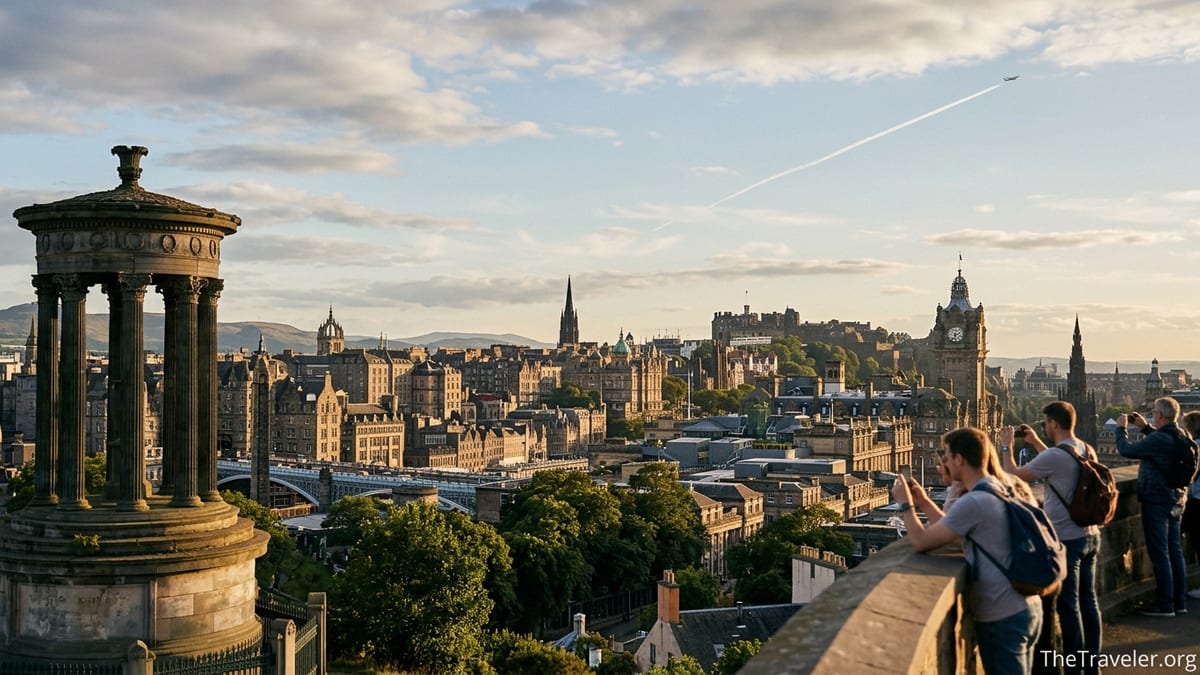
Scotland delivers a denser, moodier experience, particularly for short trips. Edinburgh’s Old Town climbs dramatically to Edinburgh Castle, with narrow closes, smoky whisky bars and ghost tours concentrated in a walkable core. Forty-five minutes away by train, Glasgow balances grand Victorian streets with a serious music and food scene. A couple of hours beyond, the Highlands rise quickly, so within four or five days you can go from cobbled lanes to lochside viewpoints and back without ever boarding a domestic flight.
In practical terms, England usually offers more variety in a single longer trip, especially if you are combining city time with a few smaller towns. Scotland is often the better choice if you want a compact, thematically coherent itinerary where history, scenery and pub culture are all close together and travel days stay short.
Most first-time visitors flying from North America still land in London, which naturally nudges itineraries toward England. But open-jaw tickets into London and out of Edinburgh, or vice versa, are increasingly common, and rail connections between the two capitals take about four and a half to five hours. If you have 12 to 14 days, spending roughly a week in England and five to six days in Scotland is realistic. With one week or less, it usually makes sense to choose one country as your focus and save the other for another trip.
Cities: London, York and Bath vs Edinburgh and Glasgow
England has the bigger and more numerous cities, but not all are equally useful for a first-timer. London is the unavoidable anchor: beyond headline sights such as the Tower of London and Westminster Abbey, it offers free entry to many major museums, including the British Museum and the National Gallery, which helps offset higher hotel prices. Typical central London mid-range hotels in 2025 have average nightly rates in the ballpark of 160 to 190 pounds, with basic, clean chain rooms in less central neighborhoods often dipping closer to 130 pounds if you book ahead.
From London, classic first-time routes add one or two smaller English cities. York offers intact medieval walls, the Gothic York Minster and alleyways like the Shambles that feel almost like a film set. Bath combines Georgian crescents with the Roman Baths and modern Thermae Bath Spa, where a timed rooftop soak with city views is a memorable splurge. Both cities are reachable in about 80 to 90 minutes by train from London, so many visitors either base for several nights or visit as long day trips.
In Scotland, Edinburgh is the default starting point. Its compactness is an advantage for jet-lagged travelers: most first-time visitors can walk from a hotel near Princes Street to the castle in under 20 minutes, detouring past the National Museum of Scotland, St Giles’ Cathedral and the Royal Mile. Local tourism boards often recommend three nights as a minimum: one full day for Old Town and New Town, one for an excursion such as Rosslyn Chapel or a whisky distillery, and one for a Highlands or St Andrews day tour if you are not renting a car.
Glasgow, Scotland’s largest city, is less visually dramatic at first glance but richer for contemporary life. Its strengths are live music, street art, free museums like the Kelvingrove Art Gallery and Riverside Museum, and independent food in areas such as Finnieston and the West End. Trains between Edinburgh and Glasgow run frequently, taking under an hour, so many itineraries sensibly split three nights in Edinburgh with one or two in Glasgow before heading north.
Castles, heritage and historic depth
England holds the numerical advantage when it comes to castles, stately homes and UNESCO-listed sites, with well-known highlights such as the Tower of London, Windsor Castle, Warwick Castle, the Roman Baths in Bath and prehistoric Stonehenge. A traveler based in London can reach Windsor or Hampton Court Palace in under an hour by train, turning royal history into efficient day trips. Many English castles have been reimagined as family destinations, with immersive exhibits, costumed guides and in the case of Warwick, activities such as falconry demonstrations designed to fill a whole day.
Scotland counters with atmosphere and setting. Edinburgh Castle looms above the city on Castle Rock, while Stirling Castle controls a strategic pass that earned the region its “Gateway to the Highlands” nickname. Further north, Eilean Donan Castle is framed by sea lochs and mountains and frequently appears in Scotland tourism campaigns. Visitors often note that even partly ruined fortresses, such as Urquhart Castle on Loch Ness, feel more dramatic precisely because of their rugged surroundings. Entry fees to major castles in both countries are broadly similar, usually in the 18 to 25 pound range for adults, with family tickets reducing the per-person cost.
For travelers who care most about royal pageantry, coronation sites and literary connections spanning Shakespeare to Jane Austen, England is the stronger first trip. You can walk from Westminster Abbey to the Churchill War Rooms in minutes, then ride the train out to Stratford-upon-Avon to see Tudor-era Shakespeare sites the next day. If your imagination is captured more by Jacobite uprisings, clan history and evocative battlefields, Scotland’s sites such as Culloden Battlefield near Inverness or the National Museum of Scotland in Edinburgh will likely resonate more deeply.
Landscapes, road trips and outdoor time
Both England and Scotland reward travelers who venture beyond the big cities, but the character of the landscapes differs. In England, classic road trip regions include the Cotswolds, with stone villages like Bourton-on-the-Water and Stow-on-the-Wold; the Lake District, where Windermere and Keswick are popular bases for hiking and boating; and Cornwall’s surf beaches and fishing towns further south. These areas are fairly heavily touristed in peak summer, and roads can feel narrow and busy to visitors unused to driving on the left.
Scotland’s landscapes are wilder and more dramatic at shorter distance from the cities. Within two to three hours of Edinburgh or Glasgow, you can be in Loch Lomond and the Trossachs National Park, driving along the A82 towards Glencoe’s steep-sided valley or continuing towards Fort William and the Road to the Isles. The North Coast 500 route around the far north has become famous, though its popularity has put pressure on small communities and accommodation, so many first-timers opt for a shorter loop focused on Skye and the central Highlands instead.
Public transport makes it possible to see scenery without driving in both countries, though it requires more planning. In England, guided day tours from London commonly bundle Stonehenge with Bath or the Cotswolds. In Scotland, small-group minibuses leaving from Edinburgh and Glasgow offer full-day loops into the Highlands, typically costing somewhere between 60 and 100 pounds per person depending on season and inclusions. These tours are efficient for nervous drivers, but you trade flexibility for convenience.
For an outdoors-focused first UK trip built around hiking, lochs and coastal views, Scotland edges ahead. A week split between Edinburgh, a rental car to Glencoe and Isle of Skye, and a final night near Loch Lomond feels distinctly different from city-centric England itineraries. If you prefer gentler countryside, manor hotels and gardens alongside your history, a circuit that pairs London with the Cotswolds and the Lake District may suit you better.
Hotels, food and on-the-ground costs
Overall trip costs in England and Scotland are more similar than many first-timers assume. Recent budget comparison data suggests that the average daily cost per person is slightly higher in England than in Scotland, with typical per-day spending on accommodation, food, transport and activities for mid-range travelers often clustering somewhere around the mid-hundreds of pounds per couple, depending heavily on season and city choice. London, as the financial and tourism hub, is the outlier that often inflates England’s averages.
In 2025, average hotel daily rates in London have been hovering around the low to mid 170-pound range for standard rooms in many reports, while Edinburgh’s average has commonly been lower, sometimes closer to around 110 to 130 pounds outside of festival season. Actual rates swing widely by month. A centrally located three-star London hotel in May might quote 190 pounds per night for a small double room, breakfast extra, while a comparable property in central Edinburgh might be closer to 140 pounds on the same dates. During August, when Edinburgh’s festivals fill the city, prices in the Scottish capital can spike and outstrip many English cities.
Food costs feel broadly comparable between the two countries, though London’s dining scene offers more range at both the budget and luxury extremes. In either capital, a casual pub meal of fish and chips or a steak pie with a drink may run 15 to 20 pounds per person, while a three-course dinner at a mid-range bistro could land around 40 to 60 pounds per person before drinks. Scotland stands out for the quality of seafood and local produce in areas like the Highlands and islands, where you might pay 18 to 25 pounds for a plate of fresh langoustines or local venison in a rural hotel dining room.
Transport budgets differ mainly in structure. In England, high-frequency rail lines connect key cities such as London, York, Bath, Manchester and Liverpool, and advance-purchase fares on longer legs can be relatively good value. In Scotland, the main intercity rail routes are fewer, but coach services and regional trains link hubs like Edinburgh and Glasgow to Inverness, Aberdeen and the central Highlands. Car rental costs are similar in both countries, though insurance excesses and one-way drop fees can add up quickly. For most first-time visitors sticking to the main tourist triangle in either country, using trains and a few guided day tours is usually cheaper and less stressful than hiring a car for the entire stay.
Culture, food and everyday atmosphere
On the street, England’s diversity is most immediately apparent in London, Manchester, Birmingham and other large cities. Food reflects that mix, with everything from Bangladeshi curries on London’s Brick Lane to West African cafes in Peckham and high-end tasting menus in Mayfair. Smaller historic cities such as York and Bath skew more toward traditional pubs, tea rooms and modern British restaurants that cater to weekend breakers from within the UK as well as international visitors.
Scotland feels smaller and in some ways more cohesive, though Edinburgh and Glasgow both have very international populations. Food highlights include hearty dishes such as haggis, neeps and tatties, smoked salmon, Cullen skink soup and an enormous range of regional whiskies. In Edinburgh, you can easily move from a casual pub on the Grassmarket serving pies and cask ales to a fine-dining restaurant in the New Town showcasing tasting menus built around Scottish shellfish and foraged ingredients. Glasgow’s strengths are more informal: late-night music venues, street-food-style eateries and relaxed brunch spots around the West End and Southside.
In terms of nightlife and contemporary culture, Glasgow and London are standouts, with busy gig calendars, gallery openings and club nights even outside peak tourist months. Edinburgh’s cultural calendar is overwhelmingly dominated by August, when the Edinburgh Festival Fringe, International Festival and other events transform the city. Hotel prices and crowds in that period are intense, so many first-timers either lean into the festival energy and budget accordingly or choose shoulder months such as May, June, September or October instead.
First-time visitors who are especially anxious about feeling welcome often report that both countries are friendly, but the smaller scale of Scottish cities can make encounters feel a little more personal. In practice, whether you are in a pub in York or a bar in Glasgow, being polite, patient and willing to chat with staff goes much further than any national stereotype.
How to choose: Trip length and what to prioritize
The most useful way to decide whether to spend more of your first UK trip in England or Scotland is to start from constraints: length of stay, season and your main interests. With five to seven days total, it usually makes sense to prioritize one country. A classic England-first itinerary might be five nights in London with one or two day trips to places like Bath, Windsor or Oxford, accepting that you will only scratch the surface and planning to return for the north of England or Scotland later.
With a similar time frame and a Scotland focus, a practical structure is three nights in Edinburgh, one or two in Glasgow and one or two nights in the Highlands, possibly based around Fort William or Inverness. This gives you a taste of both major cities and at least one full day amidst lochs and mountains, using either a hire car or small-group tours from the cities. Travelers who prefer slower travel could easily spend the entire week in Edinburgh with two or three day trips and still not exhaust the city.
For longer trips of 10 to 14 days, blending both countries becomes attractive. A widely used pattern is London for four or five nights, then train to York for two nights, then onward to Edinburgh for three or four nights with a day trip to the Highlands. Another option is to fly into London, spend several nights, then fly or train to Glasgow, rent a car and loop through the Highlands and Isle of Skye before flying home from Edinburgh or Glasgow. The key is to limit base changes: three or four bases in two weeks is usually more than enough.
Season should also influence your decision about where to spend more time. Scotland’s weather is more volatile and its Highland roads more affected by winter conditions, so deep winter itineraries may work better if they lean more on England’s cities and perhaps one Scottish city at the end. In late spring and early autumn, Scotland’s long evenings and lower midges can be wonderful, while southern England’s countryside remains lush and less crowded than high summer.
The Takeaway
For a first-time visitor whose top priorities are world-famous landmarks, varied city experiences and straightforward logistics, spending the majority of your time in England, anchored by London with one or two secondary cities such as York or Bath, is the most efficient choice. England simply has more large cities and iconic individual sights concentrated in a relatively small geographic area, and the rail network is particularly convenient for point-to-point travel without a car.
If your main dream is misty glens, rugged coasts and a sense of stepping into a smaller, more concentrated country where the leap from capital to wild landscapes is short, then Scotland deserves to be your primary focus. A week split between Edinburgh, Glasgow and the nearby Highlands often delivers a stronger sense of place in less time, especially for travelers who have already experienced major global capitals elsewhere.
Over a 10 to 14 day trip, a balanced approach works well for many visitors: roughly six to eight nights in England and four to six in Scotland, linked by a scenic train ride between London and Edinburgh. This allows you to pair London’s museums, theatre and royal history with Edinburgh’s cobbled lanes and a Highland day trip without turning the holiday into a blur of one-night stays.
Whichever way you lean, think of the decision less as England versus Scotland and more as England now, Scotland next, or vice versa. The United Kingdom rewards repeat visits, and making a deliberate, interest-based choice about where to spend more of your first trip will almost certainly leave you with a clearer, more satisfying set of memories than trying to “do it all” in a single, rushed circuit.
FAQ
Q1. Is England or Scotland better for a first-time visitor with only one week?
With seven days or less, it is usually better to focus on one country. If you want big-name landmarks, varied city life and easier rail logistics, spend the week in England anchored by London. If you want a compact mix of city and dramatic landscapes, base primarily in Scotland around Edinburgh, Glasgow and a Highlands excursion.
Q2. Which is cheaper to visit, England or Scotland?
Average overall costs are broadly similar, with England slightly higher on many comparisons largely because London is expensive. Outside peak periods, hotels and day-to-day spending in Edinburgh, Glasgow and smaller Scottish towns can feel a bit gentler on the budget than central London, though festivals and very remote areas can reverse that.
Q3. Can I comfortably visit both England and Scotland in a 10-day trip?
Yes, if you limit base changes. A realistic pattern is four or five nights in London, two in a smaller English city such as York, then three in Edinburgh with a Highlands day trip. Trying to add many more stops usually leads to rushed sightseeing and fatigue.
Q4. Do I need a car to see the best of Scotland’s scenery?
You do not strictly need a car. Many visitors use small-group tours from Edinburgh or Glasgow to reach the Highlands, Loch Lomond, Glencoe or even Skye. Renting a car does give more flexibility for photography stops and quieter corners, but narrow roads and left-side driving are stressful for some, especially in winter.
Q5. Is London worth the higher cost for first-time visitors?
For most first-timers, yes. London concentrates world-class museums, theatre, royal sites and diverse food in one place, and many museums are free to enter, which offsets higher accommodation costs. If your budget is very tight, you can reduce London nights and add time in cheaper English or Scottish cities instead of skipping it entirely.
Q6. When is the best time of year to visit Scotland compared with England?
Late spring and early autumn work well for both. Scotland’s mid-summer weather can be beautiful but also attracts midges in some rural areas and heavy crowds in hotspots like Skye. England’s southern regions tend to be milder in winter, so if you are traveling between November and February, it can make sense to weight your time more toward England’s cities.
Q7. Which country is better for families with children?
Both can work very well. England offers family-friendly castles like Warwick, theme parks and many interactive museums in London. Scotland has atmospheric castles, easy walks and wildlife boat trips that appeal to children. The better choice depends on whether your family prefers big-city attractions and theme parks or more time outdoors.
Q8. Is the food better in England or Scotland?
Food quality varies more by city and individual restaurant than by country. London and Glasgow are standouts for varied, creative dining, while Edinburgh, York and Bath all have strong modern British and international options. Scotland has a natural advantage with seafood and game, while England’s larger cities offer more global diversity.
Q9. How many days should I spend in Edinburgh compared with London?
Many first-time visitors find three full days in Edinburgh enough to see the main sights and take one nearby excursion, while London can easily fill five to seven days without feeling repetitive. If you have 10 or more days, a common split is roughly twice as many nights in London as in Edinburgh.
Q10. If I want mostly countryside and small towns, should I prioritize England or Scotland?
If you prefer softer landscapes, historic villages and manor hotels, prioritize English regions such as the Cotswolds, the Lake District or parts of Devon and Cornwall. If you are drawn to mountains, windswept coasts and a wilder feel, prioritizing Scotland’s Highlands and islands will likely be more satisfying.