


Northern Ireland packs Titanic history, wild Atlantic cliffs, lakes and mountains into a compact footprint, which makes it perfect for a road trip. The challenge is not fitting too much in, but choosing realistic routes and overnights so you are not spending your holiday stuck behind the wheel. This guide lays out practical 3, 5, 7 and 10-day itineraries that connect Belfast, the Causeway Coast and Giant’s Causeway, Derry~Londonderry, the Mourne Mountains and Fermanagh, with sample bases, typical drive times and concrete ideas for where to spend your days and evenings.
How to Structure a Northern Ireland Itinerary
Northern Ireland is roughly the size of the US state of Connecticut, which tempts many visitors to “do it all” in a few days. In reality, coastal roads are slow and scenic, mountain lanes are narrow, and you will want time for walks, pub evenings and unplanned photo stops. It helps to think in regions: Belfast as the main gateway; the Causeway Coast and Giant’s Causeway in County Antrim; Derry~Londonderry on the northwest edge; the Mourne Mountains in County Down; and the lakelands of Fermanagh in the southwest. Most of the itineraries below hop between two or three of these hubs rather than zigzagging every day.
Driving distances look short on the map, but realistic travel times are longer once you factor in traffic, breaks and the lure of viewpoints. The direct drive from Belfast to Derry~Londonderry is about 115 kilometres and often takes around 1 hour 20 minutes on main roads, while the much more scenic Causeway Coastal Route between the two cities typically fills a full day once you stop at viewpoints and villages. The Giant’s Causeway sits roughly 60 miles from Belfast, with typical drive times of about 1.5 to 2 hours depending on whether you choose the inland or coastal road, and about 1 hour 15 minutes from Derry~Londonderry.
For most visitors, hiring a car in Belfast gives the most flexibility, with major rental brands clustered around Belfast International and Belfast City airports and in the city centre. Daily car hire rates vary widely by season, but it is common to see compact cars starting around the equivalent of 35 to 50 US dollars per day in shoulder season, rising in summer. Fuel is sold by the litre and is typically more expensive than in North America, so these itineraries group sights to limit unnecessary backtracking.
The overnight bases suggested here are proven hubs with a mix of accommodation types, from city centre hotels near Belfast’s Cathedral Quarter to guesthouses in Bushmills or Portrush on the Causeway Coast, riverside boutiques inside Derry’s walls, country inns at the foot of the Mourne Mountains near Newcastle, and lakeside lodges close to Enniskillen in Fermanagh. You can adjust the comfort level, but the locations make sense in terms of driving times and access to the main sights.
A Compact 3-Day Northern Ireland Itinerary
Three days is just enough for a focused circuit that combines urban Belfast with the signature landscapes of the Causeway Coast. A realistic structure for a first visit is one night in Belfast and two nights on the north coast, or vice versa. This avoids packing and unpacking every day and keeps daily driving to a manageable level.
On Day 1, base yourself in central Belfast, ideally within walking distance of City Hall or the Cathedral Quarter so you can explore on foot. After arrival, many travellers book a black cab tour of the city’s political murals and peace walls to get historical context, then spend an afternoon at the Titanic Belfast experience in the waterfront Titanic Quarter. Tickets for the Titanic galleries are typically pre-booked in timed slots, and you should allow at least two to three hours for a visit. In the evening, you can walk back via the riverfront and find dinner in a pub on Hill Street, where live traditional music is common.
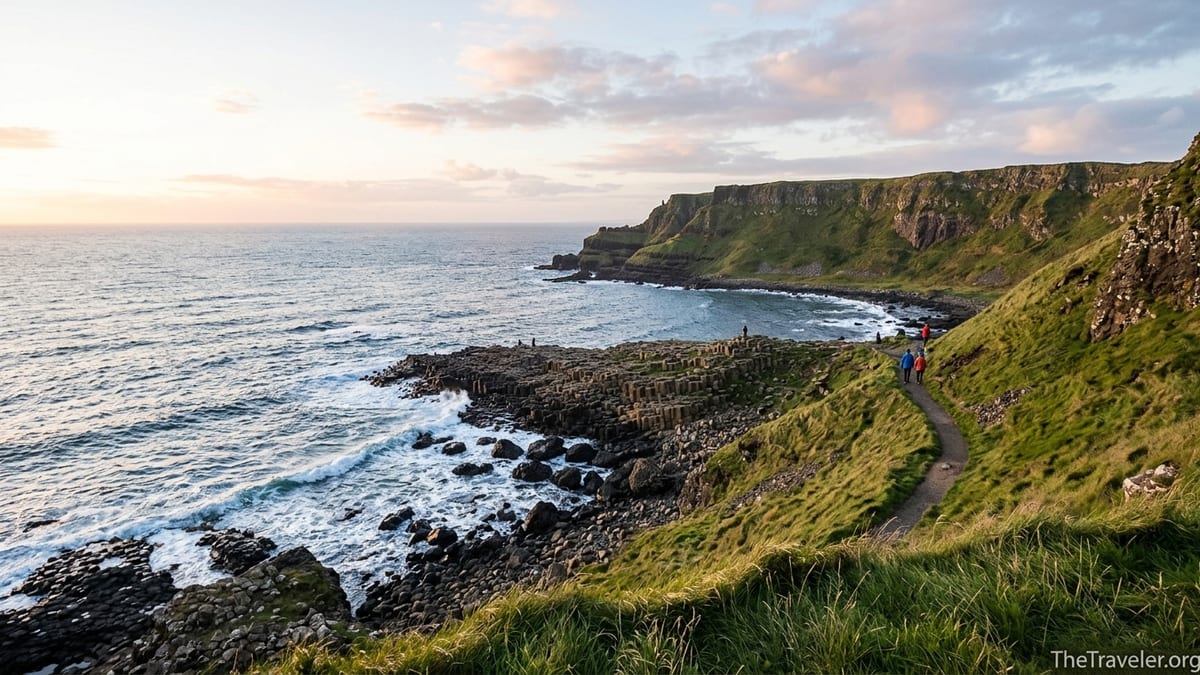
Day 2 is for the Causeway Coast. Pick up your hire car early and drive north out of Belfast. If you follow the inland A26 it takes roughly 1 hour 15 minutes to reach the Giant’s Causeway car parks, but a more memorable choice is the coast-hugging A2 Antrim Coast Road, adding at least an hour once you factor in stops. Either way, plan to arrive at the Giant’s Causeway before late morning to avoid the busiest tour bus window. The UNESCO-listed basalt columns themselves are free to walk, though there is a separate fee for the National Trust visitor centre and on-site parking. Many visitors stay nearby in Bushmills, which offers small hotels, self-catering cottages and the famous Old Bushmills Distillery with guided tours and tastings.
On Day 3, you can make a slower start on the north coast. A typical morning might include a walk at the ruins of Dunluce Castle perched on basalt cliffs, or a stroll along Portstewart Strand, a wide sandy beach where cars are permitted to park on the sand for a fee. If your departure time allows, swing through the seaside town of Portrush for coffee before driving back to Belfast. Returning via the inland route, plan around 1.5 hours of driving; if you choose the coastal road again, allow closer to three hours including brief stops. Many visitors with evening flights drop the car at Belfast City Airport, which lies only a short taxi ride from the city centre.
Five Days: Adding Derry~Londonderry or the Mournes
With five days, you can expand the 3-day circuit to include either Derry~Londonderry or the Mourne Mountains, depending on whether you prefer more city and culture or extra hiking and coastal scenery. A classic pattern is two nights in Belfast, two on the north coast, and one in Derry; or two nights Belfast, two in the Mournes, and one on the coast.
If you opt for Derry~Londonderry, spend Days 1 and 2 in Belfast as above, then drive the Causeway Coastal Route on Day 3. Instead of looping straight back to Belfast, continue west from the Giant’s Causeway. The main road to Derry~Londonderry via Coleraine and Limavady takes around 1 hour 15 minutes of pure driving from the Causeway, but you will likely pause at viewpoints near Mussenden Temple or Benone Strand, turning it into a leisurely afternoon. Aim to reach Derry before dusk, return the car if you prefer to be car-free in the city, and settle into a base near the 17th-century city walls.
On Day 4, walk the full circuit of Derry’s walls for views over the River Foyle and the Bogside neighbourhood murals, then cross the Peace Bridge to the newer waterfront. There are several small museums that explore the city’s layered history from the Plantation era to the Troubles, and guided walking tours depart regularly from the city centre in high season. In the evening, you can seek out live music in the compact old town before returning to Belfast by direct road on Day 5, a journey of around 1.5 hours by car or a similar time by coach. Many travellers choose a late-afternoon departure to allow a final stroll and lunch in Belfast.
Alternatively, choose the Mourne Mountains instead of Derry for a more outdoors-focused five days. From Belfast, it is around 1 hour 15 minutes south by car to Newcastle, a small resort town that sits at the base of Slieve Donard and the Mourne range. After one or two days in Belfast, drive down to Newcastle and use it as a base for two nights. You can hike sections of the Mourne Way trail, walk around the forested paths of Tollymore Forest Park, or simply stroll the seafront promenade. Accommodation runs from simple guesthouses to spa hotels that look across the Irish Sea.
On the final day of a Mournes-focused itinerary, drive back to Belfast via the inland A1, which typically takes just over an hour, leaving time to detour to Castlewellan Forest Park or the market town of Downpatrick. Many visitors combine this route with a quick stop at the Saint Patrick-related sites around Downpatrick if they are interested in early Christian history, before dropping the car back in Belfast and departing.
Seven Days: Full Circuit with Coast, Derry and Mournes
A week in Northern Ireland allows you to complete a full loop without rushing, combining the major regions while still allowing unstructured time. A well-balanced seven-day plan might include two nights in Belfast, two on the Causeway Coast, two in Derry~Londonderry and one in the Mourne Mountains. This keeps average daily driving under three hours and avoids changing beds every night.
Begin with two nights in Belfast to adjust to time zones and get your urban bearings. Besides the Titanic Quarter and political tours, you might step into Saint George’s Market if you are visiting over a weekend, or tour Crumlin Road Gaol for insight into 19th and 20th-century prison history. Food costs are comparable to other UK cities; a casual dinner of fish and chips or a pub main course in central Belfast typically runs in the range of 12 to 20 pounds per person, excluding drinks. Building in two evenings gives you space to sample at least one contemporary restaurant and one traditional pub.
On Day 3, drive north via the Antrim Coast to your Causeway base, taking advantage of the extra time to stop at small harbours such as Carnlough or Cushendun. Many travellers break for lunch at a café in Ballycastle or Glenarm and still reach the Giant’s Causeway in mid-afternoon for a first walk. Spend two nights in Bushmills or Portrush so you can explore without moving accommodation. On Day 4, use your car to visit Carrick-a-Rede rope bridge, the Dark Hedges avenue of beech trees, and whichever beaches or cliff paths appeal. Time-ticketing is common at Carrick-a-Rede in high season, and the suspension bridge can close in strong winds, so it is wise to check conditions with your accommodation host or visitor information office the day before.
From the north coast, Day 5 is the natural time to head west to Derry~Londonderry. Even with stops along the way, you can comfortably reach the city by mid-afternoon. Once there, you can park the car and explore on foot. The city centre is compact, and many hotels and guesthouses sit within or just outside the walls. In the evening, riverside restaurants along the Foyle offer views of the Peace Bridge lit up after dark, making a good backdrop for a final night in the city.
On Day 6, turn south toward County Down and the Mourne Mountains. This is the longest single driving day in this sample plan; driving from Derry to Newcastle via Belfast often takes close to three hours in normal conditions, so plan a stop in Belfast for lunch or a brief museum visit if you did not see everything earlier. Alternatively, you can divide the journey with an overnight near Lough Neagh, but most visitors are happy to make the drive in one go. Once in Newcastle, reward yourself with an easy coastal walk or a coffee overlooking the sea.
Day 7 is a final half-day in the Mournes for a short hike, then a drive back to Belfast or on toward Dublin if that is your onward gateway. Short hill walks near Silent Valley Reservoir or a low-level loop in Tollymore Forest Park give a taste of the granite peaks without committing to a summit attempt, and in good weather you will see the classic view of the “mountains of Mourne” rolling down to the sea. Driving back to Belfast from Newcastle in around 1 hour 15 minutes leaves time for rental car return and airport check-in.
Ten Days: Adding Fermanagh and Slower Travel
With ten days, you can slow the pace further and add a very different landscape in County Fermanagh, known for its lakelands and cave systems. A comfortable ten-day circuit might include two nights Belfast, two on the Causeway Coast, two in Derry~Londonderry, two near Enniskillen in Fermanagh and two in or near the Mourne Mountains, with the option to add an extra night to whichever region appeals most.
From Derry~Londonderry, it is roughly a two-hour drive south to Enniskillen on main roads, making it a straightforward relocation day. Fermanagh’s pull is less about single headline sights and more about the combination of water, heritage and quiet countryside. Many visitors book a lakeside hotel or lodge on the shores of Lough Erne, then spend a full day exploring by boat tour or kayak rental. The Marble Arch Caves Global Geopark offers guided underground tours through limestone caverns when conditions permit, while historic sites such as Enniskillen Castle and Devenish Island monastery add variety.
Daily costs in Fermanagh are often slightly lower than on the north coast, particularly outside peak summer. Self-catering cottages around the lakes can suit families or small groups, with weekly rentals priced competitively compared to hotel stays, especially once you factor in the ability to cook some meals. Small towns like Belleek and Lisnaskea provide everyday services such as supermarkets and fuel stations, making it easy to base here for several days without feeling remote.
From Enniskillen or the Lough Erne area, you can drive east across rural County Tyrone and County Armagh toward the Mournes. Depending on your exact route, you should allow around 2 to 2.5 hours to reach Newcastle or another base near the mountain range. Along the way, you might stop in Armagh city to see its twin cathedrals and compact Georgian streets. Once in the Mournes, two nights gives you flexibility to choose walking days based on weather. Cloud and rain are common across all seasons, so it is sensible to keep plans flexible and talk to local guides or visitor centres about current trail conditions.
On the final day or two of this 10-day route, loop back to Belfast for last-minute shopping or sightseeing. Because the driving legs are relatively short, many travellers build in purposefully unstructured time, for example an afternoon detour to a lesser-known forest park, or an unscheduled beach walk when the sun breaks through clouds on the Causeway Coast. Leaving open pockets in your schedule is one of the main advantages of dedicating a full ten days to the region.
Choosing Overnight Bases and Understanding Drive Times
Selecting the right overnight bases is key to enjoying these itineraries. Belfast is the obvious starting point, with its two airports and good rail and bus connections to the rest of the island. Staying in the compact city centre allows you to walk to most attractions and pick up a rental car only when you are ready to leave the city, which can save both money and parking stress. Accommodation ranges from international chain hotels near the riverfront to independent guesthouses in Victorian townhouses, and prices fluctuate seasonally, with summer weekends commanding the highest rates.
On the north coast, Bushmills and Portrush are the most practical bases for the Giant’s Causeway and surrounding sights. Bushmills has the feel of a small village, with cosy inns and the added interest of the Old Bushmills Distillery, while Portrush is a livelier seaside town with amusement arcades, surf schools and golf courses, which suits families or those wanting evening options. Coleraine slightly inland can also work as a more central base for those who want easier road connections and often somewhat lower accommodation prices than right on the coast.
Derry~Londonderry works best as an overnight rather than just a day trip. Staying within or near the old walls means you can experience the city after day-trippers leave, with evening walks along the ramparts and dinners in local restaurants. Meanwhile, in the Mournes, Newcastle is the most convenient choice for those relying on public transport, as it has regular bus links to Belfast. Travellers with a car might also consider smaller spots like Rostrevor or Annalong for a quieter stay, accepting longer drives to reach trailheads.
For Fermanagh, Enniskillen is the main service town and a natural base, but many visitors opt for lodging scattered around Lower or Upper Lough Erne to maximise lake views. Driving times from Enniskillen to Belfast are typically around two hours, while Enniskillen to Derry takes a similar amount of time. Because many roads in rural areas are single carriageway, journey times can stretch if you find yourself behind slow-moving vehicles, so it is best to avoid scheduling tight back-to-back activities separated by long drives.
Practical Tips for Seasons, Booking and Budget
Weather in Northern Ireland is changeable year-round, with frequent showers and moderate temperatures rather than extremes. Summer, from roughly June to August, brings the longest days and the busiest crowds at the Giant’s Causeway, the Causeway Coast and popular hiking areas. Shoulder seasons in May and September often balance milder weather with fewer visitors and slightly better value on accommodation and car hire. Winter travel is possible, but days are short and some attractions operate reduced hours, particularly outdoor sites and smaller visitor centres.
Given the popularity of certain hotspots, advance booking is wise for some elements of these itineraries. If you intend to walk across the Carrick-a-Rede rope bridge, check for timed ticketing and potential weather-related closures in advance. Similarly, guided cave tours in Fermanagh and some Belfast attractions such as the Titanic experience can sell out at peak times. For car hire, reserving early typically secures lower rates, particularly around summer holidays and major events in Belfast or Derry.
Budget-wise, travelling by car with two to four people often proves cost-effective compared with relying solely on organised day tours, especially on longer itineraries. A typical organised day tour from Belfast to the Giant’s Causeway that includes stops at Carrick-a-Rede and Dunluce Castle commonly costs in the region of 50 to 80 pounds per person, not including meals. By contrast, a day of self-driving primarily adds fuel costs on top of your rental car, though you will still pay individual entry and parking fees. That said, solo travellers or those uncomfortable driving on the left may prefer tours for convenience and commentary.
Public transport can supplement or replace driving on shorter stays. Trains run from Belfast to Coleraine, with connecting buses to Portrush and the Causeway, and there are bus connections to Derry and Newcastle, though services to rural trailheads are limited. Several private operators run coach tours linking Belfast with the Giant’s Causeway and Derry, which can be a simple way to experience the key sights in one or two long days if you have minimal time.
The Takeaway
Whether you have three days or ten, Northern Ireland rewards itineraries built around a handful of strong bases and realistic drive times. Belfast provides an energetic urban introduction; the Causeway Coast delivers world-famous geology and sea cliffs; Derry~Londonderry adds walled-city atmosphere and contemporary culture; the Mournes bring granite peaks that sweep down to the sea; and Fermanagh offers tranquil lakes and caves. With planning, you can connect these regions into a satisfying loop that leaves room for slow mornings, extra photo stops and the occasional unplanned coffee in a village you might otherwise have rushed past.
By anchoring yourself for at least two nights in each region, checking average drive times in advance and allowing for the natural slowness of scenic coastal and mountain roads, you turn a checklist of names into a relaxed journey. Add in weather flexibility, advance bookings for key attractions in peak season, and a realistic budget for car hire, fuel, food and entrance fees, and your Northern Ireland itinerary can feel less like a race and more like a series of linked experiences. In the end, the goal of any 3, 5, 7 or 10-day route here is not just to say you have seen the Giant’s Causeway or walked Derry’s walls, but to have time to linger, listen to local stories and let the landscapes unfold at their natural pace.
FAQ
Q1. Is it realistic to visit the Giant’s Causeway as a day trip from Belfast?
Yes, it is realistic. The direct drive from Belfast to the Giant’s Causeway usually takes around 1.5 to 2 hours each way by car, and organised coach tours run full-day trips that combine the Causeway with coastal stops. You will have several hours on the north coast, but staying overnight nearby allows a quieter early morning or evening visit.
Q2. Do I need a car for these Northern Ireland itineraries?
A car gives the most flexibility, especially for combining the Causeway Coast, Derry, the Mournes and Fermanagh in one trip. However, it is possible to do a shorter itinerary using trains and buses between Belfast, the north coast and Derry, supplemented by organised day tours. Remote hiking areas and lakeside locations are much easier to reach with a vehicle.
Q3. Which town is the best base for the Causeway Coast: Bushmills, Portrush or Coleraine?
Bushmills is ideal if your priority is proximity to the Giant’s Causeway and a quieter village feel, Portrush suits those who want a lively seaside town with more restaurants and nightlife, and Coleraine is a practical option for better road connections and often slightly lower prices. All three work as bases within roughly 20 to 30 minutes’ drive of the main coastal sights.
Q4. How many nights should I spend in Derry~Londonderry?
One night is enough to walk the city walls, visit a museum and enjoy an evening meal, but two nights give you a full day without travel, which feels less rushed. If your itinerary already includes several driving days in a row, consider allowing that second night for a slower pace and more time to join a guided walking tour or explore neighbourhoods beyond the historic core.
Q5. When is the best time of year to drive the Causeway Coastal Route?
Late spring and early autumn are often the sweet spots, typically May, early June and September, when daylight is long, sea views are impressive and crowds are slightly lighter than in peak summer. You can drive the route year-round, but winter brings shorter days and occasional stormy weather that can close some outdoor attractions temporarily.
Q6. Can I fit both the Mourne Mountains and Fermanagh into a 5-day trip?
Fitting both regions into just five days is technically possible but usually feels rushed, because they lie in opposite directions from Belfast. Most travellers with five days choose either the Mournes or Fermanagh to combine with Belfast and the north coast or Derry. With seven to ten days, adding both becomes much more comfortable.
Q7. Are the Giant’s Causeway and its visitor centre the same thing?
No. The Giant’s Causeway refers to the natural basalt columns along the shoreline, which can be accessed on foot without a ticket. The visitor centre, car park, audio guides and some facilities are operated separately and carry an admission fee. Many travellers choose to use the centre for parking, information and shelter in bad weather, while others park in nearby villages and walk to the stones.
Q8. Is driving on the Antrim Coast Road difficult for visitors from abroad?
The Antrim Coast Road is winding and can feel narrow to those used to wide highways, but it is manageable with steady, unhurried driving. The key is to allow extra time, be prepared for slower vehicles and pull over only in designated lay-bys. Hiring a smaller car often makes the experience less stressful on rural and coastal roads.
Q9. How far in advance should I book accommodation on the Causeway Coast?
In peak months such as July and August, booking several months ahead is wise, especially for weekends and popular villages like Bushmills and Portrush. In shoulder seasons, booking a few weeks in advance usually provides enough choice, though particular events or holidays can still cause spikes in demand. Flexible travellers visiting outside school holidays may find last-minute options, but relying on this in high season can be risky.
Q10. Can I use Belfast as a single base for all my day trips?
You can technically visit the Giant’s Causeway, Mourne Mountains and even Derry as long day trips from Belfast, but this involves a lot of repeated driving. For shorter stays of three or four nights, one base can work, especially if you prefer not to change hotels. For 5, 7 or 10-day trips, using at least two or three bases, such as Belfast plus the north coast and either Derry or the Mournes, usually creates a more relaxed, efficient itinerary.