


Northern Ireland is rarely scorching hot, almost never truly frozen and famously unpredictable. That means there is no single “perfect” month to visit, but there are definitely better times depending on whether you want open coastal roads, quiet Giant’s Causeway sunsets, city breaks in Belfast and Derry, or your best chance of half-decent hiking weather. This guide breaks the year into practical travel windows so you can pick the month that really matches your priorities.
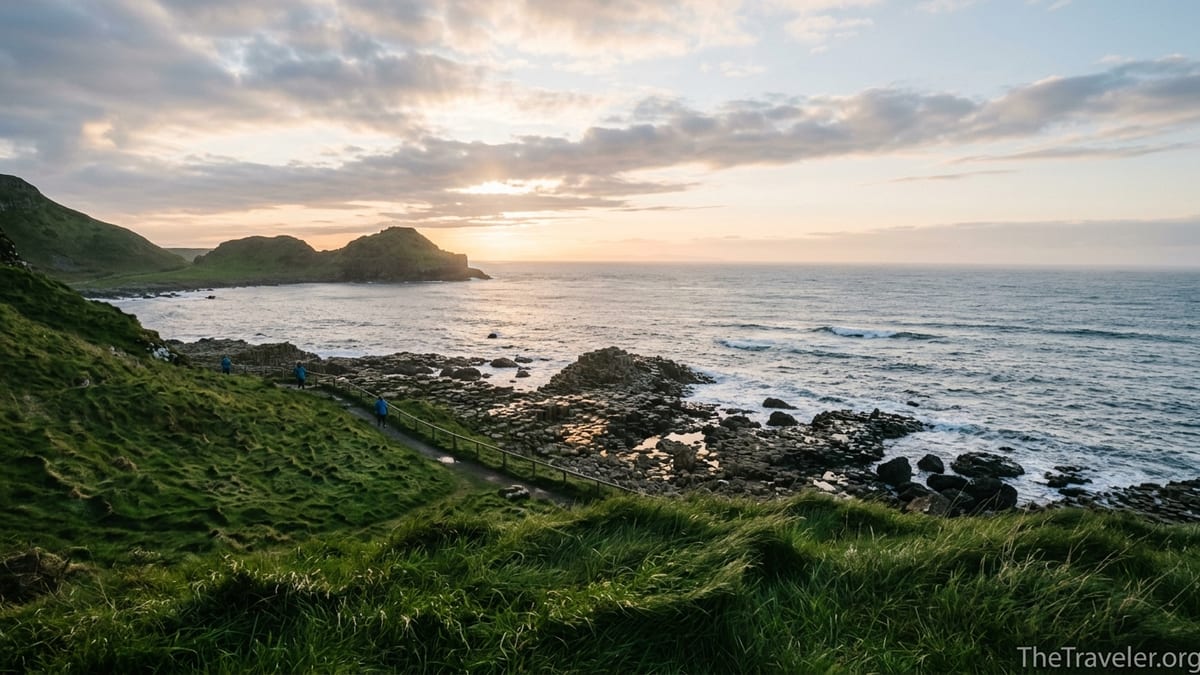
How Northern Ireland’s climate really feels
On paper, Northern Ireland’s weather looks mild and wet year round. In Belfast, long‑term averages show winter daytime highs around 7 to 8 degrees Celsius from December to February, rising to roughly 18 to 19 degrees in July and August. Nights rarely drop far below freezing and true heatwaves are unusual. Rain is spread across the year, with many months seeing around 70 to 90 millimetres, and sunshine hours are modest in every season. In practice, you feel this as changeable, maritime weather: four seasons possible in a single afternoon.
The key difference through the year is not just temperature but daylight. In midwinter, Belfast gets barely eight hours of usable light, with sunsets before 4.30 p.m., while in late June you can still see colour in the sky after 11 p.m. That makes a massive difference if you are planning a self‑drive on the Causeway Coastal Route, a day of hiking in the Mourne Mountains, or a packed city schedule with museums in the morning and pub music at night.
Because the climate is relatively steady, most travelers notice seasonal change more in crowds and prices than in dramatic weather swings. Official hotel statistics show higher room occupancy in the main summer months and lower figures in winter, with annual occupancy in recent years sitting around the upper 60 percent range. That means summer books out faster, pushes rates up and makes spontaneous trips difficult, while winter breaks can be excellent value if you are flexible and do not mind grey skies.
Sea conditions along the Causeway Coast also vary with the seasons. Swell and wind can be fierce any time, but late autumn and winter bring more frequent Atlantic storms that can close coastal walking paths or boat tours. In contrast, late spring and early autumn often combine more settled seas with long days, useful if you are eyeing cliff‑top walks near Dunluce Castle or boat trips from Ballycastle or Ballintoy.
High summer (June to August): light, warmth and peak crowds
June to August is the obvious choice for travelers who want the brightest, liveliest version of Northern Ireland. July and August are typically the warmest months, with daytime highs around the high teens and low twenties Celsius in Belfast, and long stretches of daylight that can easily support a morning at Titanic Belfast, an afternoon drive to the Giant’s Causeway and an evening pub session back in the Cathedral Quarter. On the coast you are unlikely to swim without a wetsuit, but standing on the hexagonal stones in a light fleece feels far more pleasant than in a winter gale.
This is also when the Causeway Coastal Route is at its busiest. Car parks at headline stops like the Giant’s Causeway, Carrick‑a‑Rede rope bridge and Dunluce Castle can fill from late morning onward, particularly on weekends and school holidays. Tour buses run at full clip from Belfast and Dublin, so by mid‑day you may find lines for the rope bridge and a lively, almost theme‑park atmosphere around the visitor centre. If you visit in July or August, aim for early morning arrivals before 9 a.m. or evening visits after 6 p.m. to enjoy softer light and thinner crowds.
The trade‑off for this summer buzz is cost. Recent hotel data from booking platforms show average nightly rates in Belfast climbing from around 110 US dollars equivalent in January to close to 190 dollars in August, with June and September also noticeably more expensive than deep winter. In practical terms, a central four‑star might cost 260 to 300 dollars per night in early August, compared with 150 to 180 dollars for the same room in January, while popular coastal guesthouses in Portrush or Portstewart can easily sell out on summer weekends.
For hikers, summer offers the driest underfoot conditions you are likely to get, though showers remain common. The Mourne Mountains, the Sperrins and coastal paths like those above White Park Bay are all at their most accessible. The flip side is that midges and coastal insects are more noticeable on still evenings, and popular trails can feel busy. Summer is ideal if your priority is maximum daylight and a social, festival‑like energy in Belfast and Derry, and you are willing to book early and pay peak prices.
Shoulder seasons (April to May & September): best overall balance
For most travelers who want a mix of city time, coastal drives and light hiking, late spring and early autumn are the sweet spots. In April and May, average daytime highs in Belfast climb into the low to mid teens Celsius, trees leaf out and daylight stretches well beyond 8 p.m. By May, you can realistically leave Belfast after breakfast, take the Antrim Coast Road to Cushendun and Torr Head, photograph Dunluce Castle at golden hour and still drive into Portrush before dark. Crowds are building by late May but remain noticeably lighter than peak summer.
In September, the weather is often still relatively mild, with average highs similar to late spring, yet the school holiday rush has ended. On the Causeway Coast this can feel like the best of both worlds: car parks may still be busy on sunny Saturdays, but you are less likely to queue for the Carrick‑a‑Rede rope bridge for an hour, and evenings at small restaurants in Ballycastle or Portballintrae feel more relaxed. Some local guides consider the September light along the coast to be among the most beautiful of the year, soft and low without the haze of high summer.
Prices in the shoulder months tend to sit between winter lows and summer highs. A centrally located three‑star in Belfast might average 140 to 170 US dollars per night in April or May, edging up in late May and early June as festivals and events start. Along the coast, weekend rates still spike for golf tournaments in Portrush or Portstewart and for bank holiday weekends, but midweek stays can be good value. Because occupancy is lower than peak summer, you can often secure better deals by booking Sunday to Thursday rather than Friday and Saturday.
From a road trip perspective, these months are particularly forgiving. Traffic on the narrow A2 coast road between Larne and Ballycastle is noticeably lighter, making it easier to stop at viewpoints without feeling rushed. Hiking routes like the clifftop path from Dunseverick to the Giant’s Causeway are usually open and less muddy than in winter, and city breaks benefit from long evenings for riverside walks along Belfast’s Lagan or Derry’s 17th‑century walls.
Quiet months (November to March): low prices, moody landscapes
From November through March, Northern Ireland shifts into its quietest tourism period. Daytime highs across much of the region hover between 6 and 9 degrees Celsius, with a damp chill that feels colder in coastal wind. Daylight is short; in December you may have usable light only between about 9 a.m. and 3.30 p.m. This limits how many stops you can realistically fit into a single winter day on the Causeway Coast, especially if you are driving yourself and want to avoid narrow rural lanes in the dark.
The pay‑off is that visitor numbers and prices fall. Winter occupancy reports show hotel room use dipping in these months compared with summer, and online booking sites reflect that in lower average nightly rates. It is common to find central Belfast business hotels in January for the equivalent of 110 to 140 US dollars per night, sometimes less if you are willing to prepay or stay Sunday to Thursday. Coastal B&Bs that might be fully booked in August could offer off‑season deals with breakfast and sea views for well under summer rates.
Conditions on the Causeway Coast in winter can be spectacular but demanding. Storm systems roll in more frequently from the Atlantic, producing dramatic waves at the Giant’s Causeway and around Dunluce Castle, but also strong winds and driving rain. Some operators reduce or suspend small‑boat trips out of Ballycastle or from nearby harbours in rough conditions, and the rope bridge at Carrick‑a‑Rede can close temporarily for safety. Walking the cliffs near Fair Head on a blustery January day requires serious waterproofs, warm layers and careful attention to warnings.
For city breaks, though, winter can be rewarding. Belfast’s museums, galleries and Titanic Quarter attractions are open year round, and pub culture arguably feels at its most authentic on dark, chilly evenings. Christmas lights in Belfast and Derry, seasonal markets and New Year events add atmosphere. If your priority is avoiding crowds and stretching your budget in hotels and restaurants, and if you accept that you might only see a few hours of grey light on the coast, November to early March can work well.
Month by month: what to expect in practice
January and February are the coldest and darkest months, with short days and frequent rain. On the Giant’s Causeway, you may find only a handful of other visitors midweek, and dramatic surf pounding the basalt columns. Many smaller coastal cafes close or keep very limited hours, so self‑catering apartments in Portrush or Portstewart work well, allowing you to cook in after a windswept walk. Belfast hotel rates are among the lowest of the year, which can make this a good time for a value‑focused city break with day trips by rail to places like Derry or Bangor.
March and April feel transitional. Daffodils appear in Belfast’s Botanic Gardens, and days lengthen enough to make a loop from Belfast to the Glens of Antrim realistic without driving in the dark. Weather is still highly changeable; you might have a clear afternoon on the Antrim cliffs followed by sleet on your drive back. Many coastal businesses reopen in time for Easter, and Belfast sees more weekend visitors. On the road, you will notice more campervans and international rental cars, but major sites remain manageable, especially on weekdays.
May and June are often regarded by repeat visitors as the prime months for active trips. Trails in the Mournes are less boggy, and temperatures are cool enough for long hikes without overheating. Sea cliffs along the Causeway Coast are carpeted in wildflowers, and the long evenings allow you to photograph the Giant’s Causeway at 9 or 10 p.m. with relative quiet compared to mid‑afternoon. Accommodation prices rise compared with March but are still a notch below late July and August, particularly outside bank holiday weekends.
July and August bring the warmest air and water temperatures of the year, school holidays and the biggest festival calendar. Expect Belfast to feel busy at weekends, with hotel lobbies full of international tour groups and city restaurants taking reservations well in advance. Coastal towns like Portrush become classic seaside resorts, with arcades and ice‑cream stands doing brisk business whenever the sun appears. If you come at this time, build in extra time for parking, book your Giant’s Causeway slot early and accept that you will share viewpoints with many others.
September and October are shoulder‑to‑quiet transition months. September often retains a summer softness in the air but with calmer crowds. This is an excellent time for a multi‑day drive: start in Belfast, loop the Causeway Coast, then cut inland through the Sperrins to Derry, finishing with a night or two exploring the city walls. Hotel prices usually start to ease by late September. By October, autumn storms and shorter days return, but coastal colours can be beautiful and Halloween festivities in Derry are a genuine highlight if you like city events more than beach days.
Best months for different trip types
For a classic Causeway Coast road trip, late April through June and September are the standout months. You get long days for driving the Antrim Coast Road, more reliable openings for attractions like Carrick‑a‑Rede, and manageable traffic. A typical 3‑day itinerary might see you leave Belfast for Cushendall and the Glens on day one, focus on the Giant’s Causeway and surrounding hikes on day two, then continue via Mussenden Temple and Benone Strand to Derry on day three, all without feeling rushed.
Hikers and outdoor enthusiasts should aim for May, June or September, when trails are dryer and temperatures are comfortable. In the Mourne Mountains you can link Slieve Donard and neighbouring peaks without the heavy bog of winter, and in the Sperrins you will find more forgiving ground for long ridge walks. Summer can work too, but you will need to balance longer days with potentially busier trails and carry insect repellent for still evenings near loughs and forest edges.
For city breaks focused on Belfast’s food, music and cultural scene, October to March can be surprisingly attractive. You can often pick up more affordable rooms in well‑located hotels near City Hall or the Cathedral Quarter, and you are less likely to encounter large cruise groups. A winter weekend might include an afternoon at the Ulster Museum, a tour of Titanic Belfast, dinner in the Linen Quarter and traditional music in a compact pub, all without worrying much about daylight. Short day trips by train to Derry or by bus to the Ards Peninsula fit easily into this pattern.
If your priority is lower crowds and value rather than weather, look at November, late January, February and early March. In these months, you can often book a sea‑view guesthouse in Portrush or Ballycastle a week or two ahead at a moderate rate, dine in local restaurants without reservations on weeknights and have sections of the coast largely to yourself. Just plan around reduced ferry and tour schedules and be prepared with waterproofs, insulated layers and a flexible itinerary in case storms close cliff paths for a day.
Practical tips for timing and booking
Whenever you visit, build flexibility into your schedule. Northern Ireland’s weather can shift quickly, so it pays to keep your high‑value outdoor experiences, such as the Giant’s Causeway, Carrick‑a‑Rede or a long Mourne hike, on days where the forecast looks best and use wetter periods for museums, distillery tours or long pub lunches. Because conditions change rapidly, a day that starts grey in Belfast can clear by the time you reach the coast an hour away, so do not overreact to early‑morning showers.
Booking patterns also matter. In peak months, Belfast and popular coastal towns see strong weekend demand from domestic visitors and short‑breakers from elsewhere in Ireland and Britain. If you have flexibility, arrive Sunday or Monday and stay through midweek to enjoy lower prices and thinner crowds at the biggest attractions. In winter and shoulder seasons, some coastal restaurants and small hotels close midweek and open only Thursday to Sunday, so check opening days when planning a February or March road trip.
If you plan to drive, consider daylight when plotting daily distances. In June, a 250‑kilometre loop with several photo stops and a cliff walk is comfortable. In December, even a 120‑kilometre run along the Causeway Coast with a single major stop can feel rushed in the short window between sunrise and sunset. For non‑drivers, shoulder months are easier, as bus and tour schedules are fuller. In winter, some excursion operators reduce frequency or pause operations entirely, particularly for small‑group coastal tours from Belfast.
Finally, pack with the local saying “four seasons in one day” firmly in mind. Regardless of month, a waterproof shell, warm mid‑layer, hat and gloves belong in your daypack on the coast or in the hills. In summer, add sunscreen and light layers for rare but real sunny spells that can catch pale visitors unprepared. The more prepared you are for varied conditions, the easier it becomes to choose the month that suits your budget and crowd tolerance without worrying too much about whether the weather will “cooperate.”
The Takeaway
If you want the best all‑round experience, combining reasonable odds of decent weather, long days and moderate crowds, late April through June and September stand out. These months are ideal for the Causeway Coastal Route, light hiking and blended trips that mix Belfast’s culture with time by the sea. Prices are higher than deep winter but often below the peak of July and August, and you will find it easier to park at headline stops and book accommodation without months of lead time.
Travelers who prioritise warmth, festivals and nightlife energy should choose July or August, booking well ahead and budgeting for higher hotel rates and busier roads. Those chasing lower prices, quieter attractions and atmospheric, moody landscapes might prefer November to March, particularly for city‑focused stays or photography along the wild winter coast. With realistic expectations, layered clothing and a flexible plan, almost any month can work in Northern Ireland; the key is matching your timing to what you most want from the trip.
FAQ
Q1. What is the single best month to visit Northern Ireland overall?
Many travelers find May the best compromise, with long days, mild temperatures, wildflowers on the coast and fewer crowds than high summer, though no month guarantees dry weather.
Q2. When is the best time to drive the Causeway Coastal Route?
Late April to June and September are ideal, offering long daylight, open attractions and manageable traffic, while still avoiding the heaviest July and August crowds.
Q3. Which months have the lowest hotel prices in Belfast?
Prices are typically lowest in January, February and early March, when occupancy drops and you can often find central hotels at significantly reduced midweek rates.
Q4. Is winter too stormy to visit the Giant’s Causeway?
Winter brings more Atlantic storms, but the Giant’s Causeway usually remains open; it can close temporarily in severe conditions, so check locally and dress for strong wind and rain.
Q5. When should hikers plan a trip to the Mourne Mountains?
May, June and September usually give the best mix of firm ground, comfortable temperatures and reasonable daylight, although conditions can still change quickly on the peaks.
Q6. What is the warmest time of year in Northern Ireland?
July and August are generally the warmest months, with average highs in the high teens to low twenties Celsius, though heatwaves are rare and rain is still common.
Q7. Are coastal restaurants and attractions open year round?
Major sights like the Giant’s Causeway are open year round, but smaller coastal cafes, seasonal restaurants and some tour operators often close or reduce hours from November to March.
Q8. How far in advance should I book accommodation in summer?
For July and August, especially in Belfast, Derry and coastal towns like Portrush, booking at least two to three months ahead is sensible, and longer for weekends or major events.
Q9. Is it worth visiting Northern Ireland in the rain?
Yes. Rain is frequent in all seasons, but museums, pubs, distilleries and indoor attractions make city days enjoyable, and moody coastal weather can be very atmospheric for photography.
Q10. Do I need a car to enjoy Northern Ireland outside summer?
A car gives more flexibility in shoulder and winter months when tour and bus schedules are reduced, but you can still reach key spots using rail, buses and occasional organised day tours.