


Ask a Welsh local whether North Wales or South Wales is better and you are likely to start a friendly argument. For visitors, the choice is more practical. With limited days, should you head for the jagged mountains and fortress towns of the north, or the beach-fringed, city-backed landscapes of the south? This guide compares both halves of Wales using real places, journeys and experiences to help you decide where to spend your precious holiday time.
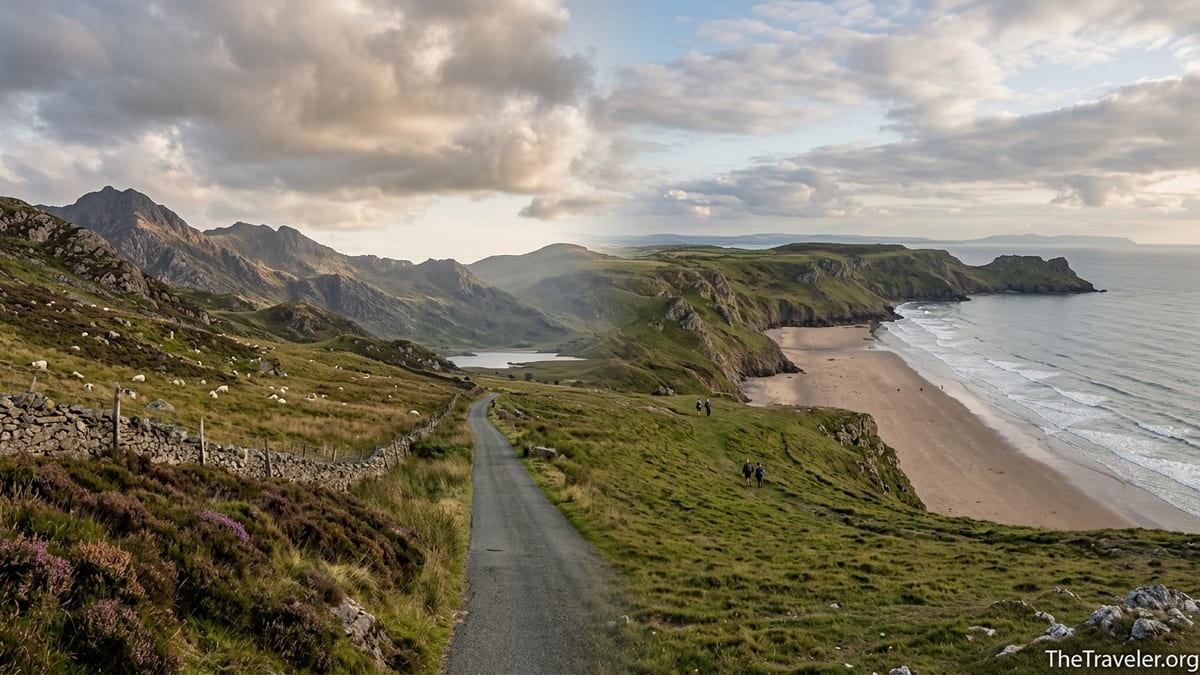
North Wales vs South Wales at a Glance
North Wales tends to attract visitors looking for big landscapes and old stone. Eryri National Park, still often called Snowdonia, dominates the region with steep ridges, glacial lakes and slate quarries turned into zip lines and underground adventures. Around its edges sit storybook castles like Conwy and Caernarfon, plus seaside towns such as Llandudno and the island of Anglesey, all within roughly an hour’s drive of one another.
South Wales offers more variety in a compact area. Within about 90 minutes of Cardiff you can combine a capital-city break, coastal walks on the Gower Peninsula or Glamorgan Heritage Coast, and mountain days in Bannau Brycheiniog, also known as the Brecon Beacons. This makes the south particularly practical for first-time visitors flying or taking the train into Cardiff and wanting to see a bit of everything without long transfers.
In terms of feel, North Wales is quieter, a little wilder and more obviously rural. Distances between sights can be short in miles but slow on narrow, twisting roads. South Wales has a denser population centered around Cardiff, Swansea and the South Wales Valleys, with more nightlife, shopping and events, plus a milder climate along the south coast that lends itself to year-round city and coastal breaks.
If you only have three to five days, most visitors will be happier choosing one region and exploring it properly. A typical North Wales trip might pair Llandudno, Conwy and Eryri. A South Wales itinerary might link Cardiff, the Gower Peninsula and a day in the Brecon Beacons. Trying to do both north and south in under a week usually means spending more time on the A470 than on the trail or beach.
Mountains and Hiking: Eryri vs Bannau Brycheiniog
If your main goal is mountain hiking, North Wales has the edge in drama. Eryri National Park, designated in 1951, is home to Yr Wyddfa, or Snowdon, the highest mountain in Wales at 1,085 metres. Well-known walking routes like the Llanberis Path or the Pyg and Miners’ Tracks attract thousands of hikers each summer, and the Snowdon Mountain Railway from Llanberis offers a non-strenuous route to near the summit when trains are running. Surrounding ranges like the Glyderau and Carneddau provide quieter, more technical ridge walks for experienced hikers.
South Wales should not be dismissed, though. Bannau Brycheiniog National Park, commonly still called the Brecon Beacons, is less jagged but full of broad, grassy summits and long views. Pen y Fan, at 886 metres, is the highest peak in southern Britain and can be climbed in half a day from roadheads near Storey Arms or Pont ar Daf, making it ideal for a short trip from Cardiff. The park’s so-called Waterfall Country, near villages like Pontneddfechan, offers gorge walks, cascades and family-friendly trails rather than big mountain days.
For hut-to-hut style long-distance hiking, both regions share the Cambrian Way, a demanding trail that runs between Cardiff in the south and Conwy in the north, staying in or near mountain country for much of its length. In practice, visitors usually sample a section or two rather than attempting the entire route. A realistic example would be spending two nights in Brecon and walking part of the central Beacons, or basing in Betws y Coed in North Wales for valley and ridge walks without needing a car every day.
Weather is a consideration in both regions. Conditions in Eryri can change fast, with cloud and rain even in summer, and some scrambles such as Crib Goch are only suitable for experienced mountaineers in good weather. The Brecon Beacons are a little lower and generally milder, but boggy ground and poor visibility are common outside high summer. In either region, packing waterproofs, decent boots and being willing to swap summits for lakeside or valley walks at short notice is sensible.
Castles, History and Culture
Wales markets itself as the land of castles, and the north is where you feel this most strongly. Edwardian fortresses like Conwy, Caernarfon, Harlech and Beaumaris form what historians call the “ring of iron” along the North Wales coast. Conwy Castle sits packed inside medieval town walls overlooking the harbour, while Caernarfon’s polygonal towers dominate the River Seiont. These sites are managed by Cadw, the Welsh Government’s heritage body, and entry is typically in the mid-teens per adult in pounds sterling, with family tickets and passes available.
In South Wales, the castles tell a slightly different story. Cardiff Castle combines a Roman fort, Norman keep and exuberant 19th century gothic revival interiors in one compact site in the city centre, while a short drive north brings you to Castell Coch, a fairy-tale red-stone castle perched in the woods above the Taff Valley. Further west, you find mighty Norman strongholds such as Caerphilly, Raglan and Kidwelly, as well as romantic abbey ruins at Tintern in the Wye Valley, which pair well with wine tasting and riverside walks.
For broader culture, South Wales again offers more density. Cardiff has national museums, concert venues and sports stadiums, while Swansea provides galleries and a lively student and surf scene. In North Wales, culture is more dispersed: Llandudno has Venue Cymru for theatre and events, Caernarfon and Bangor both host small arts venues, and there is a strong focus on Welsh language and music, especially in Gwynedd and Anglesey, where bilingual signs and everyday Welsh speech are common.
If you are travelling with an interest in industrial history, both regions deliver. North Wales gives you slate quarries converted into attractions such as underground trampolining and zip lines near Blaenau Ffestiniog, plus narrow-gauge heritage railways like the Ffestiniog and Welsh Highland lines. South Wales offers the Big Pit National Coal Museum at Blaenavon, where you can go underground with former miners, and the revamped waterfront of Cardiff Bay, with interpretation of the city’s coal-exporting past woven into regenerated docks and civic buildings.
Beaches and Coastal Scenery
Many visitors assume that North Wales is all mountains and South Wales is all beaches, but both regions have strong coastlines. In the north, the Isle of Anglesey offers a ring of sandy coves, cliffs and lighthouses. Places like Rhosneigr, Newborough and Benllech provide wide family-friendly beaches, while the Menai Strait has atmospheric views back to the mountains. On the mainland, Llandudno combines a classic Victorian promenade and pier with a quieter sandy west shore, and further west the Llŷn Peninsula offers a string of coves and surfing spots around Abersoch and Porth Neigwl.
South Wales, however, is better if your priority is world-class beaches within a short drive of a city. The Gower Peninsula, west of Swansea, was the first Area of Outstanding Natural Beauty in Wales and is famous for Rhossili Bay, Llangennith and the tidal causeway to Worm’s Head. On sunny summer weekends the roads into Gower can be slow-moving, but the payoff is broad sands backed by dunes and farmland instead of urban development. Further west, the Pembrokeshire Coast National Park, although often classed as West rather than strictly South Wales, is easy to fold into a South Wales itinerary, with picturesque resort towns such as Tenby and Barafundle Bay and Marloes Sands frequently described in guidebooks as among the most beautiful beaches in Britain.
Closer to Cardiff, the Glamorgan Heritage Coast between Ogmore-by-Sea and Nash Point has wave-cut platforms, cliffs and beach walks, while Barry Island offers a traditional British seaside day with amusements, fish and chips and family rides. These options mean you can stay in Cardiff or Swansea and take straightforward day trips by car or train to the coast, something less practical in North Wales where many of the prettiest beaches, especially on Anglesey or the Llŷn, are best reached by car.
For coastal hiking, both halves of Wales share the Wales Coast Path, a continuous walking trail that hugs much of the shoreline. In North Wales, sections around Anglesey and the Llŷn Peninsula mix cliff-top paths with views to Eryri’s peaks, while in the south, day walks from places like Rhossili, Tenby or St Davids give a combination of cliff scenery, sandy bays and small harbours. If you prefer shorter, waymarked strolls, South Wales generally offers more low-level coastal options accessible by public transport, whereas in North Wales the best stretches often start from small villages or car parks rather than train stations.
Cities, Towns and Nightlife
One of the biggest practical differences between the two regions is the presence of Cardiff in the south and the relative absence of any large city in the north. Cardiff, with a population of around 370,000 in the wider area, functions as Wales’s main gateway, cultural hub and shopping centre. From Cardiff Central station, direct trains link to London Paddington in roughly 2 hours, making a car-free long weekend plausible. Once in the city you can walk between the castle, the National Museum, Principality Stadium and the Victorian and Edwardian shopping arcades, or hop on a short local train or bus to Cardiff Bay for waterfront dining.
Swansea, Wales’s second city, offers a relaxed waterfront, marina and easy access to the Gower Peninsula, though it feels smaller and more low-key than Cardiff. Newport and the South Wales Valleys towns provide further urban options, with rugby grounds, live music venues and a dense calendar of local festivals and events, particularly from spring to early autumn.
North Wales, by contrast, is built around smaller towns and resorts. Llandudno is the classic base: a wide, curving bay lined with Victorian hotels, a long pier and the headland of the Great Orme rising behind. Conwy, a few minutes away by train or car, is a walled medieval town with an imposing castle and compact harbour. Bangor, Caernarfon and Porthmadog are all modest in scale but useful as gateways to Eryri or Anglesey. Nightlife in these places tends to be cosy pubs, seafront hotels and occasional live music rather than big-city clubs.
If you want a trip that mixes galleries, gastronomy and nightlife with day trips to scenery, South Wales is the easier choice. You might, for example, spend three nights in Cardiff with one day exploring the city, one walking in the Brecon Beacons and one on the Gower coast, all via short drives or organised tours. In North Wales, the trade-off is that you wake up closer to mountains and historic sites every day, but your evenings are more about promenade strolls, pub dinners and sea air than late-night bars.
Driving, Trains and Getting Around
For many visitors, especially from overseas, transport is the deciding factor. South Wales is significantly easier to reach without a car. Great Western Railway services from London Paddington reach Cardiff in around 100 to 110 minutes, and there are frequent trains onwards to Swansea, Carmarthen and coastal towns. From Cardiff, local trains and buses can get you to places such as Barry Island, Bridgend for the Heritage Coast, Merthyr Tydfil for the Brecon Beacons and Swansea for the Gower, though some rural areas still require a car or organised tour.
North Wales has rail links along the coast between Chester, Llandudno Junction, Bangor and Holyhead, with a branch line to Llandudno itself. These services make it entirely possible to base yourself in Llandudno or Conwy and explore castles, seaside towns and even take bus connections into parts of Eryri without driving. For example, visitors regularly use buses from Betws y Coed and Llanberis to reach popular trailheads. However, reaching the more remote corners of the Llŷn Peninsula or Anglesey, and stringing together multiple rural locations in a single trip, is much easier with your own vehicle.
The distance between North and South Wales often surprises people. Driving from Cardiff to Betws y Coed via the A470, the main north-south trunk route, takes around 4 hours in good conditions, and continuing to Holyhead on Anglesey can add another 90 minutes. Public transport between north and south usually requires changing in Shrewsbury or Birmingham in England, which can mean 5 to 6 hours of train travel. For a week or less, it is usually more rewarding to choose either north or south as your focus rather than commuting between the two.
Within each region, plan realistic travel days. Mountain roads in Eryri or narrow Gower lanes in high summer often mean slower progress than satnav estimates suggest. A good rule of thumb for both regions is to allow at least 90 minutes to move between major sub-areas, such as from Llandudno to Llanberis in the north, or from Cardiff to Rhossili or Brecon in the south, and to build in time for weather or traffic changes, especially during school holidays and bank holiday weekends.
Families, Couples and Types of Trips
Families often find North Wales appealing because so many attractions are close together and clearly defined. Around Eryri you have family-focused sites such as the Welsh Mountain Zoo near Colwyn Bay, adventure parks in old quarries, heritage railways, boat trips to see puffins off Anglesey and child-friendly castles at Conwy or Beaumaris. Seaside resorts like Llandudno offer safe promenades, piers and family hotels, and many North Wales beaches have shallow gradients ideal for paddling in summer.
South Wales, by contrast, suits families who want a mix of beach days and city amenities. Cardiff’s museums, Techniquest science centre in Cardiff Bay, and the castle appeal on rainy days, while Barry Island, Porthcawl or the Gower provide classic sand-and-sea outings when the sun shines. In the Brecon Beacons, shorter walks to viewpoints, waterfalls or reservoirs work well for children, and many farm stays and cottage rentals cater specifically to families with play areas and animals on site.
For couples, the choice depends on mood. A North Wales escape can feel wonderfully remote: think stone cottages near Beddgelert, evenings in a village pub, day hikes in the hills and drives out to quiet coves on Anglesey. South Wales can be more overtly romantic if you enjoy coastal towns like Tenby, cliff-top sunsets on the Gower or city breaks with good restaurants and theatre in Cardiff followed by a countryside inn in the Usk or Wye Valleys.
Adventure travelers will find high-thrill options in both regions, from coasteering in Pembrokeshire and surfing at Llangennith in South Wales to via ferrata-style quarry adventures and big zip lines in North Wales. For slower-paced trips, South Wales tends to win for spa hotels, country-house stays and vineyard visits, while North Wales excels at simple pleasures: scenic drives, lakeside picnics and slow journeys on little trains winding into the hills.
Accommodation and Trip Costs
Both North and South Wales offer a full range of accommodation, from basic campsites to five-star hotels. In North Wales, traditional seaside hotels and guesthouses dominate in towns like Llandudno and Criccieth, while Eryri and the Llŷn Peninsula have a growing selection of glamping sites, shepherd’s huts and self-catering cottages. Prices in popular spots such as Betws y Coed, Llanberis or Abersoch can spike in late July and August, so booking several months ahead is wise if you want specific dates or properties.
In South Wales, Cardiff and Swansea have the familiar spread of international chain hotels, independent boutique properties and budget options close to stations and city centres. On the Gower, Pembrokeshire and in the Brecon Beacons, farmhouse B&Bs, country inns and holiday parks are common. Tenby, St Davids, Mumbles and the villages around Rhossili are particularly popular in school holidays, when minimum-stay rules and peak-season pricing often apply. Visiting outside the busiest weeks of late July and August can save noticeably on accommodation costs in both regions.
In terms of everyday expenses, food and drink prices are broadly similar between north and south, with simple pub main courses often in the low to mid-teens in pounds and coffee and cake in cafes typically costing a few pounds per person. Castle and attraction admissions tend to be standardised across Wales through Cadw or local councils. Car hire, fuel and parking often make up a larger share of the budget than many visitors expect, especially if you are staying in scenic but remote locations where public transport is limited and private parking at accommodation is essential.
If you are watching your spending, basing in a small town with self-catering facilities, using buses or trains for some day trips and focusing on free activities such as hiking and beach walks can keep costs manageable in both regions. North Wales offers especially good value if you enjoy long days outdoors and simple village accommodation, while South Wales provides more scope for mixing a budget-friendly countryside base with occasional splurges on city dining or spa hotels.
The Takeaway: Which Part of Wales Should You Choose?
For a first or short trip, the simplest rule of thumb is this: choose North Wales if you want your days focused on mountains, medieval castles and small seaside towns, and choose South Wales if you want to combine a compact capital-city break with easy access to beaches and gentler hills. You will not exhaust either region in a week, and trying to cover both means losing precious time to long drives and train changes.
If you have 3 to 4 days, North Wales works best if you can fly or train to Manchester or Liverpool and then head to Llandudno, Conwy or Caernarfon as a base. South Wales is ideal if you can arrive in Cardiff and split your time between the city and the Brecon Beacons or Gower. With 7 to 10 days, you might spend the entire trip in one region and explore it deeply, or, if you do not mind a long transfer day, travel slowly between north and south, perhaps following part of the A470 or Cambrian Way and stopping overnight in mid Wales.
In the end, there is no wrong answer. North Wales will give you sharper peaks, a concentration of famous castles and a slightly more remote feel. South Wales will give you a denser mix of culture, nightlife, surfing beaches and accessible walking. Think about how you like to spend your evenings, how comfortable you are with driving on narrow rural roads, and whether your ideal day ends in a quiet village pub or a city restaurant. Then pick the side of Wales that matches that picture, knowing that the other half will be waiting for a future trip.
FAQ
Q1. Is North Wales or South Wales better for a first-time visitor without a car?
South Wales is usually better without a car because Cardiff is well connected by train from London and other UK cities, and there are frequent onward services to places like Swansea, Barry Island and Merthyr Tydfil. From these hubs you can join day tours or use local buses for the Brecon Beacons and some coastal areas, whereas many of North Wales’s most scenic spots are best reached by car.
Q2. How many days do I need to see the highlights of North Wales?
A minimum of three full days allows you to get a feel for North Wales, with time for a day in Llandudno and Conwy, a day in Eryri for either hiking or a heritage railway, and a third day for Anglesey or the Llŷn Peninsula. With five to seven days you can slow down, add quieter mountain areas, and include more coastal walks or boat trips.
Q3. Can I visit both North and South Wales in one week?
It is possible but involves a lot of travel. Driving between Cardiff and the central areas of Eryri can take around four hours in good conditions, and north-south train routes often go via England and take five to six hours. If you have a full week and really want to see both, plan one region as your main base and treat the other as a shorter add-on with one or two nights rather than trying to cover everything.
Q4. Which region has better beaches, North Wales or South Wales?
South Wales generally wins for famous beaches you can easily combine with a city break, especially on the Gower Peninsula and in Pembrokeshire, with long sandy bays and good surfing. North Wales still has excellent beaches, particularly on Anglesey and the Llŷn Peninsula, but reaching the most scenic coves often requires more driving and advance planning.
Q5. Where should I go in Wales for serious mountain hiking?
If challenging mountain hikes are your priority, North Wales is the stronger choice. Eryri offers multiple high-level routes including Snowdon, the Glyderau and the Carneddau, with everything from straightforward paths to airy scrambles. South Wales’s Bannau Brycheiniog has fine hillwalking, especially around Pen y Fan and the Black Mountains, but the terrain is generally less rugged and the peaks lower.
Q6. Is North Wales more expensive than South Wales for accommodation?
Prices vary more by season and specific hotspots than by region. Popular places in both North Wales, such as Betws y Coed, Llanberis or Abersoch, and South Wales, such as Tenby, St Davids or the Gower, can be expensive in school holidays. Outside peak summer, both regions offer good value, especially if you choose self-catering cottages, village guesthouses or midweek stays.
Q7. Which part of Wales is better for nightlife and restaurants?
South Wales has the advantage here, particularly Cardiff and Swansea, where you will find a wide range of pubs, bars, live music venues and restaurants serving everything from modern Welsh cooking to global cuisines. North Wales has plenty of good pubs and small restaurants in towns like Llandudno and Conwy, but the scene is more low-key and spread out.
Q8. Is it easier to visit Welsh castles in North or South Wales?
Both regions are rich in castles, but North Wales offers the most concentrated group of major medieval fortresses, including Conwy, Caernarfon, Harlech and Beaumaris, all within a few hours’ drive of each other. South Wales has a broader mix of castles and abbey ruins spread over a wider area, including Cardiff Castle, Caerphilly, Raglan and Tintern Abbey, which combine well with city or countryside days.
Q9. Which side of Wales is better for a family holiday with young children?
For younger children, South Wales can be slightly easier, with short transfers from Cardiff to beaches, farms and gentle walks, as well as city attractions for rainy days. North Wales is fantastic for families who enjoy more active outdoor days and do not mind some driving, with mountain railways, adventure parks and castles all popular with school-age children.
Q10. If I love both cities and wild landscapes, which region should I pick?
South Wales is usually the more balanced choice if you want to combine urban and rural experiences in a single short trip. You can stay in Cardiff for museums, shopping and nightlife, then take day trips to the Brecon Beacons for mountains and to the Gower or Glamorgan Heritage Coast for beaches. North Wales suits you better if you are happy with smaller towns in exchange for being closer to high peaks and a denser concentration of historic sites.