


On a grey Tuesday in October 2026, I stood outside York Minster with my partner, phone in hand, about to buy two Visit York Passes. We had 48 hours in the city, a wish list of big-ticket attractions, and the reassuring promise that the pass would "save us money" and "simplify" our stay. But before I tapped to pay, I did the one thing many visitors never quite get around to: I ran the numbers in detail. What I found turned that near-purchase into a firm decision to walk away.
The Real Scenario: Two Days in York and a Last-Minute Recalculation
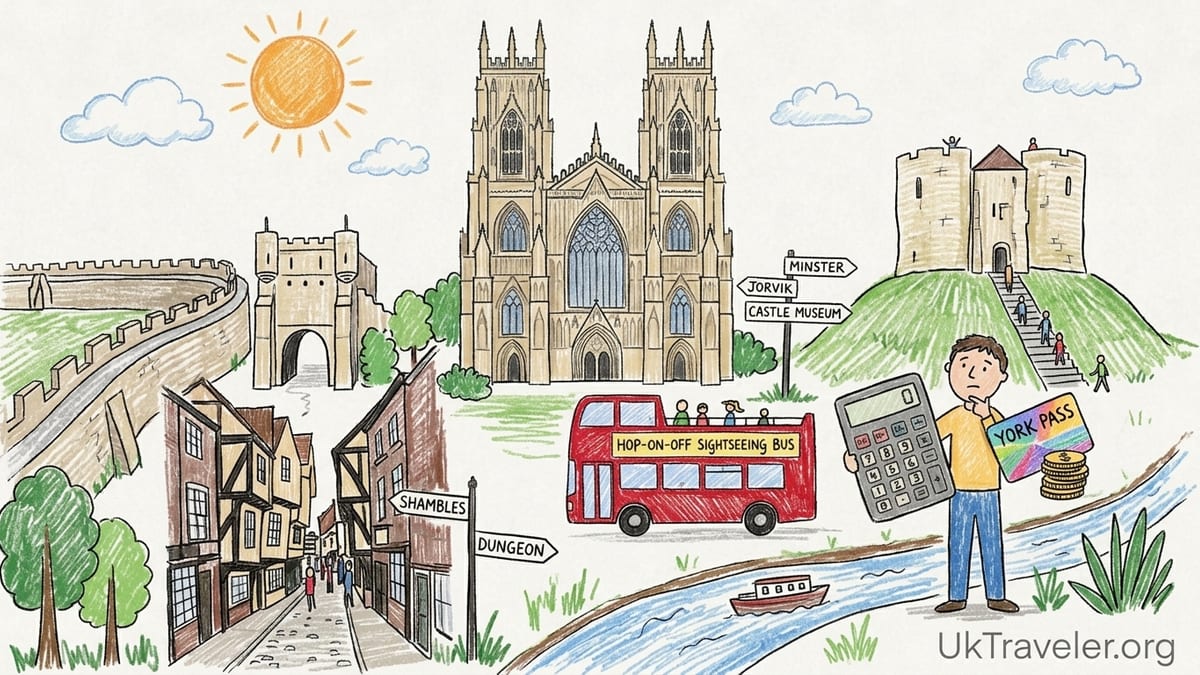
Our test case is very specific, because that is exactly how most people travel. The date was Tuesday 20 October 2026. We were two adults, staying near the city walls by Bootham Bar, with two full sightseeing days ahead. The attractions we genuinely wanted to see were York Minster, JORVIK Viking Centre, York Castle Museum, Clifford's Tower, Barley Hall, York Dungeon and a hop-on hop-off sightseeing bus, plus time to wander the Shambles, the city walls and the National Railway Museum.
On paper, the obvious product was the two-day Visit York Pass. In 2026 the official adult prices are straightforward: £72 for one day, £95 for two consecutive days and £109 for three days used across any three days within a six-day period. For two adults, that two-day pass would have cost us £190. The marketing promise is that with 35-plus attractions included, we could see more and "save significantly" compared with individual tickets.
At the pavement edge outside York Minster, I opened price pages for the main sights. York Minster general admission was £20 per adult. JORVIK Viking Centre advance adult tickets started at £17.50. The York Castle Museum, part of York Museums Trust, was roughly in the high teens for adults. Clifford's Tower, managed by English Heritage, was just under £12. Barley Hall, run by York Archaeology, sat in the low teens. York Dungeon tickets typically hovered around the mid to high £20s if bought direct. A 24-hour City Sightseeing bus ticket for York cost around the low to mid £20s for adults. Adding it up for the two of us was sobering.
Very quickly I realised that for our particular plan, the Visit York Pass was not going to deliver dramatic savings. In fact, once I added realistic timings and walking distances, there was a strong chance we would pay more with the pass than we would by just buying what we actually had time and energy to use.
How the Visit York Pass Really Works in 2026
To understand that calculation, you need to know the mechanics of the pass. In 2026, the Visit York Pass is sold in one, two or three day versions. The one and two day options are valid for calendar days, not rolling 24-hour periods. That means if you activate a two day pass at 11:00 on Saturday, it will expire at closing time on Sunday, not at 11:00 on Monday. The three day pass is more flexible: you can use it on any three days within a six-day window, but each of those is still a full calendar day, not a clock-based 24 hours.
Activation is simple but unforgiving. Your pass becomes active the first time it is scanned at an included attraction or experience. If you tap into the sightseeing bus at 9:30, your day has begun. If your first use is a late afternoon visit to a museum at 15:00, you still "spend" the whole day of validity, even though many of York's major attractions will be closing a couple of hours later.
It is also crucial to understand what the pass does not do. The Visit York Pass is not a universal fast-track product. Some attractions, such as JORVIK Viking Centre, require timed reservations for all visitors, including pass holders, because capacity is strictly controlled. Having the pass may cover the cost of admission but does not automatically place you at the front of the queue. At busy times you may need to book a time slot that is hours later or even a different day from what you originally planned.
Finally, several pass-included attractions have fairly tight opening hours. York Minster's general visiting window is typically around 09:30 to 16:00, with last admission mid-afternoon. The Castle Museum and Clifford's Tower also close by late afternoon. That compressed schedule matters when you are trying to "do enough" in one calendar day to make an expensive sightseeing pass worthwhile.
Building a Concrete Cost Comparison
Let us return to the numbers for our October 2026 trip for two adults over two days. With the Visit York Pass, we would pay £190 upfront for two consecutive days. What would the same itinerary cost if we bought individual tickets directly from each attraction at 2026 prices?
Begin with York Minster. General admission is £20 per adult, so £40 for two. Unlike in some cities, that single ticket includes access to most of the building, the crypt and exhibitions. Next, JORVIK Viking Centre. An advance adult ticket purchased on the official site is £17.50, or £35 for two. That comes with a timed entry slot and, notably, free repeat visits for twelve months, which is excellent value if you will ever return within a year.
York Castle Museum tickets for adults sit around the high teens. For simplicity in this exercise, I will use a round figure of £17, making it £34 for two adults. Clifford's Tower, booked direct, is just under £12 per adult, so around £24 for two. Barley Hall entry hovers in the low teens; using a representative £11 for our purposes gives us £22 for two. York Dungeon often sells adult tickets in the mid to high £20s; using a reasonable 2026 figure of £26 gives £52 for two adults. A 24-hour hop-on hop-off bus ticket from the City Sightseeing operator prices at around £22 per adult, so £44 for two.
Add those representative 2026 prices and you arrive at approximately £251 for two adults to visit all seven paid experiences. Against a £190 two day Visit York Pass purchase, that looks like a healthy saving of about £61. However, the problem is not in the raw totals. It lies in whether an average visitor can feasibly complete all those experiences in just two calendar days without turning their holiday into a military timetable.
How Much You Can Realistically Do in One or Two Days
To see why many people overpay with a city pass, you need to break your day into hours, not into a wish list. Let us take a typical autumn Saturday in York. York Minster first admission is around 09:30, with last general admission around 16:00. The Castle Museum usually asks you to allow at least two to three hours. JORVIK, with its ride and displays, often takes at least 60 to 90 minutes door-to-door, especially once you add queuing, the pre-show and the shop at the end.
On our October trip, we timed this carefully. A thorough visit to York Minster, including a guided tour and some time in the undercroft museum, consumed just under two hours. Walking from the Minster down to JORVIK via Stonegate and the Shambles took another 15 to 20 minutes, even without dawdling. JORVIK itself, from checking in for our time slot to stepping back out onto Coppergate, took just over an hour. By the time we emerged, it was already early afternoon and we had not yet eaten lunch.
York Castle Museum, on the other side of the River Foss, requires another 15-minute walk. Once inside, the recreated Kirkgate Victorian street, prison galleries and rotating exhibitions are not something most visitors want to rush. First-hand reports from 2026 suggest two to three hours is a normal, unhurried stay. Clifford's Tower next door may take less than an hour, but you still need a timed entry or to join the next available slot if they are limiting numbers at the top. York Dungeon typically lasts around 60 minutes, but the recommended arrival time and pre-show waiting area mean you often commit about 90 minutes door-to-door.
Layer on practicalities: queuing at security, time in gift shops, coffee breaks, lunch and simply stopping to take photos. In our own schedule, even an ambitious day that started at 09:30 and ended at closing time could fit York Minster, JORVIK, one major museum, either the bus or Dungeon and perhaps Clifford's Tower if everything aligned. Barley Hall, while compact, still deserves at least 45 minutes and requires a small detour to find its courtyard entrance off Stonegate. It became obvious that to "get value" from a two day Visit York Pass, we would need to treat museums as hurdles to clear, not experiences to absorb.
Free Alternatives That Quietly Undermine the Pass Value
Part of what draws people to the Visit York Pass is the fear of missing out. Faced with a long list of included attractions, many of which they have never heard of, visitors reason that a pass will push them to see "more of York". The reality is that some of the best things to do in York in 2026 do not cost anything at all and can easily fill large parts of a day.
The city walls, which still ring much of the historic centre, are free to walk. The stretch from Bootham Bar around to Monk Bar and on towards the Foss gives consistently photogenic views of York Minster, tile roofs and gardens below. You can easily spend an hour or more walking, stopping for photos and reading the small plaques.
The Shambles and its surrounding streets, arguably the most photographed lanes in York, are also free. Yes, many of the shopfronts have leaned into the Harry Potter theme, but if you go early or late in the day the timbered buildings, overhanging upper stories and narrow passageways are undeniably atmospheric. You will pay only if you are tempted by fudge, chocolate or the inevitable souvenirs.
The National Railway Museum remains free to enter, with an optional donation suggested. For train enthusiasts it can absorb half a day without difficulty, between the historic locomotives, royal carriages and vast Great Hall. Even for casual visitors it is an easy two-to-three hour stop, particularly in poor weather. Between the museum gardens, the Museum Gardens park itself by the Yorkshire Museum, and the riverfront paths along the Ouse, York offers an abundance of no-cost space to explore.
These free experiences mean that many visitors simply will not want or need to chain together five or six paid attractions per day. If you value slower wandering, photography, coffee shops and time to sit in Museum Gardens or by the river, your schedule naturally leaves fewer slots where a paid pass can be "wrung out" for maximum savings. At that point, the economics start tilting away from an all-you-can-visit product and towards carefully chosen individual tickets.
Where the JORVIK Pastport Fits In
The Visit York Pass is not the only multi-attraction product in town. The JORVIK Pastport, managed by York Archaeology, offers a smaller bundle that directly targets Viking and medieval history fans. In 2026, the Pastport adult price sits at £25. For that, you get entry to JORVIK Viking Centre, Barley Hall and DIG. As with JORVIK's standalone tickets, the Pastport typically includes free repeat visits for twelve months, as long as the same named person returns with ID.
Compare that £25 Pastport with buying those three individual admissions. JORVIK at £17.50, Barley Hall around £11 and DIG in the low teens combine to somewhere in the low £40s for a single adult. On a pure price basis the Pastport clearly offers value if you are definitely going to visit at least two of the three, and especially if you can realistically fit all of them into one or two days. The main operational catch is that you still need a reserved timeslot for JORVIK at busy times, regardless of whether you hold a Pastport or a Visit York Pass.
In practice, this narrower product may serve many visitors better than the broader Visit York Pass. A history-minded traveller could focus one day around JORVIK, DIG and Barley Hall, then visit York Minster and the city walls separately and perhaps choose one more big-ticket site such as the Castle Museum. Because the Pastport is relatively inexpensive, it does not create the same psychological pressure to rush through attractions purely to justify a £72 or £95 city pass purchase.
On our October visit, the JORVIK Pastport would have cost us £50 for two adults and covered two of the places already on our list, with a third as a bonus. Buying York Minster, the Castle Museum, Clifford's Tower, the Dungeon and the bus separately would then bring our total into a similar range as the Visit York Pass, but with more flexibility on dates and less obligation to cram those additional experiences into just two days.
The Hidden Cost of Rushing to “Get Your Money’s Worth”
Every multi-attraction pass plays on the same psychology. Once you have paid upfront, each individual visit feels free. That is true of the Visit York Pass as much as any other. The problem is that sunk-cost thinking tends to distort how you spend your time. During our own evaluation, we saw more than one couple power-walking along Museum Street, clutching a printed York Pass leaflet and anxiously comparing opening hours aloud, intent on reaching "just one more" attraction before closing time.
When you treat museums and historic sites as items to tick off to justify a prepayment, you lose the depth and texture that make York memorable. The recreated Victorian street inside York Castle Museum rewards those who linger, reading shopfront details and listening to ambient sounds. Barley Hall is a quiet, atmospheric timbered house where spending ten unhurried minutes in a single room can be more affecting than rushing through the entire building in twenty.
There is also a physical cost. York's centre is compact, but the constant back and forth eats energy and time. Walking from the National Railway Museum to York Castle Museum, then back over the Ouse to catch a bus tour, then across to JORVIK for a time slot, is entirely possible but not exactly relaxing. Meals get pushed later or shortened; coffee breaks are cut; serendipitous discoveries down side lanes are skipped because they are "not on the pass".
For families, the pressure can be even worse. Younger children tire more quickly, and older kids may want to linger at just one stop, such as JORVIK or the Dungeon. If parents have mentally calculated that they need to complete five or six included attractions across the day to break even on a pass, afternoon meltdowns and hurried arguments become more likely. That is a high emotional price to pay for theoretical savings of perhaps £10 or £20 per person.
Crunching the Break-Even Numbers
Let us reduce this to clear, concrete thresholds, based on 2026 prices. For one adult holding a one day Visit York Pass at £72, how much paid value do they need to consume for the pass to make financial sense? If they do York Minster (£20), JORVIK (£17.50), York Castle Museum (about £17), Clifford's Tower (about £12) and Barley Hall (about £11), their individual spend would be roughly £77.50. Add a sightseeing bus at around £22 and you reach nearly £100 of paid entries. In that ambitious scenario, the £72 pass would save about £28.
The problem is that fitting all six of those experiences into one calendar day, without feeling rushed and still taking breaks, is borderline unrealistic. Most visitors who buy a one day pass will manage perhaps three, maybe four, significant paid attractions plus a bus tour at most. If a typical day ends up being York Minster (£20), JORVIK (£17.50), the Castle Museum (£17) and the bus (£22), the individual cost of £76.50 is only fractionally more than the £72 pass. If you skip the bus or swap the Castle Museum for Barley Hall, you may actually lose money with the pass.
For the two day pass at £95, the break-even tends to be around five to six substantial paid visits in total, including at least one of the higher priced experiences like the Dungeon or the bus. Spread over two days, that is more realistic, but still assumes good stamina and fairly disciplined planning. If you instead plan a mixed itinerary of two or three paid attractions plus long free walks, the economics tilt back towards individual tickets.
The three day pass at £109 improves the equation somewhat because you can distribute visits over three days within six, smoothing out fatigue and scheduling conflicts. However, many short-break visitors are not in York for six days. For someone staying four nights and three full days, it might make sense only if they are strongly committed to a museum-heavy holiday and either cannot use or do not want to use free alternatives such as the Railway Museum and city walls.
The most honest way to think about it is this: the Visit York Pass favours people who will plan tightly, start early, are happy to move briskly and genuinely enjoy visiting several paid attractions in quick succession. If that does not sound like you, the break-even logic begins to unravel rapidly.
The Takeaway
After an hour of running the numbers outside York Minster on 20 October 2026, I closed the Visit York Pass purchase page and put my phone back in my pocket. For our two adult, two day trip, the pass could have saved us money only if we treated our time in York like a timed challenge. Paying individually for York Minster, JORVIK, York Castle Museum, Clifford's Tower, Barley Hall, the Dungeon and a sightseeing bus would indeed have exceeded the £95 per person pass price. But a realistic, enjoyable itinerary that left room for the city walls, the Shambles, the National Railway Museum and long coffees came in well below the cost of the pass.
In the end we chose a hybrid approach. We bought individual tickets for the must-see attractions we cared about and allowed the rest of our time to be governed by weather, mood and crowd levels. The only pass we seriously considered was the narrower JORVIK Pastport, which offers solid value for a cluster of related historical sites without creating the same pressure to over-schedule.
Who, then, genuinely benefits from the Visit York Pass in 2026? It suits first-time visitors who are in the city for a very short, very focused stay and are determined to see as many major paid attractions as possible. If you are the kind of traveller who happily spends full days in museums, who does not mind back-to-back time slots and who will start each day at opening time, the pass can still be a smart purchase, especially at the three day tier.
For everyone else, the economics are far less convincing. If you like to walk the walls at your own pace, wander the Shambles, linger in Museum Gardens, spend half a day in the National Railway Museum or sit by the river with a takeaway coffee, a thick bundle of prepaid admissions is more likely to distort your trip than improve it. In that case, treat the Visit York Pass as a planning tool, not a must-buy product. Use its attraction list to decide what interests you, then buy only the tickets you truly have time and desire to use.
FAQ
Q1. Is the Visit York Pass worth buying for a single day in 2026?
For most visitors, a one day pass at £72 only pays off if you manage at least four or five substantial paid attractions plus possibly a sightseeing bus in a single calendar day. If you prefer a slower pace or want to mix in lots of free activities, buying individual tickets usually makes more sense.
Q2. How many attractions do I need to visit to break even on the two day York Pass?
At 2026 prices, an adult generally needs around five to six significant paid visits over two consecutive days to clearly beat the £95 cost. That might include York Minster, JORVIK, the Castle Museum, one or two mid-priced sites such as Clifford's Tower or Barley Hall, and a higher-priced option like the Dungeon or a sightseeing bus tour.
Q3. Does the York Pass include fast-track or skip-the-line access?
The Visit York Pass covers the ticket price but does not function as a universal fast-track pass. Popular sites such as JORVIK Viking Centre still require timed reservations, and you may need to wait in the same entry queues as other pre-booked visitors.
Q4. Are the York Pass days based on 24 hours from first use?
No. The one and two day passes work on calendar days. Your day is counted from the moment you first use the pass until the end of that same operating day, not for a rolling 24-hour period. The three day pass gives you three calendar days of use within a six-day window.
Q5. What are some good free alternatives to paid attractions in York?
Exceptional free options include walking the medieval city walls, exploring the Shambles and its surrounding lanes, visiting the National Railway Museum, relaxing in Museum Gardens and strolling the riverfront paths along the River Ouse.
Q6. When is the three day York Pass genuinely good value?
The three day pass at £109 can be good value if you are in York for at least three full days, enjoy museums and historic sites, and plan to visit many higher-priced attractions across that period. It suits travellers who are happy to schedule their days around opening hours and time slots.
Q7. How does the JORVIK Pastport compare to the York Pass?
The JORVIK Pastport is a narrower bundle around £25 that includes JORVIK Viking Centre, Barley Hall and DIG. It offers strong value if you want those specific sites without committing to the broader, more expensive Visit York Pass. You will still book a time slot for JORVIK separately.
Q8. Can I visit the same attraction more than once with the York Pass?
The Visit York Pass is designed for single entry to each included attraction. Some sites, such as JORVIK when booked directly, offer their own twelve month return policies, but those are tied to the individual attraction ticket rather than the city pass itself.
Q9. Should families with children buy the York Pass or individual tickets?
Families often find that the pressure of "getting value" from a pass clashes with children’s shorter attention spans. If your kids will be happiest spending longer in just one or two places, like JORVIK or the Dungeon, it is usually better to buy those individual tickets and keep the rest of your time flexible and free.
Q10. What type of visitor is least likely to benefit from the York Pass?
Travellers who prefer unstructured days, long walks, coffee stops and a mix of free highlights are least likely to gain. If your ideal York trip revolves around wandering, photography, the city walls and maybe one major paid attraction per day, the pass will probably cost more than it saves.