


How much does a trip to England’s East Midlands really cost in 2026? To answer that, I am drawing on a five-day circuit I took with my partner in late May 2023, combining Nottingham, the Peak District and Sherwood Forest, then updating those numbers with current research. We travelled as a couple, mixing rail and driving, staying in mid-range accommodation and eating in a typical mix of cafés, pubs and grab-and-go spots. What follows is what we actually paid in 2023, where costs surprised us, and how representative 2026 prices now compare so you can build a realistic budget of your own.
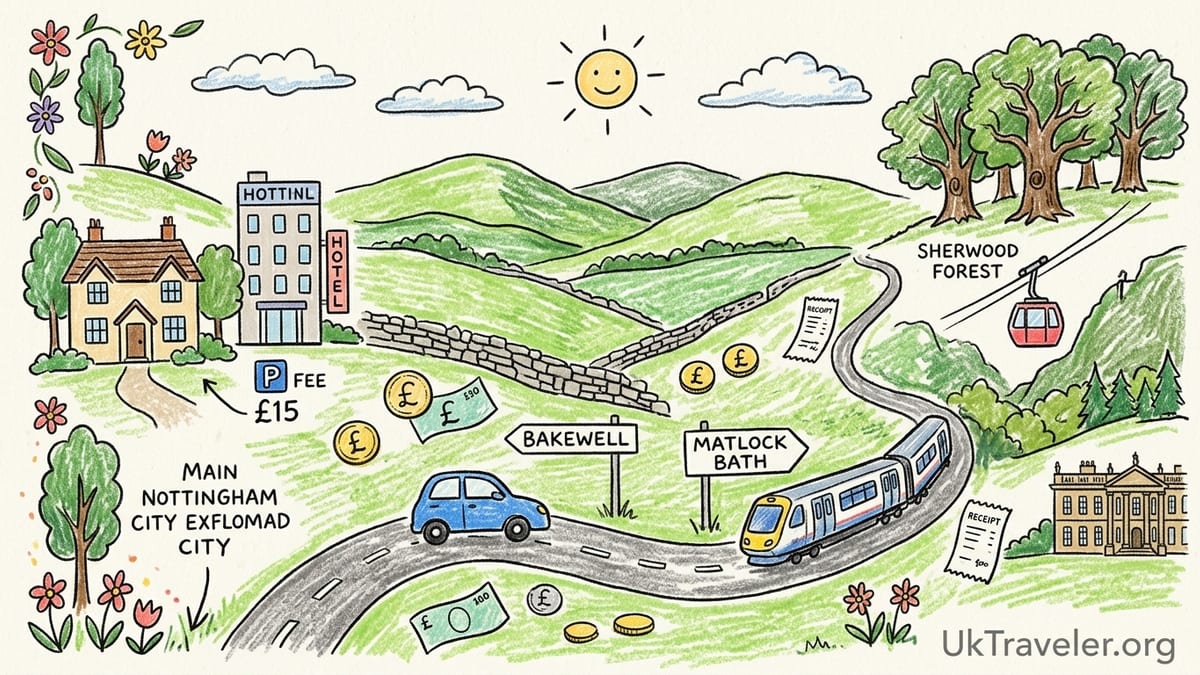
The Trip At A Glance: Where The Money Went
My late May 2023 East Midlands loop started and ended in Nottingham, with three main bases: one night in Nottingham city centre, two nights near Bakewell in the Peak District, and one night around Matlock Bath, plus a final evening back in Nottingham before an early train home. We travelled by rail from London to Nottingham and then mixed trains and a short car hire. Although this is just one trip, the pattern of costs will feel familiar to many visitors: relatively affordable countryside accommodation outside peak school-holiday weekends, offset by city-centre parking, last-minute rail fares and the cumulative effect of café stops and pub dinners.
Across five days in 2023, my partner and I spent roughly £980 in total, excluding the initial London to Nottingham rail tickets, which were bought well in advance as part of a separate journey. That £980 broke down, approximately, as £430 on accommodation, £160 on regional rail and car hire, £90 on fuel and parking, £210 on food and drink and around £90 on attractions and activities. Our style was mid-range: private ensuite rooms, one sit-down meal a day, moderate pub spending and paid entry to a couple of major attractions balanced with lots of free walking in the countryside.
By checking current 2026 prices for comparable stays, rail tickets, car parks and attractions, that same trip today would likely sit closer to £1,150 to £1,250 for two people, depending on how far in advance you booked rail tickets and weekend accommodation, and how much you drove. The big changes between 2023 and 2026 show up in statutory parking charges in the Peak District, city car park tariffs and some attraction prices, while many free countryside experiences remain just that: free.
Accommodation: What We Paid Versus 2026 Rates
Accommodation is usually the single largest cost on an East Midlands trip, and our experience was no exception. In late May 2023, we paid £110 for a simple but comfortable double room in a mid-range Nottingham city centre hotel on a Thursday night, booked about three weeks ahead. This included breakfast but not parking. Moving into the countryside, we stayed two nights in a family-run guesthouse just outside Bakewell for £95 per night including breakfast, booked directly about a month before travel. Our final night was a small hotel near Matlock Bath at £90 for a double room without breakfast, booked at fairly short notice about a week ahead.
Those 2023 prices reflected shoulder season, midweek to early weekend travel and booking directly with smaller properties. Checking comparable options now, in autumn 2026, standard double rooms in mid-range Nottingham city hotels with flexible cancellation typically sit in the £120 to £150 per night range outside peak event dates, with cheaper advance, non-refundable deals sometimes nudging just under £110. In popular Peak District villages such as Bakewell, Hathersage or Castleton, guesthouse doubles with breakfast for two people often list around £110 to £140 per night on spring and early autumn weekends, with some budget B&Bs and pub rooms still closer to £90 midweek.
Matlock, Matlock Bath and the Derwent Valley are usually a touch cheaper than the honeypot villages deeper inside the Peak District National Park, especially outside school holidays. In 2026, checking typical listings, a simple ensuite double without breakfast can still be found around £80 to £100 on quieter midweek nights, rising to £110 to £130 for busy summer Saturdays. That means our 2023 accommodation spending of roughly £430 for four nights as a couple would more realistically be around £500 to £560 today for similar locations and standards, provided you avoid last-minute weekend bookings in the most popular villages.
Rail, Car Hire, Fuel And Parking: The Hidden Transport Costs
Transport costs on our 2023 trip were more complicated to manage than accommodation. Because we wanted flexibility in the Peak District and at Sherwood Forest, we combined rail with a short car hire. In 2023, we paid just under £22 each for a walk-up off-peak day return from Nottingham to Matlock for a Saturday visit, having failed to buy advance tickets. That fitted the then-prevailing pattern of East Midlands off-peak fares, with hourly services linking Nottingham, Derby and Matlock along the Derwent Valley line. Current 2026 fares on the same route still offer off-peak and super off-peak tickets, but headline prices have edged up, and many of the cheapest fares are easiest to get if you book in advance.
For the Peak District and Sherwood Forest segments, we hired a compact car in Nottingham for three days in 2023 at £45 per day including basic insurance but excluding fuel, picking up on a Friday morning and returning Monday lunchtime. Petrol over those three days came to about £60, covering a loop from Nottingham to Bakewell, around the Hope Valley and back via Matlock Bath and Sherwood Forest. In 2026, small-car hire from central Nottingham for a long weekend still starts around £45 to £60 per day with basic cover outside school holidays, but extra-driver fees, one-way surcharges and the cost of excess protection insurance can easily push the daily rate higher if you add them at the counter.
Parking was where the hidden costs really began to show. In 2023, we used a multi-storey car park near Nottingham station on our first night, paying around £15 for just under 24 hours. That tallied with city-centre day rates that were already widely criticised by locals using council and private facilities. In the Peak District, we paid around £6 for all-day parking in a National Park Authority pay-and-display car park in the Stanage Edge area and a similar amount at another site near Bakewell. An updated schedule of charges that came into effect in 2025 now sets Peak District National Park Authority car parks at £6.60 for an all-day ticket, with shorter stays starting at £2.10 and charges applying between 9 am and 6 pm.
By 2026, tram-park-and-ride facilities and station car parks around Nottingham can still offer better value than many city-centre multi-storeys, particularly for weekend visitors, but even these have seen gradual increases. Community tips from 2024 and 2025 flagged early-bird weekday deals at the council-run Broad Marsh car park around £6.50 to £7 for a full day, while station car park weekend tariffs have tended to sit below headline private-city rates. The lesson is clear: in busy places such as Nottingham city centre or Matlock Bath on a sunny weekend, parking can quietly eat a surprising amount of your budget, particularly if you roll in late and have to accept whatever spaces are left.
Attractions, Historic Houses And Family Activities
One of the reasons the East Midlands works well for mixed budgets is that you can combine paid attractions with an almost limitless supply of free countryside. On our 2023 trip, our paid activities included a visit to a well-known Peak District stately home near Bakewell, where we paid just under £27 per adult for house and garden admission when booked a few days ahead online, plus car parking on top. That felt like a noticeable hit to the day’s budget, though it did provide several hours of interest and access to landscaped parkland. We also visited a small museum in Matlock Bath for around £7 per person, and spent modest amounts on arcade games and a riverside boat trip that cost around £6 each.
Sherwood Forest was the opposite: in 2023 there was no charge to enter the nature reserve itself, only a parking fee. That remains the case in 2026. Current information from the RSPB, which manages the reserve, confirms that there is no admission charge to access the forest and its walking trails, while the main cost for drivers is the car park. For non-members, bringing a car to Sherwood Forest for the day now costs £7, paid at the visitor centre on arrival, with RSPB members parking free. There are optional extra spends on site, such as the visitor centre café, gift shop and seasonal family events, but the core experience of walking out under the ancient oaks is still free once you have parked.
In the Peak District, official car parks run by the National Park Authority essentially act as the “ticket price” for many beauty spots. Since March 2025, all-day parking in these car parks has been £6.60, with the revenue helping to pay for path maintenance, toilets and ranger services. That means a full day’s hiking at a place like Stanage Edge or Monsal Head costs you what you pay to park, with no further admission charges. Cable car rides, showcaves around Castleton and commercial attractions such as amusement parks or heritage railways will add significantly to your budget if you choose them, but they are optional extras on top of an already rich landscape of free access.
Families need to factor in how small paid experiences add up. In Matlock Bath, for example, we spent less than £30 in total across a couple of arcades, ice creams and a short boat hire. Upgrade that to a full day at a major theme park, plus on-site food, and your spending could easily eclipse your accommodation cost. In the East Midlands, as elsewhere in England, the biggest “per person per hour” costs usually sit with large stately homes, theme parks and indoor attractions, while woodland walks, hillside rambles and riverside strolls stretch your money much further.
Meals, Pubs, Cafés And Everyday Spending
Food and drink on our May 2023 circuit were a mix of hotel breakfasts, café lunches, pub dinners and self-catered snacks. In Nottingham, we paid about £14 each for a simple dinner of main course and soft drink in a city-centre pub on our first night, followed by a shared dessert and coffee that took the total bill for two to just under £40. In Bakewell, we spent around £9 each on café lunches built around soup or a small hot dish with a drink, and £18 to £22 each for evening pub meals that included a main course and a pint. Grab-and-go bakery items and coffees most days added around £10 to £15 daily to our spend.
Adding everything together, we spent roughly £210 on food and drink over five days for two people in 2023, averaging about £21 per person per day. That figure was kept in check because two of our accommodations included breakfast, and we only had one or two alcoholic drinks each at pub dinners. Swapping to cocktail bars or ordering starters and desserts most nights would quickly have added another £15 to £25 per day to the total. Self-catering also makes a significant difference. On the night we stayed in Matlock Bath without breakfast, we bought supermarket pastries and fruit for the following morning for under £6 total.
In 2026, menus in Nottingham and popular Peak District pubs show gentle but noticeable price inflation. A pub main course in a touristy Derbyshire village now often falls in the £15 to £22 range, while coffees in independent cafés commonly sit around £3 to £4, and a slice of cake around £4 to £5. Budget-conscious travellers can still keep daily food costs under £25 per person by leaning on included hotel breakfasts, supermarket lunches and limiting drinks, but it is increasingly easy for a couple to spend £70 to £90 in a single evening when combining cocktails, starters and mains in city restaurants.
What Cost More Than Expected On The Trip
Looking back at our 2023 numbers through the lens of 2026 prices, several costs came in significantly higher than we had expected when we first sketched the trip on a notepad. The biggest shock was city-centre parking. Even though we knew Nottingham was not cheap to park in, paying around £15 for just under a day in a multi-storey near the station felt steep compared with parking at out-of-town rail stops or tram park-and-ride sites. It only takes one or two overnight stays in a central car park for parking to rival your accommodation bill for that night, especially if your hotel does not have a discounted arrangement.
Last-minute rail fares also bit harder than planned. Failing to buy advance Nottingham to Matlock tickets meant we paid around £44 for two off-peak day returns at walk-up prices, which compressed value from what was, in practice, a relatively short regional journey. In 2026, off-peak and super off-peak walk-up fares remain available, and in some cases booking on the day is fine, but cheaper advance tickets and railcards make a meaningful difference if you can commit to specific trains. Leaving all your decisions to the day of travel will inflate your overall East Midlands budget.
Stately-home admission was another area where costs mounted quickly. Paying almost £27 per adult for house and garden entry, plus several pounds for parking, meant that our time at the estate was one of the most expensive single blocks of the trip. It was an excellent day out, but families or groups visiting multiple houses in one week need to be prepared for per-person admissions that are significantly higher than they might remember from pre-pandemic trips. In contrast, repeated rural driving in the Peak District was less expensive than I had feared in 2023, although by autumn 2026 fuel prices and parking charges have both crept upward enough that the total for a car-heavy itinerary will be noticeably higher.
Weekend accommodation in the most popular Peak District villages can also be pricier than first-time visitors anticipate. We sidestepped that problem in 2023 by travelling outside school holidays and staying just outside the busiest honeypot centres. Current 2026 listings suggest that trying to book a Saturday night in midsummer in somewhere like Castleton or Edale at short notice will often bring up prices well over £150 for fairly standard rooms, particularly where flexible cancellation is included. The main takeaway is that the combination of weekend timing, late booking and peak locations is what really drives accommodation costs up.
Where We Found Unusually Good Value
Balancing those high-cost moments were several parts of the trip that offered excellent value for money. Top of that list were free woodland and countryside experiences. Our day in Sherwood Forest, for example, cost just the parking charge and whatever we chose to spend in the café. Once we had paid to park, walking out to the Major Oak, exploring side trails and picnicking among the trees cost nothing. In 2026 that model remains intact. Non-members pay £7 to park for the day while there is still no admission fee to enter the reserve, so a couple or family that brings their own picnic can enjoy a full day of activities for very little cash outlay.
The Peak District National Park delivered similarly strong value on days when we parked once and walked for hours. In 2023, we paid around £6 for all-day parking at a Stanage Edge car park, then spent the entire day exploring gritted paths and moorland edges without paying another penny. Today, 2026 tariffs show £6.60 for all-day parking in Peak District National Park Authority car parks, with shorter options for those on brief visits. Considering that this effectively includes access to maintained paths, viewpoints, picnic spots and in some cases toilets, the cost per hour of enjoyment remains extremely low compared with indoor attractions.
Another unexpectedly good-value element was staying just outside the busiest hotspots. Our guesthouse near Bakewell in 2023 cost under £100 per night including breakfast, with free on-site parking. Yet we could drive into Bakewell itself in about ten minutes and reach major walking routes with only short drives. In 2026, similar properties on the fringes of popular areas still undercut central village rooms by £20 or more per night in some cases, especially midweek. Spreading your stay across several slightly less-famous towns, such as Matlock, Belper or Buxton, can produce noticeable savings without sacrificing access to the countryside.
Finally, simple pub meals and cafés off the most touristy streets often delivered better value than headline restaurants. In Nottingham, walking a few minutes away from the very centre uncovered pubs with mains under £15, while in smaller Derbyshire towns daytime offers on soup, sandwiches and hot drinks kept lunch costs contained. These are not dramatic savings individually, but across five days they helped to keep our food and drink spending at a manageable level and limited the shock when tallying receipts at the end.
What A Similar Trip Would Cost In 2026
Taking all this into account, what would an equivalent five-day East Midlands trip cost in 2026 for two people travelling in a similar style. Working through current prices, a reasonable working budget would look roughly like this. For accommodation, plan on £500 to £560 for four nights in mid-range rooms, mixing one Nottingham city-centre night with two nights near Bakewell or another Peak District village and one night around Matlock or another Derwent Valley town. You may pay more if your dates coincide with major events or school holidays, or less if you travel midweek in the shoulder seasons and commit to non-refundable rates.
For transport, allow £150 to £200 for regional rail and short car hire if you plan a hybrid itinerary that mixes Nottingham, the Peak District and Sherwood Forest. That assumes booking some rail legs at advance rates and choosing a compact hire car for three days at around £50 to £60 per day, plus basic fuel costs, but excludes long-distance journeys from elsewhere in the UK, which vary widely. Add perhaps £70 to £100 for fuel and parking, based on current £6.60 all-day rates in Peak District National Park Authority car parks and £7 for Sherwood Forest’s main car park, plus at least two days of paid parking in or near Nottingham city centre, which can easily run to £10 to £20 per day depending on which facility and tariff you use.
Food and drink in 2026 will depend heavily on your habits, but using current sample menus, a sensible estimate for similar patterns to ours would be £280 to £320 across five days for two people. That figure assumes hotel breakfasts on two or three mornings, simple café or supermarket lunches and mid-range pub dinners most nights with one or two drinks. Swap to fancier restaurants and drinks-led evenings and you can double that line item without much difficulty. For attractions and activities, budgeting £100 to £140 for two people across the trip will comfortably cover one major stately home or estate visit, a handful of small museums or paid activities, and perhaps a special outing such as a showcave tour or cable car, while still leaving plenty of time for free walking and exploring.
Put together, that yields a 2026 trip budget in the region of £1,150 to £1,250 for two people over five days, not counting longer-distance travel to and from the East Midlands. Budgets can dip lower if you rely solely on public transport, stay in hostels or budget lodgings and cook for yourself, or run higher if you choose boutique hotels, book late in peak periods or drive extensively each day. The key is to recognise which parts of the region are naturally low-cost to enjoy and which impose fixed charges that you cannot easily avoid.
The Takeaway
After tracking my late May 2023 spending in detail and revisiting the same routes through current 2026 prices, several clear patterns emerge about what really drives the cost of an East Midlands trip. Accommodation, especially weekend hotel and B&B rates in popular Peak District villages and Nottingham city centre, will nearly always top the list, followed closely by transport decisions such as last-minute regional rail tickets, car hire choices and how often you pay for city-centre parking. Stately-home admissions and big-ticket attractions can then add chunky, visible costs on top, while food and drink quietly fill in the gaps between.
By contrast, what keeps a trip affordable is thoughtful planning around those same levers. Booking accommodation outside peak weekends, choosing bases on the fringes of honeypot areas, using advance rail tickets where possible and leaning on park-and-ride or station car parks can all trim significant amounts without feeling like a downgrade. Once on the ground, prioritising free or low-cost activities such as Peak District hikes and Sherwood Forest walks, then selectively adding one or two headline attractions, gives you depth of experience without blowing the budget.
If I were planning the same route again for 2026, I would buy regional rail tickets earlier, avoid parking overnight in the priciest multi-storeys in Nottingham, and consider extending my stay slightly in the Peak District to take fuller advantage of those £6.60 all-day parking tickets by lining up longer ridge walks and circular routes. I would still pay for at least one stately home or major attraction, but perhaps drop some of the smaller, less distinctive paid stops in favour of more time in the hills. Above all, I would keep a closer eye on how city-centre parking, weekend accommodation and late-booked trains can quietly push an otherwise straightforward East Midlands trip from comfortably affordable to unexpectedly expensive.
FAQ
Q1. How much should I budget per day for an East Midlands trip in 2026?
For a mid-range trip similar to the one described, a realistic budget in 2026 is around £230 to £250 per day for two people, excluding long-distance travel to and from the region. That covers mid-range accommodation, a mix of train and car travel, parking, food, some pub visits and a couple of paid attractions, along with plenty of free countryside time.
Q2. Is it cheaper to explore the Peak District by car or by public transport?
Public transport is usually cheaper in pure cash terms, especially if you buy advance rail tickets and use local buses, but a hire car can be better value if you have three or four people sharing and want to reach more remote trailheads. With 2026 parking at £6.60 all day in Peak District National Park Authority car parks and fuel costs on top, solo travellers will often find buses and trains more economical than driving alone.
Q3. How expensive is parking in Nottingham city centre now?
Parking in Nottingham city centre can be one of the trip’s surprise costs. Council multi-storeys and private car parks often charge over £10 for a full day, with some facilities significantly higher. Early-bird weekday deals at certain council car parks and cheaper weekend tariffs at station car parks can offer better value, so it pays to check tariffs in advance and consider tram park-and-ride sites if you do not need to park directly in the core.
Q4. Are Peak District walks still essentially free in 2026?
Yes, most Peak District walking routes remain free to access, but you should factor in parking charges as your de facto ticket price. Since 2025, all-day parking in Peak District National Park Authority car parks has been £6.60, with shorter options available. Once parked, you can usually enjoy a full day of trails, viewpoints and picnic spots without additional admission fees.
Q5. How much does a day at Sherwood Forest cost now?
Sherwood Forest remains one of the best-value days out in the East Midlands. As of 2026, there is no admission charge for the reserve itself. Non-members pay £7 to park a car for the day, while RSPB members park free. Beyond that, your main costs will be optional, such as food from the café, souvenirs from the shop or paid event tickets.
Q6. When is accommodation cheapest in the East Midlands?
Accommodation is generally cheapest in the shoulder seasons of spring and autumn, outside school holidays and major event weekends. Midweek stays from Sunday to Thursday in places like Nottingham, Matlock or the fringes of the Peak District often come in noticeably cheaper than Friday and Saturday nights, with more availability of non-refundable advance deals that undercut flexible rates.
Q7. How far in advance should I book rail tickets for the best prices?
For longer-distance rail journeys into the East Midlands, booking several weeks ahead usually secures the best advance fares. For shorter regional routes such as Nottingham to Matlock, advance tickets sometimes offer savings but are not always essential. The main thing is to avoid relying solely on last-minute peak-time walk-up fares, which are consistently among the highest prices on any route.
Q8. Are stately homes and big attractions worth the high ticket prices?
Large stately homes and major attractions in the East Midlands often charge over £25 per adult, and parking can be extra, so they are a significant line in your budget. Whether they are worth it depends on your interests. If you enjoy history, gardens and architecture, a well-chosen estate can fill most of a day and justify its cost. For travellers on tighter budgets, it can make sense to pick one headline property and spend the rest of the time on free or low-cost outdoor experiences.
Q9. Can I keep food costs low without self-catering completely?
Yes, you can keep food spending moderate by combining hotel breakfasts, supermarket lunches and simple pub or café dinners. In 2026, aiming for one sit-down main meal a day, plus grab-and-go snacks, often keeps daily food costs around £25 to £30 per person. Reserving restaurant splurges for one or two evenings and avoiding lots of cocktails will have more impact on your budget than skipping the occasional coffee.
Q10. What single change would save the most money on an East Midlands trip?
The single most effective change for many travellers is to avoid driving and parking in city centres where possible, especially in Nottingham, and instead rely on rail, buses and park-and-ride sites. Second to that, booking accommodation and key rail journeys earlier, particularly for weekend stays in the Peak District, prevents last-minute premium prices from overwhelming your budget and often frees up cash for the experiences that matter most.