


Across ten days in late September 2025, I travelled through northern England on a route many visitors consider: Manchester, Liverpool and York for culture and football, then the Lake District and Northumberland for hiking and lakeside villages. Instead of relying on a generic UK budget calculator, I tracked what I actually spent, from city hotels and match-day pints to Cumbrian buses capped at 3 pounds and a Cumbria Travel Pass that made leaving the car behind surprisingly affordable.
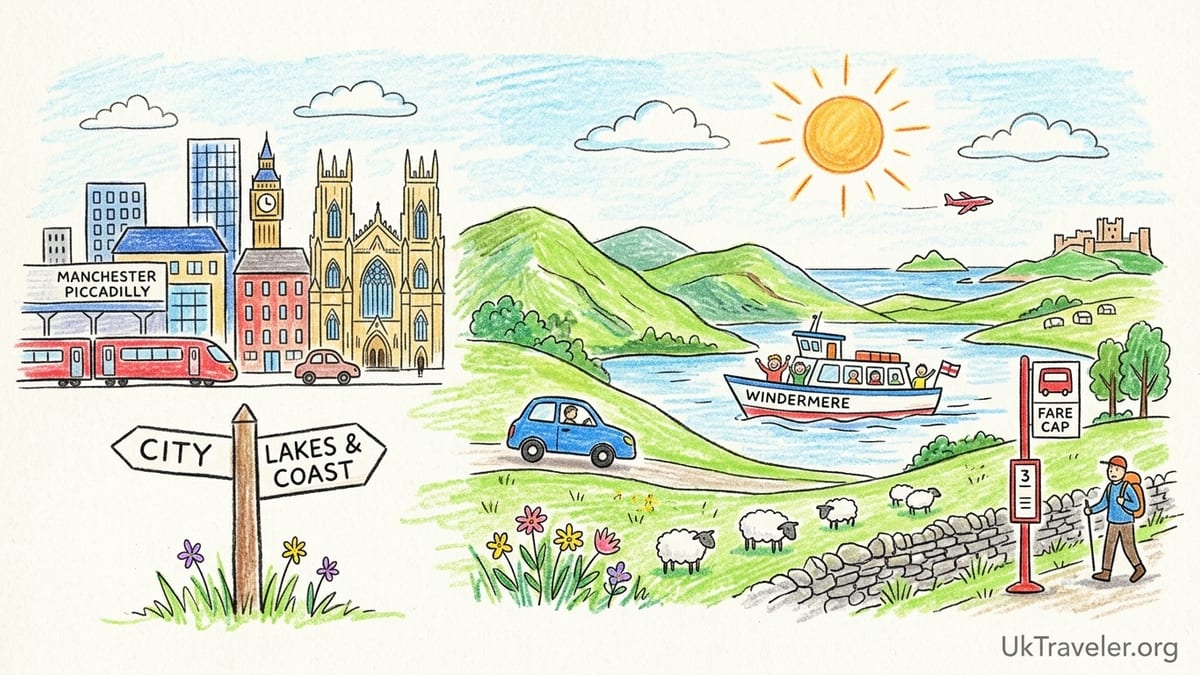
Trip Overview and How I Tracked the Costs
I travelled from 21 to 30 September 2025, starting and ending in Manchester. I am pricing everything in pounds sterling, based on the amount charged on the day, not future projections. Northern England is in the UK, which still uses the pound, and most places accepted contactless card, so I barely used cash. When I list a cost, it refers to a real purchase with the city and the month and year noted.
The route was Manchester for two nights, Liverpool for two nights, York for two nights, three nights in the central Lake District near Ambleside, then one final night near Newcastle to explore Northumberland’s coast before flying home. I mixed trains, one rental car, local buses and lake boats. That allowed a direct comparison of city-centre stays against rural hotels and guesthouses in national park areas.
To keep the numbers honest, I saved receipts in a notes app. Where I quote wider price ranges, for example for hotels or football tickets, I checked live prices in October 2026 from major booking platforms and official transport and attraction sites. Hotel averages in Manchester city centre around 80 pounds per room per night in mid‑2024, for instance, match what I actually paid later in 2025 once promotional discounts and off‑night deals were factored in.
Across ten days, excluding my intercontinental flight, I spent just under 1,350 pounds. That covered all accommodation, intercity trains, a four‑day rental car in Cumbria, fuel and parking, buses and boats, museum and attraction entries, stadium and live music experiences, and everyday food and drink. It was not a rock‑bottom backpacker trip but a mid‑range journey with a few splurges that I would budget differently next time.
City Accommodation: Manchester, Liverpool and York
Accommodation dominated my city spending. In Manchester, I stayed at a mid‑range chain hotel near Piccadilly for two weeknights in September 2025. The prepaid rate was 92 pounds per night for a double room without breakfast. City‑centre rates around 80 to 120 pounds on ordinary nights line up with Manchester hotel performance figures from 2024, where average rates were close to 80 pounds for standard properties, rising sharply during big events. I arrived between Premier League home matches and outside major concerts, which kept prices down compared with December or peak summer.
In Liverpool, two nights at a similar chain near Lime Street station in late September 2025 cost 110 pounds per night, room only. The slight premium reflected a Friday and Saturday stay and the fact that the city was hosting a large conference that weekend. There was no on‑site parking included, so drivers were paying another 18 to 25 pounds per day in nearby multi‑storey car parks. I came by train, so my “cheap” city hotel did not generate extra parking costs, but anyone driving would see that line item climb quickly.
York was noticeably more expensive. For two nights inside the city walls, again in September 2025, I paid 135 pounds per night for a compact double at a small hotel just off Bootham. Breakfast was extra at 12 pounds per person. The building’s character and the walkable location were superb, but value was harder to justify compared with Manchester. When I checked again in October 2026, similar York properties for random weekend dates in October were still often in the 130 to 170 pound range for flexible rates, reflecting York’s popularity and limited central stock.
Across all three cities, I could have gone cheaper by staying outside the centre or choosing hostels, but that would have added taxi fares or public‑transport costs, especially at night. When I added up metro rides and occasional taxis in Manchester and Liverpool, two people sharing a central mid‑range room still came out close in cost to a cheaper suburban place plus daily transport. For solo travellers, however, per‑person accommodation costs hit harder, and private rooms in hostels from 35 to 55 pounds can make real sense.
Rural Stays: Lake District and Northumberland
The surprise was that my rural nights in the Lake District and Northumberland did not save money. In some cases they cost more per night than big‑city hotels, but they quietly included extras like parking and generous breakfasts that reduced spending elsewhere. For three nights near Ambleside in the central Lake District in late September 2025, I booked a country guesthouse within walking distance of the village. The rate was 150 pounds per night for two people, including a full Cumbrian breakfast and free parking.
On paper, that was 50 to 60 pounds more than my cheapest city room. In practice, those rural inclusions mattered. Free parking would have cost 10 to 12 pounds per day in Ambleside’s pay‑and‑display car parks. Breakfast in a café for two, with coffee and a cooked dish each, regularly came to 24 to 30 pounds in 2025. Fold those into a city hotel bill and the gap almost disappears. I still considered this a splurge because there were simpler B&Bs around 110 to 120 pounds per night within a short bus ride of Ambleside, but the convenience of walking to dinner and boats felt like good value in poor weather.
In Northumberland, one night at a small hotel near Alnwick in September 2025 cost 120 pounds for a double, again with breakfast and parking included. Coastal villages closer to Bamburgh were quoting 130 to 180 pounds for the same night when I checked. The lower price inland meant a short drive to reach castles and beaches, but rural roads were quiet, and parking at coastal car parks was generally 4 to 7 pounds for several hours, less than an urban day rate.
If I had needed family rooms or summer‑holiday dates, these numbers would have looked different. When I looked at mid‑August 2026 prices across the same Lake District area, many hotels and guesthouses were asking 180 to 250 pounds per night for standard doubles. Peak school holidays and sunny weekends are some of the strongest cost drivers in national park accommodation, sometimes more than the month on the calendar itself.
Trains, Rental Car, Fuel and Parking
I used trains between cities and then hired a car only for the national parks and the Northumberland leg. Intercity rail travel in northern England is not cheap, but with advance tickets it was manageable. In September 2025, I paid 9.80 pounds for a Manchester to Liverpool single on a mid‑morning Northern service booked about three weeks ahead, and 17 pounds for a Liverpool to York advance single on TransPennine Express at an off‑peak time. A flexible walk‑up ticket on the same Liverpool to York route would likely have been closer to 30 to 40 pounds.
To reach the Lake District, I travelled from York to Oxenholme and then to Windermere on an advance ticket booked a month earlier for 28 pounds, arriving in the late afternoon. Northern and other operators allow similar advance deals on many routes, but there is a clear trade‑off: strict train times, limited refunds and the risk of paying much more if you decide late or miss a connection. A BritRail or flexi rail pass can smooth that out for heavy rail users, but pass days are only good value if you pack in several journeys or long distances.
I picked up a compact rental car at Windermere the next morning, using a local branch office instead of an airport. In September 2025 the four‑day rental cost 168 pounds including basic insurance, or 42 pounds per day. When I compared that with Manchester Airport searches in October 2026, median compact prices over a week often sat in the 30 to 40 pound per day range, with rare promotional deals dipping into the teens for off‑season rentals. The branch pickup was slightly more expensive but saved a separate transfer from the Lake District back to the airport.
Fuel across four days in the Lake District and Northumberland, covering roughly 420 miles, came to 54 pounds, based on pump prices around 1.55 pounds per litre in northern England in September 2025. Parking in national park villages and trailheads added another 32 pounds across three days. Typical pay‑and‑display rates ran 5 to 10 pounds for a full day in hotspots such as Keswick and Ambleside. In Northumberland, castle and beach car parks were cheaper at around 4 to 7 pounds per visit. Those small line items add up, but rural hotels with free parking helped keep the total below what I might have spent keeping a car in a city‑centre multi‑storey for the same period.
Buses, Boats and the Cumbria Travel Pass
National park transport can significantly change how much you spend. In the Lake District, all single bus fares on most local services are currently capped at 3 pounds under the national bus‑fare policy that has been in place in its present form since early 2025. Local authorities in Cumbria confirm that cap remains in force across Westmorland and Furness, covering popular routes such as the 555 along the central Lakes corridor. That meant short hops from Ambleside to Grasmere or Windermere in September 2025 cost me 3 pounds each way instead of the higher pre‑cap prices.
On my trip I chose a mix of driving and buses. I paid 3 pounds for an Ambleside to Grasmere bus in September 2025 and later the same day 3 pounds for the return. On another day I used a day ticket from Stagecoach at 9.50 pounds that allowed unlimited rides in the central Lakes zone, which paid off after four trips between Bowness, Ambleside and Grasmere. Families and small groups can now buy group tickets that cap daily costs, for example up to 25 pounds for up to five people on central Lakes routes according to current local transport information, which can dramatically undercut using a private car for each short journey when fuel and parking are counted.
Lakeside boat trips were a highlight and a noticeable cost. A standard circular cruise on Windermere in September 2025 cost me 17.50 pounds for roughly 45 minutes with Windermere Lake Cruises. Longer sailings between Bowness, Ambleside and Lakeside can run in the low to mid‑20s for adults, and families spending a day on the water commonly spend 50 pounds or more on tickets. Similar pricing applied on Ullswater, where return tickets on Ullswater Steamers in the 2023‑24 season were generally in the high teens to low 20s for standard adult returns, with discounts for children.
For my next visit I would strongly consider the Cumbria Travel Pass, introduced more widely in 2024 and available at 40 pounds for one day or 99 pounds for three days at current prices. The pass bundles rail, local buses and at least one significant Windermere lake cruise into a single ticket and is marketed explicitly for car‑free trips to Cumbria. On my 2025 trip, had it been available in its present form, I could have replaced individual train tickets, bus day passes and a separate cruise ticket with a three‑day pass and reduced both cost and hassle. For travellers who want to avoid driving entirely, especially solo visitors and couples, this type of integrated product can shift hundreds of pounds from car hire and parking into public‑transport passes without sacrificing flexibility.
Food, Pubs, Attractions and Live Experiences
City meals and drink were my stealth spending leaks. In Manchester, Liverpool and York in September 2025, a sit‑down pub dinner with a main dish and a pint typically came to 18 to 24 pounds per person. Casual lunches were 8 to 12 pounds for a sandwich or salad with a soft drink or coffee. A coffee from an independent café in the Northern Quarter or York’s city centre usually cost 3 to 4 pounds. Over six city days I averaged about 35 pounds per day on food and non‑alcoholic drinks, then added another 10 to 15 pounds on pub visits on days with live football or music.
In the Lake District and Northumberland, food prices were similar but portion sizes were sometimes larger, and hearty pub meals after a hike felt better value. In Ambleside and Grasmere in September 2025, pub mains such as steak and ale pie or fish and chips landed in the 17 to 22 pound range. Two‑course set menus in country inns could be found for around 25 to 30 pounds per person on weeknights. My daily food spending in the countryside averaged about 32 pounds, slightly less than in the cities, largely because there were fewer impulse coffees and no late‑night takeaway options.
Attractions added up more in the cities. In Liverpool, I paid 18 pounds for the Beatles Story exhibition in September 2025, 8.50 pounds to tour the Royal Liver Building’s tower, and 15 pounds for a guided walking tour of the docklands and music sites. In York, entry to York Minster was 16 pounds with an additional 7 pounds to climb the central tower. The National Railway Museum was free, but I donated 5 pounds. Several smaller historic houses and museums were in the 8 to 12 pound bracket.
Football and music were my biggest non‑essential splurges. A Premier League match at Old Trafford in Manchester in September 2025, bought through the club’s official site as a normal ticket rather than hospitality, cost 68 pounds for a seat in the upper tier. Cheaper seats can sometimes be found in less popular fixtures, but most league matches in Manchester and Liverpool now routinely price standard adult tickets somewhere between 40 and 70 pounds depending on opponent and membership status. A smaller Championship match in the North East later that week cost me 28 pounds and felt much better value. I also spent around 32 pounds on a live gig ticket at a mid‑size Manchester venue and 18 pounds on drinks around the show. If I were trimming the budget, I would still keep one major live experience, but I would skip the big‑club match in favour of a lower‑league game or stadium tour.
Transfers, Luggage and Taxis
Extra transport and luggage costs were modest but real. In Manchester, the train from the airport to Piccadilly in September 2025 cost 4.70 pounds off‑peak, which was far cheaper and quicker than a taxi quoted around 30 to 35 pounds for the same journey on a weekday evening. In Liverpool and York I was able to walk from the station to my hotels, but I still used taxis for two late‑night returns. In both cases short inner‑city rides of around ten minutes cost 7 to 9 pounds, paid by card in the cab.
Within Manchester and Liverpool, trams and local trains were useful but did not dominate the budget. A Metrolink tram ride in Manchester in 2025 cost roughly 2.80 pounds in the central zones when using contactless. On my trip I spent about 14 pounds total on trams across two days, mainly to reach football grounds and outlying neighbourhoods. In Newcastle, a small top‑up on a smartcard and one single ticket on the Tyne and Wear Metro came to about 5 pounds during my short stay.
I travelled with one checked suitcase and a carry‑on on my intercontinental flights. Airline baggage fees vary dramatically, but on this journey a checked bag was included in my long‑haul fare. If I had booked a separate low‑cost carrier flight into Manchester, I would have expected at least 25 to 40 pounds each way in baggage supplements, which over ten days is equivalent to losing an entire night in a mid‑range hotel. Inside the UK, almost all rail and bus operators allowed my luggage on board without additional fee as long as I could handle it myself.
One saving grace was planning accommodation so I did not need taxis with luggage very often. In Manchester and York I deliberately booked hotels within a ten‑minute walk of the main station. That decision eliminated four taxi rides that would each likely have cost 8 to 12 pounds with bags and traffic. The nights when I did surrender to a late‑night taxi were about comfort, not necessity.
Where I Overspent, Where I Found Value and What I Would Change
Looking back, the items that pushed my total trip cost toward 1,350 pounds over ten days were rarely individual hidden fees. They were conscious choices to trade money for convenience, comfort or experience. The biggest overspend was on accommodation in York and the Lake District. I chose central, charming properties at 135 and 150 pounds per night respectively in September 2025. Cheaper but still well‑reviewed options 10 to 20 minutes away on foot were available from 100 to 120 pounds at the time. Over five nights, that preference for atmosphere likely added 120 to 150 pounds to my costs.
The Premier League ticket in Manchester was also a clear budget stretch. At 68 pounds for a single seat, plus 12 pounds on match‑day food and drink, I spent roughly the same as two days of public‑transport costs. The live atmosphere was unforgettable, but in terms of value I would probably recommend most visitors consider either a smaller club match for half the price or a stadium tour in the 25 to 35 pound range paired with a pub to watch a game locally.
On the other hand, some items that look expensive at first glance delivered strong value. The 42 pounds per day compact car hire plus fuel and parking, which totalled just over 250 pounds for four days, unlocked multiple remote hikes, lakes and coastlines that would have been difficult to string together by bus. For two people sharing, that works out to roughly 31 pounds per person per day for almost complete freedom of movement. In summer, when bus frequencies are high and the 3 pound cap is firmly in place, a car becomes easier to skip, but in shoulder seasons or for ambitious itineraries, a few car days can be sensible.
The Lake District guesthouse at 150 pounds per night, once I accounted for both parking and hearty breakfasts, also felt fair compared with city stays where breakfast and parking were extra. The Cumbria bus cap at 3 pounds per single and the availability of day and group tickets were excellent value and dramatically undercut what many overseas visitors expect from rural transport. Boat trips on Windermere and Ullswater were not cheap, but for 17 to 25 pounds they delivered a full afternoon’s scenery and access to trailheads on the far shores, effectively combining sightseeing with transport.
Next time, I would make three main changes. First, I would shave one night off York and add it to Northumberland, where prices were slightly lower and hiking and coastal scenery offered more personal value. Second, I would pick one marquee live event instead of both a Premier League match and a big indoor gig. Third, I would plan my Lake District leg around a three‑day Cumbria Travel Pass and rely entirely on public transport and walking, skipping car hire altogether and saving at least 200 pounds in the process.
The Takeaway
There is no single daily cost figure that fairly captures a northern England trip. My ten‑day journey in late September 2025 came to just under 1,350 pounds excluding long‑haul flights, or around 135 pounds per day. For a couple sharing rooms, that represented a comfortable but not extravagant mid‑range itinerary. A solo traveller using some hostels and cutting back on paid attractions and live events could complete a similar route for perhaps 70 to 100 pounds per day. A family in school holidays staying in larger rooms in the Lake District could easily spend 250 pounds or more per day once national‑park accommodation and attractions are factored in.
The real cost drivers are clear. Season matters: August and festive periods in Manchester, York and the Lake District see higher hotel rates than late September or early spring, especially when Christmas markets or major football fixtures are on. City nights, particularly in York, carry a premium that can only partly be offset by cheaper food. National‑park accommodation, especially rooms with lake views or boutique interiors, often costs more than city hotels but can provide better inclusions such as breakfast and parking.
Car rental and rail passes are big swing items. A few days of car hire in Cumbria with fuel and parking can easily pass 250 pounds, while a rail‑heavy itinerary with advance tickets or integrated passes such as the Cumbria Travel Pass can bring costs down and reduce driving stress. Finally, the number of paid attractions and experiences you choose, from lake cruises and castles to football matches and concerts, will shape the top end of your budget much more than coffee or bus fares will.
If you build your budget around those levers, you can make informed trade‑offs: perhaps accepting a simpler room in York to afford a lake‑view guesthouse, using capped buses instead of a car in the Lake District, or choosing a lower‑league football match for atmosphere without the Premier League price tag. The north of England will reward you generously, whether you spend sparingly or decide, occasionally, that a particular splurge is worth every pound.
FAQ
Q1. How much should I budget per day for a Northern England trip like this?
For a mid‑range trip similar to mine in late September 2025, two people sharing can expect to spend around 130 to 160 pounds per day excluding long‑haul flights, while a solo traveller who uses more budget accommodation might aim for 70 to 100 pounds per day.
Q2. Are cities like Manchester and York more expensive than the Lake District?
City hotels in Manchester and Liverpool can be cheaper on ordinary nights than Lake District guesthouses, but York and popular national‑park villages often cost more per night, especially in summer and on weekends, although rural stays may include breakfast and parking that city hotels charge extra for.
Q3. Is renting a car in the Lake District worth the cost?
In my case a compact rental at 42 pounds per day plus fuel and parking opened up remote valleys and coastlines, which was good value for two people, but with the current 3 pound bus fare cap and products like the Cumbria Travel Pass, solo travellers and couples can realistically explore car‑free if they are willing to plan around bus and boat timetables.
Q4. How much are typical hotel prices in Manchester, Liverpool and York?
On my September 2025 trip I paid 92 pounds per night for a mid‑range Manchester hotel, 110 pounds in Liverpool and 135 pounds in York for central double rooms, with live searches in October 2026 suggesting similar Manchester and Liverpool ranges but York often higher, particularly on popular weekends.
Q5. What do football and music experiences usually cost?
My Premier League ticket in Manchester cost 68 pounds in September 2025, a second‑tier match in the North East was 28 pounds, and a mid‑size indoor gig ticket cost 32 pounds, so allowing roughly 50 to 80 pounds per major live event ticket is sensible for current prices in big northern cities.
Q6. How expensive is food and drink in northern England?
In 2025 I typically spent 18 to 24 pounds per person for a pub dinner with a drink, 8 to 12 pounds for a casual lunch and 3 to 4 pounds for coffee, which gave me daily averages of about 35 to 45 pounds per person including occasional pub visits and snacks.
Q7. Are buses and trains affordable for getting around the Lake District?
Yes, with single bus fares in most of Cumbria capped at 3 pounds and various day and group tickets, plus integrated options like the Cumbria Travel Pass that include a Windermere cruise and rail travel, public transport can be considerably cheaper than hiring a car, especially for solo visitors.
Q8. How much should I allow for boat trips on Windermere or Ullswater?
On my 2025 visit a standard Windermere circular cruise cost 17.50 pounds and longer one‑way or return journeys were in the low to mid‑20s, while Ullswater Steamers fares were typically in a similar high‑teens to low‑20s range for adult returns, so budgeting around 20 to 25 pounds per cruise is realistic.
Q9. Do I need to budget extra for parking in cities and national parks?
In cities, central hotel parking or multi‑storey car parks can run 18 to 25 pounds per day, while in the Lake District and Northumberland I paid around 4 to 10 pounds per day to park at village car parks and trailheads, though many rural hotels include free parking in the room rate.
Q10. What are the biggest factors that change the overall trip cost?
The largest cost drivers are travel season, the number of nights in premium destinations such as York and popular Lake District villages, the choice between national‑park hotels and simpler guesthouses, whether you rent a car or rely on capped bus and rail fares, and how many paid attractions, boat trips and live events you include on your itinerary.