


The Dover to Calais ferry remains the classic way to cross the Channel, and in September 2026 it is busier and more competitive than it has been in years. With three major operators, several ticket types and near-constant sailings through the day, smart planning can trim costs and stress. This guide focuses on the practical details that matter when you are actually booking: choosing between P&O, DFDS and Irish Ferries, deciding whether to sail with a car or as a foot passenger, arranging pet travel, understanding check-in rules, and finding somewhere to sleep near Dover before an early-morning departure.
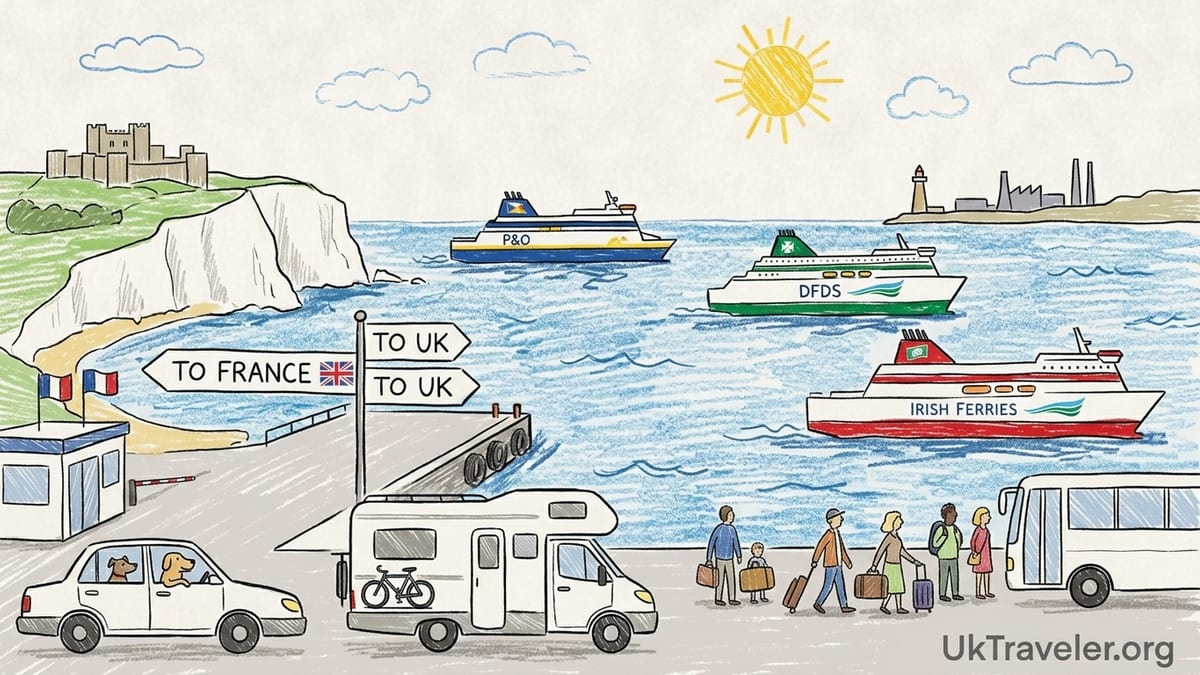
Route overview and 2026 sailing patterns
In early September 2026, Dover to Calais is effectively a turn-up-and-sail corridor, with combined crossings roughly every 1½ to 1¾ hours across the day depending on operator. P&O, DFDS and Irish Ferries all advertise multiple daily sailings on the short sea route, and timetables on a random weekday typically show well over 30 departures in total between the three companies. On this busy spine between Britain and mainland Europe, ferries carry tourists, freight trucks, coaches and day-trippers almost around the clock.
Crossing times vary slightly by operator. P&O continues to quote a sailing time of around 90 minutes between Dover and Calais, while DFDS’ advertised schedule is usually closer to 1 hour 40 minutes. Irish Ferries lists a similar 90-minute crossing on its Oscar Wilde and Isle of Inishmore ships, though actual times can fluctuate with congestion, tides and port operations. In practice, seasoned drivers treat anything under two hours from ramp to ramp as normal on this route.
Frequency and timing matter because they determine how much flexibility you have on the road. A family leaving London at 05:00 for an 09:00 P&O departure will often be able to switch to an earlier Irish Ferries or DFDS ship if traffic is lighter than expected and their ticket type allows changes. Conversely, those stuck on the M25 on a Friday afternoon may find that P&O’s and DFDS’s staggered departures give them a realistic later alternative if they miss their original check-in, again depending on fare rules and space on board.
While there are occasional overnight gaps for each individual operator, taken together the three lines cover almost all of the 24-hour clock on busy days. That makes it feasible, for example, to leave the Midlands after work on a Friday and catch a late-evening DFDS sailing to Calais, or to arrive on an early-morning Irish Ferries crossing in time to reach Paris by lunchtime, traffic and driving breaks permitting.
P&O vs DFDS vs Irish Ferries: how the main operators compare
P&O Ferries remains one of the best-known names on the Dover to Calais route, and in September 2026 still operates a dense timetable with sailings roughly every 90 to 120 minutes on many days. P&O tends to appeal to travellers who prioritise frequency, a familiar brand and a straightforward booking process. Its ships on the route feel functional rather than luxurious, with self-service dining, coffee bars, children’s play areas and onboard shopping aimed squarely at motorists doing regular cross-Channel runs.
DFDS positions itself as a slightly more upmarket experience, with a reputation among some regulars for calmer crossings and smart, modern interiors. Its Dover–France network includes both Calais and Dunkirk, but on the Dover–Calais leg it currently markets lead-in fares from about £99 one way for a standard car plus up to five passengers, subject to availability and excluding additional charges. Travellers who used DFDS during recent promotions mention day-trip offers under £60 return car-plus-four on off-peak midweek dates, but such deals are capacity controlled and time limited.
Irish Ferries is the newest entrant on Dover–Calais and is still expanding its presence. It runs up to around 20 sailings a day at peak times with a crossing time typically around 90 minutes. On its official channel route pages it highlights headline fares starting from the mid-£40s for a same-day car-and-five passengers return on specific promotions, again strictly subject to date, time and availability. Onboard, Irish Ferries leans into a bright, family-friendly feel, with a mix of café counters, casual dining and a dedicated Club Class lounge for those who want quieter seating and snacks included.
In real-world terms, price differences among the three shift constantly. A family driving to the Alps in February might find P&O’s flexible ticket only £20 more than DFDS’s standard fare at the time they search, while someone booking an August Saturday at short notice may see Irish Ferries priced significantly lower for the same time band. It is sensible to compare all three on your specific dates, times and ticket types rather than assuming one brand is always the cheapest or the most premium.
Cars, motorhomes and foot passengers: choosing how to travel
Most Dover–Calais passengers still travel with vehicles, from small hatchbacks and estate cars to long-wheelbase vans and motorhomes. All three operators allow standard cars up to a certain length and height to book at their basic car fares, with surcharges for higher or longer vehicles. For example, DFDS and P&O both require you to declare if your car plus roof box exceeds the normal height band, while Irish Ferries separates standard cars from motorhomes and taller vans when pricing. Misdeclaring size can lead to extra charges or even refusal to board if the ship is already full.
Foot passengers are possible on the route but less heavily promoted than motorists. P&O and Irish Ferries sell foot passenger tickets on selected sailings, usually requiring check-in at the Dover passenger terminal before a shuttle bus transfers you to the ship. In practice, foot-passenger capacity is limited compared with car spaces, and sailing choice can be narrower. Travellers using rail connections, such as those coming from London St Pancras, often find it easier to time their journey around specific foot-passenger sailings rather than assuming there will be a walk-on option for every departure.
The economics differ sharply between cars and foot travel. A couple travelling in a small car can often book a one-way crossing on a promotional fare that works out cheaper per person than two separate foot tickets. By contrast, a solo traveller without a vehicle may prefer the simplicity of a foot-passenger itinerary if they are continuing by train from Calais, even if it costs more than their share of a car fare. Tour operators and coach companies also use the route heavily; passengers on an organised coach trip typically have their ferry booking handled entirely by the company, including check-in and timings.
Local travellers sometimes combine one-way car bookings with alternative return options. For example, a British family might drive over to France in July with P&O, leave their car in Normandy for the summer at a relative’s house, and then fly back in August, returning to collect the vehicle in autumn via an Irish Ferries crossing. As long as you book each leg accurately for the vehicle and passengers you will actually be carrying, mixing operators and modes is entirely feasible.
Ticket types, flexibility and how pricing really works
Dover–Calais fares are famously dynamic. All three operators use yield-managed pricing similar to airlines: costs rise and fall with demand, time of day, and how full a particular sailing is. While DFDS currently advertises headline one-way fares from about £99 for a car plus up to five people on its Dover–France routes, that “from” price usually appears only on quieter crossings, such as midweek late-evening departures in shoulder seasons. The same route on an August Saturday morning could easily be several times higher for the same car and party size.
Each operator also splits tickets into at least two or three broad classes, typically a lowest “standard” or “economy” fare that is non-refundable and limited in change options, a semi-flexible fare allowing paid date or time changes, and a fully flexible option with free amendments close to departure. For instance, a couple booking a P&O standard ticket for an off-peak Sunday night in October might see a price around £120 return car-plus-two when booked months ahead, while the flexible version of the same crossings could be closer to £200, reflecting the ability to switch sailings without penalty should their plans change.
Short-break or day-return products add another layer. Irish Ferries markets day-return offers for a car plus up to five passengers at attention-grabbing rates that can start in the £40s on specific dates, provided you go out and back within 24 hours. DFDS periodically promotes similar day-trip and “short break” deals from Dover to both Calais and Dunkirk, with advertising in the mid-£50s return car-plus-four on off-peak days. The catch is that missing or not using one leg can invalidate the ticket; someone who books a cheap same-day return to stock up at a hypermarket near Calais but then decides to stay overnight may discover that the return portion is cancelled and that a new one-way ticket costs far more than the initial bargain.
Flexible tickets can be especially valuable for long overland journeys when traffic or weather may disrupt your schedule. A family driving from northern England on a Friday in August might decide that paying an extra £60 for a flexible DFDS or P&O fare is worthwhile if it avoids losing the entire booking should motorway delays make them miss the original sailing. Conversely, someone taking a pre-planned coach tour with fixed timings and little risk of last-minute changes may find that the cheapest non-flexible fare is sufficient, since the operator bears the risk of rescheduling.
Travelling with pets: rules, real costs and comfort
Pet travel has become a central factor for many Dover–Calais passengers. All three operators accept dogs and cats on their Channel crossings, but conditions vary. Irish Ferries, for example, allows pets to remain in the vehicle on the Dover–Calais route when travelling with motorists, with an option on some sailings for a dedicated Pet Deck or Pet Den area for those not kept in cars. P&O has introduced a Pet Lounge on certain Dover–Calais vessels, giving dog owners a space to stay with their animals during the crossing for an extra fee, as well as the traditional “pet in car” arrangement where animals remain in the parked vehicle on the car deck.
DFDS offers similar options, typically charging a modest supplement per pet each way and requiring that animals stay in vehicles or in designated pet-friendly cabins or areas where available. Across all three companies, assistance dogs are generally carried free of charge and permitted in passenger areas, provided their documentation is in order. For regular pets, travellers report add-on prices that feel reasonable per crossing when compared with the cost of kennels at home, though these surcharges can add up on multi-trip or seasonal commutes.
Documentation is a critical detail that is easy to overlook. Following changes introduced in recent years, Great Britain-issued EU pet passports are no longer valid for new travel to the EU, and British residents typically require an animal health certificate or EU-issued passport to take pets into France. In practice that means a vet visit before travel, which can cost more than the ferry supplements themselves. A couple driving from Kent to Brittany with two dogs might pay under £40 in total pet fees for the round trip but more than double that in vet charges, so the real cost of taking animals on holiday is higher than the ferry site headlines suggest.
Comfort is another consideration. Many dogs cope well with 90 to 100 minutes in a parked car, especially if exercised and watered before boarding, but nervous animals may struggle. Some owners time their crossings for cooler parts of the day in summer or choose early-morning and late-evening sailings to avoid heat build-up on car decks. Others pay extra for pet lounges or pet-friendly deck areas to stay close to their animals and monitor them. As with human passengers, booking earlier and choosing less busy sailings can improve the experience for pets, reducing noise and boarding delays.
Check-in, boarding and what actually happens at the port
Check-in times for Dover–Calais are stricter than many casual travellers expect, and missing them can make an apparently well-planned journey unravel. Irish Ferries currently advises motorists on the Dover–Calais route to check in at least one hour before departure, extending that to 90 minutes for those travelling with pets. P&O’s published guidance is similar, with a general rule that check-in closes 60 minutes prior to sailing for cars, while DFDS tends to suggest arrival 60 to 90 minutes before departure, depending on the ticket type and whether you are a foot passenger or carrying a vehicle.
In real life that means planning to reach the Port of Dover significantly earlier than the bare minimum. A driver booked on a 10:00 sailing with Irish Ferries who reaches the approach roads at 09:15 on a busy Saturday may find multi-lane queues, freight traffic and border checks still to navigate before they even see their ferry check-in booth. Many seasoned travellers aim to be at the port 90 minutes to two hours ahead on peak holiday weekends, regarding any extra time waiting in the boarding lanes as preferable to the anxiety of watching the clock in traffic.
The process itself involves several stages. First you check in with your ferry company at a kiosk or booth, where staff confirm your booking, passengers and vehicle details and give you a lane card. You then proceed through UK exit controls and French border checks before joining your assigned lane near the berth. Boarding is called in groups, with high vehicles and freight usually loaded first, then standard cars, followed by late arrivals and any foot passengers that need busing on board. Turning up after check-in closes risks automatic transfer to a later sailing, often with a change fee and fare difference due, and in high season there may be no immediate availability on the next departure.
Foot passengers follow a slightly different path, typically checking in at the Dover passenger terminal building before being taken by bus through the port and onto the ship. Check-in times for foot travel can be even earlier relative to departure, especially when security screening is busy. Travellers relying on public transport links, such as a train from London, should build in a generous cushion. A common real-world strategy is to aim for a train that arrives in Dover at least three hours before a booked ferry, giving wiggle room for rail delays and the transfer to the terminal.
Peak pricing, school holidays and how to save money
The Channel is one of the clearest examples in Europe of supply and demand in action. Fares spike during school holidays, Friday evenings, Sunday afternoons and around major events such as half-term ski weeks and big sports tournaments. A family of four in a standard car looking at a Saturday morning crossing in late July may find one-way fares comfortably above £200 on some sailings, while the same family travelling midweek in early October could pay less than half that, especially on a late-night departure.
Pricing calendars published by the operators and by independent aggregators show clear patterns. Early-morning and late-evening sailings are often cheaper than crossings in the middle of the day, partly because they are less convenient for families with children. Short-break offers, such as Irish Ferries’ day-return deals or DFDS’s advertised short-break promotions to France, typically focus on midweek travel and require both legs to fall within a defined period, such as 24 or 72 hours. These can be excellent value for booze cruises and shopping runs to northern France but are less useful for long holidays.
To control costs, many regulars adopt a few simple habits. They book as early as feasible, especially for popular dates like the start of the UK summer holidays, and they remain flexible about sailing times. A driver willing to cross at 23:00 with DFDS on a Tuesday in June could save a substantial amount compared with a 17:00 departure the same day. Comparing all three operators also pays off: on some days P&O might undercut DFDS by £30 for similar times, while on others Irish Ferries may be running a targeted promotion that makes it clearly the cheapest for a car plus family.
Another real-world tactic is mixing one-way tickets instead of buying a simple return. For example, a family driving to the south of France in August might discover that going out with Irish Ferries on a late-evening midweek sailing and returning with P&O on an early-morning Sunday departure costs less than a straightforward return with a single operator. Provided you keep track of reference numbers and check-in arrangements for each company, there is no penalty for booking each leg with a different brand.
Staying in or near Dover before an early departure
With check-in often closing an hour before sailing and road congestion unpredictable, many travellers choose to stay overnight in or around Dover before an early-morning ferry. This is particularly common among families driving down from northern England or Scotland, who prefer to arrive in Kent the day before and sleep near the port rather than attempting a very long night drive and risking motorway delays.
Dover itself offers a spread of budget and mid-range accommodation, from chain hotels on the seafront and near the railway station to independent guesthouses and bed-and-breakfasts up the hill towards Dover Castle. Travellers catching a 04:30 or 05:00 check-in for the first departures of the day often favour hotels along the A20 and A2 corridors that offer easy access to the port approach roads and on-site parking. In high summer, it is worth reserving rooms weeks in advance, especially on Friday and Saturday nights when demand from ferry passengers, coach tours and cruise ships can all overlap.
Some motorists go a step further and stay in nearby towns such as Folkestone, Canterbury or Ashford, trading a slightly longer pre-dawn drive for quieter surroundings or cheaper rooms. For instance, a family from the Midlands might break their journey at a roadside hotel near Ashford on the M20, then set off at 05:30 for a 07:30 check-in in Dover. This splits the drive into manageable segments, gives children proper rest and still allows a comfortable margin for unexpected traffic or service-station stops.
When choosing accommodation, consider not just price but also parking security and breakfast options. Hotels used to dealing with ferry traffic often offer early continental breakfasts or grab-and-go bags for guests leaving before standard service times. For travellers with pets, it is important to confirm pet policies in advance, as not all properties near Dover accept animals and those that do may limit the number of pet-friendly rooms.
The Takeaway
In 2026 the Dover to Calais ferry is a high-frequency, intensely competitive route where informed choices can make the difference between a smooth, good-value crossing and a stressful, expensive one. P&O, DFDS and Irish Ferries all offer broadly similar core products, with crossing times around 90 to 100 minutes and frequent sailings, but each has its own strengths, from Irish Ferries’ day-return offers and pet facilities to DFDS’s headline car-plus-five deals and P&O’s dense timetable and new pet lounge options.
For motorists, the most important decisions are timing, ticket flexibility and accurate vehicle and pet declarations. Allow a generous buffer for check-in, particularly on busy weekends and school holidays, and remember that the cheapest headline fare is rarely the best option if your schedule is tight or your journey long. Foot passengers should pay close attention to the limited sailings available and plan train connections to and from Dover and Calais with extra time for delays and transfers.
Ultimately, the route remains one of Europe’s most straightforward ways to hop between Britain and continental Europe. With realistic expectations about pricing, careful attention to check-in rules and a sensible plan for pets and overnight accommodation near Dover when needed, the Channel crossing can be a routine but rewarding part of a broader journey rather than an ordeal in its own right.
FAQ
Q1. How long does the Dover to Calais ferry take in 2026?
The advertised crossing time is around 90 minutes with P&O and Irish Ferries and about 100 minutes with DFDS, though loading, unloading and port traffic can extend total time on board.
Q2. How often do ferries run between Dover and Calais?
Across P&O, DFDS and Irish Ferries, there are typically departures every 1½ to 1¾ hours through most of the day, with more sailings at busy times and fewer in the small hours.
Q3. What is the cheapest way to take a car from Dover to Calais?
The lowest headline prices usually appear on midweek, off-peak sailings booked well in advance, with promotional day-return or short-break offers for a car plus up to four or five people on specific dates.
Q4. Can I travel as a foot passenger from Dover to Calais?
Yes. P&O and Irish Ferries sell foot-passenger tickets on selected sailings, with check-in at the Dover passenger terminal and shuttle buses taking you on and off the ship, though capacity is more limited than for cars.
Q5. Do I need to check in earlier if I am travelling with pets?
Usually yes. Irish Ferries currently requires pet owners on the Dover–Calais route to check in around 90 minutes before departure, and other operators ask pet owners to arrive earlier than standard motorists where possible.
Q6. Can pets stay with me during the crossing?
On this short route pets usually remain in the vehicle on the car deck, although options such as P&O’s Pet Lounge and Irish Ferries’ pet deck or den may allow you to spend part of the crossing with your animal for an extra fee.
Q7. How far in advance should I arrive at the Port of Dover?
Most operators close check-in about 60 minutes before departure for cars, but in practice many regular travellers aim to arrive 90 minutes to two hours early at peak times to allow for traffic and border checks.
Q8. Is it worth paying extra for a flexible ferry ticket?
For long drives or travel on busy days it can be worthwhile, as flexible tickets usually allow you to change to a different sailing without losing the full fare if delays or plan changes occur.
Q9. Where should I stay if I have a very early morning ferry from Dover?
Many travellers book hotels or guesthouses in Dover or nearby towns such as Folkestone, Canterbury or Ashford, choosing places with early breakfast options and convenient access to the port approach roads.
Q10. Can I mix operators, for example going out with one company and returning with another?
Yes. There is no obligation to use the same operator both ways, so you can book, for instance, an outbound with Irish Ferries and a return with DFDS or P&O if that combination offers better times or prices.