


South East England is one of the UK’s strongest regions for classic family holiday parks, with hundreds of sites offering caravans, lodges and camping close to beaches, forests and big-name attractions. Current holiday-park inventories suggest there are close to 300 family-friendly parks and campsites across the wider South East, yet many families still focus on a small handful of well-known brands. This guide looks beyond the headline names to compare some of the best options along the Kent and Sussex coast, around Hampshire and the New Forest, and across the Isle of Wight, focusing purely on park-style stays rather than cottages.
How Holiday Parks in the South East Compare
Holiday parks in South East England tend to cluster along the Kent and Sussex shoreline, around the sheltered Solent coast of Hampshire and in and around the New Forest National Park, with a further concentration on the Isle of Wight. Broadly, you will find three main types of accommodation: static caravans, timber or eco-lodges, and mixed touring parks that also offer safari tents, pods or pre-pitched glamping. Caravans usually offer the best value for money, especially outside school holidays, while lodges and premium holiday homes tend to come with extras such as decking, hot tubs or more generous living space.
Facilities can range from simple playgrounds and a small indoor pool right up to full leisure complexes with outdoor splash zones, slides, entertainment venues, on-site restaurants and arcades. For example, on the mainland South Coast it is common to find parks where a long weekend in a standard two- or three-bedroom caravan in early May might start in the region of a few hundred pounds, while headline summer holiday weeks in a lodge with a hot tub often climb into four-figure territory. Prices shift quickly with demand, so it is sensible to compare like-for-like options and check what is actually included, particularly around kids’ clubs and evening entertainment.
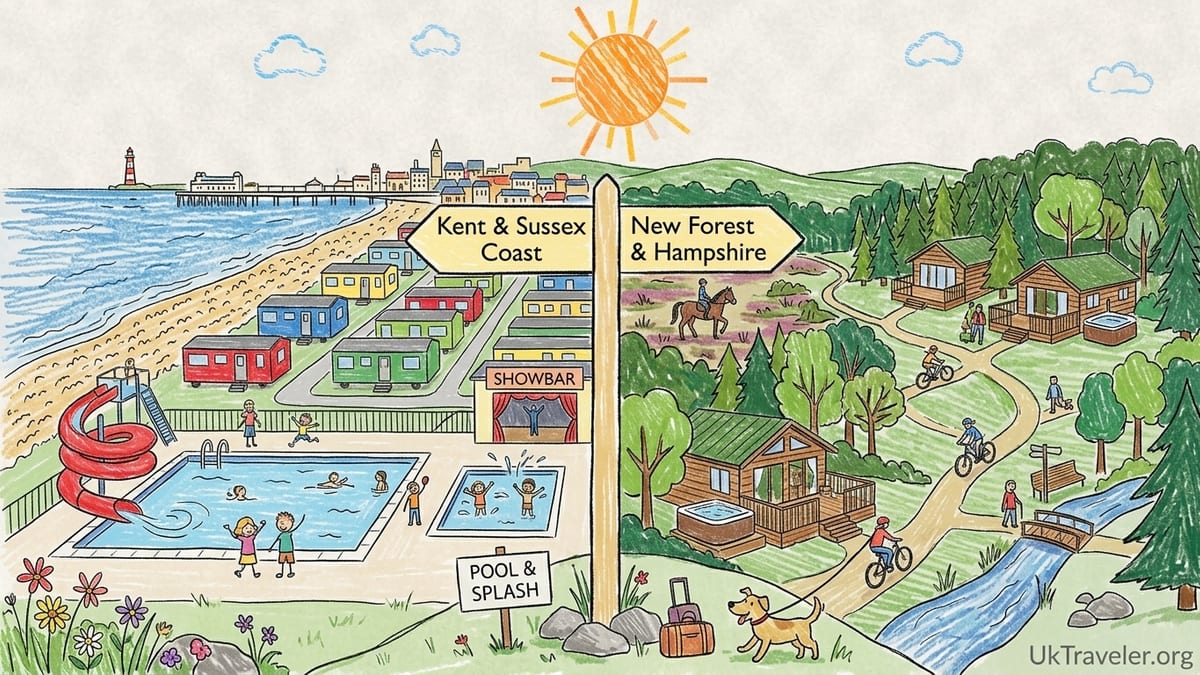
Another key choice is environment. Many Kent and Sussex parks are directly behind a shingle or sandy beach and feel sociable and busy in summer. By contrast, Hampshire and New Forest sites such as well-known forest holiday centres or riverside parks feel more wooded and rural, often with walking and cycling trails straight from the door. On the Isle of Wight, cliff-top and bay-side parks trade on sea views and access to family attractions, while some quieter sites in the west of the island focus more on walks, wildlife and simple pool-and-playground facilities.
Finally, dog-friendliness and beach access can make or break a trip. Policies vary widely. Some parks, including several big-name coastal sites, restrict dogs in certain grades of caravan or in peak periods, while others positively market pet-friendly units with enclosed decking and nearby dog-walking areas. If you are travelling with a dog, it pays to check both the park’s pet rules and seasonal restrictions on nearby beaches, as in high summer some of the most central beaches introduce dog-free zones or time limits.
Kent and Sussex Coast: Classic Seaside Caravan Parks
The Kent and Sussex shoreline is packed with traditional family holiday parks, many run by big groups that specialise in coastal caravan resorts. Around the Sussex coast, flagship parks such as Seal Bay Resort near Selsey are typical of the larger, full-on seaside experience. Seal Bay is widely promoted by tourism bodies for its scale and facilities: it combines extensive static caravan areas and some lodge-style accommodation with multiple indoor and outdoor pools, a significant splash zone and water slides, a choice of entertainment venues, soft play, arcades, bars and casual restaurants. It also has direct access to the shingle beach, making it popular with families who like to drift between pool, entertainment and seafront without using the car.
Further along the coast, other parks in the wider Sussex and Kent area follow a similar model with large pool complexes and kids’ entertainment. Around Hastings, Camber Sands and Romney Marsh, for instance, families will find parks where the headline facilities include heated indoor pools, smaller outdoor pools or splash pads for younger children, and beach access either on foot or via a short stroll over the dunes. In these resorts a family break in early summer for four in a mid-range caravan can often be priced competitively compared with booking a small seafront hotel, especially when you factor in included kids’ clubs, playgrounds and evening shows.
For younger families and those on a budget, a key advantage of the Kent and Sussex coast is choice. Because there are so many parks within a relatively compact area, it is usually possible to trade up or down on facilities without changing region. Parents who want quieter evenings might prefer more modest parks on the fringes of busier resorts, where there might be a simple indoor pool and outdoor play area but no late-night showbar, while still being just a short drive from the bigger attractions at places like Brighton, Eastbourne or Hastings seafronts.
Dog owners are particularly well catered for across this stretch of coast, as many parks have dog-friendly caravans and there are long sections of promenade or shingle where dogs are welcome for most or all of the year. A family staying near Romney Marsh, for example, might combine mornings on a dog-friendly beach with afternoons in the park’s pool and playgrounds, then drive out for a day trip to heritage railways or castles inland. The combination of simple caravan accommodation, beach walks and easy day trips makes this section of South East England one of the most flexible for multi-generational groups.
Hampshire and the New Forest: Forest Lodges, Pools and Nature Play
Move west towards Hampshire and the feel of holiday parks changes. Here, the emphasis often shifts from pure seaside fun to woodland, heathland and rivers, while still giving easy access to the Solent coast. The New Forest is particularly strong on lodge-style accommodation and high-spec holiday parks that blend family facilities with a more natural setting. One of the best-known examples is Sandy Balls Holiday Village on the western edge of the National Park, which has grown from a historic camping ground into a large, modern resort. Families can choose from static caravans, contemporary lodges and more unusual accommodation, with indoor and outdoor pools, a splash area, on-site restaurants, cycle hire and organised activities for children.
Another respected name in the area is Shorefield Country Park, just south of the main New Forest villages and not far from the coast. Here the focus is on a mix of caravan holiday homes and lodges, some with hot tubs, sitting in landscaped grounds with both indoor and outdoor pools, a spa, adventure play areas and seasonal entertainment. From the park, families can drive a short distance to pebble and shingle beaches that look across to the Isle of Wight, or head inland to meet the famous New Forest ponies, cycle forest tracks or visit attractions such as the National Motor Museum at Beaulieu.
For families who prefer something closer to camping but still want a few home comforts, the New Forest also offers mixed touring and glamping parks where pods, pre-pitched tents and simple cabins sit alongside pitches. Many of these are promoted through regional tourism websites under “family-friendly” banners, with the promise of on-site play areas, basic games rooms and sometimes small pools. In practice, they tend to lean more towards nature play and campfires than full-scale holiday-park entertainment, which can be a blessing for parents seeking quieter evenings and starry skies rather than live shows and arcades.
In terms of dog-friendly travel, Hampshire and the New Forest are hard to beat. Many holiday parks here positively encourage guests to bring dogs, with mapped woodland walks, dog wash facilities and pet-friendly units available in most accommodation types. Combined with the network of forest trails and rural pubs, this makes the area well suited to families who split their days between kids cycling in traffic-free enclosures, splash sessions in the park pool and dog walks through ancient woodland.
Isle of Wight: Pools, Splash Areas and Beachside Caravans
The Isle of Wight has long been one of the UK’s classic family-holiday destinations, and its network of coastal holiday parks reflects that history. There is no single large Haven-branded resort on the island, but several parks offer a similar mix of static caravans, lodges or chalets with family pools, restaurants and entertainment. Tourism guides for the island consistently highlight parks clustered around Shanklin, Sandown, Bembridge and St Helens in the east, and a handful of sites in the west and north that appeal to families looking for a slightly quieter base.
For families who prioritise pools and kids’ activities, Nodes Point Holiday Park near St Helens and Lower Hyde and Landguard parks around Shanklin are often recommended as strong all-rounders. These parks typically offer heated indoor pools, outdoor pools or splash areas in summer, adventure playgrounds, sports courts and structured kids’ clubs alongside evening entertainment. For example, at Nodes Point a family staying in a standard caravan in late June would usually find an indoor pool with basic slides, an adventure playground and organised activities such as kids’ discos or craft sessions, all within a short walk of the shoreline.
Whitecliff Bay Holiday Park on the east coast is another stand-out example for families. Set above a sheltered bay, it combines static caravans, lodges and glamping units with both indoor and outdoor pools, a small soft play area, playgrounds and an entertainment programme that peaks in school holidays. One of its biggest draws is direct access down to the sandy beach, which many families treat as their main playground, returning to the pools and restaurants when the tide or weather turn. Travel writers and family bloggers often highlight Whitecliff Bay as a good compromise between facilities and a slightly more relaxed atmosphere than the very largest mainland parks.
For dog owners, the Isle of Wight can work particularly well because many parks set aside pet-friendly caravans and lodges, and the island features a mix of dog-friendly beaches, coastal paths and countryside walks. Families commonly base themselves at a park around Bembridge or St Helens, where there are gently shelving beaches and rock pools that appeal to younger children, then take day trips to the west coast for bigger surf at places like Compton Bay or to attractions such as Blackgang Chine and Robin Hill. With car ferry crossings to factor in, the island can be a little pricier in peak summer than some mainland parks, but many families find that the combination of pools, splash areas, beaches and compact driving distances justifies the extra planning.
Caravans vs Lodges: Space, Comfort and Value
Across Kent, Sussex, Hampshire, the New Forest and the Isle of Wight, families broadly face the same decision: opt for a caravan as the value option, or stretch to a lodge for more space and comfort. Modern static caravans at well-known parks typically come in two- and three-bedroom layouts, sleeping four to six people, with open-plan living areas, compact shower rooms and either a small patio or deck. They are usually the cheapest way to access the full run of park facilities, with off-peak three or four-night breaks sometimes available at prices that compare favourably with a single night in a mid-range hotel for a family of four.
Lodges, by contrast, tend to appeal to families who plan to spend more time relaxing inside or on the deck. In places such as Sandy Balls or Shorefield Country Park, as well as at premium parks on the Kent and Sussex coast, lodges are usually wider and better insulated than caravans, with more generous bedrooms, larger bathrooms and sometimes extras such as dishwashers, Bluetooth speakers and hot tubs. On the Isle of Wight, several parks now market modern lodge-style units or luxury caravans with similar amenities, trading slightly higher prices for a more contemporary, home-like feel.
From a practical perspective, the choice often depends on how much time you expect to spend in your accommodation versus around the park or out exploring. Families who see the park as a base for busy days on the beach or in the forest usually do well with a standard caravan, especially in the drier months when outdoor space matters less. Those with toddlers who still nap, or multi-generational groups who might spend more time indoors, often appreciate the extra square footage and quieter feel of a lodge, particularly in shoulder seasons when evenings can be cool and rainy.
It is also worth checking small but important details. At busier seaside parks, entry-level caravans may be in older sections of the site or a longer walk from the pool and main complex, while lodges and newer premium caravans often occupy more landscaped or sheltered corners. On forested sites, some older cabins can be charming but a little dark, whereas newer lodges use large windows and patio doors to bring in more light. If you are travelling with a baby, look for floor space for a travel cot, and if accessibility is a concern, ask about ramped access and walk-in showers, which are more common in some lodge ranges.
Pools, Splash Areas and Kids’ Entertainment
For many families, the quality of pools, splash zones and children’s entertainment is the deciding factor when choosing a park. Along the Kent and Sussex coast, major parks such as Seal Bay and its competitors typically feature multi-pool complexes with flumes or smaller slides, shallow toddler areas and outdoor splash pads that open in warmer months. Daily timetables in peak season often include dedicated splash sessions, family fun hours and, occasionally, quieter adult-only swim slots earlier or later in the day. Evening entertainment can range from character shows and live music to bingo and family game nights.
In Hampshire and the New Forest, parks such as Sandy Balls and Shorefield place a similar emphasis on water play but combine it with outdoor activity programmes. Here it is common to find indoor pools that operate year-round, smaller outdoor pools that open seasonally, and add-on activities such as archery, high-ropes courses or guided forest walks. Children’s clubs may run nature-focused sessions, bug hunts and den building rather than only character-led shows. This gives families a broader mix of screen-free activities, especially valuable for slightly older children who might tire of soft play and simple splash pads.
On the Isle of Wight, park pools and entertainment programmes vary in scale but nearly all of the larger sites offer at least one heated indoor pool and some form of organised children’s activities in school holidays. Parks like Nodes Point, Lower Hyde, Landguard and Whitecliff Bay typically schedule morning or afternoon kids’ clubs, evening discos and visiting performers during peak weeks. Some also have small indoor soft play zones, outdoor playgrounds and multi-sports courts, which becomes important on days when the weather makes beaches less appealing. Smaller or more rural parks on the island might provide only a simple indoor pool and playground, but their locations often make up for it with easy access to coastal paths and countryside attractions.
When comparing parks, it is crucial to look beyond headline terms such as “water park” or “splash zone” and dig into what is actually on offer. A “splash zone” might mean a couple of small fountains for toddlers or a far bigger area with tipping buckets, mini flumes and interactive features. Similarly, kids’ clubs can range from a couple of supervised craft sessions per week up to full daily programmes segmented by age. For value, families should consider how much they are likely to use the pool and entertainment compared with free activities like beach time, forest walks and local attractions, especially if travelling outside the warmest months.
Beach Access and Dog-Friendly Stays
Direct or easy beach access is one of the main attractions of coastal parks in Kent, Sussex, Hampshire and on the Isle of Wight. Along the Sussex coast, several large parks sit immediately behind shingle beaches where families can walk straight from caravan to seafront. While these beaches may not always have extensive sand at high tide, they are ideal for paddling, pebble collecting and coastal walks, and many families simply time their sandcastle sessions for lower tides or short drives to locally known sandy stretches. In Kent, resorts along the Romney Marsh and Thanet coasts offer a mix of sandy and shingle options, often connected by promenades that are well suited to pushchairs and scooters.
In Hampshire, particularly between Hayling Island and the New Forest coast, beach access may involve a short drive rather than stepping out from the park gate, but the trade-off is often quieter, more natural-feeling shorelines. Families staying near the New Forest, for instance, might spend one day exploring woodland trails and the next on a pebbly Solent beach with views across to the Isle of Wight and passing sailing boats. On the island itself, parks such as Whitecliff Bay or those near Shanklin and Sandown sit above some of the South Coast’s classic family beaches, where gently shelving sand, promenade cafes and traditional amusements combine to create the full bucket-and-spade experience.
Dog-friendly accommodation adds another layer of choice. Many South East parks now provide dedicated pet-friendly caravans or lodges, often with hard floors, enclosed decking and dog-wash points. In the New Forest, dogs are a common sight around holiday parks and on the surrounding trails, and some parks even provide dog exercise fields or welcome packs. On the Isle of Wight, pet-friendly units are widely available and the coastal path means that even if your nearest beach has summer restrictions, you can often walk along the cliffs or seek out quieter coves that welcome dogs year-round.
However, dog policies and local beach rules can change, and they are not always consistent even along the same stretch of coast. Families should therefore build in time to check current guidance from local councils and park reception before assuming dogs are permitted on a particular beach or in certain indoor areas. In practical terms, this might mean planning beach mornings in dog-friendly sections, then afternoon swims in the site’s pool while one adult takes the dog for a woodland or clifftop walk. Allowing for this kind of split schedule can help keep both four-legged and two-legged family members happy without falling foul of local regulations.
The Takeaway
Choosing the best family holiday park in South East England comes down to matching the character of each area to your family’s priorities. The Kent and Sussex coast offers classic seaside caravan parks with big pools and busy entertainment, ideal for children who love arcades, shows and a sociable atmosphere. Hampshire and the New Forest lean towards lodge-style stays in woodland settings, where pools and kids’ clubs sit alongside nature play, cycling and wildlife watching. The Isle of Wight combines elements of both, with coastal parks that blend pools, splash areas and kids’ programmes with sandy beaches, cliff-top walks and a compact island full of family attractions.
Across all three areas, caravans provide the most budget-friendly access to park facilities, while lodges and premium holiday homes add extra space and comfort for those prepared to pay more. Pools, splash zones and entertainment programmes vary widely, so careful reading of park descriptions and recent reviews is essential, as is a realistic sense of how much time your family will spend on site versus exploring beaches, forests and villages. For dog-owning families, South East England is particularly strong, but it remains important to double-check park and beach policies before you travel.
Ultimately, the region’s strength lies in its diversity. With approaching 300 family-friendly parks and campsites across the wider South East, there is space for both high-energy seaside resorts and quiet forest hideaways. Whether you are planning a first caravan break with toddlers, a multi-generational lodge holiday or a dog-friendly escape by the sea, Kent, Sussex, Hampshire, the New Forest and the Isle of Wight together offer a depth of choice that is hard to match elsewhere in the UK.
FAQ
Q1. Which area is best for a first-time family holiday park break?
For a classic introduction, many families choose the Kent or Sussex coast, where large seaside parks offer big pools, simple beach access and plenty of kids’ entertainment without long drives.
Q2. Are lodges worth the extra cost compared with caravans?
Lodges usually give more space, better insulation and often extras like dishwashers or hot tubs, which can be worthwhile for longer stays, cooler months or multi-generational trips.
Q3. Is the Isle of Wight more expensive than mainland parks?
Ferry costs can make Isle of Wight breaks pricier overall, but on-island park prices are often comparable to similar mainland resorts, especially outside the peak school summer weeks.
Q4. Which parks are best for toddlers and younger children?
Larger parks with shallow splash areas, soft play and daytime toddler clubs, such as several big coastal sites in Sussex and key parks on the Isle of Wight, tend to work particularly well.
Q5. How early should I book for school summer holidays?
For late July and August, it is sensible to book several months in advance, especially if you want a specific park, lodge with hot tub, sea view unit or dog-friendly accommodation.
Q6. Can I visit nearby attractions easily without using the car every day?
Many coastal parks sit within walking distance of beaches and local promenades, while in the New Forest and on the Isle of Wight you will often find walking and cycling routes starting directly from or near park entrances.
Q7. Are holiday parks in the New Forest suitable for teenagers?
Yes, particularly larger sites with pools, sports courts, bike hire and outdoor activities such as archery or high ropes, combined with freedom to explore forest trails and local villages.
Q8. How dog-friendly are South East England holiday parks?
Dog-friendly options are common, with many parks offering pet-friendly caravans or lodges and easy access to walks, but families should always confirm current pet policies and nearby beach rules.
Q9. Do all parks include kids’ entertainment in the price?
Most larger resorts include standard kids’ clubs and evening shows, though some premium activities such as high ropes or adventure sessions may carry extra charges, so it is wise to check in advance.
Q10. What is the best time of year to balance price and weather?
Late May, June and early September often provide a good compromise, with milder weather, open facilities and lower prices than the peak school summer holiday period.