


Few travel debates in England are as enduring as Cornwall versus the Lake District. One is all about surf-washed beaches, pastel-hued fishing villages and cream teas above golden coves. The other is a sweep of glacial lakes and rugged fells, with slate-roofed inns and some of the finest hillwalking in Europe. Both are iconic, both are busy in peak season, and both can reward you with an unforgettable trip if you match the destination carefully to the kind of holiday you actually want.
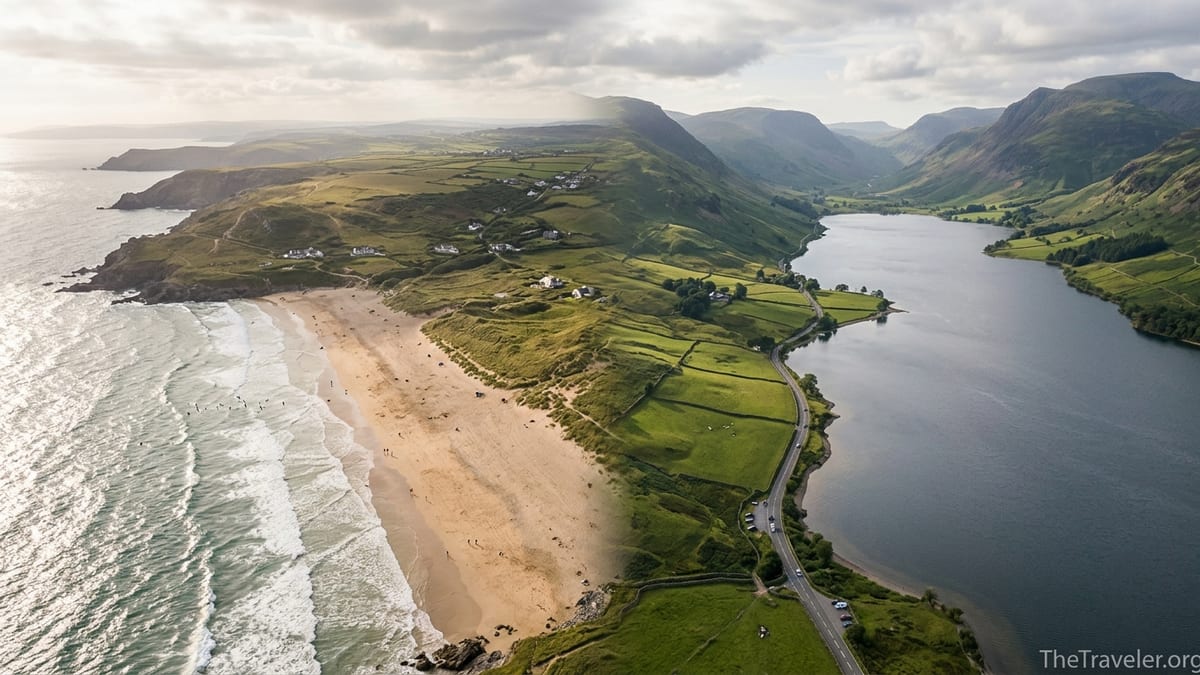
Big Picture: Coast vs Mountains
Cornwall is a long, finger-like peninsula at the far southwest tip of England, virtually surrounded by sea and fringed with hundreds of sandy coves. The north coast looks out to the Atlantic, with exposed surf beaches such as Newquay’s Fistral Beach, Perranporth and Bude. The south coast, sometimes called the Cornish Riviera, is softer and greener, with sheltered bays and working harbours like Fowey and Falmouth. Most people come here primarily for the coastline: swimming, surfing, sea kayaking, coastal walks and lazy days on the sand.
The Lake District, in contrast, is an inland national park in Cumbria, northwest England, covering roughly 900 square miles of mountains and lakes. It is home to England’s highest peak, Scafell Pike, and its deepest lake, Wastwater, along with a web of valleys such as Borrowdale and Langdale that are world-famous among walkers and climbers. Instead of beaches and surf schools, the core experiences here are hiking, boat trips on Windermere or Ullswater, and evenings in snug stone-built pubs.
In practical terms, Cornwall is generally the better choice if you want a classic seaside holiday with long beach days and coastal road trips. The Lake District is stronger if your dream England trip involves mountain views, fell walks, and dramatic scenery a few minutes’ stroll from your guesthouse door. Both regions now offer a range of boutique hotels, gastropubs and smart self-catering cottages, so your choice is less about comfort level and more about the landscape you want to wake up to.
Reaching each region is different too. From London, many visitors drive five to six hours down the M4 and A30 into Cornwall, stopping at services near Exeter before pushing on to hubs like Newquay, St Ives or Falmouth. For the Lake District, the usual route is the M6 north to junctions for Kendal, Windermere or Keswick, again around four to five hours in typical traffic. Both are realistic long-weekend road trips, but neither is a quick hop from the capital.
Beaches vs Lakes: What You Actually Do All Day
If your mental picture of a holiday involves sand between your toes, Cornwall is hard to beat within England. On the north coast, Newquay’s Fistral Beach is considered the home of British surfing, with multiple surf schools offering beginner lessons that include board and wetsuit hire. Perranporth, with its big sandy bay and family-friendly beachfront bar, and Bude’s Summerleaze and Crooklets beaches are similarly popular for bodyboarding and sandcastle-building. Around St Ives, Porthmeor beach attracts surfers while Porthminster offers more sheltered swimming in turquoise shallows backed by palm trees and smart beach cafés.
Cornwall’s south coast is less about surf and more about sheltered swimming and sailing. Gyllyngvase Beach in Falmouth, for example, has calm waters suitable for paddleboards and families, while nearby Swanpool offers kayak and SUP rentals. Fishing villages like Polperro and Mevagissey are not built around beaches as much as harbours, but you can take short boat trips, join mackerel-fishing excursions in summer, or simply sit with fish and chips watching the tide creep across the harbour wall.
In the Lake District there are no true beaches in the coastal sense, but the lakes offer their own style of waterside relaxation. On Windermere, England’s largest lake, many visitors base themselves in Bowness or Ambleside and fill their days with boat cruises, lakeside walks and short hikes up to viewpoints such as Orrest Head. Derwentwater, next to Keswick, has a delightful 10-mile circuit path that you can walk in sections using the hop-on-hop-off launch boats, combining gentle lakeside stretches with brief climbs to viewpoints like Friar’s Crag.
For stronger swimmers, wild swimming has boomed across the Lake District in recent years. Popular entry points include the National Trust beach at Fell Foot on Windermere and the quieter bays of Ullswater, where summer water temperatures can reach the mid-teens Celsius. Unlike Cornwall, where lifeguarded beaches are common in high season, lake swimming is very much at your own risk, so it suits confident swimmers who are comfortable with cold, deep freshwater and changeable weather.
Scenery, Hiking and Outdoor Adventure
Both Cornwall and the Lake District are first-class walking destinations, but they offer very different styles of hike. Cornwall’s signature route is the South West Coast Path, which traces the coastline in undulating fashion, often climbing steeply out of one cove and dropping to the next. A classic day walk might be the stretch from St Ives to Zennor, where you pass granite headlands, tiny hidden coves and grazing ponies, or the dramatic cliffs near Land’s End, where Atlantic waves hammer into stacks and arches.
In the Lake District, walking is all about the fells. The park contains more than 200 named summits, from family-friendly slopes like Catbells, which can be climbed from the landing stages of Derwentwater in a few hours, to serious all-day ascents of Helvellyn or Scafell Pike. Many visitors follow the routes popularised by Alfred Wainwright, whose illustrated guidebooks inspired generations of hillwalkers. Even if you are staying in a valley town like Keswick or Ambleside, you are usually only a short walk from a trailhead leading into steep, rugged terrain.
For adventure sports, the Lake District has the edge. Rock-climbing crags in Langdale and Borrowdale attract climbers of all levels, while ghyll scrambling operators run guided trips scrambling up mountain streams in wetsuits and helmets. Road cyclists test themselves on steep passes such as Hardknott and Wrynose, where gradients can exceed 25 percent. Cornwall has its own adventures, including coasteering near Newquay and sea kayaking around St Agnes or the Lizard, but the variety of mountain-based activities in the Lakes is broader.
The kind of scenery you prefer is important when choosing between the two. Cornwall’s drama is coastal: cliffs, sea stacks and huge Atlantic skies. The Lake District is about depth and enclosure: narrow valleys carved by glaciers, lakes reflecting looming fells, and constantly shifting clouds and light. Photographers will find iconic shots in both, but if you want sweeping seascapes at sunset it is hard to beat a west-facing Cornish beach like Sennen Cove, while dawn over Ullswater with mist on the water delivers the classic Lake District mood.
Places to Stay: Hotels, Inns and Cottages
Both regions have everything from budget campsites to high-end boutique hotels, but the feel and pricing can vary by town. In Cornwall, surf towns such as Newquay have a wide mix of budget guesthouses, mid-range chain hotels and a growing number of upscale spots, including clifftop spa hotels overlooking Fistral or Watergate Bay. St Ives, long popular with artists, now leans more upmarket, with stylish seafront hotels and chic B&Bs that often sell out for August months in advance.
Holiday cottages are a huge part of the Cornish accommodation scene. A simple two-bedroom cottage close to the beach in places like Perranporth or Bude may start around the mid hundreds of pounds for a week outside school holidays, rising to well over a thousand in peak August, with sea views and hot tubs commanding premiums. For better value, some travellers base themselves inland in villages a 10 to 20 minute drive from the coast, trading instant beach access for lower prices and easier parking.
In the Lake District, traditional inns and small hotels dominate. Around Windermere and Bowness you will find large Victorian villas converted into B&Bs, lakeside spa hotels with indoor pools and formal dining rooms, and smaller guesthouses on side streets. Keswick, at the north of the park, is particularly popular with walkers and has a high concentration of gear shops, modest hotels and dog-friendly pubs-with-rooms. Prices have risen in recent years, especially for lakeside properties and hotels with spa facilities, and it is common to pay a premium for Friday and Saturday nights.
Self-catering is just as common in the Lakes as in Cornwall. Stone-built cottages in villages like Grasmere or Hawkshead can be cosy bases for a week of fell walks, often with open fires and boot rooms. As in Cornwall, peak school holiday weeks are the most expensive. Budget-conscious travellers sometimes look to the fringes of the park, such as Kendal or Penrith, where nightly rates can be noticeably lower but you are still only a short drive or bus ride from major lakes.
Families vs Couples: Who Will Be Happiest Where?
Cornwall is an easy sell for families, especially with younger children. Many beaches are gently shelving and lifeguarded in summer, beach cafés offer kids’ menus and ice creams, and attractions like the Eden Project, St Michael’s Mount and the Lost Gardens of Heligan provide bad-weather back-ups. A typical family day might be surfing lessons at Polzeath in the morning, rockpooling at low tide, then fish and chips in Padstow or a simple barbecue on the beach if your accommodation allows it.
The Lake District can also work brilliantly for families, particularly those with active older children who enjoy walking or biking. Easy peaks such as Catbells or Hallin Fell give a sense of achievement without committing to a full mountain day. On wet days, families flock to indoor attractions like the World of Beatrix Potter in Bowness, the Lakes Aquarium at Lakeside, or the pencil museum in Keswick. Boat trips on Windermere or Coniston are short enough to hold children’s attention and are often paired with playground stops.
For couples, the choice depends on whether you want a breezy beach escape or a fireside retreat. Cornwall offers romantic seafront restaurants in St Ives and Padstow, sunset walks at Sennen or Godrevy, and cosy cottages on the cliffs around Zennor or Mullion. The Lake District leans more towards log fires, spa breaks and country-house hotels, especially around Windermere and Ullswater, with fine-dining restaurants that make good use of Cumbrian lamb and local cheeses.
If accessibility and gentle terrain are important, Cornwall’s harbour towns and promenade walks may be easier than some of the Lake District’s steep lanes and uneven fell paths. However, lakeside towns like Bowness and Ambleside do have paved promenades and accessible boat cruises, so a carefully planned Lakes trip can still work for less mobile travellers who are more interested in views than summits.
Road Trips, Weather and Costs
For classic road trips, both regions deliver, but again in different styles. A Cornish itinerary might start in Fowey, weave west to the Roseland Peninsula, then continue via Falmouth, St Ives and Land’s End to St Just and Penzance. The A30 is the main spine road, but many travellers detour onto smaller coastal roads for views over bays like St Austell or Mount’s Bay. Be aware that single-track lanes with high hedges are common; in August, it can take 20 minutes to cover a couple of miles if you are constantly reversing into passing places.
In the Lake District, driving is part of the adventure. The passes of Honister, Kirkstone, Wrynose and Hardknott provide hairpin bends, steep gradients and sudden viewpoints over hanging valleys. A popular circular route might link Windermere, Grasmere, Keswick and Buttermere, with detours into quieter valleys such as Borrowdale or Eskdale. In winter and early spring, some high passes can be closed or treacherous with ice, so check conditions and be prepared to reroute via lower roads around the edges of the park.
Weather is a major factor in this comparison. Cornwall, with its maritime climate, tends to be milder and slightly sunnier than much of the rest of England. Sea temperatures in July and August typically reach the mid to high teens Celsius, which is manageable with a wetsuit for surfing or for brief dips on warm days. The Lake District is famously wet: some valleys see rainfall on well over half the days of the year, and showers can sweep in rapidly even in July. On the plus side, this moisture is what keeps the fells green and the lakes full, but it does mean you need proper waterproofs and flexibility in your hiking plans.
Costs in both regions can be high in school holidays, but Cornwall in particular has developed a reputation as one of England’s pricier cottage destinations. A two-bedroom cottage near a sought-after beach in August can easily exceed four figures for a week. The Lake District is not far behind, particularly for lakeshore hotels and spa properties, while more modest B&Bs and inland cottages often offer better value. Eating out is broadly comparable in both regions: expect to pay typical UK gastro-pub prices for mains, with the option of cheaper fish-and-chip takeaways in coastal Cornish towns and traditional pie-and-ale pubs in the Lakes.
Which Destination Is Better for Your England Trip?
For a first-time England trip focused on classic seaside holiday vibes, Cornwall usually wins. You can stitch together a week that might include surfing lessons at Newquay, a boat trip from St Ives to spot seals, a day exploring St Michael’s Mount, and slow evenings on the beach as the sun drops into the Atlantic. This suits visitors who want plenty of unscheduled hours on the sand, access to beach bars and cafés, and the option of coastal walks rather than all-day hikes.
If your idea of a successful trip involves checking off peaks, following famous walking routes and spending most of your time in hiking boots, the Lake District is the stronger choice. Even a three-night break can give you a taste of classic fells like Catbells or Loughrigg Fell, a boat cruise on Windermere or Ullswater, and evenings in traditional inns. The region also combines easily with other northern highlights, such as the Yorkshire Dales or Hadrian’s Wall, for a broader road trip.
For romantic short breaks and honeymoons, the decision is more finely balanced. A cliff-top boutique hotel near St Ives with a sea-view room and on-site spa can be every bit as indulgent as a lakeside country house hotel near Ullswater. If you love sunsets and sea air, choose Cornwall; if you are drawn to firesides, woodland walks and misty mornings on the water, choose the Lakes. Couples travelling outside peak season might find better value and more availability in the shoulder months of May, June, September and early October in both regions.
Travellers relying on public transport might find the Lake District slightly easier. Fast trains from London and other major cities reach Oxenholme or Penrith, with onward connections to Windermere and a good local bus network linking major villages and trailheads. Cornwall is served by trains to towns like Penzance, St Austell and Newquay, but once there, exploring multiple coves and villages without a car requires more planning around bus timetables and seasonal services.
The Takeaway
Choosing between Cornwall and the Lake District is less about which is objectively better and more about aligning the destination with your travel style. If you picture yourself barefoot in the sand, tasting fresh fish beside a harbour and driving narrow lanes between cliff-top viewpoints, Cornwall fits that dream. If you want to lace up boots each morning, climb to wind-scoured summits and end the day beside a log fire with a pint of local ale, the Lake District is where you belong.
For many UK travellers, the ideal solution is not either-or but when. Cornwall excels for high-summer beach holidays and early autumn surf trips, when the sea is at its warmest and sunsets linger over the Atlantic. The Lake District shines in late spring, when the fells are green and days are long, and in crisp autumn weeks when bracken turns copper and mists hang over Derwentwater. If you are planning multiple England trips over a few years, experiencing both regions in their prime seasons offers the richest picture of the country’s landscapes.
Ultimately, both Cornwall and the Lake District are iconic for a reason. Each offers a distinctive blend of scenery, culture and activities that can easily fill a week or more. Decide what you most want to do each day, consider how you plan to travel, and be realistic about weather and budget. Do that, and whether you end up watching the sun sink behind Sennen’s waves or over the dark surface of Wastwater, you are unlikely to feel you chose the wrong place.
FAQ
Q1. Is Cornwall or the Lake District better for a first-time visitor to England?
Cornwall is usually better if you want a classic English seaside holiday with beaches, harbours and coastal drives, while the Lake District suits visitors focused on mountains, hiking and lakeside scenery.
Q2. Which region has more reliable summer weather?
Cornwall generally has milder, slightly sunnier summer weather thanks to its maritime climate, while the Lake District is wetter and more changeable, even in July and August.
Q3. Where is better for hiking: Cornwall or the Lake District?
The Lake District is stronger for classic mountain hiking, with numerous peaks and well-marked fell routes. Cornwall excels for coastal hikes along the South West Coast Path rather than summit-focused walks.
Q4. Are holidays more expensive in Cornwall or the Lake District?
Both can be pricey in school holidays. Beachside cottages in Cornwall often command some of the highest weekly rates, while lakeside spa hotels in the Lake District are similarly expensive. Inland and off-peak stays are more affordable in both.
Q5. Which is better for families with young children?
Cornwall usually works better for younger kids, offering sandy beaches, lifeguarded swimming areas and child-friendly attractions, though the Lake District can be great for families who enjoy gentle walks, boat trips and outdoor time.
Q6. Can I visit either region without a car?
Yes, but the Lake District is generally easier without a car thanks to good rail links to Windermere and Penrith and a strong local bus network. In Cornwall, exploring multiple beaches and villages by bus or train requires more careful planning.
Q7. Which destination is best for a romantic weekend break?
Both work well. Choose Cornwall for sea views, clifftop walks and beachside dinners, and the Lake District for cosy inns, spa hotels, and romantic lakeside walks in valleys like Borrowdale or around Ullswater.
Q8. What is the driving like in Cornwall compared with the Lake District?
Cornwall has many narrow, hedge-lined lanes and busy seaside town centres in summer, while the Lake District adds steep mountain passes with tight bends. Confident drivers usually enjoy both, but less experienced drivers may prefer main roads and park-and-ride options.
Q9. When is the best time of year to visit each region?
For Cornwall, late May to early July and September often bring warm weather with fewer crowds. For the Lake District, late spring and early autumn usually offer pleasant temperatures, good walking conditions and vivid scenery.
Q10. If I can only visit one, which should I choose?
Choose Cornwall if you primarily want beaches, surf and coastal villages; choose the Lake District if your priority is mountains, lakes and hiking. Let your preferred daily activities guide the decision.