


Exploring England by train is often the easiest way to link London with postcard cities like Bath, Oxford, Cambridge, York, Manchester, Liverpool and Brighton. Services are frequent, stations sit in the middle of historic centres, and with the right ticket strategy you can pay far less than many first-time visitors expect. This guide walks through key routes, ticket types, how to use advance fares, and practical tips on stations and luggage so you can plan a smooth, good-value trip without needing a car.
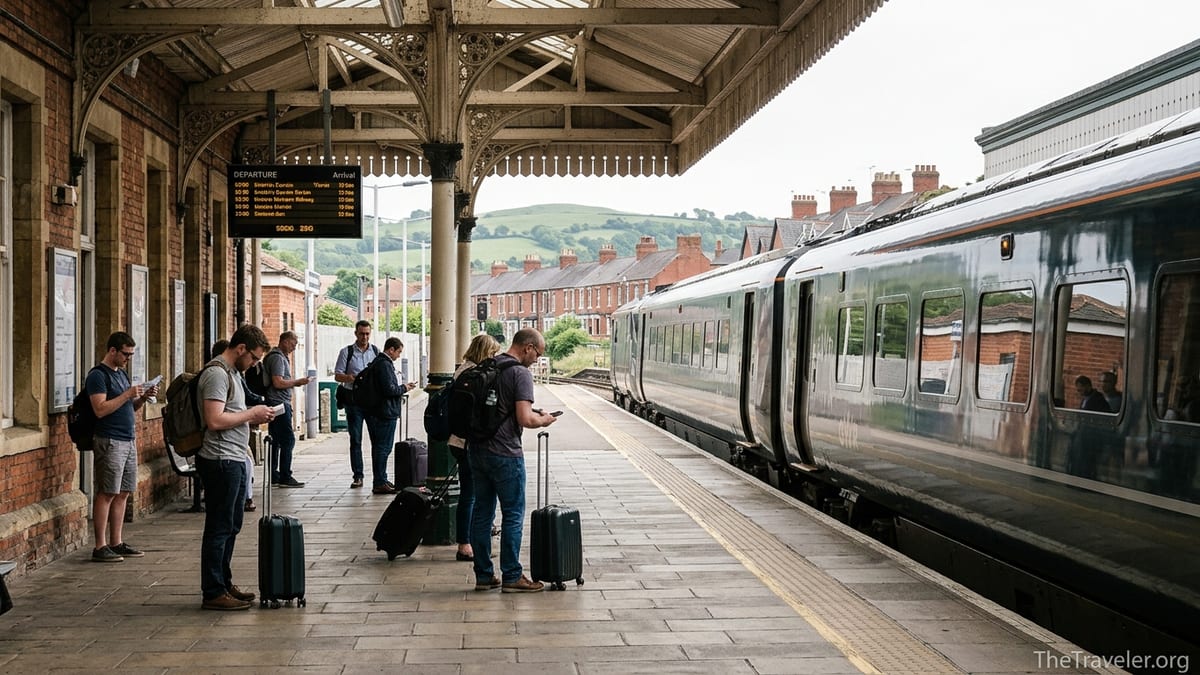
Why England by Train Often Beats Driving
For most visitors, the English rail network is more practical than renting a car, especially for a one to two week trip that starts in London. Intercity trains link central London directly to Bath, Oxford, Cambridge, York, Manchester, Liverpool and Brighton, usually faster than you could drive in normal traffic. For example, the London to York run can take around 1 hour 50 minutes on fast London North Eastern Railway services, while driving the same distance commonly takes four hours or more including congestion and parking time.
Train stations in England are usually right in the middle of town, which saves you time and hassle compared with out-of-centre car hire depots. In Bath, the main Bath Spa station sits a short walk from the Roman Baths and Abbey. In Oxford, you can walk from the station to the historic colleges in roughly 15 minutes. York’s station stands just outside the medieval walls, about a 10 minute walk from York Minster. This central positioning means you can step off the train and start sightseeing almost immediately.
Costs can compare favourably with driving when you factor in fuel, insurance, potential congestion charges and city-centre parking, which often runs to several pounds per hour. Advance train fares bought early can be considerably cheaper than flexible walk-up tickets. On some off-peak dates it is possible to see London to York advance singles advertised from under 25 pounds when booked weeks in advance, while petrol and parking for the same trip by car can quickly approach that figure before you include rental charges.
There are situations where driving makes more sense, such as trips focused on remote villages or walking trails with limited public transport. But for a classic first-time itinerary centred on major cities and historic towns, England’s rail system is usually faster, more relaxing and no more expensive if you understand how ticketing works and plan ahead.
Key London Routes: Bath, Oxford, Cambridge, York, Manchester, Liverpool, Brighton
Several core routes form the backbone of most rail-based England itineraries. From London to Bath, fast Great Western Railway trains run from Paddington to Bath Spa via Reading. On a typical weekday you can expect 2 trains per hour, with journey times around 1 hour 20 minutes on the quickest services. Many trains continue to Bristol, making it easy to visit both Bath and Bristol in the same trip.
The classic Oxford run also leaves from London Paddington on Great Western Railway services, usually taking just under an hour on the fastest trains. There is also a slower route from London Marylebone to Oxford operated by trains via High Wycombe, which can be useful if fares on the main Paddington route are expensive on your dates. This gives you flexibility when searching for cheaper tickets.
For Cambridge, most visitors travel from London King’s Cross or London Liverpool Street. King’s Cross trains are typically faster, with some services taking around 50 minutes. Liverpool Street trains can be slightly slower but may be cheaper on certain departures. Because both London termini are connected by Underground, it is easy to pick the one that suits your plans and budget.
Longer northern routes are still straightforward. London to York trains leave from King’s Cross on London North Eastern Railway services, with frequent departures and journey times under 2 hours on many trains. For Manchester, you typically travel from London Euston on fast services, often taking around 2 hours 10 minutes. London to Liverpool services also depart from Euston, with faster trains completing the trip in a little over 2 hours. London to Brighton is one of the simplest seaside runs: frequent direct trains from London Victoria or London Bridge take about 1 hour, making Brighton an easy day trip or overnight escape.
Understanding Ticket Types: Anytime, Off-Peak and Advance
England’s rail fares can look complicated, but most visitors only need to understand three main ticket types for long-distance trips: Anytime, Off-Peak and Advance. Anytime tickets are the most flexible and most expensive. They let you travel on almost any train on the route that day. A walk-up Anytime single from London to Bath on a busy weekday can be many times more expensive than the cheapest Advance fare bought weeks ahead, so these are best kept as a last resort when you need full flexibility.
Off-Peak tickets are cheaper but restrict you to quieter times of day, often avoiding the morning and late afternoon commuter peaks on weekdays. As a rough rule, leaving London after 9:30 a.m. and avoiding late afternoon departures back into London keeps you within typical Off-Peak windows, though exact rules vary by route. Off-Peak tickets are useful if you want flexibility to choose between several mid-morning or midday trains without being tied to a specific departure.
Advance tickets are usually the cheapest option for longer journeys. These are sold as singles for specific trains and dates, and are non-refundable in most cases. You can often change them for a fee plus any difference in fare if you do so before the original departure time, but you cannot simply board an earlier or later train on the day with the same ticket. This lack of flexibility is the trade-off for the lower price, so they work best when you are confident about your travel times.
When you search for London to York, for example, you might see a range of Advance singles at different price points on the same date. A midday train several weeks out could show a much lower fare than a popular mid-afternoon service closer to departure. For shorter hops around London and the South East, contactless pay-as-you-go or local day tickets can be better value than long-distance style advances, but for the headline routes between major cities, learning to use Advance tickets is the key to keeping costs under control.
How and When to Buy Advance Fares
Advance tickets in England are released in limited quantities and are priced dynamically. Train operators usually start selling these tickets up to about 12 weeks before the travel date, though for some routes they may appear even earlier or later depending on timetable finalisation and engineering works. In practice, you may start seeing cheaper Advance fares anywhere from a few weeks to several months before your trip, with prices tending to rise as the cheaper quotas sell out.
For a visitor planning an October trip, for example, it is sensible to start checking prices in late July or early August and then monitor fares once or twice a week. If you notice that London to Manchester on your preferred morning service drops to a price you are comfortable with, it is usually wise to buy rather than wait, as there is no guarantee that specific cheap tier will return. On many routes, you can still buy an Advance ticket on the day of travel if the train has unsold quotas, but those last-minute advances are often more expensive than those available weeks ahead.
You can purchase Advance tickets online through major booking platforms and train company websites, in person at staffed ticket offices, or via ticket vending machines at larger stations. Many travellers prefer to buy online and either store tickets in a mobile wallet or collect them from machines at the station using a reference code and payment card. Mobile tickets are widely accepted on intercity services and can be convenient if you are travelling light and want to avoid queuing at machines.
When comparing options, check whether splitting your journey into two Advance tickets makes sense. For instance, on certain dates it might be cheaper to buy one Advance from London to a mid-route station and another from there to your final destination, as long as the train stops at the intermediate station. This so-called ticket splitting can offer savings on busy routes such as London to Manchester or London to Bath, although it adds complexity and you must ensure the train you use stops at the station where your tickets change.
Major Terminals, Stations and What to Expect Onboard
London has several major rail terminals, each serving different parts of the country. Paddington handles Great Western Railway routes to Bath, Bristol, Oxford and much of the west. King’s Cross is the gateway to the East Coast Main Line, including York, and also serves some fast trains to Cambridge. Euston covers many services to the West Midlands and North West, including Manchester and Liverpool. Victoria and London Bridge both serve Brighton and the south coast. Understanding which terminal you need will help you choose accommodation and plan Underground transfers more efficiently.
Big stations such as Paddington, King’s Cross, Euston and Victoria feel like small airports, with large departure boards, ticket offices, ticket machines, shops and cafes. Platforms usually open about 15 to 20 minutes before departure, at which point your train and coach number will be displayed. If you arrive early, you can wait in the main concourse area and watch the screens for your platform. Smaller city stations like Bath Spa, Oxford and York are compact and easier to navigate, often with only a few platforms laid out side by side.
Onboard, long-distance English trains are almost all reserved-seat friendly and have a mix of airline-style rows and occasional tables of four. If your ticket comes with a seat reservation, it will show a coach and seat number. Reservations are sometimes displayed on digital screens above the seats or on paper slips. Even if you are not fussed about the exact seat, reserving one is wise on busier routes such as Friday evening London to Manchester departures or summer weekend services to Brighton.
Wi-Fi is available on many intercity trains, typically free in standard class but with variable speeds. There are usually power sockets at seats on newer trains, though older rolling stock may have them only in certain coaches. Most long-distance services offer at least a trolley service with drinks and snacks, and many have a small buffet counter where you can buy coffee, soft drinks and light meals. Bringing your own food is common and perfectly acceptable.
Luggage, Seating and Accessibility Tips
Luggage rules for English trains are generally generous. As a guideline, you can usually bring up to two larger items such as suitcases plus a smaller bag without extra charge, provided you can manage your own bags and do not block aisles or doors. Overhead racks above the seats suit backpacks and small cabin-sized cases, while larger suitcases go in the vertical luggage racks near the doors or at the ends of carriages. During busy periods, these racks fill quickly, so boarding early can make it easier to find space for a large suitcase.
If you are travelling with one large checked-style case and one cabin bag, plan to place the big case in a dedicated luggage stack and keep valuables and documents in the cabin bag near your seat. Many travellers feel comfortable leaving large suitcases in the racks, checking them on occasion when walking through the carriage. For peace of mind, you can attach a visible name tag and avoid leaving passports, electronics or wallets in unattended bags. Trains are not like planes: there is no formal check-in or baggage handling, and you remain responsible for your own belongings throughout the journey.
For those who need step-free access or mobility assistance, most mainline stations provide help if booked in advance. You can usually request assistance such as a ramp to board the train or an escort between the platform and taxi rank. It is sensible to book this at least a day or two before travel, especially if you are connecting between large London stations. Newer trains are built with accessible toilets and designated wheelchair spaces, and staff are generally used to helping passengers who need extra time to board.
Seating preferences can make a big difference to comfort on longer journeys. If you are prone to motion sickness, reserving a forward-facing window seat can help. Families often prefer around a table of four so they can face each other, while solo travellers may choose an airline-style seat in a quiet coach away from the doors. When booking online, look for options to choose forward-facing or window seats where available. If the system does not offer detailed choice, you can still move to another unreserved seat once the train has left if there is space.
Practical Planning: Connections, Day Trips and Railcards
Planning an England trip by train works best when you build your itinerary around a few key bases connected by simple routes. A common pattern would be three nights in London, two in Bath or Bristol, two in York and two in Manchester or Liverpool, with each move accomplished on a direct train of two hours or less. From these bases you can add day trips, such as Bath to Bristol Temple Meads, York to smaller Yorkshire towns, or Manchester to the Peak District using local services.
Day trips from London are particularly straightforward by rail. A typical day might see you taking a morning train from Paddington to Oxford, spending five or six hours exploring colleges and museums, then returning on a late afternoon Off-Peak train. For Cambridge, a morning departure from King’s Cross or Liverpool Street gets you there before lunch, with a return to London in the evening. Brighton is even easier, with frequent trains from Victoria or London Bridge making it realistic to combine a seaside walk, the pier and the Lanes in a single day.
For visitors doing several intercity journeys, railcards can offer significant discounts. Most leisure railcards give about one-third off many Off-Peak and Advance fares in exchange for a fixed fee valid for a year. Popular options for overseas travellers include the Two Together Railcard for two adults who always travel together, or regional railcards if you are focusing on a specific area. These discounts usually apply only to tickets bought before boarding, not to contactless pay-as-you-go fares within London, so you will get most value from them on pre-booked intercity trips.
When planning connections, allow generous transfer time between different London terminals. For example, if you arrive at London King’s Cross from York and need to reach Paddington for a train to Bath, plan at least 45 to 60 minutes to cross London by Underground, including time to navigate stations and find your platform. Paddington, King’s Cross, Euston and Victoria are all linked by Tube, but crowds and occasional delays mean cushion time is your friend, especially when you are carrying luggage.
The Takeaway
Using England’s rail network is often the smartest way for visitors to connect London with historic cities like Bath, Oxford, Cambridge, York, Manchester, Liverpool and Brighton. Trains are generally faster than driving, deliver you right to the centre, and can be good value if you avoid last-minute Anytime tickets and instead rely on Off-Peak and Advance fares.
The practical steps are straightforward. Decide your key bases and travel days, learn which London terminal serves each route, and start checking Advance tickets roughly 8 to 12 weeks before departure. Add seat reservations, travel light enough to manage your own bags, and leave margin for station transfers. With this planning in place, rail travel becomes a relaxed, scenic part of your trip rather than a logistical headache.
Whether you are watching the countryside roll by on the way to Bath, crossing viaducts en route to York, or heading to Brighton for a quick escape to the sea, travelling England by train lets you focus on the journey as much as the destination. With a little advance fare strategy and a clear sense of routes and stations, you can see a lot of the country quickly, comfortably and without needing a car.
FAQ
Q1. How far in advance should I buy train tickets in England?
Most long-distance Advance fares appear around 8 to 12 weeks before travel, though this can vary. Start checking a few months ahead and buy when you see a price you are comfortable with rather than waiting for a guaranteed lowest fare, which does not really exist.
Q2. Do I need to reserve a seat on English trains?
Seat reservations are strongly recommended on intercity routes such as London to York, Manchester, Liverpool and Bath, especially on Fridays and Sundays. Many Advance tickets include a reservation by default, and you can usually add one for free when buying flexible Off-Peak or Anytime tickets.
Q3. Can I use one ticket on a different train if my plans change?
Anytime and most Off-Peak tickets can be used on a range of trains that meet the time restrictions on the day, but Advance tickets tie you to a specific departure. If you need to change an Advance ticket you usually must do so before the original departure time, pay a fee and any difference in fare.
Q4. Is first class worth it on English trains?
First class generally offers wider seats, more legroom and a quieter environment, sometimes with complimentary drinks or snacks on longer routes. For many leisure travellers, a good-value Standard Advance ticket represents better overall value, but upgrading can make sense on longer journeys if you find a reasonable fare.
Q5. How much luggage can I bring on the train?
Most operators allow you to bring two larger items plus a small bag, provided you can carry them yourself and they do not block aisles or doors. Cabin-sized bags usually fit overhead, while bigger suitcases go in luggage racks at the ends of carriages.
Q6. Which London station do I need for my trip?
For Bath and Oxford you normally depart from London Paddington. York and some Cambridge services use King’s Cross, while Manchester and Liverpool usually leave from Euston. Brighton trains go from Victoria or London Bridge. Always check your ticket or booking confirmation for the correct terminal.
Q7. Are trains cheaper than renting a car in England?
On many routes, especially between major cities, trains can be cheaper or similar in cost to driving once you include fuel, insurance and parking. Using Advance and Off-Peak tickets usually undercuts the combined costs of car hire and city-centre parking for two people or more on popular routes.
Q8. Can I eat and drink on English trains?
Yes, you can bring your own food and drink onboard, and many long-distance services have a trolley or buffet selling snacks, sandwiches and hot and cold drinks. It is polite to avoid strong-smelling food in crowded coaches.
Q9. How do Railcards work for visitors?
Railcards are discount cards that typically give about one-third off many Off-Peak and Advance fares in exchange for a fixed fee. Some can be bought digitally and used by overseas visitors, especially if you are making several paid intercity journeys within a year or travelling as a couple or group.
Q10. When does it make more sense to drive instead of taking the train?
Driving can be better for itineraries focused on small villages, remote coastal areas or walking regions with limited public transport, where reaching trailheads or rural inns by train and bus would be slow or impractical. For city-focused trips, though, trains usually win on speed, convenience and stress levels.