


England looks compact on a map, but journey times, rail quirks and narrow country lanes can quickly derail an over-ambitious itinerary. This guide lays out practical 5, 7, 10, 14 and 21 day routes that realistically string together London, Bath, the Cotswolds, Oxford, York, the Lake District, Liverpool, Cornwall and a few smart alternatives. Distances, example train times and ballpark costs are grounded in current 2026 conditions, so you can set a pace that feels exciting rather than exhausting.
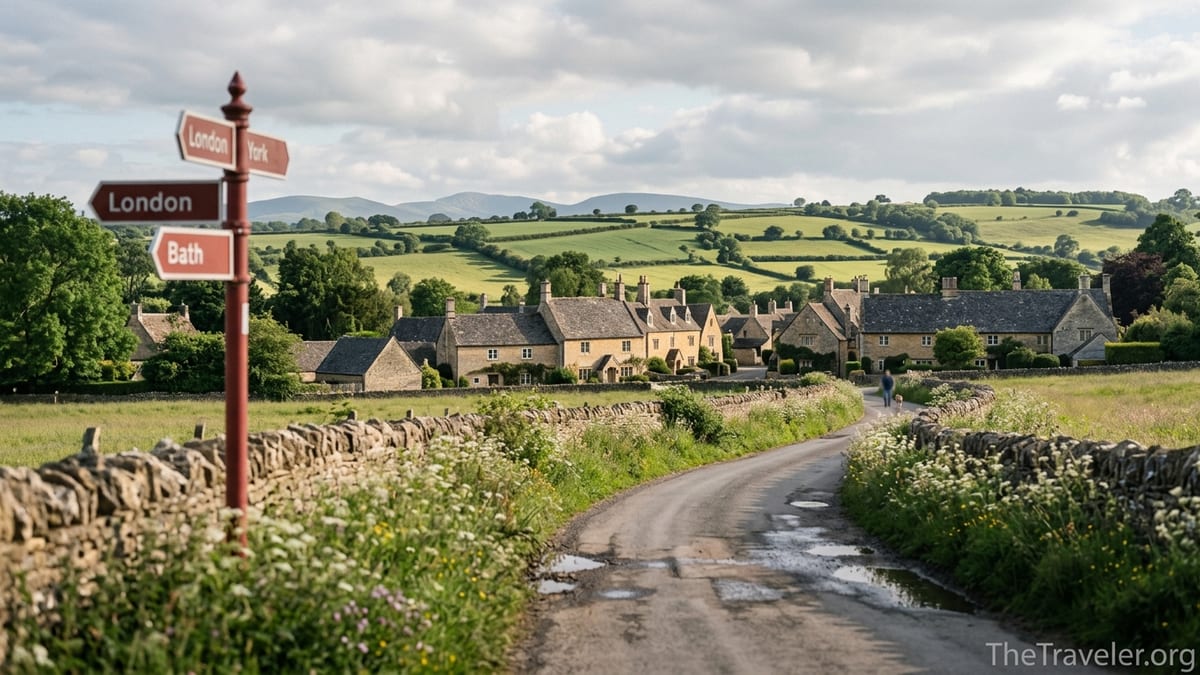
How to Think About Distance, Time and Budget in England
On paper, London to York is less than two hours by fast train and London to Bath around 1 hour 15 minutes. In practice, you need to add time for checking out of hotels, getting to the station, waiting for trains and transferring at the other end. A simple London to Bath move that is 1 hour 15 minutes on Great Western Railway often eats 3 to 4 hours of usable sightseeing time by the time you have packed, walked or ridden the Tube to Paddington and then reached your new hotel in Bath.
Trains are usually the smartest way to link big hubs such as London, Bath, Oxford, York, Windermere for the Lake District and Liverpool. As of 2026, advance singles for midweek daytime trains like London to Bath or London to York often start around the equivalent of 25 to 50 US dollars if you buy several weeks ahead and avoid the commuter rush, though walk up flexible fares can easily be three or four times that. Booking advance tickets a few weeks ahead and traveling after 9:30 in the morning usually keeps costs down while avoiding the crush of commuters.
For rural areas such as the Cotswolds and much of Cornwall, renting a car for a few days gives you much more freedom than stitching together occasional buses and branch line trains. Travel times can look short on maps but slow country roads and tractors often make a 90 minute drive into a two hour one, especially in August when domestic tourism peaks. If you plan two or three relocations in a week you will still have plenty of relaxed time in each base.
Accommodation and food prices vary widely across England, but for planning purposes many visitors now budget roughly 180 to 350 US dollars per night for a centrally located double room in places like London, Bath or York in high season, and 120 to 220 dollars in smaller towns and countryside inns. Add daily train segments of 30 to 60 dollars per person on the days you move and you will be in the right ballpark for a comfortable mid range trip.
5 Days in England: London With One Classic Side Trip
With just five days, resist the temptation to zigzag across the country. The most realistic approach is to base yourself in London and add one day trip by train to either Bath, Oxford or Brighton. Flying into Heathrow or Gatwick, many travelers spend days 1 to 4 in London seeing highlights such as the Tower of London, Westminster Abbey, Borough Market and the British Museum, with evenings in Soho, Covent Garden or along the South Bank.
For a taste of Georgian elegance and Roman history, take a day trip to Bath on day 3 or 4. Fast trains from London Paddington reach Bath Spa in about 1 hour 15 minutes. If you book an off peak advance ticket a couple of weeks ahead, a return can often be found in the region of 40 to 80 US dollars per person depending on the time of day. In Bath you can visit the Roman Baths, climb to the terrace above the Great Bath, tour Bath Abbey and walk the Royal Crescent and Circus before an early evening train back to London.
If you are more drawn to university cloisters and bookshops, substitute Oxford for Bath. Trains from London Paddington or London Marylebone usually take about 1 hour, and advance returns are often slightly cheaper than Bath. In a day you can see Christ Church or Magdalen College, stroll along the Broad and the High, browse the covered market and perhaps take a punt on the Cherwell if the weather is kind.
Five days barely scratches the surface of England, so a simple structure works best: arrive and settle, two or three intensive London days, one full day trip, then a final London day for anything you missed. Trying to add overnights in Bath or York on a five day trip usually leads to rushed hotel changes and more time on platforms than in museums or pubs.
7 Days in England: London, Bath and the Cotswolds
A week gives you enough time to add a second base beyond London and dip into the countryside. A classic seven day pattern is three nights in London, two in Bath and two in the Cotswolds reached by rental car from Bath. This works well in both directions depending on your flights, but most visitors start in London to shake off jet lag before driving.
One workable sequence is days 1 to 3 in London, then on day 4 take a mid morning Great Western Railway service from Paddington to Bath. Aim for a train after 9:30 to avoid commuter fares and crowds. Check into a central guesthouse near Pulteney Bridge or Queen Square and spend the afternoon exploring the Roman Baths, the Abbey and the honey colored terraces. A typical mid range double room in central Bath in June or September often runs 180 to 260 US dollars per night, with prices spiking for festival weekends.
On day 5, rent a small car in Bath and drive into the Cotswolds, perhaps using a circuit such as Bath to Castle Combe, Tetbury, Bibury and Bourton on the Water. The drive to the heart of the Cotswolds is under 90 minutes on paper but frequently takes longer due to winding B roads and lingering photo stops. Base yourself for two nights in a village such as Stow on the Wold or Burford where you will find traditional coaching inns and country pubs. Expect to pay 150 to 250 US dollars per night in season for a comfortable room above a pub with breakfast.
On day 7, drop your car in Oxford or back in Bath and return by train to London for a last evening before departure. This itinerary keeps your number of hotel changes to three across a week while still giving you urban energy, Roman and Georgian architecture, and the villages and rolling hills that many people picture when they think of rural England.
10 Days in England: Adding York by Fast Train
With ten days, you can realistically visit London, Bath, the Cotswolds and York without spending entire days in transit. A common pattern is three nights in London, two in Bath, two in the Cotswolds and three in York, using fast East Coast Main Line trains between London and York. London to York on London North Eastern Railway typically takes around 1 hour 50 minutes on the fastest services, with advance singles sometimes available from the equivalent of roughly 30 to 60 US dollars if you book well in advance and travel off peak.
One sequence is to spend days 1 to 3 in London, days 4 and 5 in Bath, and days 6 and 7 in a Cotswolds base reached by rental car from Bath. On day 8 you can drive to Oxford, drop the car near the station and take an afternoon train back to London, then connect from London King’s Cross to York. While changing stations in London adds a step, Paddington to King’s Cross is a 20 to 30 minute ride on the Underground, and with a mid afternoon connection you can usually reach York by early evening.
In York you have a compact, walkable city where three nights feel generous rather than rushed. Spend your first full day exploring York Minster, climbing the central tower if the weather is clear, walking the medieval city walls and wandering the Shambles. On day 10, consider a short train ride to nearby coastal or market towns, or simply linger in York’s museum quarter and riverside pubs. Hotels and guesthouses inside or just outside the walls tend to range from about 150 to 260 US dollars per night, with weekend rates higher than midweek.
This ten day structure gives you three distinct flavors of England: the global capital of London, the west country charm of Bath and the Cotswolds, and the medieval streets and rail heritage of York. Journey days are kept to roughly half days rather than full days, so you still have useful sightseeing time whenever you move between bases.
14 Days in England: Lake District and Liverpool or North York Moors
A two week England itinerary lets you add either the Lake District and Liverpool or a combination of York with the North York Moors and coastal towns. The key is to cluster destinations so that you are not bouncing back and forth through London every few days. A typical route for many travelers is London, Bath, Cotswolds, York, Lake District and Liverpool before a final night in London.
One practical sequence runs as follows. Spend days 1 to 3 in London, 4 and 5 in Bath, 6 and 7 in the Cotswolds as before, then day 8 traveling via Oxford back to London and on to York on an afternoon train. Days 9 and 10 are for York itself plus perhaps a short side trip to nearby towns. On day 11, take the train from York to Oxenholme and change for Windermere, the main rail gateway to the southern Lake District. Fast services on this route typically take around three hours including the connection, giving you part of the afternoon to reach a lakeside base such as Bowness or Ambleside.
In the Lake District, day 12 could be devoted to a boat trip on Windermere, low level walks toward Tarn Hows or Wray Castle, or a taxi out to the starting point for more serious fell walks. Accommodation here ranges from simple guesthouses around 130 US dollars per night to classic lakeside hotels several times that price. On day 13, take a morning bus or taxi back to Windermere station and ride to Liverpool via Preston, a journey of around two and a half hours depending on connections.
Liverpool makes a lively final stop, with the redeveloped Royal Albert Dock, the Beatles Story, street art in the Baltic Triangle and a strong food scene in the Ropewalks area. After one or two nights in the city, fast trains from Liverpool Lime Street back to London typically take around 2 hours 15 minutes, so you can comfortably reach the capital on day 14 for an evening flight the next day or a final night near St Pancras or Paddington.
Alternative two week routes might skip the Lake District in favor of more time in York and the North York Moors, where you can base in Whitby or Pickering and ride heritage steam trains into the heather covered hills. The same travel logic applies: cluster destinations in regions, limit yourself to four or five hotel bases, and aim for half day transfers rather than marathon relocation days.
21 Days in England: Cornwall, Coasts and Slower Travel
Three weeks in England opens up Cornwall and allows a much more relaxed pace. Many road trip travelers use London as a bookend, then create a loop that includes Bath, the Cotswolds, North Wales or the Peak District, the Lake District, Yorkshire and finally Cornwall. If you prefer to avoid long drives, you can still combine trains and shorter car rentals to explore these regions without feeling rushed.
One realistic 21 day option for first time visitors is to begin with four nights in London, followed by two in Bath and three in the Cotswolds. From there, return your car and take the train from Oxford back through London and on to York for three nights. Next, spend three nights in the Lake District, reached via train from York as in the shorter itineraries. You have now used about 15 nights with five bases and can decide how ambitiously to add Cornwall or extra time in existing stops.
If you choose Cornwall, consider picking up a car in Bristol, Exeter or Plymouth rather than in central London. Fast trains from London Paddington to Exeter or Plymouth often take around 2 hours 30 minutes to 3 hours 30 minutes, and driving into Cornwall from there reduces your time on slow single carriageway roads. Many visitors base themselves for three or four nights in areas such as St Ives, Falmouth or near Padstow to combine beaches, coastal walks on the South West Coast Path and historic sites like St Michael’s Mount or Tintagel.
Cornwall in high summer can be very busy and accommodation prices can rival or exceed London, especially for seafront rooms and self catering cottages. Booking months ahead is essential for August and school holiday weeks. With 21 days, you may prefer shoulder seasons in late April, May, September or early October, when sea temperatures are still relatively mild, crowds thinner and coastal roads less clogged with traffic. The extra time also lets you add slower experiences, such as half day walks, pub lunches next to village greens and unhurried museum visits, rather than ticking off a checklist of towns.
Train Tickets vs Car Rental: Making the Logistics Work
Many visitors underestimate both how efficient British trains can be for long hops and how tiring driving on the left along narrow hedged roads feels at the end of a jet lagged day. A hybrid approach usually works best: rely on trains between London, Bath, Oxford, York, the Lake District and Liverpool, and rent cars only for specific countryside sections like the Cotswolds or Cornwall. This minimizes parking headaches in cities where daily parking can cost as much as a budget hotel room and where low emission zones add extra charges for some vehicles.
On the rail side, advance tickets tied to a specific train are typically the best value if you can commit to times. These are often released several weeks ahead and can sell out on the most popular peak dates and Friday afternoons. Off peak day returns or flexible tickets are more expensive but give you freedom to choose any train outside the busiest commuter hours, which can be valuable if you want to linger over breakfast or adapt to weather. For longer legs such as London to York or York to Oxenholme for the Lake District, many travelers explore railcards, which offer roughly one third discounts for eligible age groups or couples traveling together and can pay for themselves on a single long round trip.
For driving segments, book a compact car with automatic transmission if you are unfamiliar with manual gearboxes, even if the daily rate is somewhat higher. Picking up outside central London in places like Bath, Oxford or Exeter avoids London’s congestion charge area and heavy city traffic. Most major rental brands operate from city train stations and airports, and a three day rental for two drivers in 2026 typically falls in the range of 180 to 300 US dollars before fuel and insurance extras, though prices spike around UK school holidays.
Whichever transport mix you choose, try to avoid scheduling very early departures the morning after a late arrival, especially if you are crossing multiple time zones. Building in a quiet first morning in London, followed by an afternoon stroll along the Thames rather than an immediate long train journey, makes the rest of the trip feel smoother and leaves you better able to enjoy England’s dense historic centers and countryside lanes.
The Takeaway
Designing an England itinerary is less about how many dots you can draw on a map and more about how many times you want to repack your suitcase and change platforms. Five days works best with a single base in London and one side trip, seven or ten days open up Bath, the Cotswolds and York, fourteen allows for the Lake District or Liverpool, and three weeks finally makes Cornwall feel realistic without living on the motorway. In every case, clustering destinations into logical regional groups and aiming for no more than four or five hotel bases keeps the journey enjoyable.
If you start planning with sample train times, approximate ticket and hotel costs and a clear sense of how you like to travel, England’s cities, villages and landscapes line up into rewarding routes. Whether you are watching dusk fall over the Georgian crescents of Bath, tracing Viking history in York, cruising across Windermere or walking a Cornish clifftop path, a thoughtful itinerary gives you the space to slow down and enjoy the variety of one small but richly layered country.
FAQ
Q1. Is it realistic to visit London, Bath, the Cotswolds and York in one week?
It is possible but feels rushed for most travelers. You would spend a significant portion of your seven days checking in and out of hotels and changing trains. For a week, focusing on London plus Bath and the Cotswolds or London plus York generally creates a better balance.
Q2. Do I need a car for the Cotswolds and Cornwall?
A car is not essential everywhere but is very useful in both regions. The Cotswolds has scattered villages with limited bus services, and Cornwall’s coast is served by infrequent rural buses and slow roads. Renting a car for two or three days in each region gives you far more flexibility than relying on public transport alone.
Q3. How far in advance should I book train tickets in England?
For popular intercity routes like London to Bath or London to York, many advance tickets open several weeks ahead and the lowest fares usually appear early. Booking two to six weeks in advance for fixed travel dates often yields better prices than buying on the day, especially for daytime and weekend services.
Q4. Is driving in England difficult for visitors from North America?
Driving on the left, navigating narrow country lanes and dealing with roundabouts can feel challenging at first, particularly after an overnight flight. Most visitors adapt within a day or two if they start with shorter drives and avoid big city centers. Renting an automatic and collecting the car outside London makes the transition much easier.
Q5. What is a sensible daily budget for a mid range England trip?
Budgets vary, but many mid range travelers plan roughly 250 to 400 US dollars per day for two people, covering accommodation, meals, local transport and occasional attractions. London and seaside hotspots such as Cornwall sit at the higher end, while smaller towns and countryside inns are usually a bit cheaper.
Q6. Are Sunday train services in England reliable for travel days?
Sundays can bring planned engineering works that close lines or add extra journey time, especially early in the morning and late at night. Trains still run, but connections may be slower or require replacement buses. If you must travel on a Sunday, check timetables carefully and allow extra time for potential changes.
Q7. Is it better to base in one place and take day trips or move between several bases?
For shorter trips of five to seven days, using London or another city as a base and taking day trips keeps logistics simple and reduces packing. Once you reach ten days or more, adding a few well chosen secondary bases such as Bath, York or the Lake District usually offers a deeper experience without overwhelming you with constant moves.
Q8. How busy do places like Bath, the Cotswolds and Cornwall get in summer?
July and August are peak months, with heavy domestic tourism, crowded car parks and higher hotel prices. Popular spots such as Bath city center, Bourton on the Water in the Cotswolds and St Ives in Cornwall can feel very busy in school holidays. Traveling in May, June, September or early October often offers similar weather with fewer crowds.
Q9. Can I do the Lake District without hiking experience?
Yes. The Lake District has plenty of low level lakeside paths, boat trips and short walks suitable for beginners, along with cafes and towns like Bowness and Ambleside. Serious mountain hikes require proper gear and experience, but you can enjoy the scenery and atmosphere without tackling steep fells.
Q10. Should I buy a rail pass for these England itineraries?
Whether a rail pass is worthwhile depends on how many long distance journeys you plan and how flexible you need to be. For a handful of fixed train legs booked in advance, individual advance tickets often work out cheaper. If you prefer spontaneity with multiple long hops in a short period, certain national passes or regional tickets may offer better overall value.