


Wales is compact on the map but distances, rural roads and patchy public transport can quickly derail an overambitious itinerary. The good news: with a bit of planning you can combine Cardiff’s culture, the peaks of Bannau Brycheiniog, the beaches of Pembrokeshire and the mountains of North Wales and Eryri in a single, coherent trip. This guide sets out practical routes, realistic timings and real-world examples to help you decide where to overnight, when a day trip works, and when renting a car is worth the cost.
How Many Days You Really Need in Cardiff and Wales
The first decision is duration. For most travellers, five to ten days is the sweet spot for combining Cardiff with at least two other regions. In five days you can reasonably see Cardiff, sample Bannau Brycheiniog on a day trip and spend a night or two on the Pembrokeshire coast. With seven to ten days you can add North Wales and Eryri without every day turning into a long travel slog.
Think in travel blocks rather than ticking off names. Cardiff to Tenby on the Pembrokeshire coast is roughly two and a half hours by car in light traffic and just over three hours by train with a change in Carmarthen. Cardiff to Eryri in the north is closer to four to five hours by car depending on traffic, and usually involves at least one train change if you go by rail. When you add check-out, check-in and time to find your hotel, even a simple relocation day can consume six or seven hours.
If you are flying into Cardiff Airport or arriving by train from London, a typical first-timer pattern is two nights in Cardiff, two or three in Pembrokeshire, and three in North Wales and Eryri. Travellers focusing on the south might opt for three nights in Cardiff, two in Bannau Brycheiniog or nearby Brecon, and two on the coast. These frameworks keep one-way transfers under about three hours on most days and leave time for actual walking, castles and coast paths.
Budget also matters. A mid-range hotel in Cardiff city centre might run from the equivalent of around 90 to 150 pounds per night depending on season, while guesthouses in Pembrokeshire and Snowdonia villages may start closer to 70 to 120 pounds. Self-catering cottages are common in rural areas and can be economical for families if you commit to three or more nights in one base, which also cuts down on driving.
Cardiff: The Ideal Base and Essential Day Trips
Cardiff works best as a two or three night base at the start or end of your Wales itinerary. The city is walkable, well connected by train, and offers enough to fill at least one full day without a car. Staying near Cardiff Central or Cardiff Queen Street stations keeps you close to rail links out into the Valleys and along the coast, and still within a 10 to 15 minute walk of Cardiff Castle, the Principality Stadium and the main shopping streets.
Within the city, you can rely entirely on walking, buses and the local trains. A typical first day might include Cardiff Castle in the morning, the National Museum in the afternoon and an evening walk around Cardiff Bay. The short train from Cardiff Queen Street to Cardiff Bay takes only a few minutes, and local bus routes connect the city centre with Mermaid Quay and the Wales Millennium Centre area on the waterfront.
Cardiff also has easy, low-stress day trips by train if you do not want to rent a car immediately. Caerphilly, with its vast medieval castle, is about 20 minutes by local train from Cardiff Queen Street. Barry Island, known for its sandy beach and amusement arcades, is under 30 minutes from Cardiff Central on the Vale of Glamorgan line. Both can be done as half-day trips with trains running roughly every half hour in daytime.
Cardiff is also where many travellers choose to pick up a rental car for the rest of their trip. As of mid 2026, typical car hire prices in the city often sit around 30 to 45 pounds per day for a compact when booked ahead, with higher rates in peak summer. Using the city as a short, car-free introduction and then collecting a vehicle on the morning you leave for Bannau Brycheiniog or Pembrokeshire strikes a good balance between cost and convenience.
Bannau Brycheiniog (Brecon Beacons): Day Trip or Overnight Stay
Bannau Brycheiniog, formerly known as the Brecon Beacons National Park, is the obvious wild escape from Cardiff. The southern edge of the park, including popular hikes like Pen y Fan, lies around an hour to an hour and a half by car from the capital along the A470. This puts it within realistic day-trip territory if you have your own vehicle, but very challenging without one. Public transport into the park is limited and often infrequent, especially outside weekends and school holidays.
With a car, a common pattern is to leave Cardiff around 8 am, reach a trailhead near Storey Arms or Pont ar Daf by 9.30 am, complete a four-hour circular walk over Pen y Fan with a picnic lunch, then drive to the market town of Brecon for an early dinner before returning to Cardiff in the evening. This makes for a full but feasible 10 to 12 hour outing. Parking at popular trailheads can fill up by mid-morning on sunny weekends, so an early start is more than just a suggestion.
For hikers who want to explore more than one route, an overnight or two in or near Brecon, Crickhowell or Hay-on-Wye is a better choice. Staying locally allows you to combine one of the central peaks on the first day with a gentler canal-side walk or a waterfall trail such as those in the "Waterfall Country" area on the second. Bed and breakfast accommodation in small towns here is often family-run and gives you a very different experience from staying in a chain hotel in Cardiff.
Without a car, it is technically possible to reach the fringes of Bannau Brycheiniog using a train to Merthyr Tydfil or Abergavenny and then a local bus, but services may only run a few times a day. That means you must be comfortable planning your walks around bus timetables and accepting that you will not reach the most remote corners of the park. For many visitors keen on mountains and flexibility, this is where renting a car just for two or three days starts to feel worthwhile.
Pembrokeshire Coast: Balancing Trains, Buses and Car Freedom
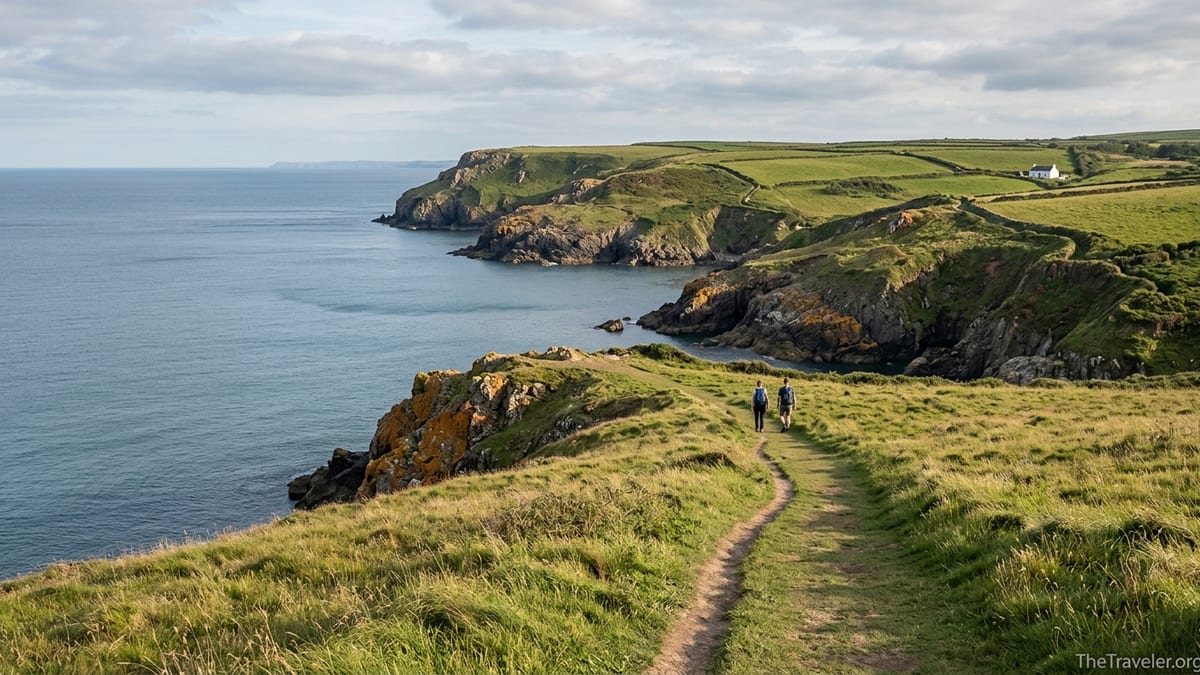
Pembrokeshire offers pastel harbours, sandy beaches and the long-distance Pembrokeshire Coast Path. It is reachable by both car and train from Cardiff, but the degree of freedom you want will shape your choice. By car, driving from Cardiff to Tenby typically takes around two and a half hours in normal conditions, following the M4 and A40 west. Continuing to smaller coastal spots such as St Davids or Whitesands Bay adds another hour along narrower roads.
By rail, Cardiff Central has direct and connecting services to coastal towns such as Tenby, Pembroke Dock and Milford Haven. For example, a typical journey from Cardiff Central to Tenby or Pembroke involves a change at Carmarthen and takes a little over three hours. Trains are usually operated by Transport for Wales or Great Western Railway and are comfortable enough for the trip, but once you reach the coast, local buses become your main tool for moving between villages and trailheads.
For many travellers, Pembrokeshire works best as a two or three night stay in one base town, even if you are using trains and buses. Tenby makes a convenient hub, with frequent trains, a walkable town centre and boat trips out to Caldey Island in season. From there, local buses can take you to Saundersfoot, Manorbier or Pembroke for day hikes or castle visits. If you have a car, staying slightly outside the main towns in a farmhouse B&B or cottage opens up quieter beaches like Freshwater West or Barafundle Bay, though access may involve walking from clifftop car parks.
If you only have five days in Wales and prefer not to drive, a sensible flow is two nights in Cardiff and three in Tenby or another Pembrokeshire town. You could spend one full day exploring Tenby’s harbour and local beaches, and another day taking the coastal bus to a stretch of the Pembrokeshire Coast Path, then return to Cardiff by train for your onward connection. With a car and a longer trip, consider linking Pembrokeshire and North Wales via the A487, following the coast through Aberystwyth, Aberaeron and the Llŷn Peninsula rather than doubling back through Cardiff.
North Wales and Eryri: When the Long Drive Pays Off
North Wales and Eryri National Park (often still called Snowdonia) reward the effort it takes to get there from Cardiff. By car, you can drive the length of Wales in roughly four to five hours using the A470, passing through the central hills, skirting Bannau Brycheiniog and eventually entering Eryri near towns like Betws y Coed or Dolgellau. It is a full relocation day but also one of the most scenic drives in the country, with frequent lay-bys for views and short photo stops.
Travelling by train, your fastest routes generally involve heading north via Shrewsbury and then west toward the North Wales coast. A typical example is Cardiff Central to Llandudno Junction in around four hours with a change or two, then a shorter onward train or bus into the heart of Eryri. Another option is to route via Bangor or Porthmadog depending on where you plan to base yourself. Once in the region, you can link smaller communities using a mix of buses and heritage railways, though services can be seasonal and may end earlier in the evening than many visitors expect.
If your priorities include climbing Yr Wyddfa, taking a scenic narrow-gauge railway, or exploring castles such as Caernarfon and Conwy, at least three nights in North Wales are advisable. One common pattern is to base in Betws y Coed for easy access to buses and the Conwy Valley railway, or in Llanberis for walking and the mountain railway up Yr Wyddfa. Another is to stay along the coast in Conwy or Llandudno, which combine historic centres with more dining options, then day-trip into the mountains.
Realistically, Eryri is where having a car brings the biggest payoff. Many popular trailheads and lakes such as Llyn Ogwen or Cwm Idwal sit along main roads with limited parking and only occasional bus services. With a vehicle you can aim for early starts, move quickly between valleys and adjust plans if weather closes in on one side of the range. If you rely on public transport, it is still possible to have a great trip, but you may need to build in more time for inevitable waiting and connections, especially outside summer weekends.
Car Versus Train: Cost, Convenience and Sustainability
Choosing between car and train in Wales often comes down to your itinerary shape. Trains and buses work very well between major nodes such as London, Cardiff, Swansea and the main towns of Pembrokeshire and the North Wales coast. They are less effective for reaching remote valleys, smaller beaches and upland trailheads. A blended approach is often best: rely on trains to reach Cardiff, perhaps explore the city and nearby towns without a car, and then rent a vehicle for a defined window of three to seven days while you tour the national parks.
As of 2026, advance train fares between major Welsh cities can be good value if booked ahead. For instance, off-peak advance tickets between Cardiff and Swansea or Carmarthen can sometimes be found for prices comparable to the fuel cost of driving the same route. However, if you are travelling as a family or small group, the per-person cost of rail tickets can quickly outstrip the daily cost of a single rental car once you are outside the main intercity legs, especially when you factor in local buses.
Rental car pricing in Cardiff and at the airport fluctuates by season. Mid-range figures of roughly 30 to 45 pounds per day for a compact car, booked several weeks ahead, are common, with higher rates in July and August. On top of that you should budget for fuel, parking charges in towns like Tenby or Conwy, and possible fees for crossing the Severn Bridge area if you are coming from England. For many visitors, hiring a car for four or five days in the middle of a longer train-based trip strikes the right balance between budget and access.
Sustainability and driving confidence also matter. If you are uncomfortable with narrow country lanes bordered by stone walls and hedges, or with driving on the left, you may find a mostly train-based itinerary less stressful. In that case, pick bases with good public transport links and accept that you will focus on the more accessible highlights: city culture in Cardiff, castle towns on the rail network, and a curated selection of coastal and mountain spots reached by bus or on foot. Wales is slowly improving its sustainable travel options, and using rail and buses where practical remains a meaningful choice if you want to reduce your footprint.
Sample Itineraries: 5, 7 and 10 Day Routes
To translate all of this into practical plans, it helps to look at concrete examples. A five-day, car-free route might look like this: arrive in Cardiff on day one and stay two nights, exploring the castle, museums and Cardiff Bay, with a half-day trip to Caerphilly if time allows. On day three, take the train to Tenby in Pembrokeshire, stay two nights on the coast and use the local coastal buses for a section of the Pembrokeshire Coast Path. On day five, return by train to Cardiff for your onward journey.
If you are willing to rent a car, a seven-day south and west Wales loop becomes viable. Spend two nights in Cardiff without a car, then on day three collect a vehicle and drive into Bannau Brycheiniog for a hike and an overnight in Brecon or Crickhowell. On day four, continue west to Pembrokeshire and stay in St Davids or Tenby for two or three nights, exploring beaches and coastal walks. On day seven, drive back to Cardiff, drop the car and either overnight in the city or board an evening train toward London or Manchester.
For travellers with ten days and a strong desire to see North Wales and Eryri, a northbound spine works well. You might spend two nights in Cardiff, one or two near Brecon in Bannau Brycheiniog, two nights around Aberystwyth or the Ceredigion coast, and four nights in Eryri with a base such as Betws y Coed or Llanberis. The middle section between south and north can be driven in a single long day along the A470, or split with an overnight stop to keep the pace gentler and allow time on the beaches or in small coastal towns.
In any of these samples, the key is to treat relocations as part of the trip rather than dead time. Stopping for lunch in a market town, detouring to a lesser-known waterfall or castle, or pausing at a viewpoint can turn a three-hour transfer into one of your favourite memories. Wales rewards curiosity and slower travel, so resist the urge to pack in every famous place name at the expense of lingering in the ones you enjoy most.
The Takeaway
Combining Cardiff with Bannau Brycheiniog, Pembrokeshire and North Wales and Eryri in one itinerary is entirely possible, but it requires realistic distances, smart base choices and a clear-eyed view of how you will move around. Cardiff makes an excellent car-free starting point, while the national parks and rural coasts are where renting a car, even briefly, can transform what you are able to see and do.
Rather than treating Wales as a quick add-on, plan at least five days and ideally a week or more. Anchor your route around two or three bases, allow time for weather and rest, and use trains and buses intelligently to complement, not compete with, driving. With that approach, you will go beyond the capital and experience Wales as a series of living landscapes and communities rather than a list of sights glimpsed from a car window.
FAQ
Q1. Can I visit Bannau Brycheiniog as a day trip from Cardiff without a car?
It is technically possible using a combination of train and bus, but services are limited and often infrequent. You are likely to spend more time waiting for connections and walking from bus stops than actually on the mountain trails. For most visitors, hiring a car for at least one or two days offers far more flexibility and access to popular routes.
Q2. How many days should I stay in Cardiff before exploring the rest of Wales?
Two to three nights in Cardiff is a comfortable amount for most first-time visitors. That gives you one full day in the city, plus time for a half-day trip to somewhere like Caerphilly or Barry Island, before you move on to the mountains or coast. If you are arriving on a long-haul flight, an extra night helps you adjust before driving rural roads.
Q3. Is it worth going all the way to North Wales and Eryri on a short trip?
If you have fewer than seven days in total, trying to include both Pembrokeshire and North Wales can feel rushed because of the long travel times. With a week or more, Eryri becomes very rewarding, especially for hikers and landscape lovers. If you only have five days, focusing on Cardiff, Bannau Brycheiniog and Pembrokeshire usually makes for a more relaxed experience.
Q4. Do I need to book trains and accommodation in advance?
Booking in advance is strongly recommended in peak months such as July and August, and around school holidays. Advance train tickets between major towns can be significantly cheaper than buying on the day, and popular coastal towns like Tenby or St Davids often sell out of central, mid-range rooms. Outside high season, you may find more last-minute flexibility but should still book key legs and first nights ahead.
Q5. What is driving in rural Wales actually like for visitors?
Driving in rural Wales can be a pleasure, with quiet roads and beautiful scenery, but it also means dealing with narrow lanes, blind bends and the occasional sheep in the road. Speed limits may be 60 miles per hour on country roads where you will feel safer going much slower. Allow extra time for every journey, use passing places considerately, and avoid planning long night drives on unfamiliar rural routes.
Q6. Which town works best as a base for Pembrokeshire without a car?
Tenby is often the easiest base without a car thanks to its rail connections, compact centre and variety of accommodation. From Tenby, local buses can take you to nearby beaches, coastal villages and parts of the Pembrokeshire Coast Path. If you have a car, you can consider smaller bases such as St Davids or Solva for a quieter feel and easier access to remote stretches of coastline.
Q7. How do I combine Cardiff, Bannau Brycheiniog and Pembrokeshire in five days?
A realistic five-day route might be two nights in Cardiff, one near the Bannau Brycheiniog area and two nights on the Pembrokeshire coast. For example, spend days one and two exploring Cardiff, drive or take a tour into the national park on day three and overnight near Brecon, then continue to Tenby on day four and enjoy a coastal walk on day five before returning to Cardiff or onward travel.
Q8. Is it easy to find vegetarian or vegan food outside Cardiff?
Cardiff has a growing number of vegetarian and vegan-friendly cafes and restaurants, especially in the city centre. In smaller towns and villages you may have fewer dedicated options, but many pubs and bistros now offer at least one or two meat-free dishes. If you have specific dietary needs, checking sample menus online and booking ahead for dinners in very small communities is a sensible precaution.
Q9. When is the best time of year to follow this kind of Wales itinerary?
Late spring and early autumn often provide the best balance of milder weather, longer daylight hours and fewer crowds. May, June and September are popular with walkers because trails are usually less busy than in school holidays, but conditions can still be changeable, so packing waterproof layers is essential. In winter, shorter days and potential storms make mountain and coastal plans more subject to disruption.
Q10. Can I rely on mobile data and navigation apps in rural Wales?
In and around Cardiff and larger towns, mobile coverage and data speeds are generally good enough for navigation and trip planning. In the mountains of Bannau Brycheiniog and Eryri, and along some remote stretches of the Pembrokeshire coast, signal can drop out entirely. It is wise to download offline maps in advance, carry printed directions for key legs, and avoid relying solely on live navigation for remote trailheads.