


Southern England has quietly become one of Europe’s most interesting cool-climate wine regions, with Sussex and Kent leading the charge and Hampshire close behind. For travellers, that means a new dilemma: do you check into a room among the vines and let the countryside slow you down, or keep a Brighton or London base and join a guided day tour into wine country? This guide compares both approaches, focusing on real-world vineyard stays and wine experiences in Sussex, Kent and Hampshire, with a particular eye on English sparkling wine, cellar tours, food pairings and the all-important question of who drives.
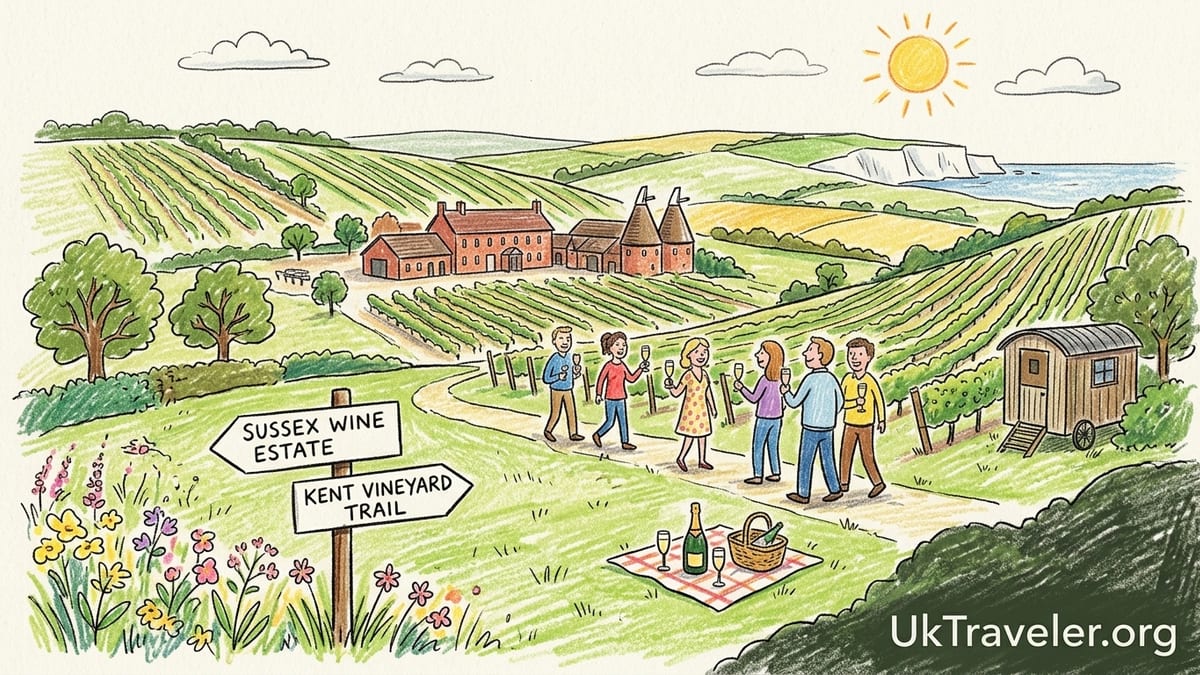
Why Southern England Is Suddenly Serious Wine Country
Over the past two decades, southern England’s wine map has changed dramatically. Cooler summers that used to challenge grape ripening now routinely deliver the kind of long, sunny growing season that Champagne producers rely on, especially across the chalk and greensand of Sussex, Kent and Hampshire. Many leading estates here work with the same core grapes as Champagne, particularly Chardonnay, Pinot Noir and Pinot Meunier, and most top sparkling wines are made using the traditional method, where the second fermentation happens in the bottle. The result is a style of English sparkling that often leans taut, citrusy and chalk-driven, with fine bubbles and relatively low alcohol.
Sussex and Kent are at the heart of this story. Sussex is home to some of the best-known sparkling producers and has pushed to establish “Sussex” as a quality designation for local fizz. Kent’s vineyards stretch across the North Downs and Weald, with sites such as Kit’s Coty and Squerryes showing how well Chardonnay and Pinot can ripen on south-facing chalk slopes. Hampshire, meanwhile, is building a strong reputation for precise, mineral sparkling wines, with chalk-rich estates clustered around Winchester and the South Downs. For visitors, the upshot is clear: within two hours of London or an hour of Brighton you can find yourself in countryside that feels rural and remote, tasting sparkling wines that increasingly appear on serious restaurant lists across the UK.
Wine tourism has grown to match. Estates that once only opened for occasional tastings now offer full visitor centres, restaurants, vineyard walks and accommodation. This means you can design anything from a quick afternoon tasting to a full long weekend of cellar tours, food pairings and walks through the vines. The question is how immersive you want that experience to be, and how much time you can give it.
Staying Among the Vines in Sussex
Sussex has moved quickly to build a dedicated inventory of vineyard accommodation. One of the most developed examples is Rathfinny Wine Estate near Alfriston, set in a sweeping amphitheatre of vines on the South Downs. Its Flint Barns offer 10 en-suite bedrooms that function as a kind of vineyard inn, with a ground-floor dining room and snug complete with open fires. Select self-catering options on the estate, such as a vineyard cottage, give guests the option of cooking for themselves while still being a short stroll from tasting rooms and walking trails.
Rathfinny also illustrates the current economics of winery experiences. Standard vineyard tours with guided walks through the vines and winery, plus a tasting of Sussex sparkling wines, are currently priced at about £34 per person for the 2026 to 2027 season, typically lasting around 1 hour 45 minutes. Tours run on set days and times, with more frequent departures at weekends. While that might feel like a premium compared with a simple bar tasting, it is modest beside full-day Brighton-origin experiences that fold in coastal walks, transfers and meals, which often run to several times that price per person.
Beyond Rathfinny, Sussex now offers a broader set of places where you can actually sleep on or adjacent to an estate. Converted barns and farmhouse rooms are common, as are shepherd’s huts and small clusters of cabins tucked at the edges of vineyards. Destinations marketed as vineyard escapes typically package accommodation with a welcome bottle of local sparkling, a pre-booked tour or tasting, and breakfast built around local produce. Some country hotels partner with nearby estates rather than growing their own grapes, creating packages that combine a night in a classic country-house setting with a guided tasting at an associated vineyard the following day.
The main advantage of staying on a Sussex vineyard is tempo. Once day-trippers head back to Brighton or London, the estate usually falls quiet. Tasting rooms double as relaxed wine bars in the evening, staff have more time to talk through older vintages or specific parcels, and you can walk out among the rows at golden hour without checking a train timetable. For many travellers, that unhurried after-hours atmosphere is the single biggest argument for booking a vineyard stay rather than just a day trip.
Kent: From London Day Trips to Country Weekends
Kent wears its “Garden of England” reputation lightly but is arguably just as dynamic a wine region as Sussex. A key practical difference is that many Kent vineyards lie within relatively easy reach of London by train, which has shaped the style of experiences on offer. Some estates sit close enough to mainline stations that you can arrive by rail, take a short taxi ride and be walking a vineyard trail and tasting a flight of still and sparkling wines in time for a late lunch. This makes Kent particularly attractive for travellers who do not want to hire a car.
Several Kent producers have built reputations for premium English sparkling wine, especially those working on the North Downs’ chalk escarpments. Flagship sites like Kit’s Coty have inspired single-vineyard bottlings with higher price tags and more complex winemaking, from barrel-fermented Chardonnay to extended lees-aged sparkling cuvées. On the ground, this tends to translate into well-developed visitor centres that double as wine bars or restaurants, offering multi-course lunches matched with different wines. Advance booking is essential on peak summer weekends, especially for set tasting menus.
While true on-vineyard accommodation is less widespread in Kent than in Sussex, it is steadily growing. Some estates operate a handful of rooms in converted oast houses or farm cottages, often marketed as boutique countryside stays within reach of London. Others partner with local inns and B&Bs in neighbouring villages, building packages that include taxi transfers to and from the estate for tastings and dinners. This hybrid setup can be a smart compromise if you want a car-free weekend without being confined to a single vineyard for all your meals and activities.
Kent also has a busy calendar of food and wine events, from summer fizz festivals to collaborative dinners with London chefs. For travellers, the practical implication is that weekends can sell out early, especially around harvest time in late September and October. If you want to pair a vineyard day with headline gardens such as Sissinghurst or seaside stops like Whitstable, it is worth sketching your itinerary and making key bookings several months ahead.
Hampshire’s Sparkling Scene and Where It Fits In
Hampshire plays a quieter but important role in southern England’s wine story. The county’s vineyards cluster around chalk downland near Winchester, Alresford and the South Downs, areas that have long produced high-quality sparkling wines. Hambledon, often cited as England’s oldest commercial vineyard, helped anchor the region’s reputation decades ago and today offers guided tours, tastings and vineyard lunches in a visitor centre that sits right among the vines. Other estates, from boutique family-run outfits to larger sparkling-focused producers, now form a loose network that promotes Hampshire fizz through joint events and tasting days.
For travellers, Hampshire’s wine country is easiest to access by car, either from London via the M3 corridor or combined with a wider tour of the New Forest or South Coast. A handful of estates run structured tours and tastings on fixed days, typically priced similarly to comparable offerings in Sussex and Kent, while special events such as sparkling-focused festivals and harvest celebrations create focal points in the calendar. Accommodation on or next to vineyards is more limited than in Sussex but is beginning to emerge, sometimes in the form of high-spec rural retreats that double as bases for wine touring, walking and country-house visits.
Hampshire works particularly well as an add-on to a broader southern England trip. For instance, you might spend two nights in Sussex staying on a vineyard, then drift west for a couple of days in Hampshire splitting your time between a historic city such as Winchester and one nearby estate for a cellar tour and tasting lunch. This approach allows you to compare different regional expressions of English sparkling wine while keeping driving distances manageable.
Because Hampshire producers often focus tightly on sparkling wine, tastings here can be especially instructive if you are keen to understand how grape variety, site and winemaking choices affect the finished style. Expect flights that compare, for example, a blanc de blancs Chardonnay-based sparkling with a Pinot-dominant cuvée, or wines that have seen very different ageing times on lees. For serious enthusiasts, these in-depth sessions can justify a dedicated stop even if your main base is in Sussex or Kent.
Vineyard Stay vs Day Trip: How To Choose
When you compare staying directly on a vineyard with taking a tasting day trip from Brighton or London, you are really weighing immersion against flexibility. A vineyard stay in Sussex or, increasingly, Kent locks you into a slower rhythm. You might check in on a Friday afternoon, wander the vines at sunset, have a three-course dinner with local sparkling pairings, sleep a short walk from the cellar, then wake to breakfast overlooking the rows before joining a mid-morning tour. There is no scramble for the last train and no negotiation over who drives. The trade-off is that evenings are quiet and you are mostly limited to the estate’s own food options or whatever is within a short taxi ride.
Day trips, by contrast, are about variety. From London, rail links plus pre-booked taxis open up a string of Kent estates for tastings and lunches in a single long day. From Brighton, operators offer full vineyard-and-coast packages that bundle transport, guided tours at one or two Sussex estates, and a pub or seaside stop. These Brighton-origin experiences are priced significantly higher than a single vineyard’s own tour and tasting, reflecting the convenience of door-to-door logistics and hosted commentary throughout the day.
Cost is a key factor. A couple joining a Sussex estate tour at around £34 per person can spend a relatively modest sum for nearly two hours of guided walking and tasting. Add a bottle to take home and perhaps lunch in the estate restaurant and you still stay firmly in day-out territory. A fully guided day tour from London or Brighton can easily cost several times more per head once you account for minibus transport, multiple tastings and restaurant stops, though it may still work out cheaper than hiring a car, paying for fuel and limiting your own drinking.
Time is the other consideration. If you only have one spare day in a London-heavy itinerary, it is hard to beat a well-run day tour that handles all the logistics. If you have a full weekend or more, staying among the vines lets you slow down, walk, and experience the estate outside of its peak visiting hours. Many travellers find that a hybrid strategy works best: they begin with a guided day trip to get oriented and sample a range of producers, then return on a later visit for a focused, two- or three-night stay on a single estate that they particularly liked.
Inside the Cellar: Tours, Tastings and Food Pairings
Cellar tours across Sussex, Kent and Hampshire generally follow a similar arc. You begin among the vines, where a guide explains the local soils, grape varieties and pruning choices, before moving into the winery to see presses, tanks and rows of ageing bottles. Tastings take place either in a dedicated room or in a more informal bar area, almost always finishing with a flight of two or three sparkling wines and sometimes including a still white or rosé for contrast. Booking ahead is strongly recommended, especially at weekends between May and October.
Tour prices tend to track the depth of the experience. Entry-level tours sit in the £30 to £40 range and include a structured tasting. More in-depth options, which might involve reserve wines, single-vineyard bottlings or food pairings, cost more. Some estates offer short, standing tastings for walk-ins at a tasting bar for a smaller fee or on a pay-per-glass basis, useful if you are exploring independently by car or on foot and want to keep your schedule loose.
Food is increasingly central to the offer. Estate restaurants now range from casual kitchens serving seasonal small plates to destination dining rooms with multi-course menus. In Sussex and Kent, you can expect to see classic pairings such as oysters and blanc de blancs, fried or smoked fish with brisk, citrus-led sparkling cuvées, and local cheeses matched with richer, longer-aged wines. Sunday lunches at vineyards have become especially popular, with roast-focused menus designed to work with both still reds and sparkling rosés. Reservations are essential in peak season and it is worth letting the estate know if you plan to do a full tasting flight alongside lunch so they can pace pours sensibly.
For travellers keen to learn, ask specifically about comparative tastings. Many estates quietly offer side-by-side flights that show how different base vintages or dosage levels affect the final character of an English sparkling wine. Even if these are not listed as formal options, staff can often pour two wines at once and talk you through them, giving you a more detailed sense of the region’s style in a short window of time.
Transport, Designated Drivers and Tour Types
Transport is the practical hinge on which most English wine trips turn. If you plan to drive yourself, you will need to be strict about limits for the driver. UK drink-driving laws are tight, and rural lanes in Sussex, Kent and Hampshire can be narrow, dark and unforgiving. Many couples quietly arrange that one person spits or drinks minimally during tastings, but this can blunt the experience. A more comfortable option is to build tastings around lunch, linger over food and coffee, and then leave a generous gap before getting back behind the wheel.
To avoid designated-driver compromises altogether, look at private transfers or joining organised tours. From Brighton, various operators run minibus-based vineyard days that include pick-up and drop-off in the city, visits to one or two Sussex estates and free time at the coast. From London, options tilt towards Kent, where rail plus short taxi hops can stitch together a car-free day. Many rural taxi firms are small and book up on sunny weekends, so pre-booking both outbound and return legs is important if you are not on a scheduled tour.
Private tours appeal if you want control over the itinerary. A driver-guide will collect you from your hotel or holiday rental, customise the day around your interests and often secure tasting slots at a couple of different estates. These experiences are inevitably more expensive than shared tours but make sense for groups of four or more once the cost of multiple tasting fees, meals and taxis is factored in. They also allow more flexibility: you can linger at an estate where you feel particularly at home, or stop at viewpoints and villages along the way.
Shared group tours are better value and more sociable. You relinquish some choice of estates and timing but gain a ready-made group of fellow wine travellers, which can make tastings livelier and less intimidating for beginners. If you are visiting in high season and not renting a car, booking at least one shared or private tour day early in your trip gives you a solid, low-stress introduction to the region, after which you can decide whether to explore further under your own steam.
Booking, Seasons and Practical Tips
English wine country is a genuinely seasonal destination. Vineyards begin to green up in late spring, with the landscape looking particularly lush in June and July. August and early September bring the warmest weather and the thickest canopy, though also the busiest visitor days. By late September and October, many estates are deep into harvest, which can be an exciting time to visit if you are interested in the nuts and bolts of winemaking. You may see grapes being brought in, presses running and cellar teams at work, but tours can sell out quickly and some dates are blocked out for operational reasons.
When booking vineyard accommodation in Sussex or Kent, check what is open midweek. Some on-site restaurants or tasting rooms operate shorter hours outside Friday to Sunday, and winter schedules can be very limited. If you are travelling in the cooler months, ask about heating in shepherd’s huts or cabins, and whether breakfast is included or taken at a separate building. For day trippers, early planning mostly revolves around train times, taxi pre-bookings and securing spots on the specific tours or lunches you care most about.
Packing is straightforward but benefits from a bit of thought. Comfortable, closed footwear is essential for walking through vineyards, which often involve uneven ground and can be muddy after rain. Layers and waterproofs matter more than dressy outfits; even smart estates tend toward relaxed dress codes, though some restaurants expect neat casual. If you plan to buy bottles, consider a padded wine carrier or be prepared to have purchases shipped home, particularly if you are continuing by rail with limited luggage space.
Finally, think about how wine fits into the rest of your southern England itinerary. Pair a vineyard stay with coastal walks along the South Downs Way, visits to medieval towns such as Rye or Lewes, or garden-focused days at high-profile estates. Building your wine experiences around broader countryside and cultural stops makes them feel less like a specialist detour and more like a natural part of exploring the region.
The Takeaway
Choosing between a vineyard stay and a day trip in southern England is less about right and wrong than about what sort of trip you want. Sussex, with its growing cluster of on-site accommodation and well-developed visitor experiences, suits travellers who like the idea of parking the car or closing the train app and simply sinking into life among the vines for a couple of nights. Kent is ideal for London-based visitors keen on flexible, largely car-free days out that still deliver serious English sparkling wine, vineyard walks and destination lunches. Hampshire, meanwhile, rewards those willing to venture a little further for focused tastings and quieter, more rural estates.
In all three counties, English sparkling wine now stands confidently alongside established European benchmarks, supported by cellar tours that explain exactly how climate, soil and careful winemaking turn cool southern counties into credible fizz country. Whether you approach via a Brighton-origin vineyard and coast experience that wraps logistics into a higher but hassle-free price, or via a self-planned weekend in a vineyard inn where the tasting room is your local bar, you will find no shortage of ways to taste the region’s best bottles. Decide how much time you have, how you feel about driving, and how immersed you want to be, then build your trip around the estates and experiences that best match that mood.
FAQ
Q1. Is it better value to stay on a vineyard or book a day tour from London or Brighton?
Both can be good value, but in different ways. Estate tours in Sussex often start around the mid-£30s per person including tastings, while full-day guided trips from London or Brighton cost significantly more per head but bundle transport, planning and multiple stops. If you have time for a two- or three-night break, a vineyard stay can feel better value overall because you enjoy the setting outside tour hours. If you only have one spare day and want car-free convenience, a premium-priced day tour makes sense.
Q2. Can I visit Sussex or Kent vineyards without hiring a car?
Yes. Many visitors travel by train from London or Brighton to a nearby station, then use pre-booked taxis to and from individual estates. Some Kent vineyards sit within a short taxi ride of mainline stations, and Brighton-based operators run minibus tours into Sussex that include pick-up and drop-off. The key is to plan transport in advance, especially at weekends when rural taxis book up quickly.
Q3. How far in advance should I book vineyard accommodation?
For summer weekends and harvest season, it is wise to book vineyard rooms at least two to three months ahead, particularly at popular Sussex estates with limited on-site accommodation. Midweek stays in spring or autumn are easier to secure at shorter notice, although specific packages that include tastings and dinners can still sell out. If your dates are fixed, prioritise accommodation and key tours first, then fill in restaurant and transport details later.
Q4. What is included in a typical English vineyard tour?
Most tours begin with a walk through the vines, followed by a look at the winery and cellars and finishing with a guided tasting. A standard experience usually lasts between 60 and 120 minutes and includes two or three wines, often focused on sparkling styles. Some estates add small food pairings, such as cheese or charcuterie, while more in-depth options might include extra wines, older vintages or a seated tasting with a host.
Q5. When is the best time of year to visit vineyards in Sussex, Kent and Hampshire?
Late spring to early autumn offers the most attractive vineyard landscapes, with June and July bringing lush green vines and relatively long days. August is warm but busy. Late September and October can be particularly interesting if you want to see or sense the harvest in action, though tours may be more limited. Winter visits are quieter, with fewer tours and shorter opening hours, but tastings can feel more intimate.
Q6. How do estates handle designated-driver issues during tastings?
Most wineries are sensitive to drink-driving rules and provide spittoons at tastings, encouraging guests to spit or limit consumption if they are driving. Some offer reduced-price or soft-drink options for designated drivers. If you are concerned, consider booking a private driver, joining a group tour from London or Brighton, or structuring your day so the main tasting falls before a long lunch and a generous break before driving.
Q7. Are English sparkling wines comparable to Champagne?
While English sparkling wines share grape varieties and traditional-method production with Champagne, the style is distinct. Southern England’s cool climate and chalk soils can produce wines with high acidity, fine bubbles and flavours ranging from citrus and green apple to brioche and toasted nuts after ageing. Many international critics now rate the best English bottles highly, and they are increasingly poured at weddings, celebrations and serious restaurants as an alternative to Champagne.
Q8. Do vineyards cater well for vegetarians, vegans or other dietary needs?
Most estate restaurants in Sussex, Kent and Hampshire offer at least one vegetarian main and are used to accommodating dietary requests, especially if told in advance. Vegan options and gluten-free dishes are increasingly common, but provision varies. When booking a tasting with food pairings or a set menu, flag your requirements early so the kitchen can plan suitable alternatives that still pair well with the wines.
Q9. Can I visit multiple vineyards in one day?
Yes, but it requires careful planning. By car, two estates with pre-booked tastings and a lunch stop are usually the comfortable maximum, especially if you allow time for walking and browsing. On rail-and-taxi days from London or Brighton, you might visit one main estate for a tour and lunch and a second for a shorter tasting. Joining a guided group tour is often the simplest way to string multiple visits together without worrying about logistics or driving.
Q10. Is it necessary to be a wine expert to enjoy English vineyard tours?
Not at all. Most tours are designed for curious beginners, with guides explaining vineyard work and winemaking in straightforward terms. You can ask as many or as few questions as you like, and tastings are usually relaxed rather than formal. Serious enthusiasts can seek out more technical visits or in-depth comparative tastings, but a basic interest in food and drink is more than enough to enjoy a day among the vines.