


Working out the best time to visit England’s East Midlands is less about chasing perfect sunshine and more about matching your plans to the very real quirks of local weather, events and countryside conditions. Over the last decade I have visited Nottinghamshire, Derbyshire, Leicestershire and the Peak District in spring, summer and autumn, with multiple trips focused on both cities and rural walks. Winter is the one season I have largely skipped in person, apart from short day visits, so for that I lean on current opening calendars and official guidance. What follows is not a tidy four-season postcard, but a practical account of when paths turned to claggy mud, when village car parks overflowed, which festivals transformed city atmospheres, and how daylight shaped what I could realistically see in a day.
Understanding East Midlands Seasons in Real Life, Not Just Averages
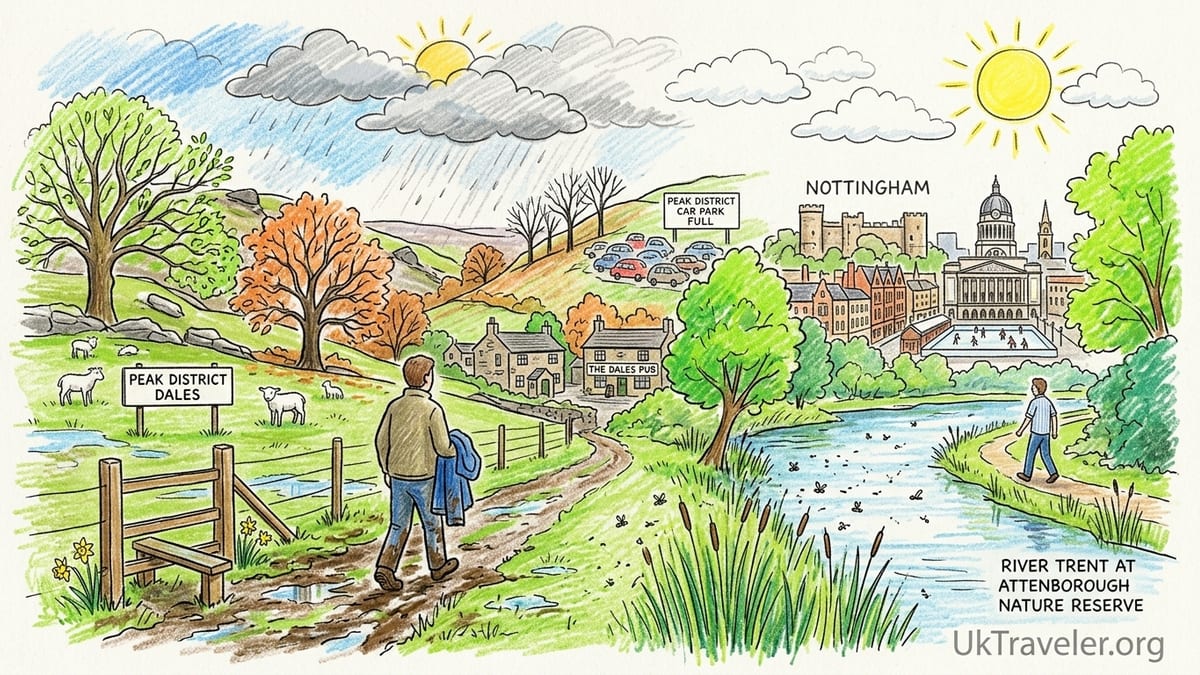
On paper, the East Midlands looks moderate year-round, with average highs in Derby and Nottingham generally around the mid-teens Celsius in spring and low twenties at best in high summer. In practice, what struck me on repeated trips was not the temperature itself but the mix of showers, low cloud and sudden bright spells that can reshape a day several times over. In spring and autumn I learned to start a countryside walk in a fleece and waterproof, then finish it in shirt sleeves.
In cities such as Nottingham, Derby and Leicester, this changeable pattern is usually manageable. Pavements drain quickly and cafes are never far away, so a heavy shower often just means a pause under an arcade or in a museum. Out in the Peak District or Sherwood Forest, the same shower can turn tracks into slick clay, slow progress to a careful shuffle and leave trousers striped with mud from the knees down. The difference between reading a forecast of “light showers” and actually pushing through knee-high wet grass near Baslow became very clear after a few days on the ground.
Daylight has mattered far more to me than raw temperature when planning rural days. In March and April I have been caught out trying to fit a long circuit above Matlock and a visit to a manor house garden into one day, only to find that a grey start and early dusk left me finishing woodland sections in dull light that made roots harder to read underfoot. By contrast, in June and July the long evenings meant I could leave Nottingham or Leicester after lunch, drive into the Peaks and still manage a three-hour walk with time for a late pub supper.
Humidity is another understated factor. In mid-summer I have had warm but overcast days along the River Trent near Attenborough Nature Reserve that felt close and heavy, with insects rising from the reeds. Walking the same stretches in late September felt fresher, with clearer air and fewer midges, even when the thermometer showed similar numbers. This difference became one of the main reasons I started favouring late summer and early autumn for countryside-heavy itineraries.
Spring: Greening Countryside, Muddy Paths and Quieter Cities
My first real introduction to an East Midlands spring was a late March trip based between Nottingham and the Derbyshire Dales. The countryside was just turning green, lambs were appearing in fields around Youlgreave and Ashford-in-the-Water, and daffodils were out in every village verge. Conditions looked inviting from the car, yet the paths told a different story. Winter’s rainfall had left many of the lower routes near rivers and valley bottoms in persistent mud, and every stile approach had become a churned gateway.
On one circular route from Cromford towards Black Rocks, rain the previous week had saturated the thin soil. The rockier stretches were fine, but farm tracks had turned to a paste that tried to pull boots off with each step. I still covered the distance, but my pace dropped and I spent more time skirting puddles than looking at the views. This became a pattern across several March and early April walks: spring is lovely for colour and birdsong, but unless it has been a run of unusually dry weeks, you should expect to finish the day with mud up your shins.
For city sightseeing, however, spring has been one of my favourite times. Nottingham’s centre felt spacious in April, with students around but family visitors not yet arrived in big numbers. I could walk straight into the castle grounds when they were open in previous years and explore the Lace Market’s narrow streets without feeling jostled. In Leicester, spring visits allowed me to tour the King Richard III Visitor Centre and then wander to the cathedral without queueing for tickets or contending with festival crowds. The weather often sat in that comfortable zone where carrying a light waterproof was enough.
Family attractions and gardens start to come to life in spring too. On visits to National Trust properties in the wider region, including places such as Hardwick Hall and Canons Ashby, I have found that late April and May bring fresh planting, lambs in neighbouring fields and manageable visitor numbers during term time. Paths in formal gardens drain better than open countryside, so you gain the sense of a new season without quite so much mud. The main limitation is daylight. In early spring, I have more than once misjudged the time, lingering over a garden walk and then driving into the Peaks too late to enjoy a substantial hike before dusk.
Summer: Long Days, Busy Weekends and Peak District Parking Pressure
Summer has given me the broadest experience across the region, from long evenings in Nottingham and Leicester to hot days on the gritstone edges above Hathersage. The most immediate benefit is daylight. In June and July it has been easy to combine a slow city morning with a countryside afternoon. I have often left Nottingham after an early lunch, reached the eastern fringes of the Peak District in about an hour and still had five or six hours of usable light for a linear walk between village bus stops or a circuit from a car park.
The trade off is pressure on popular locations at weekends. The Peak District National Park Authority itself notes that some of its car parks are small and fill early in the day, and encourages visitors to have alternative parking or public transport plans. On my own summer Saturdays, I have arrived at the main Castleton car park late morning to find every marked space taken and cars circling, with unofficial verge parking already creeping along the approach roads. On another occasion at Ladybower, I reached Fairholmes car park around 11 am and joined a loose queue as drivers hovered for departing visitors. Midweek, the very same car parks felt almost relaxed.
These patterns have reshaped how I plan summer trips. For countryside-focused days, I now aim for early starts or deliberately choose less famous access points, such as small lay-bys near Baslow Edge or village car parks away from the main honeypots. When I stayed in Sheffield and used the train and bus into the Peaks, the experience was different again. Picking up a bus from Hathersage meant I could step off almost on the moor without worrying about spaces, though of course I had to pay more attention to the timetable and carry layers for cooler late evening waits at rural stops.
In the cities, summer brings atmosphere and events, but not always oppressive crowds. Nottingham’s riverside area around Victoria Embankment feels particularly lively on warm evenings, with people walking and cycling along the Trent and using the parks. Large open air events do raise numbers on certain weekends, particularly when big concerts take over Wollaton Park or festivals are staged in city parks, but on non-event days I have found it quite manageable. Leicester in summer has its own programme of food festivals, riverfront activities and cricket at the Upton Steel County Ground that add colour without reaching the crush of a capital city.
For families, the long days of the main school holidays make this an obvious time for the East Midlands, especially with theme parks and country parks operating to their fullest. The flipside is that queues at major attractions and traffic on key roads into the Peak District can build from mid-morning. Over several summers I have learned to treat the first two or three hours of the day and the last two as “golden time” for quieter playgrounds, walks and garden visits, using the busier middle of the day for indoor museums or a long lunch.
Autumn: Woodland Colour, Cooler Air and Balanced Crowds
If I had to choose one season that consistently gave me the best balance between scenery, comfort and crowds in the East Midlands, it would be autumn. From late September through much of October, I have repeatedly found a mix of warm-enough days, vivid colour and a calmer pace in both countryside and cities. The shift is most dramatic in woodland and valley landscapes. Walking through the Derwent Valley near Matlock in early October, I remember low sun catching copper beech leaves and mist lifting from the river, with temperatures cool enough for a fleece but not cold on the hands.
Paths by this point tend to be firmer than in spring. After drier late summers, many field edges around Bakewell and Tideswell have been compact underfoot, with only isolated muddy gates. Sherwood Forest, with its sandy soils, can be particularly pleasant in autumn, its oaks and birches turning colour while the main trails stay easy to follow. On several October visits I have been able to walk for hours among ancient oaks near Edwinstowe without the constant sidestepping of puddles that spring usually demands.
City experiences mellow too. Nottingham in September has often felt like a city between phases, with university students returning but major Christmas and winter events not yet underway. I have enjoyed this shoulder period for cultural visits, spending unhurried time in galleries and smaller museums before taking late afternoon strolls around The Park or the canal basins in slanting light. Leicester, meanwhile, builds towards its Diwali celebrations in October or early November, which are now focused on Diwali Day itself according to the city council, turning Belgrave Road into one of the most atmospheric autumn evenings in the region. Even when I have not been present on the exact day, being in the city in the lead up has brought light displays and an anticipatory buzz.
Parks and gardens can be excellent in autumn as well. Places such as Canons Ashby and other National Trust gardens in the wider East Midlands advertise autumn colour walks and family activities, with opening times still generous compared with winter. On my visits, I have appreciated the more oblique sunlight for photography. A late afternoon at an estate near the Northamptonshire border once produced some of my favourite travel images from the region, with low sun catching ornamental grasses and long shadows giving depth to formal avenues.
For hikers and casual walkers, autumn’s cooler air has been a practical advantage. Climbing the edges above Hathersage in mid-October felt less draining than similar ascents in July, and I noticed fewer people struggling with heat on popular ascents. The risk, of course, is shorter days. I once misjudged a route from Stanage Edge back towards a village and ended the last half hour in very low light, grateful for a torch. By November, planning conservative distances and carrying winter layers becomes essential, even when afternoons still feel relatively gentle at valley level.
Winter: Reduced Hours, Festive Events and Research-Based Advice
My own winter experience in the East Midlands is limited to short day visits to Nottingham and Leicester and a couple of bracing Peak District walks from village bases. I have not spent full multi-day winter trips in the region in the same way as spring through autumn. For that reason, I draw here on official calendars and visitor information alongside those brief impressions.
Even on my short midwinter forays, the most striking factor was the rapid loss of light. By mid-afternoon in December, the sun was already low over the Trent and in the streets between Nottingham’s Old Market Square and the station, long shadows made it feel later than it was. In Leicester, a February visit brought sleety showers that cleared by evening, but pavements remained damp and reflective under streetlights, and the temperature drop after dark encouraged early retreats indoors.
Attraction opening hours tighten noticeably in winter. Nature reserves such as Attenborough, just outside Nottingham, publish shorter winter hours for their visitor centres from the point when the clocks go back, so facilities close earlier even if the reserve itself can be visited in daylight. Country houses in the wider region, including estates managed by large conservation charities, often advertise limited winter opening of their interiors, focusing instead on special trails or Christmas events. Hardwick Hall, for example, promotes seasonal experiences such as Hardwick Wintertide, with the house closing mid-afternoon on most days outside specific late night openings.
Cities, on the other hand, become event-focused. Nottingham is known for its winter festivities in Old Market Square, with a large funfair-style event and ice rink, and Leicester and other towns across Leicestershire publicise Christmas lights switch-ons, markets and illuminated tractor parades that draw family crowds. These events offset the early darkness with atmosphere, though anyone planning to combine them with rural walks will find the day very compressed. From my own limited winter wandering along the Trent, I would strongly recommend keeping any countryside element short, sticking close to clear waymarked paths, and using cities as the base of operations at this time of year.
From a transport and parking perspective, winter brings mixed effects. Peak District car parks are generally quieter on cold, grey days than on summer weekends, which reduces the stress of finding a space. However, planning documents and advice from the National Park Authority continue to emphasise the need to use formal car parks and avoid narrow verges, both because of ground conditions and safety. Ice, fog and early nightfall add their own risks on unfenced moorland roads. For most first-time visitors whose priorities are city culture or Christmas events, I would lean towards public transport for the bulk of winter travel with only short, carefully chosen countryside forays.
Matching Your Trip Focus to the Best Season
After a decade of visits across three seasons and some limited winter days, the strongest conclusion I can offer is that there is no single “best” month for the East Midlands. The ideal window depends almost entirely on whether you are chasing city culture, countryside rambles, family outings, gardens or more serious hiking. Getting this alignment right makes a bigger difference to the feel of your trip than the small swings in average temperature.
For city-focused breaks in Nottingham, Leicester or Derby, my own best experiences have come in spring and autumn. April and May gave me comfortable walking temperatures, flowering parks and relatively low crowding outside of event weekends. September and early October brought warm-enough days, rich light and a steady drumbeat of cultural events without the busiest Christmas or summer festival crowds. Summer can work very well too, especially if you enjoy evening riverside walks and open air concerts, but check dates for large festivals and football or cricket fixtures, which can make hotel prices and crowds spike on specific weekends.
If your priority is countryside, particularly the Peak District and the ancient woodlands of Sherwood and North Nottinghamshire, then late summer into early autumn has felt like the sweet spot on most of my trips. Paths are usually at their driest in August and September, heather blooms on the moors and trees begin to turn. Weekdays at this time can give you space even at popular viewpoints, while weekends remain busy enough to support village cafes and public transport without overwhelming every car park. Spring is lovely for new growth and lambs but demands more tolerance for mud and changeable showers.
Families targeting a mix of city attractions, theme parks and country parks will probably need to travel in school holidays, which points to late July and August. In that case, I would strongly recommend building in early starts, reserving tickets in advance where possible, and planning at least one or two days that avoid the most famous honeypots. Choosing a Trent-side country park, a less-known Leicestershire farm park or a National Trust garden over the most famous Peak District dales on a Saturday can dramatically reduce stress without sacrificing scenic value.
Garden enthusiasts might prefer late April to mid June, when borders in places like Hardwick Hall’s grounds, the University of Leicester Botanic Garden and other estates across the region are at their most lush. Serious hikers who want longer days for ridge routes across Kinder Scout or the eastern edges may favour June and July, accepting the risk of heat and crowds in exchange for the ability to cover long distances in a single outing. For those same routes in cooler air with more atmosphere, early October can be magical, provided you carry a torch and respect the earlier dusk.
The Takeaway
Putting all of this together, my strongest piece of advice is to start not with the calendar, but with the shape of the trip you most want. Are you imagining brisk walks through golden woodland, buzzing city streets under festival lights, or lengthy moorland days where you barely see another person between car park and trig point? Once that picture is clear, the right time of year for the East Midlands almost chooses itself.
From my own experience, late summer into early autumn has delivered the most consistently rewarding blend of countryside conditions and city pleasures. Paths are usually dry, woodland colour is rising, the worst of the summer parking crush has eased on weekdays and cultural calendars remain full. Spring offers fresh greens, lambs and relatively quiet cities at the cost of muddier paths and shorter evenings. High summer brings maximum daylight and family-friendly operations in full swing, balanced by busy car parks in the Peak District and popular events in the cities. Winter pares everything back to a more local rhythm of Christmas markets, shorter opening hours and brisk, compact country walks for those who are well prepared.
Whatever season you choose, the East Midlands repays a flexible approach. Carry a waterproof even in July, leave spare time in your day in case a car park is full or a shower passes through, and keep a short list of alternative walks or indoor attractions in your back pocket. With that mindset, the region’s shifting weather and event patterns become less of a problem and more of the character of the trip: mist rising from a Derbyshire valley on a cool September morning, lights reflecting in a Leicester street after a November parade, or an unexpectedly bright April afternoon in Sherwood when you thought you had packed only for rain.
FAQ
Q1. What is the single best month to visit the East Midlands?
There is no single best month, but based on my trips, September usually gives the best balance of dry paths, pleasant temperatures, autumn colour beginning in the countryside and a good spread of city events without peak summer crowds.
Q2. When are Peak District car parks around the East Midlands least stressful to use?
In my experience, weekday mornings outside the main school holidays are the calmest, particularly in late April to early June and again from mid September to mid October. Summer weekends often see small National Park Authority car parks fill by late morning, so arriving before 9 am or choosing less well known access points makes a big difference.
Q3. Is summer rain really a problem for countryside walks in the East Midlands?
Summer showers rarely ruin a day outright, but they can make certain field paths and gateways sticky and slow, especially after prolonged rain. I have completed many July and August routes with only light mud, yet springlike conditions can reappear quickly after a wet spell, so waterproof boots and gaiters are still useful in high summer.
Q4. Which season is best if I mainly want to visit Nottingham and Leicester without much countryside?
Spring and autumn have worked best for me. April, May, September and early October offer comfortable temperatures for walking between sights, relatively manageable hotel prices away from big event weekends and enough daylight to fit in museums, shopping and evening dining without winter’s early dusk.
Q5. How early does it get dark in winter, and how does that affect rural sightseeing?
Around December, usable daylight in the East Midlands can effectively run from about 9 am to a little after 3 pm, which makes longer rural routes difficult to fit in safely. On my brief winter visits, I have treated any countryside element as a short excursion and focused most of the day on city-based activities or illuminated seasonal events.
Q6. Are autumn colours in the East Midlands really worth planning a trip around?
Yes, in my experience they are. Woodland in Sherwood Forest, the Derwent Valley and estates across Derbyshire and Leicestershire show impressive colour from late September through much of October, especially on calm, bright days. The combination of copper beech leaves, misty mornings and low afternoon sun has given me some of my most memorable walks and photographs.
Q7. When are family attractions and theme parks at their busiest in the region?
They are busiest during the main school summer holidays in late July and August, as well as on bank holiday weekends and some half term weeks. On several summer trips I have seen car parks and queues build from late morning onwards, which is why I now aim to arrive early, pre-book tickets when available and keep at least one quieter day focused on parks, gardens or less-known countryside.
Q8. Is it realistic to combine a full city day with a Peak District hike?
In high summer it is just about possible to spend a half day in a city and still fit in a moderate Peak District walk, thanks to long evenings. I have done it by leaving the city straight after lunch and returning after dark. At other times of year, especially in spring and autumn, I have found it more rewarding to dedicate one day to each rather than trying to cram both into a single itinerary.
Q9. How much does weather actually change from one part of the East Midlands to another?
Temperatures and rainfall totals across Nottinghamshire, Derbyshire and Leicestershire are broadly similar, but local geography matters in practice. Higher ground in the Peak District tends to be cooler, windier and wetter than lowland areas around Nottingham or Leicester, and I have repeatedly moved from a bright city morning into mist and stronger winds within an hour’s drive towards the moors.
Q10. If I dislike crowds, which periods should I avoid most?
If you want to avoid crowds, try not to visit during the main school summer holidays, bank holiday weekends, or around major city events such as large music festivals, big football fixtures or Diwali celebrations in Leicester. My quietest experiences have been on midweek days in late April and May, and again on non-event weekdays in late September and early October.