


The basalt columns of the Giant’s Causeway, the ruins of Dunluce Castle and the creaking planks of the Carrick-a-Rede Rope Bridge sit less than two hours from Belfast. The question for many travelers is not whether to go, but how: a fast day trip, an overnight along the coast or a multi-day journey that links every cove and castle. This guide breaks down each option with real-world examples, current transport choices and practical details so you can match the route to your time, budget and travel style.
Understanding the Belfast to Giant’s Causeway Route
The Giant’s Causeway sits on the north Antrim coast, roughly 100 to 110 kilometers from central Belfast by road. In normal traffic it is about a 1 hour 30 minute drive each way by car or tour coach. Public transport takes longer, with a typical journey involving a bus or train to Coleraine or Bushmills followed by a local link to the visitor area.
The core sights most visitors try to combine in a single outing cluster within a relatively compact stretch of coastline. The Giant’s Causeway, Dunluce Castle, the village of Bushmills with its working distillery, and the Carrick-a-Rede Rope Bridge are all within about 25 to 30 minutes’ drive of one another. That cluster is what makes the region workable as a long day trip from Belfast as well as an atmospheric overnight or multi-day itinerary.
Driving north from Belfast, you have two broad choices. The inland route via the M2 and A26 is the quickest for those who prioritize time on the ground at the main attractions. The longer but far more scenic Causeway Coastal Route via the A2 threads through coastal towns such as Carrickfergus, Larne and Ballycastle. Many independent drivers choose the inland route north in the morning and return to Belfast along the coast in the evening once the pressure to reach timed tickets has eased.
Because the attractions are close together, the bigger planning question is not geography but pace. A coach day tour will usually run from around 8 am to early evening and give you short, structured visits. Hiring a car or staying overnight opens up dawn and sunset at the Causeway, slower pub dinners in Bushmills and side trips to places that large buses often skip.
Day Trip from Belfast: What You Can Realistically See
A full-day trip from Belfast typically lasts nine to ten hours door to door. Organized coach tours commonly depart around 8 am from central pick-up points near Belfast City Hall or the main hotels and return around 6 pm. In that time you can expect one main stop at the Giant’s Causeway plus two or three shorter stops such as Carrick-a-Rede, Dunluce Castle’s viewpoint or a quick photo stop at the Dark Hedges or a coastal village.
On a typical coach itinerary from Belfast in 2026, you might pay around £45 to £70 per adult for a shared tour that includes transport and a driver-guide but not food. Some tours also exclude admission to Dunluce Castle or the optional crossing at Carrick-a-Rede, which adds to your on-the-day costs. A common pattern is one to one and a half hours of free time at the Giant’s Causeway, 45 to 60 minutes for Carrick-a-Rede, and 20 to 30 minutes for Dunluce Castle from an external viewpoint.
Self-driving offers more flexibility on a day trip but requires discipline. Leaving Belfast by car around 8 am via the motorway, you could arrive at the Giant’s Causeway by about 9.30 am, spend two hours walking the clifftop path and down to the stones, then drive ten minutes to Bushmills for lunch. After that, you might tour the distillery if timings suit, then continue 15 minutes to Dunluce Castle for an in-depth visit, before finishing with Carrick-a-Rede in late afternoon. You would likely be back in Belfast around 7 or 8 pm, depending on how long you linger at each stop.
Public transport day trips are possible but tighter. A common pattern is a morning train from Belfast Lanyon Place to Coleraine, roughly 1 hour 20 minutes, then a local bus to the Causeway or Bushmills. Travelers who choose this route often focus mainly on the Giant’s Causeway and perhaps one additional stop within walking or short bus distance rather than trying to fit in every coastal highlight.
Key Stops: Giant’s Causeway, Dunluce Castle, Carrick-a-Rede and Bushmills
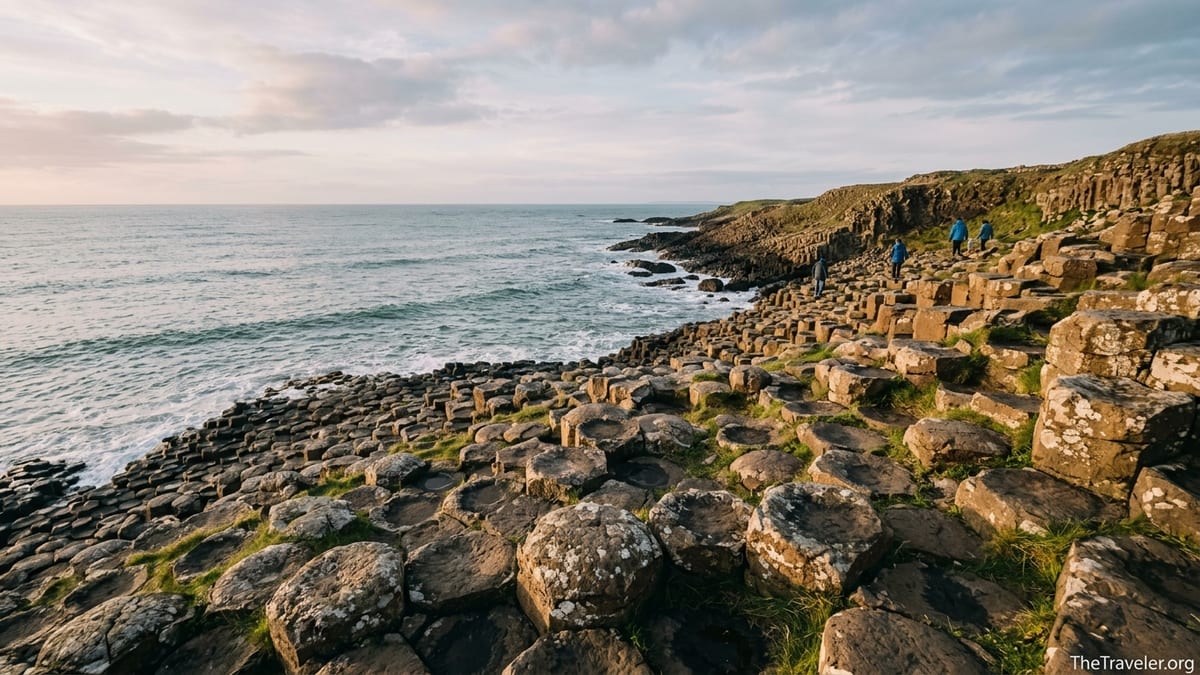
The Giant’s Causeway is free to access on foot, though there is a charge for the visitor centre’s interpretive exhibits and car park. Many visitors simply park in nearby lots in Bushmills or at independent car parks near the entrance and walk down to the stones. Once on site, allow at least an hour to stroll along the basalt columns and another 30 to 45 minutes if you plan to walk one of the upper clifftop trails for wider views.
Dunluce Castle, perched on a clifftop between the Causeway and Portrush, is one of the most atmospheric ruins in Northern Ireland. Recent visitor information widely lists adult admission at around £6, with reduced rates for children, making it a relatively affordable stop for independent travelers. Inside you can wander through the remains of halls, towers and courtyards, with viewpoints out to the sea and back along the coastline. Even a short 45 minute visit provides a strong sense of history and scenery.
Carrick-a-Rede Rope Bridge, managed by the National Trust, connects the mainland to a small island once used by salmon fishermen. In 2026, entry involves a timed ticket for crossing the bridge when it is operating, with separate parking and a short coastal walk from the car park. The bridge itself takes only a few minutes to cross, but queues and time on the island typically make this a 60 to 90 minute stop. Many visitors treat it as a highlight of the day because of the cliff views back to the mainland.
Bushmills, a small village a short drive from the Causeway, is best known for its historic whiskey distillery, which is running regular guided tours again. Entry prices vary by tour type, but you can expect to pay a moderate fee that includes a guided walk through parts of the production area and a tasting for adults of legal drinking age. If you prefer not to tour, the on-site shop and bar are open for visitors at posted hours, making it a good lunch or early evening stop complete with cafes and traditional pubs in the village streets.
When an Overnight Stay on the Causeway Coast Makes Sense
An overnight stop between Belfast and the Giant’s Causeway suits travelers who dislike long days on the road or want to experience sunrise or sunset at the coast. With one night on the Causeway Coast you can turn a rushed checklist into a more relaxed loop, especially in summer when daylight stretches well into the late evening. It also allows you to choose from small guesthouses, farm stays and boutique hotels that are part of the charm of this region.
A common pattern is to leave Belfast late morning, follow the slower but scenic A2 Coastal Route through Carrickfergus and the Glens of Antrim, and arrive in the Ballycastle or Bushmills area by mid afternoon. After checking into a guesthouse, you might visit the Giant’s Causeway for a quieter early evening walk, have dinner in Bushmills and then return to your accommodation without the pressure of a long drive back to the city. The next morning you could fit in Carrick-a-Rede and Dunluce Castle before heading back to Belfast via the quicker inland road.
In practical terms, overnight stays on the Causeway Coast can be good value compared with Belfast, especially outside peak summer weekends. A midrange guesthouse in Bushmills or Portballintrae often prices at a level similar to or slightly below a central Belfast hotel of comparable standard. Choosing a base within a 10 to 15 minute drive of the Causeway means you can adjust your visit times to avoid tour buses, for example by walking down just after opening or in the last couple of hours before closing of the visitor centre facilities.
Overnights particularly suit independent drivers and families. Without the rigid timetable of a day tour, you can schedule slower meals, playtime on beaches such as White Park Bay, or spontaneous photo stops at viewpoints that catch your eye. If weather turns unexpectedly wet, an overnight plan gives you a buffer to shift the main outdoor activities into whichever half of the trip offers clearer skies.
Designing a Multi-Day Causeway Coast and Belfast Itinerary
Travelers with three to five days in Northern Ireland can turn a simple Belfast and Giant’s Causeway combination into a fuller Causeway Coast journey. A typical three-day pattern might be one night in Belfast and two nights on the coast, or vice versa. This allows time for Titanic Belfast, the murals and historic neighborhoods in the city, as well as a generous exploration of the coastal landscapes.
One practical example for a four-day trip is to arrive in Belfast and spend the first day on city sights, staying overnight near the cathedral quarter for easy access to restaurants and pubs. On day two, collect a rental car and follow the coastal route, stopping at Carrickfergus Castle and a scenic glen or two before reaching Ballycastle or Ballintoy for the night. Day three might focus on Carrick-a-Rede in the morning before driving on to the Giant’s Causeway and Dunluce Castle, ending the day with dinner in Portrush or Portstewart. Day four could include a leisurely distillery tour in Bushmills before returning to Belfast via the faster inland road.
Those with longer stays sometimes continue from the Causeway Coast to Derry or across the border into County Donegal, linking wild beaches and additional walking routes. In these cases, the Giant’s Causeway becomes one highlight within a larger ring of Northern Ireland and northwest Ireland rather than a single day trip. This style works best for travelers comfortable with driving on rural roads and who enjoy unpacking fewer times rather than shuttling back and forth from Belfast.
Multi-day itineraries also make sense outside the peak summer season when daylight is shorter. In shoulder months, such as April or October, trying to drive from Belfast, visit multiple attractions and return in daylight can feel rushed. Spreading the same route across two or three days keeps daily driving to a relaxed level and allows you to wait out showers in cafes or museums, stepping back outside when conditions improve.
Choosing Between Tours, Self-Drive and Public Transport
Coach tours from Belfast are the simplest option for many first-time visitors. They are particularly well suited to solo travelers, city-break visitors without a driving license for the United Kingdom, or anyone uneasy about driving on the left. When comparing tours, look at departure time, total time promised at the Giant’s Causeway, whether Carrick-a-Rede and Dunluce Castle are included and if admission fees are extra. Reading recent traveler reviews can give a sense of whether commentary is focused on history, landscapes or television filming locations.
Self-driving offers the greatest flexibility and is often the best choice for a couple, family or group of friends who want to explore beyond the standard stops. A typical mid-size rental car picked up in Belfast might cost in the region of £40 to £70 per day in 2026 depending on season, insurance and booking conditions. Fuel costs for a Belfast to Causeway loop are modest given the short distances. The main trade-offs are the need for a confident driver, navigating occasionally narrow rural roads and keeping an eye on parking regulations at busy sites.
Public transport works for patient travelers on a budget or those who prefer to minimize their environmental impact. The usual pattern is a train from Belfast to Coleraine or a direct bus towards the Causeway area, then onward buses to the visitor site and surrounding towns. This can be excellent value, but connections and timetables limit how many stops you can reasonably include in one day. Many independent travelers who choose public transport prioritize the Giant’s Causeway itself and perhaps one nearby town, saving Carrick-a-Rede and Dunluce Castle for a separate excursion or future visit.
Some visitors blend approaches. For example, you might join a guided coach outing for a structured day trip to orient yourself, then later rent a car for an overnight along the coast once you are more familiar with local driving conditions. Others book a private driver-guide for a single day if budget allows, which combines flexibility with local insight and removes parking and navigation worries.
Sample Itineraries: Day Trip, Overnight and Three-Day Route
To make the options more concrete, consider a classic non-driving day trip for a couple staying in Belfast. They might book a mid-priced coach tour that departs at 8.15 am, stops briefly at Carrickfergus Castle for photos, then continues to the Carrick-a-Rede Rope Bridge for a late-morning crossing. After lunch in a coastal café they would reach the Giant’s Causeway mid afternoon, walk the stones and clifftop paths for about 90 minutes, then pause at Dunluce Castle for an exterior view on the way back, arriving in Belfast around 6.30 pm ready for dinner in the city.
For an overnight self-drive, imagine two friends collecting a rental car from Belfast at 10 am and taking the scenic A2 route. They stop in Glenarm for coffee, detour through the Glens of Antrim and reach Ballycastle by mid afternoon to check into a sea-view guesthouse. An early evening walk at the Giant’s Causeway lets them see the columns in soft light with fewer crowds. The next morning they cross Carrick-a-Rede when it opens, explore Dunluce Castle in late morning, have lunch and a short distillery visit in Bushmills, then return to Belfast via the inland route by early evening.
A three-day route might suit a family of four. Day one is spent in Belfast exploring Titanic Belfast, the Cathedral Quarter and Botanic Gardens, with an overnight in a family-friendly hotel. On day two they drive directly to the Giant’s Causeway, arriving mid morning and spending several hours on the main trails. In the afternoon they tour Bushmills Distillery while younger family members enjoy local cafés and shops, then settle into a rented cottage near Portballintrae. Day three combines a morning at Carrick-a-Rede (weather permitting) with a final stop at Dunluce Castle before returning to Belfast or continuing on to Derry.
These patterns are examples rather than prescriptions. The key is to decide how much time you want at each stop and whether you prefer to return to a Belfast base each night or to wake up with the sound of the Atlantic outside your window. Once you know that, you can choose between a quick hit, an overnight or a longer coastal meander that links Belfast with the Causeway Coast in a way that suits you.
The Takeaway
The choice between a day trip and an overnight or multi-day itinerary from Belfast to the Giant’s Causeway is less about distance than about rhythm. A day tour works perfectly if you are short on time, happy with a structured schedule and primarily want to see the famous basalt columns, a castle ruin and a rope bridge in one memorable sweep.
Staying overnight along the Causeway Coast, however, changes the mood entirely. It gives you dawn and dusk at the cliffs, quieter walks between bus arrivals, and the chance to linger over dinners in Bushmills or Ballycastle without a long drive hanging over you. A longer route that links Belfast, the Causeway Coast and perhaps Derry or Donegal turns a single highlight into a coherent journey through Northern Ireland’s landscapes and stories.
Whichever option you choose, planning with realistic drive times, current opening hours and your own energy levels in mind will make the difference between a box-ticking excursion and a vivid memory. Think about whether you want to travel light with a single base in Belfast or pack the car once and wake up by the sea. From there, it becomes easy to design an itinerary that combines Belfast and the Giant’s Causeway in a way that feels like your trip rather than someone else’s template.
FAQ
Q1. Is the Giant’s Causeway realistic as a day trip from Belfast?
Yes. With a 1.5 hour drive each way by car or coach, the Giant’s Causeway fits comfortably into a full-day trip from Belfast, especially if you focus on a few key stops rather than the entire coast.
Q2. How much time should I allow at the Giant’s Causeway itself?
Most visitors are satisfied with 1.5 to 2 hours, which allows time to walk down to the stones, explore the columns and take an upper clifftop path for wider views.
Q3. Do I need to pay to visit the Giant’s Causeway?
Access to the stones and coastal path is free on foot, but there is a charge for the visitor centre facilities and its car park. Independent car parks and village parking nearby offer alternatives.
Q4. Can I visit Dunluce Castle, Carrick-a-Rede and Bushmills on the same day?
It is possible on a long day with an early start by car or tour, but you will have limited time at each stop. An overnight on the Causeway Coast offers a more relaxed pace for combining all four.
Q5. Is it better to self-drive or join a tour from Belfast?
Self-driving gives maximum flexibility and suits confident drivers who want to explore side roads and smaller villages. Tours are easier for first-time visitors, solo travelers and those who prefer not to drive on the left.
Q6. When is the best time of day to visit the Giant’s Causeway to avoid crowds?
Early morning and late afternoon into the evening usually feel quieter than midday, especially when multiple coach tours arrive. Overnight stays nearby make these times easier to reach.
Q7. Is public transport a good option for the Giant’s Causeway from Belfast?
Public transport is workable and good value, particularly for budget-conscious travelers, but timetables limit how many additional stops you can combine comfortably in a single day.
Q8. Are there family-friendly options along the Causeway Coast?
Yes. Many guesthouses and hotels welcome families, the Giant’s Causeway paths can be adapted for different ages, and towns like Portrush and Portstewart offer beaches and playgrounds.
Q9. What should I pack for a Belfast and Giant’s Causeway trip?
Plan for changeable weather with layers, a waterproof jacket, sturdy walking shoes with good grip, and a small daypack for water, snacks and camera or phone.
Q10. How far in advance should I book tours or accommodation on the Causeway Coast?
In peak summer and on holiday weekends it is wise to book coach tours, rental cars and coastal accommodation several weeks ahead, while shoulder seasons offer more flexibility.