


Northern England stretches from the mountains of the Lake District and the Pennines to the gentler hills of Yorkshire and the big skies of the Northumberland coast. It is compact on the map, yet the seasonal experience varies dramatically not only month by month, but also between the wet western uplands and the drier eastern side in the Pennines’ rain shadow. This guide uses climate data, daylight patterns and current visitor information rather than personal anecdotes to help you decide when to come and where to go at different times of year.
Understanding Northern England’s Climate and Regions
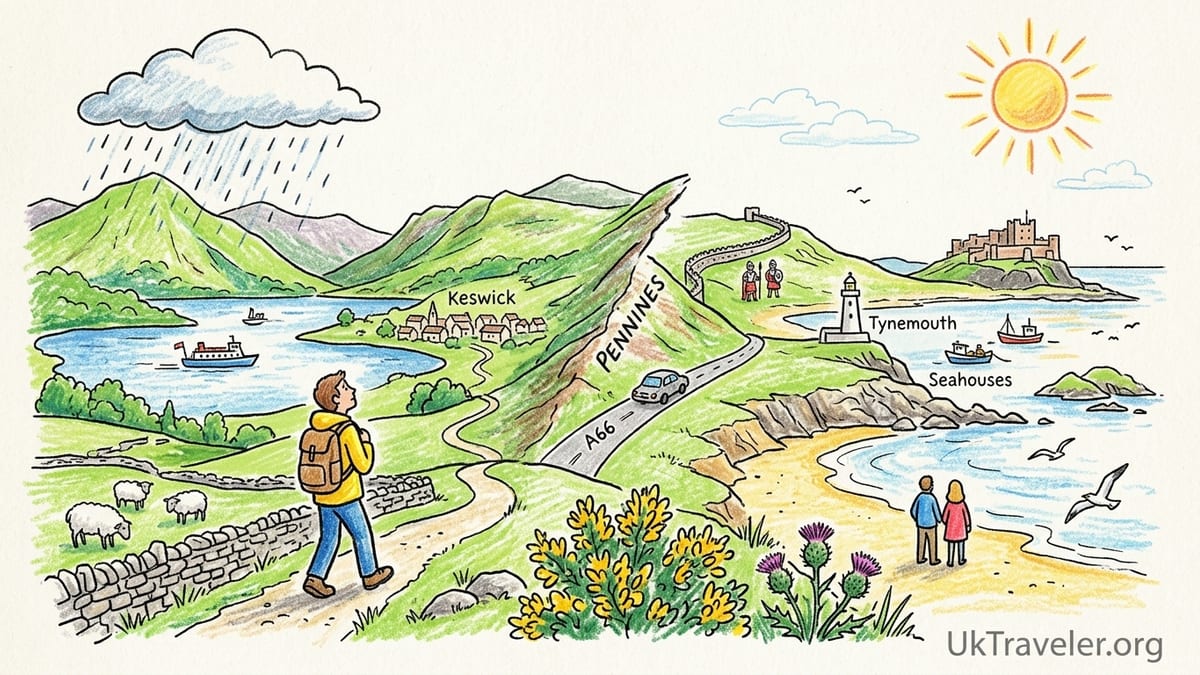
The first step in timing a trip to Northern England is understanding how much the climate changes as you move from west to east. Met Office climate guidance notes that some of the wettest places in England sit in the Lake District and on the west facing Pennine slopes, where moist Atlantic air hits the mountains and drops heavy rain. In contrast, parts of North East England, including areas around Tynemouth and Stockton on Tees, record annual rainfall totals that are low by English standards, thanks in part to the Pennines’ rain shadow and a cooler maritime climate along the North Sea coast.
For visitors, this means that a rainy forecast in the Lake District does not automatically rule out drier conditions on the Yorkshire Coast or around Newcastle and Northumberland. On a showery day in Keswick or Ambleside, it is often possible to drive east over the A66 toward Barnard Castle or north towards Hadrian’s Wall and find brighter weather. The same front that produces steady rain on the western fells can weaken as it crosses the Pennines, giving only light showers or cloud further east.
Daylight also shifts strongly through the year. In mid winter, cities such as Manchester, Leeds and Newcastle see roughly seven to eight hours of usable daylight, with the sun setting by around 3.45 to 4.00 pm in December. By late June, the region is light until after 10.00 pm, and true darkness barely arrives in the far north of Northumberland, which matters if you hope to stargaze or photograph night skies. These daylight swings shape everything from hiking itineraries to opening hours and transport schedules.
Because weather and daylight interact with different landscapes, it is helpful to think of Northern England in four broad trip types. The wet western uplands cover the Lake District, the high Pennines and the western side of the Yorkshire Dales. The drier eastern side includes the Northumberland and Yorkshire coasts, inland Northumberland, and cities like Newcastle and York. Layered on top are dense urban areas around Manchester, Leeds, Liverpool and Sheffield, plus cross country routes such as Hadrian’s Wall and the Trans Pennine Trail. Each of these responds differently to the shifting seasons.
Winter: Short Days, Quiet Trails and City Lights
Winter in Northern England typically runs from late November through February. Temperatures in lowland cities often hover between a little above freezing and around 7 degrees Celsius. Higher ground in the Lake District and on the Pennines can be several degrees colder, with hill snow appearing at intervals. Atlantic low pressure systems bring wind, rain and occasional storms, and the west is notably wetter than the east in this period. On the Lake District fells or the western Yorkshire Dales, paths can be saturated and streams in spate, while urban centres like Newcastle and Leeds might simply have a succession of grey, drizzly days.
For hikers, these conditions demand caution but also offer rewards. Winter walking in the Lake District can be spectacular when cold, clear high pressure settles, giving snow streaked ridges above Derwentwater or Ullswater. However, daylight is short and many classic full day routes are not realistic without hill experience, winter equipment and very early starts. Lower level circuits around lakes or valley paths in places such as Grasmere, Borrowdale and Buttermere are more practical in December and January. On the drier eastern side, routes along the Northumberland coast path, for example near Bamburgh or Alnmouth, can feel wild but are usually less muddy than equivalent length walks around Keswick or Coniston.
Winter is one of the best times for dark sky travel. Northumberland International Dark Sky Park, which covers Northumberland National Park and Kielder Water and Forest Park, offers some of the darkest skies in England. Winter stargazing packages at country hotels or holiday parks in this area often run from roughly November to March, taking advantage of early nightfall. Clear nights are not guaranteed, but even with patchy weather visitors frequently report seeing the Milky Way and bright constellations that are almost impossible to spot from cities.
For city breaks, winter is anchored by Christmas markets and New Year celebrations. Manchester, Leeds, York and Newcastle all stage Christmas events, festive lights and expanded shopping from late November. Many large attractions, such as the National Railway Museum in York or the Baltic Centre for Contemporary Art in Gateshead, remain open year round, while some smaller heritage sites in the countryside close or adopt weekends only schedules until spring. In football terms, winter is peak season. The Premier League and English Football League schedules run from roughly August to May, with December and early January packed with fixtures and the atmosphere around stadiums in cities such as Manchester, Liverpool, Newcastle and Leeds at its most intense.
Spring: Changeable Weather, Greening Valleys and Early Wildlife
Spring in Northern England, from March into May, is perhaps the most changeable season. Atlantic weather systems still reach the west frequently, but there are longer spells of lighter winds and sunshine between fronts. Average daytime temperatures in cities climb into the low teens Celsius by late April, though frosts are still possible, particularly inland. The Lake District and the western Pennines remain wetter than the east, but the heaviest winter deluges become less common, and valley fields and hedgerows green up rapidly.
For walkers, spring can be a sweet spot in the Lake District and Yorkshire Dales. Paths are still muddy, particularly after snowmelt or a wet March, yet slopes around places like Langdale, Wharfedale and Swaledale fill with lambs and wildflowers. Reservoir and waterfall walks in the western Dales, such as around Malham or Aysgarth, can be spectacular while rivers are still full. On the eastern side, the North York Moors and Howardian Hills emerge from winter with drier ground underfoot than the Cumbrian fells, making shorter circuits from coastal towns such as Whitby or Robin Hood’s Bay attractive even in April showers.
Spring also marks the start of key wildlife seasons. Puffins and other seabirds begin returning to breeding colonies on islands off the Northumberland coast from around April. Boat operators based in Seahouses advertise sailings to the Farne Islands, with the main puffin viewing season running from roughly April to late July, and peak numbers often visible in May and June. Landing trips to Inner Farne are managed by the National Trust, and advance booking becomes advisable by late spring, especially at weekends and during school holidays.
In cities, spring brings more outdoor events. University terms are in full swing in towns such as Durham, Leeds and Newcastle, so nightlife and cultural programming are lively but not as dominated by peak season visitors as in August. Museum and cathedral visits fit easily around changeable weather, and transport networks function normally outside isolated disruption from rail engineering works or occasional strikes. Accommodation prices in April and early May are often lower than in the main summer holiday period, particularly in the Lake District, where rates for a classic small hotel in Ambleside or Keswick can be meaningfully cheaper than in late July or August.
Early Summer: Long Days and Growing Demand
From late May through June, Northern England shifts into early summer. Daytime temperatures typically sit in the mid to high teens Celsius in many lowland areas, with the warmest days rising into the low twenties, especially away from the coast. The maritime influence means that extreme heat is less common than further south in England, but still possible in sheltered inland valleys. Rainfall in the west remains frequent but there are longer settled periods, and rivers and paths begin to dry out. In the east, the North Sea keeps places such as Tynemouth, Whitby and Berwick upon Tweed slightly cooler than inland, and sea fog, sometimes called haar, can drift ashore on otherwise warm days.
For hikers, June is often one of the most reliable months for long mountain days in the Lake District and on the Pennines. Snow has usually gone from all but the highest gullies, and there is enough daylight for big classic days such as the Fairfield Horseshoe above Ambleside or the long ascent of Scafell Pike from Wasdale or Borrowdale. However, the wet winter and spring leave some high level routes still soft and boggy, especially on plateau areas such as Cross Fell or Kinder Scout in the wider Pennine chain. Waterproof boots remain advisable, and carrying extra layers is still important on exposed summits where wind chill can surprise even experienced walkers.
On the coast, June is arguably the best time to combine wildlife and scenery in Northumberland. Puffin and guillemot colonies on the Farne Islands are in full swing, and boat trips see burrows and cliffs busy with adults bringing in sand eels for chicks. Seal numbers increase later in the year, but early summer strikes a balance between bird activity and relatively settled seas. Beaches such as Bamburgh, Embleton and Druridge Bay feel summery by afternoon while often remaining quiet in the early morning, especially midweek outside school holidays.
In cities, early summer is a good time for blended trips that mix urban days and upland or coastal side trips. Manchester and Leeds host music events and food festivals as beer gardens and rooftop terraces open for the season. York’s historic centre is busy but not yet at late summer peaks. Football becomes less central as the main professional seasons end by May, although pre season friendlies for major clubs and international fixtures, such as European Championship qualifiers, sometimes bring one off matches to northern stadiums in June. Longer evenings make it viable to plan day trips that return late, for example a morning train from Newcastle to Alnmouth, a coastal walk and a late evening return under lingering sunset light.
Peak Summer: Busy Lakes, Warm Evenings and Coastal Crowds
Peak summer in Northern England covers late June, July and August. This is school holiday season, when families travel from across the United Kingdom and abroad. Average high temperatures in lowland areas often reach the high teens or low twenties Celsius, and occasional heatwaves push inland temperatures higher. The west still sees more rain than the east, but heavy downpours are interspersed with long, pleasantly warm spells. On the coast, the North Sea keeps sea temperatures relatively cool, but beaches from Northumberland down through the Yorkshire coast and to Formby and Crosby near Liverpool fill on sunny weekends.
Accommodation demand in the Lake District, Yorkshire Dales and Northumberland during this period is high. Popular towns such as Keswick, Windermere, Ambleside and Bowness can see hotel rooms and self catering cottages booked months ahead for peak weeks in late July and early August. Prices for family friendly options, such as two bedroom holiday cottages or centrally located B&Bs, often rise significantly compared with shoulder seasons. On the eastern side, coastal villages such as Seahouses in Northumberland or Staithes and Robin Hood’s Bay in Yorkshire also experience tight availability. Booking early is strongly advised for anyone reliant on specific school holiday dates.
Hiking conditions vary by micro region. On a good day, the Lake District offers superb summer walking, with dry rock on classic ridges like Striding Edge on Helvellyn and clear visibility to distant fells. However, trails can be crowded and car parks at popular valleys such as Wasdale, Great Langdale or Buttermere often fill early in the morning. The western fells can still be hit by heavy showers, and thunderstorms sometimes build after hot days. On the drier eastern side, the North York Moors heather starts to bloom in late August, creating purple expanses around routes near Goathland, Rosedale or the Cleveland Way above Saltburn. Ground conditions there are generally firmer than equivalent altitude routes in the central Lakes.
The long evenings of peak summer are not ideal for dark sky trips, because astronomical darkness barely arrives at this latitude between roughly June and early August. Stargazing events in Northumberland are therefore less frequent or focus more on solar viewing and family astronomy experiences rather than truly dark nights. Coastal birdlife remains strong, with seabird colonies on cliffs like Bempton in East Yorkshire active through much of summer, while on the Farne Islands the puffin season usually begins to tail off by late July when many chicks have fledged and adults spend more time at sea.
For urban travel, peak summer is balanced. Cities such as Manchester, Liverpool and Newcastle are lively but not as dominated by local students due to university vacations. This is a good period for combining museum visits with evening canal walks in Manchester’s Castlefield, dockside strolls in Liverpool’s Royal Albert Dock or riverside terraces along Newcastle’s Quayside. Some football clubs in the North West and North East host pre season tours or friendlies in late July and early August, giving visitors a chance to see stadiums such as Old Trafford, Anfield or St James’ Park on match days even outside the main Premier League and EFL calendar.
Autumn: Colours, Quieter Trails and Prime Dark Skies
Autumn, from September into early November, is arguably the most rounded season for many types of travel in Northern England. Temperatures cool gradually, with September days often still reaching the mid teens Celsius and November bringing crisper air. Rainfall increases again, particularly in the west, and Atlantic storms start to track further south, but long settled spells are also common. Trees in the Lake District, Yorkshire Dales and along river valleys such as the Derwent, Swale or Wharfe begin to change colour from late September, with peak foliage usually appearing sometime in October depending on elevation and weather patterns earlier in the year.
For hiking, early autumn offers drier ground than spring in many areas, because late summer warmth has baked paths and bogs before the first significant autumn storms arrive. Classic low and mid level walks, such as circuits around Derwentwater or Ullswater in the Lake District, or riverside routes near Bolton Abbey in Wharfedale, can be at their most photogenic. Higher routes over Helvellyn or the Langdale Pikes rely more on luck with weather, but when clear, the combination of long sightlines and autumn colour gives exceptional views. In the eastern rain shadow, routes along Hadrian’s Wall near Housesteads or Steel Rigg, and coastal walks near Dunstanburgh Castle, often remain comparatively firm underfoot even after western valleys have turned muddy.
Autumn is also prime season for dark sky travel. From roughly mid September onward, nights lengthen enough that full darkness returns between evening and dawn. Northumberland International Dark Sky Park becomes a magnet for stargazers and photographers. Many lodges, campsites and small hotels around Kielder and Bellingham advertise autumn stargazing weekends that combine guided telescope sessions with daytime walking and cycling. Clear skies are still subject to the usual British variability, but the probability of genuinely dark hours combined with reasonably mild evening temperatures is often higher in late September and October than in the colder core of winter.
Wildlife experiences shift focus in autumn. While the main puffin season has ended by late summer, the Northumberland coast remains rich in birdlife and becomes important for migratory species. In addition, Atlantic grey seals around the Farne Islands begin their pupping season around late October. Boat trips from Seahouses adjust their schedules to highlight sightings of white coated pups on the rocks. Visitors should check locally for any restrictions on landings to protect the colony and be prepared for cold, windy conditions out at sea even when the mainland feels relatively mild.
In cities, autumn coincides with the start of the academic year, which brings students back to places such as Newcastle, Leeds and Sheffield and injects energy into nightlife and cultural scenes. The main professional football season runs from August to May, so by September league tables are taking shape and the atmosphere around weekend fixtures feels intense in football focused cities like Newcastle and Manchester. Early season tickets can sell out for high profile matches, but mid table fixtures sometimes leave last minute availability, especially for neutral visitors content to sit outside traditional home supporters’ sections.
Special Timing: Wildlife, Dark Skies, Football and School Holidays
Across all seasons, certain specialised interests demand particular timing. Puffin and seabird travel is a clear example. To see puffins on the Farne Islands in Northumberland, the core viewing season runs from around April to late July, with May and June often offering the densest burrow activity and most frequent sightings of adults flying in with fish. Outside these months, boat trips still run to see seals and other birds, but puffins spend most of their time far out at sea and sightings near the islands become rare. Visitors planning trips specifically around puffins should therefore aim for late spring or early summer and book boat tickets ahead of time, especially for weekend departures.
Dark sky trips follow a different pattern. Because of the region’s latitude, true darkness is limited between roughly late May and early August. The best windows for serious stargazing in Northumberland’s International Dark Sky Park and other dark areas of the Pennines and Dales are generally from mid September to early April, with particularly long nights in December and January. Autumn and early spring trips combine more reasonable temperatures with enough dark hours for both early evening and late night sessions. Organised stargazing events and astronomy festivals often cluster in these months, and some pubs and hotels in places like Kielder and Coquetdale now offer telescope hire or guided sessions as part of short break packages.
Football is a major draw for visitors, especially in cities such as Manchester, Liverpool, Newcastle and Leeds. The Premier League season traditionally runs from August to May, with the 2026 to 2027 season, for example, scheduled to begin in late August and end in late May. That broad pattern is typical across seasons. Domestic cup competitions and European fixtures add midweek matches, particularly in autumn and spring. Travelers wanting to experience a live match should look for home fixtures from around September to April, avoiding the earliest weeks of the season when schedules can shift and the very end of the season when tickets for decisive games are in especially high demand.
Family travel is anchored by United Kingdom school holidays, which have direct effects on prices and crowding. The main English school breaks impacting Northern England are: a one week half term around late February, a two week Easter holiday in March or April, a one week late May half term and the long summer holiday from late July through late August or early September. There are also shorter breaks in October and at Christmas. Lake District and coastal accommodation prices often spike in the late May half term and throughout the main summer holidays, and many family friendly attractions, such as boat cruises on Windermere or Ullswater, increase their timetable frequency in these periods. Outside school holidays, the same hotels and cottages can be markedly quieter and, in many cases, cheaper.
The Takeaway: Best Time by Trip Type
Because Northern England’s weather and daylight vary so much between seasons and between the wet western uplands and the drier eastern side, there is no single universally “best” month. Instead, the ideal timing depends on what you want from the trip and how flexible you can be. For hiking focused travel in the Lake District and western Yorkshire Dales, May, June and September usually strike the best balance between longer daylight, lower risk of snow or ice, and paths that are not yet at their muddiest winter state. Be ready for showers even in these months, and consider keeping a day or two free to switch plans between fells and lower valleys depending on the forecast.
For walking that relies less on mountain weather and more on open views, the eastern side offers more options in marginal conditions. Coastal and lowland hiking around Northumberland, the North York Moors and sections of Hadrian’s Wall works well in spring and autumn, when temperatures are comfortable for long days on foot and the drier climate produces firmer ground underfoot. Winter visits can still be attractive on clear, crisp days, though short daylight and wind off the North Sea require careful clothing choices and realistic route lengths.
If your priority is cities, culture and football, late autumn through early spring is ideal. From roughly October to March, Manchester, Liverpool, Leeds, Sheffield, Newcastle and York offer full cultural programmes, atmospheric pubs and cafes, and regular professional football fixtures. Christmas markets and winter lights make late November and December particularly festive for city breaks, although you will need to accept frequent grey days and pack for rain. Accommodation in cities during this period is often better value than in the Lake District at the height of summer.
For wildlife, summer beaches and family travel tied to holidays, timing is more tightly defined. Puffin and seabird focused trips to the Farne Islands are best from late spring into early summer, while family seaside holidays on the Northumberland or Yorkshire coasts work best from late June through August, accepting that water temperatures remain cool. Lake District family breaks tied to school holidays benefit from booking well ahead for July and August or targeting the late May half term. If stargazing or quiet countryside is more important than warm beach weather, aim for September, October or early spring in Northumberland’s dark skies region instead of the mid summer school holiday peak.
FAQ
Q1. When is the best time to hike in the Lake District?
For most visitors, May, June and September combine longer days with relatively stable conditions and less winter mud, though showers remain likely and experienced hikers can also enjoy crisp winter days on lower level routes.
Q2. Is the Northumberland coast drier than the Lake District?
Yes, climate data shows that parts of North East England, including coastal areas such as Tynemouth and stretches of the Northumberland coast, receive significantly less annual rainfall than the Cumbrian fells, partly due to the Pennines’ rain shadow.
Q3. When can I see puffins on the Farne Islands?
Puffins typically arrive from around April and remain visible through to late July, with May and June often offering the best combination of numbers, settled seas and daylight for boat trips from Seahouses.
Q4. What is the best season for dark sky trips in Northumberland?
The strongest dark sky conditions run from mid September to early April, when nights are long enough for full darkness and Northumberland International Dark Sky Park offers excellent chances of seeing the Milky Way on clear nights.
Q5. Are summer months good for stargazing in Northern England?
Between roughly late May and early August, true darkness barely arrives at these latitudes, so summer is better for coastal and hiking trips, while serious stargazing is more rewarding in autumn, winter and early spring.
Q6. When does the English football season run?
The main professional football season, including the Premier League and English Football League, traditionally runs from August to May, with league fixtures, domestic cups and European matches making autumn and spring especially busy for fans.
Q7. Which months suit family beach holidays on the Northumberland or Yorkshire coasts?
Late June through August offers the warmest air temperatures and the best chance of sunny days, though the North Sea remains cool, so families usually bring wetsuits or focus on sand play and coastal walks rather than long swims.
Q8. Do attractions in Northern England close in winter?
Major museums, galleries and city based attractions tend to open year round, but some smaller heritage sites, gardens and remote visitor centres in areas like the Dales and Northumberland move to limited hours or close from roughly November to March.
Q9. How busy does the Lake District get in peak summer?
In late July and August, especially during school holidays, popular Lake District towns see high occupancy, car parks in key valleys fill early and prices for hotels and cottages rise markedly compared with spring and autumn.
Q10. If I want autumn colours and quieter trails, when should I visit?
Late September through October usually brings good autumn foliage in the Lake District and Dales, with fewer crowds than peak summer and enough daylight for full walking days, although western valleys may experience increased rainfall.