


North West England rewards visitors who match their plans to the season. This is one of the wettest corners of the UK in its mountains, yet Liverpool, Manchester and the Cheshire plain can feel almost like a different country on the same day. Choosing when to come is less about finding a single “best month” and more about pairing your tolerance for rain, crowds and shorter days with the right mix of city time, lakes, coastline and countryside.
Understanding North West England’s Climate and Regions
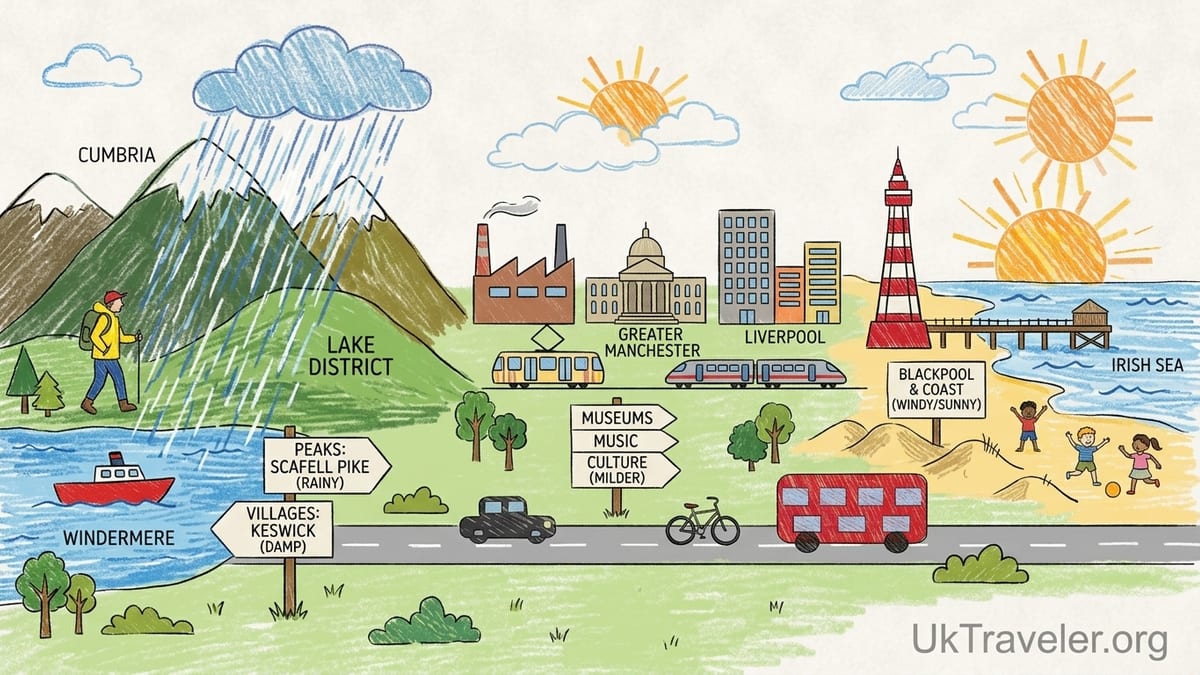
The Met Office groups North West England with some of the United Kingdom’s wettest regions, especially the Lake District fells and the west facing slopes of the Pennines in Cumbria and Lancashire. Moist air from the Atlantic is forced up over these mountains, creating heavy orographic rain. Weather stations in upland Lake District valleys record annual rain totals several times higher than low lying towns only a short drive away, which is why hikers heading for peaks like Scafell Pike, Helvellyn or Great Gable can encounter cloud, drizzle and strong winds on days when Manchester enjoys dry pavements and occasional sunshine.
By contrast, the lower lying plain that stretches around Merseyside, Greater Manchester and Cheshire is milder and drier, though still very changeable. Cities such as Liverpool, Manchester and Chester see rain spread quite evenly through the year, with frequent showers and overcast skies rather than long downpours. Their annual rainfall is usually closer to the UK average than to the extremes seen in the central Lake District, which makes them practical destinations even in winter when the fells are clagged in cloud and paths turn to mud.
Along the Lancashire and Cumbrian coasts, places like Blackpool, Lytham St Annes, Morecambe and Barrow in Furness feel very exposed to Atlantic weather. Westerly winds can bring rapid swings from bright, blustery sunshine to squally showers rolling in off the Irish Sea. In summer this can be refreshing and keeps temperatures comfortable on hot days when inland cities feel humid. In winter the same exposure means raw windchill on promenades and piers, even when the thermometer does not look particularly low.
Daylight length adds another important layer. In mid winter, around late December and early January, sunrise in Manchester is close to 8:30 in the morning and sunset around 4 in the afternoon, giving little more than seven and a half usable hours. By late June, you can expect first light before 4:30 and lingering twilight well after 10 at night across the region. Those long summer evenings transform what you can realistically do in a single day, especially for mountain hikes, scenic drives between lakes or coastal walks between resort towns.
Winter: Short Days, Wild Fells and City Comfort
Winter in North West England, from roughly December to February, tends to be mild compared with continental Europe but often wet, windy and dull. In upland Cumbria, the Met Office records some of the highest average monthly rainfall totals in late autumn and winter, and the Lake District fells can see sleet, snow, ice and frequent low cloud. On popular routes from Seathwaite, Langdale or Wasdale, paths turn boggy and streams run high after repeated Atlantic storms. For serious hikers, this is a time that demands winter skills, proper waterproofs, and often crampons and ice axe for the highest tops, rather than a casual holiday stroll.
At lake level though, villages such as Bowness on Windermere, Ambleside, Keswick and Grasmere can be atmospheric in winter. Piers run quieter cruises on lakes like Windermere and Ullswater, and local guesthouses often reduce rates outside Christmas and New Year. You might pay noticeably less for a double room with breakfast than in August, and can sometimes book character properties last minute that would be full in peak summer. The trade off is likely to be grey skies, drizzle and the need to build indoor options, such as Lakeland museums, tea rooms and cosy pubs with open fires, into every day.
For city breaks, winter can work well. Manchester and Liverpool thrive on culture that does not depend heavily on sunshine. In Manchester, visitors combine the Science and Industry Museum, the football grounds at Old Trafford or the Etihad Stadium, galleries such as the Whitworth, and Northern Quarter cafes into compact weekends. In Liverpool, the Royal Albert Dock, The Beatles Story, the Merseyside Maritime Museum and both cathedrals fill short days comfortably. Early darkness adds a dramatic backdrop to waterfront skylines and Christmas markets without severely affecting your ability to sightsee, because distances between attractions are small and public transport is frequent.
On the Lancashire coast, winter is a more specialist choice. Blackpool’s main outdoor amusements largely close or scale back after the extended Illuminations season ends in early January, and many seafront B&Bs take a seasonal pause. Stormy walks along the promenade between Blackpool Tower and South Pier can be memorable, but bitter wind off the sea and occasional road spray mean this is best for hardy walkers with good waterproofs. Families with young children generally do better waiting for spring unless they are visiting for a specific indoor attraction such as the big waterpark or the tower circus when those are running.
Spring: Fresh Green Hills and Quieter Cities
Spring in North West England, running from March through May, can feel like several seasons in one. March often still feels wintry, with cold showers, hill snow and bare trees in upland Cumbria and the Pennines. By April and May, daylight stretches rapidly and the region’s countryside turns vivid green as lambs appear in fields across the Yorkshire Dales fringe, the Howgill Fells and the Cumbrian valleys. Met Office climate summaries for nearby Cumbrian stations show April often among the drier months, with significantly lower average rainfall than the November and December peak, which gives this period a reputation among walkers as one of the better bets for clearer days.
In the Lake District, spring is ideal for low to mid level hiking. Routes around Derwentwater, Grasmere, Rydal Water and the lower slopes of Ullswater see far fewer people than in August, especially midweek. Paths may still be muddy, but you are more likely to enjoy breathable walking temperatures and intermittent sunshine instead of hot, airless conditions in the valleys. Many boat services on Windermere and Coniston expand from their winter timetable around late March or early April, and outdoor seating reappears outside lakeside pubs in villages such as Ambleside, Coniston and Hawkshead.
Cities also benefit in spring. Manchester and Liverpool start to feel lighter and more open as parks such as Sefton Park in Liverpool or Heaton Park in Manchester green up. Hotel prices outside Easter and major events can be attractively lower than in midsummer weekends. Spring is a smart choice for cultural travellers who value galleries, theatre and live music more than late opening beer gardens. With mild, if changeable, weather, you can comfortably mix indoor attractions with short walks along Liverpool’s waterfront or Manchester’s canals without overheating or shivering.
Spring is also a good window for the Cheshire countryside and stately homes. Gardens at places like Tatton Park or Dunham Massey open with carpets of bluebells, and estate farm shops and cafes feel lively again after winter. Roads are noticeably quieter than in peak summer, making it easier to combine a drive through villages like Knutsford, Alderley Edge and Tarporley with a relaxed lunch and perhaps a short woodland walk. Families travelling with school age children will need to focus on the Easter holidays, which do see some price rises and booked up cottages, but remain less congested than the long summer break.
Early Summer: Long Days Without Peak Crowds
Early summer in North West England, broadly June and the first half of July, often offers the best balance between long daylight, milder temperatures and manageable visitor numbers. By June, evening light lingers past 10 pm even in Manchester and Liverpool, and in the Lake District you can finish a long fell walk above Ullswater or Buttermere and still have time for a slow pub dinner in daylight. Sea temperatures in the Irish Sea remain cool but coastal resorts feel noticeably warmer than in April, with plenty of families using the beach for sandcastles and paddling on brighter days.
For hikers and scenery seekers, this is many locals’ preferred period. Mountain conditions are still mixed, and heavy showers or low cloud are entirely possible, but the risk of persistent winter snow on popular higher routes is usually over. Paths over passes like Styhead or Stake Pass are busier than in March but not yet saturated. Lakeside towns such as Keswick and Windermere are lively without the gridlocked car parks reported by local tourism discussions in the late July and August school holiday peak. Boat companies on Windermere, Ullswater and Coniston typically run full summer timetables by this point, so you have plenty of flexibility for circular, car free days.
City travel works especially well in early summer. Outdoor seating along Liverpool’s Royal Albert Dock and at Manchester’s pedestrian squares fills with after work crowds on dry evenings, and many festivals and concert tours schedule dates in June. Hotel rates can edge up around major events such as football finals or big stadium concerts, so it is worth checking calendars at venues like Liverpool’s M&S Bank Arena or Manchester’s Co-op Live and Etihad Campus before fixing dates. Outside those spikes, you often pay less midweek for central hotels than in high tourist cities further south, while still enjoying the full restaurant and nightlife scene.
Along the Lancashire coast, early summer brings the funfair rides in Blackpool and the arcades along the Golden Mile into full swing without the shoulder to shoulder August atmosphere. Day trippers arrive for weekends, but midweek stays in June can feel surprisingly relaxed. Resorts such as St Annes and Lytham, with their grassy dunes and more low key promenades, are particularly pleasant for couples or older visitors who prefer gentle walks, golf and seafront cafes to late night bars. Families with pre school children often choose this period to enjoy shorter queues and slightly lower accommodation costs than during the main school break.
Peak Summer: Crowded Lakes, Busy Coasts and Festive Energy
Peak summer in North West England revolves around the school holidays from late July through August, and in some years spilling into early September when the weather stays settled. Visitor data from Windermere and broader Cumbria shows July, August and September as the busiest months for the Lake District, with traffic and car parks at their most pressured. Roads into key honeypots such as Bowness on Windermere, Keswick, Ambleside and Grasmere can back up significantly on sunny weekends and bank holidays, and parking at popular starting points like Great Langdale and Wasdale often fills by mid morning.
The upside is energy and extended opening hours. Attractions around Windermere, such as boat services, heritage railways and family adventure parks, run to their most frequent schedules. Campsites and glamping sites on lakes including Ullswater and Derwentwater are full of families, barbecues and evening games. Water activities such as paddleboarding, boat hire and lakeshore swimming become realistic options for many visitors once air temperatures lift on settled days. For those who want a classic British summer holiday with pub gardens, ice creams and busy village streets, this is the moment to embrace, accepting that you will share it with many others.
On the Lancashire coast, peak summer is the classic Blackpool season. The three main piers buzz, the Pleasure Beach runs long hours with its rollercoasters, and events like the Blackpool Air Show bring extra crowds to the seafront in August. Free outdoor entertainment and street performers make the promenades lively well into the evening when the weather plays along. Accommodation prices in Blackpool, St Annes and Morecambe rise in line with demand for sea view rooms and family suites. For many families limited to school holiday dates, this is the natural time to come, but it is wise to book central parking or choose accommodations within walking distance of the front to avoid repeated traffic queues.
Manchester and Liverpool feel festival like in their own way during peak summer, but they are less weather dependent than the coast or Lakes. Visitors combine rooftop bars or outdoor terraces with indoor highlights like Anfield or Old Trafford stadium tours, Tate Liverpool, or Manchester’s HOME arts complex. Heatwaves occasionally push temperatures into the upper twenties Celsius, and city centres can feel muggy. On such days a day trip by train to the coast, such as Liverpool to Formby’s dune backed beach or Manchester to Blackpool North, can offer relief. Peak summer is still a sensible time for city breaks if you prioritise nightlife, concerts and sport over quiet museums and low prices.
Families planning a combined itinerary need to be realistic about crowds in this period. A seven night trip in late August that mixes two nights in Manchester with five in the central Lake District will involve busy roads and pre booked attractions. On the positive side, long daylight and guaranteed full timetables on boats, railways and children’s farms make it easier to keep younger travellers occupied every day. Those who dislike queuing or fully booked car parks might consider staying on the fringes of the Lakes, such as around Penrith or Kendal, and day tripping in, or shifting their main holiday to early July before the English school term ends.
Autumn: Colour, Storms and Illuminated Coasts
Autumn from September through November might be the most nuanced season for North West England. In the Lake District and Pennines, early autumn often delivers some of the year’s finest walking conditions. Trees around Grasmere, Ullswater and Borrowdale begin to turn gold through October, and bracken on the hillsides shifts to deep rust colours. Climate records for Cumbria show rainfall increasing again in autumn, especially in October and November, but there are frequently settled spells of crisp, clear days between frontal systems. For many photographers and serious hikers, a mid October week with a flexible plan gives a higher chance of dramatic scenery than a hazy August fortnight.
The risk, especially later in the season, is Atlantic storms. The same weather patterns that give the Lakes their reputation for high rainfall can bring very wet, windy periods that wash out ridge routes and swell rivers quickly. Paths in steep sided valleys like Langstrath or Deepdale can become slippery and waterlogged. Sensible autumn planning builds in low level alternatives such as lakeshore paths, boat trips, or visits to indoor attractions in Keswick and Windermere on the wettest days. Because visitor numbers drop sharply after the main school holidays, you gain flexibility to switch plans at short notice without worrying as much about crowds.
For the coast, autumn is synonymous with Blackpool’s famous Illuminations. The town’s long running light festival switches on in late August and now typically runs well into the first days of January, stretching the season far beyond the traditional summer closing date. Visitors drive or ride trams along the six mile seafront display, while associated events such as the Lightpool Festival, occasional fireworks and tower projection shows animate the promenade on selected evenings. Weekends in September and October can be as busy as high summer along the promenade in the early evening, even if daytime feels cooler and more blustery. Wearing warm layers, hats and gloves is essential if you plan to stand on the seafront watching light shows after dark.
Cities and lowland countryside come into their own again in autumn. Urban parks in Manchester, Liverpool and Chester blaze with colour from late October into early November, and mild temperatures make it comfortable to wander neighbourhoods or sit in covered outdoor spaces with heaters. Cheshire’s stately homes and farm attractions run harvest and Halloween themed events, which appeal especially to families. Prices for hotels and self catering properties usually fall between the summer peak and the Christmas market season, making autumn a value friendly choice for travellers who do not mind changeable weather and early nightfall by November.
Best Seasons by Trip Type: Cities, Lakes, Coast and Countryside
Choosing the best time to visit North West England depends heavily on whether your focus is city culture, mountain hiking, seaside fun, family travel or rural relaxation. For Manchester and Liverpool city breaks, the most forgiving windows are spring and early summer, roughly April to early July, plus early autumn in September. In these periods, you enjoy lighter evenings, comfortable temperatures for walking between galleries, stadiums and waterfronts, and a busy calendar of gigs and festivals. Winter city breaks are also viable, especially around Christmas markets, but you should expect shorter days, more rain and colder evenings.
For Lake District hiking, the sweet spots are often late spring and early summer, such as May, June and the first part of July, along with an agile approach to early autumn. These times balance longer daylight with paths that have had some chance to dry after winter, while avoiding the heaviest school holiday crowds and parking pressure. Winter and early spring require more technical preparation, and peak summer offers atmospheric hikes if you are ready to start early in the morning to dodge heat and crowds on the most popular trails. A rainy week is always possible in any month, so booking accommodation with drying space for wet gear and being ready with indoor backup plans is essential.
The Lancashire and Cumbrian coasts, including Blackpool, Morecambe and St Annes, suit different travellers in different seasons. Families who want the full amusement and beach experience, including Blackpool’s big rides and seasonal events like the air show and fireworks, will find peak summer and the early part of the Illuminations season most rewarding. Couples and older visitors who prefer quieter promenades, gentler weather and fewer hen and stag parties often favour June or September midweeks, when many seafront hotels still operate fully but the atmosphere is more relaxed and temperatures are generally milder than in April.
Cheshire’s countryside and stately homes can be enjoyed year round, but April to June and September to early October stand out. These periods bring colourful gardens, manageable visitor numbers at heritage properties, and driving conditions that are usually less stressful than in winter storms or peak holiday Saturdays. Families combining Cheshire with a Lake District or Blackpool stay often plan to put their active, weather dependent days in the middle of the holiday and keep Cheshire for arrival or departure nights, when a simple walk, farm visit and pub meal near their accommodation is all that is needed after a travel day.
The Takeaway
North West England is not a region where you simply pick “the sunniest month” and expect perfect conditions. Its complex terrain, from sea level promenades to steep fells, creates sharp local contrasts in rain, wind and cloud even on the same afternoon. The Lake District and the western Pennine slopes rightly rank among the UK’s wettest landscapes, while the lower lying plain around Merseyside, Greater Manchester and Cheshire offers more moderate, city friendly weather that keeps museums, music venues and stadiums humming throughout the year.
For travellers, that means the best time to visit depends as much on your plans and tolerance for rain, crowds and early darkness as on the calendar itself. Winter favours culture heavy city breaks and atmospheric lakeside villages for those unfazed by drizzle. Spring and early summer combine fresh green landscapes, lengthening days and quieter roads, ideal for first time visitors wanting to see a bit of everything from Manchester’s galleries to Windermere’s cruises. Peak summer delivers the full family holiday package of beaches, boat trips and late night promenades, at the price of queues and higher room rates. Autumn rewards flexible travellers with rich colour, dramatic weather and Blackpool’s extended season of light.
Whichever season you choose, planning around regional differences pays dividends. You might anchor a February trip in Manchester, using a single clear day to dash up to a snowy Lakes viewpoint, or base an October holiday around Blackpool’s Illuminations with quieter midweek walks in the nearby Forest of Bowland. By thinking in terms of trip type rather than a one size fits all “best month,” you can align North West England’s varied moods with your own priorities and leave with the sense that you experienced the region at its seasonal best.
FAQ
Q1. Is there a genuinely dry season in North West England?
There is no true dry season. Spring and early summer months like April, May and June often bring fewer prolonged downpours than late autumn and winter, but showers remain likely year round, especially in upland areas such as the Lake District and the western Pennines.
Q2. When is the best time to visit the Lake District for hiking?
For most visitors, late spring and early summer, roughly May, June and early July, offer the best balance of long days, milder temperatures and manageable crowds. Early autumn in September and early October can also be excellent for lower level routes and autumn colour, provided you are flexible around more frequent rain.
Q3. Are Manchester and Liverpool good winter city break destinations?
Yes. Both cities have strong indoor cultural scenes, from museums and galleries to football stadium tours and music venues, which makes them practical choices in winter. You will encounter short days and changeable weather, but compact city centres and reliable public transport mean you can still see a great deal without relying on sunshine.
Q4. When are Blackpool’s main events and Illuminations?
Blackpool’s big summer atmosphere peaks in July and August, including the air show in August and busy weekends on the seafront. The famous Illuminations switch on in late August and currently run into early January, with particularly lively evenings in September and October when many visitors come specifically to drive or ride trams through the light displays.
Q5. What is the best season for family travel in North West England?
Families tied to school holidays usually find late July and August best for beach and amusement park fun, as well as full timetables on Lake District boats and attractions. Families with more flexibility often prefer late May or early June, when prices and crowds are lower but many seasonal businesses are open and the weather can be pleasantly mild.
Q6. How does coastal weather around Blackpool compare with inland cities?
Blackpool and the wider Lancashire coast feel more exposed to Atlantic winds than Manchester or Liverpool. In summer this can keep seaside promenades cooler and fresher on hot days, while in winter and autumn it brings strong gusts and a colder windchill, even when inland cities feel relatively calm.
Q7. Is autumn a good time for Lake District photography?
Autumn, especially from late September through October, is one of the most rewarding times for Lake District photography. Woodland and valley trees turn rich shades of gold and red, and low angled light can create dramatic reflections on lakes. The trade off is higher rainfall and occasional storms, so having flexible plans and waterproof clothing is important.
Q8. When are the longest daylight hours, and how does that affect travel plans?
Daylight peaks around late June, when sunrise is very early and sunset close to 10 pm. These long days are ideal for mountain hikes, scenic drives that link several lakes or coastal walks between resort towns, because you have more time to complete activities safely in daylight and can fit more into a single day trip.
Q9. Are accommodation prices much higher in peak summer?
In popular areas such as central Lake District towns and Blackpool seafront, accommodation prices typically rise in late July and August as demand from holidaymakers and families peaks. Outside those weeks, particularly in late spring, early summer and autumn shoulder seasons, the same rooms can often be booked for noticeably lower rates, especially midweek.
Q10. How far in advance should I book for a summer trip to North West England?
For July and August trips that include the Lake District or Blackpool, it is wise to secure key accommodation several months ahead, especially for weekends, school holidays and bank holidays. City breaks to Manchester or Liverpool can usually be planned with shorter notice, except when major concerts, football matches or festivals push up demand for central hotel rooms.