


The East Midlands is one of those regions that quietly gets under your skin. What looks, on paper, like a patchwork of counties turns out on the ground to be stately homes with serious swagger, limestone gorges that feel far wilder than you expect, and a surprising mix of trams, space rockets and caves. Over several trips between 2023 and 2026 I have cherry-picked days out that I would genuinely repeat, and skipped a few big-name sights that felt overcrowded or overpriced. This guide is organised by experience rather than county, and every section is based on things I actually did, with researched alternatives clearly flagged as such.
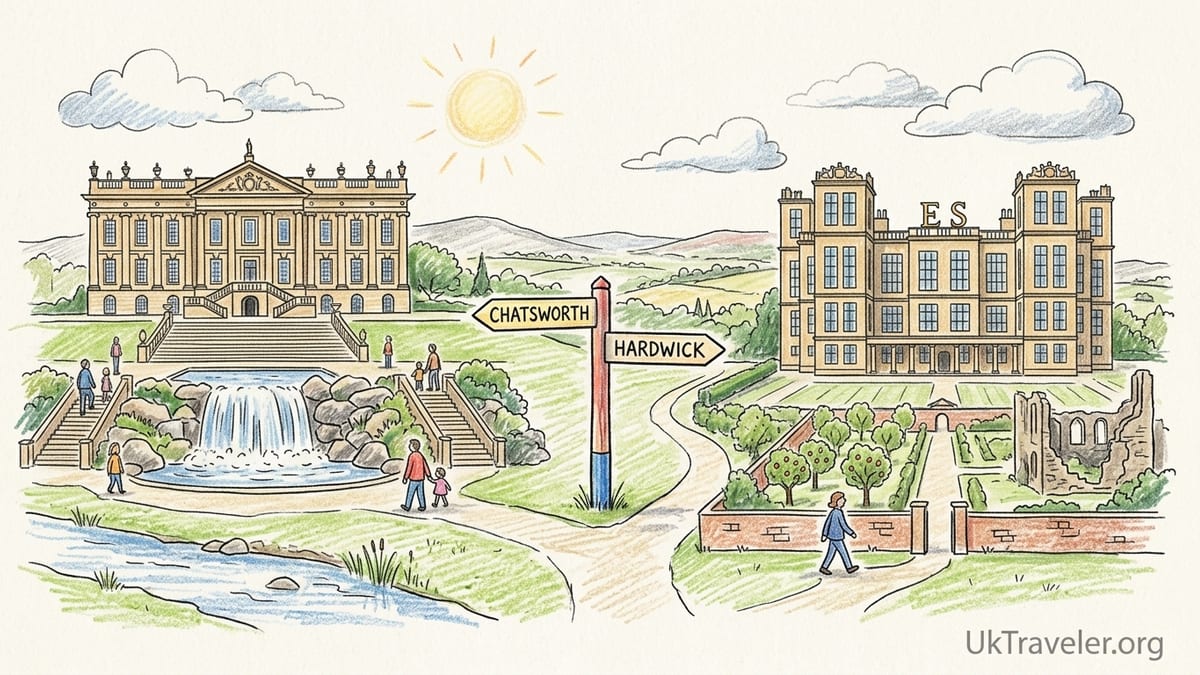
Historic House Days: Chatsworth and Hardwick
If you only have time for one grand day out in the East Midlands, I would still spend it at Chatsworth House near Bakewell in Derbyshire. My most recent visit was in July 2026, on a dry, bright Saturday with hazy sun. I booked a standard House & Garden ticket online in advance through the Chatsworth website and paid £35 for one adult, which included the house, garden, farmyard and playground, plus free parking when booked together. On an earlier visit I had paid separately to park in the main house car park at £10 for the day. From mid-morning to late afternoon, I spent roughly six hours on the estate, of which about ninety minutes were inside the house, two and a half hours wandering the gardens and water features, and the rest split between the farmyard, playground and a late picnic by the river.
The physical effort at Chatsworth is moderate rather than extreme. The house itself is easy, with lifts and level access in key areas, but the garden includes steep paths, steps and uneven ground, especially if you climb up towards the Cascade or the Rock Garden. I averaged around 15,000 steps that day according to my phone, and felt it in my calves but never needed specialist hiking kit. In school holidays and on weekends the crowds can be heavy. By midday, several of the state rooms were moving at a shuffle and there were short queues to see major artworks. The garden soaked people up better, but the adventure playground was noisy and very busy. Facilities are strong: several cafes, toilets near the house and farmyard, picnic areas, and reasonably clear signposting. Despite the cost and the crowds, I would definitely repeat this experience, although next time I would pick an off peak weekday or arrive for the first house entry slot to get a quieter run through the rooms.
Hardwick Hall, also in Derbyshire near Chesterfield, made for a contrasting historic-house day that I would also happily do again, particularly if you enjoy architecture and views. I last visited in May 2025 on a breezy, sunny day with fast-moving cloud. I used the main National Trust car park at Hardwick and, as a member, scanned my card at the machine for free parking and admission. Friends travelling with me who were not members paid the standard National Trust on-the-day rate at the kiosk for house and garden entry, which at that time was just over £18 per adult plus a separate parking charge at the Park Centre for non-members. We spent about four hours on site, including a house tour, a walk through the formal gardens and orchard, and a short circuit in the surrounding parkland.
Hardwick requires a bit less physical effort than Chatsworth if you stay close to the house. The main climb is the stairs within the hall to reach the upper long gallery, which some visitors may find tiring but which can be taken slowly. The grounds are rolling rather than steep, with a couple of short inclines. Crowds were moderate when I went: busy enough that some rooms held a dozen or more people, but there was space to stop and read interpretation boards. The stableyard cafe and toilets coped well and there were benches scattered through the gardens. I would repeat Hardwick on a clear day for its far-reaching views and the atmospheric unfinished Old Hall beside it. For a first trip to the region I would prioritise Chatsworth for its breadth, but Hardwick is the house I would return to when I wanted somewhere slightly quieter with more walking options straight from the car park.
Woodland Walks and Robin Hood Lore at Sherwood Forest
Sherwood Forest in Nottinghamshire is often marketed through the lens of Robin Hood, but my most enjoyable day there in April 2024 was really about woodland, birdlife and easy trails. I drove to the official Sherwood Forest Visitor Centre car park near Edwinstowe on a grey but dry Sunday. Parking operated on a pay and display system with a flat day rate. On that visit I paid £5 for a full day ticket, in line with Nottinghamshire County Council’s published car park charge for the site. Admission to the forest and visitor centre itself was free. I did not need to book in advance; I simply arrived mid-morning, paid at the machine and walked straight into the reserve. I spent just over four hours on the main waymarked routes, including the trail to the Major Oak and a longer loop on quieter paths away from the central hub.
In terms of physical effort, Sherwood was easy to moderate. The main paths from the visitor centre to the Major Oak are wide, relatively level and surfaced, suitable for buggies and most wheelchairs in reasonable conditions. Once I turned off onto the longer forest trails the surfaces became more natural, with roots and occasional mud, but there were no serious climbs. The weather remained dry, which helped. Crowds were heavy close to the visitor centre, particularly around late morning when coach parties and families were streaming in, and the area around the Major Oak felt busy, with people lining up to take photos. Further out, traffic dropped off quickly and I walked long stretches seeing only a handful of others. Facilities at the visitor centre included a cafe, toilets, a small exhibition, and a gift shop with Robin Hood themed souvenirs. I would repeat this day, but I would aim to arrive by 9.30am to enjoy the central section before it fills and then escape onto the outer trails.
A researched alternative, if you want deeper forest and do not mind a more commercial setup, is to base yourself at Sherwood Pines Forest Park, which sits a short drive away and is run by Forestry England rather than the Sherwood Forest charity partnership. Published information highlights graded cycling and walking trails, a Go Ape high ropes course and a larger adventure play area. Parking is typically charged by the hour up to a day rate and can add up on a long stay, but the mix of activities makes it a strong choice for families or mixed-ability groups. I have not yet visited Sherwood Pines in person, so I would treat it as a complementary option rather than a direct substitute for the quieter trails around the Major Oak.
Industrial Heritage on Rails at the National Tramway Museum, Crich
Crich Tramway Village, rebranded in 2026 back to its formal name of the National Tramway Museum, delivered one of my favourite industrial-heritage days anywhere in the UK. My last trip was in September 2025 on a bright, cool day with sunny intervals. I drove to the museum at Crich in Derbyshire and parked in the free on-site car park. I bought a full-price adult ticket at the entrance, which cost just under £22 at that time and, under their standard offer, included free return visits on most opening days for twelve months from the date of first use. There was no need to pre-book; I arrived late morning, paid at the admission desk and spent about five hours on site.
The experience divides into two parts: the tram rides along the hillside track and the recreated period street and depots. Physically, it was an easy day. The steepest work involved climbing aboard the vintage trams themselves and, in one case, taking the stairs to the open top deck, which is narrow and can be tiring for anyone with mobility issues. Otherwise, the site has a mix of level and gently sloping paths. I rode the trams several times, walked up to the woodland walk above the quarry, and made it out to the Glory Mine tram stop, where a public footpath leads up towards Crich Stand and wider views. Crowds were moderate. On my visit, trams rarely filled completely and I was able to sit upstairs without queuing for more than one departure.
Facilities were reasonable but felt stretched at peak lunchtime, when the main cafe queue lengthened and indoor seating filled. Toilets were clean and dotted around the site, and there was a decent playground for younger children. I would absolutely repeat this visit, particularly with guests or family. The combination of genuine rolling stock, the immersive street scenes, and the views out across the Derwent Valley felt like good value, especially given the free-return ticket arrangement. I did notice that shop prices for souvenirs were on the high side, so I would plan ahead if you are with children who might want merchandise.
Caves and Heights above Matlock Bath
The Heights of Abraham above Matlock Bath in Derbyshire offered one of the more dramatic experiences I tried, and it is the one I would most carefully qualify before recommending. I visited in August 2023 on a warm, sunny day that turned increasingly humid. I parked in one of the long-stay pay and display car parks along the A6 in Matlock Bath, paying around £6 for over four hours, and walked to the base station of the cable car. I bought a standard adult ticket on the day which included the cable car ride up and down, access to the hilltop park, and guided tours of both show caverns. My ticket cost just over £23, reflecting then-current high-season pricing. I spent around four hours from arrival to departure, including two cave tours, a walk around the viewpoints, and time in the cafe.
Physical effort here was significantly higher than my other days out in this guide. Even once the cable car had done the main climb, there were still steep paths between the top station, the play areas and the entrances to the caverns. Inside the caves, I tackled low ceilings, narrow passages and several short flights of steps. The tours moved at a steady pace and there was some chance to rest while the guide talked, but by the end my legs felt worked. Anyone with mobility issues, claustrophobia or heart or breathing concerns should think carefully and check the latest access information before visiting. Crowds were noticeable but manageable; tours were busy without being dangerously packed, though the hilltop cafe and terrace were close to full at lunchtime.
Facilities at the Heights of Abraham were solid. The hilltop station had toilets, a cafe, a gift shop and a small exhibition, and there were multiple outdoor seating areas. Staff handled the flow of people efficiently, but I did feel conscious of being part of a large, commercial operation. I would repeat this experience reluctantly and only on a clear, cooler day when I felt fit, because the views over the Derwent gorge from the viewing platforms were outstanding and the geological commentary inside the caverns was excellent. However, I did come away feeling that the ticket price was edging on the steep side for what was essentially half a day on site, especially when combined with separate car parking costs in Matlock Bath. If budget is tight, this is one big-ticket attraction I would consider swapping for free local walks and a cheaper show cave in other parts of the Peak District.
Riverside Hiking at Dovedale and the White Peak
For pure landscape, my most satisfying day in the East Midlands was hiking from the Dovedale car park near Thorpe up to the famous stepping stones and on into the limestone gorge. My latest visit was in June 2025, on a forecast of sunshine and scattered clouds that delivered exactly that. I drove to the National Trust Dovedale car park at the end of the lane from Thorpe, postcode DE6 2AY, arriving just after 8.30am. At that time the car park fee for non-members was £6 for up to four hours or £8 for over four hours, payable in cash at the machine. As a National Trust member I parked for free by scanning my membership card at the terminal. There is no admission charge to the valley itself. I stayed just under five hours, walking from the car park to the stepping stones, continuing along the Dove to Milldale and back, with a short detour partway up Thorpe Cloud on the return.
In terms of physical effort, this was a moderate walk. The path from the car park to the stepping stones is a well-used track that undulates slightly but is not steep. Beyond the stones, the valley path rolls gently with occasional rockier sections and tree roots. The optional climb up Thorpe Cloud is the toughest section, a steep grassy slope that becomes slippery when wet. On my dry-weather visit, I managed the short ascent and descent cautiously without needing technical gear, but it is not suitable for everyone. There are basic toilets near the car park, operated by the Peak District National Park rather than the Trust, with a small entry fee. There is no cafe at the stepping stones themselves, but I carried my own food and later bought refreshments at the National Trust facilities back at Ilam Park, a short drive away, where there is a tea room and additional parking with the same £6 and £8 charging pattern for non-members.
Crowds at Dovedale vary dramatically by time of day. When I set off before 9am, I saw only a handful of other walkers. By late morning, the stepping stones area was busy enough to require patience crossing in both directions, with lines forming on either bank for photos. The further I walked towards Milldale, the more the crowds thinned, and beyond a certain point it felt relatively peaceful, even in summer. I would repeat this day in a heartbeat, but I would always aim for an early start, especially on weekends or in school holidays. The mixture of riverside walking, limestone crags, and the option of a short, sharp summit on Thorpe Cloud makes it one of the best value experiences in the region, particularly if you already hold National Trust membership that absorbs parking costs.
Hands-on Science at the National Space Centre, Leicester
The National Space Centre in Leicester delivered exactly the kind of indoor, weatherproof day that makes sense in a region known for changeable skies. I visited most recently in February 2026 on a cold, wet Saturday when outdoor plans would have been miserable. I booked an adult ticket online two weeks in advance through the official National Space Centre system. Thanks to a temporary government-backed VAT reduction that summer and spring, the standard online adult price had been adjusted to around £22, with children aged 5 to 16 slightly cheaper and under-5s free. I also pre-booked car parking at £4 for the day, payable as an add-on during the booking process. Arriving just before the 10am opening time, I checked in with my email confirmation and spent approximately six hours exploring the galleries, planetarium and temporary exhibitions.
The physical effort involved was low to moderate. The centre is mainly indoors on several levels connected by lifts, with clear ramps and a few staircases. I spent the day on my feet, but there were regular seating areas and interactive displays that naturally broke up the walking. The main strain came from standing for long periods during popular shows and presentations. Crowds, however, were heavy. By late morning the galleries were busy, with queues forming at the most popular interactive exhibits, such as the mock-up Soyuz capsule and the space-walk simulator. The planetarium shows, which were included in my ticket for one standard film with an option to pay extra for additional sessions, booked out quickly. I reserved my preferred time slot as soon as I arrived and would recommend doing the same.
Facilities at the National Space Centre matched what you would expect from a major science attraction. There was a large cafe with a mix of hot meals and snacks, a separate coffee stand, plenty of toilets and baby-change facilities, and a shop that leaned heavily into space toys and branded merchandise. I found food and drinks on the expensive side for their quality, so next time I would bring more of my own snacks and treat the cafe as a backup rather than the main event. Despite the crowds and catering prices, I would definitely repeat this day. The combination of real spacecraft, including a towering rocket in the central hall, well-presented exhibits, and a high-quality immersive planetarium show felt like good value for the ticket price, especially when used as a full-day activity rather than a rushed half-day visit.
Family-Friendly Museums and Attractions I Would Repeat
Not every memorable experience in the East Midlands involved big-ticket stately homes or headline landscapes. Smaller, family-friendly museums rounded out my trips and, in some cases, punched well above their weight. One that stands out is the industrial and social history museum in Nottingham’s city centre, which I visited on a drizzly November afternoon in 2024. Entrance that day cost under £10 for an adult and I did not pay for parking because I reached it by tram from a park-and-ride, using a day ticket that covered both parking and transport. I spent around three hours exploring reconstructions of Victorian streets, lace workshops and domestic interiors, all under one roof.
The effort level for this sort of museum visit was minimal. The building was mostly level, with lifts available where needed, and plenty of seating. Crowds, even on a weekend, never reached the point of discomfort. Families were present, but the exhibits spread them out and there were quieter corners where I could take my time over interpretation panels. Facilities were functional rather than flashy but did the job: a small cafe, toilets on each floor, and a simple gift shop. This is the kind of attraction I would happily repeat on a future trip, particularly as a fallback plan when weather or energy levels rule out longer walks.
Another family-oriented experience I would do again is a return to the farmyard and adventure playground within the Chatsworth estate, mentioned earlier in this guide. On a spring 2024 visit I bought a farmyard and playground-only ticket online in advance for £12, which included free parking when booked that way. I stayed roughly three hours, long enough for animal encounters, a tractor-themed play area and a couple of circuits of the woodland playground. Crowds were thick during the middle of the day, and the noise level reflected that, but the atmosphere was warm and staff were patient. Facilities in this specific corner were good: toilets, covered picnic barns, and snack kiosks serving hot drinks and simple food. I would not visit the farmyard as a standalone adult day out, but as part of a wider Chatsworth trip or with children it is something I would repeat.
For context, there are several other large family attractions in the East Midlands that I have researched but not yet visited, such as Twinlakes Theme Park near Melton Mowbray and Sundown Adventureland further north. Both offer full-day experiences with multiple rides and themed areas and operate on flat per-person admission. Based on published information, their ticket prices sit in the same broad bracket as the National Space Centre or Heights of Abraham when bought in advance. Because I have not experienced them personally, I would treat them as options to investigate rather than firm recommendations.
The Takeaway
Looking back over a run of East Midlands trips between 2023 and 2026, I would happily repeat most of the days described here, but for slightly different reasons. Chatsworth and Hardwick scratch the itch for big history and grand architecture. Sherwood Forest and Dovedale deliver accessible, atmospheric landscapes that feel far removed from urban routine without demanding alpine fitness. The National Tramway Museum at Crich demonstrates how industrial heritage can be lively and hands-on rather than dry, while the National Space Centre in Leicester anchors any itinerary that needs a guaranteed all-weather option.
The experiences I am less eager to repeat all share a pattern: relatively high pricing combined with crowds that erode the sense of discovery. The Heights of Abraham is the clearest example. I do not regret going; the views and caves justified a one-off trip. Yet when I weigh the cost of a cable car and cavern package, plus paid parking in Matlock Bath, against a free or low-cost day of walking at Dovedale or in Sherwood, it slides down my personal repeat list. Similarly, I would time any return visits to headline attractions for quieter weekdays and shoulder seasons, when the East Midlands feels more like a living region than a collection of Instagram backdrops.
If you are planning your own route through the region, I would build around one major paid house or museum day, one or two low-cost landscape days, and, if you have children in tow, at least one attraction with strong facilities and easy entertainment like Crich or the Chatsworth farmyard. Use online booking for big-ticket attractions to lock in prices and parking, pack your own food where practical, and aim early for popular walks such as Dovedale or Sherwood to stay ahead of the crowds. Above all, leave space for the quieter corners. In my experience, it is the unscheduled hour on a woodland loop or a late-afternoon picnic by the River Derwent at Chatsworth that you are most likely to want to repeat.
FAQ
Q1. Do I need to hire a car to enjoy these East Midlands experiences?
In practice a car makes this itinerary much easier, particularly for Dovedale, Crich and the Heights of Abraham, which are served by limited public transport. I have used a mix of trains and local buses to reach places like Chatsworth and the National Space Centre, but door-to-door journey times were significantly longer than driving and often involved tight rural connections. If you are travelling without a car, I would prioritise the National Space Centre, city museums, and one or two headline sites that offer dedicated bus links or are reachable from mainline stations.
Q2. How much should I budget per day for tickets and parking?
On the days described here, my combined spend on entry and parking ranged from under £10 for a city museum reached by tram, through around £6 to £8 for National Trust parking at Dovedale with free landscape access, up to roughly £40 to £45 for a full day at a major paid attraction such as Chatsworth, the National Space Centre or the Heights of Abraham. If you plan two or three big-ticket days in a week, you can easily spend over £150 for two adults on admission and parking alone, while adding low-cost hiking or woodland days will pull the average down.
Q3. Are these experiences suitable for visitors with limited mobility?
The National Space Centre, Chatsworth house interiors and city museums are the most accessible based on my visits, with lifts, ramps and staff used to supporting visitors with different needs. Dovedale, Sherwood Forest and the Heights of Abraham all include uneven ground, slopes and, in the case of the Heights, cave steps and confined spaces. At Dovedale I met visitors using sticks and moving at their own pace along the river path, but the optional climbs were clearly more demanding. I would strongly recommend checking each site’s latest access statement and, if possible, phoning ahead to discuss specific requirements before travelling.
Q4. When is the best time of year to visit to avoid crowds?
From my trips between 2023 and 2026, shoulder seasons in late spring and early autumn offered the best balance. A May weekday at Hardwick and an early June visit to Dovedale felt pleasantly busy without being overwhelmed, while August weekends at the Heights of Abraham and prime summer dates at Sherwood were noticeably crowded by late morning. For headline attractions like Chatsworth or the National Space Centre, I would choose term-time weekdays where possible and aim to arrive at or just before opening to enjoy the first couple of hours in relative calm.
Q5. Do I need to book tickets in advance?
For the National Space Centre and Chatsworth I booked online in advance and would do so again, both for peace of mind on entry and to secure parking and time slots for popular elements like planetarium shows or house entry. At the National Tramway Museum, Sherwood Forest and Dovedale I did not need to pre-book and paid for either admission or parking on arrival. My rule of thumb is to pre-book anything with timed entries, seasonal pricing or limited parking, and to check the official website the week before travel for any new rules or capacity controls.
Q6. Are there good options for bad-weather days?
Yes. The National Space Centre in Leicester is almost entirely indoors and worked well on a cold, wet February weekend. Nottingham’s social history museum and other city-based collections in Derby, Leicester and Lincoln also provide reliable shelter with enough content for two to three hours. Chatsworth offers some resilience because you can spend a large chunk of time inside the house, but in heavy rain you will lose much of the value of the gardens and wider parkland, so I would still treat it as a fair-weather priority if you have flexibility.
Q7. How child-friendly are these attractions?
Most of the experiences described are very child-friendly. The Chatsworth farmyard and playground, the National Tramway Museum at Crich, Sherwood Forest’s visitor-centre trails and the National Space Centre all attracted plenty of families on my visits and offered toilets, nappy-changing, cafes and play areas. Dovedale and other walks are suitable for older children used to walking; the biggest factor is supervising them safely near water and on rocky paths. The only site I would be cautious about with younger or easily spooked children is the Heights of Abraham caves, which are dark, echoing and include some tight sections.
Q8. Is National Trust membership worth it for this kind of trip?
On my itinerary, National Trust membership saved me repeated parking and entry fees at Dovedale, Ilam Park and Hardwick. Over several visits, the free parking at Trust car parks that would otherwise have cost £6 or £8 per visit added up quickly. If you intend to visit multiple Trust countryside sites and at least one major house in the East Midlands, and you also travel elsewhere in England or Wales, membership can represent good value. If your plans centre mainly on independent attractions like Chatsworth, Crich and the National Space Centre, the benefits are more limited.
Q9. How far in advance should I plan accommodation around these experiences?
For summer visits, especially during school holidays or when events such as Chatsworth’s country fair or Christmas market are running, I would look at accommodation at least two to three months ahead if you need particular dates or family rooms. On my June and September trips I booked rural guesthouses and small hotels three to four weeks in advance without difficulty, but noticed availability tightening around weekends near major events. For flexible shoulder-season travel, a couple of weeks is often enough, especially if you are willing to stay in market towns like Bakewell, Matlock or Ashbourne rather than directly beside headline attractions.
Q10. If I only have a long weekend, which three experiences should I prioritise?
Based on what I would do again, my three-day shortlist would be a full house and garden day at Chatsworth, a landscape day split between Dovedale and Ilam Park, and one industrial or science-focused day at either the National Tramway Museum in Crich or the National Space Centre in Leicester depending on the weather. That combination gives you grand interiors, classic Peak District scenery and at least one hands-on, family-friendly museum, while keeping driving distances manageable and leaving room for spontaneous stops in villages and market towns along the way.