


Northern England is sold as a collage of misty fells, thunderous football crowds and photogenic steam trains. After several extended trips built around exactly those promises, some experiences lived up to the hype so completely that I would travel for them again. Others were good once, but not worth shaping a future itinerary around. What follows is a strictly experience-first guide, based on days I actually spent on the ground, to help you decide what deserves a place at the heart of your own northern adventure.
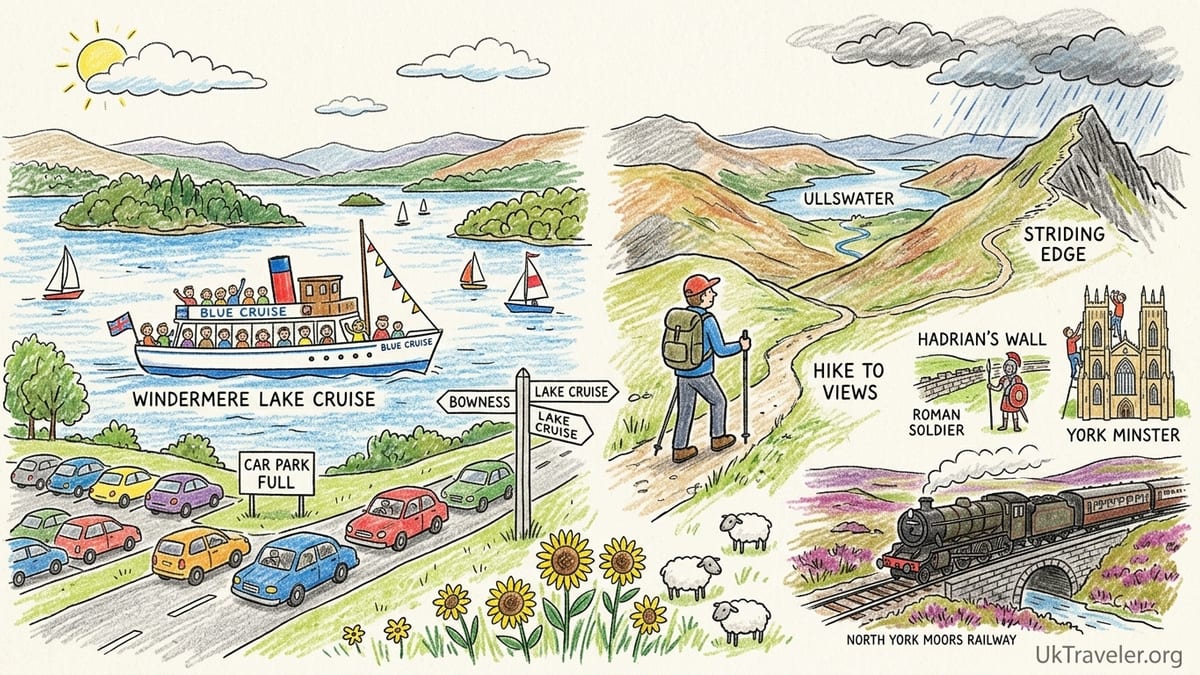
Drifting Across Windermere: When a Lake Cruise Beats the Road
My most repeatable Lake District experience was not a summit, but a slow circuit on Windermere out of Bowness on a clear May afternoon. I booked the Islands (Blue) circular cruise with Windermere Lake Cruises, paid just over 17 pounds for an adult ticket at the pier for the 45 minute loop, and ended up seeing more of the lake for less effort than on any drive. The boat traced a gentle arc around the wooded central islands, with live commentary pointing out Belle Isle, the older boat houses and the fells beyond. I spent much of it outside on the upper deck, light jacket zipped, nursing a takeaway coffee from the kiosk and watching small sailing dinghies tack back and forth in the breeze.
Practically, this is an easy half day. The cruise itself is under an hour, and even if you add time for boarding, wandering Bowness before and after, and a pub lunch, you are still back at your hotel by mid afternoon. On my departure the weather hovered around 18 degrees Celsius with bright sun and a scattering of cloud, and the lake was busy but not jammed, with seats available on both decks. Walking to the pier is level and boarding uses ramps, so the physical effort is minimal. I would absolutely travel for this again, especially as part of a first or second Lake District visit, because it gives a broad, low stress overview of Windermere that driving the congested east shore road simply cannot match.
I repeated Windermere by car on another trip and spent a grey August Saturday mostly in traffic along the lakeside, hunting for parking at Waterhead and turning down full pay-and-display car parks. The contrast was stark. From the water, the lake felt open and serene even with other boats around. From the road, it felt cramped and overused. If your time is short, put the money into a lake cruise rather than extra fuel and parking; it is one of the few paid experiences in the Lakes that I consider essential for most travelers.
The only caveat is weather. On a stormy November day with low cloud and steady rain, I once skipped a pre-booked afternoon crossing and absorbed the small loss rather than spend three quarters of an hour staring into fog from the covered deck. In shoulder seasons, I would book flexible or buy at the pier, then decide based on visibility. This is an experience I would pay for again in good conditions and decline entirely in poor ones.
Hiking Northern Fells: When the Views Earn the Effort
My most satisfying hike in northern England was not the famous Striding Edge on Helvellyn, but a quieter circuit above Ullswater that started and ended in the village of Glenridding. I set off mid morning in early June, following the well marked path up to Birkhouse Moor and then looping back on lower terraces, a round trip of roughly 4 to 5 hours including photography stops. I paid nothing beyond a village car park fee of around 8 pounds for the full day and a packed lunch bought at the local shop. The weather was ideal for walking: high cloud, dry ground, cool breeze, and clear visibility across Ullswater to Place Fell and beyond.
The effort, however, was real. The ascent from Glenridding is steady and sometimes steep, and it felt like solid moderate exercise even with trekking poles. I was sweating hard by the time I reached the ridge, but the payoff was a long, open view down the full length of Ullswater, with the lake bending gently in the distance and small steamers threading their way between piers. Crowding was limited to a few dozen other walkers over the day, mostly near junctions with the Helvellyn routes. For a traveler in average hill-walking shape, I would consider this a rewarding, repeatable day hike that justifies basing yourself in the Ullswater area rather than only around Windermere or Ambleside.
By contrast, my day on Helvellyn via Striding Edge in late October was an experience I am glad I had once and would not repeat in the same conditions. I set off from Patterdale under low grey cloud, hoping the forecast would clear. Instead, drizzle hardened into driven rain by the time I reached the start of the narrow scramble. The temperature felt close to freezing in the wind, rocks were slick, and visibility on the ridge dropped to tens of metres. Crowds still funneled onto the crest, some under-equipped in trainers and light hoodies, and several bottlenecks formed where people hesitated on wet down-climbs. Physically and mentally, this was strenuous. I paid only for parking, but ended the day soaked, cold, and without any real sense of the famous panorama.
Would I travel for Striding Edge again? Only in a dry high summer spell with an early start and a willingness to change plans if the forecast turned. The emotional cost of pushing through poor conditions on such an exposed route, while feeling pressure from the line of people behind, outweighed the satisfaction of ticking off a classic. If you enjoy hiking but have limited days, I would build a trip around one or two flexible mid grade fell days like the Ullswater circuit, and keep the marquee scrambles as optional extras that depend entirely on the weather you get.
Steam, Stone and Story: The North York Moors Railway and Whitby Coast
A day on the North Yorkshire Moors Railway between Pickering and Whitby felt like stepping into a living film set, and it is one of the northern experiences I would gladly repeat. I booked tickets online a week in advance, paying just under 50 pounds for an adult return in standard class on a regular service. The journey from Pickering to Whitby took around two hours each way, including pauses at intermediate stations like Goathland and Grosmont, where you can break your trip. I travelled in late September on a dry, crisp day with a mix of sun and cloud, the heather fading to browns and russets across the moor tops.
The physical effort was minimal. You walk stairs to bridges and platforms and maybe a short hill to reach village pubs, but the day is mostly about sitting by the window, feeling the rhythmic pull of the locomotive and watching the countryside roll past. Crowding depended on timing. My outward train was comfortably busy, with pairs and families filling most seats but no one standing. The return service closer to school finishing time was significantly fuller, and I would recommend reserving or arriving early if you want a specific seat type. Despite the cost, especially for a family, this is an experience I would structure a Yorkshire trip around, because it weaves scenery, heritage and practical transport into a single memorable day.
It is not a perfect value proposition. On another visit, I boarded during a special steam gala weekend, where an adult all day rover ticket cost over 40 pounds and individual journeys came in around 30 pounds even for short hops between villages. The atmosphere was electric, with multiple locomotives running, photographers clustered on embankments and a timetable full of movements, but trains were crowded to the doors and quiet appreciation of the landscape was almost impossible. By mid afternoon I was standing in a vestibule listening to lively conversations about boiler pressures and livery details rather than the moorland silence I had imagined. I enjoyed it once as a spectacle, but I would not travel specifically for a gala again unless I was already a dedicated railway enthusiast.
Linking the railway with the coast turned the day from a heritage novelty into a rounded North York Moors experience. In Whitby I paid a small fee, under 15 pounds, to visit the ruined abbey above the town and spent an hour walking the headland and the cobbled streets below. Fish and chips near the harbour cost around 12 pounds, and the town was crowded with domestic visitors even on a shoulder season weekday. It was busy to the point of feeling frenetic in the narrow lanes. If I repeated the experience, I would stay overnight inland in Pickering or Helmsley and treat Whitby as a few hours of contrast at the railway’s far end, not the main destination.
Roman Frontiers and Northumberland Castles: Weather-Dependent Wonders
Walking a short stretch of Hadrian’s Wall on a clear day in Northumberland is one of the most powerful historic experiences I have had anywhere in Britain, and I would plan another trip around it. I based myself near Once Brewed and spent a day combining a section of wall between Steel Rigg and Housesteads with time at Vindolanda and the Roman Army Museum. I bought the combined saver ticket on arrival at Vindolanda for a little over 20 pounds, which granted entry to both museum sites. Parking at Steel Rigg added around 5 pounds. The June weather was bright and breezy, with good visibility across the rolling farmland to the north.
The walk itself along the crags near Steel Rigg took about three hours at an unhurried pace, including stops to explore milecastles and photograph the wall snaking away over the ridges. Underfoot, the path is often stony and steep in short bursts, with repeated ups and downs that make it feel more demanding than the short distance suggests. I was breathing hard on several climbs, and anyone with limited mobility would likely find this section challenging. Visitor numbers were moderate, with clusters around car parks and near viewpoints but long stretches where I could see no one. The physical and emotional sense of standing at the former edge of the Roman world, with ravens circling above the stones, made the effort worthwhile enough that I would happily return for a longer linear section on another trip.
In contrast, my visit to Bamburgh Castle on a wet October day was more mixed. I paid just over 17 pounds for adult admission at the gate and around 4 pounds to park in the large car park at the base of the dunes. The castle interior was atmospheric, with richly decorated rooms and exhibits, but heavy rain and strong winds made exploring the battlements and beach below uncomfortable. The North Sea horizon vanished into grey, and the otherwise dramatic view of Lindisfarne and the Farne Islands was entirely obscured. Crowds were moderate inside as visitors sought shelter, which meant some rooms felt tight and slow to move through.
Would I travel for Bamburgh again? Yes, but only with a weather window that promised at least partial sun, because so much of the appeal lies in the interplay between castle, sea and sky. In good conditions on a separate visit, walking the long strand of beach southwards with the castle receding behind me was one of the easiest yet most satisfying coastal walks I have done in England, essentially free beyond parking and offering staggering views for minimal effort over an hour or two. In foul weather, the cost of admission for mainly indoor exploration felt less justified, and if I were planning a shoulder season route today, I would keep flexibility to swap Bamburgh with an inland day at Durham Cathedral or Beamish Museum if heavy rain set in along the coast.
Football, Music and Nightlife: Manchester and Newcastle After Dark
Even as someone who does not habitually watch football, touring Old Trafford in Manchester turned out to be surprisingly engaging and is something I would consider repeating with football fans in tow. I pre-booked a stadium and museum tour online for a late afternoon slot, paying about 33 pounds for an adult ticket. The guided portion lasted just over an hour, covering the stands, pitchside, players’ tunnel and dressing rooms, followed by time in the museum. It was a dry March evening, cool but not uncomfortable, and the group numbered roughly 20 people, large enough to feel communal but small enough that questions were answered without rushing.
Physical effort was limited to walking flights of stairs between concourses and seating tiers, manageable for most visitors who are comfortable with city sightseeing. As a non fan, the most interesting elements were the stories about rebuilding after the Munich air disaster and the explanations of how match days affect the surrounding part of Trafford. I left much more interested in the culture of northern football, and I would recommend the tour to anyone curious about the role clubs play in local identity, even if they are not invested in the league table. I would not, however, build my entire itinerary around this if I were not already passing through Greater Manchester; it is a valuable half day add-on rather than a primary draw.
The same trip’s attempt to sample Manchester’s city centre nightlife was more uneven. I spent an evening in the Northern Quarter, starting with an early dinner and then drifting between a couple of craft beer bars and a small live music venue. Entry for the gig cost around 15 pounds on the door, drinks were in the 6 to 8 pound range, and the crowd felt predominantly local and student-heavy. On a Friday in late April, the area was busy to the point of feeling hectic by 10pm, with some bars operating one-in-one-out queues. The music itself was excellent indie rock, but the combination of noise levels, packed spaces and the need to stand for several hours made the night physically tiring. I enjoyed experiencing Manchester’s reputation as a music city, but for my own travel style I would repeat this only with a specific band I cared about, rather than dropping in at random.
By comparison, a night in Newcastle upon Tyne built around a Premier League match at St James’ Park delivered a clearer sense of place. I bought a ticket on the club’s official resale platform a few weeks in advance for a little under 60 pounds and spent about three hours wrapped into the match experience from turnstiles to final whistle. The walk up through the city centre, with fans converging from all directions, felt like a civic event. It was a cold December evening but dry, and the stadium atmosphere was intense without feeling hostile. This is an experience I would gladly repeat and that I would genuinely plan travel around, particularly if you can combine it with a day exploring nearby Tynemouth or the Northumberland coast.
York After Dark and Under the Stones: Medieval History Immersed
In York, two experiences stood out for opposite reasons. The first, an evening climb of York Minster’s central tower combined with a daytime visit to the cathedral, is something I would schedule again on any Northern England trip that passed within reach. I booked admission and a tower slot through the Minster’s own ticketing system, paying just under 20 pounds for the combined ticket. The cathedral entry allows repeat visits within a year, so cost per visit falls if you are staying several days. My tower climb took place around sunset in September, with patchy cloud, light wind and clear views over the compact city and surrounding flatlands.
The climb itself involves more than 250 narrow stone steps and is a serious physical effort in a confined spiral staircase. Anyone uncomfortable with heights or tight spaces may find it challenging. At the top, however, the reward is a 360 degree panorama that puts York’s medieval street plan, walls and river loops into context in a way ground level walks cannot. Visitor numbers are capped per time slot, so it never felt overcrowded on the platform, and the staff allowed enough time to take photographs without constant shuffling. Inside the Minster earlier that day, crowds were moderate, with some tour groups but ample quiet corners. This combination of interior, tower and city at dusk is one of the most complete medieval experiences in northern England, and I would both travel and pay for it again.
The second experience, a popular ghost walk through the Shambles and surrounding lanes on a damp November night, sounded promising but ended up more mixed. I paid 12 pounds in cash at the start point for a ninety minute tour advertised as spine chilling and historically grounded. In reality, the group ballooned to over 40 people, stretching along the pavements and blocking narrow alleys. The guide’s theatrical delivery was energetic, but stories were heavy on invented dialogue and light on verifiable history, and I frequently struggled to hear at the back, competing with bar noise and other tour groups at the same stops. Light drizzle persisted throughout, leading to umbrellas and hoods that further obstructed sightlines.
Would I repeat a York ghost experience? Yes, but with tighter criteria: smaller group size, advance booking with a cap clearly stated, and ideally a company that leans into darker social history rather than pure jump scares. As it was, the value for time and money felt marginal, and I left feeling I would rather have spent the evening doing another circuit of the city walls at dusk, which are free to access and deliver moody views of the Minster and snickets without theatrical interruption.
Dark Skies and Quiet Roads: Stargazing and Scenic Drives Worth the Detour
My most transporting northern experience came not in a city or on a famous summit, but pulled into a lay-by between Helmsley and Stokesley in the North York Moors National Park on a cold, crystal clear February night. This area holds official International Dark Sky Reserve status, and on that particular evening the Milky Way was plainly visible arcing overhead. I had left Helmsley after an early dinner, driving for around thirty minutes on dry but icy minor roads to reach one of the higher stretches near Sutton Bank. There was no admission charge, just a couple of pounds paid earlier to park in town. The wind cut sharply at around freezing, and I wore full winter layers, hat and gloves.
The physical effort of stargazing itself is light, but the cold is intense, and you need to be willing to stand still outside for twenty or thirty minutes at a time. I used a simple tripod and mid range camera to take a few long exposure shots, but the real reward was simply switching off the headlights and letting my eyes adjust until the sky filled with stars that are invisible from cities. Traffic was extremely light at that hour, and I saw no other visitors in the lay by. This is an experience I would unquestionably repeat and one I would build winter or shoulder season plans around, provided I had flexibility to pick a clear night and was comfortable driving rural roads after dark.
Not every northern drive delivered that level of magic. A day tracing parts of the A592 Kirkstone Pass and surrounding minor roads in steady summer rain felt like a long succession of fogged windscreens, tight passing places and limited views. I burned through fuel and parking fees in Glenridding and Windermere and ended the day more fatigued than inspired. It convinced me that in bad weather I would rather use buses and occasional taxis for valley connections and save car days for genuinely scenic weather windows, or swap them outright for another rail and walk combo.
Another drive that justified itself was the coastal route between Tynemouth and Craster on a clear late spring day, combining short walks at Whitley Bay, Amble and near Dunstanburgh Castle. Parking at each stop cost between 3 and 5 pounds, and entry to Dunstanburgh’s ruins through the coastal path system added under 10 pounds. The day was structured as a series of two to three kilometre strolls rather than a single long hike, making it accessible for mixed fitness groups. Light sea breezes and high clouds kept temperatures comfortable. This is a loop I would happily repeat because it turns a simple drive into a chain of bite sized coastal experiences that collectively feel like more than the sum of their parts.
The Takeaway
After several extended swings through northern England, the experiences I would travel for again have a few elements in common. They combine strong sense of place with either manageable physical effort or honest strenuousness that is repaid in full by what you see and feel. They hold up even when you factor in real world costs and crowding, and they retain flexibility to adjust around the region’s famously changeable weather.
If you are shaping a first or second trip, I would build the core around three pillars: at least one day that fuses landscape and light effort, such as a Windermere or Ullswater cruise paired with a valley walk; one day that digs deep into history, such as Hadrian’s Wall plus Vindolanda or York Minster including the tower; and one evening that captures northern identity, whether through a match at St James’ Park, a carefully chosen Manchester gig, or a dark sky session in the North York Moors or Northumberland. Around those pillars, add optional big effort hikes and specialised heritage experiences like steam galas only if forecast, budget and personal interests align.
Some marquee activities turned out to be one time achievements for me: Helvellyn in cloud and rain, Whitby and Bamburgh in driving weather, and overcrowded ghost walks that obscured the real city. They were not mistakes so much as reminders that northern England rewards patience and selectivity. The more you match each experience to the right conditions and expectations, the more likely you are to leave wanting to come back, not because you missed things, but because the things you chose were worth doing twice.
FAQ
Q1. Is it worth paying for a Windermere lake cruise if I have a rental car?
Yes, in my experience the lake cruise from Bowness gave a calmer and more scenic overview of Windermere than driving the crowded shore roads, and I would pay for it again in good weather.
Q2. Which single hike in the Lake District would you repeat if you only had one day?
I would repeat a moderate circuit above Ullswater from Glenridding, which took around 4 to 5 hours and offered wide views without the exposure and crowds of Striding Edge.
Q3. Is the North Yorkshire Moors Railway worth the ticket price for non train enthusiasts?
Yes, as long as you choose a regular timetable day rather than a gala, the combination of moorland scenery, country stations and the option to connect with Whitby makes it good value for a full day out.
Q4. How physically demanding is walking Hadrian’s Wall near Steel Rigg?
The route involves repeated short, steep climbs and descents on stony paths, so it feels more demanding than the distance suggests and is best for visitors comfortable with hilly half day walks.
Q5. Would you plan a trip around a football match or just a stadium tour?
I would plan around a live match at St James’ Park in Newcastle because the citywide build up is part of the experience, while I see the Old Trafford tour as a worthwhile add on if you are already in Manchester.
Q6. Is York Minster’s tower climb worth the extra cost and effort?
Yes, if you are comfortable with narrow staircases and heights, the sunset view over York’s walls and rooftops makes the combined cathedral and tower ticket one of the region’s standout experiences.
Q7. Are York ghost walks a must do evening activity?
Not necessarily; my large group tour felt overcrowded and light on real history, so I would only recommend a ghost walk if you can book a smaller, more historically focused option in advance.
Q8. How realistic is it to see dark skies without special equipment in the North York Moors?
On a clear, moonless night you can see an impressive number of stars and even the Milky Way with the naked eye from higher lay bys and viewpoints, provided you dress warmly and give your eyes time to adjust.
Q9. Is Bamburgh Castle still worth visiting in bad weather?
The interior remains interesting, but because the sea views and beach walks are a major part of the experience, I would prioritise Bamburgh for days with at least some clear spells.
Q10. If I only have one night out in the North, should I choose Manchester or Newcastle?
If you can align with a football match, I would choose Newcastle for the compact city centre and stadium atmosphere; for live music variety and bar hopping, central Manchester has the broader choice.