


The chalky slopes of Sussex and the gentle hills of Kent have quietly become one of Europe’s most interesting cool-climate wine regions. For travellers, that translates into an increasingly sophisticated choice of vineyard tours, cellar-door tastings, long lunches and even vineyard sleepovers within easy reach of London. This guide focuses on Sussex and Kent specifically, comparing headline estates such as Rathfinny and Chapel Down with curated multi-vineyard tours, and showing you how to solve practical issues like transport, designated drivers and where to stay.
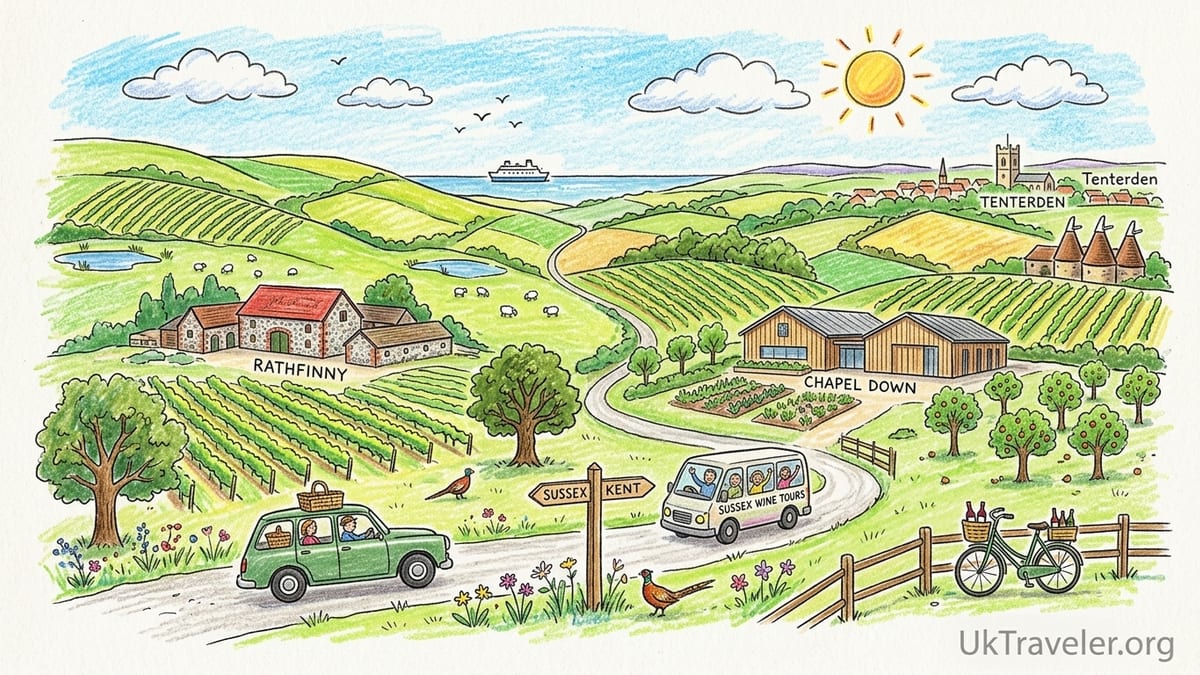
Why Sussex and Kent Are England’s Vineyard Heartland
Sussex and Kent sit on the same band of chalk and limestone that runs through Champagne, which helps explain why so many of England’s leading sparkling wine estates have clustered here. Vineyards roll across south-facing slopes of the South Downs in Sussex and the so-called Garden of England in Kent, catching long summer daylight and cool sea breezes that are ideal for slow-ripening grapes. The result is a concentration of wineries and visitor experiences that you will not find elsewhere in the country.
The regional tourism boards for the South East actively market this corner of England as vineyard country, and with good reason. Sussex alone now has well over a hundred vineyards open or in development, and Kent adds a growing roster of estates ranging from boutique family producers to Chapel Down, one of England’s largest wine brands. For visitors, that density means you can realistically plan a long weekend that takes in two or three contrasting estates without spending all day in a car.
Crucially, the infrastructure for wine tourism has caught up. Rathfinny Wine Estate in East Sussex exemplifies this shift, with on-site accommodation, dining and a programme of guided tours and tastings that operate year-round. In Kent, Chapel Down outside Tenterden has invested in a modern visitor centre, deli, restaurant and a calendar of events that include wine-and-dine experiences and seasonal festivals. Travellers no longer have to choose between serious wine and a polished day out: you can now have both in one itinerary.
When you are weighing up tour options, it helps to understand that you are choosing between two broad models. Some estates, like Rathfinny and Chapel Down, are destinations in their own right where you may happily spend the whole day. Others work best as part of a circuit, which is where organised multi-vineyard tours and private drivers come into their own. The sections below break down how the different types of experience compare, with concrete examples from Sussex and Kent to help you decide what to book.
Flagship Estate Tours: Rathfinny in Sussex
Rathfinny Wine Estate, just outside the village of Alfriston in East Sussex, is often the first name recommended when travellers ask for a flagship Sussex vineyard. The estate spreads across a sweep of the South Downs, with long views down the Cuckmere Valley towards the sea. Its Summer Tour & Tasting is the core experience: a 1 hour 45 minute guided visit that typically runs several times a day between May and September and takes guests through the vines, into the winery and finishing with a tasting of Rathfinny’s Sussex sparkling wines.
For winter 2026/27, Rathfinny’s vineyard tour is priced at around £34 per person, which includes the guided walk and tutored tasting. That figure is a useful benchmark when comparing other estates in the region. At Rathfinny, groups are usually small enough for questions, and guides focus on explaining why the chalk soils and coastal climate matter, along with the decisions that go into traditional-method sparkling wine. The tone is informative but relaxed, so you do not need prior wine knowledge to enjoy it.
One of Rathfinny’s strengths is the way it bundles other experiences around the basic tour. There is a free self-guided vineyard trail that visitors can walk with a printed map, plus a Cellar Door shop where short drop-in tastings are available. Dining is another highlight: the Tasting Room restaurant offers refined, seasonal dishes paired with estate wines, while the more informal Flint Barns Dining Room serves hearty, produce-led menus. Many travellers structure their day around a late-morning tour followed by a long lunch with wine flights.
Accommodation makes Rathfinny particularly attractive if you are worried about designated drivers. The Flint Barns provide ten or so comfortable rooms in converted farm buildings right in the heart of the estate, along with a self-catering cottage for longer stays. This means you can park the car, join an afternoon tour, enjoy dinner with a bottle of sparkling and simply walk back to your room. For couples or small groups, the convenience of staying on-site often justifies the higher per-night rate compared with a village B&B.
Chapel Down and the Kent Wine & Dine Experience
On the Kent side of the border, Chapel Down near Tenterden has evolved into a full-scale visitor destination. The winery lies just outside the market town, surrounded by rolling vineyards and herb gardens. Standard tours combine a guided walk through the vines and winery with a tutored tasting in one of the modern tasting spaces. These core tours typically run several times a day in peak season and last around two hours, so they slot easily into a South East road trip or a day out from London.
Chapel Down has built a reputation for elaborate food-and-wine experiences. A popular option is a half-day package that includes a guided tour, a tasting of several still and sparkling wines, followed by a three-course lunch in the on-site Swan restaurant. Sample experiences described by visitors typically feature five wines in the tasting and two glasses of still wine with lunch, giving a rounded sense of the range from crisp Bacchus to richer barrel-aged styles. Prices for these packages usually sit noticeably higher than a simple tour, but you are effectively covering both an in-depth tasting and a restaurant meal in one booking.
Unlike some smaller vineyards, Chapel Down is geared to handle a steady flow of visitors. There is a dedicated cellar-door shop offering wine flights, spirits and local produce, and in high season you will often find vineyard walks, seasonal dinners or even a larger event such as a festival weekend on the calendar. That makes it a strong choice for travellers who prefer a more social, buzzy environment rather than a quiet, contemplative tasting. Families also appreciate that non-drinkers have gardens to wander in and soft drinks to hand.
Accessibility is another practical factor in Chapel Down’s favour. Many of the standard tours and tasting spaces are step-free and suitable for wheelchairs or mobility scooters, something that is not always true of hillside vineyards. Parking is straightforward, and the estate is within a short taxi ride of Tenterden. For visitors using public transport, the usual pattern is to take a train to Headcorn or Ashford International, then a pre-booked taxi to the winery. That extra leg adds cost, but it also removes the need for a designated driver if you plan to enjoy more than a glass or two.
Multi‑Vineyard Tours and Private Transport
While flagship estates like Rathfinny and Chapel Down can easily fill a day, there is a strong case for joining a multi-vineyard tour if your goal is to compare different producers and wine styles in a single outing. In Sussex, companies such as Sussex Wine Tours, Great British Wine Tours and other regional specialists offer day-long itineraries that typically include visits to two or three contrasting estates, guided tastings and a relaxed lunch, all bundled with transport from a central pick-up point.
A typical Sussex group tour might start with a morning pick-up in Brighton, followed by a drive to a sparkling-focused estate in the South Downs, a guided vineyard walk and tasting, then lunch either on-site or at a nearby country pub, and a second visit in the afternoon to a smaller, more experimental producer. Prices vary, but you can often expect to pay a per-person rate that includes tasting fees and lunch, with discounts for group bookings. For travellers without a car, these tours are often the most efficient way to see multiple vineyards without worrying about rural bus timetables.
In Kent, similar operators and private drivers link estates around Tenterden, Ashford and the Romney Marsh. A tailor-made itinerary might combine Chapel Down with a smaller family-run vineyard nearby, allowing you to contrast the slick, polished visitor centre at a major producer with the more intimate experience of tasting in a rustic barn. Some London-based private tour companies even offer hotel pick-ups in the capital, taking guests directly to Kent and back in a day, which can work well for short city breaks.
When comparing multi-vineyard tours, look closely at the details. Check how many wines are included at each stop, whether there is a proper guided component or just a self-guided tasting flight, and what is covered at lunch. If a tour advertises three estates in a single day, be realistic about how rushed that might feel once you factor in driving time and rest stops. Two well-chosen vineyards with unhurried tastings usually provide a more satisfying experience than a frantic checklist of names.
Guided Walks, Tastings and Lunch: How to Match a Tour to Your Style
Every vineyard visit combines some mix of walking, talking, tasting and eating, but the proportions vary a great deal between estates. At Rathfinny, the focus during summer tours is very much on being out among the vines, learning about pruning, canopy management and the local landscape before heading inside for a structured tasting. The route can include uneven ground and gentle inclines, so comfortable footwear is essential. In winter, there may be a greater emphasis on the winery, bottling line and cellar, making these tours appealing for visitors who are more interested in winemaking than countryside views.
Chapel Down, by contrast, often leans into a more balanced split between vineyard, winery and structured tasting, with a strong emphasis on demystifying English wine for first-time visitors. Guides talk through grape varieties such as Bacchus and Chardonnay, explain the difference between still and traditional-method sparkling wines, and point out how the Kentish climate influences picking dates and wine style. If you are new to wine tourism and want a clear, friendly introduction, this kind of straightforward explanatory tour works very well.
Lunch can be a simple farm-style platter or a full restaurant experience depending on where you book. At Chapel Down’s Swan restaurant, menus often feature local Kentish produce and dishes designed to pair with estate wines, from fresh seafood to slow-cooked meats. At Rathfinny, the Tasting Room’s refined plates and Flint Barns’ more rustic cooking reflect the South Downs’ larder, with vegetables and game from surrounding farms. Many visitors plan their timing so that a tour ends just before lunch, avoiding awkward gaps in the day.
If you are planning a multi-vineyard day, moderation and pacing matter. It can be tempting to accept every top-up during a tasting, but many experienced wine travellers find that spitting some wines allows them to stay fresh for afternoon visits and to remember more of what they tasted. Asking guides if spittoons are available is entirely normal in this context. Combining a more in-depth guided tour in the morning with a quicker flight-style tasting at a second estate later in the day is often the most enjoyable balance.
Solving the Designated-Driver Problem
One of the biggest practical challenges in Sussex and Kent is transport between vineyards. Rural roads are often narrow and poorly lit, train lines do not always run close to the main estates, and drink-driving laws are rightly strict. If one person in your group has to drive, their ability to enjoy tastings will be limited, so it pays to build a transport strategy into your trip planning from the outset.
The simplest solution for many visitors is to base themselves in a nearby town such as Brighton, Lewes or Eastbourne for Sussex, or Tenterden, Ashford or Rye for Kent, and then rely on pre-booked taxis for individual vineyard visits. For instance, a common pattern is to take a train from London to Brighton or Lewes, then a taxi to Rathfinny or another South Downs estate, returning the same way. This approach keeps journey times manageable and leaves everyone in your party free to participate fully in tastings.
For those wanting to visit multiple vineyards in a single day without drawing straws for a designated driver, organised tours are usually the safest option. Sussex-based outfits like Sussex Wine Tours and other regional operators offer minibus tours with a driver-guide, while some Kent companies run similar services out of Canterbury or Ashford. These tours typically pick up in a central location and handle all navigation, parking and timing, which is particularly reassuring for overseas visitors unfamiliar with country lanes and left-hand driving.
Travellers with higher budgets or celebrating special occasions sometimes opt for a private driver or chauffeur service, especially if they plan to buy wine and would rather not juggle cases on public transport. Private drivers can also wait on-site while you enjoy lunch or a tasting, then move you on to the next stop. When comparing quotes, ask whether waiting time and detours are included, and confirm that the company is familiar with the rural access roads around specific estates such as Rathfinny or Chapel Down.
Staying Among the Vines: Vineyard Accommodation and Nearby Bases
One of the pleasures of the Sussex and Kent wine regions is the chance to stay either on a vineyard or very close to one. At Rathfinny, the Flint Barns occupy a cluster of restored agricultural buildings in the middle of the estate, with simple but stylish rooms that open directly onto vine views and surrounding downland. Guests can wake up to mist over the rows, take a self-guided walk before breakfast and wander to the Cellar Door or Tasting Room without ever getting into a car.
While Chapel Down does not currently offer full on-site hotel-style accommodation at the winery itself, visitors often base themselves in and around Tenterden, where a mix of inns, guesthouses and self-catering cottages put you a short taxi ride from the estate. This works particularly well for longer stays that mix wine visits with other Kent attractions such as gardens, castles and coastal walks. When booking, look for accommodation that advertises familiarity with wine tourists, as they are more likely to have relationships with local taxi firms and to understand your timing needs after tastings or dinners.
Beyond the headline estates, several smaller vineyards in both counties now offer rooms, shepherd’s huts or glamping pods among the vines. These tend to suit travellers who value atmosphere and immersion over hotel-like service, and they can be excellent bases for walking or cycling holidays that take in multiple cellar doors. If you choose this route, factor in the limited availability and higher weekend demand during harvest and peak summer.
For many visitors, a hybrid model works best. You might spend one night actually on a vineyard, such as at Rathfinny’s Flint Barns, followed by a night or two in a nearby town with better dining variety and transport connections. This approach gives you the romance of sleeping among the vines without locking you into one location for your entire stay. It also allows you to sample both estate restaurants and independent local spots over the course of a long weekend.
How to Choose and Book the Right Sussex or Kent Wine Tour
With so many options on the table, narrowing down your Sussex and Kent wine plans can feel daunting. A practical first step is to decide whether your priority is a deep dive into one or two flagship estates, or a broader overview of the region via a multi-vineyard tour. If you are particularly drawn to Sussex sparkling wine and the South Downs scenery, anchoring your trip around Rathfinny makes sense. If you are excited by the idea of combining wine with a restaurant experience and a lively visitor centre, Chapel Down may be the better focal point.
Budget also plays a role. Entry-level guided tours at major estates typically start in the £30 to £40 per person range, with Rathfinny’s winter 2026/27 vineyard tour sitting at around £34 per person. Packages that bundle tastings with multi-course lunches or extra wines can rise significantly from there. When comparing prices, always check what is included: number of wines in the tasting, whether food is part of the deal, and any service charges. For multi-vineyard tours, pay attention to whether tasting fees and lunch are fully included or payable on the day.
Booking early is advisable, particularly for weekend dates between late spring and early autumn. Popular time slots at estates like Rathfinny and Chapel Down can fill weeks in advance, especially when special events or seasonal menus are running. If you are visiting from overseas and have limited flexibility, it is wise to build confirmed tour times into your travel plans rather than hoping to drop in. At the same time, keep at least one unstructured afternoon in your itinerary for spontaneous tastings or a second glass of a wine you particularly enjoyed.
Finally, consider practicalities like weather and footwear. The English climate can be unpredictable, and vineyard paths in both Sussex and Kent are often grass or chalk tracks that become slippery after rain. Waterproof shoes, a light jacket and layers will make your tour more comfortable in all but the worst conditions. Many estates run tours in all but extreme weather, but do check cancellation policies in case storms or heatwaves force changes.
The Takeaway
Sussex and Kent now rank among Europe’s most dynamic cool-climate wine destinations, and they are close enough to London to be folded into a weekend break. Whether you opt for a deep, immersive day at Rathfinny in the South Downs, a wine-and-dine experience at Chapel Down in Kent, or a curated multi-vineyard tour that strings several estates together, the key is to plan with both pleasure and practicality in mind.
Guided vineyard walks, structured tastings and long lunches are central to the appeal of these regions, but success often hinges on the details: how you will get there, who will drive, where you will stay and how much time you allow at each stop. On-site accommodation at estates such as Rathfinny’s Flint Barns, along with regional tour operators and reliable taxis, can solve the designated-driver dilemma and let everyone in your group participate fully.
If you treat the South East as vineyard country in its own right rather than an afterthought to a London city break, you will be rewarded with serious wines, big skies and a surprisingly sophisticated hospitality scene. Start with one or two anchor estates, decide how many tastings you can realistically enjoy in a day, and book tours that match your pace. From there, Sussex chalk slopes and Kentish orchards will do the rest.
FAQ
Q1. Can I visit Rathfinny and Chapel Down in the same day?
It is technically possible, but not ideal. The drive between Alfriston in East Sussex and Tenterden in Kent takes around two hours once you factor in rural roads, and adding a tour and tasting at each makes for a rushed day. Most travellers find it more enjoyable to focus on one county per day or to spread the estates over a long weekend.
Q2. How far in advance should I book vineyard tours in Sussex and Kent?
For peak season weekends from late spring to early autumn, aim to book at least three to four weeks ahead, especially for popular time slots and packages that include lunch. Midweek and off-season dates can often be secured closer to the time, but it is still wise to reserve once your travel dates are fixed.
Q3. Are Sussex and Kent vineyard tours suitable for beginners to wine?
Yes. Tours at estates like Rathfinny and Chapel Down are designed for mixed groups, and guides usually start with basics such as grape varieties and how sparkling wine is made. You do not need prior knowledge to enjoy them, and questions are encouraged throughout.
Q4. What should I wear for a vineyard tour in the South East of England?
Comfortable, closed-toe shoes with good grip are essential, as you will often walk on grass, chalk paths and uneven ground. Dress in layers suitable for the changeable English weather and bring a light waterproof jacket if rain is forecast. There is no need for formal clothing unless you are planning a special-occasion lunch.
Q5. Can I reach Sussex and Kent vineyards without a car?
In many cases, yes. A common pattern is to take a train from London or another city to a nearby town such as Brighton, Lewes, Ashford or Headcorn, then continue by pre-booked taxi to the vineyard. Multi-vineyard tour companies also offer minibus transport from central pick-up points, which is ideal for those who prefer not to drive.
Q6. How much should I budget for a day of wine touring?
As a rough guide, allow around £30 to £40 per person for a standard guided tour and tasting at a major estate, more if you choose a package that includes a multi-course lunch. Add transport costs, which may range from local taxis to a share of an organised tour fee, and extra for any bottles you decide to buy and take home.
Q7. Are children allowed on Sussex and Kent vineyard tours?
Policies vary by estate, but many larger vineyards allow children on guided tours as long as they are supervised, although tastings are restricted to adults over the legal drinking age. It is best to check individual vineyard guidelines in advance, particularly regarding pushchairs on vineyard paths and facilities such as baby changing.
Q8. What happens if the weather is bad on the day of my tour?
Most estates operate tours in light rain and cool conditions, adjusting the balance between outdoor vineyard walks and indoor winery visits as needed. In cases of severe weather that makes outdoor access unsafe or unpleasant, vineyards may reschedule or adapt the experience. Check the cancellation and rebooking policy when you reserve.
Q9. Can I buy wine at cellar doors and ship it home?
Almost all vineyards have a cellar-door shop where you can buy bottles after your tasting. Some offer shipping within the UK or to selected international destinations, usually for an additional fee. If you are travelling by train or plane, ask staff about packaging and weight restrictions before purchasing large quantities.
Q10. Do vineyards in Sussex and Kent cater for dietary requirements at lunches?
Most estates with restaurants or hosted lunches, including high-profile names such as Chapel Down and Rathfinny, can cater for common dietary needs such as vegetarian, vegan and gluten-free meals with advance notice. Make sure to mention your requirements when booking and reconfirm on arrival so the kitchen can plan appropriately.