


Few regions in Britain lend themselves to slow travel quite like South West England. From Atlantic-swept Cornish headlands to the honeyed stone of Bath’s Georgian crescents, the area is now a fully fledged spa destination in its own right, with VisitEngland explicitly highlighting spa hotels as part of the South West product. Yet search results are crowded with everything from serious destination spas to seaside hotels that simply squeeze a massage table into a basement room. This guide cuts through the noise, comparing some of the best spa hotels in Cornwall, Devon, Dorset and Bath/Somerset, and a handful of country retreats, to help you choose the right kind of escape for how you actually want to unwind.
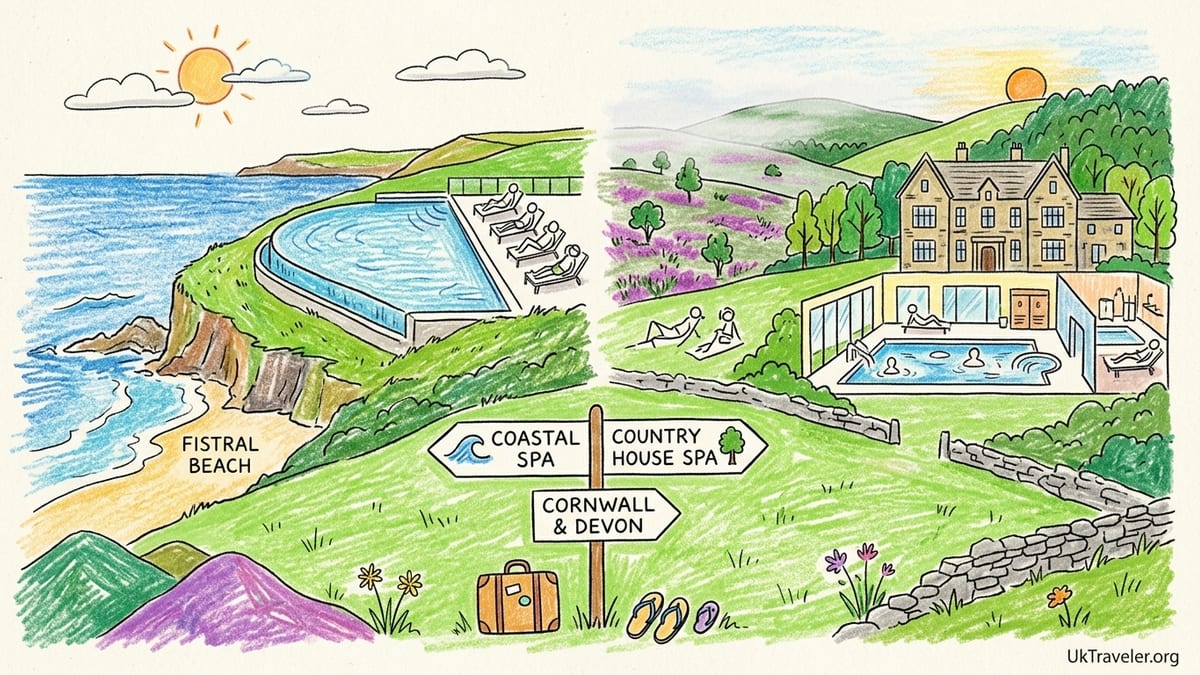
How to Read the South West Spa Scene
“Spa hotel” is one of the most elastic labels in British hospitality. In South West England it can mean anything from a purpose-built wellness complex with hydrotherapy pools, thermal suites and resident therapists, to a traditional seaside hotel where the entire spa offer is a single treatment room off the gym. When VisitEngland talks about spa hotels as a regional strength, the focus is on the former: places where wellness is a core part of the stay, not an afterthought attached to a conference venue or family resort.
For travellers, the practical difference is huge. A destination spa, such as a serious country house retreat on Dartmoor or near Bath, typically offers a multi-pool complex, several types of heat experience, dedicated relaxation zones and often adults-only times or spaces. By contrast, many three and four star seaside hotels in Cornwall or Dorset advertise a “spa” that in reality is a basic indoor pool with an adjacent sauna, or a couple of treatment rooms you must book well ahead. Prices can look similar at first glance but the depth of experience is not.
As you weigh up options across Cornwall, Devon, Dorset and Somerset, look carefully at seven factors: the quality and size of the pools, the presence of a genuine thermal suite, sea views or countryside outlook, adults-only or child-free zones, restaurant standard, couples’ suitability and how feasible it is to arrive without a car. In this comparison we prioritise hotels where at least a full afternoon of spa time feels worthwhile, and flag where a place is better treated as a comfortable base with the option of one or two treatments rather than a spa-focused escape.
Price-wise, expect entry-level double rooms with spa access in high season to start from roughly £220 to £300 per night in strong four star hotels, rising to £400 and above in five star country estates and design-led coastal properties. Outside school holidays and midweek, you can often find dinner-bed-breakfast packages or “spa stay” bundles for noticeably less; this is when the South West offers some of the best value luxury in the UK.
Cornwall: Clifftop Pools and Adults-Only Escapes
For many travellers, the archetypal South West spa break involves a Cornish headland and the sound of waves from a heated pool. On the north coast, several hotels have invested heavily in their wellness offering, blurring the line between beach resort and destination spa. Properties on and around Newquay’s Fistral and Watergate Bay, for instance, combine direct beach access with modern spa complexes and ocean-facing relaxation areas, which makes them popular with couples seeking a balance of surf and saunas.
One of the clearest examples of a purposefully designed coastal retreat is Fistral Beach Hotel and Spa. Marketed as adults-only and explicitly geared towards couples, it offers an indoor pool, sauna, steam room and jacuzzi plus multiple treatment rooms, all set behind floor-to-ceiling windows that frame the Atlantic. Many rooms have freestanding bathtubs looking out to sea and balconies where you can hear the surf at night. Typical shoulder-season double rates with breakfast often run in the £220 to £280 range, with packages including a 60-minute spa treatment for each guest lifting the total into the £350 bracket, which is competitive for an adult-only product in such a location.
Not all Cornish “spa hotels” are this comprehensive. Some long-established seaside properties list a small pool and perhaps one therapist as their spa for marketing purposes, and you may find the experience underwhelming if your benchmark is a dedicated thermal suite. When comparing options, look for details such as hydrotherapy features, a variety of heat experiences and designated quiet zones. If a listing simply mentions “treatments available” without elaborating, assume it is closer to a hotel with treatment rooms than a full spa resort. In these cases, your best bet is to treat the stay as a classic coastal break first and foremost, using the spa menu for a single massage rather than planning your whole itinerary around it.
Devon: Destination Spas and Wild Coast Wellness
Devon offers some of the region’s most complete destination spas, many of them in rural settings where woodland or moorland views replace sea horizons. Country hotels around Dartmoor, such as historic manor houses that now operate as five star spa retreats, typically combine large indoor pools with thermal suites, outdoor hot tubs and extensive treatment menus. They appeal to travellers who want wellness woven through the whole stay, from pre-breakfast swims to evening saunas after a day on the moor.
Along the coast, newer openings in South and North Devon position themselves very much as wellness-led resorts. On the North Devon coast, for example, Saunton Sands Hotel has invested in a modern “Source Spa” concept, complete with a thermal suite inspired by the marine environment, hydrotherapy pool and sea-facing relaxation spaces. Facilities like these go well beyond the token pool found in many older resorts and justify spending a full day on site rather than treating the hotel simply as a base for beach walks. Expect high-season packages that bundle accommodation, spa access and some dining to sit in the £280 to £350 per night range for two.
Devon is also strong on spa hotels that double as romantic escapes. Country properties within a taxi ride of Exeter or Plymouth rail stations often pitch themselves to couples with candlelit pools, couples’ treatment rooms and fine-dining restaurants that carry regional awards. For guests arriving car-free from London or the Midlands, being able to connect via mainline rail and then arrange a 20 to 40 minute taxi to the estate can make logistics far less daunting than self-driving narrow rural lanes after dark.
At the other end of the spectrum, some Devon hotels near busy seaside towns list a “spa” that is limited to an indoor pool shared with families and a single sauna cabin. These can still work for multi-generational trips where the main draw is the beach or nearby restaurants, but they are not truly spa destinations. As a rule of thumb, if a property markets golf, weddings and conferences more heavily than wellness, the spa is likely to be supplementary rather than central.
Dorset: Boutique Boltholes and Modest Seaside Spas
Dorset’s spa offering is more boutique than blockbuster, with a scattering of country house hotels and a growing clutch of design-led properties along the Jurassic Coast. While the county cannot yet match the scale of some Cornish or Devon resorts, it does offer some characterful small spas, including garden hideaways and compact thermal suites that work well for one- or two-night breaks combined with walks on the South West Coast Path.
In the east of the county, near Christchurch and Bournemouth, a number of four star hotels combine harbour or sea views with indoor pools, basic thermal facilities and treatment rooms. These are attractive if you prioritise location and price over depth of spa offering. For example, a harbourside hotel might offer an indoor pool, a simple sauna and a couple of therapy rooms but no true hydrotherapy circuit; rates might hover around £180 to £230 per night in shoulder season. For many guests that is sufficient for an evening swim and a massage after a day exploring cliffs and beaches, but it is a different proposition from a full wellness resort where your entire itinerary can revolve around heat, water and relaxation.
Where Dorset excels is in intimate, personality-rich hotels that integrate the spa into a wider sense of place. A number of small properties in market towns and villages hide their spa facilities in walled gardens or converted outbuildings, pairing them with strong, locally focused restaurants and good access to walking country. Here, the spa is less about extensive facilities and more about atmosphere: perhaps a hot tub under fruit trees, a small sauna and a couple of cosy treatment rooms. For relaxed couples’ weekends and off-season escapes, these can feel as restorative as more elaborate complexes, provided you arrive with realistic expectations.
If your priority is a wide choice of thermal experiences and large pools, however, Dorset may be better approached as part of a wider South West itinerary. You might, for example, pair a two-night Dorset coastal stay with simpler facilities with three nights in a Somerset or Devon destination spa to get the best of both worlds.
Bath and Somerset: Historic Waters and Luxe Country Estates
Bath is arguably the spiritual home of British spa culture, with natural hot springs used since Roman times and a compact city centre built around wellness and leisure. Modern visitors can still bathe in mineral-rich waters at contemporary thermal complexes in the city, including a major day spa that offers both rooftop and indoor pools fed by the springs, plus steam rooms and relaxation areas. Several upmarket hotels in Bath position themselves around privileged or easy access to these waters, either by offering private spa facilities drawing on the springs or by packaging entry with overnight stays.
Two distinct models dominate in and around Bath. In the city itself, stylish townhouses and five star hotels focus on smaller but luxurious spa facilities combined with high-end dining and walkable sightseeing. The Gainsborough Bath Spa, for example, is often cited by frequent visitors as one of the city’s most indulgent stays because of its elegant spa complex using natural thermal water, plush relaxation spaces and central location. Room-only rates here for a midweek night can easily reach £300 to £400 in peak periods, reflecting both the spa and the city’s popularity with international travellers.
Beyond Bath, Somerset’s countryside has become a hotbed for high-end spa-led retreats. Country estates with extensive gardens and kitchen gardens, such as the much-lauded Newt in Somerset, fold wellness into a broader “English country living” experience, with indoor-outdoor pools, saunas, treatment barns and strong farm-to-table restaurants. These properties tend to sit firmly at the top of the price spectrum, with packages often starting around the mid-£400s per night for two including breakfast and garden access, but they deliver a holistic sense of retreat that goes far beyond a standard hotel spa.
For car-free travellers, Bath and Somerset are among the easiest South West spa destinations. Bath Spa rail station is on a mainline from London and the South West, and several upscale hotels are within walking distance or a short taxi ride. From Bath, buses or pre-booked taxis can take you into nearby Somerset for country retreats, though reaching the most rural estates still usually requires private transfers. If you want a no-car stay, combining two nights at a central Bath hotel with day access to thermal waters and a further two nights at a semi-rural property reachable by taxi is often the most seamless approach.
Country House Retreats vs Seaside Hotels: What You Really Get
Across Cornwall, Devon, Dorset and Somerset, one of the most important decisions is whether to opt for a countryside retreat or a coastal hotel. Country house spas, often set in parkland or on the edge of national parks such as Dartmoor or Exmoor, generally provide the most substantial thermal facilities: think long indoor pools, hydrotherapy jets, multiple saunas and steam rooms, experience showers and quiet relaxation lounges. They also tend to be more adult-focused, sometimes explicitly excluding children from key parts of the spa or limiting them to certain hours.
Seaside hotels, by contrast, trade on direct access to beaches and sea views. Even when their spa facilities are less extensive, waking up to Atlantic or Channel vistas and being able to walk a few minutes to the sand is a major part of the appeal. Hotels like Fistral Beach Hotel in Cornwall or harbour-front properties in Devon and Dorset fall into this category: their pools and thermal spaces may be smaller than those of inland destinations, but the combination of sea air, surfing lessons, coastal walks and a post-activity massage can feel just as restorative as a day spent rotating between saunas.
For couples, the key question is privacy and atmosphere. Adults-only hotels or those with adults-only spa zones are often worth the premium if you are seeking a romantic break; there is a tangible difference between soaking in an outdoor hot tub with only the sound of waves and doing so while children jump in and out of a nearby family pool. Many coastal resorts split their offer, with a main pool for all guests and smaller, quieter hydrotherapy or relaxation areas reserved for adults, so read facility descriptions carefully rather than relying on star ratings alone.
It is also useful to consider how each type of property structures its day. Destination spas may include wellness talks, yoga classes and scheduled hydrotherapy sessions, encouraging you to stay on site. Seaside hotels lean towards flexible spa opening times that fit around beach activities and sightseeing trips. If you prefer to dip in and out of the spa rather than commit to a fixed timetable, a coastal hotel with a small but well-equipped spa can be the better fit.
Practicalities: Pools, Dining, Couples’ Perks and Car-Free Access
When scanning hotel descriptions, look first at the pool. A serious spa in this region usually offers at least one substantial indoor pool with space for laps, kept comfortably warm but not overheated, alongside whirlpools or hydrotherapy jets. Some also have outdoor or rooftop pools, particularly in Bath and along the coasts of Devon and Cornwall. In contrast, many mid-market hotels list a “plunge pool” or small indoor pool that can feel crowded during busy periods. If unhurried swimming and lingering on a lounger are central to your vision of a spa break, choose a property where the spa is clearly larger than the hotel’s function space.
Restaurants are another key differentiator. Country estates in Somerset and Devon often run destination restaurants with strong local sourcing, tasting menus and extensive wine lists, which can make staying on site for the entire evening a pleasure rather than a necessity. Coastal hotels can be more mixed: some have excellent kitchens, while others rely on simple brasserie menus and expect guests to dine in nearby towns. A realistic budget for dinner in a good South West spa hotel restaurant is around £50 to £70 per person excluding drinks, though many properties offer better value if you book dinner-inclusive packages.
Couples’ perks are widespread in the region’s spa hotels and worth seeking out. Adults-only Cornwall properties near surf beaches, design-led Devon retreats and Bath city hotels all tend to promote couples’ massages, private use of hot tubs or thermal suites at set times, and late checkout on romance packages. These can be particularly good value in shoulder seasons such as March, April, October and November, when room rates drop but spa facilities are arguably at their most appealing thanks to cooler outdoor temperatures.
Finally, consider how you will arrive. Bath and Bristol are obvious gateways for Somerset and city-based stays, with frequent rail services from London and the Midlands. For Devon and Cornwall, mainline trains to Exeter, Plymouth and Truro put you within a taxi ride of several high-quality spa hotels, although the most remote country estates will still expect guests to arrive by car. Dorset’s coastal towns are reachable by rail from London Waterloo, after which local taxis or pre-arranged transfers can get you to hotels with relative ease. If you prefer not to drive narrow rural lanes, focusing on spa hotels within 20 to 30 minutes of major stations will give you the most relaxed experience.
The Takeaway
The South West of England now supports a genuinely diverse spa-hotel market, from adults-only surfside hideaways in Cornwall to serene country estates in Somerset and Dartmoor-fringed retreats in Devon. VisitEngland’s spotlight on spa hotels as part of the regional product reflects a reality on the ground: travellers can now choose from a spectrum of experiences, whether they want deep, multi-day wellness programmes or a single indulgent afternoon of steam and sea views as part of a wider coastal holiday.
The key to satisfaction is matching your expectations to the right type of property. If you crave extensive thermal facilities, quiet pools and the sense of being cocooned in a landscape, lean towards destination spas in the countryside or Bath’s more luxurious townhouses. If waking to the sound of waves and stepping straight onto the sand matters more than the number of saunas, a coastal hotel with a decent indoor pool and competent treatment menu may be ideal. In every case, read facility lists closely and look beyond the generic “spa hotel” label.
With realistic budgets, careful comparison and a willingness to travel slightly off-season, South West England can deliver spa breaks that rival those of continental Europe, without the time and expense of flying. Whether your priorities are couples’ time, solo reset, group celebration or simply warming up in a rooftop pool after a walk on a windswept beach, there is a retreat in Cornwall, Devon, Dorset or Somerset to fit the brief.
FAQ
Q1. What is the main difference between a destination spa and a hotel that just has treatments?
Destination spas in South West England build the entire stay around wellness, offering sizeable pools, thermal suites, relaxation zones and a wide treatment menu, whereas many seaside hotels simply provide an indoor pool and one or two treatment rooms as an add-on to a more traditional beach or city break.
Q2. Which areas of the South West are best for car-free spa breaks?
Bath and central Somerset are the easiest for car-free spa trips, thanks to direct rail links to Bath Spa and onward taxi connections to nearby country estates, while several spa-focused hotels in Devon and Cornwall can also be reached by taxi from mainline stations such as Exeter, Plymouth or Truro.
Q3. Are there adults-only spa hotels suitable for couples?
Yes, a number of South West hotels market themselves specifically to adults, including ocean-facing spa properties in Cornwall and several country retreats in Devon and Somerset that either exclude children from key spa areas or limit family access to certain hours, making them well suited to romantic stays.
Q4. How much should I budget per night for a quality South West spa hotel?
For a strong four star spa hotel with good facilities, expect to pay roughly £220 to £300 per night for a double room in high season, while five star country estates and design-led coastal retreats often start closer to £350 to £450 per night, especially when spa access and breakfast are included.
Q5. When is the best time of year to visit South West spa hotels?
The shoulder seasons of March to early June and late September to November generally offer the best balance of quieter spas, lower prices and atmospheric weather, with cooler temperatures making saunas and hot tubs particularly appealing compared with high-summer stays during school holidays.
Q6. Do South West spa hotels usually allow day guests into their facilities?
Many destination spas and larger hotels in Cornwall, Devon and Somerset sell day passes or spa-day packages to non-residents, often including several hours of pool and thermal-suite access plus a treatment and light lunch, though availability is usually limited and advance booking is strongly recommended.
Q7. Can I combine coastal activities like surfing with a spa break?
Yes, several Cornish and Devon hotels close to popular surf beaches pair board hire and lessons with on-site spas, so guests can spend the morning in the water and the afternoon recovering in warm pools, steam rooms and treatment rooms overlooking the sea.
Q8. Are South West spa hotels suitable for solo travellers?
They can be very welcoming to solo guests, particularly destination spas and Bath city hotels that offer peaceful relaxation areas, single-occupancy room rates and structured spa-day itineraries, making it easy to enjoy treatments, reading time and gentle exercise without feeling out of place.
Q9. How child-friendly are spa hotels in the region?
Child policies vary widely: some resorts have family pools and early-evening swim times but restrict under-16s from thermal areas, while others are adults-only throughout, so families should always check pool rules, kids’ club options and available room types before booking.
Q10. Do I need to pre-book spa treatments before my stay?
In high season, weekends and at popular properties in Cornwall, Devon and Bath, it is wise to reserve key treatments and any private spa experiences several weeks in advance, as therapist schedules and couples’ slots can fill quickly, especially during school holidays and public long weekends.