


The South West of England looks compact on the map, but it splinters into very different holiday experiences once you start choosing where to stay. Cornwall’s wild Atlantic coves feel a world away from Dorset’s fossil beaches or Somerset’s spa towns, and picking the right base can make the difference between an easy, rewarding trip and hours lost in traffic on narrow lanes. This guide breaks the region into the six areas that most 2026 accommodation searches already use in practice: Cornwall, North Devon, South Devon, Dorset, Somerset and the small city hub of Exeter. For each, you will find what the area does best, who it suits, and concrete examples of places that work well as bases, including St Ives, Falmouth, Woolacombe, Dartmouth, Lyme Regis and Bath.
How to choose your South West base
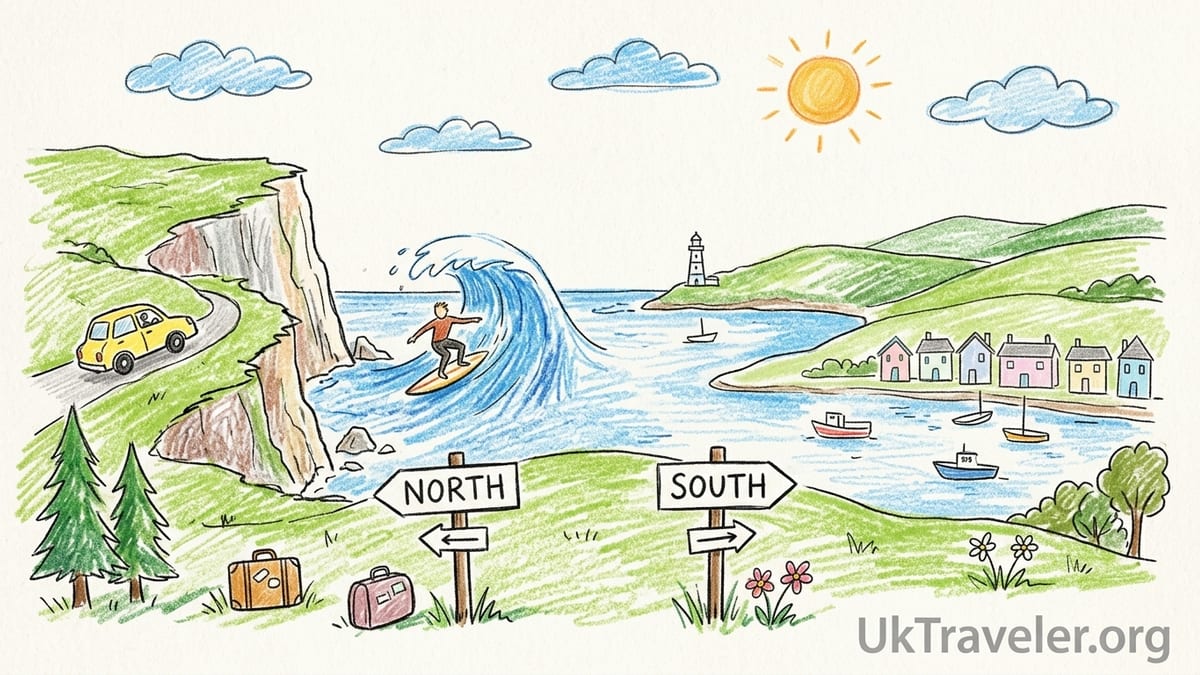
Before you fall in love with a cottage photo or sea view suite, decide what kind of South West holiday you want. If you picture big surf and rugged cliffs, you will be disappointed by the gentler estuaries of South Devon. If you want car-free city exploring and train connections, then a remote Cornish cove will feel like a logistical headache. Start with the county, then the type of coastline or countryside, then drill down to a specific town or village.
For dramatic Atlantic scenery and famous surf beaches, Cornwall is still the headline act, especially around St Ives and the north coast. For a slightly shorter drive from much of England and Wales, with long sandy beaches and a similar outdoorsy feel, North Devon around Woolacombe is a strong alternative. If you prefer sheltered harbours, sailing and estuaries lined with pastel houses, South Devon and the Dartmouth area usually work better. Dorset is the choice for easy access to the Jurassic Coast’s fossil cliffs, while Somerset is about Bath’s Georgian streets, Exmoor’s moorland and quieter inland villages. Exeter, finally, is the practical hub, especially if you are arriving by train and want to fan out on day trips.
Prices across the region vary by season, but as a rough guide a double room in a mid-range hotel in May or late September might run from around £90 to £150 per night in places like Woolacombe or Lyme Regis, rising to £180 or more in hotspots such as St Ives or Bath in high summer. Self-catering apartments for a family of four commonly sit in the £800 to £1,400 per week bracket outside peak school holidays, rising sharply in late July and August. Booking six months ahead or more is sensible for the most popular bases, especially if you want parking on-site.
Cornwall: dramatic coastline and Atlantic surf
Cornwall occupies the far tip of England, with coast on almost every side and a long-established reputation for beaches, surf and fishing harbours. The north and west coasts face the Atlantic and feel wild and open, with waves that draw surfers to spots like Newquay and Perranporth and cliff paths that give sweeping views. The south coast is more sheltered, with wooded creeks, working ports and subtropical gardens around Falmouth, Fowey and the Helford River. Distances can be deceptive; once you reach the county border there is still a good two hours’ drive to Land’s End, especially in summer traffic.
St Ives is one of the classic Cornish bases for those who want drama and culture in the same small town. The beaches here, including Porthmeor and Porthminster, are framed by headlands and consistently appear on lists of the most scenic stretches of sand in the UK. The town also has an unusually strong art scene for its size, with galleries, studios and converted fishermen’s cottages that now sell ceramics, prints and paintings. In practice, that means you can surf in the morning and spend the afternoon in a gallery or coffee shop without moving the car. Accommodation ranges from smart hotels above Porthminster Beach to compact guesthouses tucked up steep lanes, with many charging well over £200 per night in August for sea-view doubles.
Falmouth, by contrast, sits on Cornwall’s south coast and works well as a more central, practical base. It fronts a large natural harbour and is connected by ferries to St Mawes and other villages, which allows car-free exploring along the Carrick Roads. The town has a sizable year-round population, a university and a cluster of restaurants and bars, which gives it more of a lived-in feel than some resort towns. Families often appreciate the combination of Gyllyngvase Beach, a gently shelving sand-and-shingle curve with lifeguards in season, and easy day trips to attractions such as the subtropical gardens near Mawnan Smith or the maritime museum. Many visitors now treat Falmouth as their main base and head by car or bus to the more rugged west for day trips to spots like St Michael’s Mount or the Minack Theatre rather than changing accommodation mid-week.
If you want fewer crowds and lower prices, you might look at inland towns on the A30 spine instead, then drive out each day to different coasts. In places like Launceston and around Bodmin Moor you will usually find better availability in school holidays, and driving times to both the north and south coasts can be under an hour. This suits travellers who value flexibility over waking to a sea view and who are comfortable doing 40 to 60 minute drives to reach beaches or headlands each morning.
North Devon: beaches and outdoor travel
North Devon offers much of Cornwall’s surf-and-coast walking appeal with a slightly shorter journey for many visitors from the Midlands and north of England. The main draw is a sweep of wide sandy beaches between Woolacombe and Saunton Sands, backed by dunes and low cliffs, plus inland access to Exmoor’s moorland and river valleys. The South West Coast Path threads the whole shoreline, so even a short break can include easy circular walks with sea views and pub lunches in villages such as Mortehoe or Croyde.
Woolacombe is frequently recommended as the best all-round base for a first-time North Devon trip. The beach is a long, shallow bay of fine sand that regularly features in UK best beach shortlists, with surf schools, lifeguard patrols in season and enough width at low tide that it rarely feels overcrowded. The village just behind the dunes is practical rather than polished but has most of what you need on foot: cafes for breakfast, takeaways for simple suppers, a small supermarket and several pubs. Accommodation choices run from full-service seafront hotels with indoor pools and sea-view balconies to large holiday parks on the hills above, where a family of four might pay from roughly £500 to £900 for a week in June in a caravan or lodge, depending on facilities.
Nearby Croyde and Saunton provide contrasting flavours of the same coastline. Croyde is a tighter, more traditional village wrapped around one of the region’s most consistent surf beaches, with thatched pubs and a slightly more youthful feel. Saunton, a few minutes away, is more about a vast open beach and a classic hotel above the sands, popular with longboarders and photographers. Many visitors base in Woolacombe for the wider accommodation choice and day trip to Croyde or Saunton by car or bus when the surf report looks promising. This area works especially well for active groups who want to mix surfing lessons, bodyboarding, coasteering and long coastal walks without driving far.
If you are keen to blend sea and moor, it is also possible to base inland on the edge of Exmoor, in villages such as Combe Martin or around the Heddon Valley, then drive 30 to 40 minutes to the main beaches. That gives easier access to wooded river walks and higher, cooler air in heatwaves, though you will trade away sunset strolls on the sand straight from your front door.
South Devon: harbours, estuaries and sheltered coast
South Devon presents a softer, more intricate coastline than North Devon or most of Cornwall. Instead of long, straight beaches, you find drowned river valleys called rias, where wooded hillsides drop into tidal estuaries and small ferries shuttle between quays. This is excellent territory for sailing, stand-up paddleboarding and sheltered swimming on calm days, and for slow holiday rhythms where you stop for coffee in one harbour, lunch in another and an ice cream at a third.
Dartmouth is one of the best all-round bases in this part of the region. Perched on the western bank of the River Dart, it has a historic waterfront lined with timber-framed buildings, waterside pubs and pastel townhouses rising steeply behind. From here it is easy to combine river cruises, steam train rides along the Dart valley, and coastal walks out to Dartmouth Castle or along Start Bay. The town centre squeezes in a surprising number of independent shops and restaurants for its size, which keeps evenings interesting even outside peak season. Accommodation runs from small harbourside hotels and bed and breakfasts to holiday apartments up the hill, where you might pay from roughly £130 to £220 per night in mid-summer for a central double room with river glimpses.
South Devon’s wider area, known as the South Hams, is full of villages that function as quieter alternatives or day-trip targets from Dartmouth. Salcombe has a sailing and boutique-shopping feel, with sandy coves a short boat ride across the estuary. Kingsbridge offers more practical amenities and lower prices as an inland market town at the head of the same inlet. To the east, the coast from Slapton Sands to Blackpool Sands mixes shingle beaches, wooded ribs of headland and small campsites that appeal to families who value nature and simplicity over nightlife. Basing in Dartmouth keeps all of these within roughly a 30 to 45 minute drive or boat trip.
Compared with Cornwall or North Devon, South Devon is less about headline surf beaches and more about sheltered bays, boat hire and days that blur into long waterfront lunches. It suits couples, older travellers and families with younger children who prefer calmer seas, shorter walks and the option of days out by train or river boat rather than exclusively by car.
Dorset: Jurassic Coast and Lyme Regis
Dorset’s main coastal attraction is the Jurassic Coast, a UNESCO-listed stretch of cliffs and coves that exposes 185 million years of geological history. The coastline runs from Exmouth in East Devon to Studland Bay near Swanage, but many visitors focus on the central Dorset section around Lulworth Cove and Durdle Door, or on the far western town of Lyme Regis. Compared with Cornwall or Devon, Dorset is easier to reach from London and much of southern England by car or train, and driving distances between key sites are shorter.
Lyme Regis makes an excellent base if you want a compact, walkable town at the heart of the Jurassic Coast. It sits in a natural amphitheatre around a small harbour known as the Cobb, backed by cliffs that hold rich fossil beds. In practice that means you can join guided fossil walks on nearby beaches in the morning, then spend the afternoon swimming from the sandy town beach, browsing independent shops or visiting small museums that explain the town’s connections to early palaeontology. Accommodation options range from award-winning bed and breakfasts in Georgian townhouses to small seafront hotels, guesthouses with rare on-site parking up the hill and a scattering of self-catering apartments within a few minutes’ walk of the promenade.
If your main aim is to tick off famous coastal landmarks such as Durdle Door and Old Harry Rocks in a three or four night stay, you might consider basing closer to Weymouth or Swanage and visiting Lyme Regis as a day trip. Weymouth has a long sandy beach, a busy harbour and a large supply of mid-range hotels and guesthouses that keep prices relatively competitive, especially outside school holidays. With a car, you can drive west to Charmouth and Lyme one day for fossil hunting, then east another day for cliff-top walks around Lulworth, all within about an hour each way. Lyme Regis, by contrast, rewards a slower approach, with many visitors choosing a single week there and exploring mostly on foot or by short local bus rides.
Inland Dorset offers a different landscape again: chalk downs, small market towns like Bridport and Sherborne, and quiet villages with thatched cottages and old inns. These can work as bases if you are more interested in countryside walks and pub gardens than daily swims, and coastal drives rarely exceed 45 minutes. Prices inland tend to sit a little below the seafront equivalents for similar standards of room and breakfast.
Somerset: Bath, Exmoor and quieter countryside
Somerset is the choice for travellers who want a mix of historic city, moorland national park and slower-paced rural stays rather than a pure seaside break. It reaches from the dramatic sea cliffs near Minehead and the Quantock Hills across rolling farmland to Bath in the east, with a patchwork of small towns and villages in between. As a base, Somerset often works best for those planning a touring holiday by car, hopping between two or three centres over a week.
Bath is the most obvious starting point. The compact city centre is built almost entirely in pale Bath stone, giving it a coherent Georgian character that is rare in the UK. Most visitors combine time at the Roman Baths, which make use of the city’s original thermal springs, with walks up to viewpoints like Alexandra Park or along the canal towpath. There is ample choice of hotels, from large chains near the station to independent townhouses near the Circus and Royal Crescent, plus serviced apartments for longer stays. Expect room rates to reflect Bath’s popularity: a central double can easily top £200 per night in summer or on December weekends, with prices falling midweek in winter.
From Bath it is straightforward to drive or take trains into the Somerset countryside. Exmoor National Park, which straddles the Somerset and Devon border, offers high moorland, steep wooded valleys and a short but rugged coastline. Villages such as Porlock and Dunster sit within reach of cliff-top walks, while inland bases around Dulverton give easy car access to the central moor. Accommodation here is noticeably quieter than the cities and tends to be in country inns, farmhouse bed and breakfasts and small guesthouses, where personal recommendations still matter more than star ratings.
If you prefer flat cycling routes and old churches over steep hills, the Somerset Levels and the area around Glastonbury and Wells provide a contrasting lowland landscape. Here, converted barns and small hotels often offer generous space and gardens at lower nightly rates than the better-known city hotels, though you will need a car to make the most of them. Many travellers now pair three nights in Bath with three or four nights in rural Somerset or Exmoor, using the city for culture, dining and rail connections at the beginning or end of the trip.
Exeter: the practical transport hub
Exeter is not a traditional resort in the way St Ives or Lyme Regis are, but it deserves attention as a base for travellers who value straightforward logistics. The city sits at the point where the M5 motorway meets the main roads into Devon and Cornwall, and has direct rail services to London, Bristol, the Midlands and the north of England. That makes it one of the simplest arrival points for visitors who do not want to drive farther into the peninsula, or who plan to rent a car for only part of their stay.
Within the city, the focus is on history and riverfront life rather than beaches. The Gothic cathedral dominates a central green, and there are chunks of Roman and medieval wall visible on short walking tours. Down by the Quayside, old warehouses have been converted into cafes, pubs and small shops, and you can hire kayaks or paddleboards to explore the river on calm days. The compact centre means that even a one or two night stay can feel relaxed: most mid-range hotels and guesthouses are within a ten to fifteen minute walk of the main station, and there are enough restaurants and bars for varied evenings without needing taxis.
Exeter comes into its own as a base for day trips. A 30 to 40 minute train ride takes you to Exmouth on the Jurassic Coast, while Dawlish and Teignmouth sit along the same scenic seafront line. With a hire car, you can reach Dartmoor National Park in under an hour for tors and reservoirs, or push west on the A30 towards Okehampton and Launceston as the first stepping stones into Cornwall. Budget-conscious travellers sometimes base in Exeter for three or four nights in a chain hotel or serviced apartment, using off-peak train tickets to sample different coast sections, then finish the trip with a shorter, more expensive stay directly by the sea.
Which base suits which traveller
Matching the right base to your travel style is the real art of planning a South West England trip. Surf-focused groups who want to be in the water morning and evening will be happiest in Cornwall’s north coast towns or in North Devon’s Woolacombe and Croyde area, where rentals often come with hose points and outhouses for boards and wetsuits. Couples who imagine lazy harbour walks, boat trips and good dinners usually gravitate towards South Devon’s Dartmouth or Salcombe, or to Falmouth on Cornwall’s south coast, where the evening atmosphere is lively without being rowdy.
Families with younger children, prams and nap schedules may prefer the flatter promenades and central beaches of places like Lyme Regis, Weymouth or Exmouth, where pushing a buggy or hauling a beach cart does not involve steep hills. Bath and Exeter suit culture-seeking travellers and those prioritising train connections, with plenty of rainy-day options in museums, galleries and historic buildings. Walkers and birdwatchers, finally, might find their best week split between an inland base on Exmoor or Dartmoor and a short coastal stay, giving them both moorland and sea without having to commit to a single landscape.
It is also worth being realistic about driving. In peak months, a nominally short hop along the coast can take much longer than a mapping app suggests, especially on narrow lanes bounded by hedges. That is why many experienced visitors now pick one main base and accept longer day trips in one direction, rather than trying to sleep in three or four different places in a week. For example, basing in Falmouth and doing long day trips to the far west and to the Eden Project, or staying in Woolacombe and exploring both Exmoor and Clovelly from there, often feels calmer than constant packing and unpacking.
The Takeaway
If you think of South West England as a single label, planning a trip can feel overwhelming. Once you break it into the six practical areas that most 2026 accommodation searches already use, the decision becomes simpler. Cornwall is for Atlantic drama and surf, North Devon for big beaches and easy-going outdoor travel, South Devon for harbours and sheltered estuaries, Dorset for Jurassic Coast cliffs and fossil hunting, Somerset for Bath and quieter countryside, and Exeter for direct transport links and flexible day trips.
Within those areas, the specific bases mentioned here give reliable starting points. St Ives and Falmouth anchor contrasting sides of Cornwall, Woolacombe works as a classic North Devon beach hub, Dartmouth shows off South Devon’s river estuaries, Lyme Regis gives you a walkable Jurassic Coast town and Bath brings history and spa culture into the mix. From each, you can layer in day trips that match your interests, from boat rides and cliff walks to museum visits and farm shops.
Planning ahead, especially for school holidays, will give you far more choice of sea views, parking and family-sized rooms. Decide first what you want your days to look like, then pick the area and base that match that rhythm. With that done, the South West’s narrow lanes and tidal timetables stop being obstacles and turn into part of the pleasure of exploring one of England’s most varied regions.
FAQ
Q1. Is it better to stay in Cornwall or Devon for a first South West England trip?
Cornwall offers more dramatic Atlantic scenery and famous surf beaches, while Devon is slightly easier to reach and mixes big sands in the north with sheltered estuaries in the south. For a short first trip with limited driving, North Devon or South Devon can feel more manageable. For a longer stay focused on coastal walks and iconic views, Cornwall usually wins.
Q2. When is the best time of year to visit these areas?
Late April to early July and September to early October often offer the best balance of milder weather, longer days and fewer crowds. Late July and August bring school holiday traffic and higher prices, especially in St Ives, Woolacombe, Lyme Regis and Bath. Winter can be atmospheric for storm watching in Cornwall or moorland walks on Exmoor, but some coastal businesses reduce hours or close.
Q3. Do I need a car to enjoy the South West?
A car gives the most flexibility, especially for rural bases and small coves with limited public transport. However, it is possible to combine rail and bus travel if you base in compact hubs such as Exeter, Bath, Falmouth or Lyme Regis, and then use local buses, ferries and occasional taxis for day trips. For a first visit without a car, pairing Exeter with one coastal town on a rail line such as Exmouth can work well.
Q4. How far in advance should I book accommodation?
For peak summer weeks, school holidays and bank holiday weekends, booking four to six months ahead is sensible for the most popular bases, especially if you need parking or family rooms. Outside those periods, you will often find more last-minute availability, though sea-view rooms and well-reviewed guesthouses in places like St Ives and Lyme Regis can still sell out several months in advance.
Q5. Which base is best for families with young children?
Woolacombe, Lyme Regis, Weymouth and Exmouth are all strong options for families, thanks to gently shelving beaches, lifeguard cover in season and easy access to toilets and cafes. Falmouth and Dartmouth also work well if you are happy to do short drives to beaches and mix harbour time with simple walks and boat trips.
Q6. Where should I stay if I am mainly interested in hiking?
For coastal hiking, St Ives, Woolacombe, Dartmouth and Lyme Regis all sit directly on the South West Coast Path and offer good day-walk options straight from town. For moorland hikes, consider splitting your stay with time on Exmoor or Dartmoor, basing in towns like Porlock, Dulverton or around Princetown, then adding a few days on the coast.
Q7. Is Bath a good base for seeing the wider South West?
Bath is excellent for history, architecture and spa culture and works well as a start or end point, especially by train. It is less central for daily beach trips, as most coasts are at least 60 to 90 minutes away by car. Many travellers spend two or three nights in Bath, then move on to a coastal or countryside base in Devon, Dorset or Cornwall rather than trying to commute daily from the city.
Q8. How expensive is it to stay in these areas?
Prices vary widely by town and season, but hotspots like St Ives, Bath and central Falmouth can be among the most expensive places to stay in the UK outside the big cities in peak months. Cheaper options often include inland market towns, larger resorts with more hotel competition such as Weymouth, and holiday parks or campsites near but not right on flagship beaches. Visiting in May, June or September usually offers better value than August.
Q9. Which area is best if I am travelling by train from London?
Exeter, Bath and Dorset’s coastal towns such as Weymouth and Dorchester have direct or simple rail links from London. From Exeter you can easily connect onward to Exmouth, Paignton or Cornwall. If you want to limit train changes, it can make sense to base in one of these better-connected hubs and then use local transport or occasional car hire for specific day trips.
Q10. Can I combine more than one base in a week?
Yes, and many travellers do, but it is wise to limit yourself to two bases for a seven-night trip to avoid losing too much time packing and driving. A common pattern is three nights in Bath or Exeter followed by four nights on the coast, or a split between a moorland base on Exmoor or Dartmoor and a seaside town such as Woolacombe, Dartmouth or Lyme Regis.