


Few UK breaks feel as escapist as a cottage holiday in South West England. From surf towns in Cornwall to Jurassic Coast villages in Dorset, the region’s self catering scene is vast and increasingly sophisticated. One specialist agency now lists more than 5,700 cottages across the South West, while Vrbo surfaces roughly 14,800 cottage style properties across the wider region at any one time. With so much choice, the challenge is not finding a cottage but knowing how to pick the right one, at the right price, with the right facilities.
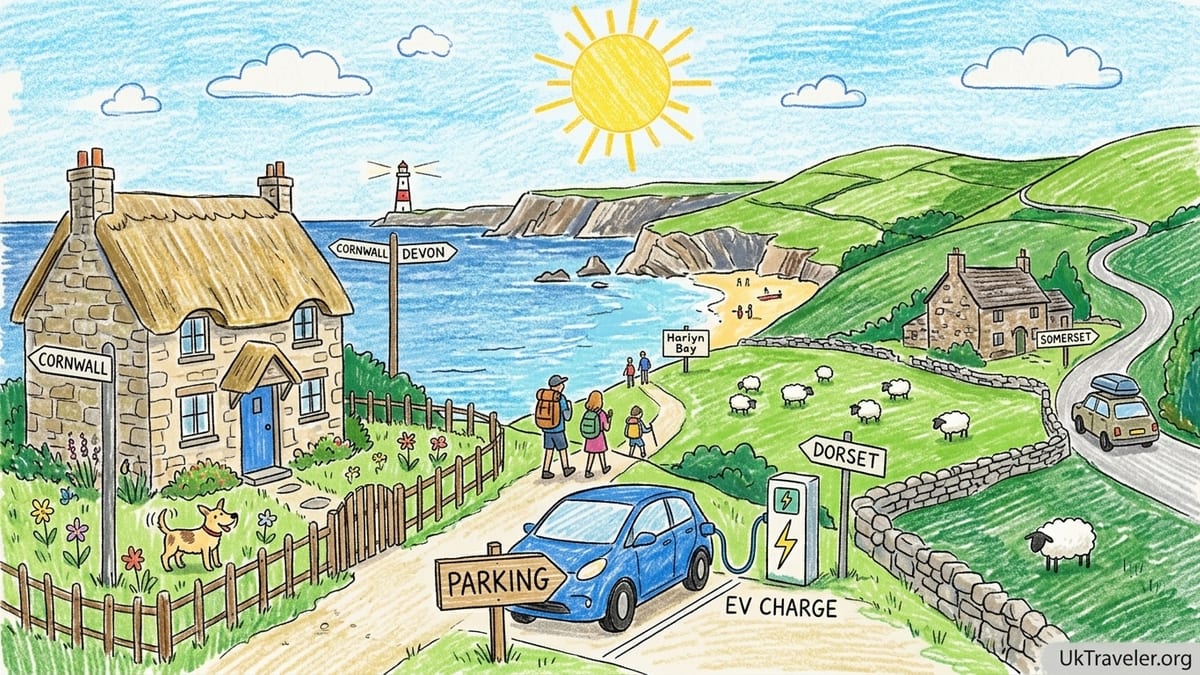
How to Choose a South West Cottage: Key Basics
Before diving into specific counties, it helps to understand how South West cottage holidays are typically structured. Most self catering properties operate on a three night minimum outside peak dates and a seven night minimum in late July and August, with Friday or Saturday changeovers standard. A two bedroom cottage close to the coast in Cornwall or Devon might start around £450 to £650 for a three night winter weekend, but rise to £1,500 or more for a summer school holiday week depending on location, finish and facilities like hot tubs.
Parking has become a hard filter for many guests, especially in older harbour villages where on street spaces are scarce. In Mousehole, for example, a clifftop cottage such as Sandpiper specifically highlights private off road parking and an on site EV charger, a combination that now commands a premium compared with character cottages that rely on public car parks further down the hill. In inland hamlets or on the fringes of towns, free parking on a private drive is the norm rather than the exception.
Cleaning and service fees vary by platform and provider. Direct booking sites often bundle cleaning into the nightly rate, while larger platforms such as Airbnb and Vrbo commonly show a separate cleaning fee that can add £80 to £200 to a stay, especially for larger family homes with hot tubs and gardens. Always click through to the full price breakdown before committing, as the cheapest nightly rate is not necessarily the best value once fees and taxes are included.
EV charging is still inconsistent across the region. A growing number of properties, such as Old Barn Tregonetha in North Cornwall, now advertise dedicated charge points with either inclusive use or billing via an app or separate fee. Others explicitly ban use of standard sockets for car charging for insurance reasons, directing guests to public fast chargers in nearby towns instead. If you drive an EV, treat “EV charger” as a non negotiable filter and read house rules carefully.
Cornwall: From Wave Facing Cottages to Romantic Retreats
Cornwall remains the most searched county in the South West for coastal cottages, and inventory runs from studio boltholes to glass fronted architect designed houses. Along the north coast, places like Mawgan Porth, Harlyn Bay and Bude are prime territory for modern coastal cottages, many built or refurbished specifically for holiday use. Swallows Rest, tucked down a quiet lane inland from Mawgan Porth, is a typical example of a contemporary cottage style property with hot tub access, dog friendly policies, countryside views and EV charging paid via an app, while still being a short drive from the surf beaches.
For coastal cottages, distance to the sand is the main driver of price. Sea view houses in Harlyn Bay such as Poldhu, where you can walk to the beach in around five minutes, often command four figure weekly rates even outside peak school holidays. In contrast, pretty inland villages ten or fifteen minutes’ drive from the coast still offer strong value, especially in shoulder seasons like May, June and September when beaches are quieter. Beach access is not always step free, so check descriptions and photos if mobility is an issue.
Cornwall is also one of the most dog friendly regions in the UK. Many cottages market themselves heavily to pet owners, from luxury barns like Old Barn Tregonetha, which provides dog biscuits and throws, to classic farm conversions with enclosed gardens and nearby walking. Some beaches have seasonal dog restrictions between roughly Easter and late September, but there is always a list of nearby year round dog friendly beaches in the property guidebook. Expect a per dog supplement of around £30 to £50 per stay on mainstream platforms, and insist on clear rules about numbers, breeds and where dogs may sleep.
Romantic stays abound in Cornwall, from one bedroom hot tub cottages like Harper’s Cottage near Callington, with its private EV charger and dedicated parking, to bijou fisherman’s cottages in harbour towns such as Mousehole or St Ives. Many of these operate year round with attractive off season weekend pricing, often around £350 to £550 for a winter three night stay including logs for the wood burner. For couples, checking whether the hot tub is private or shared with neighbouring cottages, and whether it is included or charged as an extra, is important before booking.
Devon: Family Homes, Moorland Escapes and Coastal Villages
Devon offers a rich mix of self catering options, from beachside apartments in Woolacombe and Croyde to stone cottages on the fringes of Dartmoor. In North Devon, cottage clusters around the Hartland Peninsula and Bideford Bay typically provide off road parking, access to coastal paths and, increasingly, communal facilities like shared hot tubs and games barns. A converted barn with a hot tub and views towards the Atlantic might average £900 to £1,400 for a week in August, dropping to £500 to £700 in shoulder season.
Family homes are a particular strength in Devon. Larger detached properties sleeping eight or more, such as those around Carbis Bay’s Devon equivalent in areas like South Hams or near Paignton, often resemble modern suburban houses but come with sizeable gardens, hot tubs and EV charging. A property in this mould might charge a nightly rate around £250 to £400 depending on season, with an additional cleaning fee reflecting the time needed to service hot tubs, multiple bathrooms and outdoor kitchens between stays.
For romantic escapes, Dartmoor and Exmoor are the obvious choices. Here, small stone cottages with open fires, roll top baths and walking straight from the door are prized. Many are dog friendly, but parking can be tight in older villages. Look for properties with an allocated space or private drive rather than “parking in village car park,” which can mean a five to ten minute uphill walk back to your front door. In remote locations, EV chargers are still relatively rare, so plan to use public chargers in larger towns like Tavistock or Barnstaple.
Minimum stays in Devon generally mirror the wider region, with three nights common outside school holidays and full weeks in peak summer. However, some high end family houses, especially along the English Riviera stretch between Torquay and Dartmouth, impose seven night minimums for most of the season and apply stricter cancellation policies. If travelling with children in August, it is worth locking in bookings six to nine months ahead, as the combination of sea views, gardens and a hot tub is snapped up quickly.
Dorset: Jurassic Coast Cottages and Village Boltholes
Dorset’s cottage scene is dominated by the Jurassic Coast and its hinterland. Coastal villages such as Lyme Regis, West Bay and Charmouth are home to traditional cottages, many accessed by steep, narrow lanes where parking is a prize. In historic Lyme Regis, for instance, period townhouses divided into holiday apartments may only offer on street spaces or council car parks a short walk away, while newer developments on the outskirts include allocated parking bays. When comparing options, factor in the extra daily cost of public parking if your chosen cottage does not include a dedicated space.
Families are drawn to Dorset for its beaches and fossil hunting. Self catering houses with gardens within a short drive of family beaches such as Charmouth and Weymouth often combine off road parking with outdoor space for children to play. Prices in school holidays are broadly comparable with Devon, though Dorset sometimes offers marginally better value for inland, village based houses where you drive ten to twenty minutes for a beach day. Cleaning fees on booking platforms can be notable for larger Dorset farmhouses, particularly where pets are allowed, so review the final total rather than headline nightly rates.
For romantic stays, Dorset’s chocolate box villages around the Cranborne Chase and Dorset Area of Outstanding Natural Beauty offer thatched cottages with low beams, flagstone floors and wood burners. Many of these are run through specialist agencies that include linen and cleaning in the core rate, keeping pricing straightforward. Hot tubs are less ubiquitous than in Devon or Cornwall, but where they are included they tend to sit in private walled gardens or on raised decks with countryside views, and will be clearly highlighted in the listing photographs.
EV charging in Dorset is catching up. Some coastal cottage complexes now promote shared charge points in communal parking areas, where guests pay for usage via an app and are asked to move their cars once charging is complete. However, many individual cottages still either prohibit EV charging on site or simply do not mention it. If you do not see any reference to EVs in the property details, contact the owner before booking; trailing a cable across a narrow village lane is unsafe and likely to breach house rules.
Somerset: Coast, Countryside and Hot Tub Hideaways
Somerset’s cottage offer splits between the north coast around Minehead and Watchet, the Quantock and Mendip Hills, and the rural interior of cider orchards and villages. Around Exmoor’s fringes, operators such as Exmoor Character Cottages blend period properties with modern comforts including hot tubs and high speed broadband. Their booking terms for 2026 highlight two important trends in the sector: insurers insisting on formal hot tub familiarisation on arrival, and in some cases banning on site EV charging entirely for safety and insurance reasons, even as guests increasingly expect it.
Coastal Somerset is more understated than Cornwall or Devon, but sea view apartments and houses around Minehead and Blue Anchor offer excellent value. Parking is usually easier here than in tight Cornish harbours, with dedicated spaces or off street drives common even in older terraces. A two or three bedroom cottage with sea glimpses and a shared garden hot tub might run to £800 to £1,100 per week in August, dropping to £400 to £600 in low season, often with shorter midweek breaks available outside school holidays.
Inland, Somerset excels at romantic and wellness focused retreats. Converted barns with large picture windows and private hot tubs, yoga decks and fire pits are increasingly common around the Quantocks and near Glastonbury. Many are adults only, with strict maximum occupancies and no pets policies that help preserve a quiet, spa like feel. Cleaning fees here can be relatively high compared with simple farm cottages, reflecting the extra time involved in draining, refilling and treating hot tubs between guests, as well as maintaining linens, robes and spa amenities.
Families often base themselves close to attractions such as Cheddar Gorge or Wookey Hole, combining days out with countryside walks. Large Somerset farmhouses sleeping ten or more typically offer ample parking, big lawns and play barns; some include EV chargers, others direct guests to rapid chargers at nearby supermarkets or service stations. School holiday pricing is competitive versus Cornwall, and you may find that a similar standard of house with hot tub and games room in Somerset can be several hundred pounds cheaper in August than its coastal Cornwall equivalent.
Coastal Cottages vs Inland Escapes
Across Cornwall, Devon, Dorset and Somerset, the main strategic choice is whether to prioritise a walkable beach or better value inland. Coastal cottages, especially those with sea views and direct beach access, routinely command the highest nightly rates. A three bedroom coastal house in Padstow or St Ives with parking and an EV charger can easily top £2,500 for a late August week, particularly if it also includes a hot tub or dedicated surf store. Inland by just ten to fifteen minutes, similar quality houses in villages or on working farms may cost half that, trading sea views for countryside tranquility.
Beach distance is often expressed in approximate walking times rather than metres, and it pays to scrutinise this. “Ten minute walk” can mean a gently sloping lane in a modern development, or a steep, stepped route down from a clifftop cottage. Guests with buggies or mobility issues should look for phrases such as “level walk” or “no steps to beach,” and use satellite imagery to double check terrain where possible. If you plan to drive to the beach daily, enquire about parking costs there too, as popular hotspots like St Ives and Lyme Regis have premium tariffs in peak season.
Inland escapes, particularly in parts of mid Cornwall, rural Devon and inland Somerset, often feel more spacious. You are more likely to find large gardens, bigger kitchens and dedicated parking for several cars, along with quieter surroundings. These properties suit multigenerational groups who plan to mix day trips to the coast with time relaxing on site. EV charging is often easier to implement on larger rural plots, so you may find more reliable on site charge points here than in tightly packed seaside streets where wiring upgrades are constrained by older building stock.
Weather is another subtle factor. Coastal cottages benefit from sea breezes in summer, which can keep interiors cooler, but are more exposed to winter storms. Inland valleys and moorland edges may offer more shelter in shoulder seasons, making hot tub use and outdoor dining more comfortable outside high summer. When comparing properties, think about how you intend to spend your evenings and whether you will value a sheltered courtyard or deck as much as daytime sea views.
Dog Friendly Properties, Hot Tubs and EV Charging: What to Expect
Dog friendly cottages are now a defining feature of the South West market. Many Cornish and Devon agencies actively court pet owners, pointing out nearby dog friendly beaches, pubs with water bowls and enclosed gardens. However, the term “dog friendly” covers a spectrum. Some properties simply allow dogs downstairs; others provide welcome packs with treats, throws for sofas and dedicated outdoor dog showers. Cleaning fees and deposits may rise slightly for pet stays, with some owners charging an additional cleaning supplement or requesting that dogs are not left alone inside.
Hot tubs have shifted from luxury extra to near standard in many new or refurbished cottages, particularly in Cornwall and Devon. Properties such as Coombe Rise near Bude or cottage clusters in Cornwall’s countryside advertise private tubs overlooking fields or gardens, while coastal homes like Poldhu on Harlyn Bay integrate hot tubs into decks with sea views. Insurers now expect formal safety procedures, so guests may be asked to attend a short briefing on arrival, observe curfews on tub use and refrain from adding oils or bubbles. Some owners meter hot tub usage into core pricing, while others charge an optional supplement, so clarify this ahead of time.
EV charging is uneven but improving. Examples such as Sandpiper in Mousehole, Old Barn Tregonetha and Glendale Cottage in Cornwall now offer dedicated EV chargers, sometimes free for guests and sometimes billed separately via smart systems. Other operators, including certain Somerset cottage collections, explicitly state that they cannot allow vehicle charging due to insurance and wiring constraints. Guests in EVs increasingly adopt a hybrid model: overnight slow charges where permitted, topped up by public rapid chargers at supermarkets or roadside hubs on day trips. When booking, look for explicit mention of an EV point, check connector type, and confirm whether you need to bring your own cable.
When you combine dog friendly policies, a private hot tub and on site EV charging in a single property, you are looking at the upper end of the South West cottage market. These houses are highly sought after and book first for peak weeks, especially in Cornwall and Devon. If that full wish list matters to you, try to secure dates nine to twelve months ahead and be prepared for pricing at the top of the local range.
Pricing, Minimum Stays and School Holiday Strategies
Pricing for South West cottages is highly seasonal. Off peak, a simple two bedroom cottage in inland Somerset or rural Dorset might cost £350 to £500 for a long weekend, while a high spec two bedroom sea view house with hot tub in Cornwall or Devon might sit around £700 to £1,000 for the same period. During May half term and the late July to August school holidays, these numbers can double, with coastal family houses regularly achieving £2,000 to £3,500 per week depending on size, proximity to the beach and facilities.
Minimum stays are a key lever for value. Many owners insist on seven night bookings in late July and August, but offer short breaks outside that window. Shoulder seasons such as late April to early June and September are particularly rewarding: seas are warming, beaches are quieter and nightly rates soften. A family of four might find that a five night September stay in a high spec Devon or Dorset cottage with hot tub costs little more than a seven night August stay in a simpler inland house without a tub.
Cleaning and service fees can distort apparent value, especially on large platforms that present nightly rates separate from fees. A family house in Cornwall might show a headline rate of £250 per night, but a £200 cleaning fee and separate service fee push the effective nightly cost significantly higher on short stays. Direct booking sites or independent agencies sometimes incorporate cleaning into the weekly price, which can be more cost effective if you plan a three or four night break rather than a full week.
For peak school holidays, booking strategies matter. Coastal Cornwall and North Devon often sell out first, particularly properties with parking, sea views and hot tubs. Dorset and Somerset can offer better availability and sharper pricing for comparable comfort, especially if you are willing to be ten to twenty minutes’ drive from the sea. Midweek arrival dates, where offered, can be cheaper than classic Saturday to Saturday patterns and may come with reduced traffic on changeover days.
The Takeaway
South West England’s cottage market is broad and fast moving, with thousands of options in Cornwall, Devon, Dorset and Somerset at any given time. The best choice for you depends less on finding a mythical “perfect” cottage and more on prioritising the facilities and locations that shape your days: walking distance to a beach versus better value inland, hot tub versus extra bedroom, or characterful village lane versus easy parking and EV charging.
Across the region, coastal cottages near headline beaches and harbour towns carry the highest premiums, while inland villages and moorland edges provide more space and better value. Dog friendly policies, private hot tubs and on site EV chargers can transform the feel and convenience of a break, but also push properties into the most in demand tier, particularly in summer holidays. Whatever your priorities, reading listings carefully, checking the fine print on cleaning fees, parking and EV rules, and booking early for peak dates will help ensure that your South West cottage stay matches the dream: slow mornings, long coastal walks or country rambles, and evenings soaking in the views from your temporary home.
FAQ
Q1. How far in advance should I book a South West holiday cottage for August? For coastal cottages in Cornwall and Devon with parking or a hot tub, nine to twelve months’ notice is sensible; Dorset and Somerset inland options may still have availability six months ahead.
Q2. What is a typical minimum stay for South West holiday cottages? Most properties require at least three nights outside peak season and seven nights during late July and August, though some offer flexible midweek breaks in spring and autumn.
Q3. How much should I budget for a family cottage near the beach in summer? A three bedroom family cottage within walking distance of a good beach often ranges from about £1,500 to £3,000 per week in school holidays, depending on location and facilities.
Q4. Do most cottages include parking, or will I need to use public car parks? Rural and village properties usually include off street parking, but historic harbour towns and some Jurassic Coast villages rely on public car parks, so always check the listing details.
Q5. How common is EV charging at South West cottages? Dedicated EV chargers are increasingly common, especially in newer or higher end cottages, but many older properties still do not offer charging and may prohibit using standard sockets for cars.
Q6. Are cleaning fees always charged separately from the nightly rate? Not always; direct agencies often bundle cleaning into the overall price, while large platforms frequently list a separate cleaning fee that has a bigger impact on short stays.
Q7. What should I look for in a dog friendly cottage? Check for enclosed outdoor space, nearby walks or dog friendly beaches, clear house rules on where dogs can go, and any extra cleaning charges or pet deposits.
Q8. Are hot tubs usually private or shared between cottages? In standalone cottages and many higher end barn conversions, hot tubs are private, but in cottage clusters or holiday villages they may be shared, so read descriptions and site maps carefully.
Q9. Which months offer the best value for coastal cottages? May, June and September usually combine milder weather and quieter beaches with lower rates than peak summer, making them strong value months for coastal stays.
Q10. Is it cheaper to stay inland and drive to the coast each day? Often yes; inland cottages in villages or countryside locations can cost significantly less than sea view houses, and a short daily drive to the beach may still work well for many families.