


Scotland packs remarkable variety into a relatively small country. In a single week you might wander medieval closes in Edinburgh, listen to live music in Glasgow, hike into misty Highland glens, boat across deep lochs, and board a ferry for wind‑scoured islands where the next stop is the Atlantic. The challenge for most travelers is not whether to go, but how to choose where to spend limited days. This guide compares Scotland’s key regions and headline destinations, with concrete examples and price ranges, to help you match your itinerary to your travel style, budget, and time of year.
How to Choose Your Scottish Base: Quick Orientation
Most international visitors arrive via Edinburgh or Glasgow, which are also the best hubs for rail and bus connections across the country. If you are flying from North America, you will often find the most competitive fares into Edinburgh or Glasgow, then connect by train to Inverness for the Highlands, or to Aberdeen for the east coast. As of 2025, Edinburgh Airport handles around 15 million passengers a year and Glasgow around 8 million, so both have frequent flights from major European hubs as well as seasonal long‑haul services.
For a first trip of 7 to 10 days, many visitors split their time between one city and one rural area, for example 3 nights in Edinburgh and 4 in the Highlands around Glencoe, Loch Ness or the Cairngorms. Self‑drive itineraries are popular, but Scotland’s rail and coach network covers most major destinations, including Inverness, Fort William, Aviemore and Stirling. If you plan to explore islands such as Skye, the Outer Hebrides or Orkney, factor in CalMac or NorthLink ferry crossings and build in buffer time in case of weather‑related disruption, which has been an ongoing reality on some west‑coast routes.
Accommodation costs vary sharply by place and season. In Edinburgh in August, when the festivals are in full swing, a central three‑star hotel can reach 250 to 300 pounds per night, while the same room in November might drop closer to 120 pounds. In smaller Highland towns like Fort William or Aviemore, a good guesthouse might run 110 to 160 pounds in high season, with simple bunkhouse or hostel beds from around 30 to 45 pounds. Islands can be pricier at peak times because supply is limited, so early booking is essential.
Your travel style matters as much as your budget. City‑break travelers tend to focus on Edinburgh or Glasgow, culture seekers add St Andrews and Stirling, road‑trippers gravitate to Glencoe, Skye and the North Coast 500, and serious walkers prioritize the Cairngorms or Loch Lomond and The Trossachs. Wildlife enthusiasts often look to the Outer Hebrides or Orkney, while families may prefer Loch Lomond or the Cairngorms where outdoor activities, short walks and family‑friendly attractions are close together.
Edinburgh vs Glasgow: Scotland’s Twin City Icons
Edinburgh and Glasgow are only 50 minutes apart by frequent train, yet they offer distinct flavors. Edinburgh is Scotland’s postcard city, with a dramatic volcanic skyline crowned by Edinburgh Castle and the medieval Old Town dropping steeply to Princes Street Gardens. Visitors come for grand historic sights like the Royal Mile, Holyrood Palace and the National Museum, which are all walkable from a central base. It is the better choice for first‑timers, festival‑goers and travelers who want a compact, atmospheric city with easy day trips to places like Stirling, North Berwick or St Andrews.
Glasgow, by contrast, is larger and more lived‑in, famous for its music scene, Victorian architecture and friendly bar culture. The West End around Byres Road and the University of Glasgow has leafy streets, craft beer pubs and the excellent Kelvingrove Art Gallery and Museum, which has free entry. City‑break travelers who value nightlife, live music and modern culture often prefer Glasgow. Prices are typically a bit lower here than in central Edinburgh; for instance, a weekend double room in a mid‑range chain near Glasgow Central station often runs 120 to 180 pounds in spring, versus 180 to 240 pounds in similarly central Edinburgh.
For short stays without a car, either city works well. Edinburgh Waverley and Glasgow Queen Street station both connect directly to the Highlands. If you plan frequent day trips, consider staying near the main station: in Edinburgh, around Princes Street or the New Town, and in Glasgow, around George Square or the Merchant City. Rail passes such as the BritRail Spirit of Scotland pass can be good value if you are planning multiple long‑distance journeys within a week or two.
In terms of crowds, be realistic about Edinburgh in August. The Fringe, International Festival and Royal Military Tattoo create an electric atmosphere but also drive up prices and strain capacity. Restaurants on the Royal Mile may require advance reservations, and popular attractions like Edinburgh Castle can see timed‑entry tickets sell out days ahead. If you prefer a more relaxed city experience, consider May, June, September or early October, and use Glasgow as a base for concerts and shopping while still day‑tripping to Edinburgh.
Highland Highlights: Glencoe, Loch Ness, Cairngorms and Loch Lomond
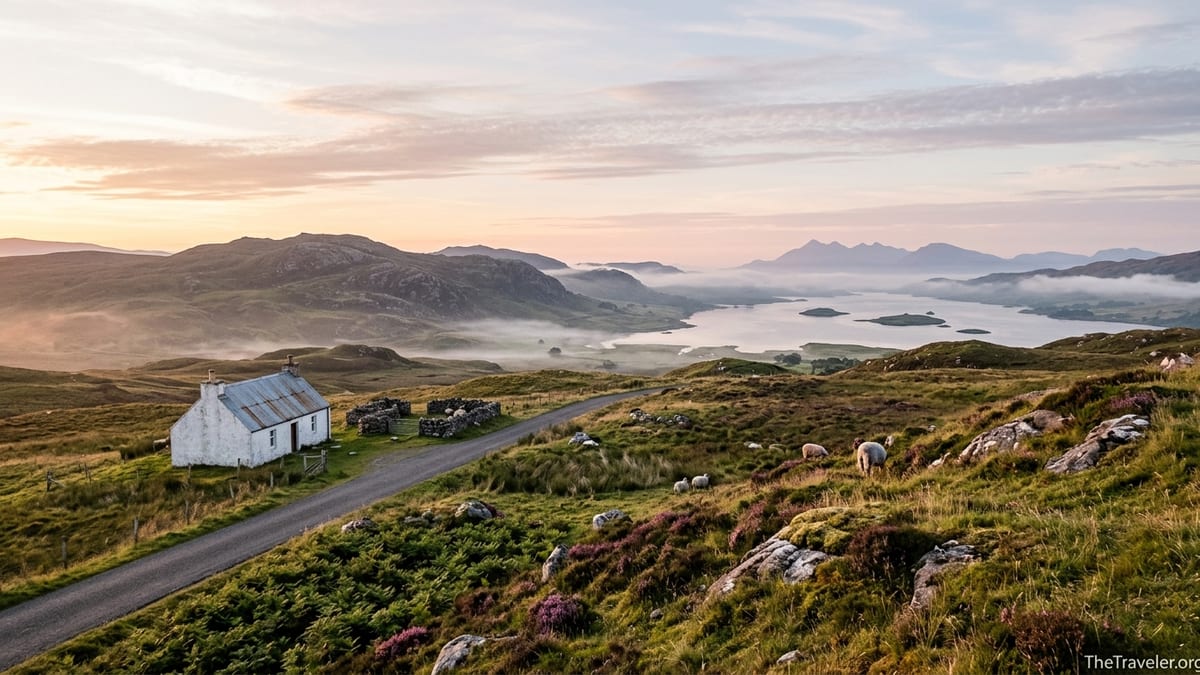
The Scottish Highlands are less a single destination than a vast region of glens, lochs and rugged peaks, each with a different character. Glencoe is the archetypal Highland landscape, with steep, U‑shaped valleys and trailheads starting right from the roadside. It suits photographers, hikers and road‑trippers who want dramatic scenery with fairly easy access. Many travelers drive the route from Glasgow to Fort William via Glencoe, stopping at the viewpoints near the Three Sisters and the visitor centre. A simple hotel or inn near Glencoe might cost 140 to 200 pounds in July, while campsite pitches for campervans are often around 25 to 35 pounds.
Loch Ness, stretching southwest from Inverness to Fort Augustus, is immensely famous but can feel quite busy along its main trunk road, especially around Drumnadrochit and the car parks for Urquhart Castle. It suits families and first‑time visitors who want iconic sights, boat cruises and accessible attractions more than it does serious hikers. You can take an hour‑long cruise from near Drumnadrochit or Fort Augustus for roughly 20 to 30 pounds per adult, often combining it with castle entry. If your time is short and you value quieter landscapes, you may prefer nearby Glen Affric or the quieter shores of Loch Ness’s south side, reached via single‑track roads.
The Cairngorms National Park, anchored by towns like Aviemore, Braemar and Kingussie, is ideal for active travelers, families and winter sports fans. It offers everything from easy lochside circuits around Loch Morlich and Loch an Eilein to strenuous hikes on Cairn Gorm and Braeriach. In winter, skiers and snowboarders head for the Cairngorm Mountain and Glenshee ski areas when snow conditions cooperate. Visitor information highlights that the park contains five of the UK’s six highest mountains and over forty Munros, along with significant restrictions on campfires in summer to protect the landscape, so check current regulations before wild camping or barbecuing.
Closer to Glasgow and Edinburgh, Loch Lomond and The Trossachs National Park offers a taste of Highland scenery within 60 to 90 minutes of the cities. Towns like Balloch, Balmaha and Callander make good bases for families, with short walks such as Conic Hill and Ben A’an, loch cruises from Balloch or Tarbet, and adventure parks and boat hire. Because Loch Lomond is so accessible, summer weekends can be crowded at popular beaches and car parks, and day‑trip parking can run 5 to 10 pounds. For travelers without a car, frequent trains from Glasgow Queen Street to Balloch and slower West Highland Line services to Arrochar and Tarbet or Crianlarich make this one of the easiest rural areas to explore.
Isle of Skye, Outer Hebrides and Orkney: Which Island Is Right for You?
The Isle of Skye has become the poster child for Scottish island travel, thanks to social media images of the Old Man of Storr, Quiraing and Fairy Pools. For photographers, first‑time visitors and people with only a few days to spare, Skye is often the default choice. It connects to the mainland via the Skye Bridge as well as ferries, so access is flexible. That popularity comes at a cost: in July and August, single‑track roads to the Fairy Pools can clog with traffic by mid‑morning, parking areas may fill by 10 a.m., and accommodation in hubs like Portree routinely sells out months ahead, with double rooms often 180 to 260 pounds or more.
The Outer Hebrides, stretching from Barra and South Uist to Harris and Lewis, provide a very different experience: long white‑sand beaches like Luskentyre, a strong Gaelic culture, and a slower pace. They suit repeat visitors, nature lovers and travelers who do not mind limited nightlife in return for big skies and quiet roads. Ferries from Oban, Mallaig or Ullapool are the main gateways, and ongoing issues with vessel reliability and weather can affect schedules. Recent seasons have seen periods when islanders called for visitors to build in extra buffer days and avoid relying on last‑minute ferry bookings. Once there, you can expect small guesthouses at 120 to 170 pounds, with simple self‑catering cottages higher in peak weeks.
Orkney, reached by ferry from Scrabster, Aberdeen or the shorter crossing from the far north coast, is a dream destination for history enthusiasts. Sites like Skara Brae, the Ring of Brodgar and Maeshowe sit within an easy drive of Kirkwall, and you can visit several in a single day without long hikes. Compared with the Outer Hebrides, Orkney’s roads are good and distances short, making it ideal for cautious drivers. Summer days are long, with light lingering late into the evening, and the sea cliffs around Yesnaby or the Italian Chapel on Lamb Holm add dramatic variety beyond the Neolithic core.
For travelers with limited time, Skye is usually the simplest taste of island life, particularly if you are already touring the Highlands. For those who prioritize wildlife, sweeping beaches and a sense of remoteness, the Outer Hebrides are hard to beat, provided you are comfortable with ferry logistics and the chance of disruption. History buffs with an interest in prehistoric sites might rank Orkney above both. All three areas reward visiting outside peak July and August if your schedule allows; May, early June and September often bring a good balance of daylight, mild temperatures and fewer crowds.
Castles, University Towns and Smaller Cities: St Andrews, Inverness and More
Beyond the big two cities, several smaller urban centers and historic towns are worth considering as bases, especially for travelers who prefer a quieter pace. St Andrews on the east coast blends a medieval university, cathedral ruins and world‑famous golf courses. Golfers book tee times on the Old Course or nearby Kingsbarns months ahead, while non‑golfers enjoy the beaches, the castle ruins perched over the North Sea, and café‑lined streets that buzz with students in term time. From Edinburgh it is roughly a 90‑minute combination of train and bus via Leuchars, making it feasible as a long day trip or a relaxed two‑night stay.
Inverness, often called the capital of the Highlands, is the main gateway to Loch Ness and a logical starting or ending point for Highland road trips and North Coast 500 itineraries. It works well for travelers who want a small city with supermarkets, restaurants and rail connections but who plan to focus day trips on the countryside. Typical activities include evening walks along the River Ness, visits to nearby Culloden Battlefield and Clava Cairns, and boat trips on the Moray Firth in search of dolphins. Accommodation costs are lower than in Edinburgh; a mid‑range chain hotel near the station might be 100 to 150 pounds on a summer night.
Sterling and Perth, located between the Central Belt and the Highlands, make good bases for travelers who want easy access to both urban and rural Scotland without changing hotels frequently. Stirling Castle rivals Edinburgh Castle for historical interest but is less crowded, and the Wallace Monument overlooks the surrounding countryside. From Stirling you can reach Loch Lomond, the Trossachs and even Glencoe as day trips by car. Perth, further east, provides access to Highland Perthshire for forest walks, riverside drives and distilleries in towns like Pitlochry and Aberfeldy.
Castle enthusiasts should note that some of Scotland’s headline sites, such as Edinburgh Castle, Stirling Castle, Eilean Donan near Skye and Urquhart Castle on Loch Ness, have become very popular. Timed tickets for Edinburgh Castle and Stirling Castle are strongly recommended in summer. Lesser‑known options such as Dunnottar Castle near Stonehaven, Kilchurn Castle on Loch Awe, or Castle Fraser in Aberdeenshire may appeal to travelers seeking atmospheric ruins with smaller crowds, although they require more driving or careful use of regional buses.
Matching Destinations to Traveler Types and Seasons
Families with school‑age children often do best basing in one or two locations to minimize long drives. Loch Lomond, Aviemore in the Cairngorms, and Fort William near Ben Nevis all offer short walks, playgrounds, boat trips and easy access to supermarkets and casual dining. For example, a family might rent a self‑catering lodge near Aviemore for a week in July, spending less per night than two hotel rooms and using it as a base for the Highland Wildlife Park, the Strathspey Steam Railway and gentle lochside walks. Islands such as Mull or Skye can work well for families too, but ferry logistics and narrow roads call for more planning.
Honeymooners and couples often seek a mix of scenery and comfort. Boutique hotels or country houses in areas like Glencoe, Torridon, Speyside or the Isle of Skye offer fine dining, hot tubs and curated whisky lists alongside mountain views. A typical splurge might be 300 to 500 pounds per night for a luxury lodge or hotel with a tasting menu. Shoulder seasons like May, early June and September are popular times to visit, combining long daylight and fewer midges with slightly softer prices than peak August.
Backpackers and budget travelers can still enjoy Scotland, but expectations need to be realistic. Hostel beds in major cities often cost 30 to 45 pounds in summer, while rural hostels, camping pods and bothies offer cheaper options in the Highlands. Public transport can replace car hire for many routes: Citylink coaches link Glasgow and Edinburgh to Fort William, Skye and Inverness, while local buses fill in the gaps. To keep costs down, many travelers self‑cater from supermarkets rather than eating every meal in pubs, where a main course plus drink easily reaches 18 to 25 pounds per person.
For serious hikers, cyclists and landscape photographers, destination choice is heavily seasonal. Winter brings snow to the Highlands and potential for mountaineering in Glencoe, Ben Nevis and the Cairngorms, but conditions demand proper gear and experience, and daylight is short. Spring and autumn offer more stable weather for multi‑day treks like the West Highland Way or the Speyside Way. Road‑trippers considering routes like the North Coast 500 should be aware that summer congestion, especially in small villages with limited parking and services, has become a talking point among locals and visitors alike, prompting some to recommend May or September as a better balance of traffic and conditions.
Practicalities: Getting Around, Weather and Crowd Management
Driving remains the most flexible way to explore the Highlands and islands, but it comes with responsibilities. Many popular routes, including parts of Skye, the Outer Hebrides and the North Coast 500, rely heavily on single‑track roads with passing places. Rental car companies in Edinburgh or Glasgow typically charge more in summer, and automatic transmissions can cost significantly more than manuals. Travelers new to driving on the left or on narrow rural roads should consider shorter driving days and avoiding peak arrival times at busy sites to reduce stress.
Scotland’s ferry network, especially on the west coast, is run largely by CalMac. While overall reliability has improved in some years, there have been repeated periods of disruption due to aging vessels, weather and maintenance issues, particularly affecting routes to islands such as Arran, Mull, the Uists and Barra. Travelers planning to visit islands in high season should book vehicle spaces well in advance, sign up for service alerts, and avoid tight same‑day connections with flights or rail. Building in an extra overnight on the mainland before long‑haul departures is prudent if your route depends on a specific sailing.
Weather is famously changeable. In a single July day in the Highlands you might experience sun, showers, low cloud and stiff wind. Packing strategies matter more than chasing perfect forecasts. A good waterproof jacket, layered clothing, sturdy footwear and midges repellent are more useful than a suitcase full of city outfits. Winter brings beautiful low light and quieter sites, but storms can close mountain roads and ferry routes. In shoulder seasons, daylight hours are generous, and crowds are thinner, making late April to June and September particularly attractive for flexible travelers.
Crowd management increasingly shapes the Scottish travel experience. Edinburgh’s Old Town, Skye’s beauty spots and sections of the North Coast 500 can feel saturated at peak times. Simple tactics help: start days early, visit landmark sites in late afternoon when day‑trip buses have gone, and add lesser‑known alternatives to your plan. For instance, if Fairy Pools parking is full, you might explore the quieter walk to Rubha Hunish on Skye’s north tip; if Loch Ness cruise tickets are sold out, a calmer boat trip on Loch Shiel or Loch Tay can offer an equally atmospheric experience with fewer people.
The Takeaway
Choosing the best places to visit in Scotland is ultimately about matching your expectations and travel style to each destination’s character. Edinburgh and Glasgow offer complementary city experiences and efficient transport hubs. The Highlands around Glencoe, Loch Ness, the Cairngorms and Loch Lomond provide varying blends of wild scenery, family‑friendly activities and logistical ease. Skye, the Outer Hebrides and Orkney each deliver a distinct island atmosphere, from photogenic icons to remote beaches and Neolithic stones, while smaller centers like St Andrews, Inverness and Stirling add historical depth without overwhelming scale.
Rather than attempting to “do Scotland” in a single trip, most travelers benefit from choosing two or three contrasting bases and exploring each in depth. A week combining Edinburgh, Glencoe and Skye, or Glasgow, Loch Lomond and the Cairngorms, will feel richer and more relaxed than a rushed circuit. Allowing for weather, ferry conditions and the occasional delayed train is part of traveling here. Build in breathing space, book key accommodations and crossings early, and leave room in your schedule for unexpected viewpoints, café stops and conversations.
Whether you are a first‑time visitor chasing castle silhouettes and city festivals, a repeat traveler seeking quieter islands, or a family looking for lochside walks and wildlife, Scotland can be tailored to suit you. With realistic expectations about distances, costs and crowds, and a willingness to embrace the unpredictable sky, you will find that almost any combination of city, Highlands, islands and castles yields the kind of memories that bring people back again and again.
FAQ
Q1. How many days do I need to see both Edinburgh and the Highlands?
Allow at least 5 to 7 full days to pair Edinburgh with a taste of the Highlands. A common pattern is 2 to 3 nights in Edinburgh and 3 to 4 nights in one Highland base such as Fort William, Aviemore or Inverness, with day trips from each rather than changing hotels every night.
Q2. Is the Isle of Skye worth visiting if I only have one week in Scotland?
Skye can be worthwhile in a one‑week trip if you are comfortable with some long travel days. Many itineraries use Edinburgh or Glasgow as a starting point, then spend 2 to 3 nights on Skye and 2 to 3 nights elsewhere in the Highlands. If you prefer slower travel, you may get more out of focusing on the mainland and saving Skye for a future visit.
Q3. Which is better for a first visit, Edinburgh or Glasgow?
Edinburgh is usually better for first‑time visitors who want historic sights, a compact centre and classic views. Glasgow suits travelers who prioritize nightlife, live music and a less touristy feel. Because the cities are so close by train, many visitors spend more time in one but day‑trip to the other.
Q4. Are Scottish island ferries reliable enough to plan tight connections?
Ferry operators aim for reliable service, but weather and vessel issues can cause cancellations or delays, especially on some west‑coast routes. It is unwise to schedule a same‑day island ferry and international flight. Instead, build in at least one buffer night on the mainland before long‑haul departures and keep your plans flexible.
Q5. Do I need a car to enjoy the Highlands and islands?
A car gives the most flexibility, particularly on Skye, in remote Highland glens and around the Outer Hebrides. However, it is possible to see a lot by combining trains, long‑distance coaches, local buses and guided day tours from bases like Inverness, Fort William or Portree. Travelers nervous about driving on single‑track roads may find organized tours less stressful.
Q6. When is the best time of year to visit Scotland to avoid crowds?
Late April to June and September are often the best compromise between crowds, daylight and weather. July and August bring school holidays, peak prices and the busier stretches of routes such as the North Coast 500 and Skye’s main sites. Winter is quiet and atmospheric in cities and some rural areas but comes with short days and a higher chance of weather‑related disruption.
Q7. How expensive is Scotland compared with other European destinations?
Scotland is generally comparable to other popular parts of the United Kingdom. City accommodation and dining can feel costly, especially in Edinburgh during festivals, but costs drop outside peak season and in smaller towns. Self‑catering, public transport and focusing on free outdoor activities like hiking and coastal walks can keep budgets under more control.
Q8. Which destinations are best for families with young children?
Loch Lomond, the Cairngorms around Aviemore, and coastal towns like Oban or North Berwick work well for families. They offer short, manageable walks, boat trips, wildlife viewing and playgrounds, plus easy access to supermarkets and child‑friendly restaurants. Islands such as Mull and Arran are also good options if you are comfortable handling ferries and variable weather.
Q9. Is the North Coast 500 suitable for first‑time visitors to Scotland?
The North Coast 500 showcases spectacular scenery but involves many single‑track roads, long driving days and limited services in some stretches. It is best enjoyed by confident drivers with at least 7 to 10 days and a flexible schedule. First‑time visitors with less time might prefer a shorter loop combining Glencoe, Skye, Inverness and Loch Ness or a base‑and‑day‑trip approach from one or two Highland towns.
Q10. Can I see the Northern Lights in Scotland?
The Northern Lights are occasionally visible in Scotland, especially in winter and in northern areas like Caithness, Orkney and the Outer Hebrides. However, sightings are never guaranteed and depend on solar activity, clear skies and darkness. If you do catch a display, it is a bonus rather than something you can reliably plan a trip around.