


The Norfolk Broads remain one of Britain’s classic waterway escapes, a low-stress boating region with more than 125 miles of navigable rivers, quiet nature reserves and waterside pubs. Whether you are planning a romantic two-person escape, a school-holiday family adventure or your very first time at the helm, choosing the right cruiser, operator and route will shape the entire trip. This guide compares leading hire yards, boat types and starting marinas, and explains how pricing, fuel, insurance, moorings and Wi-Fi really work in 2026 so you can book with confidence.
Why Choose the Norfolk Broads for a Boating Holiday
The Broads are uniquely well suited to relaxed boating holidays. The rivers and broads are almost entirely lock free, so there is no constant stopping, queuing or complex lock operation to worry about. For nervous first-time skippers this makes a huge difference: you spend your time actually cruising and exploring rather than wrestling with heavy gates and ropes. Speeds are low, typically around 4 to 6 miles per hour, so the entire region feels slow-paced and forgiving.
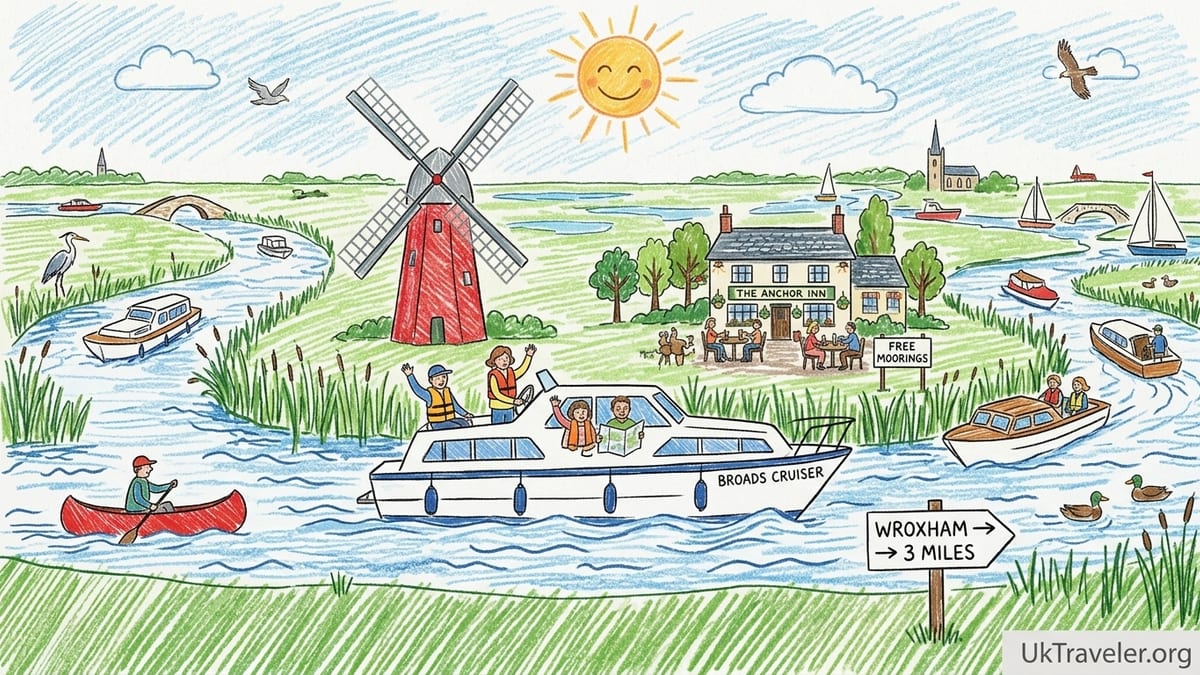
Scenically, the Norfolk Broads combine reed-fringed rivers, open lagoons, windmills and marshes with easy access to villages and market towns. From the River Bure around Wroxham to the wide, open Hickling Broad, there are regular moorings near pubs, shops and attractions. Wildlife is a constant presence, with herons, marsh harriers and, if you are lucky, bitterns and otters appearing around quiet reaches. You can shape a route around birdwatching, walking or simply drifting between waterside beer gardens.
Crucially, the Broads are extremely experienced at handling newcomers. Major yards such as Richardson’s at Stalham, Norfolk Broads Direct in Wroxham, Herbert Woods at Potter Heigham and Barnes Brinkcraft in Wroxham all routinely welcome guests with no prior boating experience. Staff deliver a thorough handover, show you how to control the boat, and often take you out for a practical trial run before you leave the marina. That makes these holidays accessible even if nobody in your party has ever handled a boat before.
From a cost point of view, a boating holiday can compare well with a cottage or resort stay, especially for families or small groups. In 2026, all-inclusive short-break cruiser prices on the Broads generally start around £530 to £550 for a compact two-berth or older four-berth boat outside peak dates, and rise beyond £1,000 for larger and newer craft in high season. When that is shared between four or six people, especially if you cook on board and use free or low-cost moorings, the per-person daily cost can remain reasonable.
Key Operators and What They Do Differently
Most visitors will book through one of a handful of well-established boatyards or via a specialist agency that represents multiple fleets. On the northern Broads, Richardson’s at Stalham offers one of the largest selections of cruisers, from simple budget two-berth boats to modern multi-cabin family models. Their large fleet means good availability for school holidays and a range of prices, including more affordable older boats that still have all the essentials like heating and showers.
Norfolk Broads Direct and Barnes Brinkcraft in Wroxham both position themselves slightly more towards the mid to upper end of the market. Norfolk Broads Direct has invested heavily in modern, easy-handling cruisers, many of which are all-inclusive with a fuel allowance, Wi-Fi and parking included in the hire price. Barnes Brinkcraft has a strong choice of dual-steering and outside-helm boats that appeal to couples and families who want to sit in the open air while cruising in good weather.
Herbert Woods at Potter Heigham is particularly convenient if you want to explore quieter northern reaches such as the rivers Thurne and Hickling. Their fleet mixes traditional Broads-style craft with contemporary designs, including boats designed around families and those needing easier access. Smaller operations such as Pacific Cruisers at Loddon on the southern rivers offer a more boutique, personal feel, sometimes with slightly fewer frills but a loyal repeat-client base that likes familiar, well-kept boats and a friendly team that knows regular customers by name.
Alongside individual yards, there are booking agencies that list hundreds of boats from multiple marinas on a single platform. These do not operate the boats themselves but allow you to compare prices, sleeping layouts and features like bow thrusters or Wi-Fi across several operators at once. That can be useful if you are flexible about your starting base and want to quickly see where the best-value deals on short breaks or pet-friendly cruisers are appearing for your dates.
Choosing Between Two-Person and Family Cruisers
Two-person cruisers on the Broads are typically compact boats with one double bed or convertible saloon seating, a small galley and a shower room. At the simpler end, a long-weekend short break for a couple on a smaller, older two-berth in shoulder season might start around the £530 to £600 mark. Newer, more luxurious two-berth boats with a fixed island bed, better sound insulation, larger shower and upgraded furnishings can run closer to £800 to £1,000 for a peak-season short break.
Family cruisers range from four-berth boats with two doubles to larger six- or eight-berth models featuring multiple cabins and two heads. For example, a family of four booking a mid-range four-berth cruiser from a major yard in the school summer holidays should expect to pay from around £1,100 to £1,400 for a three or four night short break, and more for a full week. Older eight-berth boats can look expensive at first glance, but when split between two families or a group of friends they often work out at a few hundred pounds per person for a week.
The key trade-off is space versus manoeuvrability. For couples who appreciate privacy and comfort, a modern two-berth with generous windows and a quiet engine will feel spacious enough and far less daunting at moorings. Families, on the other hand, generally benefit from a boat where children have their own cabin, there is a second toilet, and there is a decent aft or forward deck where everyone can sit outside. It is worth checking floor plans carefully: some cheaper family boats rely on converting the main saloon into a bed every night, which can become tedious on a week-long trip.
Think too about internal layout in relation to the weather. Sedan-style boats with a single living level and large patio-style doors at the back suit cooler or changeable months because most of the social space is inside but still bright. Classic centre-cockpit designs with raised seating can feel wonderfully airy in summer, yet may be draughtier off-season. Families travelling in April or October might be happier in a snug sedan or forward-steer cruiser with efficient heating rather than a very open design.
Outside Steering, Pet-Friendly Boats and Accessibility
Boats with outside steering or dual steering positions are popular on the Broads because they combine sociable cruising with protection from the elements. A typical dual-steering cruiser might have an internal helm for wet or cool days and a flybridge or open cockpit helm for sunny conditions. These boats cost a little more and are often slightly higher, which can limit access under the lowest bridges, but they are excellent for families who like everyone to be able to see and chat while underway rather than sitting in a low saloon.
Pet-friendly boating holidays are a major part of the Broads scene. Most big operators allow at least one dog on the majority of their fleet, with a typical charge of around £30 to £50 per pet for a short break or week. Some promotions at certain times of year reduce or waive pet fees altogether. If you are bringing a large or older dog, consider a forward-steer or sedan-style cruiser that keeps most living space on one level, minimising steep steps. It is also worth asking the yard for a secure rear deck with a door or gate, which makes it easier to manage dogs at moorings.
In terms of accessibility, the Broads is improving but boats are, by nature, compact spaces. A few operators offer cruisers with easier side access, lower steps and grab rails that can work for travellers with limited mobility. However, wheelchair-friendly boats remain relatively rare and should be booked well ahead. If mobility is a concern, it can be wise to start from a marina with level, well-surfaced pontoons and close parking so there is minimal distance between car and boat when loading luggage and provisions.
When comparing boats, also look for small touches that matter day to day: guard rails around side decks if you are nervous about children moving along the boat, non-slip surfaces on steps, and good external handholds at the bow and stern. These practical details do not always appear in headline descriptions but can be picked up in boat photos or by asking the hire yard specific questions before you commit.
First-Time Boaters, Starting Marinas and Suggested Routes
First-time skippers are the norm on the Norfolk Broads rather than the exception, and the infrastructure reflects that. Yards routinely provide buoyancy aids, a full safety briefing and a practical demonstration of turning, mooring and handling currents before you leave. Staff will also talk you through local bridge heights, speed limits, how to pass sailing boats safely and what to do if you run aground on a soft mud bank. If you are particularly anxious, you can request a slightly longer handover or ask the yard to suggest very simple first-night moorings.
Choosing the right starting marina has a big influence on the character of your holiday. Wroxham, sometimes called the capital of the Broads, offers quick access to the River Bure and busy stretches with plenty of pubs, boatyards and attractions. It suits first-timers who prefer to be in the heart of the action with frequent moorings and short hops between stops. Stalham, home to Richardson’s, is a little quieter but ideal for exploring the northern rivers towards Barton Broad and Ludham. Potter Heigham, base for Herbert Woods, opens up the Thurne and, with planning, the beautiful yet slightly more remote Hickling and Horsey waters.
On a typical three or four night first-time itinerary from Wroxham, many couples spend the first evening near Horning or Salhouse Broad, then continue to Ranworth and perhaps up to Acle before looping back. This keeps daily cruising times to a few relaxed hours and avoids tougher bridges. Families on a week-long break from Stalham often enjoy a circuit that includes Barton Broad, Ludham Bridge and Ranworth, with optional side trips for attractions such as the tree-top adventure park near Hoveton or nature reserves close to the rivers Ant and Bure.
If you are drawn to the quieter, more rural feel of the southern Broads, marinas such as Brundall or Loddon place you on the rivers Yare and Chet. These areas can feel more spacious, with longer gaps between villages, and are often favoured by returning visitors rather than complete beginners. First-timers can certainly start here, but you should be comfortable with slightly longer daily cruising legs and fewer alternative moorings if your first choice is full.
Short Breaks Versus Full Week: How Long Do You Need?
Short breaks of three or four nights are an excellent way to test whether a boating holiday suits you, and they are particularly popular outside peak school holidays. Many operators offer Friday to Monday weekend breaks and Monday to Friday midweek breaks on a significant portion of their fleets. For a small two-berth cruiser, prices for these short breaks commonly begin in the £530 to £550 band in lower-demand weeks, with mid-range family boats charging more, especially at popular times such as late May or early September.
A full week opens up a much wider slice of the Broads and allows for rest days. With seven nights, most itineraries can include both busy hubs such as Wroxham and Horning and quieter stretches like the upper Ant or the more open expanses of Barton and Hickling. For families travelling in school summer weeks, a typical mid-range four-berth cruiser for seven nights might cost from the mid-four-figure range depending on the boat’s age and specification. While that appears high, it effectively bundles transport, accommodation and much of your entertainment into one cost.
When deciding between a short break and a week, think about how comfortable you are with learning new practical skills. On a three-night trip, the first day is dominated by briefings and getting used to steering and mooring, leaving perhaps two full days of confident cruising. A week gives you time to relax into a routine, revisit favourite places and cope calmly with a day of poor weather by mooring early at a pub with a fireside instead of feeling compelled to push on.
From a budgeting perspective, the nightly rate for a week is typically lower than for a short break, but cleaning and turnaround costs mean that very short hires carry a slight price premium. If you are driving a long distance to reach Norfolk, it often makes financial sense to stay for at least four nights. On the other hand, if you live within two or three hours’ drive, a long weekend can be a low-risk way to sample the Broads before committing to a more expensive main holiday in a future year.
Understanding Costs: Fuel, Insurance, Parking, Wi-Fi and Mooring
Pricing structures vary by operator, so it is important to look beyond the headline hire rate to understand the likely total cost of your trip. Some fleets now promote all-inclusive packages where essential extras are folded into the price. For example, certain Wroxham-based operators supply a tank of fuel, unlimited or generous Wi-Fi, parking for at least one car and a damage waiver as part of the quoted hire figure. Others separate these items, with a fuel deposit payable on arrival, optional collision damage waiver and daily Wi-Fi charges or data limits.
Fuel is usually handled by taking a deposit at the start of your holiday, often around £100 to £150 for a typical family cruiser, then refunding any balance after you return and the tank is checked. On a normal first-time itinerary with moderate cruising, that deposit is often sufficient for a short break, and only slightly exceeded on a week-long trip. Boats on the Broads tend to be diesel-powered and are fairly economical at the low speeds enforced on the waterways, but big boats on long routes will naturally burn more fuel than compact two-berth cruisers pottering between nearby moorings.
Collision damage waivers or security deposits are another key line item. Instead of holding a large cash deposit, many operators offer a non-refundable waiver fee that caps your liability for accidental damage, such as scuffed paintwork or broken fenders. The cost varies by fleet and boat size but is often in the region of a modest daily or per-hire fee. Factor this into your comparison of headline prices. Also check what is excluded: propeller damage, for instance, may still attract additional charges if you stray into shallow water outside marked channels.
Parking is generally straightforward at main marinas, with at least one vehicle space included or offered at a modest daily rate. Some yards provide secure, gated parking; others use open-air, unsupervised lots close to the moorings. Wi-Fi is increasingly standard, but speeds can be variable on board due to the rural setting. Operators that advertise unlimited Wi-Fi typically mean that data limits are high enough for general browsing and messaging but not for heavy streaming on multiple devices. Finally, moorings along the Broads are a mix of free public moorings administered by local authorities, moorings at pubs that request you buy food or drinks, and paid yacht station berths in larger centres such as Horning or Great Yarmouth. Allow a small daily budget for occasional paid moorings and showers at yacht stations.
Route Planning, Daily Distances and Practical Tips
Route planning on the Broads is more about time and tide than distance alone. Because speeds are low, a seemingly short hop on the map can take longer than expected, especially if you are travelling through popular sections at busy times. Many booking agencies and operators publish sample itineraries that list approximate cruising times between key points, which can be invaluable when plotting a realistic first-time route. A typical, comfortable day might involve three to four hours of actual cruising split between morning and afternoon, with a leisurely lunch stop moored along a quiet bank.
Tides matter especially where rivers widen or where bridges have limited headroom. Certain low bridges are impassable to larger hire cruisers at most states of the tide, while others are navigable only at low water with the canopy lowered. Your hire yard will brief you on which bridges to avoid and how to read the height gauges before attempting any that might be borderline for your boat. For a first holiday, many skippers choose routes that do not require passing under the tightest bridges at all, sticking instead to open sections of the Bure, Ant and Thurne.
In practice, the best way to plan is to choose a general direction rather than a rigid schedule. For a three or four night break from Wroxham, for instance, you might aim loosely for Horning on the first night, Ranworth the second and somewhere around Acle for the third, with flexibility to stop earlier if you find an appealing mooring. Keep in mind that popular moorings near honeypot villages can fill up in late afternoon during school holidays, so arriving by mid-afternoon increases your chances of getting a prime spot near a pub or village green.
On the boat itself, a few habits make life simpler. Always have one crew member ready with a boat hook and rope as you approach a mooring, and approach slowly so that any misjudgment results in a gentle bump rather than a hard impact. Encourage everyone, especially children, to keep fingers and feet clear of the gap between boat and bank. Wearing lifejackets whenever you are on deck or stepping on or off the boat is strongly recommended, and most yards provide appropriately sized buoyancy aids for all guests, including children.
The Takeaway
A Norfolk Broads boating holiday offers a mix of gentle adventure and old-fashioned relaxation that is increasingly rare. The wide choice of boats, from compact two-berth cruisers to spacious family craft with outside steering, means there is an option to suit almost every party size and budget. For first-time skippers, the lock-free rivers, low speeds and highly experienced hire yards make the learning curve manageable, particularly if you start from a well-connected base such as Wroxham, Stalham or Potter Heigham.
To get the most from your trip, look carefully at what each operator includes in its headline price, from fuel allowances and damage waivers to Wi-Fi and parking, and consider how you want to balance space against ease of handling. Decide whether a short break taster or a full week fits your schedule and confidence level, then sketch out a flexible route that keeps daily cruising times modest and leaves room for impromptu moorings, wildlife watching and pub gardens.
With realistic expectations, a bit of route planning and a boat that genuinely fits your party, a Broads cruise can become the kind of holiday people repeat year after year. The rivers change with the light and seasons, but the simple pleasure of gliding past windmills and reedbeds at walking pace, with your floating home following behind, remains timeless.
FAQ
Q1. Do I need any previous boating experience to hire a cruiser on the Norfolk Broads?
Most visitors are complete beginners and no formal experience is required. Hire yards provide a detailed handover, show you how to control the boat and give a practical demonstration of mooring and turning before you leave the marina.
Q2. How much does a short-break boating holiday on the Broads typically cost?
As a guide, smaller two-berth or compact family cruisers on short breaks often start around £530 to £550 in lower-demand periods, with larger or newer craft and peak dates rising beyond £1,000 for the same duration.
Q3. What is the difference between a two-berth cruiser and a family boat?
A two-berth cruiser is usually a compact boat designed for a couple, sometimes using the saloon seating as a bed, while family boats have extra cabins, more beds, and often a second toilet plus larger living and deck spaces.
Q4. Are the boats suitable for children and is it safe for families?
Yes, the Broads are generally considered family friendly, with low speeds and no locks on most routes. Children should wear lifejackets on deck, and parents may prefer boats with secure rear decks and good guard rails for added peace of mind.
Q5. Can I bring my dog on a Norfolk Broads boating holiday?
Most operators welcome dogs on many of their boats, usually for a modest pet fee per animal. When booking, confirm the maximum number of pets allowed and choose a layout with easy access and secure outside space if you are bringing a larger or older dog.
Q6. How does fuel payment work on a hire cruiser?
Typically you pay a fuel deposit when you collect the boat. After you return, the yard measures how much fuel you used, deducts the cost from the deposit and then refunds any remaining balance, or occasionally asks for a small top-up if you cruised extensively.
Q7. What is a damage waiver and do I really need it?
A damage waiver is a non-refundable fee that limits the amount you must pay if the boat suffers accidental damage. While optional in some cases, many first-time hirers choose it for peace of mind, as it avoids having a large security deposit at risk.
Q8. Will I have Wi-Fi on board and is mobile coverage reliable?
Many modern cruisers include on-board Wi-Fi, which is usually sufficient for email, messaging and light browsing but less reliable for heavy streaming. Mobile coverage is generally good around main villages but can be patchy in more remote stretches of river.
Q9. Do I have to pay to moor the boat each night?
There is a mix of free and paid moorings. Public moorings and some quiet riverbanks are free, while yacht stations and popular pub moorings may charge a modest overnight fee or expect you to use the pub in return for tying up there.
Q10. How far can I realistically travel on a three or four night first-time holiday?
Most first-timers plan routes involving three to four hours of gentle cruising per day. From bases like Wroxham or Stalham, that is enough time to visit two or three different villages and a couple of broads without rushing, leaving plenty of time for walks, pub stops and wildlife watching.