


The East of England is one of the easiest parts of Britain for first-time visitors to explore. It begins just beyond London’s suburbs yet feels quietly rural, defined by slow waterways, big skies, royal estates and low-key seaside towns. This guide explains how the region fits together, how it differs from East Anglia, and how to plan a realistic first trip using simple travel zones that match how visitors actually move around.
East of England vs East Anglia: Getting Your Bearings
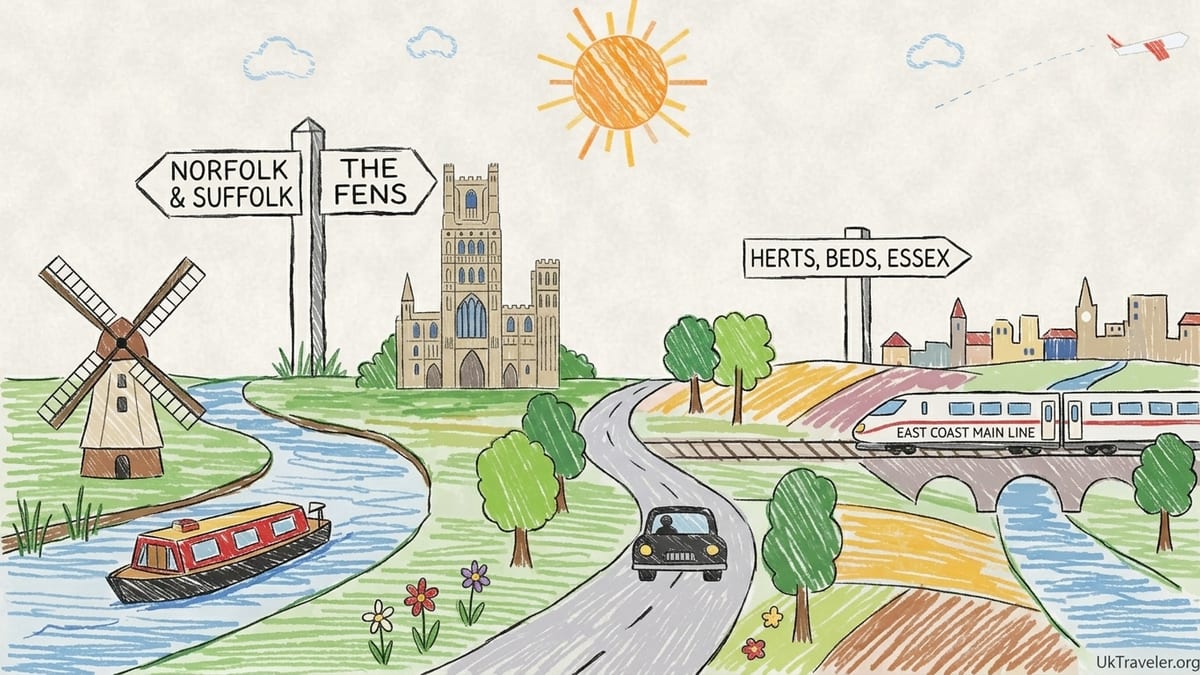
First-time visitors often hear both “East Anglia” and “East of England” and assume they are interchangeable. In British usage, East Anglia usually refers to the old Anglo-Saxon heartland of Norfolk and Suffolk with Cambridgeshire and the Fens often included. By contrast, the official government region called the East of England covers six main counties: Norfolk, Suffolk, Cambridgeshire, Essex, Hertfordshire and Bedfordshire. When British tourism bodies such as VisitEngland promote the East of England they mean this wider group, which stretches from the Norfolk Broads on the North Sea to the commuter belt towns just north of London.
For practical trip planning, it is easier to forget county boundaries and think in travel zones that mirror how train lines, roads and rivers run. Most first-time visitors combine Cambridge and the Fens with one or two water-based areas such as the Norfolk Broads or the Suffolk coast, then add a short countryside or heritage break in Hertfordshire, Bedfordshire or Essex before looping back to London. You can think of the region as a horseshoe wrapped around the capital’s northern and eastern edges, with the North Sea on one side and gentle farmland on the other.
These distinctions matter when searching for accommodation or tours. A “Norfolk Broads boating holiday” will be firmly in East Anglia, but a “short break in the East of England” could just as easily mean a spa hotel near St Albans in Hertfordshire or a seaside guesthouse in Southwold, Suffolk. Understanding the terminology will help you read British brochures and online listings more confidently and avoid booking somewhere that is convenient on a map yet awkward in real travel time.
The overall character, however, is consistent. Compared with the mountainous north and west of Britain, the East of England feels low-lying, open and watery. Inland, you find medieval wool towns, timber-framed villages and grand country houses with landscaped parkland. On the coast, estuaries and shallow beaches dominate instead of dramatic cliffs. VisitEngland’s messaging highlights exactly these assets: easy-going boating holidays, royal and aristocratic estates, National Trust manor houses, bird-filled salt marshes and miles of navigable rivers.
Arriving From London: Trains, Driving and Getting Around
London is the natural gateway for the East of England. Fast trains from London Liverpool Street reach Cambridge in about an hour and Norwich in under two hours, while lines from London King’s Cross run to Cambridge and on towards Ely and King’s Lynn. Southend-on-Sea in Essex can be reached in around an hour, making it an easy seaside day trip. For most first-time visitors who are not used to driving in Britain, beginning the journey by rail is the least stressful option, especially after a long-haul flight.
Once in the region, the choice between relying on trains or renting a car depends on your priorities. If your main goals are to stroll historic centres like Cambridge, Norwich or Bury St Edmunds and to take organised boat trips on the Norfolk Broads, trains and local taxis will work. For example, you can travel from London to Norwich by train, take a short local train or bus to Wroxham and then join a pre-booked river cruise or hire a small day boat. Similarly, the Suffolk coastal towns of Ipswich and Lowestoft sit on railway lines, and local buses run to popular seaside spots such as Aldeburgh and Southwold.
Driving offers much more flexibility once you move away from the main lines. Trains rarely reach sheltered creeks, nature reserves or remote beaches, and buses can be infrequent, especially on Sundays or outside summer. A visitor based in Norwich with a rental car can comfortably explore the North Norfolk Coast in a day, linking places like Blakeney, Wells-next-the-Sea and Holkham Hall without watching timetables. Parking at coastal villages is usually straightforward though sometimes subject to modest daily charges, which are common at managed car parks near popular beaches and nature reserves.
A simple compromise is to pair the two modes. Many travellers take the train from London to a hub such as Cambridge or Norwich, pick up a car at the station and use it for three or four days to explore the wider countryside and coast before returning the vehicle. Road conditions are generally relaxed by British standards: the region is flat, winter snow is rare compared with the north, and main roads are well signed. Single-track lanes do exist near marshes and rural beaches, so it is worth allowing extra time and driving patiently.
Cambridge and the Fens: Colleges, Cathedrals and Big Skies
Cambridge is one of the East of England’s star attractions and a gentle introduction to British history. The compact centre is dominated by the colleges of the University of Cambridge, many founded in medieval times. Visitors typically join a guided walking tour or book a short “punting” trip along the River Cam, where flat-bottomed boats glide past college gardens and bridges. Punting is an iconic local experience and an easy way to see the so-called Backs, the lawns and trees behind the colleges that line the river.
Beyond the university, the wider Fenland landscape is a draw in its own right. The Fens are broad, flat, reclaimed wetlands stretching north and east of Cambridge, criss-crossed by straight drainage channels and rivers. Ely, a small city about 15 minutes by train from Cambridge, is famous for its vast cathedral which rises above the low countryside. Wisbech and March, smaller Fenland towns, show how 18th and 19th century traders and farmers prospered from fertile land and navigable waterways. For a first visit, a simple loop of Cambridge, Ely and nearby nature reserves provides an excellent introduction to the region’s blend of academic heritage and working landscape.
Water plays a quiet but constant role here. The River Great Ouse and its tributaries are popular with narrowboats and kayaks, and the flatness of the land makes cycling particularly easy. Visitors used to mountainous scenery may find the Fens’ subtlety surprising. Much of the appeal lies in big skies, vast fields and the sense of tranquillity. Nature reserves on the Fen edges often combine bird hides, easy boardwalks and small visitor centres that explain how centuries of drainage turned marsh into farmland while still leaving pockets of rich wetland habitat.
Cambridge also makes a practical base. Fast, frequent trains connect it to London, while cross-country services run towards Norwich, Ipswich and Stansted Airport. Many visitors choose two or three nights in Cambridge at the start of their trip, adjusting to the time zone, before heading further into the East of England by train or rental car.
Norfolk Broads and North Norfolk Coast: The Classic Water and Wildlife Double
The Norfolk Broads are perhaps the East of England’s signature waterway destination. This network of slow-flowing rivers and man-made lakes, or broads, is managed as a national park and promoted strongly by VisitEngland for boating holidays. You can hire self-drive cruisers for three or seven nights, rent a sailing boat if you have experience, or simply book a half-day trip from hubs such as Wroxham, Horning or Potter Heigham. Boatyards routinely brief first-time skippers, providing tuition on steering, mooring and basic safety, so boating here does not require previous experience.
On the water, the pace is deliberately slow. Speed limits on most reaches are low, and the emphasis is on watching reed beds, windmills and birdlife slip past. Villages such as Horning and Ranworth line the banks with waterside pubs, small shops and moorings for visiting boats. Many operators also offer waterside cottages that include private moorings, so visitors can split their time between cruising and staying ashore. The Broads’ popularity means booking well ahead for peak school holiday weeks is wise, while shoulder periods in late spring and early autumn offer quieter waterways and often settled weather.
From the Broads it is an easy jump, by car or local bus, to the North Norfolk Coast, another travel zone much loved by British holidaymakers. This coastline is low and sandy with a string of villages such as Wells-next-the-Sea, Blakeney and Cley-next-the-Sea. Instead of intense resort development, you find small harbours, flint cottages, salt marshes and long beaches backed by dunes and pine woods. Nature reserves support large colonies of migratory birds, and boat trips run from harbours like Blakeney to view seal colonies on offshore sandbanks.
The combination of inland waters and sea makes north Norfolk a particularly strong choice for visitors who want variety without long distances. One realistic itinerary might include two or three nights in or near Wroxham for Broads boating and then two more based near Wells or Holkham to explore the coast. Car travel between these zones usually takes around an hour. Even without a car, it is possible to piece together days out using buses that connect Norwich to coastal towns, though timetables reward careful checking and early starts.
Norwich and Suffolk: Historic Cities, Coasts and Countryside
Norwich is the region’s main city and one of England’s most rewarding historic centres. Its medieval street pattern remains visible, wrapped around a vast Romanesque cathedral and a Norman castle now housing a museum and art gallery. The commercial core mixes independent shops and traditional markets with newer shopping centres, but the atmosphere stays largely local rather than corporate. Norwich makes a convenient base for visitors wanting an urban stay blended with easy escapes to the Broads or North Norfolk coast.
Suffolk, directly to the south, offers a slightly softer, more rural character, with a strong emphasis on heritage towns and the arts. Inland, places like Bury St Edmunds, Lavenham and Long Melford showcase timber-framed guildhalls, market squares and wool churches that speak of medieval prosperity. Many of these towns host small hotels in converted coaching inns, where low beams, open fires and snug bars provide a version of “old England” that many international visitors imagine.
The Suffolk coast is quieter than some British seaside regions yet has several high-profile stops. Southwold, with its pier, lighthouse and pastel beach huts, is a favourite weekend escape for Londoners. Aldeburgh, a little further south, combines a shingle beach with a reputation for music and visual arts thanks to the legacy of composer Benjamin Britten and the nearby Snape Maltings arts complex. Nature reserves at Minsmere and Orford Ness protect marshes, reed beds and shingle spits rich in birdlife. Compared with the North Norfolk Coast, Suffolk’s shoreline feels slightly more refined and cultural, with galleries, independent bookshops and food shops built around local fish and farm produce.
Inland Suffolk countryside provides a calm counterpoint. The so-called “Constable Country” around Dedham Vale, on the Suffolk–Essex border, reflects the river landscapes painted by artist John Constable: low hills, church towers, willows and slow rivers. Small guesthouses and country hotels often occupy converted farmhouses or manor houses, with walking routes and cycle paths starting right from the door. Travellers with a rental car will find it easy to link the coast with these inland landscapes over three or four days, while those on public transport may prefer to focus either on the coast or on a single market town hub.
Essex Coast and Countryside, Hertfordshire and Bedfordshire
Essex, immediately east of London, is often reduced in popular culture to stereotypes of brash commuter towns, but the county’s coast and countryside are a very different story. A deeply indented shoreline of creeks, estuaries and islands offers a quieter, more local seaside experience than some better-known Riviera-style resorts elsewhere in England. Towns such as Maldon on the River Blackwater still base part of their identity on sailing barges and salt production, while coastal villages around the Colne and Crouch estuaries host marinas, nature reserves and waterside pubs. Further south, Southend-on-Sea has a more traditional fairground-and-pier feel and works well for a simple day out from London.
Inland Essex shifts quickly into rolling farmland and villages. Stately homes and gardens, often under the care of national heritage organisations, open their grounds to visitors in spring and summer. These estates embody much of what VisitEngland promotes about the region: grand houses, landscaped parks and family-friendly days out. Although you can reach some of them by bus, a car makes visiting smaller sites far easier, especially if you want to string two or three together in a single day.
North-west of London, Hertfordshire and Bedfordshire feel less obviously coastal but come into their own as short-break destinations. Towns such as St Albans, with its Roman remains and large cathedral, and Hertford, with its rivers and compact historic centre, are popular with Londoners looking for a weekend away that does not require a long drive. Accommodation ranges from small city-centre hotels and bed-and-breakfasts to country-house style properties set in parkland where afternoon tea, spa facilities and golf are common draws.
Bedfordshire offers quieter, more agricultural scenery, dotted with estates, nature reserves and small market towns such as Ampthill and Biggleswade. Major transport corridors, including north-south mainline railways and motorways, cut through the county, so it is often used as a stopover on longer British road trips. However, visitors who pause find low-key attractions like riverside walks, village pubs and converted barns offering farm-to-table dining. These inland counties, though lacking the headline coasts and waterways of Norfolk and Suffolk, round out an East of England itinerary with easy, gently paced escapes that fit into a two- or three-night break.
Beaches, Waterways, Historic Houses and Royal Heritage
Across the East of England, four themes appear repeatedly: accessible beaches, quiet waterways, grand houses and royal or aristocratic heritage. The coastline from north Norfolk down through Suffolk and Essex is dominated by shallow bays, sandy or shingle beaches and large estuaries rather than cliffs. This geography makes the region popular with families and birdwatchers alike. Many beaches slope gently, and coastal paths or promenades allow long, level walks. Seaside towns usually feature a mix of traditional fish-and-chip shops, independent cafes and small amusement arcades, though the scale is typically modest compared with Britain’s bigger resorts on the northwest coast.
The waterways are perhaps the East of England’s most distinctive feature. Besides the famous Norfolk Broads, rivers such as the Great Ouse, Stour and Blackwater offer canoeing, paddleboarding and river cruises. Boating holidays are marketed heavily to domestic and overseas visitors, emphasising that you can explore at your own pace, mooring at riverside pubs or in quiet countryside locations. Rental prices vary by season, boat size and level of comfort, but the underlying idea is always the same: days marked by slow travel, wildlife encounters and informal picnics on deck or on the riverbank.
Historic houses and royal estates provide a different sort of “water and land” story. On the north-west edge of Norfolk, the Sandringham Estate is widely known as a private royal residence with public gardens and a museum. Visitors can tour the grounds, woodland walks and parts of the house at set times of year, combining their visit with nearby coastal stops such as Hunstanton or the marshes around Snettisham. Elsewhere in the region, grand houses like Holkham Hall in Norfolk or Ickworth near Bury St Edmunds in Suffolk open landscaped parks, lakes and woodland to day visitors, often hosting seasonal events from outdoor theatre to food festivals.
These estates help explain why VisitEngland places such emphasis on manor houses, royal sites and formal gardens in its promotion of the East of England. They tie the region’s gentle landscapes to national stories of monarchy, aristocracy and agricultural change. For first-time visitors, they also provide practical outing structures: arrive mid-morning, tour the house, have lunch in a courtyard cafe and then spend the afternoon walking parkland paths or exploring a walled garden before driving back to a coastal guesthouse or market-town hotel.
The Takeaway
For a first trip, the East of England works best when treated as a collection of overlapping travel zones rather than a single tick-list. Cambridge and the Fens introduce the region’s low horizons and academic heritage. The Norfolk Broads and North Norfolk Coast deliver the classic water-and-wildlife experience that VisitEngland showcases. Norwich and Suffolk layer in historic cities, arts-oriented seaside towns and deeply rural countryside. Essex, Hertfordshire and Bedfordshire then supply accessible short breaks and a quieter, everyday version of English country life within easy reach of London.
Trains provide straightforward access from the capital to key hubs, while a short period with a rental car opens up less connected creeks, beaches and estates. Water is the thread that ties everything together, whether in the form of inland broads, tidal estuaries or ornamental lakes in royal parks. For many visitors, the reward lies not in single landmarks but in the region’s mood: understated, spacious and rooted in an old relationship between landowners, farmers, rivers and sea.
With realistic expectations about travel times, a willingness to mix city stays with rural nights, and an appetite for both boating and historic houses, first-time visitors can stitch together a week or ten days that feels deeply English yet far calmer than London’s pace. Most leave with memories of wide skies, quiet boats, flint churches and long coastal walks, and with the sense that they have glimpsed a side of the country that locals guard lightly but value highly.
FAQ
Q1. How many days do I need for a first trip to the East of England?
Most first-time visitors find that 7 to 10 days allows a good mix of Cambridge, the Norfolk Broads or coast, and one or two countryside bases without rushing.
Q2. Is it better to rent a car or rely on public transport?
You can reach major hubs like Cambridge, Norwich and Ipswich easily by train, but a car is very helpful for exploring remote beaches, small villages and country houses.
Q3. Do I need boating experience for a Norfolk Broads holiday?
No, hire companies routinely brief complete beginners, give basic tuition and supply manuals. The waterways are slow and well signed, which keeps the learning curve gentle.
Q4. When is the best time of year to visit?
Late spring and early autumn usually combine mild weather, long days and fewer crowds. July and August are busier, especially during British school holidays.
Q5. Are the beaches suitable for families?
Yes, many beaches in Norfolk, Suffolk and Essex are gently shelving with wide sands at low tide. Always check local safety advice and observe lifeguard flags where present.
Q6. Can I explore the region without basing myself in London?
Yes, you can arrive via regional airports or by train from other British cities and then base yourself in hubs like Cambridge, Norwich or Bury St Edmunds instead of London.
Q7. How does East Anglia differ from the wider East of England?
East Anglia usually means Norfolk, Suffolk and often Cambridgeshire, while the East of England region also includes Essex, Hertfordshire and Bedfordshire around London’s northern edge.
Q8. Are royal estates like Sandringham open all year?
Public access usually follows a seasonal schedule, with house tours, gardens and parkland open on specific dates. It is wise to check opening times when planning your itinerary.
Q9. Is the region good for walking and cycling?
Yes, the landscape is mostly flat or gently rolling, with coastal paths, riverside trails and quiet lanes. This makes it especially appealing to leisure walkers and casual cyclists.
Q10. How busy are popular spots in peak season?
Well-known resorts, boatyards and estates can feel lively in school holidays, but the region still has many quiet corners. Booking accommodation and boats early is recommended in summer.