


Southern England’s holiday cottage scene is no longer a niche alternative to hotels. With more than a thousand self catering cottages now listed across Cornwall, Devon, Dorset, the Cotswolds and Wiltshire, the New Forest, Isle of Wight and the coasts of Kent and Sussex, this is a mature market with options for every budget and travel style. From dog friendly beach houses in Cornwall to honey stone cottages in the Cotswolds and big family houses in the New Forest, the choice can feel overwhelming. This guide breaks down the main cottage types, highlights real world examples and explains when a self catering stay offers better value and flexibility than a hotel.
Understanding the Southern England Cottage Landscape
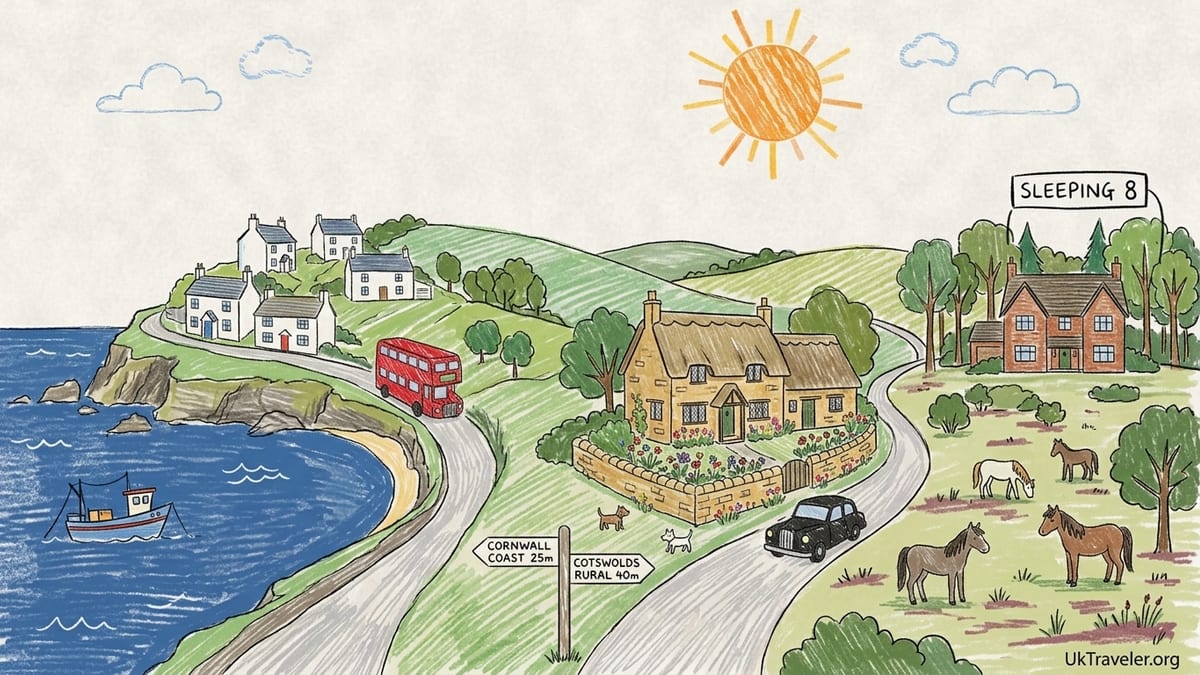
Across southern England, holiday cottages now cover everything from compact seaside apartments to architect designed barn conversions and large country houses. Specialist agencies and independent owners list hundreds of properties in Cornwall and Devon alone, with Dorset, the Cotswolds, Wiltshire, the New Forest, the Isle of Wight and the Kent and Sussex coasts adding many more. Inventory is particularly dense along Cornwall’s north coast around Newquay and St Ives, East Devon’s Jurassic Coast, Dorset’s Purbeck peninsula, and classic Cotswold villages such as Bourton on the Water and Stow on the Wold.
Prices vary widely by region and season, but some patterns are consistent. A two bedroom cottage a short walk from the beach in Cornwall or Devon in peak August often starts around the low to mid four figures for a week, while the same property outside school holidays can drop to a few hundred pounds. Inland Cotswold or Wiltshire cottages, and rural New Forest or Isle of Wight houses, can be better value in summer, while coastal Kent and Sussex cottages sometimes undercut the south west for short breaks outside high season.
The flexibility of self catering is a key draw. Most cottages provide full kitchens with hobs, ovens and fridges as standard, and many now include dishwashers, washing machines and dedicated outdoor space. That makes longer stays practical, especially for families and dog owners who would quickly rack up restaurant and pet fees in a hotel. Minimum stays typically range from two or three nights in shoulder seasons to a firm seven nights during the main school holidays.
Because the cottage sector has grown so fast, quality varies. Established coastal complexes might feel close to a resort, with on site parking, laundry and reception, while one off conversions on farms or village lanes feel more like house sitting for a local. Reading recent reviews and studying floor plans and photos is essential, particularly if accessibility, parking or child safety are priorities.
Seaside Cottages: Cornwall, Devon, Dorset and the South Coast
Seaside cottages are the archetypal southern England escape, and nowhere does them quite like Cornwall. Around Newquay’s Fistral Beach, contemporary sea view apartments routinely sleep four in two bedrooms, with private balconies, on site parking and lifts. A typical peak summer week in a mid range, two bedroom Fistral apartment that accepts one dog might fall in the 1,500 to 2,000 pounds range, dropping to under 800 pounds in May or late September. In smaller fishing villages such as Mousehole or Portloe, traditional terraced cottages with two bedrooms and compact courtyards remain in high demand for couples and young families.
Devon’s north coast offers a blend of surf beaches and slightly gentler pricing. In resort towns like Woolacombe or Croyde, a modern two or three bedroom cottage within walking distance of the sand might cost a little less than a comparable Cornish option in August, especially if you look a few streets back from the seafront. East Devon resorts, including Sidmouth and Seaton, have grown a network of self catering cottages and apartments in Victorian villas and farm conversions that give access to the Jurassic Coast without the higher price tag of southwest Cornwall.
Dorset’s coast suits travellers who want sea views without the furthest drive west. Around Lyme Regis, West Bay and Swanage, converted fisherman’s cottages, small townhouses and barn conversions offer flexible stays. Expect to pay a premium for anything right on the Cobb in Lyme Regis or above the harbour at West Bay, especially in late July and August. By looking a short drive inland, for example at cottages on working farms near Bridport or Dorchester, families often save several hundred pounds over a week while still being 10 to 20 minutes from the sea.
Further east, the Isle of Wight, plus Kent and Sussex, offer gentler seaside cottage pricing. On the Isle of Wight, self catering clusters close to Ventnor and Shanklin, including traditional bungalows near Steephill Cove and cottage complexes on historic estates inland. Around Whitstable, Broadstairs, Hastings and Rye, converted fishermen’s houses and compact town cottages are popular with rail travellers from London, with three or four night minimums common outside the main holidays. These south and east coast areas can be strong value for long weekends where Cornwall and Devon might insist on full weeks.
Rural Stone Cottages: Cotswolds, Wiltshire and the New Forest
Honey coloured stone cottages in the Cotswolds are the quintessential rural English daydream. Picture a two or three bedroom terrace in Bourton on the Water or Chipping Campden with low beams, flagstone floors and a walled garden. These properties are heavily booked for long weekends year round, often with three night minimums and weekly bookings at Christmas and in August. Nightly rates can rival city hotels, but when split between four guests the relative value is strong, particularly given that you have a full kitchen and living space instead of one or two bedrooms.
Wiltshire’s villages and small towns, from Castle Combe to Bradford on Avon, offer a similar aesthetic with often slightly lower prices. Farm based conversions near the edge of the North Wessex Downs or close to prehistoric sights like Avebury and Stonehenge frequently include generous parking, large kitchens and enclosed gardens that work well for children and dogs. Many ask for a three or four night minimum at weekends and a week in peak summer, but are open to two night breaks midweek.
The New Forest brings a different sort of rural cottage experience. Here, the draw is the mixture of heathland, ancient woodland and pony dotted lanes. Self catering stock ranges from modest two bedroom brick cottages on village lanes in Brockenhurst or Lyndhurst to substantial houses that sleep eight or more on the edge of the forest. Enclosed gardens are especially valued because free roaming ponies and donkeys have a habit of wandering up to open doors. Prices are at their highest during May half term, the main summer holidays and autumn foliage season in October.
For many travellers, rural cottages are where self catering most clearly beats hotels. A family of five could easily need two hotel rooms or a suite in a New Forest boutique hotel, but a three bedroom cottage with a large kitchen and parking may well come in cheaper per night, with far more living space. The trade off is the need to plan meals and drive to pubs or farm shops rather than having a restaurant downstairs.
Dog Friendly and Hot Tub Stays: What to Expect
Dog friendly cottages are now a staple across southern England, particularly in Cornwall, Devon, Dorset and the New Forest. Many coastal cottages allow one or two dogs, often charging a modest flat fee per stay or a per night supplement. A typical example is a Cornish barn conversion that sleeps four, with a private garden and one dog included in the price, and an extra charge for a second dog. Some parks and cottage complexes include dog friendly units as standard, with enclosed patios, outdoor hoses for sandy paws and information on nearby year round dog friendly beaches.
Policies vary more around beaches and local rules. Even at dog friendly properties, peak summer restrictions can apply on certain stretches of sand, especially in Cornwall, Devon and the Isle of Wight, where dogs are sometimes barred from main resort beaches during the day between early July and late August. Booking a cottage a short drive from several smaller coves or estuaries that remain dog friendly all year can make a big difference if you are travelling with pets.
Hot tub properties have moved from novelty to mainstream over the last decade. You will now find them scattered across most of the regions covered here, from glass fronted lodges above Cornish surf beaches to Cotswold barn conversions with private spa courtyards. Prices reflect the extra amenity: a three bedroom hot tub cottage might cost noticeably more per week than a similar property without, and minimum stays are often stricter, particularly on weekends and bank holidays.
Guests should budget for practicalities around hot tubs. Owners sometimes levy higher cleaning fees or require a longer gap between bookings to service the tub, and usage rules can restrict hours or the number of bathers at one time. Reading the small print matters; in some cases, damage deposits are higher for hot tub properties, and glass is banned in the tub area, meaning you might want to bring your own plastic drinkware for evening soaks under the stars.
Large Family Houses vs Hotels
One of the clearest value plays in the southern England cottage market is at the larger end. Houses that sleep eight to twelve guests are widely available in all the featured regions, from big Victorian townhouses in coastal resorts to country houses with multiple reception rooms and large gardens. These properties appeal to multi generational groups and friend reunions who might otherwise need four or five hotel rooms. Even with summer week prices that can run into several thousand pounds, the per person nightly cost often compares favourably with mid range hotel rooms in the same area.
Take a notional eight berth house near the Cornish coast or in the New Forest, priced around the mid to high three thousands for a prime August week. Split between four couples or two families, the nightly cost per person can look surprisingly reasonable once you factor in the ability to self cater breakfast and some dinners, store children’s snacks and drinks, and avoid bar prices. By contrast, booking four decent hotel rooms in a popular seaside town for the same dates can easily approach or exceed the same outlay, with less flexibility and shared space.
Large houses do carry extra responsibilities. Owners often set higher security deposits and stricter house rules to deter parties, and minimum stays are usually a full week in summer and at Christmas and New Year. Parking can be a limiting factor in traditional villages and small coastal streets, where driveways may only fit two or three cars. When planning a group trip, it is important to be realistic about car sharing, use of local trains or taxis and whether the property layout suits everyone’s mobility and privacy needs.
Hotels still win on daily servicing, room service, pools and on site dining, so the calculus shifts for shorter stays or smaller groups. A couple on a two night break in the Cotswolds or Brighton might prefer a small hotel or inn with breakfast included. For families staying five nights or more, particularly those who value separate bedrooms, living space and gardens, self catering quickly becomes the more comfortable and economical option.
Practicalities: Minimum Stays, Fees, Parking and Kitchens
Minimum stays are one of the most important practical considerations when booking southern England cottages. Many coastal properties in Cornwall, Devon and Dorset require seven night bookings from Saturday to Saturday or Friday to Friday between mid July and late August. Shoulder seasons, including May and June and September, increasingly allow three or four night short breaks, while winter often sees two night minimums, especially in the Cotswolds, New Forest and urban centres in Kent and Sussex.
Cleaning fees are handled in different ways. Some owners build cleaning into the overall rental, advertising an all in weekly rate. Others add a separate cleaning charge that can vary from a modest flat fee on a small cottage to a more substantial amount for large houses or hot tub properties. Guests should factor this into comparisons and check whether linen, towels, utilities and Wi Fi are included or charged separately. Many well established operators now bundle heating, electricity, bed linen, towels, parking and Wi Fi into the rental, with no hidden extras, which simplifies budgeting.
Parking is a crucial detail in popular coastal towns and traditional villages. Newer apartment blocks near beaches often include one dedicated parking space per unit, sometimes with the option of paying extra for a second car. Older fisherman’s cottages or stone terraces may have no private parking at all, relying on public car parks or on street spaces that fill quickly in school holidays. Rural cottages and barn conversions typically excel here, with ample off road parking on farmyards or private drives, but access tracks can be narrow and unsuited to very low slung cars.
Kitchen facilities make or break a self catering stay. At a minimum you should expect an oven, hob, fridge and basic cookware. Many modern cottages now provide full sized fridge freezers, dishwashers and washing machines as standard, particularly in family orientated properties. Higher end rentals often go further, with induction hobs, Nespresso type coffee machines and extensive crockery and glassware. Checking inventories before arrival helps avoid over packing; for instance, some beach focused cottages supply cool boxes, plastic plates and containers for picnics, while rural retreats might emphasise baking equipment or barbecue tools.
Peak School Holiday Pricing and How to Save
Pricing in southern England’s cottage market is tightly bound to the school calendar. The late July to late August high season brings the steepest rates, especially for family sized properties near beaches or major attractions. Surveys of tens of thousands of cottages across the UK have consistently shown that a week around the early August peak can cost several hundred pounds more than early July or early September in the same property. Coastal areas in Cornwall, Devon and Dorset tend to see the sharpest jumps, followed by the New Forest and the Cotswolds.
Families tied to school dates still have strategies to save. Booking as early as the previous autumn secures the widest choice at the lower end of peak prices, particularly for cottages with rare features like enclosed gardens, four equal bedrooms or level access. Travelling at the very start or end of the summer break, where local authority term dates allow, can shave meaningful amounts off rates and reduce crowding. February and October half terms, along with Easter, are popular but often notably cheaper than the main summer holidays for equivalent cottages.
Those without school age children can exploit the biggest discounts by travelling outside peak periods. In November to March, excluding Christmas and New Year, weekly rates in Cornish or Devon self catering complexes can drop to a fraction of their summer prices, with offers on longer stays. A seven night stay in a four star Cornish villa sleeping up to six people in winter might be available for a few hundred pounds, compared with well over a thousand in August. Cotswold and New Forest cottages are also attractive in low season for cosy, good value long weekends.
Flexibility on location brings additional savings. Choosing a property a ten or fifteen minute drive from the sea, rather than directly on the seafront, often yields a noticeable price drop in Cornwall, Devon and Dorset. Similarly, staying just outside the most famous Cotswold villages or picking an inland Kent or Sussex base gives access to coast and countryside without marquee village premiums. For many travellers, the sweet spot is a cottage that balances easy access to beaches or walking trails with lower rates and easier parking.
The Takeaway
Southern England’s holiday cottage market has grown into a diverse and substantial accommodation sector. From surf side apartments in Cornwall and Devon to stone cottages in the Cotswolds and wooded retreats in the New Forest and on the Isle of Wight, self catering properties now compete head on with hotels for comfort and, often, price. Travellers can choose between seaside cottages, rural boltholes, dog friendly and hot tub escapes, and large family houses, each with their own strengths.
The key to a successful stay lies in matching property type and location to your travel style. Beach lovers with dogs should focus on year round dog friendly stretches of coast and enclosed gardens, while walkers may prioritise direct access to footpaths from rural cottages in Wiltshire or the New Forest. Large groups will usually find that a big house with a well equipped kitchen and ample parking beats multiple hotel rooms on both cost and sociability.
Understanding minimum stays, cleaning and dog fees, parking arrangements and the contours of peak pricing helps you compare options fairly. When you read beyond the glossy photos to study floor plans, facilities lists and recent reviews, the southern England cottage market offers remarkable choice and flexibility, whether you are planning a short off season escape or a classic summer holiday by the sea.
FAQ
Q1. When does a holiday cottage work out better value than a hotel in southern England?
A cottage usually beats a hotel once you need more than one room or are staying four nights or longer. Families and groups of four or more often save money by sharing a two or three bedroom cottage, especially in Cornwall, Devon, Dorset and the Cotswolds, where hotel family rooms and suites can be expensive in peak season.
Q2. What is the typical minimum stay for cottages in Cornwall, Devon and Dorset?
In late July and August, many coastal cottages insist on seven night stays, usually from Friday or Saturday. Outside peak season, three or four night minimums are common for weekends, with two night stays more available in winter and midweek, and slightly more flexibility for inland properties than for seafront homes.
Q3. How far in advance should I book a popular seaside cottage for school summer holidays?
For prime weeks in Cornwall, Devon, Dorset or the Isle of Wight, it is wise to start looking between nine and twelve months ahead, especially if you need specific features like sea views, enclosed gardens, step free access or multiple equal bedrooms. Some of the most sought after cottages see repeat guests reserving the same week each year.
Q4. Are cleaning fees and utilities usually included in cottage prices?
Many established agencies and owners in southern England include cleaning, heating, electricity, linen, towels and Wi Fi in the quoted weekly rate. Others may add a separate cleaning fee or charge extra for linen or towels, particularly on shorter stays. Always check the breakdown before booking so you can compare like for like with hotels and other cottages.
Q5. What should I look for in kitchen facilities for a comfortable self catering stay?
At minimum, look for an oven, hob, fridge, basic cookware and enough crockery for your group. For longer trips, a full size fridge freezer, dishwasher, washing machine and decent worktops make a big difference. Families and beach goers may also value plastic plates, storage containers and cool boxes, while keen cooks might prioritise sharp knives, baking trays and good pans.
Q6. How do dog policies typically work at southern England holiday cottages?
Most dog friendly cottages allow one or two dogs, often with a flat fee per stay or a modest nightly supplement. Rules commonly require dogs to stay off furniture and beds, be kept on leads in shared grounds and not be left alone for long periods. Check local beach restrictions too, as some main resort beaches limit dog access during daytime in high summer.
Q7. Are hot tub cottages worth the extra cost?
Hot tub properties almost always cost more than similar cottages without tubs, and they can carry higher cleaning fees and deposits. They are most worthwhile for groups planning to spend evenings at the property and for winter or shoulder season stays, when a private hot soak adds real value. If you will be out exploring all day and evening, you may prefer to save the premium.
Q8. Is parking usually included with holiday cottages in villages and resorts?
Rural cottages and barn conversions often have ample off road parking, sometimes for several cars. In older coastal resorts and historic villages, private parking is less guaranteed. Apartments may come with one allocated space, while traditional cottages sometimes rely on public car parks or on street parking. If you are driving, confirm parking details, height limits and any extra charges before you book.
Q9. Which regions offer the best value for money for cottage stays in southern England?
In general, inland areas of Devon and Dorset, quieter parts of the Cotswolds and Wiltshire, and less hyped stretches of the Kent and Sussex coasts offer better value than marquee Cornish surf towns or the most famous Cotswold villages. Travelling outside the late July and August peak and staying a short drive from the sea also improves value significantly.
Q10. How can I avoid surprises when booking a large family cottage?
For big houses, study floor plans, bedroom layouts and bathrooms carefully, and check for any bunk rooms or sofa beds that may not suit all adults. Confirm total costs including cleaning, dog fees, hot tub servicing and security deposits, and clarify parking capacity and house rules around noise and visitors. Clear expectations at booking stage make multi generational or group trips much smoother.