


From Great Yarmouth’s golden sands to the quieter stretches of the Suffolk coast, the East of England is packed with large family holiday parks offering caravans, lodges and chalets. With 26 holiday parks and villages listed just around Great Yarmouth alone, and big-name sites advertising short caravan breaks from around £109 and peak summer holidays from about £259, it can be hard to know where to start. This guide looks at the best family-friendly options in Norfolk and Suffolk, focusing on the busy Great Yarmouth, Hemsby and Caister strip and the wider east coast, and compares how caravans, lodges and chalets stack up for beach access, pools, kids’ clubs, dog friendliness and rainy-day facilities.
How the East of England Holiday Park Scene Stacks Up
The coastal stretch from north of Great Yarmouth down into Suffolk is one of the UK’s densest clusters of holiday parks, with a mix of big-brand names and independent sites. Official tourism listings for Great Yarmouth currently show 26 separate holiday parks, chalet sites and holiday villages in and around the town and nearby resorts such as Hemsby, Caister, Scratby and Hopton. Many of these are large, full-facility parks, with hundreds of caravans or lodges, indoor pools, evening entertainment and direct or easy access to the beach.
On price, the region remains competitive for families watching the budget. At the time of writing, large parks in Great Yarmouth such as Vauxhall are advertising off-peak caravan breaks in 2026 from around £109, with school holiday and summer breaks from roughly £259 depending on grade of accommodation and length of stay. Those headline prices are typically for a long weekend outside peak dates or a basic caravan, but they give a realistic sense of what is possible if you book early or travel in shoulder seasons such as late April, early June or September.
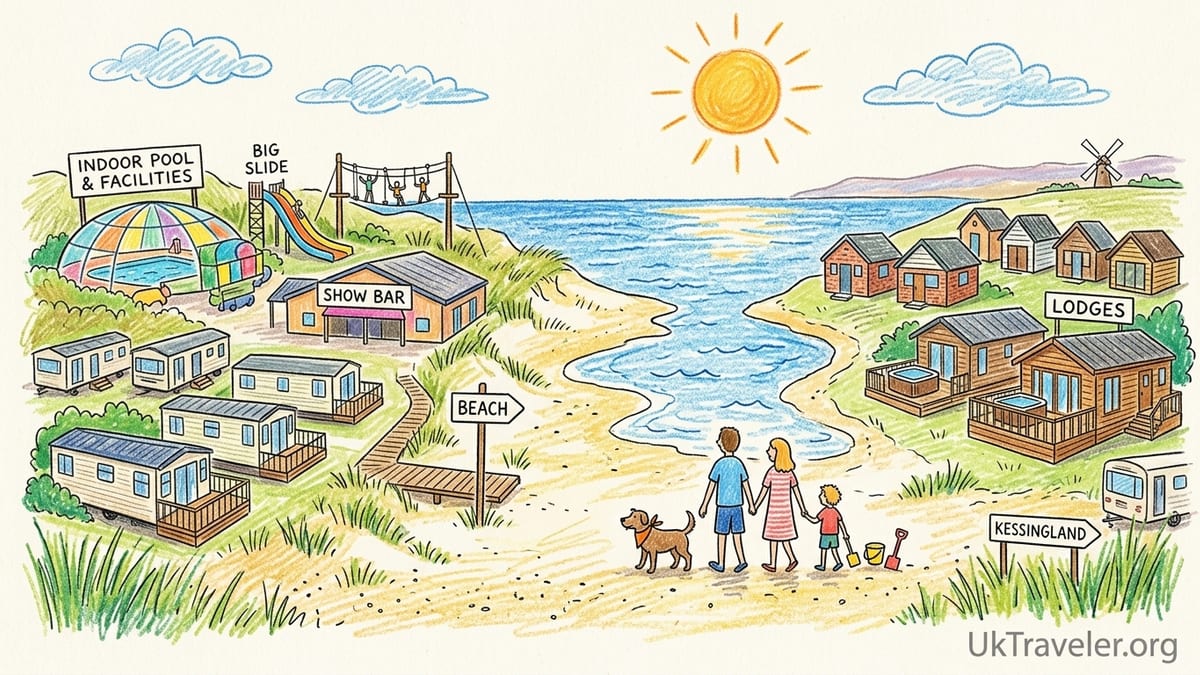
Across Norfolk and Suffolk, you will find three main types of accommodation on parks: static caravans, lodges and chalets. Caravans are by far the most common and cover everything from compact two-bedroom models to premium three or four-bedroom units with decking and sea glimpses. Lodges generally sit at the top end, with more living space, better insulation and, on some parks, extras such as hot tubs. Chalets are common around legacy resorts like Hemsby and California and range from simple brick-built blocks to upgraded, open-plan units that offer more of a “little cottage by the sea” feel.
For families, the key differences come down less to the label on the door and more to what the park includes in the price. When you compare options in Great Yarmouth, Caister or Kessingland, look closely at whether you get access to an indoor pool, how extensive the kids’ clubs and entertainment programme are, and whether things like soft play, climbing walls or high ropes courses require extra payment. A cheaper caravan on a park with big indoor facilities can often work out better value than a slightly nicer lodge somewhere with little to do on a rainy day.
Great Yarmouth’s Big-Hitter Parks: Vauxhall, Seashore and Caister
Great Yarmouth remains the focal point for many east coast family breaks, combining traditional seafront attractions with easy access to the Norfolk Broads. Around the town you will find some of the region’s best-known holiday parks, each with a slightly different flavour. Vauxhall Holiday Park, now operated by a major national group, sits just inland from the seafront and markets itself heavily around its large indoor pool complex, all-weather activities and full-on evening entertainment in the main venue. For families who want lots of organised fun, character shows and plenty to do without leaving the park, Vauxhall is a strong all-rounder.
On the northern edge of Great Yarmouth, Haven’s Seashore Holiday Park offers a different balance, with direct access to the wide sandy beach and a recently refreshed indoor pool and splash facilities. The park overlooks the dunes and promenade, making it appealing if you want to combine traditional bucket-and-spade days with modern facilities. Seashore’s caravans span standard through to signature grades, and many families with younger children like the ability to walk or take a short bus ride down the seafront to the main arcades and attractions, including the Pleasure Beach and the Sea Life aquarium.
Further up the coast, Caister-on-Sea Holiday Park has been welcoming families for well over a century and still scores highly with guests who want a proper “park by the dunes” setting. The park sits directly behind miles of sandy beach, with boardwalk access from within the site. Reviews consistently mention the easy beach access and the big indoor leisure pool, along with a packed programme of kids’ clubs and evening entertainment in peak season. Caravans dominate the accommodation stock here, though higher-grade models offer more space and often partial sea views. For active families, Caister combines beach time with organised activities such as archery, aerial adventure courses and sports coaching sessions, many of which can be pre-booked.
Price-wise, these flagship parks near Great Yarmouth are usually among the most expensive in the area at absolute peak dates, but they are also the ones most likely to run short promotional breaks outside the school holidays. A midweek spring break in a standard caravan can often cost well under £200 for a family, particularly if you are flexible on exact grades and book early. For many, the extra on-park facilities, especially large indoor pools and modern show bars, justify slightly higher prices compared with smaller, quieter parks farther along the coast.
Hemsby and Caister: Chalets, Caravans and Classic Holiday Villages
Hemsby, a few miles north of Great Yarmouth, illustrates how varied east coast holiday accommodation can be. The village is essentially built around holiday parks, with a mixture of static caravan sites, large chalet villages and more modern holiday park complexes. Richardson’s Hemsby Beach Holiday Park positions itself as a high-energy family resort, with a large indoor pool, flumes, adventure play, an extensive entertainment programme and a range of caravans and lodges. It sits a short walk from Hemsby’s lively “village” strip of arcades, cafes and small funfair rides, and around five to ten minutes on foot from the main beach, depending on where you stay on site.
Scattered around Hemsby and neighbouring Newport are older-style chalet parks where brick-built or timber chalets line up along small roads. These chalets can offer excellent value, especially for larger or multi-generational groups who want separate bedrooms and a bit more privacy. Interiors vary significantly because many units are individually owned, so it is worth looking at up-to-date photos and guest feedback before booking. Facilities on some of these chalet parks are limited to a small outdoor play area or seasonal bar, while others may share access to a pool or clubhouse. For families who plan to spend most of the day on the beach or exploring, a simple but well-kept chalet can be an economical base.
Caister itself blends large, branded parks with smaller independents. While the main Haven park offers the fullest range of facilities, there are also quieter caravan parks and chalet sites tucked behind the dunes or closer to the village. These often appeal to families with older children or those bringing dogs who prefer a less busy setting while still being close to expansive sandy beaches. Many smaller parks in the Caister and Scratby area provide straightforward static caravans with parking beside the unit, a small launderette and perhaps a modest bar or kids’ room, keeping prices lower but requiring you to head into Great Yarmouth or Hemsby for big entertainment venues.
Between Hemsby and Caister, coastal erosion has been a reality in recent years, with some older seafront chalets and properties affected. Newer caravan parks tend to sit further inland on more secure ground, and most big operators actively manage access routes to the beach. When researching, it is worth checking recent guest comments or local news for any temporary changes to beach access, especially if mobility is a concern or you are travelling with pushchairs.
Norfolk’s Wider Coast: Hopton, California and Quieter Corners
Beyond Great Yarmouth’s main strip, the Norfolk coast offers a series of quieter resorts that still host substantial holiday parks. To the south, Hopton-on-Sea is home to a large park popular with returning families who like a slightly more relaxed atmosphere but still want indoor and outdoor pools, bars and restaurants, and organised entertainment. Many of the caravans here sit on terraces looking out toward the sea, and the small, sheltered beach below the cliffs is ideal for younger children. Prices at Hopton are often comparable to or slightly above Great Yarmouth’s main parks in peak season, but some families feel the more spacious layout and coastal views are worth the premium.
North of Great Yarmouth, smaller communities such as California, Scratby and Winterton host a scattering of parks that tend to be more low-key. In California, for example, you will find traditional caravan sites and chalet parks within walking distance of the sand and shingle beach, plus a modest parade of cafes and amusements. These parks usually have smaller pools or rely on outdoor facilities, so they may be less appealing for midwinter or very rainy weeks, but they can feel quieter and more personal in summer compared with the big-brand resorts. They also often accept dogs in a good proportion of units, with easy access to dog-friendly sections of the shoreline.
For nature-minded families, basing yourself at a park close to the Norfolk Broads can be a smart move. Several holiday parks near Burgh Castle, for example, sit beside rivers and marshes, combining on-site pools and play areas with boat trips, fishing and birdwatching. These tend to be caravan-led sites with fewer chalets or lodges, and beach access relies on a short drive to Gorleston or Great Yarmouth, so they suit families who are happy to mix coastal days with countryside activities.
Whichever part of the Norfolk coast you choose, one theme is consistent: indoor facilities matter. Even in July or August, East Anglia can be breezy and showers are common. Parks with fully enclosed pool complexes, large indoor play barns or entertainment venues give you ready-made back-up plans. When comparing prices, factor in how much you might otherwise spend on external attractions such as indoor play centres or swimming pools if your chosen park offers little to do under cover.
Suffolk’s Sunrise Coast: Kessingland, Lowestoft and Felixstowe
South of the Norfolk border, Suffolk’s “Sunrise Coast” offers a slightly softer, more rural version of the family holiday park scene, though big-brand names are still present. At Kessingland Beach, a major holiday park sits just behind the dunes, with direct or very short walking access to a long, largely undeveloped sand and shingle beach. On-park, families have both indoor and outdoor pools, an adventure playground and evening showbar entertainment, giving the site a similar feel to the larger Norfolk parks while the surroundings feel a little wilder and less built up.
Around Lowestoft and Pakefield you will find a cluster of parks run by national operators, along with independent sites that look out over the low cliffs. Static caravans and chalets again dominate, though some parks have begun to add higher-spec lodges to appeal to longer-stay guests and second-home buyers. Many of these Suffolk parks emphasise sea views and direct coastal walks rather than large-scale indoor complexes, which can be a selling point for families who prefer early-morning beach strolls and quieter evenings on the decking to late-night show bars.
Farther south, Felixstowe remains one of Suffolk’s most established seaside resorts and supports several sizeable holiday parks. Parks here typically sit within a short walk or a few minutes’ drive of the main beach and seafront, with its mix of amusements, traditional fish and chip shops and the historic fort and nature reserve at Landguard Point. One of the better-known parks close to town offers an indoor pool and modern entertainment facilities but has no direct beach frontage, while its sister park focuses more on a peaceful seafront location with minimal facilities, appealing to couples or families who are happy to spend most of the day on the promenade or exploring nearby coastal villages.
Compared with Norfolk, Suffolk’s big parks can sometimes be marginally cheaper in peak weeks, though price differences are often small and driven more by specific offers and accommodation grades than by county. Suffolk’s main advantage for many families is its access to quieter, less crowded beaches and attractive day-trip options inland, such as the market towns of Beccles and Woodbridge or the heathland and forests around Dunwich and Rendlesham, which offer plenty of space for cycling and walking when children need a break from the beach.
Caravans, Lodges and Chalets: Which Works Best for Your Family?
Choosing between a caravan, lodge or chalet often comes down to your budget, the season and how you like to holiday. Modern static caravans on large parks in Great Yarmouth or Kessingland typically sleep four to eight people in a compact but efficiently designed space, with open-plan living areas, fitted kitchens and shower rooms. Entry-level models are perfectly adequate for most families on a short break, especially in summer when you will spend much of your time outdoors, while mid-range and premium grades add extras such as central heating, double glazing, dishwashers and larger decking areas.
Lodges, which you will find on some of the larger east coast parks and on dedicated lodge developments, are a step up in both price and comfort. They usually offer more generous living and bedroom space, better insulation and sometimes additional features such as en-suite bathrooms or hot tubs. For multi-generational groups or families travelling outside high summer, a lodge can feel more like a small holiday cottage, with a proper hallway and utility storage, making wet coats and sandy shoes easier to manage. Because they are more expensive per night, it is worth looking for parks that offer lodge-specific perks such as quieter locations within the site or access to premium facilities.
Chalets are an East Anglian classic, particularly around Hemsby, California and some Suffolk resorts. They range from simple single-storey brick or timber units dating from the mid-20th century to refurbished open-plan spaces with modern bathrooms and kitchens. Chalets often appeal to families with toddlers or anyone who finds caravan steps a challenge, as they usually have level access and more solid walls that can make them feel quieter and sturdier in windy weather. Because many chalets are individually owned and let, standards and styling vary widely, so focus your search on up-to-date interior photos, recent reviews and clear descriptions of heating, insulation and bed layouts.
When you compare prices, remember that the type of accommodation is only part of the value equation. A simple chalet on a park with very limited facilities may look cheap but could leave you paying extra to visit off-site pools, indoor play centres and evening shows, especially on a wet week. A slightly more expensive caravan or lodge on a full-facility park might save money overall by including all-weather pools, kids’ clubs and entertainment passes in the headline price.
Beach Access, Kids’ Clubs and Rainy-Day Back-Up
For many families, easy beach access is the single biggest factor when choosing between parks along the Norfolk and Suffolk coastline. Sites like Caister-on-Sea, Kessingland Beach and several parks near California and Scratby sit directly behind dunes or low cliffs, meaning you can walk from your caravan or lodge to the shoreline in a matter of minutes. In practice, this can transform the feel of a holiday, allowing you to pop back for lunch, naps or forgotten buckets without loading everyone into the car. Parks set just inland, like some in Great Yarmouth and Felixstowe, may require a short drive or bus ride to reach the beach, which is worth factoring in if you have very young children or limited mobility.
Kids’ clubs are another major differentiator. Larger branded parks near Great Yarmouth, Hopton and Kessingland typically run full daily programmes in school holidays, with age-banded sessions, character meet-and-greets, sports coaching and creative workshops. Evening entertainment often includes early family shows followed by live music or comedians. Smaller independent parks may offer only a basic playroom or an occasional kids’ disco, which can suit families who prefer a quieter atmosphere but may be less satisfying for older children who want more social time and activities. When you look at brochures or booking sites, check not just that a kids’ club exists but also how frequently sessions run and whether there are extra charges.
Given the East of England’s famously changeable weather, rainy-day facilities carry real weight. Parks with large indoor pool complexes, splash zones, flumes or lazy rivers stand out as strong choices for families booking outside high summer or simply wanting guaranteed fun whatever the forecast. Vauxhall in Great Yarmouth, for example, builds much of its offer around its indoor water park and all-weather activities, while Seashore and Caister both invest heavily in covered leisure spaces. In Suffolk, Kessingland Beach and Felixstowe’s larger parks also provide indoor pools, though the scale of flumes and water features may be more modest.
Beyond pools, look for soft play barns, indoor sports courts, arcades and covered mini-golf or climbing walls. These are the features that make the difference between a rainy afternoon everyone remembers fondly and one spent trying to entertain children in a cramped caravan. If you know your children are happiest in the water, it may even be worth compromising slightly on beachfront location to secure a park with a stronger indoor offer within an easy drive of the coast.
Dog-Friendly Options and Practical Tips for Booking
Many families now travel with dogs, and the east coast holiday park market has responded. A substantial number of caravans and some lodges on parks around Great Yarmouth, Hemsby, Caister, Kessingland and Felixstowe are designated pet-friendly, usually with a small nightly supplement and a limit on the number of animals per unit. Dog-friendly beaches are common along the Norfolk and Suffolk coasts, although some resorts impose seasonal restrictions on specific central sections, so it is wise to check local signage or council information when you arrive.
If dog walks are a priority, favour parks that back directly onto dunes or coastal paths, such as those at Caister-on-Sea, California, Kessingland and the quieter fringes of Felixstowe. These allow you to step out early in the morning for a brisk walk without needing to drive. Some parks also provide dog exercise areas, outdoor water bowls near reception and dog-friendly seating zones in their bars or terrace areas, though policies vary. If you have a nervous or reactive dog, a quieter, more spacious park or a lodge with a fully enclosed decking area can be worth the extra cost.
When it comes to booking, early planning remains the best way to secure value. Those headline caravan prices from around £109 and summer holidays from about £259 at big-name parks are usually tied to specific midweek dates or shorter breaks outside the absolute peak of late July to late August. Families tied to school holidays will often find better value in the May half-term or the first week of the summer break than in the central August fortnight. Signing up for park operators’ newsletters and price alerts can help you spot flash sales, especially for last-minute spring or autumn escapes.
Finally, check carefully what is and is not included in the price. Some parks bundle entertainment passes, swimming and kids’ clubs into the overall cost, while others charge for certain activities, Wi-Fi or linen and towels. If you are comparing a well-priced chalet in Hemsby with a caravan at a larger resort in Great Yarmouth, make a simple list of likely extras such as evening shows, pool use, soft play and parking charges. This will help you decide whether a higher upfront price actually represents better overall value once you add in what your family will realistically do each day.
The Takeaway
Norfolk and Suffolk’s east coast is one of the UK’s most concentrated and competitive markets for family holiday parks, with Great Yarmouth alone listing 26 parks and villages. The choice can feel overwhelming, but a few key questions quickly narrow it down: how important is being right on the beach, how much indoor activity space do you need, and do you prefer a full-on entertainment resort or a quieter coastal base?
For families who want the lot, the big branded parks in and around Great Yarmouth, Caister and Kessingland deliver beach access, indoor pools, kids’ clubs and evening shows, with caravan breaks starting around the low hundreds of pounds outside peak weeks. Those seeking space and value, or travelling with dogs, might gravitate toward slightly smaller caravan sites and chalet villages in Hemsby, California or Felixstowe’s fringes, accepting fewer facilities in exchange for quieter beaches and simpler surroundings.
Whether you opt for a well-equipped caravan at a large resort, a cosy lodge overlooking the dunes or a no-frills chalet a short stroll from the arcades, the east coast’s blend of long sandy beaches, traditional seaside fun and easy day trips into the Norfolk Broads or Suffolk countryside means there is no single “best” park. Instead, the region excels at offering enough choice that most families can find a park that feels as if it has been designed with them in mind.
FAQ
Q1. Which area is best for a first-time family holiday park break in the East of England?
For a first trip, many families choose the Great Yarmouth and Caister area because it combines large full-facility holiday parks with a classic seafront, amusement parks, arcades and easy access to both beaches and the Norfolk Broads.
Q2. Are caravans, lodges or chalets better for young children?
For toddlers and younger children, modern caravans and single-level chalets both work well, as they offer compact layouts and often fewer internal stairs, while lodges suit larger families who want extra space and better insulation outside high summer.
Q3. How close to the beach are the main Norfolk and Suffolk holiday parks?
Many parks sit directly behind dunes or low cliffs with short paths or boardwalks to the sand, especially at Caister-on-Sea, Kessingland and parts of California and Scratby, while others such as some Great Yarmouth and Felixstowe sites are a short drive or bus ride from the main seafront.
Q4. What can we expect to pay for a short caravan break in this region?
As a broad guide, off-peak midweek caravan breaks at larger parks in 2026 can start from around £100 to £150, while school holiday weeks and higher-grade caravans or lodges cost more, particularly in late July and August.
Q5. Do these holiday parks offer much to do on rainy days?
Yes, many of the larger parks near Great Yarmouth, Hopton, Kessingland and Felixstowe have indoor pools, splash zones, soft play, arcades and covered entertainment venues, although smaller independent parks may offer fewer indoor facilities.
Q6. Are the holiday parks suitable for families with teenagers?
Teenagers often enjoy parks with bigger pool complexes, sports courts, climbing or aerial adventure courses and more varied evening entertainment, so larger branded parks around Great Yarmouth, Caister, Hopton and Kessingland tend to work best for this age group.
Q7. How dog-friendly are Norfolk and Suffolk coastal parks?
A significant number of parks across Norfolk and Suffolk designate specific caravans or lodges as pet-friendly and many nearby beaches have dog-friendly stretches, though you should always check park rules and local seasonal beach restrictions before booking.
Q8. Is it better to stay on a big resort park or a smaller independent site?
Bigger resort parks usually provide more facilities, kids’ clubs and evening shows, which suit active families, while smaller independent parks can offer quieter surroundings, simpler accommodation and sometimes better value for those who prefer to make their own entertainment.
Q9. When is the best time of year to visit for good weather and prices?
Late May, June and early September often provide a good balance of milder weather, longer days and more competitive prices than the peak school holiday weeks in late July and August, though conditions can be changeable at any time on the east coast.
Q10. How far in advance should we book a family holiday park in this region?
For school holiday weeks and popular parks around Great Yarmouth, Caister, Hopton, Kessingland and Felixstowe, booking several months ahead usually secures better choice and prices, while off-peak breaks can sometimes be found at shorter notice, especially outside bank holidays.