


From wide North Sea horizons to rows of pastel beach huts, the east of England’s coastline is made for unhurried cottage holidays. North Norfolk, the Suffolk Coast and a handful of quieter Essex resorts offer thousands of self catering places to stay, from compact fisherman’s cottages steps from the sand to spacious family houses with parking, hot tubs and space for the dog. This guide focuses on the strongest cottage inventory in North Norfolk and along the Suffolk Coast, with carefully chosen Essex options where the quality and location merit a look.
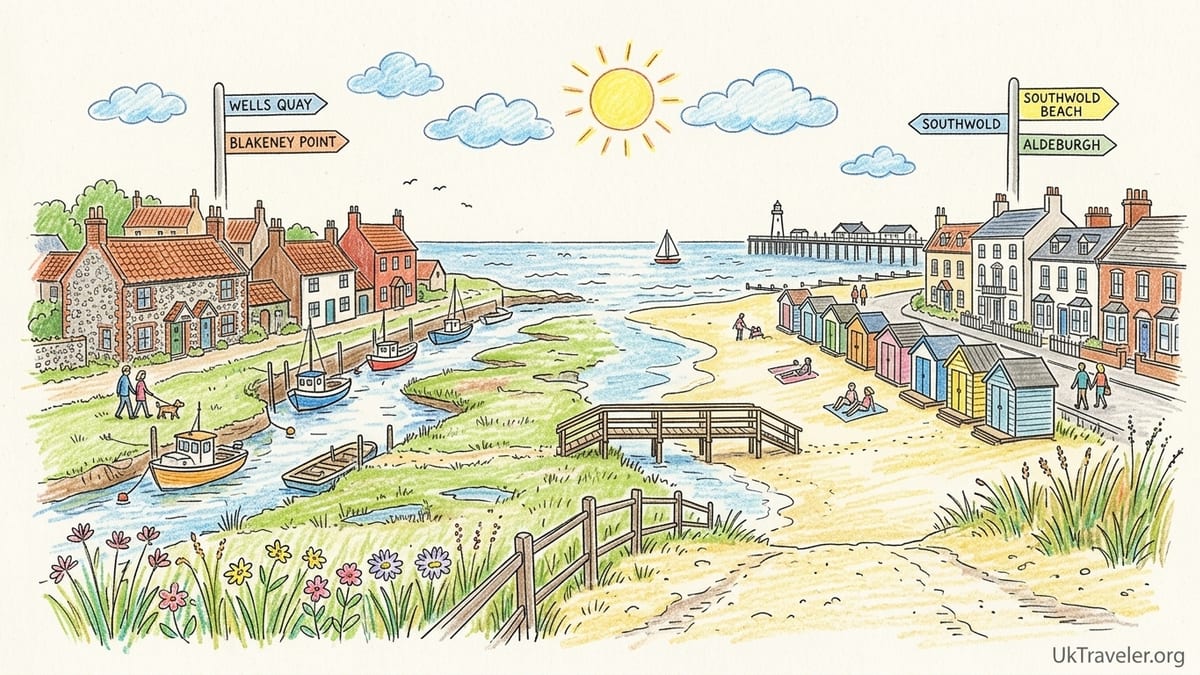
How the east coast cottage scene looks right now
North Norfolk and the Suffolk Coast have developed some of the most mature cottage markets in the UK, especially around Wells next the Sea, Blakeney, Cromer, Sheringham, Southwold and Aldeburgh. A single specialist in Norfolk is currently listing well over seven hundred coastal cottages, and it is common to see seven night prices for smaller, four star rated properties starting around the mid five hundreds in quieter weeks and rising to the high eight hundreds in peak periods. In practice that means a couple can often find a one or two bedroom cottage outside school holidays for roughly the same price as a mid range hotel, but with more space, a kitchen and usually better access to the beach.
On the Suffolk Heritage Coast, operators based in Aldeburgh and Southwold collectively advertise hundreds of cottages that stretch from Thorpeness and Aldeburgh up to Southwold, Walberswick and Dunwich. One Southwold agency alone promotes cottages in the town plus nearby villages such as Reydon and Walberswick, while an Aldeburgh focused specialist mentions over two hundred properties across Aldeburgh, Thorpeness, Southwold and surrounding countryside. This concentration of stock gives visitors a genuine choice between sea view apartments, period town houses near the high street and larger family homes with gardens slightly set back from the shore.
By contrast, the Essex coast has a smaller but interesting pool of cottages in resorts such as Frinton on Sea, Walton on the Naze and around Mersea Island. Here you are more likely to find one off houses and converted bungalows close to the promenade rather than dense clusters of holiday cottages. For travellers who value quieter sands, dog friendly beaches for much of the year and easier parking, these Essex bases can work very well as an alternative or add on to a week in Norfolk or Suffolk.
Across all three counties, the key factors that shape price and availability are distance to the beach, the presence of a direct sea view, on site or reserved parking, whether dogs are welcome and the size and flexibility of the sleeping arrangements. The following sections compare how those features play out in specific locations, using real cottages that are available to book at the time of writing as reference points.
North Norfolk: Wells next the Sea and Holkham
Wells next the Sea is one of North Norfolk’s best known bases, with a long sandy beach and pine backed dunes accessed by a scenic walk or a short road train from the harbour. Typical holiday cottages here fall into two camps: period fisherman’s houses in the lanes near the quay and more modern houses and barn conversions on the fringes of town. A good example of the former is Coastguard Cottage, a dog friendly house sleeping six within walking distance of the quay and pubs, with on site parking and an enclosed garden. Published weekly rates here span roughly from just under one thousand pounds in quieter weeks to the high one thousands during the heart of summer, reflecting its combination of space, parking and dog friendly status.
In Wells, very few properties sit directly on the sand because of the way the harbour and tidal marsh separate the town from the open beach. Instead, the premium is on being able to stroll to the quay in a few minutes. Families who prioritise immediate sand access might choose to stay just west at Holkham or in static lodge style accommodation near the beach car park, then make day trips into Wells. Holkham’s cottages, often run as part of the estate, tend to be characterful period houses in tiny hamlets, with generous gardens and parking but a short drive to the beach rather than a walk.
When comparing Wells cottages by price, a smaller two bedroom house without parking or sea views can sit closer to that six hundred to eight hundred and fifty pound band for a seven night stay outside the peak school holiday window. The step up in cost as you add secure parking, a courtyard or garden, a second bathroom and a dog friendly policy is visible across most agents’ listings. Wells works particularly well for extended families who want to combine beach days with boat trips, crabbing on the quay and easy access to Holkham National Nature Reserve.
Holkham’s vast beach, film famous and often cited as one of England’s best, is equally accessible from cottages in neighbouring villages like Burnham Overy Staithe and Stiffkey. Here you will find flint walled cottages that may not have sea views but do offer walking access to saltmarsh creeks and bird reserves. Prices are broadly similar to Wells, though small, simple cottages a little inland can still sometimes be found below the Norfolk four star average, particularly out of season.
Blakeney, Cley and the creeks
Blakeney sits in the heart of the North Norfolk Coast Area of Outstanding Natural Beauty, a former trading port now best known for its seal trips and atmospheric saltmarsh walks. The village has a strong stock of holiday cottages, ranging from compact boltholes tucked off the High Street to larger houses with gardens on the outskirts. Many are marketed specifically as dog friendly, reflecting the popularity of this stretch of coast with walkers and dog owners. One specialist lists an entire section of dog friendly Blakeney cottages, with options from small one bedroom apartments to grand period houses that sleep ten or more guests.
Most Blakeney cottages are set behind the sea wall, so true open sea views are rare. Instead, visitors look for elevated windows with views across the saltmarsh and creeks toward Blakeney Point. Properties that manage to offer this outlook, plus a dedicated parking space in a village where on street parking is tight, command some of the highest weekly prices on the coast. It is common to see a three bedroom cottage with marsh views and parking priced several hundred pounds higher in peak weeks than a similarly sized house without these benefits.
Neighbouring Cley next the Sea offers a similar cottage mix but in a more compact village built around the famous windmill. Here, you will often find traditional flint cottages set slightly back from the main road, which means no direct sea views but easy access by foot to the shingle beach and nature reserve. For travellers who are happy with a ten to fifteen minute walk or a short drive to reach the water, Cley can offer marginally better value than Blakeney itself, particularly for couples and small families.
In both Blakeney and Cley, hot tubs are less common than in inland Norfolk or in parts of Cornwall. The focus is more on cosy interiors, wood burning stoves and flexible sleeping for multi generational groups. If a hot tub is essential, it is worth filtering specifically for that facility or considering cottages in slightly less central locations where modern lodge developments include them as standard.
Cromer and Sheringham: classic resorts with family appeal
Cromer and Sheringham, further east along the North Norfolk coast, feel more like traditional seaside towns, with piers, promenades and family attractions. This makes them particularly appealing for travellers with younger children who want arcades, easy beach access and a choice of cafes and chippies within a short stroll of the cottage. The holiday cottage stock here includes seafront apartments, Victorian townhouses divided into flats and suburban houses in quiet streets a block or two from the sea.
In Cromer, cottages and apartments that sit directly on or just above the West Promenade carry a clear premium because you can step out almost onto the sand. While exact pricing fluctuates with demand, it is reasonable to expect seven night rates for a modern two bedroom sea view flat with parking to sit above the typical six to eight hundred and fifty pound band for four star cottages, especially during school holidays. Step a few streets inland, accept on street parking and a partial rather than full sea view, and prices tend to soften.
Sheringham has a slightly smaller centre but a similar feel, with a shingle and sand beach and a heritage railway that adds to its family charm. Many of the most practical cottages are traditional terraced houses within a five to ten minute walk of the station and seafront. These rarely have sea views but often come with small courtyards and enough space to store buggies, surfboards or buckets and spades. Dog friendly policies are common here too, although summer dog restrictions apply to parts of the main beach, so families with dogs may choose to drive a few minutes to less regulated stretches either side of town.
Hot tubs in Cromer and Sheringham remain something of a niche extra, more likely to appear in newly built houses on the edge of town than in characterful period properties close to the centre. If the idea of sinking into warm water after a day on the pier is attractive, it can pay to search for larger detached houses or modern developments slightly uphill from the seafront, where gardens are bigger and privacy is easier to achieve.
Southwold and Walberswick: Suffolk’s beach hut belt
Southwold is one of the Suffolk Coast’s most sought after towns, known for its colourful beach huts, pier and handsome Georgian and Victorian architecture. Holiday cottages here include petite terraced houses close to the seafront, renovated fisherman’s cottages in the lanes behind the High Street and larger homes with gardens near the common. Agencies based in town promote everything from compact couples’ boltholes to substantial houses used part time as successful holiday lets, reflecting strong demand for self catering stays.
Sea views are a key price driver in Southwold. A three storey contemporary house with an uninterrupted view of the beach and North Sea, plus a private garden, will typically command significantly higher weekly rates than a similar sized house set behind the High Street. Some properties are marketed through sales brochures specifically as ideal holiday homes because they sit just a few paces from the common, market place and beach, with parking for two cars and layouts that work well for extended families. Parking is valuable here; Southwold’s popularity on hot weekends makes street spaces scarce, so cottages with a dedicated drive or reserved space are particularly attractive.
Across the river from Southwold, Walberswick offers a more low key village feel with plenty of character cottages in lanes leading to the sand dunes. Many are within a five to ten minute walk of the beach, though only a handful have direct sea views due to the line of dunes. For families, the combination of quieter sands, easy crabbing in the creeks and the option to take the seasonal ferry or a walk across to Southwold makes Walberswick a strong alternative base. Prices here can be marginally lower than Southwold, especially for cottages without off street parking, but the gap has narrowed as demand for the wider Suffolk Coast has grown.
In both Southwold and Walberswick, hot tubs are not a defining feature of the cottage scene. Instead, visitors look for sunny courtyards, outdoor dining spaces and flexible sleeping for mixed age groups. Dog friendly properties are relatively easy to find, but travellers should check seasonal beach restrictions and be ready to use the dunes and nearby countryside paths for longer walks in high summer.
Aldeburgh, Thorpeness and nearby villages
Aldeburgh and its close neighbour Thorpeness anchor the southern end of the Suffolk Heritage Coast, with a strong network of local agencies marketing cottages and houses. One Aldeburgh based company alone promotes more than two hundred holiday homes in and around Aldeburgh, Thorpeness, Southwold and nearby inland villages, illustrating just how dense the local cottage market has become. In Aldeburgh, options range from simple apartments above the High Street to substantial sea view houses mere steps from the shingle.
A representative example is a large, pet friendly house near Aldeburgh’s High Street and seafront, marketed as being just a few steps from the beach with light, airy interiors. For a mid September week, advertised prices can sit in the low one thousands for a property that sleeps eight to ten, depending on precise facilities and finish. Sea view status and off street parking remain the main price escalators, followed by dog friendly policies. Smaller terraced cottages or maisonettes a street or two back from the seafront can still be found with weekly rates broadly aligned with that six hundred to eight hundred and fifty pound band in off peak periods, particularly for one or two bedroom layouts.
Thorpeness, with its mock Tudor houses and ornamental boating lake, offers a more self contained holiday village experience. Many of its cottages are twentieth century builds designed specifically for leisure, which means larger gardens and in some cases easier parking than in central Aldeburgh. Sea views are again limited by the line of houses along the front, so properties that manage a direct outlook over the North Sea command higher rates. While hot tubs are still relatively unusual in the immediate seafront streets, they appear more often in larger, more private houses tucked behind the main village.
Villages such as Snape, Westleton and Dunwich provide alternative bases slightly inland or on quieter stretches of coast. Here, you may find barn conversions and rural cottages with big skies, easy access to nature reserves and, occasionally, the kind of space and seclusion needed for a hot tub. The trade off is a drive rather than walk to the beach, which some families are happy to accept for more house and garden for their money.
Essex coast highlights: Frinton, Walton and Mersea
The Essex coast cannot match Norfolk or Suffolk for sheer volume of dedicated cottage agencies, but it does offer a scattering of attractive holiday houses that suit travellers who value quieter sands and easier journeys from London or the Midlands. Frinton on Sea is known for its long, gently shelving beach and neat avenues of early twentieth century houses. Individual owners and small local firms offer self catering homes here, from compact apartments to bungalows just a short walk from the promenade. A typical example is a dog friendly bungalow near the sea at the Walton end of Frinton, set on a quiet residential road with an enclosed garden, appealing to families who want a simple base with secure outdoor space for children and pets.
Nearby Walton on the Naze provides a slightly more traditional resort feel, with a long pier, arcades and colourful lines of beach huts. Holiday cottages tend to cluster just behind the seafront, where streets offer level walking access to the sand and pier. A dog friendly holiday house a few hundred metres from the year round dog friendly section of beach illustrates the kind of set up available: no sea view, but an easy stroll to the water and enough space inside to suit a small family or two couples. Prices here are often competitive compared with Norfolk and Suffolk hotspots, especially outside school holidays.
Mersea Island, reached via its tidal causeway, is another Essex option with a growing number of short let houses and chalets. West Mersea’s painted beach huts and seafood shacks give it a low key charm, and while there are fewer traditional cottages than in Suffolk villages, visitors can find modern houses and annexes that work well for long weekends. For dog owners, stretches of the island’s beaches and coastal paths provide year round walking, although it is wise to check local bylaws and tide times.
Because inventory is more dispersed along the Essex coast, travellers who have particular needs such as hot tubs or specific accessibility features may need to spend more time comparing individual listings. However, those who simply want clean, comfortable accommodation within walking distance of the sand, with parking in front of the house and a more local feel than busier national hotspots, will find Frinton, Walton and Mersea Island well worth considering.
Comparing key features: beach distance, views, parking, dogs, hot tubs and capacity
Across North Norfolk, the Suffolk Coast and parts of Essex, distance to the beach is the headline factor that shapes both price and day to day convenience. In Wells next the Sea, Blakeney and Cley, many cottages are a short walk from harbours or creeks, but reaching broad sandy beaches often involves a fifteen to thirty minute walk or a short drive. By contrast, Cromer, Sheringham, Southwold, Aldeburgh, Frinton and Walton all have cottages where you can be on the sand within a couple of minutes of stepping out of the front door. Families with young children or older relatives often find these seafront or near seafront properties worth the additional cost.
True sea views are surprisingly scarce despite the length of coastline. In Blakeney and Cley, most views are of saltmarsh rather than open water. In Wells, only a handful of properties sit high enough or close enough to the channel to offer meaningful water views. Southwold and Aldeburgh offer more traditional sea facing terraces and modern townhouses directly on the front, so travellers who value watching the sunrise over the North Sea from their living room will find the best selection here. Essex has some seafront apartments in Frinton and Walton, but the majority of houses sit just behind the promenade, with partial views at best.
Parking can make or break a holiday in peak season. In Southwold, Aldeburgh, Wells and Blakeney, narrow streets and heavy summer visitor numbers mean that cottages with off street parking or reserved spaces are significantly easier to live with. Families travelling with roof boxes, paddle boards or multiple cars may want to give these properties priority, even if it means sacrificing a marginally closer walk to the sea. Cromer, Sheringham, Frinton and Walton often have more on street parking in residential areas, but seafront apartments and central cottages here also benefit from dedicated spaces when available.
Dog friendliness is a strong theme along this coastline. Specialist Norfolk agencies highlight dog friendly cottages in Wells, Blakeney and across the North Norfolk coast, while Suffolk and Essex listings frequently flag enclosed gardens and proximity to dog friendly beach sections. However, many main resort beaches impose seasonal restrictions, so a dog friendly cottage does not automatically mean a summer beach will be fully open to pets. Travellers with dogs should look for mentions of nearby year round dog friendly stretches or coastal paths to avoid frustration.
Hot tubs remain a desirable but not ubiquitous feature. Inland Norfolk, rural Suffolk and some lodge style developments near the coast are more likely to offer them than tight knit historic streets. Where hot tubs are available in seaside towns, they are usually found in larger detached houses or new build homes with private gardens, and command a visible premium on the weekly rate. For many visitors, especially families and groups, a safe, enclosed garden or courtyard proves more useful day to day than a tub used only once or twice.
The Takeaway
Choosing a coastal holiday cottage in the east of England is less about chasing a single perfect town and more about matching your priorities to what each stretch of coast does best. North Norfolk excels in characterful villages, big skies and dog friendly walking, with Wells, Blakeney, Cromer and Sheringham offering very different moods despite lying only a short drive apart. The Suffolk Coast adds strong sea view options in Southwold and Aldeburgh, plus quieter village bases in Walberswick and Thorpeness, all supported by a dense network of professional cottage agencies.
Essex, meanwhile, offers fewer but often better value houses close to underrated beaches in Frinton, Walton and around Mersea Island. For some travellers, a week split between a high profile location such as Southwold or Wells and a calmer few days in Essex provides an ideal balance of buzz and breathing space. Whatever mix you choose, being realistic about how much you value walking straight onto the sand, having a guaranteed parking space, bringing the dog and enjoying extras such as hot tubs will help you filter effectively.
With a Norfolk specialist alone showing hundreds of coastal cottages and Suffolk agencies listing hundreds more, availability is rarely the issue outside of peak school holidays. The real task is to decide whether you want saltmarsh creeks or a pier and promenade outside your front door, and then to book early enough to secure a house or apartment that matches your wish list. Do that, and the east of England’s beaches and villages will more than repay the effort.
FAQ
Q1. Which area is best for a first time east coast cottage holiday?
For a first visit, many travellers choose either Wells next the Sea in North Norfolk for its harbour and vast beach, or Southwold on the Suffolk Coast for its pier, beach huts and easy sea views.
Q2. How far in advance should I book a summer cottage?
For peak school holiday weeks in July and August, it is sensible to book at least six to nine months ahead in places like Wells, Blakeney, Southwold and Aldeburgh, especially if you need parking or a dog friendly garden.
Q3. Are cottages in Essex significantly cheaper than in Norfolk and Suffolk?
Essex resorts such as Frinton and Walton on the Naze often offer better value for similar space, particularly outside school holidays, although headline prices vary by property size, finish and exact location.
Q4. Where can I find the best sea views from a cottage?
Southwold and Aldeburgh have some of the strongest concentrations of true sea facing cottages and townhouses, while Cromer and parts of Sheringham also offer apartments and houses with direct North Sea views.
Q5. Is it easy to bring a dog to North Norfolk or the Suffolk Coast?
Yes, many cottages are explicitly dog friendly and there are extensive coastal paths, but main resort beaches often have seasonal dog restrictions, so it is worth checking local rules and looking for nearby year round dog friendly stretches.
Q6. Do most coastal cottages have private parking?
Not in historic centres such as Southwold, Aldeburgh, Wells and Blakeney, where period streets are tight. Off street parking is a premium feature that tends to increase the weekly rate but makes life easier in peak season.
Q7. How common are hot tubs in seaside cottages?
Hot tubs are still relatively uncommon in traditional terraced cottages close to the seafront, and more likely to be found in larger detached houses or modern developments with bigger, more private gardens.
Q8. What capacity do most cottages cater for?
The bulk of coastal cottages in Norfolk, Suffolk and Essex sleep between four and six people, although there are plenty of two person boltholes and a smaller but growing number of houses that sleep eight to ten or more.
Q9. Is a car essential for these destinations?
A car is highly recommended, as many of the most attractive villages and beaches are poorly served by public transport, and having your own vehicle makes it easier to explore different stretches of coast during your stay.
Q10. When are prices lowest for coastal cottages?
Prices usually dip outside school holidays, particularly in late autumn, winter and early spring, when seven night stays in smaller four star cottages can often be found near the lower end of the typical price range.