


For a first trip to Northern Ireland, most travelers end up weighing the same question: should you spend more nights in Belfast, the energetic capital, or Derry~Londonderry, the compact walled city in the northwest? Both are rich in history, culture and personality, but they deliver very different experiences. This guide compares them side by side so you can decide which city to prioritize, and how to divide your time if you are visiting both.
Understanding the Character of Each City
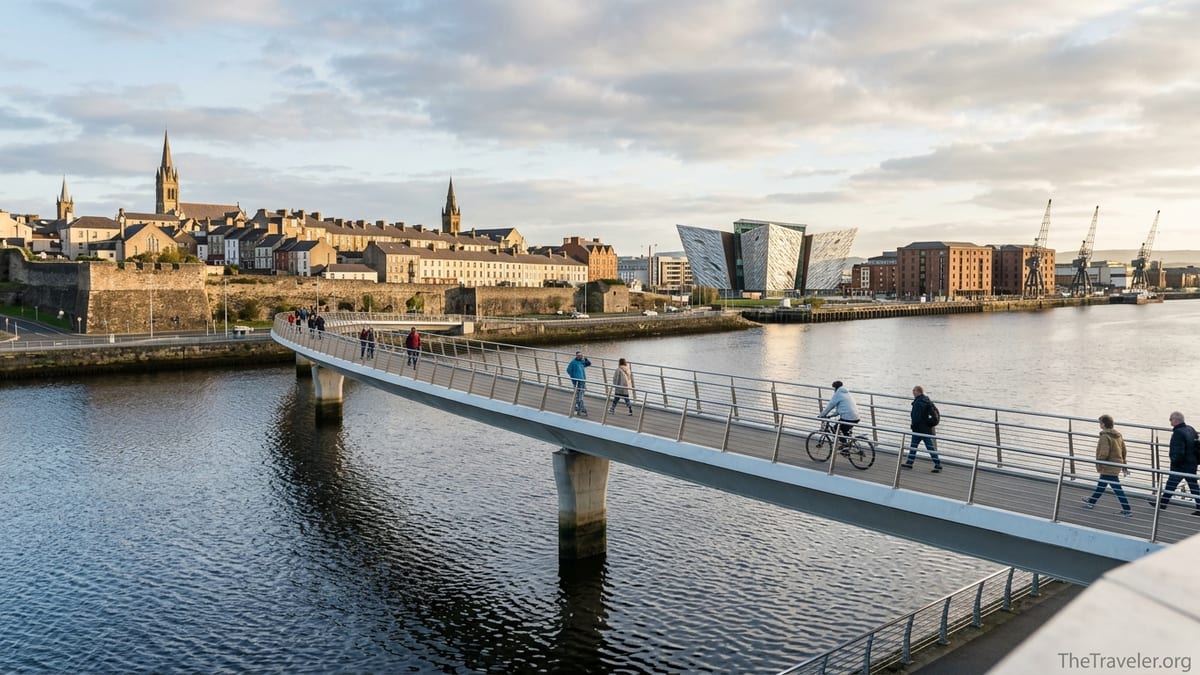
Belfast is Northern Ireland’s largest city and its main air and ferry gateway, with two airports, a busy cruise port and the feel of a small but confident capital. The skyline mixes red-brick Victorian warehouses, cranes along the River Lagan and new glass hotels and offices. Once synonymous with the Troubles, it has spent the past two decades reinventing itself around attractions like Titanic Belfast and regenerated districts such as the Cathedral Quarter and the Maritime Mile.
Derry~Londonderry, usually shortened locally to Derry, is much smaller and more intimate. It is famous as Ireland’s only fully intact walled city, with 17th century ramparts forming a walkable loop above the River Foyle and the historic Bogside below. The city center feels compact and walkable, with most major sights, pubs and restaurants within a 10 to 15 minute stroll of one another. Rather than a big-city buzz, Derry offers a strong sense of place, living history and community.
For many travelers, Belfast feels more obviously urban and energetic, with more neighborhoods to explore and a broader restaurant and nightlife scene. Derry, by contrast, can feel immediately welcoming and manageable. It lends itself to slow wandering on foot, standing on the walls to take in sweeping views, and spending time in museums and political murals that speak directly to the recent past.
In a typical one-week Northern Ireland itinerary, many visitors naturally pass through Belfast at the beginning or end of the trip and then decide whether the northwest is worth the detour. The answer often depends on whether you are more drawn to maritime and industrial history, live music and nightlife, and easy onward connections, or to walled-city ambiance, Troubles-era history in a compact setting, and access to quieter coastal landscapes.
History & Political Storytelling
If you are interested in the Troubles and political history, both cities are rewarding, but the experience is different. In Belfast, a classic introduction is a black taxi tour through the Falls Road and Shankill Road, where drivers explain the Catholic and Protestant narratives while stopping at large gable-end murals and peace walls that still separate communities. Many tours run two to three hours and often cost in the region of what you would expect for a small-group private tour in a European capital, with pick-up from central hotels and the Titanic Quarter common.
Belfast also layers in older industrial history. The former Harland & Wolff shipyard, now the Titanic Quarter, is where RMS Titanic was built. The striking Titanic Belfast museum sits beside the slipways, with interactive galleries covering shipbuilding, the transatlantic era and the sinking. You can easily combine this with a visit to the preserved SS Nomadic and a walk along the Maritime Mile, where interpretive panels and public art connect past and present.
Derry’s history is more concentrated in a small area and unfolds vertically as you walk. On top of the walls, you see cannons from the 17th century Siege of Derry, views across to St Columb’s Cathedral and, below, the Bogside murals. Dropping down into the Bogside, the People’s Gallery murals and the "You Are Now Entering Free Derry" wall mark key moments from the civil rights era and Bloody Sunday. Nearby, the Museum of Free Derry, in a modest modern building, offers exhibits that are often described by visitors as intense but essential, putting faces, stories and documents to events many people only know from headlines.
Where Belfast spreads its story across several districts, Derry’s narrative can be understood in a single day walking circuit: the walls, the Guildhall, the Bogside murals, a museum such as the Tower Museum or Museum of Free Derry, then across the Peace Bridge to see how the riverfront has changed. Travelers who especially value walkable, deeply layered history often come away feeling that Derry left the stronger emotional impression, even if Belfast had more individual attractions.
Major Attractions, Museums & Walkability
On a first trip, Belfast clearly has the larger list of blockbuster sights. Titanic Belfast ranks among the most visited attractions on the island and regularly tops Northern Ireland visitor numbers. Crumlin Road Gaol, the 19th century prison turned visitor attraction in North Belfast, offers guided tours through cell blocks, an underground tunnel and execution chamber. The city center is anchored by Belfast City Hall and the surrounding shopping streets, while the leafy Queen’s Quarter adds the Ulster Museum, Botanic Gardens and the university area’s cafes.
Even with this range, Belfast can require more planning and transport. Titanic Quarter sits a 20 to 25 minute walk or a short Glider bus ride from City Hall. Crumlin Road Gaol is another 20 minutes on foot or a quick taxi from the center. The Falls and Shankill mural areas are spread out; most visitors rely on organized tours or taxis rather than walking independently. The result is that you may spend more of your sightseeing day moving between pockets of interest, especially if it is your first visit and you are still getting your bearings.
Derry is markedly more walkable. The historic center is compact enough that many visitors arrive at the bus or train station, walk across the Peace Bridge or up the hill, and then do most of their sightseeing without transport. A full loop of the city walls themselves takes roughly 20 to 30 minutes of steady walking, but most people stop for views of the Bogside, the Foyle and the cathedral spires, turning it into a leisurely hour. From the walls, side streets drop into the Craft Village, Guildhall Square and Waterloo Street, all lined with independent shops, pubs and cafes.
Attraction density is also on Derry’s side. The Tower Museum, Guildhall, Siege Museum, Museum of Free Derry and Bogside murals are all within a short stroll of each other. This means that even with limited time, you can see a lot without feeling rushed. For travelers who tire easily, are traveling with children, or simply prefer to avoid figuring out bus routes, Derry’s layout is a major plus. Belfast remains manageable by European city standards, but the perception of distance between quarters is greater.
Food, Pubs & Nightlife
Belfast has the broader and more cosmopolitan dining scene. Around the Cathedral Quarter you will find everything from contemporary Irish tasting menus and seafood-focused kitchens to ramen bars and plant-forward cafes. Weekends see the area’s cobbled lanes fill up, with traditional pubs, cocktail bars and live music venues clustered together. On a typical Friday or Saturday evening, you can move between several spots on foot: a traditional bar with live trad music, a busy beer garden, then a modern small-plates restaurant.
Because of its size and its role as a business and conference hub, Belfast also offers a good spread of mid-range and upscale hotel restaurants. Many larger properties near City Hall, the university and the waterfront run pre-theatre menus to capture theatre-goers headed to the Grand Opera House or Waterfront Hall. Price-wise, central Belfast is generally a little cheaper than Dublin but higher than smaller regional towns; expect main courses in casual city-center restaurants to be in line with other UK regional cities.
Derry’s food and drink scene is smaller but often pleasantly surprising. In the streets leading off Shipquay Street, Waterloo Street and the Craft Village, you will find bistros focused on local produce, cafes that double as venues for small gigs, and pubs where live traditional music is a regular feature rather than a performance staged purely for tourists. Many visitors gravitate toward venues along the walls or near the Peace Bridge in the evenings, combining riverside walks with a pint and a plate of seafood or modern Irish comfort food.
Nightlife in Derry feels more concentrated and local. You are likely to share a bar with students from Ulster University’s Magee campus, multigenerational groups out for birthdays and visiting tour groups. In Belfast, by contrast, you will find more late-opening clubs, beer gardens and themed bars, particularly in the Cathedral Quarter and around Botanic Avenue. If your priority is a wide choice of bars and restaurants within a short walk of a central hotel, Belfast will serve you better. If you prefer a smaller scene where you might quickly recognize faces over a few nights, Derry can be very rewarding.
Hotels, Pricing & Practicalities
Belfast, as the capital and main business center, has a much larger hotel inventory across all price points. Within a 10 to 15 minute walk of City Hall you can choose from large international chains, design-forward boutique hotels in converted warehouses, and smaller guesthouses. Around the Titanic Quarter and waterfront, newer hotels cater to cruise passengers and conference delegates. This competition typically keeps standards solid, and it is usually possible to find mid-range rooms at prices comparable to other UK cities outside London, especially if you avoid peak weekends such as major concerts and sporting events.
Short-term rental apartments are also widely available in Belfast, particularly near the Cathedral Quarter, Lisburn Road and the Queen’s Quarter. These can suit families or groups who want more space and self-catering facilities, though it is worth watching for minimum-stay rules and cleaning fees that can narrow the price gap versus hotels. Because Belfast is a year-round business and events city, booking ahead for Friday and Saturday nights is advisable.
Derry has fewer beds overall but a good range for its size. Inside or just outside the walls you will find a couple of well-established hotels that appeal to tour groups, along with smaller independent properties and B&Bs on quiet side streets. Many travelers enjoy staying within the walled area purely for the atmosphere, stepping out in the evening directly onto cobbled streets and walking to dinner or a pub in minutes.
In general, nightly rates in Derry tend to be slightly lower than in Belfast, especially outside high summer and major festival periods. That said, large conferences or events can still book up much of the city’s limited stock, so it is wise to reserve early if you are locked into specific dates. For budget travelers, hostels and simple guesthouses in Derry provide good value, particularly for those happy with shared facilities and a more communal feel.
Day Trips & Regional Access
For day trips, Belfast’s biggest advantage is its central position and transport connections. From the city you can join bus tours or self-drive the Antrim Coast and Glens, taking in places like Carrickfergus Castle, the Giant’s Causeway and the rope bridge at Carrick-a-Rede, as well as filming locations associated with popular TV series. The journey time by car to the Giant’s Causeway is roughly 1.5 to 2 hours depending on your route. To the south, Belfast offers easy access to the Mourne Mountains for hiking, as well as trips to Armagh or the St Patrick sites around Downpatrick.
Public transport options supporting these excursions include regular trains toward the north coast and buses along the main tourist corridors. Organized full-day coach tours departing from central Belfast are widely advertised, appealing to visitors who do not want to rent a car. You can realistically base yourself in Belfast for four or five nights and take several distinctly different day trips without constantly changing hotels.
Derry, on the other hand, works as a hub for the northwest. The city sits close to the border with County Donegal in the Republic of Ireland, opening up easy day drives or tours to places such as the Inishowen Peninsula, Malin Head, Fanad Head lighthouse and the beaches around Portsalon. Inland you can reach historic sites such as Grianan of Aileach, a stone hillfort with wide views over Lough Foyle and the surrounding countryside, in under an hour by car.
Public transport in the northwest is less frequent and more limited in coverage than around Belfast, so many visitors to Derry who want to explore Donegal opt to rent a car for at least a portion of their stay. For those happy to focus on the city itself, however, Derry works very well without a car: you can spend two full days walking the walls, exploring museums, taking a Bogside tour, visiting the Guildhall and simply enjoying the pubs and cafes, all on foot.
Getting Between Belfast and Derry~Londonderry
Deciding how to divide nights between Belfast and Derry often goes hand in hand with understanding how easy it is to move between the two. Despite the perception of distance, the transport link is straightforward. Translink runs frequent Goldliner X routes by bus between Belfast and Derry~Londonderry, with typical journey times around two hours, operating throughout the day and into the late evening.
There is also a scenic rail line between Belfast and Derry that follows the Antrim coast for part of the route, regarded by many locals as one of the most attractive train journeys in the region. Journey times are a little over two hours depending on the service. The train station in Derry~Londonderry sits on the opposite bank of the River Foyle from the historic center, but you can walk across the Peace Bridge into town in roughly 10 to 15 minutes or take a short taxi ride.
For travelers renting a car, the drive between Belfast and Derry uses good main roads and usually takes around two hours without extended stops, though many people detour along the Causeway Coastal Route to stretch the journey into a full day of sightseeing. Given these options, it is entirely feasible to land in Belfast, spend a couple of nights, then continue to Derry without feeling that you are losing too much time in transit.
Because the route is so direct, some visitors choose to base themselves entirely in Belfast and visit Derry as a long day trip by car. While possible, this can feel rushed, especially if you want to spend meaningful time in the museums and on the walls. If Derry’s history and atmosphere are important to you, at least one night in the city, and ideally two, will give a much richer experience than a quick out-and-back excursion.
How Many Nights in Each City on a First Trip?
For a first-time visitor focusing solely on Northern Ireland and arriving by air into Belfast, a sensible baseline is to spend more nights in Belfast and fewer in Derry, while still making space for both. On a one-week trip, a common pattern is 3 or 4 nights in Belfast and 2 in Derry, with the remaining nights somewhere along the Antrim Coast or in the countryside. This allows time to cover Belfast’s headline sights, take at least one full-day coastal tour, and still enjoy a two-night stay inside Derry’s walls.
If your interests lean strongly toward Troubles-era political history and walkable historic centers rather than big-city nightlife, you might invert this balance slightly once you are in the northwest. Some travelers report that one or two nights in Belfast feels sufficient after a black taxi tour, Titanic Belfast and a few evenings in the Cathedral Quarter, while Derry’s compact intensity leaves them wishing they had added an extra night to explore Donegal or simply to slow down.
Your travel style also matters. If you prefer to unpack once and rely on organized day tours, Belfast deserves more nights, potentially four or five, because tour options to the Giant’s Causeway, the Mournes and other regions are far more numerous. You could then add a short one or two-night side trip to Derry as a contrasting finale. If you are comfortable driving and want to experience both the Antrim Coast and Donegal, splitting more evenly between Belfast and Derry, or even giving Derry three nights, can make logistical sense.
For shorter trips of three to four nights total, it may be best to choose one city and do it well rather than splitting time. In that case, Belfast suits those who want variety of food, nightlife and organized excursions, while Derry is ideal for travelers craving a walkable historic city with a strong narrative and easy access to quieter landscapes nearby.
The Takeaway
There is no single correct answer in the Belfast vs Derry~Londonderry debate. Belfast is the natural anchor for most Northern Ireland itineraries, with its major transport links, big-ticket attractions like Titanic Belfast, wide choice of hotels and restaurants, and easy day trips along the Antrim Coast and beyond. It deserves at least two full days on a first visit, and more if you plan to use the city as a base for several excursions.
Derry offers something Belfast cannot replicate: a fully walled historic core, Troubles-era history concentrated in a compact area, and a strong sense of local character packed into a small footprint. Its walkability makes it especially appealing to visitors who prefer to explore on foot without constantly figuring out public transport, and it is an excellent springboard into County Donegal and the northwest.
For most first-time visitors who have a week or more, prioritizing Belfast for three or four nights and Derry for two is a balanced approach. This gives you the energy and variety of the capital and the emotional depth and intimacy of the walled city. If you have less time and must choose one, let your interests guide you: choose Belfast for big-city culture, nightlife and organized tours, and choose Derry if you value compact historic ambiance, powerful recent history and a more local, lived-in feel.
Whichever you choose, remember that distances in Northern Ireland are short. With trains, buses and good roads linking the two cities in around two hours, you can always plan a return trip that flips the balance and lets you get to know the other side of this compelling internal comparison.
FAQ
Q1. Is Belfast or Derry~Londonderry better for a first-time visitor to Northern Ireland?
For most first-time visitors, Belfast works better as a base because of its major attractions, transport links and day-trip options, but adding at least one or two nights in Derry gives valuable contrast and deeper historical context.
Q2. How many days should I spend in Belfast versus Derry on a one-week trip?
A good starting point is 3 to 4 nights in Belfast and 2 nights in Derry, with the remaining night along the Antrim Coast or in rural Northern Ireland, but you can adjust based on whether you prefer big-city energy or small-city intimacy.
Q3. Can I visit Derry as a day trip from Belfast?
It is possible to visit Derry as a long day trip by car or early bus and late return, but it can feel rushed; staying at least one night allows time to walk the walls, visit museums and experience the city after day-trippers leave.
Q4. Which city is more walkable, Belfast or Derry?
Derry is more compact and easily walkable, with most sights clustered around the city walls and riverfront; Belfast is still manageable on foot but its key districts and attractions are spread over a larger area.
Q5. Where will I find better nightlife and restaurant choice?
Belfast has the wider range of restaurants, bars and late-night venues, especially in the Cathedral Quarter and Queen’s Quarter, while Derry offers a smaller but atmospheric scene centered on traditional pubs and live music.
Q6. Which city is better for learning about the Troubles and political history?
Both are excellent, but in different ways: Belfast’s black taxi tours and murals show contrasting community perspectives across several districts, while Derry concentrates its story around the walls, Bogside murals and museums in a smaller area.
Q7. Are hotels cheaper in Belfast or Derry?
Prices fluctuate with demand, but Derry often comes out slightly cheaper on average because it has fewer large business events, while Belfast has a bigger range of properties from budget to high-end that can push prices up on busy weekends.
Q8. Which city is better without a car?
Both work well without a car; Belfast offers more organized day tours to coastal and countryside sights, whereas Derry is extremely easy to explore on foot but relies more on renting a car or private tours for excursions into Donegal.
Q9. Is it easy to travel between Belfast and Derry~Londonderry by public transport?
Yes, frequent buses and regular trains link Belfast and Derry in roughly two to two and a half hours, making it simple to include both cities in one itinerary without driving.
Q10. If I have only three or four days total, should I choose Belfast or Derry?
With such limited time, focus on one city: pick Belfast if you want marquee attractions, nightlife and day tours, and pick Derry if you prefer a compact walled city with powerful recent history and a more intimate feel.