


North East England combines historic cathedral cities, a dramatic North Sea coast, big-name family attractions and some of the quietest countryside in England. This guide picks out 25 of the best places to visit across Northumberland, Tyne and Wear, County Durham and the Tees Valley, from blockbuster sites such as Durham Cathedral and Alnwick Castle to quieter coastal towns and upland walking country. It is written as a practical planning tool, with real-world timings, example ticket prices and suggested bases for trips of two to seven days.
How to Think About the North East: Regions, Bases and Seasons
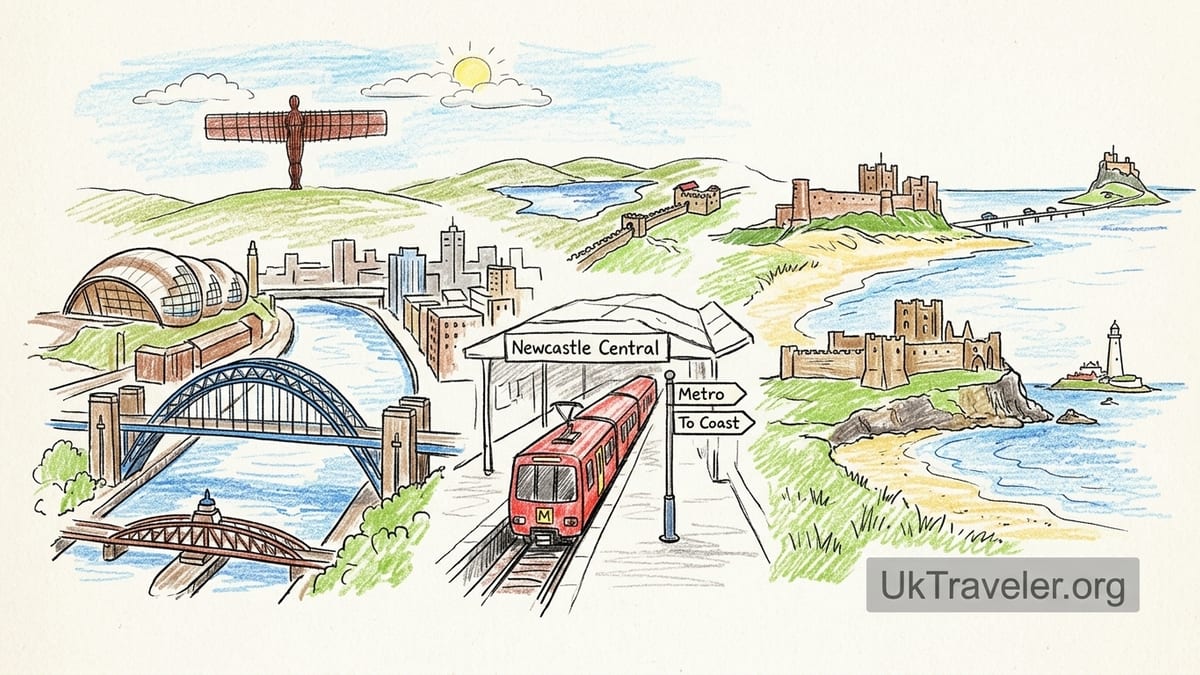
For trip planning, it helps to picture North East England as four broad zones. Northumberland offers big skies, castles and long sandy beaches from Alnwick and Bamburgh to Holy Island and Berwick-upon-Tweed, as well as inland highlights such as Hadrian’s Wall, Hexham and Kielder Water. Tyne and Wear centres on city culture in Newcastle and Gateshead, plus Metro-linked seaside towns including Tynemouth, Whitley Bay and Sunderland. County Durham mixes the cobbled cathedral city of Durham with industrial heritage at Beamish Museum and castle country around Bishop Auckland, Barnard Castle and Raby Castle. Further south, the Tees Valley takes in Victorian resort Saltburn-by-the-Sea, Hartlepool’s historic quay and green spaces within reach of Middlesbrough and Darlington.
Newcastle is the most convenient all-round base for public transport, with direct rail links from London, Edinburgh, Leeds and Manchester and fast Metro services along the Tyne and Wear coast. Durham works well if your priority is the cathedral city and Beamish, while Alnwick or Seahouses are excellent for a Northumberland-coast focused holiday. For the Tees Valley and the North Pennines, Darlington or Barnard Castle make relaxing and practical bases with good road access.
The region is a year-round destination, but experiences shift with the seasons. Coastal walks around Bamburgh, Tynemouth or Saltburn are at their best from late spring to early autumn. Major attractions such as Beamish and Alnwick Castle currently run their main seasons roughly from late March to late October, with reduced or special-event opening in winter, so it is important to check dates before you travel. Inland, Kielder Water and the North Pennines offer good walking and dark skies in all but the very shortest winter days, provided you are prepared for changeable weather.
In cost terms, headline attractions in 2026 such as Beamish or Alnwick Castle typically charge adult admission in the £22 to £35 range, with family tickets from roughly £60 to £95, often on a “pay once, visit all year” basis. By contrast, seaside towns like Whitley Bay or Tynemouth can be enjoyed for the price of Metro fares, fish and chips and perhaps a small admission to the local priory or lighthouse. This mix makes it realistic to combine one or two big-ticket days with lower-cost walks, beaches and historic streets.
Newcastle, Gateshead and the Tyne Coast
Newcastle and Gateshead together form the cultural and transport hub of the region, well suited to a two or three night stay. Newcastle Quayside, overlooked by the Tyne Bridge and Sage Gateshead concert hall, is the obvious first stop. It is about 20 minutes on foot from Newcastle Central Station, and rewards a half-day of strolling the riverfront, crossing the Gateshead Millennium Bridge and exploring the steep lanes known as the Side and the Sandhill. Many visitors pair this with a walk through Ouseburn Valley, the city’s creative quarter, which can be reached on foot in around 20 minutes from the Quayside.
Across the river at Gateshead, the Angel of the North stands on a hill just off the A1. This 20-metre-high steel sculpture has free open access and is usually visited as a short stop of 30 to 45 minutes. From Newcastle city centre, the Angel is approximately 5 miles by road, or around 20 minutes by local bus to the nearest stop followed by a short walk. Many travellers combine the Angel with a visit to Beamish Museum or with Durham on a full-day circuit by car.
For sea air, the Tyne and Wear Metro links central Newcastle and Gateshead with the coast at Tynemouth and Whitley Bay in roughly 30 to 35 minutes. Tynemouth works well as a relaxed half or full-day trip, mixing Victorian terraces, cafés and Tynemouth Priory and Castle, which occupies a cliff-top headland. Whitley Bay, one Metro stop further, has a sweeping sandy bay and St Mary’s Lighthouse on a tidal island, plus family-friendly promenade facilities. A standard adult Metro day ticket costs in the region of £6 to £8 depending on zones, making it a good-value way to explore without a car.
Accommodation in and around Newcastle runs from major chain hotels beside the station or Quayside to serviced apartments and boutique townhouses in Jesmond. Families may prefer apartments with kitchens, while couples often opt for Quayside hotels with river views. For a coastal base within reach of the city, Whitley Bay has traditional seafront guesthouses and some modern apartments, while Tynemouth offers small hotels above the beach. As a rule, allow at least a full day for Newcastle and an additional full day for Tynemouth and Whitley Bay combined, especially in summer when beach time is part of the appeal.
Durham, Beamish and Castle Country
Durham lies about 12 minutes south of Newcastle by fast train, or 30 minutes by car down the A1, and it can be seen comfortably in a long half-day, or more leisurely over a full day. The city’s centrepiece is Durham Cathedral, a World Heritage Site set high above a loop of the River Wear. Entry to the main cathedral remains on a donation basis, while separate tickets apply for the museum, guided tours and tower. Recent information indicates that an annual museum pass costs around £15 per person, while special exhibitions and the tower incur additional charges. The combination of cathedral, cloisters, riverside walks and compact cobbled streets makes Durham particularly attractive to history-minded travellers and couples.
About 8 miles north-west of Durham and 30 minutes by car from central Newcastle sits Beamish, The Living Museum of the North. This open-air museum recreates life in the North East from the 1820s through to the mid 20th century using period streets, trams and costumed staff. Current prices for the standard “unlimited pass” are approximately £35 for adults, £26 for seniors and students and £20.50 for children aged 5 to 16, with several family combinations from around £57.50 for one adult and two children up to about £96 for two adults and three children. These passes are valid for unlimited daytime visits for one year, representing strong value for families staying in the region for a week or making repeat trips.
South and south-west of Durham, County Durham becomes castle and countryside territory. Bishop Auckland lies about 12 miles from Durham, or roughly 35 minutes by car from Newcastle. The town has been revived in recent years through arts-led projects and Auckland Castle (also known as Auckland Palace), former home of the Prince Bishops of Durham. Further west, Barnard Castle, about 40 miles and an hour’s drive from Newcastle, appeals to visitors as both a handsome market town and the location of the Bowes Museum, which houses European art in a French chateau-style building. North-east of Barnard Castle, Raby Castle sits in deer parkland near Staindrop and is usually visited together with Barnard Castle as a shared full day from Durham or Darlington.
In terms of length of stay, Durham is worth at least a full day including cathedral, riverside walks and perhaps the university’s Oriental Museum or a boat hire on the River Wear. Beamish warrants a full day on its own, particularly with children. Bishop Auckland, Barnard Castle and Raby Castle together fill one or two days depending on your interest in art collections and country walking. Accommodation in this part of the region ranges from city-centre hotels and riverfront guesthouses in Durham to traditional coaching inns and country-house hotels around Barnard Castle and Raby. Winter visits are quieter but require checking opening days carefully, as some historic houses close midweek or for the season.
Northumberland Coast: Castles, Holy Island and Quiet Harbours
The Northumberland coast is one of the scenic highlights of England, combining huge beaches, dramatic castles and small working harbours. From Newcastle, regular buses and the main East Coast rail line run north to Alnwick (around 45 to 60 minutes by bus or 35 minutes by train to nearby Alnmouth), Bamburgh and Seahouses (about 1 hour 30 minutes to 2 hours by bus) and Berwick-upon-Tweed (circa 45 minutes by train). Many visitors either take day trips from Newcastle or stay a few nights in Alnwick, Seahouses or Bamburgh to reduce travel times.
Alnwick is an inland market town about 30 miles north of Newcastle. Its twin attractions are Alnwick Castle and a large contemporary garden complex next door. Alnwick Castle is a medieval fortress and stately home with strong Harry Potter filming links. Recent published prices indicate adult gate admission around £24 to £25, with children approximately £13 and family tickets in the £64 to £71 range, with a discount of roughly 10 percent for online booking. Tickets are generally valid as season passes, allowing repeat visits during the open months, and discounts apply for visitors arriving by public transport. The site closes for winter, with current seasons running from late March until around 20 October, so spring and summer are ideal for families.
North of Alnwick, Bamburgh combines perhaps the most photogenic castle in the region with a wide sandy beach that appeals to walkers, surfers and families. From Newcastle it is about 50 miles by road, typically a 1 hour 15 minute drive in light traffic. Without a car, most travellers route via Alnwick by bus and allow up to two hours each way. Bamburgh Castle charges separate admission from the village and beach; prices change year to year but are broadly similar to Alnwick’s, sitting in the high teens to low twenties for adults. Nearby Seahouses, a straightforward 10-minute drive south of Bamburgh, is the main departure point for boat trips to the Farne Islands, where visitors can see seals and seabirds in season. Boat fares vary by operator and itinerary, but adult prices often start around £25 to £35 for a standard wildlife cruise, with discounts for children.
Holy Island of Lindisfarne, accessed by a tidal causeway north of Bamburgh and Seahouses, is one of the most atmospheric places in Northumberland. From Newcastle it is about 60 to 70 miles, or roughly 1 hour 30 minutes by car, but the limiting factor is safe causeway crossing times. These are published online by local authorities and must be checked carefully, as vehicles are occasionally stranded by fast incoming tides. Many travellers allow a full day for Holy Island, fitting their arrival and departure around a safe window of several hours, which permits exploration of Lindisfarne Priory, Lindisfarne Castle and the village. Accommodation on the island itself is limited to small inns and guesthouses, so first-time visitors generally stay in Bamburgh, Seahouses or Berwick and visit as a day trip.
Berwick-upon-Tweed sits just below the Scottish border, approximately 65 miles north of Newcastle and around 45 minutes by fast train. Its Elizabethan town walls, Georgian streets and views of the River Tweed make it a satisfying half or full-day destination, particularly for history enthusiasts who enjoy walking the ramparts. Accommodation here ranges from small hotels to holiday cottages appealing to longer stays. Overall, the Northumberland coast calls for at least three full days to sample Alnwick, Bamburgh, Seahouses and Holy Island, and longer if you hope to add Berwick or use the area as a walking and beach holiday base.
Northumberland Inland: Hadrian’s Wall, Hexham and Kielder Water
West of Newcastle the landscape rises to form the Northumberland National Park and the line of Hadrian’s Wall, the Roman frontier that once guarded the northern edge of the empire. The market town of Hexham lies about 23 miles west of Newcastle and 35 minutes by regular trains, which makes it a convenient base for car-free visitors keen on Roman sites and countryside walks. Hexham Abbey, the town’s central square and riverside paths can be explored in a relaxed half-day, with an additional afternoon or full day needed to reach the main Hadrian’s Wall forts by bus or car.
Housesteads Roman Fort, roughly 30 miles from Newcastle by road and about 40 minutes’ drive, is one of the best-preserved sites on Hadrian’s Wall. It is usually managed with an admission ticket covering the fort and museum buildings, while National Trust or English Heritage membership can reduce costs. Most independent visitors from Newcastle allow a full day to combine Housesteads with at least one more viewpoint or short stretch of wall walking, such as nearby Steel Rigg or Sycamore Gap, although the latter area has been undergoing landscape works in recent seasons. Guided minibus tours from Newcastle and Hexham are another option for those without a car.
Further north-west, Kielder Water and Forest Park provides an altogether different experience. Kielder Water is the largest man-made lake in northern Europe, surrounded by conifer forest and threaded with trails for walking and cycling. Visitor hubs such as Kielder Waterside and Tower Knowe offer facilities and activities. Current information highlights instructor-led paddleboarding and canoeing, fishing boat hire, archery, Segway sessions and a small indoor pool and spa. Boat cruises aboard the Osprey ferry operate seasonally on the reservoir, with tickets sold at Kielder Waterside and Tower Knowe or via advance booking. Prices vary by operator and activity, but families should budget for individual sessions in the low tens of pounds per person and modest additional parking charges.
Accommodation in inland Northumberland ranges from luxury forest lodges at Kielder Waterside and other holiday parks to country inns and B&Bs scattered across the Tyne Valley. Kielder in particular lends itself to a long weekend in a lodge or cabin, using daytime for walking, cycling and activities and evenings for stargazing in what is designated as part of Northumberland International Dark Sky Park. Compared with the coast, this area is less seasonal, although short winter daylight hours and potential snow on higher ground mean that visitor numbers peak from late spring to early autumn. For most travellers, one day for Hexham and Hadrian’s Wall and one or two days around Kielder offers a good introduction.
Tees Valley, North Pennines and the Southern Edge of the Region
South of County Durham, the Tees Valley region marks the southern boundary of North East England. Middlesbrough, Darlington, Hartlepool and Redcar & Cleveland form its main urban centres, with green and coastal escapes a short drive away. Saltburn-by-the-Sea in Redcar & Cleveland, about 45 miles and one hour’s drive from Durham or an hour by train from Darlington via Middlesbrough, is a standout Victorian resort. It has a traditional pier, a cliff lift linking town to beach and a good surf break that supports several surf schools. Pier access is usually free or low cost, with income coming mostly from amusements and food outlets, while surf lessons and equipment hire are priced similarly to other English surf towns, typically from several tens of pounds per half-day session.
Hartlepool, around 30 miles south-east of Durham and 45 minutes by car, draws visitors to its regenerated historic quay area. Here, a recreated 18th and 19th century seaport streetscape and a preserved naval vessel form the core of the main heritage attraction. Ticket prices for this complex change from season to season but tend to fall in the mid-teen pounds range for adults, with discounts for children and families. Combined tickets sometimes include entry to associated museums in the town. Hartlepool’s main appeal is to families and naval history enthusiasts, who often combine a few hours at the museum with seaside time or a walk around the Headland area.
Middlesbrough itself is best known to travellers for galleries, live events and as a gateway to the coast and the North York Moors, which lie just outside the region and can be visited as optional extensions. Closer to hand within the North East, countryside south-west of Middlesbrough and Darlington leads into the North Pennines Area of Outstanding Natural Beauty. This upland area, reachable from Darlington or Barnard Castle within 30 to 60 minutes by car, offers moorland walking, waterfalls and reservoir views. It is especially suited to hikers and landscape photographers rather than first-time city-break visitors.
Darlington, on the main East Coast rail line like Newcastle and Durham, has become more visible to visitors since the opening of attractions such as Hopetown Darlington, a railway heritage site that celebrates the world’s first public railway to use steam locomotives. Hopetown brings together restored railway buildings, interactive exhibits and heritage rolling stock. Exact 2026 ticket prices vary depending on exhibitions and whether special events are running, but families should plan for admission in line with other regional heritage sites, likely in the low to mid-teens per adult with family and child discounts. Given its location close to Darlington station, Hopetown combines well with a wider Tees Valley or County Durham itinerary.
Which Places Work Best for Different Travellers
Choosing between these 25 destinations depends heavily on your interests, group and budget. For families, Newcastle and the Tyne coast, Alnwick, Bamburgh and Seahouses, Beamish, Kielder Water and Saltburn stand out. Newcastle offers hands-on museums, easy Metro access and plenty of casual dining. Beamish delivers a full day of tram rides, 1900s sweets and farm animals on an unlimited pass that spreads cost across repeat visits. On the coast, Bamburgh’s beach and castle mix well with boat trips from Seahouses, while Kielder adds adventure activities and forest play areas. A practical two-child family might, for example, spend one day at Beamish, one day on the Tyne coast and another visiting Alnwick Castle, interspersed with lower-cost park and beach days.
History-focused travellers tend to prioritise Durham Cathedral, Newcastle’s historic core, Hadrian’s Wall and the cluster of castles at Alnwick, Bamburgh and Raby, alongside museum experiences at Beamish and Hartlepool. With a car, you can realistically fit Durham, Beamish and the Angel of the North into two full days based in Newcastle or Durham, driving less than an hour between each. Couples often balance this with quieter coastal or countryside time, such as a night in Bamburgh or a stay in Barnard Castle to access Raby Castle and the North Pennines.
For coastal holidays, the main decision is whether to stay around the Tyne and Wear urban coast or the quieter, more rural Northumberland and Tees Valley stretches. Tynemouth, Whitley Bay and Sunderland all combine sandy beaches with theatres, restaurants and public transport back to Newcastle. By contrast, Seahouses, Bamburgh and Holy Island offer more dramatic scenery and darker skies, but fewer nightlife options. Further south, Saltburn and Hartlepool’s Headland provide Victorian promenades and surf beaches within reach of Middlesbrough and Darlington. Travellers keen on hiking and wildlife increasingly look inland to Hadrian’s Wall country, Kielder Water and the North Pennines, where waymarked trails and designated nature reserves give access to birdlife, red squirrels and big-sky views.
Budget-conscious visitors can keep costs down by basing themselves in cities such as Newcastle, Sunderland or Middlesbrough, where accommodation tends to be cheaper outside major event weekends and where public transport reduces the need for car hire. City days spent exploring quaysides, free museums and cathedral precincts can be alternated with one or two higher-cost attraction days at Beamish or Alnwick Castle. Eating from markets and casual local chains, using railcards on trains and favouring walks and beaches as core activities all help make a North East trip competitive with more famous English regions.
Practical Multi-day Itineraries
For a two-day introduction based on public transport, an efficient plan is to stay in central Newcastle. On Day 1, explore Newcastle Quayside, Ouseburn and the city centre, then ride the Metro to Tynemouth for late afternoon beach time and fish and chips before heading back into town. Day 2 can then focus on Durham, reached in about 12 minutes by train; spend the day at Durham Cathedral, riverside walks and the castle area, returning to Newcastle in the evening. If you prefer living history, you might instead combine one city day with a full day at Beamish Museum, reached in roughly an hour by bus and Metro connections.
A four-day itinerary allows you to add Northumberland coast highlights. With Newcastle still as base, devote Day 1 to Newcastle and Gateshead, including the Angel of the North by bus. Day 2 covers Durham. On Day 3, travel to Alnwick by bus or train to Alnmouth and taxi, giving yourself most of the day for Alnwick Castle and the town centre before returning in the evening. Day 4 then focuses on the Tyne coast: descend on Tynemouth in the morning for its priory and market if visiting at a weekend, then continue by Metro to Whitley Bay for an afternoon on the beach and, if tide and conditions permit, a walk to St Mary’s Lighthouse.
With a full week and access to a car, you can build a more immersive route covering all four sub-regions. One workable pattern is to spend the first two nights in Newcastle, using one full day for the city and coast and one for Beamish and Durham. Then move north for two or three nights in Alnwick or Seahouses, day-tripping to Bamburgh, the Farne Islands and, if tide times suit, Holy Island and Berwick-upon-Tweed. Finish with two nights in County Durham or the Tees Valley, using Barnard Castle or Darlington as a base to reach Raby Castle, the North Pennines and Hopetown Darlington, adding a half or full day in Saltburn or Hartlepool for a final coastal viewpoint.
Travellers with particular interests can easily adapt this skeleton plan. Hikers might swap some coastal days for more time around Hexham, Hadrian’s Wall and Kielder, perhaps staying in a lodge or rural B&B. Families with younger children may wish to stay an extra day near Kielder or the Tyne coast and reduce driving time between bases. Whatever the exact combination, distances in the North East are compact enough that you can assemble very different landscapes and experiences into a single holiday without long days on the road.
FAQ
Q1. How many days do I need to see the main highlights of North East England?
Most first-time visitors are well served by a four to five day trip, which allows one or two days in Newcastle and on the Tyne coast, a day in Durham, and at least one full day on the Northumberland coast. With a week you can comfortably add Beamish Museum, Hadrian’s Wall or Kielder Water and at least one Tees Valley destination such as Saltburn or Hartlepool.
Q2. Is it realistic to explore North East England without a car?
Yes, if you are prepared to focus on the main hubs and plan ahead. Newcastle, Durham, Darlington, Alnwick (via Alnmouth), Berwick and the Tyne and Wear coast are all accessible by train or Metro, and there are seasonal buses to Bamburgh, Seahouses and some Hadrian’s Wall sites. Reaching Kielder Water, the North Pennines and more rural castles is easier with a car or on a guided tour.
Q3. Which town makes the best base for a first visit?
Newcastle is the most flexible base, especially for visitors arriving by train, offering a wide choice of accommodation and direct links to Durham, the Tyne coast, Alnwick and Hexham. Durham suits those who prefer a smaller, historic city, while Alnwick, Seahouses or Bamburgh work well if your priority is beaches and castles over nightlife and museums.
Q4. How expensive are major attractions like Beamish and Alnwick Castle?
As of 2026, many headline sites charge adult admission in the £22 to £35 range, with child and family tickets offering better value per person. Beamish sells an “unlimited pass” around £35 for adults that covers repeat visits for a year, while Alnwick Castle’s online adult tickets are around the low twenties with discounts for families and public-transport users. It is sensible to check current prices before you travel and to budget for one or two such days in a week-long trip.
Q5. When is the best time of year to visit Holy Island, Bamburgh and the Farne Islands?
The coastal season runs roughly from late April to early October, when days are longer, most visitor facilities are open and Farne Islands wildlife boat trips are running. Sea breezes can keep temperatures cool even in midsummer, so layers are essential. Holy Island is visitable year-round, but winter visits require particular care with short daylight hours and tidal causeway times.
Q6. Can I use North East England as a base for visiting North Yorkshire or Cumbria?
Yes, with some extra travel. From Newcastle or Durham you can reach York in around an hour by fast train, making it viable as a long day trip into North Yorkshire. Cumbria and the Lake District require more time, with journeys typically of two hours or more by car or train, so they fit better into longer itineraries that combine regions rather than short breaks centred solely on the North East.
Q7. What kind of weather should I expect?
North East England has a cool maritime climate with relatively dry but breezy conditions along the coast and more rainfall in upland areas. Summer daytime highs commonly sit in the high teens to low twenties Celsius, while winter highs are often in low single figures. Sudden showers are possible in all seasons, so waterproofs and windproof layers are recommended, particularly for Holy Island, Bamburgh, Hadrian’s Wall and Kielder.
Q8. Are there good options for hiking and wildlife watching?
Yes. Hadrian’s Wall country offers well-known linear and circular walks with expansive views, while Kielder Water and the North Pennines feature forest and moorland trails with chances to see red squirrels, ospreys and a wide range of upland birds. On the coast, boat trips to the Farne Islands are famous for seals and seabird colonies in season, and quieter stretches of beach around Bamburgh or Holy Island suit independent birdwatching.
Q9. Is North East England suitable for budget travel and backpackers?
It can be, especially if you base yourself in cities or larger towns. Newcastle, Sunderland, Durham and Middlesbrough often have budget hotels, hostels or simple guesthouses, and public transport makes it possible to reach beaches and some castles without hiring a car. Free or low-cost sights such as cathedral interiors, town walls, beaches and moorland walks can be combined with one or two paid attractions to keep overall costs moderate.
Q10. Do I need to book tickets in advance for key attractions?
Advance booking is strongly advised for major sites in peak periods, especially Alnwick Castle, Beamish and popular Farne Islands boat trips, as well as for guided tours at Durham Cathedral or specialist walking tours in Newcastle. Outside school holidays and summer weekends, many smaller towns and seafronts can be enjoyed without advance reservations, although it is still wise to reserve accommodation and any evening restaurant tables in busier resorts.