


Northern Ireland packs a lot into a compact map: a lively capital, walled historic cities, wild coastlines and quiet lakelands all within a few hours’ drive of each other. For first-time visitors, couples, families or anyone planning a road trip, the hardest decision is often not what to see, but where to stay. This guide compares the best bases across Belfast, Derry~Londonderry, Portrush, Bushmills, Ballycastle, Newcastle and Fermanagh so you can match each place to your style of trip, budget and time on the ground.
How to choose your base in Northern Ireland
Distances in Northern Ireland are short, but travel time can still add up if you pick the wrong base. Belfast to the Causeway Coast is about 90 minutes by car in light traffic, while Belfast to Enniskillen in the Fermanagh Lakelands is around two hours. That means you can technically “day-trip everywhere,” but you will spend a lot of time in the car or on buses. For most visitors, splitting the trip between a city base and a coastal or countryside base works best.
Think about your priorities. If this is your first visit and you have four or five days, Belfast plus one Causeway Coast town such as Portrush or Bushmills will give you a good blend of culture and scenery. With a week or more, you can add a third base, perhaps Derry~Londonderry for history and nightlife or Fermanagh for lakes and quiet walks. Couples might favour atmospheric villages and boutique hotels, while families tend to appreciate walkable seaside towns and cabins with parking on site.
Season matters too. Between late spring and early autumn, coastal towns like Portrush and Ballycastle feel lively, with open cafes, coastal walks and seasonal attractions for children. In winter, city bases such as Belfast and Derry~Londonderry generally offer more restaurants, indoor activities and reliable public transport, while countryside areas like Fermanagh become peaceful retreats for those who are happy to settle into a hotel spa or fireside pub.
Budget plays a role as well. Belfast and the popular Causeway Coast towns see higher prices on weekends and in July and August, especially when events such as The Open at Royal Portrush or large concerts are in town. In those periods, moving even 15 or 20 minutes inland, or choosing an unfashionable midweek stay, can noticeably reduce nightly rates. It is worth booking well ahead for summer and bank holidays, particularly if you want specific properties or family rooms.
Belfast: best all-round base for first-timers
Belfast is the most practical base for many first-time visitors thanks to its two airports, good rail and bus connections and wide spread of accommodation. The city centre and Cathedral Quarter put you within walking distance of major sights like Belfast City Hall, the historic entries off High Street and a dense cluster of pubs and restaurants. Couples often look for small boutique stays around the Cathedral Quarter or near the Lagan riverfront, where you can stroll to evening venues and Titanic Belfast without using a car.
Families frequently choose hotels and serviced apartments close to the Titanic Quarter or near the Botanic area in the south of the city. Around the university and Botanic Gardens, you will find mid-range chains and guesthouses that offer breakfast, on-site parking and easy bus links into the centre. This area is particularly handy if you plan day trips south towards the Mourne Mountains or north towards the Causeway Coast, as you can avoid the tightest city-centre driving.
Belfast works especially well for short stays of two or three nights. You can spend a full day at Titanic Belfast and the surrounding maritime district, another day exploring the murals and history-focused tours in the west of the city, and still use the evenings to sample traditional music in older pubs or newer cocktail bars. Organised day tours to the Giant’s Causeway, Carrick-a-Rede Rope Bridge and the Dark Hedges depart from the city most days of the week, which means travellers without a car can still reach the coast.
The trade-off is that Belfast is not on the coast and does not offer the “wake up by the beach” experience. Driving to the Giant’s Causeway, Carrick-a-Rede, Dunluce Castle or the beaches around Portrush and Portstewart will take a full day, and returning to Belfast each night can feel repetitive on a longer trip. If your itinerary leans heavily towards the coast, it is usually wiser to combine a couple of nights in Belfast with a move north.
Derry~Londonderry: culture and history near the northwest coast
Derry~Londonderry, Northern Ireland’s second city, is compact, walkable and packed with history. The best area for most visitors is the city centre inside and just around the 17th century walls, where you can stroll between the Guildhall, the Peace Bridge, the murals in the Bogside and the cathedral in a single morning. This central district is where the majority of hotels, B&Bs and apartments are concentrated, ranging from simple guesthouses above pubs to modern riverfront hotels with views across the Foyle.
For couples and culture-minded travellers, Derry~Londonderry offers an atmospheric evening scene. Many visitors choose small boutique-style stays in or near the Walled City so that they can walk to restaurants, theatre performances and traditional music sessions without worrying about taxis. Areas around the Peace Bridge and Ebrington Square on the opposite bank have seen significant regeneration, with contemporary hotels and a growing food-and-drink scene that still feels close to the historic core.
The city is also a strategic base if you plan to explore both the northern coastline and County Donegal just across the border. By car, it is typically under an hour to coastal spots like Downhill Demesne and Mussenden Temple to the east, while the dramatic beaches and cliffs of Donegal, such as those near Inishowen, can be reached in similar driving times to the west. Travellers on a road trip often give Derry~Londonderry two or three nights between coastal stays further east.
Families who prioritise seaside time may find Derry~Londonderry better as a short cultural stop than a long coastal base, because the nearest beaches with full facilities are a drive away. Parking in the centre is manageable but can be tight on busy weekends, so if you have a car, look for accommodation that explicitly includes on-site or arranged parking. For those relying on public transport, bus and train connections run along the coast to Coleraine and beyond, making it feasible, if slower, to day-trip without driving.
Portrush: lively seaside base for the Causeway Coast
Portrush is one of the most popular bases on the north Antrim coast, known for its three main beaches and its long-standing role as a holiday town. The town combines traditional seafront amusements and fish-and-chip shops with newer cafes and bars, so it works well for families and younger travellers who want a bit of buzz in the evenings. During major events such as The Open Championship at Royal Portrush, the town becomes particularly busy and accommodation prices reflect the demand.
Centrally located hotels and guesthouses put you within an easy walk of the railway station, beaches and harbour. Visitors planning to rely on public transport appreciate that Portrush is the terminus of a railway line, making it one of the few coastal bases reachable by direct train from Belfast via Coleraine. In practice, this means you can arrive without a car and still access the Giant’s Causeway, Carrick-a-Rede Rope Bridge and other highlights using a mix of scheduled buses and organised tours.
Couples and golfers often look at higher-end options near Royal Portrush Golf Club and along the coastal road towards Dunluce Castle, which typically offer quieter settings and views along the coastline. Newer luxury properties and well-reviewed guesthouses in this area tend to focus on design-led interiors, strong breakfasts and on-site parking, which suits travellers who treat Portrush as a comfortable base for a multi-day coastal itinerary rather than a simple overnight stop.
The main drawbacks of Portrush are crowding and noise in high season. School holidays, bank holiday weekends and event periods can make the central streets and seafront feel very busy, and late-night noise from bars may be an issue in some locations. If you are visiting as a family with young children or simply prefer quieter evenings, consider looking for accommodation slightly outside the densest town centre, or choosing nearby Portstewart instead while still using Portrush beaches and restaurants during the day.
Bushmills: convenient gateway for the Giant’s Causeway
Bushmills is a small village a short drive from the Giant’s Causeway and home to the famous distillery that shares its name. For visitors whose main priority is easy access to the Causeway and other nearby landmarks such as Dunluce Castle, Bushmills is one of the most practical bases. You can often reach the Giant’s Causeway visitor centre in around ten minutes by car, and some rural B&Bs and self-catering cottages sit within walking distance of the cliffs and fields above the formations.
The village has a mix of accommodation types, including traditional inns, B&Bs on the edge of town and self-catering cottages on nearby country lanes. A number of properties trade on historic character, with open fires, low-beamed ceilings and on-site restaurants, which appeal to couples looking for a romantic base with a sense of place. Smaller guesthouses around the edges of Bushmills often emphasise views across farmland and easy parking, making them a comfortable choice for road-trippers who expect to come and go throughout the day.
For families, the main advantages of Bushmills are its central position on the Causeway Coast and its relatively relaxed pace, especially compared with busier Portrush. From Bushmills, it is typically a short drive to the Carrick-a-Rede Rope Bridge, coastal viewpoints, beaches and filming locations associated with popular television series, meaning you can combine several stops in a single day without long transfers. Self-catering cottages near the village are popular with multi-generation groups who value extra space and the option to cook.
The trade-off is that Bushmills itself is small. While there are a handful of restaurants, pubs and cafes, the evening scene is subdued outside peak season, and travellers looking for nightlife or wide restaurant choice often drive to larger towns. Public transport is more limited than in Portrush, so Bushmills works best if you have your own car. In shoulder and low seasons, many visitors appreciate that the village remains relatively quiet even when big attractions along the coast are busy during the daytime.
Ballycastle and Newcastle: quieter coastal towns for walkers and families
Ballycastle sits at the northeastern corner of the Antrim Coast and makes a good base for travellers who value scenery and walking over nightlife. The town has a harbour, a beach and direct views towards Rathlin Island on clear days, with several walking paths leading along the cliffs and inland. Accommodation here tends to be a mix of small hotels, guesthouses and holiday rentals, many within a short walk of the seafront. It appeals particularly to visitors planning to explore the Glens of Antrim, remote stretches of coastline and ferry trips to Rathlin.
For couples and hikers, Ballycastle’s main advantage is its position at the less commercialised end of the Causeway Coast. Carrick-a-Rede Rope Bridge is typically about a 10-minute drive away, and several lesser-known coves and viewpoints sit within easy driving distance. Visitors on multi-day road trips often choose Ballycastle as a pause between busier Portrush and the quieter counties further west or south, taking advantage of its small-town feel and sea views without sacrificing access to headline attractions.
Newcastle, further south beneath the Mourne Mountains, offers a different kind of coastal base. The town lies along a broad sandy strand with the mountains rising sharply behind, creating one of the most striking coastal-mountain backdrops in Northern Ireland. Accommodation ranges from classic seafront hotels and family-run B&Bs to larger resort-style properties with pools and spas. For families, the long promenade, play areas and nearby forest parks provide plenty of low-cost ways to spend the day without driving far.
Newcastle is especially attractive if you want to combine a few days at the beach with time on walking trails. Trails into the Mournes and surrounding forests start just above town, so active travellers can leave the car parked and head directly into the hills. The main limitation is that Newcastle is some distance from the north Antrim coast, so it is not a practical base for day-tripping to the Giant’s Causeway. It works better paired with Belfast for a short break or with Fermanagh as part of a wider countryside-focused itinerary.
Fermanagh Lakelands: tranquil countryside stays around Enniskillen
The Fermanagh Lakelands in the southwest of Northern Ireland cater to travellers who prioritise water, quiet and greenery over coastal scenery. Enniskillen is the main town and a sensible base if you prefer to be near shops, cafes and services. Around its edges and along Upper and Lower Lough Erne, you will find a broad range of countryside hotels, lakeside lodges, traditional guesthouses and self-catering properties, many with direct water access or extensive grounds.
For couples, lakeside hotels and cabins provide a slower pace. Many properties offer spa facilities, boat rentals or paddle sports on the loughs, making it easy to spend entire days without driving far. Evenings tend to revolve around on-site restaurants or relaxed local pubs rather than busy bar districts, which suits travellers looking to unwind at the end of a longer Ireland itinerary. Some of the more established hotels operate as full-service resorts, which can be reassuring if you prefer everything in one place.
Families often gravitate to self-catering options or holiday parks with activities such as playgrounds, small pools or organised nature sessions for children. Having a kitchen, separate bedrooms and parking directly outside the door is particularly helpful on extended stays, and the quieter roads of Fermanagh make driving with children less stressful than in city centres. Boat trips to historic island sites and lakeside walks offer easy half-day outings that can be adjusted to suit different ages and energy levels.
The main consideration is distance. From Fermanagh, it is feasible but time consuming to day-trip to the north coast or the big cities, and public transport connections are less frequent than in Belfast or Derry~Londonderry. As a result, the Fermanagh Lakelands are best included as a distinct part of a longer road trip rather than a base for wider touring. If you are combining Fermanagh with Belfast or the Causeway Coast, many travellers find that three nights in each feels balanced.
Itinerary ideas: matching bases to different types of trips
For a short first visit of four or five nights without a car, a common pattern is to spend two or three nights in Belfast and the remainder in Portrush. From Belfast you can explore the city, take a guided day tour along the Causeway Coast if you wish, and then travel by train to Portrush for a couple of days by the sea. Staying near the Portrush station or seafront keeps logistics straightforward and maximises your time on the sand and coastal paths.
Couples on a one-week road trip with a rental car often opt for three bases: Belfast, a Causeway Coast village and either Derry~Londonderry or the Fermanagh Lakelands. For example, two nights in Belfast, three nights in or near Bushmills, and two nights in Enniskillen provides a mix of urban culture, cliff-top scenery and lakeside calm. In Bushmills, choosing a characterful inn or countryside B&B gives you cosy evenings after days spent wandering the Giant’s Causeway, cliff paths and rope bridges.
Families with school-age children frequently build their trip around walkable seaside towns with access to playgrounds, ice cream shops and easy day trips. A typical eight-night family route might include three nights in Belfast near the Botanic area, three nights in Portrush or Portstewart for beaches and the Causeway Coast, then two nights in Newcastle for the Mournes. Booking apartments or self-catering cottages in these places allows for simple breakfasts at home, space for luggage and the ability to adjust plans when the weather changes.
Travellers who have visited Northern Ireland before and want a slower pace may design their itinerary around Derry~Londonderry and Fermanagh or around Ballycastle and the Glens of Antrim. In those cases, the focus shifts from ticking off headline sights to exploring local food, lesser-known walks and smaller heritage sites. Choosing smaller, owner-run guesthouses and talking with hosts about their favourite routes and viewpoints often leads to experiences that will not appear in standard guidebooks, whether that is a quiet picnic spot overlooking the lough or a scarcely visited cove accessible by farm track.
The Takeaway
There is no single “best” place to stay in Northern Ireland, only the base that best fits your own trip. Belfast works brilliantly as an introduction to the region and a hub for public transport, while Portrush and Bushmills anchor classic Causeway Coast itineraries. Ballycastle and Newcastle suit travellers who value walking and quieter evenings, Derry~Londonderry offers layered history and culture, and the Fermanagh Lakelands provide a deep exhale of countryside calm.
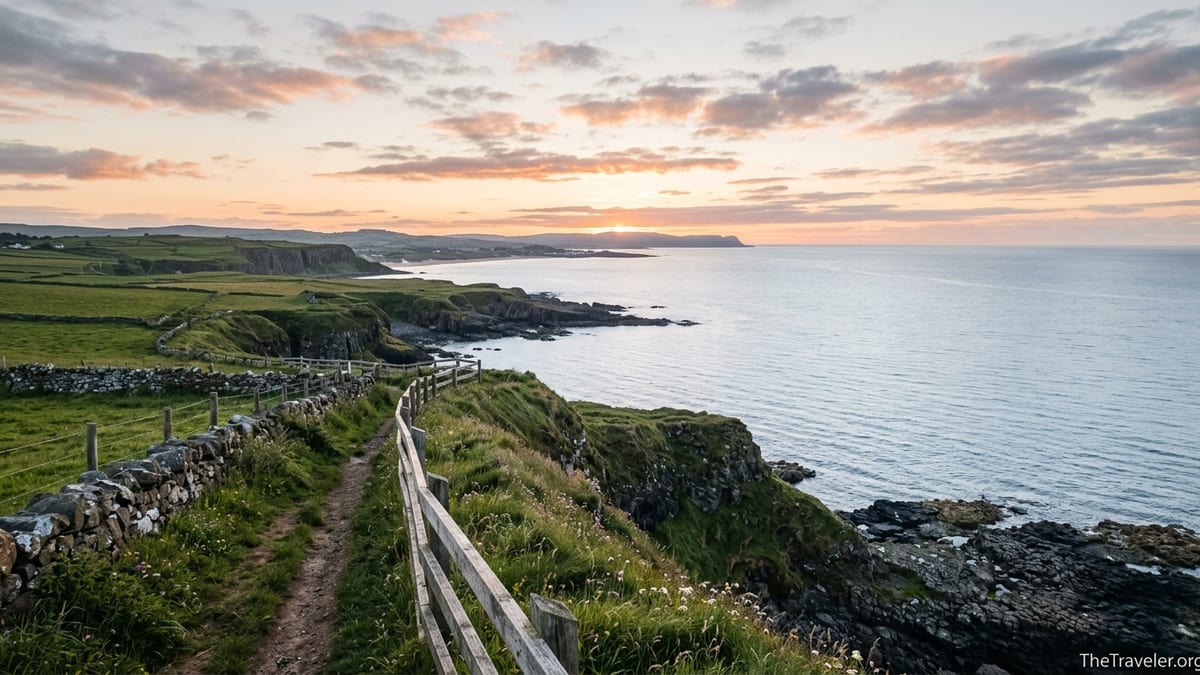
When choosing, start with your must-see places and your style of travel. If you want late-night bars, galleries and street art, lean towards Belfast or Derry~Londonderry. If sunrise walks above basalt cliffs and evenings in small pubs are your idea of a perfect trip, focus on the north Antrim coast. If you picture yourself on a lakeside deck with a book and the sound of oars in the distance, look closely at Fermanagh. Once you have matched these priorities to a handful of likely bases, compare specific properties, check recent guest reviews and book early for peak seasons.
Whatever you choose, remember that in Northern Ireland the next landscape is rarely far away. Even from a single base, a one- or two-hour drive can shift you from city streets to cliff tops, from long sandy beaches to quiet marinas. With a little planning, you can combine two or three contrasting bases into one trip and come away with a surprisingly complete sense of this compact, varied corner of the island of Ireland.
FAQ
Q1. Is Belfast or Derry~Londonderry a better base for a first trip?
Belfast usually works better for a first trip because of its two airports, strong rail and bus links, and wide range of day tours, but Derry~Londonderry is an excellent second base if you have more than five days.
Q2. Where should I stay for easiest access to the Giant’s Causeway?
Bushmills offers the quickest access by car, while Portrush combines reasonable access with more restaurants, beaches and public transport for those without a car.
Q3. Do I need a car to explore the Causeway Coast?
You can reach key sights using trains, buses and organised tours from Belfast and Portrush, but having a car gives you far more flexibility for smaller coves, viewpoints and rural stays.
Q4. Which coastal town is best for families with children?
Portrush is popular with families thanks to its beaches, seafront amusements and train access, while Newcastle works well for combining beach time with forest parks and easy walking trails.
Q5. Is it practical to stay in Belfast and day-trip everywhere?
It is possible but you will spend a lot of time in transit. Most travellers find it more relaxing to combine Belfast with at least one coastal or countryside base, especially on trips longer than three nights.
Q6. What is the quietest place to stay on the north coast?
Smaller bases such as Ballycastle or rural guesthouses and cottages around Bushmills generally feel quieter than central Portrush, particularly outside school holidays and major events.
Q7. How many nights should I stay on the Causeway Coast?
Two nights allows you to see the main sights, but three or four nights give you time for slower coastal walks, extra beaches and possible side trips into the Glens of Antrim.
Q8. Is Fermanagh too far from the rest of Northern Ireland for a short trip?
Fermanagh is best for trips of a week or longer. For a three- or four-night visit focused on highlights, Belfast plus a Causeway Coast base is usually more time-efficient.
Q9. Are there good options for couples looking for boutique stays?
Yes. Belfast’s Cathedral Quarter, Derry~Londonderry’s Walled City, Bushmills village and lakeside hotels in Fermanagh all offer characterful, smaller properties that suit couples.
Q10. When should I book accommodation for summer or big events?
For July and August, and for major events such as tournaments at Royal Portrush, aim to book several months in advance, especially if you need family rooms or have your eye on specific properties.