


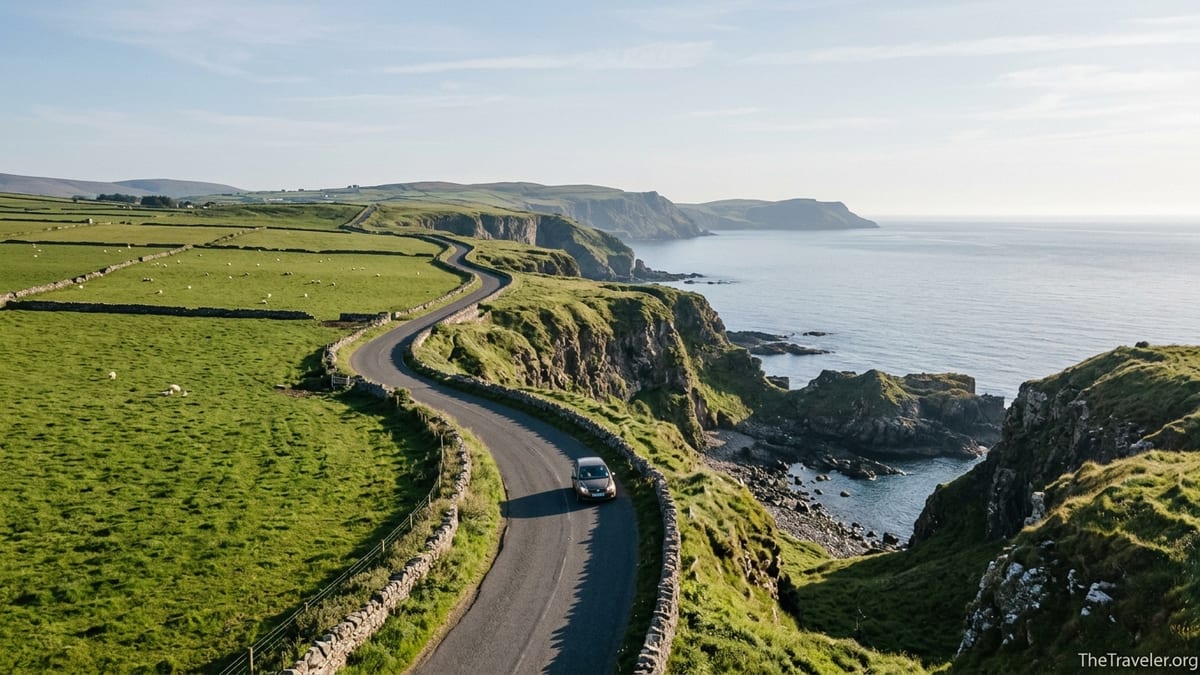
Northern Ireland is made for road trips. Distances are short, scenery changes fast and the roads themselves are part of the experience, from the cliff hugging bends of the Causeway Coast to the open mountain passes of the Mournes. With a rental car, a flexible plan and a sense of adventure, you can link Belfast, the Causeway Coastal Route, Derry~Londonderry, the Fermanagh Lakelands and the Mourne Mountains into one memorable circuit.
Getting on the road: car rental, rules and realistic budgets
Most Northern Ireland road trips start in Belfast, which has two main airports: Belfast International to the northwest of the city and George Best Belfast City Airport just a few miles from the center. Both have on site car hire desks from major brands such as Hertz, Avis, Budget and Enterprise, as well as local operators. Booking at least a few weeks ahead usually gives the best choice and price, especially in the peak months from June to early September.
For a compact or economy car, daily rates fluctuate but often sit in the range of the equivalent of 35 to 60 pounds per day in high season when booked in advance, sometimes a little lower in spring or autumn. Expect to pay extra for automatic transmission, additional drivers, one way drop offs and optional excess reduction. Many contracts allow you to cross into the Republic of Ireland for an added fee, but this is not always automatic, so check the small print before you confirm if you plan to visit Donegal or Dublin as part of a wider itinerary.
Driving itself is straightforward if you are used to rural roads. Traffic is light once you leave Belfast and the main motorways. You drive on the left, seatbelts are compulsory and speed limits are posted in miles per hour, not kilometers. On smaller coastal and mountain roads, limits of 60 miles per hour are common, but in practice you will often travel far slower because of bends, farm vehicles and frequent photo stops. Alcohol limits are strict and policing can be visible on main holiday routes, so plan on a designated driver at all times.
Parking is generally easier than in many parts of mainland Europe. In towns such as Belfast, Derry~Londonderry, Portrush and Enniskillen you will find a mix of multi storey car parks, surface lots and pay and display bays on the street. Coastal and countryside attractions, including the main Causeway Coast sites and many Mourne trailheads, usually have dedicated car parks that charge a modest flat fee or hourly rate. Carry coins or a contactless card, and always check signage before leaving the car.
Belfast by car: practical base, city driving and overnight stops
Belfast works well as both your arrival point and a base for the first or last night of a road trip. Collecting a car at the airport and driving into the city is simple, with clearly signed routes from both Belfast International and Belfast City Airport taking around 30 to 40 minutes and 10 to 15 minutes respectively in normal traffic. Many visitors choose to spend the first day car free, exploring the compact center on foot and by taxi, then pick up their vehicle the following morning to head out on the open road.
If you do keep the car in the city, look for hotels that either include on site parking or offer discounted rates at nearby garages. Properties in the Titanic Quarter, near the Cathedral Quarter and around the university area in the south of the city often bundle parking into their room packages. Expect overnight charges in the broad range of 10 to 20 pounds depending on location. In the center, public multi storey car parks can be cost effective if you are out sightseeing for much of the day.
Driving in central Belfast is more manageable than in many capitals. Main routes are clearly marked, and the city is small enough that you rarely spend long in heavy traffic outside peak commuter hours. A car is most useful for reaching vantage points such as Cave Hill Country Park or for an evening drive along Belfast Lough, but you can safely leave it parked while you visit major attractions like Titanic Belfast, City Hall or the Ulster Museum. When you are ready to head out, the Causeway Coast, Mournes and Fermanagh are all within two to three hours, which keeps day to day driving times relatively low.
For overnights before or after a longer circuit, consider one night at the start in the city center and one night at the end near the airport if you have an early flight. Some airport hotels offer park and stay packages that can be convenient if you want to return the car the evening before departure and use a shuttle the next morning.
Driving the Causeway Coastal Route: highlights, parking and pacing
The Causeway Coastal Route between Belfast and Derry~Londonderry is the headline drive in Northern Ireland. Much of it follows the A2 road as it clings to the Antrim coast, with the Irish Sea to one side and cliffs, glens and headlands on the other. Driving time without stops between Belfast and Derry~Londonderry is around four hours, but that figure is largely academic, because almost everyone turns it into at least a full day of meandering and photo breaks.
Classic stops include Carrickfergus Castle just north of Belfast, the seaside town of Whitehead, the dramatic bends between Larne and Cushendall, the Dark Hedges inland near Ballymoney, Carrick a Rede rope bridge, the basalt columns of the Giant’s Causeway, clifftop Dunluce Castle and the beaches around Portrush and Portstewart. Many of these have official car parks, some run by national heritage bodies and some by local councils, with clearly posted daily or hourly charges. For example, at larger attractions the parking fee can be bundled into visitor admission, while at small laybys and viewpoints it may simply be free but with limited space.
Parking fills quickly at iconic sites in summer and on sunny weekends. To avoid frustration, aim to arrive at big ticket stops like Giant’s Causeway and Carrick a Rede early in the morning or later in the afternoon, allowing the middle of the day for coastal driving and less busy pauses in small villages. For lunch, places such as Ballycastle or Cushendall have central car parks within a short walk of cafes and bakeries, which is particularly welcome if you want a break from driving.
Overnight, Portrush and Portstewart are popular bases with a wide choice of guesthouses and hotels that cater to drivers, often with private parking onsite or street parking in residential areas. Bushmills, near the Giant’s Causeway, suits travelers who prefer a quieter village feel and shorter shuttles to the main sights. Derry~Londonderry at the western end of the route makes a natural city stop with evening restaurants and a chance to walk the historic walls, with several hotels offering secure parking just outside the compact old center.
Fermanagh Lakelands by car: Enniskillen, islands and quiet roads
From Derry~Londonderry or the north coast, turning inland brings you to County Fermanagh and its network of lakes, islands and low hills. Enniskillen, straddling the River Erne between the Upper and Lower Lough, is the main hub and a good overnight base. It is roughly a two hour drive from Derry~Londonderry on main roads and a similar distance from Belfast if you are approaching from the east, so it fits neatly into the middle of a multi day circuit.
Driving in the Fermanagh Lakelands is gentler than the sheer cliffs of the Causeway or the tight turns of the Mournes. Roads wind along the shores of Lough Erne, passing marinas, small villages and forest parks. Popular stops include Enniskillen Castle, viewpoints such as the Cliffs of Magho above Lower Lough Erne and attractions like Marble Arch Caves and the nearby Cuilcagh mountain boardwalk trail. Most of these have signposted car parks with moderate day charges and clear information boards. At busier sites, arrive earlier in the day to secure spaces, especially in summer and on bank holiday weekends.
For scenic detours, short loops around Lower Lough Erne reveal small harbors and laybys where you can pull in for a picnic or a photo. Many travelers choose to leave the car for a few hours and join a boat trip from Enniskillen to Devenish Island or other historic sites, returning later to continue driving. Accommodation ranges from lakeside lodges and country hotels with large car parks to town center guesthouses that rely on nearby public parking, which is usually free in the evenings.
Because public transport in rural Fermanagh is limited, having a car lets you visit quieter spots such as Castle Archdale Country Park, forest drives or remote viewpoints that tour buses rarely reach. Just keep an eye out for livestock on minor roads and be prepared to slow or pull into passing places for oncoming traffic on single lane stretches.
Mourne Mountains and coastal drives: Spelga Pass, Silent Valley and seaside villages
The Mourne Mountains in County Down provide a very different driving experience, with high passes, reservoirs and a rugged coastline that feels surprisingly wild for an area so close to Belfast. From the city, you can reach the coastal resort of Newcastle in about an hour and the mountain roads around Spelga Dam and Silent Valley in another 30 to 40 minutes, making the Mournes suitable for both day trips and overnight stays within a longer circuit.
One classic route climbs from the coastal side near Newcastle or Kilkeel up to Spelga Pass, the high saddle beside Spelga Dam, which is one of the highest drivable points in Northern Ireland. The road here runs through open moorland with expansive views over the central Mournes. There is a small car park at the dam itself, often used as a starting point for walks, and various roadside pull ins where you can stop briefly for photographs. Nearby, a stretch of road known locally as the “magic hill” creates the illusion that cars roll uphill when left in neutral, a quirky diversion on an already memorable drive.
Another rewarding diversion is the road into Silent Valley, a reservoir nestled deep in the mountains. The entrance is reached via minor roads from Kilkeel and there is a dedicated car park inside the park, with a modest admission fee that covers both vehicle access and parking. From here, paths and access roads allow for easy strolls around the reservoir, while more experienced hikers can continue onto rougher mountain tracks. Even if you stay near the car, the surrounding peaks and stone walls create a distinctive landscape that makes the short driveway worthwhile.
For coastal driving, the Mourne Coastal Route between Newcastle and Kilkeel, and onward to Warrenpoint, threads between sea and mountains with frequent places to pull off and admire beaches, dunes and fishing harbors. Dundrum Bay offers sweeping views back to the Mournes, especially in the soft light of late afternoon. In villages such as Newcastle, Annalong and Kilkeel, seafront car parks and on street spaces make it easy to pause for an ice cream, a walk on the promenade or a seafood dinner before continuing over the mountains or back toward Belfast.
Planning 3, 5 and 7 day road trip circuits
If you have three days, focus on a compact loop between Belfast and the Causeway Coast, with an optional taster of the Mournes. One workable pattern is to spend night one in Belfast, day two driving the Causeway Coastal Route with an overnight in Portrush, Portstewart or Bushmills, and day three returning to Belfast via either the inland A26 and M2 for speed or by retracing part of the coastal road. With careful timing you can include highlights such as Carrickfergus, Carrick a Rede, the Giant’s Causeway and Dunluce Castle, leaving some shorter coastal sections or the Dark Hedges for another trip.
With five days, you can add either Fermanagh or the Mournes to the same skeleton route. For example, after a day on the Causeway Coast and a night near Portrush, drive west to Derry~Londonderry for a city afternoon and overnight, then head south the next day to Enniskillen and the Fermanagh Lakelands. Spend a night or two around Enniskillen exploring lakeside drives and attractions like Marble Arch Caves, then complete the loop back to Belfast on the final day. Alternatively, drop Fermanagh and instead spend two days using Newcastle or Rostrevor as a base for exploring the Mourne mountains and coastal roads.
With a full week, it becomes realistic to link all four regions into one sweeping circuit without rushing. One example would be day one in Belfast, day two along the Causeway Coast to an overnight around Portrush or Bushmills, day three exploring the north coast at a slower pace and continuing to Derry~Londonderry, day four driving south to Enniskillen, day five in the Fermanagh Lakelands with optional hikes or boat trips, day six crossing east to the Mournes with a night in Newcastle, and day seven climbing over Spelga Pass or visiting Silent Valley before returning to Belfast. This pattern keeps individual driving days mostly in the range of two to three hours behind the wheel, leaving time for walks and sightseeing.
Whatever the length of your trip, build flexibility into your plan. Weather can change quickly, especially along the coast and in the mountains, and some of the most enjoyable moments come from spontaneous stops at small beaches, harbors, viewpoints and cafes that are not on any formal itinerary. Having a general framework for overnight stops and major sights, then leaving gaps for unplanned detours, tends to produce the most satisfying road trips.
Parking, navigation and on the road logistics
Reliable navigation makes driving far more relaxing. Most rental cars include built in satellite navigation or offer it as an extra, but many travelers simply use offline maps on their smartphones. Before leaving a hotel or cafe with strong Wi Fi, download maps for the region so you are not reliant on mobile signal in remote valleys or along cliff top roads. Always carry a backup such as a printed map for context, especially in the Mournes and Fermanagh where turnings can be small and signposts sparse.
In towns and at major attractions, follow official parking signs rather than relying on informal verges or farm gateways, which may be needed for agricultural access. Many village centers have clearly marked “P” symbols indicating short stay and long stay car parks. In the countryside, if you need to stop briefly for a photograph, choose laybys or designated pull ins with enough room for you and any through traffic. Avoid blocking narrow lanes or entrances, and be mindful that tractors, local traffic and emergency vehicles use these roads daily.
Fuel is widely available along main routes, but there are fewer petrol stations in the most rural corners of the Mournes and Fermanagh. It is sensible to top up when your tank drops to around half, particularly before an early morning departure into the mountains or a long loop around Lough Erne. Many modern stations have contactless payment and small convenience stores where you can pick up snacks and drinks for the car. Restrooms are usually available either at fuel stops or at major visitor attractions along the Causeway Coast and in larger towns.
Finally, factor in how driving conditions change with the weather. On dry summer days, narrow roads can still be busy with tour buses and cyclists. In rain or mist, visibility on mountain passes drops and surfaces can become slippery, so slow down and use dipped headlights. In winter, daylight hours are short, and on unlit rural roads it is often more enjoyable to time your drives for mid morning to mid afternoon, leaving evenings for relaxed dinners in your overnight base.
The Takeaway
A Northern Ireland road trip linking Belfast, the Causeway Coast, Derry~Londonderry, Fermanagh and the Mourne Mountains offers a concentrated slice of landscapes and experiences in a compact area. With realistic driving times, thoughtful overnight stops and an understanding of local road conditions, parking and rental options, you can see a great deal without feeling rushed.
Whether you have a long weekend or a full week, the key is to treat the journey as part of the holiday rather than a chore. Plan a skeleton route with clear bases such as Belfast, the north coast, Enniskillen and Newcastle, then allow space for weather windows, spontaneous diversions and lingering at places that speak to you. With that balance, the winding coastal roads, quiet lakeland lanes and high passes of the Mournes will become highlights in themselves, long after the trip has ended.
FAQ
Q1. Do I really need a car to explore the Causeway Coast and the Mournes? For maximum flexibility, a car is very helpful, especially for quieter beaches, viewpoints and mountain passes that public transport does not reach easily. There are organized day tours from Belfast to the Causeway Coast, but having your own vehicle lets you control timings and combine regions like Fermanagh and the Mournes in one trip.
Q2. Is driving in Northern Ireland suitable for visitors who are not used to rural roads? Many visitors manage comfortably with some preparation. Roads are generally well maintained but can be narrow and winding in coastal and mountain areas. If you are new to driving on the left, consider renting a smaller car, avoiding long first days behind the wheel and building in plenty of breaks so you do not feel rushed.
Q3. How much should I budget for fuel on a 7 day circuit? Fuel prices vary, and consumption depends on vehicle size and driving style, but for a moderate loop of Belfast, the Causeway Coast, Derry~Londonderry, Fermanagh and the Mournes, many travelers find that a compact car uses the equivalent of roughly two to three full tanks. It is wise to allow a flexible fuel budget rather than planning to the last liter.
Q4. Are car parks at major attractions like the Giant’s Causeway and Silent Valley usually open year round? The main car parks at flagship attractions are typically open throughout the year, although opening hours and charges may change between seasons. Smaller coastal or mountain car parks can occasionally be closed for maintenance or in severe weather, so it is sensible to check locally or be ready with an alternative stop nearby.
Q5. Can I use one base, such as Belfast, for day trips to all these regions?From Belfast you can reach the Causeway Coast, the Mournes and parts of Fermanagh on day trips, but driving times add up and you may spend more hours in the car than you would like. For a more relaxed experience, most travelers prefer to stay at least one or two nights on the north coast and one or two nights either in Fermanagh or the Mournes instead of returning to Belfast every evening.
Q6. How early should I book accommodation and car rental for summer trips?In July and August, car rental fleets and popular coastal or lakeside accommodations can be heavily booked, especially around weekends and public holidays. Booking both your car and key overnight stops several months ahead gives more choice of vehicle types, parking options and hotel locations, particularly in smaller places like Portrush, Bushmills, Enniskillen and Newcastle.
Q7. Is roadside parking safe for short photo stops on coastal and mountain roads?There are many safe laybys and designated pull ins where you can stop briefly, but it is important not to park on blind bends, narrow verges or in front of gates and farm tracks. If in doubt, continue a little farther until you find a wider area with clear visibility in both directions so you can rejoin the road safely.
Q8. What kind of car is best for a Northern Ireland road trip?For most itineraries, a small to mid sized hatchback is ideal, offering enough space for luggage while remaining easy to maneuver and park on narrow streets and mountain roads. Larger vehicles and campervans are possible but may be more awkward in compact coastal villages, tight car parks and on some of the narrower scenic routes.
Q9. Are there any special rules about crossing into the Republic of Ireland with a rental car?Rental contracts differ. Some companies allow cross border travel by default within the island of Ireland, while others require you to pay an additional fee or obtain prior written permission. Always check the terms before booking and confirm at the rental desk so that your insurance and breakdown cover remain valid if you decide to cross the border.
Q10. What is the best time of year for a road trip that includes the Causeway Coast, Fermanagh and the Mournes?Late spring and early autumn often provide a good balance of lighter traffic, longer daylight and milder weather, though conditions can change quickly at any time of year. Summer brings busier roads and higher prices but also more frequent services and open attractions. Winter trips can be atmospheric but require shorter driving days and more flexibility in case of storms or poor visibility in the mountains.