


Planning a road trip through Scotland can be deceptively tricky. Distances look short on the map, yet single track roads, photo stops and moody Highland weather all stretch driving days far beyond what a navigation app suggests. This guide lays out realistic 5, 7, 10, 14 and 21 day itineraries that combine Edinburgh, the Highlands, Isle of Skye, Glencoe, Loch Ness and selected islands, with sample overnight stops and typical driving times so you can build a trip that feels memorable rather than exhausting.
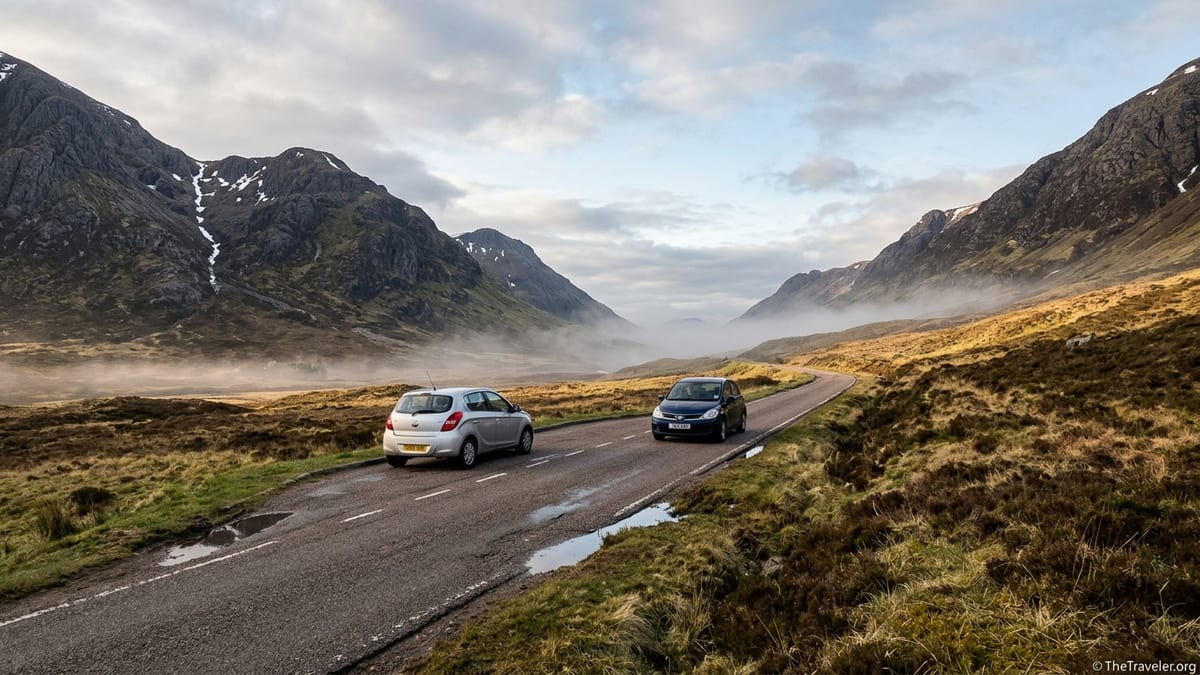
How to Use This Scotland Itinerary Guide
This guide is designed for travelers who want to see Scotland’s headline destinations without turning their trip into a nonstop endurance drive. Each sample itinerary is built on typical driving times between key hubs such as Edinburgh, Glencoe, Fort William, Portree on Skye and Inverness, then padded to reflect real conditions on Scottish roads, including single track sections, farm traffic and frequent photo breaks.
As a broad rule, a route that looks like 3 hours on a mapping app often takes 4 to 4.5 hours once you factor in roadworks, slower traffic and weather. For example, Edinburgh to Portree on Skye can show as under 5 hours, but visitors regularly find it becomes 6 to 7 hours once they stop in Glencoe and at viewpoints or castles along the way. Building your days around no more than 4 hours of net driving is a good target for a relaxed holiday.
All routes in this guide assume you pick up a rental car in Edinburgh or Glasgow after at least one night in the city to recover from long haul flights. Major rental brands such as Enterprise, Hertz, Avis, Europcar and Sixt are present at both airports, and in summer a compact automatic typically starts around the equivalent of 45 to 70 pounds per day if booked several months ahead, with prices higher for one way rentals and peak August dates.
None of these itineraries require driving at night or using particularly technical mountain passes. However, they do include Highland roads with blind summits and occasional single track stretches. Overseas visitors should familiarise themselves with driving on the left, Scotland’s lower drink drive limit, and the etiquette of passing places before leaving the cities, using the official guidance and campaigns promoted by VisitScotland, Traffic Scotland and Road Safety Scotland that specifically target tourist drivers.
Essential Driving Realities in Scotland
Scotland is compact, but its most beautiful roads are often the slowest. Motorways and main A roads around the Central Belt run at up to 70 miles per hour, but once you head into the Highlands you are more likely to average 35 to 45 miles per hour, even on a dry day. It is normal to spend long stretches behind a campervan, tractor or tour coach, especially in summer, and you should resist the temptation to overtake unless visibility is absolutely clear.
Single track roads, which are common on Skye, Mull and in the far northwest, require special attention. These narrow roads have passing places where one vehicle pulls in to let another pass. Locals expect visiting drivers to use these generously, both to pass oncoming traffic and to let faster vehicles behind overtake. A friendly wave as you pass is considered good manners and helps keep traffic flowing on scenic but fragile routes.
Weather is another factor that stretches driving times. In April and October you might encounter sudden fog on Rannoch Moor, sleet on the A82 near Glencoe or strong crosswinds on exposed bridges. In July and August, heavy rain showers can cut visibility on Skye’s Trotternish Peninsula or around Loch Ness. Traffic Scotland and similar official services publish real time advice that is worth checking each morning, particularly for winter or shoulder season trips when snow and ice can affect higher passes.
Finally, parking and access at popular viewpoints and trailheads need to be factored into your schedule. In Glencoe, car parks at the Three Sisters viewpoint and the Lost Valley trail can fill by late morning in summer, and on Skye, parking at the Fairy Pools, Quiraing and Old Man of Storr is often marshalled with paid lots that may involve a short walk from car to trailhead. Allow extra time at each stop so you are not tempted to drive faster later in the day to “catch up.”
Five Day Scotland Itinerary: Edinburgh, Glencoe and Skye Snapshot
A five day trip offers enough time for a taste of city life, Highland scenery and Skye’s drama without racing every day, as long as you resist the urge to add too many detours. This outline assumes you arrive in Edinburgh and depart from either Inverness or back from Edinburgh, using a loop that concentrates on the western Highlands.
On Day 1, spend the day in Edinburgh without a car, exploring the Royal Mile, Edinburgh Castle and the National Museum of Scotland on foot. Overnight in the Old Town or New Town, where you can easily reach both Waverley Station and tram links to the airport. On Day 2, pick up your rental car at the airport or a city depot in the morning and drive to Glencoe via Stirling and Crianlarich, a route that usually takes about 3.5 to 4 hours without long stops. Spend the afternoon walking short trails such as Glencoe Lochan or the Devil’s Staircase viewpoint, then overnight in Glencoe village or nearby Ballachulish.
Day 3 takes you from Glencoe to Skye, a classic west Highland drive. Many visitors choose to pause in Fort William for supplies, then continue via Glenfinnan to see the viaduct made famous by the Harry Potter films, before looping back to the A82 and A87 towards the Skye Bridge. Glencoe to Portree typically involves 4.5 to 5.5 hours of net driving depending on stops, and you should aim to arrive on Skye by late afternoon. Base yourself for two nights in Portree, Broadford or around Sligachan for easier access to the island’s main sights.
On Day 4, explore Skye with a loop up the Trotternish Peninsula, ticking off Old Man of Storr, the Quiraing and Kilt Rock. Each of these viewpoints involves short, sometimes steep walks and busy car parks, so spending a full day on this loop, plus a stop in colourful Portree Harbour, is realistic. On Day 5, drive from Skye to either Inverness via Loch Ness or back to Edinburgh. Portree to Inverness via the A87 and A82 takes around 3.5 to 4.5 hours, before stops at Eilean Donan Castle and Urquhart Castle on Loch Ness, while Portree to Edinburgh via the same route and onward past Glencoe usually requires 6 to 7 hours, so you should schedule a final night in your departure city rather than trying to fly out the same evening.
Seven Day Scotland Itinerary: Classic Loop via Loch Ness
With a full week you can complete a more balanced loop that keeps both Skye and Loch Ness while softening the pace. Many first time visitors choose a pattern such as Edinburgh, Glencoe, Skye, Loch Ness and Inverness, then back to Edinburgh or on to Glasgow by train. This avoids too many one night stays while still covering several famous lochs and glens.
Days 1 and 2 mirror the five day plan: one day in Edinburgh without a car, then a drive to Glencoe with an overnight stop. On Day 3, travel from Glencoe to Skye, but instead of detouring to Glenfinnan you might drive directly via Fort William, Spean Bridge and the Great Glen, stopping at viewpoints around Loch Lochy and Loch Garry before reaching Eilean Donan Castle and the Skye Bridge. Overnight in Portree or Broadford for three nights, giving you two full days on Skye.
Days 4 and 5 can be split between the north and south of Skye. One day might focus on Trotternish, while the other includes the Fairy Pools, the Talisker Bay area and perhaps a boat trip from Elgol if seas and weather allow. Driving times on Skye can be deceptive, as many of the most scenic roads, including those to the Fairy Pools and Elgol, are partly single track, so allow 40 to 50 minutes for what might look like a shorter hop.
On Day 6, leave Skye for Loch Ness and Inverness. Portree to Drumnadrochit on Loch Ness often takes 3 to 3.5 hours, including a regular stop at Eilean Donan Castle. Many visitors then take a short one hour cruise on Loch Ness from near Urquhart Castle before continuing another 30 minutes to Inverness for the night. Day 7 allows for a relaxed morning in Inverness and then a 3.5 to 4 hour drive or a 3.5 hour train journey back to Edinburgh. Returning the car in Inverness and taking the train south avoids repeating the same Highland roads and can be a welcome break from driving at the end of a busy week.
Ten Day Scotland Itinerary: Adding Islands and Slower Days
With ten days, you can add either extra time on Skye, an additional island such as Mull or a slower exploration of the eastern side of the Highlands. A popular structure is three nights in Edinburgh, one in Glencoe, three on Skye, one at Loch Ness and two in Inverness or the Cairngorms, giving several days with only short drives.
After a car free start in Edinburgh, Day 3 becomes your drive to Glencoe, as described earlier, with an overnight stay. Day 4 then runs from Glencoe to Skye, where you base yourself for three or even four nights. That longer stay means you can build in a “soft” day for poor weather, perhaps visiting Talisker Distillery, the small museum at Skye Museum of Island Life, or simply enjoying Portree’s cafes rather than pushing through low cloud on ridgelines.
On Day 7, leave Skye and follow the road to Inverness via Loch Ness, but instead of driving the full loop in one go, consider an overnight stop in or near Drumnadrochit. That reduces your driving to around 3 hours for the day, leaving time for a boat tour on Loch Ness, a visit to Urquhart Castle and a quieter evening on the loch shore. Day 8 then becomes a short drive of about 30 to 40 minutes into Inverness, freeing up the rest of the day for Culloden Battlefield, Clava Cairns or a distillery visit to the Speyside region.
The final two days can be spent in the Cairngorms National Park, about an hour from Inverness, by basing yourself in Aviemore or Grantown on Spey, or you can return south via Pitlochry and Perth, dropping the car in Edinburgh or Glasgow. If you are curious about the western islands beyond Skye, a different version of this ten day plan substitutes Mull for part of the route. In that case, you would travel from Glencoe to Oban for the ferry to Mull, spend two nights exploring Tobermory, Calgary Bay and wildlife tours, then continue north through Fort William to Skye. Ferry schedules on routes such as Oban to Craignure and Uig to Tarbert are released seasonally, and services sometimes run with reduced capacity, so you should book well in advance and keep an eye on updated timetables.
Fourteen Day Scotland Itinerary: Deep Highlands and Multiple Islands
Two full weeks opens the door to a genuinely in depth tour of Scotland’s Highlands and islands, blending headline sights with quieter corners. An efficient pattern is to combine Edinburgh, Loch Lomond or Stirling, Glencoe, Mull, Skye, Loch Ness and the Cairngorms, keeping most drives in the 2 to 4 hour range and allowing multiple night stays in each base.
One practical version starts with three nights in Edinburgh, then a short drive of about 1.5 hours to either Stirling or the Loch Lomond area for one or two nights. This lets you visit Stirling Castle, Doune Castle or take a loch cruise at Balloch before heading north. From there, a 2.5 to 3 hour drive takes you into Glencoe for two nights, where you can fit in one full hiking day on trails such as the Lost Valley or the Pap of Glencoe, and a lighter day exploring Glen Etive or the shores of Loch Leven.
From Glencoe, it is only about 1.5 hours to Oban, gateway to the Inner Hebrides. Two or three nights on Mull via the ferry from Oban to Craignure allow time for Tobermory’s harbour, a day trip to Iona for its historic abbey and white beaches, and wildlife tours searching for sea eagles and dolphins. After returning to the mainland, continue north through Fort William and past Eilean Donan Castle to Skye, where three or four nights provide time to explore both Trotternish and the Cuillin foothills, as well as boat trips to Loch Coruisk or Raasay.
Leaving Skye, drive east to Loch Ness and then on to Inverness for two nights. This section often appears as a single long day in ambitious plans, but splitting it as an overnight at Loch Ness first can be more pleasant, especially if you want a loch cruise or time to explore Urquhart Castle. For the final days, turn southeast into the Cairngorms, basing yourself in a village such as Aviemore for walking, cycling or family friendly attractions like the funicular railway on Cairn Gorm when operational. Your last full day can then be a relatively easy 2.5 to 3 hour drive back to Edinburgh or Glasgow for your flight home, with a final stop in Pitlochry or Dunkeld along the way.
Twenty One Day Scotland Itinerary: Grand Circuit of Highlands and Islands
Three weeks in Scotland allows for a grand circuit that includes Edinburgh, both coasts, several islands and stretches of the North Coast 500 without the frantic pace sometimes associated with that branded route. This length of trip particularly suits visitors flying long haul, giving time to adjust to the time zone and weather while still covering remote regions such as Assynt and the Outer Hebrides if ferry schedules cooperate.
A sample 21 day itinerary might start with four nights in Edinburgh, followed by two nights around Loch Lomond or Stirling, two nights in Glencoe and three nights in Mull. From Mull, return to Oban and continue to Fort William for a night before carrying on to Skye for four to five nights. This already creates a generous west coast arc, but you can extend it by adding a side trip to the Outer Hebrides, for example by taking the ferry from Uig on Skye to Tarbert on Harris, then exploring the beaches of Harris and Lewis for several days before returning to the mainland.
Typical crossings between Uig and Tarbert are around 1 hour 40 to 1 hour 50 minutes, though schedules and vessels are subject to change and occasional disruption, so it is essential to build contingency days into your plan. Staying three or four nights in Harris and Lewis gives you time to visit Luskentyre Beach, the standing stones at Callanish and the historic blackhouse villages without rushing between them. When you return to the mainland, you can continue a partial North Coast 500 circuit via Ullapool, Assynt’s rock towers near Stac Pollaidh and the beaches around Durness, before turning south again towards Inverness.
The final stretch of a 21 day circuit can include two or three nights in or near Inverness, followed by several nights in the Cairngorms or Royal Deeside, and a last night in a lowland town such as Dunkeld, Pitlochry or St Andrews before your departure. Long haul visitors often appreciate inserting occasional two night “rest stops” in smaller towns where the driving distance for the day is under 2 hours, leaving time for laundry, slower meals and unscheduled walks along rivers or loch shores. With this much flexibility, you can also respond more easily to weather patterns, shifting your hiking days to clearer windows and using wetter spells for distilleries and museums.
Overnight Allocation and Practical Booking Tips
One of the most common mistakes in Scotland road trip planning is stringing together too many one night stops. Packing up every morning, loading the car in rain and repeatedly arriving late in the day to new accommodation quickly becomes tiring, especially on narrow roads that demand constant concentration. As a rule of thumb, aim for at least two nights in each base, and ideally three or four on islands like Skye and Mull where weather can easily disrupt your plans.
For example, on a seven night trip that includes Edinburgh, Glencoe and Skye, a balanced allocation might be two nights in Edinburgh, one in Glencoe and four on Skye, rather than trying to add Inverness as a separate overnight for the sake of a quick Loch Ness photo. On a fourteen night route that includes both Mull and Skye, something like three nights in Edinburgh, two in Glencoe, three on Mull, four on Skye and two in Inverness or the Cairngorms is more restful than trying to squeeze in additional cities.
Seasonality also plays a large role in planning. July and August bring long daylight and many festivals, but also the busiest roads, higher accommodation prices and the prospect of midges in still, damp conditions around lochs. May, early June and late September often combine quieter roads and reasonable weather, with typical nightly rates for mid range hotels and guesthouses in popular areas ranging from roughly 120 to 220 pounds for a double room, with self catering cottages and simple B&Bs sometimes undercutting that in shoulder seasons.
For car hire, it is worth comparing prices between airport and city centre locations, especially in Edinburgh, as picking up a vehicle a day or two after arrival can save money and reduce the stress of immediately driving in a unfamiliar city after a long flight. Automatic transmissions are popular with overseas visitors but constitute a smaller share of fleets, so they tend to sell out or become significantly more expensive closer to departure. Booking ferries early is particularly important for routes serving Skye’s neighbouring islands and the Outer Hebrides, as some vessels operate with constrained capacity and services can be affected by vessel maintenance or weather delays.
The Takeaway
Scotland rewards travelers who slow down. It is tempting to attempt a circuit that names every famous glen, loch and island, but the reality of Highland driving, ferry logistics and changeable weather means that depth almost always beats breadth. Choosing a handful of bases such as Edinburgh, Glencoe, Skye, Loch Ness and one or two islands, then linking them with realistic driving days of no more than 4 hours, produces a far more enjoyable experience than a frantic checklist tour.
Whether you have five days or three weeks, the core ingredients stay the same: begin with at least one car free day in Edinburgh, build multi night stays into your Highlands and islands, respect the limits of single track roads and ferries, and be prepared to adapt plans to Scotland’s skies. Do that, and you will come home with memories of quiet loch shores, ridge top views and village pubs rather than white knuckles and rushed photos from the car window.
FAQ
Q1. Is it realistic to drive from Edinburgh to the Isle of Skye in one day?
Yes, it is physically possible, but it is a long day. Most routes via Glencoe and the Skye Bridge involve at least 5 to 6 hours of net driving, and many visitors take 7 hours or more once they include fuel stops, meals and viewpoints. Breaking the journey with an overnight in Glencoe or Fort William is often more comfortable, especially if you are not used to Scottish roads.
Q2. How many nights should I spend on the Isle of Skye?
For most travelers, three nights is a good minimum. This gives you two full days to explore Trotternish, the Fairy Pools and other highlights, plus a little buffer for poor weather. On longer trips of ten days or more, four or five nights on Skye can make sense if you enjoy hiking and want time for boat trips or quieter corners of the island.
Q3. Do I need a car to see the Highlands and islands?
A car offers the most flexibility for combining Edinburgh, Glencoe, Skye, Loch Ness and multiple islands, particularly if you want to reach trailheads and smaller villages. However, it is possible to see many highlights using a mix of trains, long distance buses and organised small group tours from hubs like Edinburgh, Glasgow and Inverness, which can be a good option for those nervous about driving on the left.
Q4. What is a safe daily driving limit for a Scotland road trip?
For most visitors, planning for 2 to 4 hours of net driving per day is a comfortable range, with occasional longer days of up to 5 hours if broken by meaningful stops. Anything more than that on consecutive days, especially on Highland roads, can become tiring and reduce your enjoyment of the scenery and towns you have come to see.
Q5. When is the best time of year to drive this kind of itinerary?
Late spring and early autumn are often ideal. May, early June and late September typically offer a balance of relatively long daylight, milder weather and lighter traffic than peak summer. July and August bring festivals and very long days but also busier roads, higher prices and midges around lochs and damp woodland.
Q6. How far in advance should I book ferries and accommodation for islands?
For popular island routes and peak months, many travelers now book accommodation and car spaces on ferries several months ahead, sometimes as early as January or February for July and August trips. Outside peak season, booking a few weeks ahead is often sufficient, though it is still wise to secure key crossings and at least your first and last nights well in advance.
Q7. Are Scottish single track roads dangerous for overseas drivers?
Single track roads are not inherently dangerous if you follow local etiquette, drive slowly and use passing places properly. The main risks arise when drivers are unfamiliar with the rules, drive too fast for conditions or fail to let faster traffic pass. Taking your time, pulling in frequently and staying alert at blind bends and summits make these roads manageable for most confident drivers.
Q8. Can I visit both Skye and Mull on a ten day trip?
Yes, but it requires careful planning and a willingness to accept several days with moderate to long drives. Many visitors find that focusing on one major island such as Skye or Mull, plus the mainland Highlands, produces a more relaxed holiday. If you are set on both, consider three nights on each and keep the rest of your bases to two or three locations rather than adding more one night stops.
Q9. Is Loch Ness worth an overnight stay or just a quick stop?
Loch Ness can be either, depending on your interests. A quick stop for a photo from the roadside will not reveal much, but an overnight in or near Drumnadrochit allows time for a boat tour, a visit to Urquhart Castle and perhaps a quieter evening walk along the loch. For many itineraries, one night on Loch Ness plus one or two nights in Inverness strikes a good balance.
Q10. Should I finish my trip in Edinburgh, Glasgow or Inverness?
The best departure city depends on your flights and final route. Many Highland and island itineraries naturally circle back to either Edinburgh or Glasgow, both of which have major international connections and train links. Inverness works well as an endpoint if you are flying within the UK or to selected European destinations, or if you plan to return south by train rather than repeating long drives at the end of your holiday.