


Scotland is one of Europe’s easiest countries to explore by rail. Trains link the big cities in under an hour, climb into the Highlands with views of lochs and moorland, and even skirt the shores of remote sea lochs. Yet there are also corners where buses thin out, timetables shrink to a couple of services a day, and a rental car suddenly makes more sense. This guide explains how to plan Scotland by train, the most scenic routes, how tickets and luggage work in practice, and where adding a car will make your itinerary smoother rather than stressful.
Scotland’s Rail Network at a Glance
For most visitors, Scotland’s rail map starts with the Central Belt. Edinburgh Waverley and Glasgow Queen Street are the two main hubs, linked by fast ScotRail services that typically take around 50 to 60 minutes via Falkirk High. Trains on this corridor run roughly every 15 minutes during the day, so you can treat it almost like a metro link between the two cities rather than a journey you need to plan far in advance.
From these central hubs, intercity lines fan north, east and west. Edinburgh and Glasgow both have direct trains to Inverness, Aberdeen and Dundee, while Glasgow Queen Street is the starting point for the famous West Highland Line to Fort William, Mallaig and Oban. Many of these routes are served by ScotRail regional trains with large windows and space for luggage, while some longer runs, such as services from London to Inverness or Aberdeen, are operated by other companies like London North Eastern Railway and Lumo.
Journey times give a good sense of scale. Edinburgh to Inverness takes roughly three and a half hours; Glasgow to Fort William is about three hours and 45 minutes; Edinburgh to Aberdeen is around two and a half hours. That means you can comfortably use a city as a base and day trip deep into the Highlands, or string several regions together in a week without relying on domestic flights.
For planning, it helps to think in corridors rather than isolated journeys. The Edinburgh–Glasgow spine links both cities to Stirling and Perth. The Highland Main Line continues from Perth to Inverness. From Inverness, branches run to Kyle of Lochalsh on the west coast and to Wick and Thurso in the far north. On the west, the line from Glasgow splits at Crianlarich, sending one branch to Oban and another to Fort William and Mallaig. Understanding these junctions makes it easy to sketch a loop that avoids backtracking.
Key City Routes: Edinburgh, Glasgow, Aberdeen, Inverness and Fort William
The workhorse route for many visitors is Edinburgh to Glasgow. Trains run between Edinburgh Waverley and Glasgow Queen Street via Falkirk High in just under an hour, with additional slower routes via Airdrie and via Bathgate that serve commuter towns. Typical walk-up off-peak returns on this corridor in 2026 are in the mid-teens in pounds, and since peak fares were removed from ScotRail services in 2025, pricing is now simpler throughout the day rather than split into peak and off-peak bands.
Heading north, Edinburgh to Inverness and Glasgow to Inverness are both practical in a single day. The Edinburgh to Inverness run usually takes around three hours and 30 to 40 minutes and includes a scenic stretch across the Forth Bridge and through the Cairngorm foothills. Glasgow to Inverness services often route via Stirling and Perth, taking a similar overall time. First class is available on some intercity services, offering a quieter carriage, wider seats and at-seat refreshments, which can be worthwhile if you are carrying laptops and want to work during the journey.
Edinburgh and Glasgow to Aberdeen are also straightforward. Typical journey times are just over two and a half hours from Edinburgh and around two hours and 40 minutes from Glasgow Queen Street via Stirling and Dundee. These trains serve coastal cities like Dundee and Montrose along the way, so you can easily build a chain of stops, for example spending a night in Dundee to visit the waterfront museums before continuing to Aberdeen and onwards by bus into Royal Deeside.
Fort William, the outdoor capital of the Highlands, is reached by the West Highland Line from Glasgow Queen Street. The journey takes roughly three hours and 45 minutes, often on two or three direct services a day, and passes lochs, remote moors and the flanks of Ben Nevis. Many visitors arrive by train, spend two or three nights hiking or joining guided tours to Glen Coe or the Road to the Isles, then either continue by rail to Mallaig or pick up a rental car locally for more remote glens.
Scenic Rail Journeys You Should Not Miss
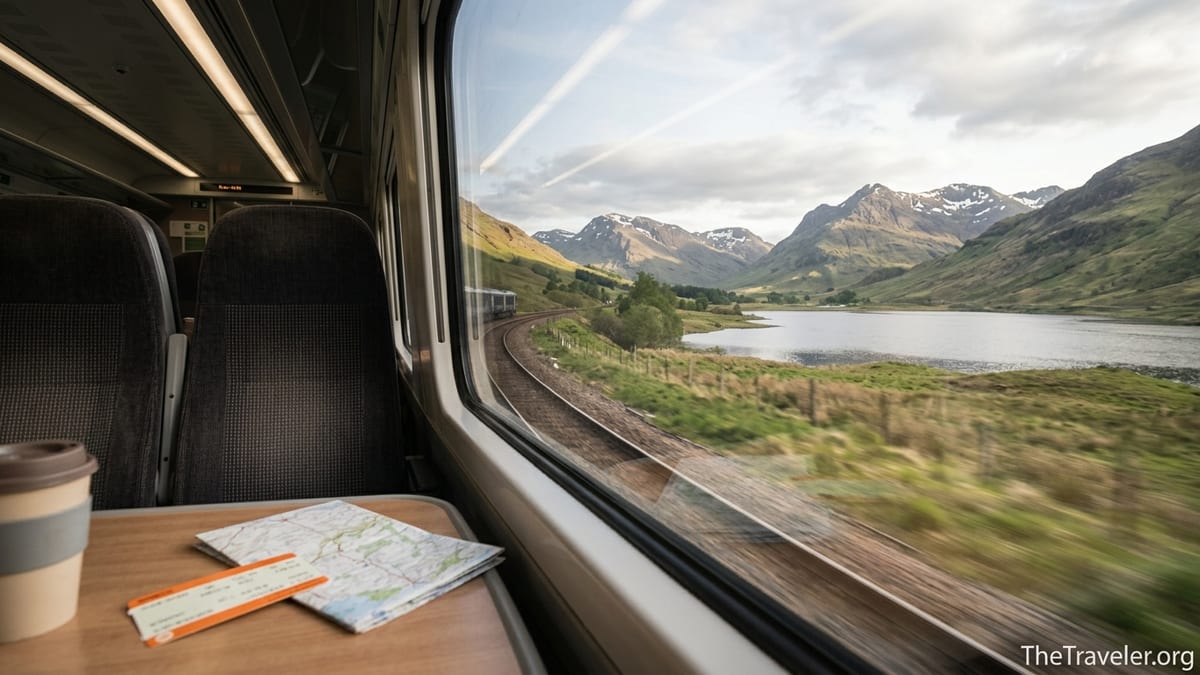
The West Highland Line from Glasgow to Fort William and Mallaig is often described as one of the most scenic railways in the world, and with good reason. Leaving the city, the train climbs along the shores of Loch Long and Loch Lomond, passes the wild expanse of Rannoch Moor, then threads between mountains into Fort William. North of Fort William, the line continues to Mallaig, crossing the Glenfinnan Viaduct made famous by the Harry Potter films. Standard ScotRail services run this route year round, while in summer a separate heritage train, The Jacobite, operates steam-hauled trips between Fort William and Mallaig on selected days.
Another standout is the Highland Main Line between Perth and Inverness. Trains snake through the Cairngorm National Park, passing Pitlochry, Aviemore and the wide valley of Strathspey. On clear days you see heather moorland, pine forests and high plateaus that stay snow-dusted well into spring. Many travelers break the journey with a night in Aviemore to hike in Rothiemurchus Forest or visit the Cairngorm Reindeer Centre before continuing north.
From Inverness, two smaller lines feel like slow journeys back in time. The Kyle of Lochalsh line runs west for around two and a half hours, tracing the shores of Loch Carron and skirting mountains before ending opposite the Isle of Skye at Kyle of Lochalsh. With three or four departures most days, it is perfectly feasible to take a morning train from Inverness, have lunch in Kyle and return on an afternoon service, or stay overnight and connect by bus across the Skye Bridge. The Far North Line from Inverness to Wick and Thurso is longer and more rural, with sweeping views of peatlands and empty coastline, and is best done as an overnight side trip rather than a day dash.
On the east coast, the run from Edinburgh to Aberdeen offers classic coastal scenery. After crossing the Firth of Forth, trains follow the shoreline past beaches, fishing villages and river mouths. Sit on the left-hand side leaving Edinburgh for the best sea views. Similarly, the shorter hop between Glasgow and Oban, about three hours, passes Loch Lomond and the Pass of Brander before reaching a busy ferry port where boats depart for Mull and the Inner Hebrides, making it a natural gateway to island-hopping itineraries that combine rail and sea.
Tickets, Railcards and How to Keep Costs Sensible
Scotland uses the same national ticketing system as the rest of Great Britain, which means you will see familiar categories such as Advance, Anytime and Off-Peak tickets. On most long-distance corridors, booking an Advance fare one to three months in advance can significantly cut your costs compared with buying on the day, though flexibility is reduced because these tickets are tied to specific trains. On busy summer Saturdays to the Highlands, Advance tickets for key services can sell out, leaving only more expensive flexible options, so early booking is wise if your dates are fixed.
Since peak fares were removed on ScotRail-operated services in 2025, the price distinction between peak and off-peak has largely disappeared on purely Scottish routes. This simplifies planning for visitors: if you look at Edinburgh to Glasgow, for example, a same-day return bought in 2026 is typically around the mid-teens in pounds and valid on any train that day, rather than doubling in cost at rush hour. On routes that involve cross-border operators, such as London to Edinburgh or London to Inverness, peak pricing can still apply, so always check which company is running your train before assuming flat fares.
Railcards are worth considering if you expect to spend at least 80 to 100 pounds on rail travel within a year. The 16–25, 26–30, Senior and Two Together Railcards generally give around one-third off most fares for an upfront fee, which quickly pays for itself on a loop such as Edinburgh–Inverness–Kyle of Lochalsh–Glasgow–Edinburgh. If you are arriving from overseas, you can often buy digital railcards on UK ticketing apps using your own smartphone and a bank card, without needing a UK address, provided you meet the age or group requirements.
Visitors who plan intense weeks of train travel sometimes look at passes that cover multiple days, such as various rover tickets that include much of Scotland, or broader passes valid across Great Britain. These can be convenient on itineraries with lots of spontaneous day trips, but they are not always the cheapest option. A realistic approach is to sketch your likely journeys, price them individually on a booking site for a comparable time of year, then compare that total with the cost of a pass plus any required seat reservations.
Practicalities On Board: Luggage, Seating and Seasonality
Most Scottish trains are set up for travelers carrying at least one medium suitcase and a backpack. On intercity services between cities such as Edinburgh and Inverness, carriages generally have overhead racks for small bags, luggage stacks near the doors for larger cases, and standard two-plus-two seating. If you are traveling with very large suitcases, avoid placing them in doorways or blocking aisles; use the dedicated racks, even if it means sitting a few rows away from your bags. Theft is relatively rare but you should still keep valuables like passports and electronics in a daypack by your feet rather than in the main suitcase.
Seat reservations work differently depending on the route. Some ScotRail services allow you to reserve seats in advance, particularly on longer intercity runs, while on others seats are unallocated and you simply board and sit anywhere not marked as reserved. For popular summer trains to Fort William, Mallaig or Oban, advance reservations are strongly recommended because individual coaches can become very busy, especially if there are hiking groups boarding at intermediate stations. Between Edinburgh and Glasgow, by contrast, most tickets are flexible and trains run so frequently that reservations are less important.
Seasonality has a big impact on comfort. July and August see the heaviest tourist traffic, higher accommodation prices in places like Skye, and rail services that can feel crowded on sunny weekends. If you can, consider traveling in May, June or September for longer daylight, generally milder weather and fewer tour groups. Winter journeys can be magical on routes like the Highland Main Line, with snow on the hills and low golden light, but storms can disrupt services and daylight hours are short, so allow buffer time if connections are tight.
Food and drink options vary by route. Intercity services often have a trolley or small buffet selling snacks, hot drinks and simple sandwiches, while shorter regional trains may not. In practice, many travelers pick up supplies from supermarkets or station cafés before boarding. Larger stations such as Edinburgh Waverley, Glasgow Queen Street, Inverness and Aberdeen have a full range of shops and coffee chains, while smaller rural stops might only have a basic shelter and ticket machine, with no food nearby.
When Trains Shine and When a Rental Car Is Better
Trains are ideal for point-to-point travel between cities, major tourist hubs and larger Highland towns. If your itinerary looks like Edinburgh–Glasgow–Fort William–Inverness–Aberdeen–Edinburgh over 10 days, rail is usually the most relaxed, efficient option. You avoid navigation, narrow single-track roads, and the challenge of finding city-centre parking, all while being able to read, sleep or watch the scenery through large panoramic windows. Combined with local buses and guided day tours, this style of travel lets you reach many classic landscapes without ever picking up car keys.
There are, however, clear moments where a rental car makes more sense. Once you want to explore smaller glens, lochside villages or islands with limited public transport, flexibility becomes crucial. For example, from Fort William you can reach Glen Coe and Glenfinnan by bus, but schedules can be infrequent and services may finish early in the evening, which can make it hard to combine long hikes with dinner somewhere remote. In Skye, services between villages reduce significantly outside high summer, and some iconic spots such as the Quiraing or Neist Point are easier to stitch together in one day with a car.
Costs also matter. A compact rental car collected at Edinburgh Airport for a week in spring 2026 typically runs to a few hundred pounds, before fuel and insurance add-ons. One-way rentals, such as picking up a vehicle in Edinburgh and dropping it in Inverness, usually attract a noticeable one-way fee, which can push a short hire of two or three days into a higher bracket than simply renting for five days from a single location. A common strategy is to design your rail loop first, then bolt on a short car rental period in one place, for example three days out of Inverness to explore the Black Isle, Ullapool and Torridon.
Driving in Scotland brings its own learning curve. Many rural roads are single track with passing places, sheep often wander close to the tarmac, and weather can change quickly even in summer. If you are unused to driving on the left or in narrow conditions, consider limiting driving to one part of your trip rather than relying on a car the whole time. In that sense, it can be more relaxing to use trains to cross long distances, then rent a car for a focused local section where public transport is weakest.
Sample Itineraries That Mix Rail and Road
One classic loop for first-time visitors starts in Edinburgh, hops to Glasgow by train, then heads up the West Highland Line to Fort William. Spend two or three nights there for hikes, a day trip on the Jacobite steam train to Mallaig, or a guided excursion to Glen Coe. From Fort William, continue by train to Mallaig, take the ferry to Skye, and rely on local buses or an organised tour for two or three nights. From Skye, reach Kyle of Lochalsh by bus and board the train back to Inverness, then finish with a rail run via Aberdeen and Dundee back to Edinburgh.
A second option focuses more on car-based Highland exploration without sacrificing the scenic rail sections. Start with trains between London, Edinburgh and Inverness, perhaps overnighting in Aviemore to break the journey. In Inverness, pick up a rental car for three to five days to drive the North Coast 500 region or a condensed version of it, returning to Inverness to drop the car and avoid one-way fees. From there, you can return south by train on either the Highland Main Line to Edinburgh or via Aberdeen and the east coast.
Visitors with limited time might base themselves in one city and add targeted excursions. For example, three nights in Edinburgh with a day trip to Glasgow by train, plus a long day out to Pitlochry or Aviemore, gives a flavour of both urban Scotland and the Highlands without changing accommodation frequently. Similarly, if you base in Glasgow, you can day trip by rail to Stirling for its castle, to Balloch at the southern end of Loch Lomond, or to Oban for a long but rewarding day that includes sea views and a seafood dinner before catching an evening train back.
All of these itineraries can be adjusted around festivals and seasons. In August, Edinburgh’s festivals put huge pressure on room availability, so some travelers choose to sleep in Glasgow or Stirling and use the train daily into Edinburgh instead. In winter, a loop that leans more on cities and shorter rail hops, such as Glasgow–Oban–Fort William–Inverness–Edinburgh, can still deliver snowy mountain views without committing to long drives in challenging road conditions.
The Takeaway
Scotland’s rail network is compact, scenic and surprisingly comprehensive for a country of its size. Trains link the main cities quickly, climb into the Highlands along routes that are journeys in their own right, and connect with ferries to islands and buses to remote villages. For many classic itineraries, from Edinburgh and Glasgow to Fort William, Inverness and Aberdeen, rail is not only viable but often the most enjoyable way to travel.
At the same time, there are regions where tracks and timetables thin out and the freedom of a rental car becomes valuable, especially if you want to chase sunsets along single-track roads or combine multiple remote viewpoints in a single day. The sweet spot for many visitors is a hybrid plan: use trains for long legs and city-to-city moves, then rent a car for a carefully chosen segment where it unlocks places that would otherwise require awkward bus changes or expensive private tours.
By understanding where Scotland’s rail lines run, how ticketing works since the removal of peak fares on many routes, and what to expect in terms of luggage, reservations and seasonal crowding, you can build an itinerary that plays to the strengths of both rail and road. The result is a trip that feels adventurous but not exhausting, where the journeys themselves are part of the reason you came.
FAQ
Q1. Do I need to book Scottish train tickets in advance, or can I buy on the day?
For short hops such as Edinburgh to Glasgow, buying on the day is usually fine because fares are relatively flat and trains are frequent. For longer Highland routes, especially in summer, advance booking often gives more choice of departure times and can secure cheaper seats on busy services.
Q2. How much does a typical intercity train journey cost in Scotland?
Prices vary by route and timing, but as a rough guide a same-day return between Edinburgh and Glasgow often sits in the mid-teens in pounds, while single journeys between Edinburgh and Inverness or Aberdeen commonly start from a few tens of pounds and rise at short notice or on popular dates.
Q3. Is first class worth paying for on Scottish trains?
First class can be worthwhile on longer runs such as Edinburgh to Inverness or Aberdeen if you value extra space, quieter carriages and at-seat refreshments. On short city hops of under an hour, most travelers find standard class entirely adequate and prefer to save the money for activities or meals.
Q4. Can I take large suitcases on Scottish trains?
Yes, you can bring large suitcases, but you should place them in the dedicated luggage racks near doors rather than blocking aisles or seats. Overhead racks are best for smaller bags, and it is wise to keep valuables in a small daypack at your seat rather than in checked luggage.
Q5. When in a Scotland itinerary is it best to rent a car?
Car rental makes the most sense once you want to explore places with sparse public transport, such as smaller parts of Skye, remote glens near Fort William, or the far northwest coast. Many travelers time their rental to cover only these segments, using trains for the longer city-to-city journeys.
Q6. Is driving in the Scottish Highlands difficult for visitors?
Driving is manageable with care but can feel challenging if you are unused to single-track roads and driving on the left. Expect narrow lanes, passing places and occasionally livestock on or near the roadway. If you are nervous, limit driving to a shorter segment of your trip and avoid long winter drives in the dark.
Q7. Are there discounts like railcards available to visitors from overseas?
Yes, many national railcards such as the 16–25, 26–30, Senior and Two Together Railcards are available to eligible visitors regardless of nationality. They usually give about one-third off many fares for an upfront fee, and can often be purchased digitally through UK ticketing apps.
Q8. How far in advance should I book the Jacobite steam train from Fort William to Mallaig?
The Jacobite often sells out weeks ahead in the main summer months, especially for morning departures. If riding the steam train is a priority, book as soon as you have fixed dates. If not, remember that regular ScotRail trains on the same route offer similar views and are included in standard ticketing.
Q9. Can I explore the Isle of Skye without a car using trains and buses?
It is possible but requires more planning and flexibility. You would typically take a train to Mallaig or Kyle of Lochalsh, then connect by ferry or bus to Skye and use local buses or guided tours to reach key sites. Outside high summer, reduced bus frequency can make it hard to fit several remote stops into a single day.
Q10. Is Scotland by train suitable for families with children?
Yes, many families find rail travel in Scotland easier than driving because children can move around, use on-board toilets and look out of large windows. Short city hops and scenic routes like the West Highland Line are particularly popular, though it is sensible to bring snacks and activities for longer stretches.