


The English Midlands bundle together some of the country’s richest experiences: industrial heritage in Birmingham, half-timbered streets in Stratford-upon-Avon, grand battlements at Warwick Castle and honey-stone villages in the Cotswolds. Whether you start in the region itself or come up from London for the day, choosing the right tour can save hours of logistics and turn a rushed checklist into a relaxed, story-filled journey.
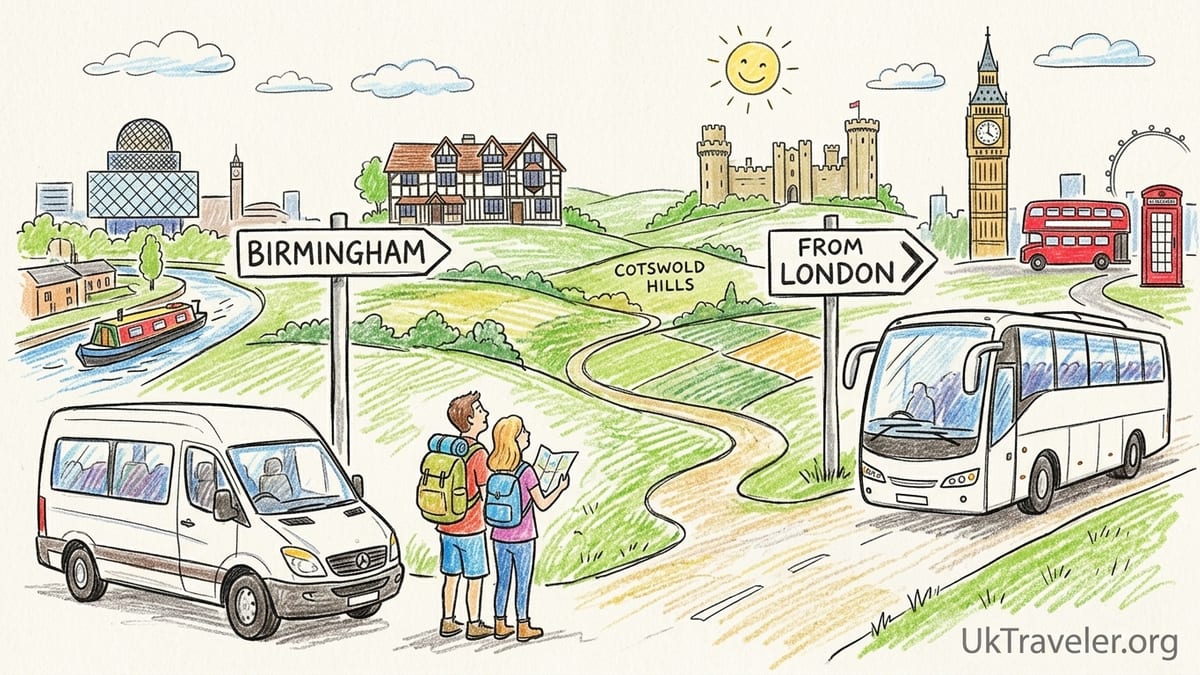
How Midlands Tours Work: Starting in Birmingham vs Arriving from London
Midlands day trips fall into two broad camps. First are tours that start within the region, typically from Birmingham city centre or nearby hubs such as Stratford-upon-Avon. These are ideal if you are already staying in the Midlands and want focused explorations of the Cotswolds, Shakespeare country or Birmingham itself. A common pattern is a small-group minibus that collects guests from central Birmingham around 9 am and returns by early evening, with transport and guiding included but some entrance fees paid locally.
The second camp is made up of coach tours that depart from London and loop through the Midlands before returning to the capital. Big-name operators commonly advertise full-day itineraries combining Warwick Castle, Stratford-upon-Avon, a panoramic drive through the Cotswolds and a short walking tour in Oxford, usually departing near Victoria Coach Station around 8 to 8.30 am and returning between 7 and 8 pm. These tours focus on efficiency: you sacrifice lingering time in each place, but all transport and most major entry tickets are prearranged.
For many visitors, the choice hinges on where you sleep. If you are based in Birmingham, it rarely makes sense to travel to London just to join a Midlands tour. Conversely, if you have only two or three days in the UK and your hotel is in central London, a long but carefully planned coach circuit can be the most practical way to sample several headline destinations in a single day without navigating train changes or rural buses.
Pricing structures reflect the difference. Midlands-based small-group tours often run in the region of moderate three-figure amounts per adult for a full day, with 12–16 passengers on board, while large London-based coaches can bring the per-person cost down yet seat 40 or more. Understanding whether entrance fees are bundled or optional, and what level of commentary and group size you prefer, is essential before you book.
Birmingham Walking Tours: Industrial Stories and Street-Level Detail
Birmingham itself is worth at least half a day on foot, and guided walking tours are a straightforward way to understand how this once heavily industrial city reinvented its canals and warehouses into today’s cultural quarters. A typical introductory walking tour runs around two hours, covering the revamped Centenary Square, the canalside Gas Street Basin and the Victorian architecture around Victoria Square and Colmore Row. Group sizes are often capped at a couple of dozen participants, with wireless headsets sometimes provided so you can hear the guide over city traffic.
Several independent outfits and local guides now run scheduled Birmingham walking tours, often once or twice daily, with advance booking via mainstream tour platforms. Expect to pay a modest fee per adult for group tours, with private versions available at higher rates if you want a customised route that includes, for example, the Jewellery Quarter’s metalworking heritage or a detour to see the exterior of the iconic Library of Birmingham. Self-guided options exist too, including app-based trails that provide GPS-triggered commentary.
While walking tours rarely include entrance tickets to paid attractions, guides will frequently point out museums such as the Birmingham Museum and Art Gallery or the Coffin Works, which you can return to afterwards. Transport is, by definition, your own two feet, so these outings suit travellers comfortable with moderate walking and variable weather. A guided overview on your first morning can be particularly valuable if you then plan to explore further afield on your own by train or car.
For visitors keen on niche themes, there are also occasional special-interest walks, such as street art routes in Digbeth or tours focused on Birmingham’s role in the Industrial Revolution. These tend to run less frequently and sometimes operate only in peak months, so checking current schedules and minimum numbers is important if you are visiting outside summer.
From Birmingham to the Cotswolds: Small-Group Countryside Escapes
Reaching the Cotswolds independently from Birmingham by public transport can be surprisingly time-consuming, usually involving a train to a gateway town such as Moreton-in-Marsh and then local buses or taxis between villages. Small-group day tours from Birmingham solve this by using a minibus to thread several scenic stops together into a single outing, often marketed as “Cotswolds in a Day” experiences. One well-known regional operator has built a reputation for full-day loop itineraries that leave from designated pick-up points reachable by train from Birmingham, Oxford or even London.
On these countryside days, transport is typically by air-conditioned minibus with around 12–16 seats, giving the guide flexibility to use narrow village lanes that big coaches cannot. Itineraries commonly include postcard stops such as Broadway Tower, Chipping Campden or Bibury, combined with time for lunch in a market town. Entry fees seldom play a major role here, because much of the value lies in walking the stone-lined streets and taking in hilltop viewpoints. Where a specific attraction is included, such as a manor garden, that is normally clearly flagged in the tour description and built into the advertised price.
For travellers staying in Birmingham without a car, these tours strike a practical balance between independence and convenience. You are freed from timetables yet still have free time in each village to explore at your own pace. The trade-off is that you must keep to the group schedule, and weather in the Cotswolds can be changeable even in summer, so pack layers and be prepared for both sunshine and showers. Families should also consider that long stretches of country lanes can be soporific for younger children, although regular short stops usually break up the day.
Driving yourself from Birmingham into the Cotswolds is certainly possible and gives more flexibility for photographers or walkers. Yet narrow roads, limited parking in popular villages and the need for a sober driver make organised tours particularly sensible for first-time visitors or those keen to sample pub lunches without watching the clock.
Stratford-upon-Avon & Shakespeare Tours: From Steam Trains to Stage Doors
Stratford-upon-Avon, about 40 kilometres south of Birmingham, is the anchor for most Shakespeare-focused experiences in the Midlands. Visitors based in Birmingham can reach Stratford by regular train or bus, but organised day trips add valuable context by tying the town’s half-timbered houses, riverside walks and theatres into a coherent narrative about Shakespeare’s life and times. Typical small-group excursions from Birmingham run as full days, leaving mid-morning and returning by early evening, with guided walking tours of the historic centre and free time to visit Shakespeare-related properties.
One of the most atmospheric options during summer is the Shakespeare Express, a steam-hauled train operated by a heritage railway company between Birmingham and Stratford on selected Sundays. Passengers travel in vintage carriages along a scenic route that takes around an hour each way, with time in Stratford to explore independently before the return service. While this is not a fully guided tour in the standard sense, it effectively packages return transport with a heritage experience, and many travellers pair it with a pre-booked walking tour or an evening performance at the Royal Shakespeare Theatre.
Dedicated Shakespeare tours within Stratford itself often follow the so-called Historic Spine, a route that links landmarks such as Shakespeare’s Birthplace, the Guildhall and Holy Trinity Church. Some guided options include timed entry to properties managed by local heritage organisations, while others leave you to purchase tickets on arrival, which can be useful if you want flexibility to decide how many interiors to see. Tour durations range from quick 90-minute introductions to more detailed half-day experiences that layer in costume exhibitions or backstage theatre tours when schedules permit.
An organised tour makes particular sense on busy weekends or during school holidays, when timed entry slots for popular sites can sell out and parking is scarce. Guides also help weigh up whether a matinee or evening performance at the Royal Shakespeare Company fits your schedule, especially if you are returning to Birmingham the same day. Independent travellers with strong Shakespeare knowledge may be happy to self-guide with a printed map, but first-time visitors often find that a local guide’s anecdotes about Elizabethan town life bring depth that audio guides cannot easily match.
Warwick Castle and Medieval England: Family-Friendly Day Trips
Warwick Castle is one of the Midlands’ most popular family attractions and appears on both Birmingham-based and London-based itineraries. From Birmingham, it is straightforward to reach by direct train to Warwick station and a short walk or taxi, but coach and minibus tours remove the need to coordinate train times with entry slots and live shows. Many organised options include timed admission to the castle in the base price, sometimes with access to seasonal events such as falconry displays or staged jousting.
Inside the castle grounds, you will find costumed interpreters, recreated medieval rooms, interactive exhibits and extensive gardens. A typical organised visit allows three to four hours on site, which strikes a balance between seeing the battlements, main interiors and one or two scheduled demonstrations without feeling rushed. For families, this is often enough, especially if you are combining the castle with another destination such as Stratford in a single day.
Coach tours from London that include Warwick usually depart early, spend a substantial block of time inside the castle and then continue to Stratford-upon-Avon and beyond. These full-day circuits commonly advertise entry to Warwick Castle and at least one Shakespeare-related property, along with a short walking tour of Oxford and a drive through selected Cotswold villages. Group sizes on these departures are typically large, and commentary comes via a guide on board, so the experience is more about efficient sightseeing than in-depth historical interpretation at each stop.
Choosing between independent travel and a tour for Warwick often comes down to your appetite for logistics. Travellers comfortable with reading UK rail timetables and pre-booking castle tickets online may prefer to set their own pace, perhaps arriving earlier in the day to avoid peak crowds. Others, particularly those visiting with children or older relatives, may value the simplicity of a single booking that covers coach transport, admission and a rough schedule, even if that means accepting fixed departure and return times.
London-Based Day Trips: Oxford, Cotswolds, Stratford and Warwick in One Loop
For visitors staying in London, the classic way to sample the Midlands in one day is a circular coach tour that links Warwick Castle, Stratford-upon-Avon, the Cotswolds and Oxford. Several long-established operators run such itineraries, often described with phrases like “Oxford, Stratford, Cotswolds and Warwick Castle day trip.” These tours typically depart from central London around 8 to 8.30 am, reach Warwick late morning, stop in Stratford around lunchtime, then continue with a panoramic drive through Cotswold villages before ending with a guided walking tour in Oxford and returning to London early evening.
Transport is usually by large, modern coach with air conditioning, onboard commentary and sometimes Wi‑Fi. Entrance fees to Warwick Castle and Shakespeare’s Birthplace are often bundled into the higher-priced versions of these tours, while more budget-friendly options may include exterior views only or offer discounted entry tickets as add-ons. In Oxford, walking tours are generally included, though entry to individual colleges or libraries varies by departure and time of year, as some colleges restrict group access during exam periods.
Because these loop tours cover significant distances, time at each stop is carefully rationed. Travellers might have 90 minutes to two hours at Warwick Castle, a similar span in Stratford, short photo stops or drive-through views in the Cotswolds and around an hour in Oxford. This suits those who want breadth rather than depth: you gain a strong overview of several regions in a single day but will not explore every tower or side street. The upside is that you need only one booking, and you travel with a guide who can weave the day’s disparate locations into a coherent story about English history from the medieval to the modern era.
When assessing these London-based tours, look closely at what is included in the quoted price. Some departures fold in all major admissions, a light lunch and even audio headsets, while others cover only transport and guiding. Also consider your own energy levels: a 10- or 11-hour day with multiple stops can be tiring, particularly if you are still adjusting to jet lag. For many visitors, this is still a worthwhile investment, turning what would be a complex series of train journeys and taxi rides into a single, curated excursion.
When to Choose an Organised Tour Over Driving Yourself
In the Midlands, an organised tour makes clear sense whenever your itinerary combines multiple rural or small-town stops that are awkward to link by train or bus. A day that strings together Warwick Castle, Stratford-upon-Avon and more than one Cotswolds village, for instance, demands either a car and a confident driver or a tour that handles the route logistics. For many visitors, especially those unused to driving on the left or navigating tight village lanes, leaving the wheel to a professional is simply more relaxing.
Time efficiency is another factor. A London-based coach trip that includes Warwick, Stratford, the Cotswolds and Oxford compresses into one day a route that would otherwise require several separate rail journeys plus local bus connections, each with waiting time and the risk of missed links. While such tours can feel brisk, they remove the need to research timetables, buy tickets at multiple stations or negotiate with taxi drivers in rural areas where ride-hailing services are limited.
Organised tours also shine when entrance tickets are scarce or queues are long. Timed slots at high-profile attractions, especially during school holidays and summer weekends, can sell out in advance, and coach operators often hold group allocations that independent travellers cannot easily access at short notice. Families benefit too: with transport, entry and a loose schedule set, adults can focus on enjoying the day rather than checking maps and clock-watching.
Independent travel still has its strengths. If you want a late dinner along Birmingham’s canals, an unhurried matinee at the Royal Shakespeare Theatre or long photo sessions in a particular Cotswold village, controlling your own car or train schedule is hard to beat. A sensible compromise for many is to join one or two key organised day tours for logistically complex routes, while using trains or a rental car for simpler point-to-point journeys within the Midlands.
The Takeaway
The Midlands rewards both careful planners and spontaneous explorers, but its most satisfying experiences often lie outside straightforward rail corridors. From Birmingham’s industrial revival and Stratford’s Elizabethan streets to the battlements of Warwick Castle and the gentle hills of the Cotswolds, an array of tours helps stitch these places together in ways that suit different time frames and comfort levels.
Travellers already based in Birmingham will usually find that local walking tours and small-group minibus excursions offer the richest mix of insight and flexibility, particularly for countryside forays into Shakespeare country and the Cotswolds. Those anchored in London with little time to spare can still gain an engaging overview via full-day coach loops that fold Warwick, Stratford, the Cotswolds and Oxford into a single, long but rewarding outing.
Whichever style you choose, pay close attention to what is included in the price, from entrance fees and transport to group size and guiding style. With realistic expectations about pace and distance, the right Midlands tour can feel less like a checklist and more like a narrative journey through centuries of English life, from castle ramparts and college quads to canal basins and cobbled lanes.
FAQ
Q1. Is it better to base myself in Birmingham or London for Midlands day trips?
For in-depth visits to Stratford, Warwick and the Cotswolds, Birmingham is usually more convenient, while London works best for broad one-day coach loops that sample several regions.
Q2. Do Birmingham-based tours usually include entrance fees to attractions?
Many small-group tours include transport and guiding but leave entrance tickets optional, especially in the Cotswolds, while some Stratford and Warwick Castle trips bundle specific admissions in the advertised price.
Q3. How large are groups on typical Cotswolds or Shakespeare country tours from Birmingham?
Small-group countryside tours often run with around 12 to 16 passengers in a minibus, while themed walking tours in towns like Birmingham or Stratford may host up to 20 or so participants.
Q4. Are London-to-Midlands day trips too rushed to be worthwhile?
They are fast-paced, but for travellers with only a few days in the UK they can provide an efficient overview of Warwick, Stratford, the Cotswolds and Oxford without complicated train and bus changes.
Q5. Do I need to drive to enjoy the Cotswolds from the Midlands?
No, small-group minibus tours from the region are designed specifically for non-drivers, linking several villages and viewpoints that are hard to reach in one day using only public transport.
Q6. When is the Shakespeare Express steam train a good option?
It is ideal in summer for travellers who want a characterful way to travel between Birmingham and Stratford, combining vintage rail travel with free time to explore town sights independently.
Q7. How far in advance should I book Warwick Castle tours in peak season?
In school holidays and summer months it is prudent to reserve at least a few weeks ahead, especially for London-based coach tours that include timed castle admission.
Q8. Are organised tours suitable for families with younger children?
Yes, especially Warwick Castle and some Cotswolds routes, but families should check total duration, coach facilities and how much free time versus structured commentary is included.
Q9. Can I combine a Royal Shakespeare Company performance with a day trip from Birmingham?
Yes, many visitors pair an afternoon exploring Stratford with a matinee or evening performance, returning to Birmingham by late train or organised transport, though performance schedules vary by season.
Q10. What should I look for when comparing different tour operators?
Focus on departure and return times, what transport and entrance fees are included, typical group size, guide qualifications and recent traveller reviews describing pace and commentary style.