


Choosing where to sleep can make or break a trip to the West Midlands. Birmingham and its neighbours now attract major events, restaurant pilgrims and heritage hunters, and the hotel scene has raced to catch up. Birmingham’s official tourism site even maintains a large accommodation marketplace that pulls together everything from slick city apartments to country house hotels, a sign of just how central beds have become to the region’s visitor economy. On a recent multi-stop trip I road-tested a handful of key hotels across the area, paying close attention to the details that never show up in glossy booking photos. Here is what genuinely worked, and where I would look next time.
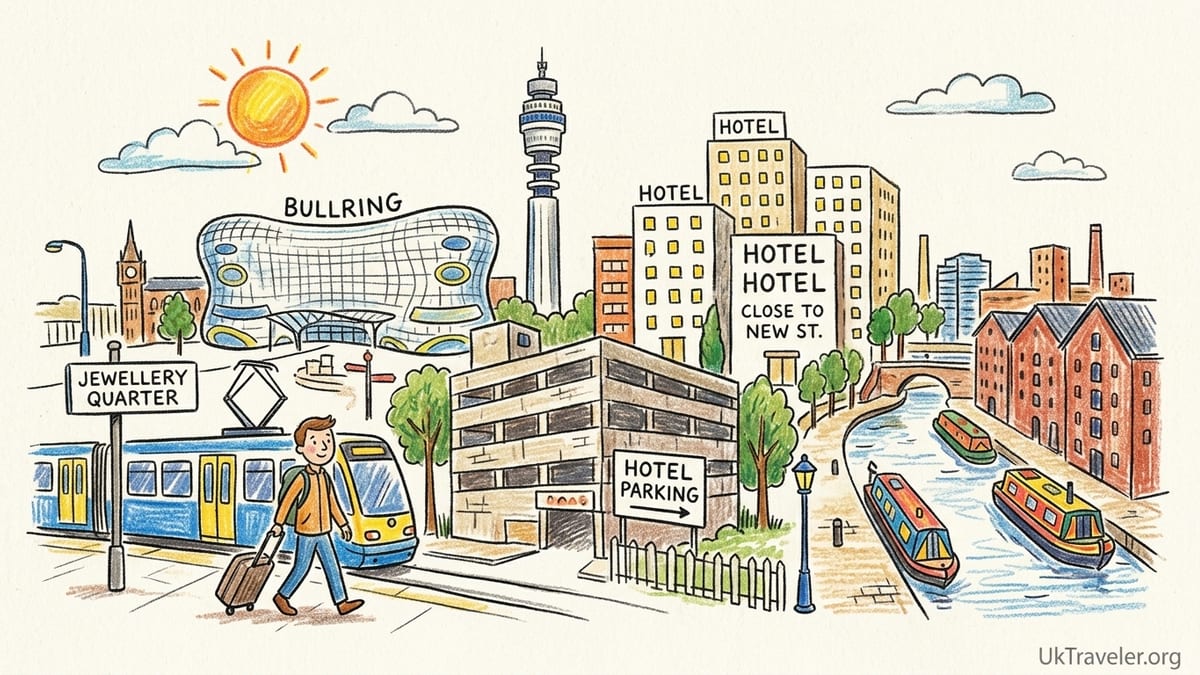
Birmingham City-Break Hotels: Sleep Close to the Action
For a classic Birmingham city break, I based myself at a business-style hotel a few minutes’ walk from Birmingham New Street station and the Bullring. My room was a standard double, roughly 20 to 22 square metres, with just enough floor space to open a large suitcase beside the bed and still walk around. The mattress was medium-firm with a thick topper, closer to the feel of Premier Inn beds than the thin mattresses you sometimes find in older city properties. Bedding was synthetic but breathable, and I slept comfortably even with the air conditioning set low. The official photos made the rooms look a touch brighter than they really are, but in person they felt practical and well maintained rather than tired.
The bathroom was a compact, pod-style unit with a walk-in shower, decent water pressure and a glass door that sealed properly so the floor did not flood. It was not marble-and-brass luxury, but the tiling was clean and there were no signs of mould in the grout. Noise insulation mattered more. From my fifth-floor room on a Friday night I could just hear the low murmur of Broad Street revellers until about midnight, but double glazing cut out most traffic hum and I never needed earplugs. Breakfast was taken in a ground-floor restaurant space that doubled as a bar in the evening. The buffet leaned towards hot options, with eggs, sausages and grilled tomatoes, plus pastries and fruit. Booking images suggested a sprawling spread; in reality it was modest but fresh and kept topped up, which counts for more than fancy cake stands.
Parking for this stay relied on a nearby multi-storey that offered discounted day rates if you validated your ticket at reception. There was no dedicated hotel car park, which is common in the tight core around New Street and Corporation Street, so drivers should factor an extra five to ten minutes’ walk with luggage. The upside is station access. From the hotel entrance I could wheel a carry-on to New Street in under five minutes and reach the tram for the Jewellery Quarter in another couple, which made day trips feel frictionless. Late at night the surrounding streets were busy but not rowdy, with a steady mix of office workers, shoppers and theatre-goers heading home. I felt comfortable walking back alone before midnight, helped by good lighting and constant pedestrian traffic.
For travellers seeking a similar central base, personally I would return to this kind of mid-market chain over older budget blocks that sit directly above nightlife. Reassuringly thick mattresses, reliable air conditioning and quiet corridors are more valuable on a three-night stay than designer cushions. As researched alternatives, recent guest reviews consistently call out The Grand Hotel Birmingham for characterful, historic interiors and strong soundproofing, and the easyHotel and ibis budget options near New Street for rock-bottom prices and functional rooms for those who plan to spend most of their time out in the city rather than in the hotel.
Jewellery Quarter and Canal-Side Weekends
For a slower-paced weekend I shifted to a canalside hotel near Brindleyplace, about ten minutes’ walk from Symphony Hall. This stay felt immediately different. My corner room on an upper floor was slightly larger than the city-centre base, closer to 25 square metres, with floor-to-ceiling windows facing the canal. In bright daylight the views over narrowboats, towpaths and red-brick warehouses justified the marketing shots. At night, however, reflections in the glass made it harder to enjoy the scene and highlighted how close neighbouring apartments were. The mattress here skewed firmer, with less give at the shoulders, which back sleepers may prefer but side sleepers might find unforgiving after several nights.
The bathroom followed a modern, semi-open design, with a sliding door and a large walk-in shower fitted with a rainfall head and a separate handheld attachment. Water pressure was strong and temperature control precise, which is important in conversions where plumbing can be quirky. The booking photos had shown glossy white tiling and sleek chrome, all accurate, but they did not reveal that storage space was limited. There was only a slim ledge by the sink, so two people sharing would need to keep most toiletries in their bags. Breakfast felt more generous than the city-centre hotel, with made-to-order eggs alongside a buffet and proper barista coffee from a staffed machine. Seating spilled onto an outdoor terrace above the canal in good weather, a pleasant spot for planning the day.
Noise here was a tale of two evenings. On the first night, midweek, the area fell quiet by 11 pm, with only distant chatter from bars along the water. On Saturday, late-night drinkers leaving nearby venues meant short bursts of noise that drifted up to my room until around 1 am. It was rarely sustained, but light sleepers should request a higher floor facing away from the busiest stretches of Broad Street. Parking came via a small underground garage with a limited number of spaces, reachable down a ramp off a narrow side street. The bays were tight, and larger SUVs might find manoeuvring awkward. If you arrive after office hours, consider dropping passengers and luggage at the main entrance first.
From this bases, station access involved either a 15-minute stroll to New Street along well-lit central streets or a short taxi ride if carrying heavy bags. The late-night surroundings felt urban but comfortable, with groups of friends bar-hopping and couples walking back from restaurants in Brindleyplace. If you want something a little quieter but still characterful, researched alternatives include boutique properties in the Jewellery Quarter, where former factories and workshops have been converted into smaller hotels and serviced apartments. These often trade slightly longer walks to the main shopping core for more residential surroundings, independent cafes and easier on-street parking, a good mix for travellers who prefer a neighbourhood feel.
NEC and Birmingham Airport: Event-Focused Stays
Large exhibitions and concerts at the National Exhibition Centre and Resorts World can send room prices at on-site hotels soaring. For one NEC event I opted for a night at a chain hotel on the airport campus instead of staying directly beside the halls. The room was compact but efficiently laid out, around 18 square metres, with a queen bed, built-in desk and open wardrobe. Photos had made it appear almost apartment-like, yet in reality there was little spare floor space for spreading out gear. The mattress, however, was excellent by airport standards: thick, with a slight plush top layer and firm support underneath. After a long day on tiled exhibition floors, that counted more than design flourishes.
The bathroom followed a bright, practical template with a glass-enclosed shower and simple white tiling. Water pressure was adequate rather than powerful, but hot water was instant at 6 am when many event-goers were also getting ready. Noise is the make-or-break detail at airport hotels. Here, triple-glazed windows meant that aircraft movements were barely perceptible, and the bigger issue was internal. My corridor had a steady flow of late arrivals until around midnight and early departures from 5 am. Doors had soft closers, but they still made a noticeable thud. Earplugs solved it for me, and light sleepers should ask for a room at the far end of a corridor away from lifts.
Breakfast started early, which is essential if you need to be at an NEC stand before doors open to the public. Service began at 5.30 am with continental items and from 6 am for hot dishes. The spread looked smaller in person than in staged photos, but it covered the basics well: eggs, bacon, mushrooms, cereal, yoghurt and fruit. Parking was in a shared surface car park with automatic number plate recognition, billed nightly and paid at reception. From the hotel, I took the free Air-Rail link from the airport terminal to Birmingham International station, then walked through the enclosed bridge directly into the NEC in about 15 minutes. That covered walking pace and short waits for the shuttle, and it felt manageable even with a laptop bag and marketing materials.
Late-night surroundings on the airport side are functional rather than atmospheric. Expect illuminated access roads, service vehicles and the glow of terminal windows rather than pubs and promenades. This suited me after a tiring event day. For travellers who want more restaurant choice and an evening stroll, researched alternatives include staying in Birmingham city centre or Coventry and riding the train to Birmingham International. Trip-planning discussions increasingly highlight that a short rail journey can be easier on the wallet and spirit than overpaying for a very average room right beside the NEC, especially when big conventions drive dynamic pricing.
Coventry Bases for Culture and Convenience
Coventry has become a useful satellite base for West Midlands trips since its stint as UK City of Culture, and I tested that theory with a two-night stay at a chain hotel opposite Coventry railway station. My room on the sixth floor was a contemporary double, around 22 square metres, with large windows facing the station frontage. The mattress was softer than in the Birmingham and airport properties, with a noticeable sink at the shoulders that might divide opinion. I found it cosy for one or two nights but would prefer firmer support on a longer stay. The main thing the official photos did not show was how close the station really is: the building fills the lower half of the window view, and trains are constantly visible, though well insulated acoustically.
The bathroom was compact but bright, with a large walk-in shower and glass screen. Water pressure was good even at peak morning times, and the shower controls were easy to operate without sudden temperature swings. Breakfast was served in a ground-floor restaurant that opened onto the street, creating more of a city-brasserie atmosphere than a typical chain breakfast room. The buffet included hot items, fresh fruit, pastries and a good spread of plant-based milks and cereals. Compared with booking photos, the space felt smaller but livelier, helped by commuters dropping in for coffee.
Noise levels inside the room were low considering the location. Trains could not be heard with the windows closed, and only the faintest station announcements filtered through on a quiet afternoon. At night the dominant sound was occasional sirens on the ring road rather than nightlife. Parking was in a multi-storey just behind the hotel, with a pedestrian bridge linking back to the station forecourt, a simple arrangement once you know the route but not immediately obvious from online descriptions. Station access for onward trips to Birmingham International and Birmingham New Street could hardly be easier: I timed six minutes from leaving my room to standing on the platform with a small wheelie case.
Late-night surroundings around the station felt well lit but functional. There are some newer bars and cafes in the redeveloped precincts, yet this is still very much a transport hub rather than a romantic evening quarter. For travellers who want a more historic atmosphere, researched alternatives include boutique hotels in Coventry’s medieval core, closer to the cathedral ruins and Herbert Art Gallery. Even so, using a modern station-side base worked well for me when combining NEC commitments with a day exploring Coventry’s post-war architecture and museums without moving hotels.
Black Country Stops: Practical Bases Near Dudley and Wolverhampton
The Black Country does not yet have the same density of boutique hotels as central Birmingham, but it offers practical bases for exploring industrial heritage sites such as the Black Country Living Museum, Dudley Tunnel and limestone caverns, and the canals around Tipton and Wednesbury. On this trip I chose a mid-market hotel on the edge of an industrial estate near Oldbury, marketed as handy for both Birmingham and the wider Black Country. My room felt more spacious than the Birmingham city-centre options, around 24 to 26 square metres, largely because there was less built-in furniture. The mattress was basic but serviceable, slightly springier and thinner than I had in the city, and the bedding leaned towards heavier duvets, which might be warm for some in summer months.
The bathroom design was straightforward, with a combination shower-over-bath rather than a walk-in, and simple white fixtures. Water pressure was strong and the tub drained quickly, but the shower curtain clung slightly, something the polished booking images did not make obvious. Breakfast took place in a low-ceilinged dining room off reception, with a core of hot items and a smaller selection of continental choices. It felt more like a traditional roadside hotel breakfast than a sleek urban buffet, but staff were friendly and kept coffee and hot food replenished.
Noise here was very different to city locations. There was almost no late-night street or bar noise, but early-morning traffic from nearby roads and delivery lorries started around 6 am. Double glazing muted this to a background rumble, yet light sleepers might prefer rooms at the rear of the property. Parking was the simplest of the trip: a large free surface car park directly outside the entrance, with ample space even when a coach group arrived. Without a nearby rail station, this kind of hotel works best for drivers. For rail-based travellers, Wolverhampton or Sandwell & Dudley station areas offer better public transport connections into Birmingham and across the region.
Late at night the surroundings were quiet and a little anonymous, with closed office buildings and darkened warehouses nearby. It felt safe but not particularly walkable or atmospheric, so I planned dinners either on-site or at nearby retail-park restaurants that could be reached by car. As researched alternatives, regional accommodation indexes list several chain hotels around the M5 and M6 junctions, including near West Bromwich and Walsall, which are frequently used by event organisers. These are rarely destinations in themselves, but they put you within straightforward driving distance of major attractions while keeping room rates predictable even when central Birmingham is busy.
How to Read Between the Lines of West Midlands Hotel Photos
Across these stays, one pattern became clear: booking photos across West Midlands hotels tend to emphasise public spaces and wide-angle room shots while downplaying the very details that shape how well you sleep. Glossy images of rooftop terraces or colourful lobbies tell you little about mattress firmness, window seals or the number of plug sockets near the bed. I made a point of noting where my own experience diverged from the digital brochure and found the biggest gaps in areas such as storage, bathroom layout and true room size.
In several properties the rooms were technically as large as advertised, yet awkwardly shaped because of older building footprints. This left dead zones where you could not place luggage without blocking doors. Photos rarely show both the bed and door in one frame, so you do not see this until you arrive. The solution is to read guest descriptions that mention whether it was easy to lay out two open suitcases, especially important for longer stays or families. In canal-side and Jewellery Quarter locations, images of water views or brick courtyards may also underplay how close neighbouring apartment windows are, something you only notice once you are inside the room looking out.
Birmingham’s official tourism and travel trade resources now pull many of these properties into a single accommodation marketplace, which at least makes comparison easier. That kind of listing usually includes star rating, approximate price band and distance to key venues, but it is still worth cross-checking real-world details elsewhere. Combine that with the kind of on-the-ground observations outlined in this piece and you are far more likely to land a base that fits your priorities, whether that is breakfast before dawn for an NEC shift or a quiet corner above a canal towpath.
The Takeaway
On this circuit through Birmingham, Coventry and the Black Country, the stays that worked best were not necessarily the newest or highest starred, but the ones whose real-world experience matched the story told online. In Birmingham city centre, a straightforward chain hotel near New Street delivered solid sleep and quick access to trains and trams, which mattered more for a city break than balconies or designer lighting. Along the canals, just enough distance from the noisiest bars translated into peaceful midweek evenings and only moderate late-night disruption on weekends.
Near the NEC and airport, saying yes to a compact but well soundproofed airport hotel gave me reliable early breakfasts and a 15-minute covered connection to the exhibition halls without paying show-week premiums. In Coventry, planting myself opposite the railway station kept both NEC runs and city sightseeing simple, while a Black Country roadside base traded atmosphere for easy parking and shorter drives to industrial heritage attractions. None of these experiences were flawless, but all felt fairly represented once I understood which details the booking photos glossed over.
If you are planning a West Midlands trip, begin by deciding what you want to be close to: canals and galleries, late-night restaurants, early trains or motorway junctions. Use Birmingham’s official accommodation marketplace and major booking platforms as a starting map, then look for first-hand sleep-related details such as noise levels, mattress comfort and true walking times to stations. With that combination of research and realistic expectations, the region’s expanding range of hotels and apartments can support everything from a foodie weekend in the city to a multi-stop exploration of the wider West Midlands without sleepless nights undermining your plans.
FAQ
Q1. Is it better to stay in Birmingham city centre or near the NEC for big events?
For major NEC events, staying in Birmingham city centre often balances price and atmosphere, with frequent trains to Birmingham International and more evening dining options.
Q2. How long does it take to get from Birmingham city centre hotels to the NEC by train?
From New Street station most trains to Birmingham International take around 10 to 15 minutes, with an additional 5 to 10 minutes on foot via the enclosed bridge to the NEC halls.
Q3. Are canalside hotels in Birmingham noisy at night?
Midweek, canalside areas around Brindleyplace are usually calm by late evening, but on Fridays and Saturdays some bar noise can carry until after midnight, especially on lower floors.
Q4. Is hotel parking in Birmingham city centre difficult?
Many central hotels do not have on-site parking and rely on nearby multi-storey garages, so drivers should expect to walk a few minutes with luggage and budget for overnight fees.
Q5. Is Coventry a good alternative base for NEC and Birmingham visits?
Yes, Coventry’s station-side hotels offer quick rail links to both Birmingham International for the NEC and Birmingham New Street while often pricing below equivalent city-centre rooms.
Q6. What should I look for in booking photos when choosing a West Midlands hotel?
Focus on images that show the full room layout, window type and bathroom configuration, and treat highly staged lobby shots as less important for overall comfort.
Q7. Are Black Country hotels suitable for travellers without a car?
Roadside and business-park hotels around Oldbury and West Bromwich are easiest with a car, but bases near Wolverhampton or Sandwell & Dudley stations can work for rail travellers.
Q8. Do Birmingham hotels generally offer early breakfasts for event attendees?
Hotels near the NEC, airport and main stations often start breakfast service earlier than typical leisure properties, though exact times vary so it is worth checking before booking.
Q9. How safe are late-night walks back to central Birmingham hotels?
Busy routes between New Street, the Bullring and major hotel clusters are well lit and heavily used until late evening, though as in any city, sticking to main streets is sensible.
Q10. Where can I find a comprehensive overview of accommodation in the West Midlands?
Birmingham’s official tourism site curates a broad accommodation marketplace for the city and wider region, which is a useful starting point before checking recent guest reviews.